Poland admits guilt; could get 20 years

Johnny Poland will never be a police officer again after pleading guilty May 22 to a federal crime. Photo/LTN file

Johnny Poland will never be a police officer again after pleading guilty May 22 to a federal crime. Photo/LTN file

By Kathryn Reed

South Lake Tahoe police Officer Johnny Poland is going to prison.

Poland pleaded guilty today to obstruction of an official proceeding. This was one of four charges leveled against the 44-year-old earlier this year.

He will be sentenced Aug. 7.

He faces a maximum sentence of 20 years behind bars, a $250,000 fine and three years of supervised released.

According to court documents, on June 29, 2011, Poland interfered with the FBI’s investigation of a South Lake Tahoe gang member. He persuaded the gang member’s girlfriend to conceal and destroy evidence. In October and November of that year, Poland tampered with this witness in an investigation into his own conduct as well as the conduct of the gang member. Poland instructed another witness to conceal and destroy evidence rather than provide it to federal authorities. Poland admitted that he corruptly attempted to alter, destroy, mutilate, and conceal evidence material to an official proceeding.

Poland admitted guilt to all of this on May 22 in federal court in Sacramento.

The original federal complaint against Poland had details dating to 2003.

Poland, who was hired by the department in 1998, began having substantial public run-ins with his superiors beginning in November 2006. He was one of the officers called to South Tahoe High School regarding gang violence that led to the campus being on lockdown for several hours. The previous three years Poland had been the resource officer at the school.

He was fired in June 2007 after admitting to letting a student involved in the tussle to keep a BB gun in a vehicle despite a no weapons ban at the school.

He fought that termination and was reinstated in fall 2009.

In November 2011, when the federal investigation began, he was put on paid administrative leave.

Local FBI Agent Chris Campion, who was instrumental in the investigation, could not be reached for comment.

When the indictment came out earlier this year, the city was able to take him off the payroll. But even today, despite the guilty plea, the police department cannot automatically fire him.

“There is still a process that protects him under the Police Officer Bill of Rights,” Police Chief Brian Uhler told Lake Tahoe News. “We hope that he understands that resigning would free up a spot.”

Poland remains out on bail until sentencing. He was released after his arrest in January on $100,000 bond.


Paid beach parking in S. Tahoe is a done deal

By Kathryn Reed

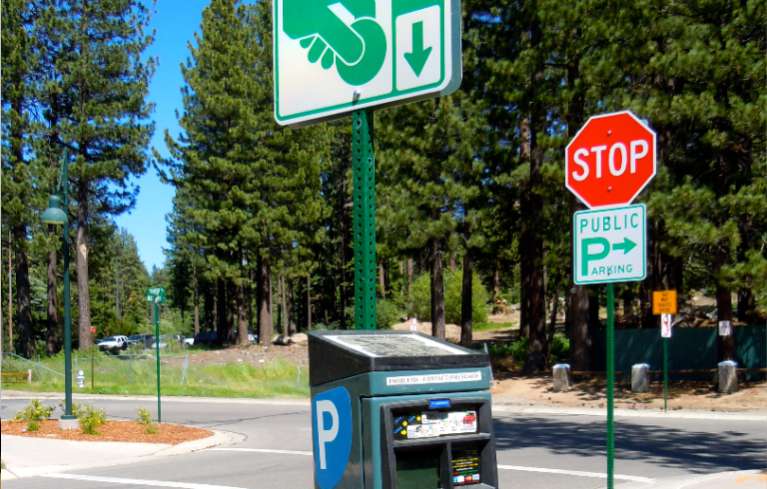
No longer can opponents to South Lake Tahoe’s expansion of metered parking point to Truckee as an example of a town that continuously loses money with paid parking.

Truckee is projected to net $140,000 this fiscal year that ends June 30. And the town council this month agreed – unanimously – to keep the program intact.

South Lake Tahoe on a 4-1 vote May 21, with Mayor Tom Davis dissenting, made what is expected to be the last tweak to its parking plan for this summer season.

The vote was to install the parking kiosks at the two lots serving Lakeview Commons and not put them in at Regan Beach.

A pilot parking meter program started in 2011 on Bellamy Court. Photo/LTN file

A pilot parking meter program started in 2011 on Bellamy Court in South Lake Tahoe. Photo/LTN file

At previous meetings it was agreed meters will go in at Venice Drive, with operation being seasonal during the warm months; and year-round near Lakeside Beach in the state line area.

“Everyone knows my position on paid parking. I hate it,” Davis said. He said in the fall he hopes it will have not been a success so he can be the first to make a motion to abandon the whole thing, and perhaps then the city can resell the used kiosks.

Councilmember Hal Cole said, “I’m a big believer in user fees. I think the people using it should fund it.”

Councilwoman Brooke Laine pointed out how the U.S. Forest Service charges at all of its beaches in the basin except for Kiva. She tied this to the city’s having paid parking at its beaches except Regan and Timber Cove.

State Parks is asking for $10 at the lot at Vikingsholm – and that could be for a 10-minute visit.

The city is going to charge $2 per hour, with a maximum of $10 per day.

Paid parking has been talked about for three years. In the past year, those against the concept have come out in large numbers to oppose the plan. However, at Tuesday’s City Council meeting, only four spoke — all against paid parking.

The council intends to assess in the fall how the program worked – or didn’t.

In other action:

• The council agreed to Tom Watson’s three-year contract. The city attorney starts July 8. He will make $154,000 per year, receive the same benefits as other city staff, and be given up to $7,500 in moving expenses. If the council wants to terminate him before the contract expires June 30, 2016, he will be paid six-months severance.

• Deputy City Attorney Nira Feeley will be the interim city attorney from June 1-July 7.

• Tom Greene with the Tahoe Prosperity Center updated the council on that group’s plan to bring broadband to the Lake Tahoe Basin.

• It was agreed in the near future the council would discuss the possibility of going to voters to seek a raise in the snow removal fee that currently stands at $20/year. That money is for equipment. Tying increases to the Consumer Price Index will also be broached.

• There will be a special council meeting May 30 at 4pm regarding the Bijou erosion project.

• Depending on the action taken Thursday by the Planning Commission, the Chateau project may be on the June 11 council agenda.

• A special council meeting may be needed in June regarding the area plan for the tourist core.


Tree vandals strike West Slope

By Cathy Locke, Sacramento Bee

El Dorado County residents and sheriff’s investigators are trying to track down vandals who have laid waste to thousands of dollars’ worth of trees on private property.

Detective John Robertson said he has five active cases, all involving cedars that have been felled in recent months.

Three of the incidents occurred on the same property along Lotus Road.

“We’re looking at it as vandalism,” Robertson said. “I’ve never seen anything like it.”

The incidents have occurred in the Lotus, Coloma and Shingle Springs areas, north and west of Placerville. Robertson estimated that the financial losses to property owners are in the thousands of dollars.

Wendy Deitz, whose property has been hit three times, said the first incident occurred just before Christmas. Her husband, Robert, had hung holiday lights on the cedars planted as a buffer between their house and Lotus Road.

In the early morning hours, someone removed the lights and chopped down 20 trees in varying sizes.

The Deitzes initially thought someone had cut them down and stolen them for Christmas trees, but then they discovered that the trees had been dumped in their pond.

They planted more cedars, including some donated by El Dorado Nursery, but someone came along and pulled them up, Wendy Deitz said. The couple replanted once again, and this time her husband installed game cameras.

When their trees were targeted a third time, the cameras captured the image of a man cutting a tree with a hand saw. Although he is seen from the back, “he is obviously left-handed,” Wendy Deitz said.

She and her husband also found a soda can that they turned over to the Sheriff’s Office for possible fingerprint or DNA analysis.

Wendy Deitz said they had heard from three other residents on Lotus Road that trees on their property had been cut down as well.

“I guess it’s just someone who doesn’t like cedars,” she said, adding that the trees are cut so low they won’t grow back.

Brendan Wilce, a nurseryman at El Dorado Nursery in Shingle Springs, said the trees targeted have been incense cedars, which are native to El Dorado County.

“They grow naturally in this area,” he said. “They’re the trees on the (Highway) 50 corridor that you see as you go up here.”

Wilce said he couldn’t think of any practical reason someone would want to destroy them.

“They’re not an invasive plant,” he said, “They’re a great local native tree.”

Although they produce pollen this time of year, he said, they tend to be less of a problem for allergy sufferers than oaks.

Wilce said it was difficult to estimate the value of the mature cedars that have been felled.

He said the replacement trees the nursery has supplied to some of the victimized property owners are 24-inch box trees, which retail for $250 each.

Detective Robertson said most of the targeted trees have been fairly close to roadways. He urged people who see any suspicious activity to call him at (530) 642.4722.


Ski resorts slow to deal with climate change

By Greg Hanscom, Pique

When a report warning of global warming’s disastrous impacts on skiing garnered national headlines in December, activists hoped the news would encourage a serious response both at home and in Washington, D.C. But the ski industry itself, where bad press means all the difference between a banner year and a bust, greeted the headlines with all the enthusiasm of a rainstorm on the slopes.

Industry leaders quickly jumped in to do damage control. Vail Resorts ran an ad in the New York Times under the banner, “The Climate HAS CHANGED,” with photos of skiers and snowboarders wallowing in fresh powder at the company’s playgrounds, which include Vail, Beaver Creek, Keystone and Breckenridge in Colorado, as well as three resorts around Lake Tahoe.

The company’s CEO, Rob Katz, wrote a letter to the editor of the Denver Post berating those who “alarm people with images of melting snow.” “Count me in the category of someone who is very worried about climate change,” Katz wrote, and then added, “You can count me out of the group that says we need to address climate change to save skiing.”

Ski resorts don't like using the C words -- climate change. Photo/LTN file

Ski resorts don’t like using the C words — climate change. Photo/LTN file

Save wildlife habitat and prevent natural disasters, sure, Katz intoned, but let’s keep skiing out of this.

The reaction revealed an industry deeply torn between protecting its long-term survival and ensuring its short-term profitability. “Ski area owners and operators are aware of the scientific studies and projections regarding the long-term potential impacts of climate change,” the National Ski Areas Association said in a position statement, “but we remain optimistic as an industry.”

The forecast does not inspire confidence, however. The report that made headlines in December, Climate Impacts on the Winter Tourism Economy in the United States, provided a long list of alarming reminders: By the end of the century, winter temperatures are projected to warm an additional four to 10 degrees Fahrenheit in North America. In high-emissions scenarios, the winter snowpack in the Cascades and the Sierra is projected to decrease between 40 and 70 per cent by 2050. If we continue to pollute the way we do now, skiing will be confined to the top quarter of Aspen Mountain in average years by the end of the century. Utah’s Park City Mountain Resort will have no snowpack whatsoever.

The report then attempted to put a price tag on all this, calculating that, over the course of the last decade, ski areas lost more than $1 billion in potential revenue to bad snow years. Failure to respond quickly to climate change, the authors wrote, “spells economic devastation for a winter sports industry deeply dependent upon predictable, heavy snowfall.”

Commissioned by the nonprofit Protect Our Winters (POW for short) and the Natural Resources Defense Council, the report was part of a broader effort to highlight the economic significance of outdoor recreation, and to use that as a lever to promote conservation. But the ski industry has been reluctant to talk about this looming catastrophe, even for the sake of prolonging its own life.

“It’s a tough reality to swallow,” says Elizabeth Burakowski, a Ph.D. candidate in snow science at the University of New Hampshire and one of the report’s co-authors. “It’s bad for business.”

The National Ski Areas Association does have a program called the Climate Challenge that encourages resorts to reduce greenhouse gas emissions — though it says nothing about all the emissions spewed when skiers travel to the resorts — and it has advocated for clean energy programs on the national level. And many individual resorts, including Vail, have cleaned up their operations by shifting to renewables like wind power. But when it comes to the larger fight against climate change, most industry leaders say they have enough to worry about already.

Nationally, the number of visits to ski resorts has remained essentially flat since the industry started keeping track in 1979. Analysts blame younger people, who aren’t replacing aging Baby Boomers, the ski industry’s main market. And now comes the news that snowboarding, a sport largely credited for saving the industry in the 1990s, is on a steep downhill slide. A report released this winter by RRC Associates, a company that tracks winter recreation, found that the percentage of snowboarding visits to ski areas has declined over the past two years, while the number of days boarders head to the mountain has dropped sharply in the past decade.

At Mammoth Mountain, environmental affairs director Ron Cohen says he’s got his hands full just keeping up with Forest Service and state regulations. The ski area, he says, simply lacks the resources to be more active on climate change. “Everybody knows — people who work here and think about strategy — we’re not ignorant of the issue,” Cohen says. “We know that there are these discussions, these issues, scientific theories, facts — all of the above — but we’re focused on business strategy a lot more than we are on something we have a lot less control over.”


Fighting Chance helps keep kids safe

By Kathryn Reed

Krystal Steadman never learned the lessons taught in Fighting Chance. Her fourth-grade class at Meyers Elementary School was on the calendar that spring of 2000 a week after the 9-year-old was abducted.

It would be pure speculation that the then fourth-grader would be alive today had she been taught what to do if bad guys come after you.

Her capture occurred nine years after Jaycee Lee Dugard, then a fifth-grader at the same South Shore school, was abducted.

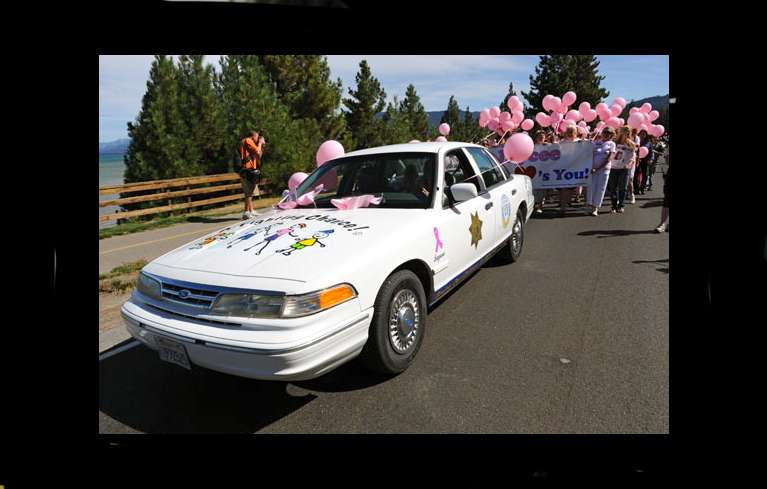
The Fighting Chance vehicle leads the 2009 parade celebrating Jaycee Lee Dugard's freedom. Photo/Lisa J. Tolda

The Fighting Chance vehicle leads the 2009 parade celebrating Jaycee Lee Dugard’s freedom. Photo/Lisa J. Tolda

Fighting Chance in large part came about as a reaction to Dugard’s abduction from a bus stop. Terry Probyn, Jaycee’s mom, is on the video that is used in the classrooms. This was taped on the 10-year anniversary of the abduction. (Jaycee was found alive in 2009.)

This week members of Soroptimist International South Lake Tahoe are in the classrooms throughout Lake Tahoe Unified teaching the Fighting Chance curriculum.

Brooke Laine, when she was president of the club, came up with the program in the mid-1990s. It has continued on every year since then. It started in the fifth grade, but now includes grade 3, 4 and 6, too. Laine said fifth grade was not chosen because that was Jaycee’s grade, but instead it had more to do with the age group molesters target.

“Pre-puberty, that is the age the child molesters want,” Laine told Lake Tahoe News. “They plan their attack. You have to be prepared to plan your escape. I don’t even want to tell them how many sexual predators are in town. I have a binder of them. I know where they live.”

Laine’s children were about 4 and 5 when the program started. She would read books about abductions, molestation – all to gain knowledge in her quest to put Fighting Chance together.

Laine said Probyn told her one of the biggest regrets she had was not teaching Jaycee what to do if someone grabbed her.

Soroptimist International Tahoe Sierra teaches the third-graders by using a board game that in large part looks like the South Shore. It’s about figuring out routes to get to home and school safely. Different “what if” scenarios are played out so kids will start thinking about what to do if some stranger approaches or grabs them.

Fourth-graders learn via the video. But the DVD is turned on and off, with discussion in between to engage them, let them ask questions and allow time for the material to sink in.

In fifth grade they are taught what to do. Laine said she is not aware in all these years of a single parent not turning in the permission slip. She said because the material can be “shocking”, parents must say it’s OK for their child to learn the message of Fighting Chance.

In sixth grade youths are taught that if the suspect gets out of the vehicle, but they’re locked in, to take a button off a shirt and put it in the ignition. Kick out a taillight if stuffed in the trunk. Cops in Tahoe know to pull over a vehicle with a busted out taillight just for the reason someone could be in there.

The El Dorado County Sheriff’s Office has twice donated an old vehicle for the purpose of teaching kids. And it has twice been used in a parade in Jaycee’s honor – first to remember her, and then to celebrate her release from captivity.


Food map details what people in U.S. eat

By Mary Clare Jalonick, AP

CHAPEL HILL, N.C. — Do your kids love chocolate milk? It may have more calories on average than you thought.

Same goes for soda.

Until now, the only way to find out what people in the United States eat and how many calories they consume has been government data, which can lag behind the rapidly expanding and changing food marketplace.

Researchers from the University of North Carolina at Chapel Hill are trying to change that by creating a gargantuan map of what foods Americans are buying and eating.

Part of the uniqueness of the database is its ability to sort one product into what it really is – thousands of brands and variations.

Take the chocolate milk.

The government long has long classified chocolate milk with 2 percent fat as one item. But the UNC researchers, using scanner data from grocery stores and other commercial data, found thousands of different brands and variations of 2 percent chocolate milk and averaged them out. The results show that chocolate milk has about 11 calories per cup more than the government thought.

The researchers led by Professor Barry Popkin at the UNC School of Public Health, are figuring out that chocolate milk equation over and over, with every single item in the grocery store. It’s a massive project that could be the first evidence of how rapidly the marketplace is changing, and the best data yet on what exact ingredients and nutrients people are consuming.

That kind of information could be used to better target nutritional guidelines, push companies to cut down on certain ingredients and even help with disease research.

Just call it “mapping the food genome.”

“The country needs something like this, given all of the questions about our food supply,” says Popkin, the head of the UNC Food Research Program. “We’re interested in improving the public’s health and it really takes this kind of knowledge.”

The project first came together in 2010 after a group of 16 major food companies pledged, as part of first lady Michelle Obama’s campaign to combat obesity, to reduce the calories they sell to the public by 1.5 trillion. The Robert Wood Johnson Foundation agreed to fund a study to hold the companies accountable, eventually turning to UNC with grants totaling $6.7 million.

Aided by supercomputers on campus, Popkin and his team have taken existing commercial databases of food items in stores and people’s homes, including the store-based scanner data of 600,000 different foods, and matched that information with the nutrition facts panels on the back of packages and government data on individuals’ dietary intake.

The result is an enormous database that has taken almost three years so far to construct and includes more detail than researchers have ever had on grocery store items – their individual nutritional content, who is buying them and their part in consumers’ diets.

The study will fill gaps in current data about the choices available to consumers and whether they are healthy, says Susan Krebs-Smith, who researches diet and other risk factors related to cancer at the National Cancer Institute.

Government data, long the only source of information about American eating habits, can have a lag of several years and neglect entire categories of new types of products – Greek yogurt or energy drinks, for example.

With those significant gaps, the government information fails to account for the rapid change now seen in the marketplace. Now more than ever, companies are reformulating products on the fly as they try to make them healthier or better tasting.

While consumers may not notice changes in the ingredient panel on the back of the package, the UNC study will pick up small variations in individual items and also begin to be able to tell how much the marketplace as a whole is evolving.

“When we are done we will probably see 20 percent change in the food supply in a year,” Popkin says. “The food supply is changing and no one really knows how.”

For example, the researchers have found that there has been an increase in using fruit concentrate as a sweetener in foods and beverages because of a propensity toward natural foods, even though it isn’t necessarily healthier than other sugars. While the soda and chocolate milk have more calories on average than the government thought, the federal numbers were more accurate on the calories in milk and cereals.

Popkin and his researchers are hoping their project will only be the beginning of a map that consumers, companies, researchers and even the government can use, breaking the data down to find out who is eating what and where they shop. Is there a racial divide in the brand of potato chips purchased, for example, and what could that mean for health? Does diet depend on where you buy your food – the grocery store or the convenience store? How has the recession affected dietary intake?

“It’s only since I’ve really started digging into this that I have realized how little we know about what we are eating,” says Meghan Slining, a UNC nutrition professor and researcher on the project.

Steven Gortmaker, director of the Harvard School of Public Health Prevention Research Center, says the data could help researchers figure out how people are eating in certain communities and then how to address problems in those diets that could lead to obesity or disease.

“The more information we have, the more scientists can be brainstorming about what kinds of interventions or policy changes we could engage in,” Gortmaker said.

But the information doesn’t include restaurant meals and some prepared foods, about one-third of what Americans eat. If the project receives continued funding, those foods eventually could be added to the study, a prospect that would be made easier by pending menu labeling regulations that will force chain restaurants to post calories for every item.

Popkin and his researchers say that packaged foods have long been the hardest to monitor because of the sheer volume and rapid change in the marketplace.

The Healthy Weight Commitment Foundation, an industry group representing the 16 companies that made the pledge to reduce 1.5 trillion calories, says it will report this summer on how successful they’ve been, according to Lisa Gable, the group’s president. The first results from Popkin’s study aren’t expected until later this year.

Marion Nestle, a New York University professor of nutrition, food studies and public health, says the data could be useful in pressuring companies to make more changes for the better. Companies often use “the research isn’t there” as a defense against making changes recommended by public health groups, she notes, and it can be hard to prove them wrong.

“What people eat is the great mystery of nutrition,” Nestle says. “It would be wonderful to have a handle on it.”
Plane crash survivor relives his story

By Tom Hauser, KSTP-TV

For George Lamson Jr., every day since Jan. 21, 1985, is a gift.

Galaxy Airlines Flight 203 crashed shortly after take-off just after 1am that day.

Lamson was the only one of 71 people on board who survived that crash a short distance from the airport in Reno.

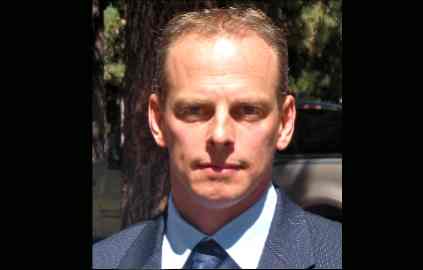
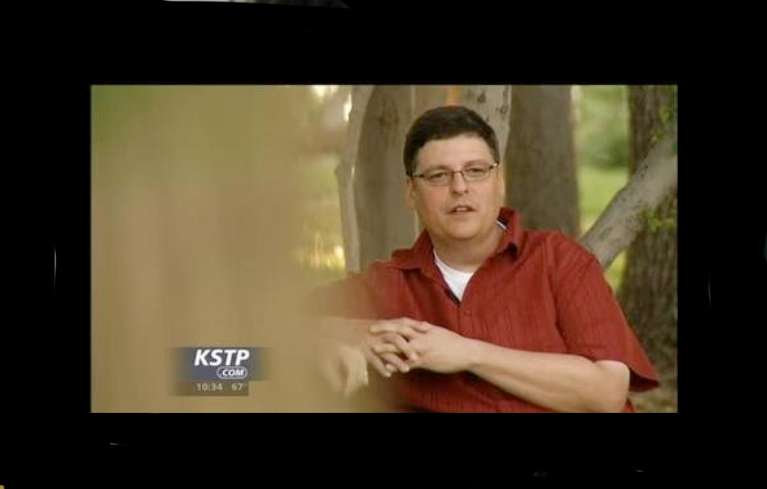
George Lamson Jr. will be part of a documentary about plane crash survivors. Photo/KSTP-TV

George Lamson Jr. will be part of a documentary about plane crash survivors. Photo/KSTP-TV

He’s one of 14 people to be the sole survivor of a commercial plane crash.

“What I remember is hitting the ground, waking up seeing the sky, thinking I was dead,” Lamson told me recently in Reno. “I feel gratitude for having a second chance to live.”

What makes the crash all the more difficult to deal with is the fact his dad, George Lamson Sr., survived just over a week before he died.

The younger Lamson was just 17 years old when he and his dad flew to the Lake Tahoe/Reno area for a Super Bowl trip on a chartered plane. Most of the people on the trip were from Minnesota and western Wisconsin.

Immediately after the crash there were three survivors. Seventeen-year-old George Lamson and his dad both survived along with Robert Miggins of Wayzata. Lamson, Sr. and Miggins later died of their injuries.

In fact, a National Transportation Safety Board report indicates 16 people survived the initial crash impact, but most immediately died in a huge fireball.

George and his dad were sitting near the front of the plane by a bulkhead. The plane broke apart near them and they were thrown about 40 feet from the plane away from the explosion and fire.

The cause of the crash, according to the NTSB report, was a series of tragic events. A ground worker at the Reno airport improperly closed an “air start access door” that came open shortly after take-off.

The small open door beneath a wing caused strong vibrations in the plane. That, in turn, caused a series of pilot errors as they tried to troubleshoot the problem.

The plane crashed just a couple miles from the airport. “When I looked out the window I saw the ground,” Lamson recalls about the moments before the crash.

“So our plane was tilted this way, I’m looking out the window and I’m still seeing the ground. I should be looking up at the stars or wherever. Then we knew something was wrong. It got very quiet in the cabin.”

Lamson came back to Minnesota and finished his senior year at Cretin High School. About five years later he moved to Reno and now lives just minutes from the crash site. “I didn’t come here consciously to be near my dad,” he told me last week. “But I realize that by being here I do feel closer to him.”

There’s a memorial to the Galaxy plane crash victims several miles from the crash site in a public park. When Lamson is having a bad day, he’ll sometimes visit the memorial to remind himself how fortunate he really is. There’s not a day that goes by that he doesn’t think of his dad and all the others who died.

“I carry them around with me all the time. They’re with me 24/7.”

George will be in Minneapolis May 30 for the premiere of “Sole Survivor,” a documentary film about some of the sole survivors of plane crashes. He admits he was initially reluctant to get involved, but decided it was time to open up.

“I wanted to do something that would explain what I went through and maybe teach somebody that may be going through a difficult time they could learn from my experience.”


Work at Washoe Meadows set for this summer

By Kathryn Reed

Despite an ongoing 1½-year-old lawsuit involving Washoe Meadows State Park, improvements at the South Shore park are expected to begin this summer.

The bridge crossing Angora Creek is slated for replacement, along with work on the channel so it flows better.

Comments for the CEQA documents are being taken until June 5. Project specs are available for review at the El Dorado County library in South Lake Tahoe.

Cyndie Walck with State Parks told Lake Tahoe News the plan is to work on the bridge and channel starting in August. The goal is to have everything wrapped up this season, with some possible vegetation work needed next year.

A lawsuit involving Washoe Meadows State Park is not preventing environmental upgrades taking place this summer. Photo/LTN file

A lawsuit involving Washoe Meadows State Park will not stop upgrades from happening this summer. Photo/LTN file

“The bridge will be redwood. It will have 30-foot long stringers,” Walck said.

This bridge is not near the golf course.

Once the comment period closes, the park system will begin securing necessary permits from Lahontan Regional Water Quality Control Board, Tahoe Regional Planning Agency and others.

“For the Angora Creek project, we are reviewing the recently received documents to see if we have any questions or comments. We appreciate that the project goals are to improve meadow habitat and improve park visitor experience in Washoe Meadows State Park,” Lynne Paulson told Lake Tahoe News.

Paulson is part of the Washoe Meadows Community that in November 2011 sued State Parks regarding its swapping land between the state park with neighboring Lake Valley Recreation Area.

State Parks, as all land owners along the Upper Truckee River are being mandated by Lahontan and TRPA, must reduce the amount of sediment flowing from the river to Lake Tahoe. Rerouting the river so it has a more natural meander is the most common way to achieve this goal. Proposed improvements to this section of river also come with reconfiguring the holes of Lake Tahoe Golf Course that sits on the state recreation land. Originally nine holes were to be moved. That has been revised to five.

Walck said until the lawsuit is resolved, the river restoration, the park’s first general plan and other recreation issues cannot be dealt with.

“For the Upper Truckee River and golf course project, Washoe Meadows Community’s lawsuits — and the concerns that prompted the action — remain unresolved but are active in the court system with motions, case updates and other actions on the court calendar during the coming months. It is important to continue to protect Washoe Meadows State Park’s resources and hold government agencies accountable for following the law,” Paulson said.

The other project this summer is working on the creek. It can range in depth from less than 6 inches to 3½-foot gullies. The deep part means water is not flowing into the meadow and therefore it is drying out.

“That access is from the west side off Lake Tahoe Boulevard,” Walck explained. “(The project) is to maintain the water table and spread water off the sewer line.”

Both projects are expected to cost about $150,000. State Parks will pay for part of it, with Tahoe Fund money expected as well.


College enrollment drops as people return to work

By Mary Beth Marklein, USA Today

College enrollments declined 2.3 percent this spring compared with a year earlier, a sign that more students are returning to the workforce as the economy recovers, a report out Thursday says.

The biggest drops occurred among adult learners attending for-profit colleges and public community colleges, which are most likely to enroll students in vocation-oriented classes tied to the local job market. Enrollments at those institutions fell 8.7 percent and 3.6 percent, respectively.

For colleges, which saw enrollments peak in 2011 during the recession, the declining numbers represent “a bit of a return to normal,”says Doug Shapiro, executive director of the non-profit National Student Clearinghouse Research Center, which released the report. “It’s reflective of good news for the economy and labor market.”

Numbers are based on data provided by about 95 percent of the nation’s colleges and universities to the National Student Clearinghouse, which offers verification and research services to participating colleges.

Enrollments this spring reached 19,105,651, down from 19,550,391 last spring. A similar decline has occurred during fall semesters, when enrollment figures have historically been higher. Enrollments last fall were down 1.8%, to 20,195,924, compared with a high of 20,556,272 in fall 2011.

Among details between this spring and last spring:

• Four-year public institutions saw a 1.1 percent drop in enrollments while four-year private colleges saw a slight increase.

• Across regions, the Midwest saw the greatest decrease in overall enrollment, 2.6 percent, while the Northeast saw the smallest decrease, less than 1 percent. The drops were 1.7 percent in the West and 2.2 percent in the South.

• The decrease was steeper for women than men (2.7 percent vs. 1.7 percent) but women still accounted for more than 57 percent of this spring’s enrollments.

• Enrollments among students over age 24 fell 3.6 percent, while rates for traditional-age students fell 1.4 percent.

Michael Reilly, executive director of the American Association of Collegiate Registrars and Admissions Officers, says the numbers are consistent with trends showing declines in the size of high school graduating classes and may reflect recent scrutiny on for-profit colleges. Last summer, Sen. Tom Harkin, D-Iowa, wrapped up a two-year investigation of the sector that found that students at for-profit colleges on average had lower graduation rates and higher average loan default rates than those enrolled in nonprofit institutions.

Steve Gunderson, CEO of the Association of Private Sector Colleges and Universities, which represents for-profit institutions, attributed some of the enrollment declines to what he called “right-sizing.” But he also said his schools also have grown more selective as federal and state policymakers focus on issues such as graduation rates.

“We as a sector used to practice what we would call open access (admissions). Everyone had a chance,” he says. Increasingly, he says, “enrollments are reflecting a better-prepared, less risky student body.”


Author shares reality of citizens being imprisoned without a trial during WWII

By Kathryn Reed

“Crimes of the government can become sins against the innocent, especially in the mind of a child.”

“In 1942, all three branches of the government violated the Constitution.”

“Immigrants are often scapegoats.”

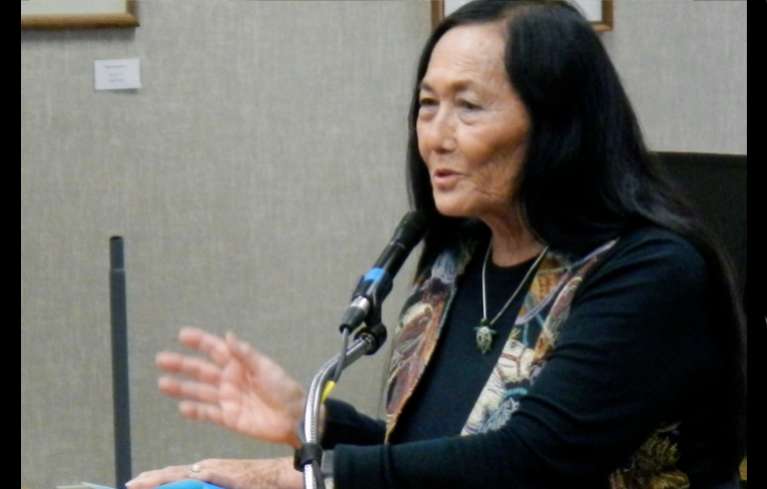
Those are some of the thoughts Jeanne Watatsuki Houston shared with nearly 200 people who listened to her speak this month in South Lake Tahoe. She, with husband James Houston, wrote “Farewell to Manzanar” – a story about her three-year internment at the Eastern Sierra “prison” during World War II.

She was a 7-year-old living in Southern California in 1942 when the government started posting posters on telephone poles telling those who were of Japanese heritage to turn up at bus depots and train stations on a certain day. It didn’t matter if they were U.S. citizens.

Jeanne Houston tells her story about being forced to live in an internment camp during World War II. Photo/Kathryn Reed

Jeanne Houston tells her story about being forced to live in an internment camp during World War II. Photo/Kathryn Reed

“We looked like the enemy,” Houston said.

Soldiers with guns herded them onto their transport. While not confrontational, at least for Houston’s family, it was still a military act.

Her father had already been whisked away. He was arrested the first day after Pearl Harbor because he was not a citizen. He had come to the United States with his parents in 1904 when he was 17.

“He was considered a dangerous person,” Houston said. He was a fisherman by trade. Her dad was sent to a federal prison in Bismarck, N.D.

The laws didn’t allow him to become a citizen until 1952.

“There had already been 100 years of anti-Asian laws,” the author said.

And while the United States was at war with other countries at this time, it was only Japanese who were rousted from their homes. Those other countries were in Europe where the people looked more like those in Washington, D.C., who were making the decisions.

It has been 40 years since Houston published the book. It took her more than two decades after being released from what was essentially a prison – not a camp in any sense of the word – to begin writing her story. It was a story that her husband did not know before they married.

“I don’t want others to feel guilty, it is understanding we want,” Houston said.

She realizes this segment of U.S. history is still unknown to many. People don’t realize the government rounded up 120,000 people – 70 percent of who were born in the United States – and sent them to one of 10 internment camps. That is why she continues to tell her story. (The May 14 talk was sponsored by the South Lake Tahoe Friends of the Library.)

“I don’t think it will happen again, but I think it could,” Houston said.

Today, Manzanar is a National Historic Site. It’s a bit like a ghost town. While Manzanar means apple orchard in Spanish, the dusty outpost in the Owens Valley with decaying remnants of the past and a visitors center with stories of the country’s racist act, sits in the middle of nowhere as a reminder of what the government can do to its own people.