Placer County attracting slew of film crews

Placer County isn’t just a place to visit, it’s an area film crews like to shoot.

In the last 15 years, millions of dollars have been generated from film companies.

The vistas, abundant recreational activities and diverse terrain have been used in feature films, television commercials and photography for national companies.

Beverly Lewis, director of the Placer-Lake Tahoe Film Office, recently hosted a Tahoe Film Conference for government officials who may be involved in some aspect of a production company’s work in the county. The conference highlighted the needs of production companies and the local economic benefit that is derived from this work.

Cinema Verite was a critically acclaimed HBO TV movie that aired in 2012. Scenes were shot in a wide variety of homes in Auburn in four days and used for a montage of homes all over America. Photo/Provided

“Cinema Verite” scenes were shot in a variety of homes in Placer County.  Photo/Provided

Placer County said of the film industry, “It brings Placer County to the world.”

The Placer-Lake Tahoe Film Office publicizes the many available locations and assists production companies in finding the right “look” for what they’re trying to achieve. The film office also expedites the permitting process and ensures all the needs of the production companies are met, from lodging and meals to materials used to construct sets.

Keynote presenter Amy Lemisch, executive director of the California Film Commission, pointed out the huge economic effect the film industry has on the state.

“The film industry brings millions of tourists to California,” she said. “People do want to visit the places they see on TV and in the movies.”

Although Placer County is distant from most Southern California-based studios, the close proximity of varied terrain within the county makes it a popular place to shoot. While there have been numerous feature films shot in whole or in part in locations throughout Placer County, production work primarily comes from commercials and photography shoots.

Commercial film director Tim Damon has produced 14 commercials in the county in the last 10 years. This year also marks the ninth time in five years that the Orvis Company chose Placer County to shoot still photography for its seasonal catalogs.

California, which at one time was the state where almost all movies and commercials were shot, is now facing competition from other states that offer financial incentives to production companies. To sweeten the pot for filming in California, the state Legislature recently enacted a film tax incentive, giving production companies tax breaks for production shoots in the state.

Placer County has already played host to four such productions including The Muppets, an HBO movie and an upcoming Spike Jonz film starring Joaquin Phoenix. The California Film Commission estimates that, depending on the complexity of the shoot; a production company will spend between $100,000 and $250,000 a day.

— Lake Tahoe News staff report


SnowGlobe’s return to S. Tahoe not definite

By Kathryn Reed

Between the producer of SnowGlobe wanting to be paid and the use of the field being a question mark, the New Year’s Eve music festival may not come back to South Lake Tahoe for a third year.

“The taxpayers voted to provide funds to construct a community play field and therefore the first concern is to ensure the taxpayers receive what they paid for. If the field can be protected in such a way as to ensure its playability and also be utilized for this and other events, that could be a win-win,” City Manger Nancy Kerry told Lake Tahoe News. “City staff has been exploring options to achieve both goals and believe the best solution would be to cover the field with rubber field mats, but the costs are significant.”

That is an expense the producer does not want to incur.

While the city could purchase the mats – they cost six figures, the installation and tear down would be passed on to whatever entities were to use them.

The music fest SnowGlobe starts its three-day run Dec. 29 in South Lake Tahoe. Photos/Kathryn Reed

SnowGlobe music fest may not threepeat in South Tahoe. Photo/LTN file

Chad Donnelly, producer of the three-day event, did not return phone calls.

Talks are still ongoing, but not as optimistically as they were earlier this year, sources have told Lake Tahoe News.

The event is said to be an economic boon for the region. It brings in people who would not otherwise have been in town and is an older crowd than those milling about Stateline on New Year’s Eve.

The city is also talking with Lake Tahoe Visitors Authority and the business community to see if they have the money Donnelly desires and if another location could be secured.

There was talk Donnelly was being wooed by North Shore entities. Andy Chapman with North Lake Tahoe Resort Association did not return a phone call.

As for LTVA, Executive Director Carol Chaplin said, “We’re not trying to keep it, we are trying to understand what the issues on all sides are, the challenges and the opportunities to make sure that if and when it happens, or not, that all of our constituents understand why and agree that it has been thoroughly vetted.”

LTCC’s board has already committed to being a partner with SnowGlobe if it were to return to the ball fields adjacent to the college.

“The college stands ready to support the local community. If SnowGlobe is an event our community finds as viable and a desired event, the college will be a partner in providing a safe and responsible event that benefits the businesses and community of South Tahoe,” LTCC President Kindred Murillo told Lake Tahoe News.


Tahoe bill passes Nevada Legislature

By Andrew Doughman and Conor Shine, Las Vegas Sun

Legislators slogged through dozens of bills Friday, turning the Senate and Assembly chambers into arenas for legislative triumph and death.

Following a lengthy day of voting, bills you might find good, bad or just plain weird are headed to Republican Gov. Brian Sandoval, meaning they now need nothing more than a signature from Sandoval to become law.

But just as many bills died because they didn’t pass by a legislative deadline that ended midnight Friday, perhaps none as spectacularly as a sex education bill from Assemblyman David Bobzien, D-Reno.

“You only have 120 days to do business with deadlines,” Bobzien said. “Bills die. That’s the way it is.”

Senate Democrats declined to consider the bill that Assembly Democrats had passed on a party-line vote, highlighting the inter-party fighting that can happen when senators need the Assembly to pass its bills and Assembly members need the Senate to pass its bills.

To achieve their goals, legislators swapped and traded in a this-for-that spate of paper-making frenzy resulting in dozens of last-minute amendments.

“We’ve done more alterations here than Joan Rivers’ plastic surgeon,” said Assemblyman William Horne, D-Las Vegas, in a tweet.

Legislators have for the past few months nurtured their bills through the legislative process, fending off opponents, compromising with interested parties, and gathering the legislative voting blocs necessary to pass their bills. In short, they get personally invested in the legislative process.

And while legislators can rise to the occasion to debate important state social and fiscal policy, they also can spend evenings in closed meetings debating the merits and demerits of a bill about raw milk.

“It’s surreal, but I think particularly for those of us who have been here a couple of sessions, you get used to it,” Bobzien said.

While past sessions’ deadline votes have run out the clock in lengthy and contentious arguments among legislators, the 2013 Legislature ended the day at 10pm with laughter in the Senate and congenial well wishes for a senator’s birthday.

Friday’s deadline is somewhat meaningless; big pieces of legislation including a major energy overhaul, a gun background check bill, a bill allowing for medical marijuana dispensaries, a gas tax, a Southern Nevada stadium study bill, and other bills are exempt from the deadline.

But that doesn’t mean major bills didn’t pass Friday either.

Here’s a look at some of the big bills the Legislature approved or killed Friday:

A bill to permit an increase in the sales tax to allow Las Vegas Metro Police to retain 300 officers has passed the Senate, 18-3. Assembly Bill 496 would increase the sales tax in Clark County by 0.15 percent if it is approved by a two-thirds vote of the Clark County Commission.

A controversial bill that would have updated and standardized sex education curriculum across the state won’t advance any further after it died in the Senate Friday.

Supporters framed the bill as a common sense update to the state’s sex education policy, but it became mired in heated rhetoric about what exactly would be changed.

Critics had earlier warned that the bill would serve to push the agenda of Planned Parenthood, especially in regards to abortion, and would disconnect sex education from morality and community concerns.

Legislators paved the way for a renewed agreement with California to protect the environment around Lake Tahoe.

Senate Bill 229 passed in the Assembly on a 40-1 vote and now heads to the governor’s desk.

Earlier this month, Sandoval and California Gov. Jerry Brown announced they’d reached a deal to keep the two states in a decades-old compact to protect the environment around Lake Tahoe, agreeing to ease some barriers for development and mollifying the concerns of some environmentalists.

The agreement comes two years after the Nevada Legislature passed a law requiring the Silver State to break the compact if substantial changes weren’t made by both the compact and the regional plan governing how the sensitive environment is developed. Environmentalists launched an effort this year to repeal the 2011 law, succeeding in convincing the Nevada Senate to pass Senate Bill 229 to keep Nevada in the compact.

Assemblyman Jason Frierson, D-Las Vegas, brokered a compromise to a major homeowners’ association bill that passed Friday out of the Assembly.

The omnibus HOA bill, Senate Bill 280, passed in a 35-6 vote.


Federal fine ends Ensign’s exit from politics

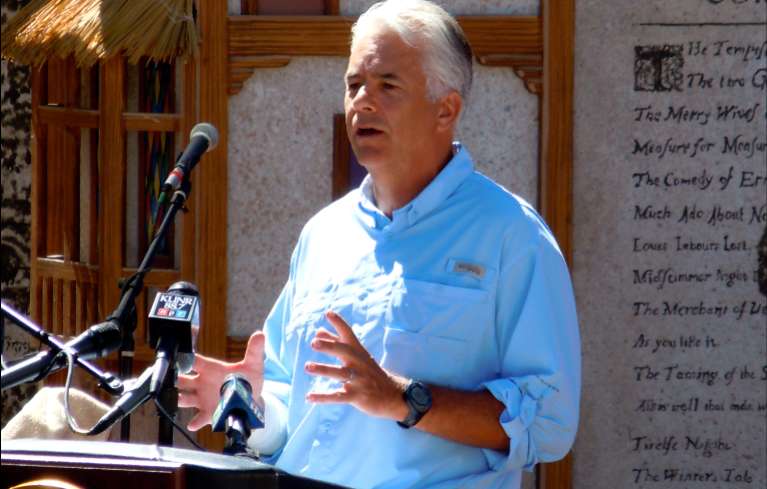
John Ensign, while a strong supporter of Lake Tahoe, left politics in disgrace. Photo/LTN file

John Ensign, while a strong supporter of Lake Tahoe, left politics in disgrace. Photo/LTN file

By Karoun Demirjian, Las Vegas Sun

Two years ago, the Federal Election Commission deciding to fine former Sen. John Ensign $32,000 for breaking campaign finance laws would have been big news.

But in a week filled with scandals, the first punishment levied on the erstwhile senator failed to stir anyone.

“It’s old news, and the political world has moved on,” said Eric Herzik, a political science professor at UNR. “It’s just a sad end to a sad story.”

The contorted tale of Ensign’s ethically shady steps to extricate himself from a long-term affair with his campaign treasurer — who also happened to be the wife of his chief of staff — gripped Nevada and the nation from when it was first made public, in June 2009, until well after Ensign stepped down in May 2011.

The Senate Ethics Committee excoriated him in a report detailing how Ensign had enlisted his staffers, family and even his Senate colleagues to help get Cynthia and Douglas Hampton to leave his employ quickly — and flagrantly ran afoul of campaign finance laws and congressional lobbying restrictions in the process.

In comparison to that 68-page tome, the FEC’s 10-page report offers few fresh details, save for a more exact itemization of Cynthia Hampton’s salary and health insurance cost, and the revelation that Ensign’s campaign and political action committee treasurer, Lisa Lisker (who replaced Hampton), was also complicit in failing to report the $96,000 Ensign’s parents gave to Hampton as off-the-books “severance.”

The FEC had dropped its case against Ensign in 2010, citing Ensign’s parents’ claim that they believed the $96,000 they gave the Hamptons was a “gift.”

Soon after, the Department of Justice dropped its investigation of Ensign.

The FEC only reopened its inquiry into the Ensign case after the Senate Ethics Committee released its report two years ago. The Justice Department, however, has not pursued charges against Ensign — and few think the FEC decision will change their minds.

“There’s nothing in there that DOJ didn’t already know,” said Melanie Sloan, executive director of watchdog group Citizens for Responsibility and Ethics in Washington, which has publicly criticized the Justice Department for failing to prosecute Ensign and filed a lawsuit seeking the Justice Department’s files on the case. “(The FEC decision) doesn’t even hold anybody culpable; nobody admits any wrongdoing. There’s not anything giving Justice grounds.”

The FEC rules by conciliation agreement — a handshake, effectively, between the FEC and the accused individuals — that the charges are fair and final. But there is a clause in the Ensigns’ agreement to ensure that the facts of the case, as laid out by the FEC, can’t be considered an admission of guilt.

Prior to the FEC’s fine, Douglas Hampton was the only person involved in the Ensign saga to have been sanctioned for his participation in illegal activity.

Hampton, who had been charged with seven felonies, was found guilty of breaking the law that requires former congressional staffers to wait at least one year before lobbying and was sentenced to a year’s probation.

Ensign, who was forced to abandon his political career, had otherwise gotten off scot-free.

Few in the political world think Ensign — who resumed his veterinary practice and has otherwise been keeping a low profile since he left Congress — will have to face a further reckoning.

“I would be amazed if there’s any more to this story. Ensign has moved on. The political world’s moved on. If anybody wants to go after John Ensign, I think it would be viewed as kind of piling on,” Herzik said. “You look back at it with a couple of years’ perspective, and there was no scandal here except the personal stupidity of John Ensign.”

“I think it’s just water under the bridge. If he were still in office, that’s a different ball game,” said David Damore, political science professor at UNLV. “But out of sight, out of mind. There’s been like 15 scandals since then.”


Heavenly evolving into year-round playground

By Kathryn Reed

A playground of a different kind is mapped out for the area surrounding Tamarack Lodge at Heavenly Mountain Resort.

Of the $25 million Vail Resorts will be spending in the coming months on summer recreation plans at its California and Colorado resorts, it is not being revealed how much is going into Heavenly.

Construction on two rope courses, a canopy tour and zipline center is slated to begin in mid-June. It’s likely some of this will be open in August. All should be ready for the ski season. And if the weather cooperates, most of these amenities will be accessible year-round.
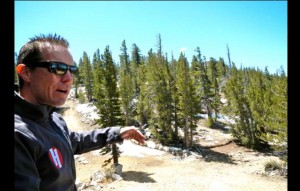
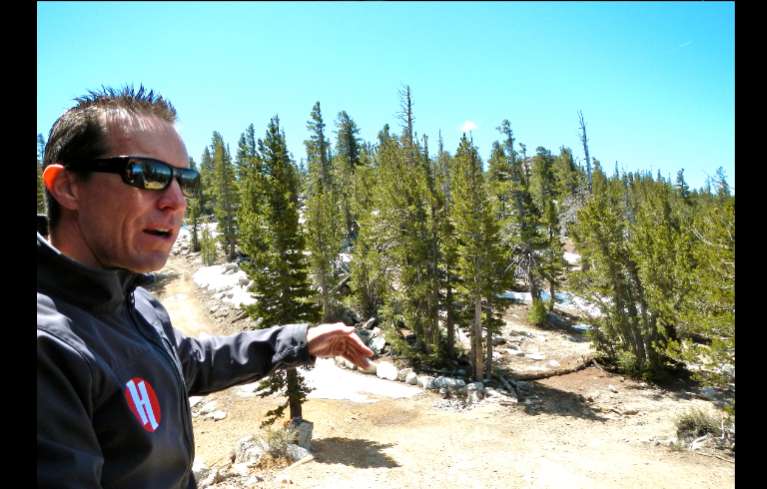
Pete Sonntag, Heavenly's general manager, points to where the amphitheater for weddings will go off the mid-station gondola deck. Photos/Kathryn Reed

Pete Sonntag, Heavenly’s general manager, points to where the amphitheater for weddings will go off the mid-station gondola deck. Photos/Kathryn Reed

Stakes are in the ground at the various locations outlining the various courses. Even though measurable snow is on the ground at the top of the gondola, Heavenly General Manager Pete Sonntag doesn’t anticipate this being a hindrance to starting work.

On a tour of the project site Thursday, Sonntag stopped at the mid-station of the gondola to point out where an amphitheater for weddings and other special events will be constructed on the southeast side of the walkway in the woods.

“It will be all natural stone with terraces built in. It will be rustic,” Sonntag said.

It’s possible interpretive talks will take place there, with a hike to follow from the top of the gondola.

Wedding guests and others will have a view of Lake Tahoe. After the ceremony, everyone would get back on gondola for the reception at Tamarack Lodge.

The lodge will be expanded in the back this summer to allow for more storage. Sonntag said with the dining facility exceeding expectations and now being the No. 4 producing restaurant of the entire company, storage has been an issue. (It opened in December 2010.)

As for the gondola, the resort is in the middle of a four-year project to replace the windows of each car.

Ed Cook, who owns a tree service by the same name, was riding the gondola May 23 to look for hazardous trees. The goal is to take ones out before they could take out the gondola line.

New amenities

A four-line zipline called the Zip Flyer will be accessed from the Easy Rider lift. The mini-climbing wall that had been nearby will go where the umbrella bar used to reside.
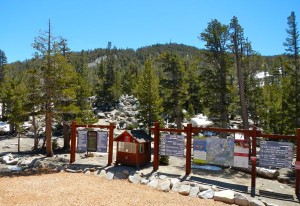
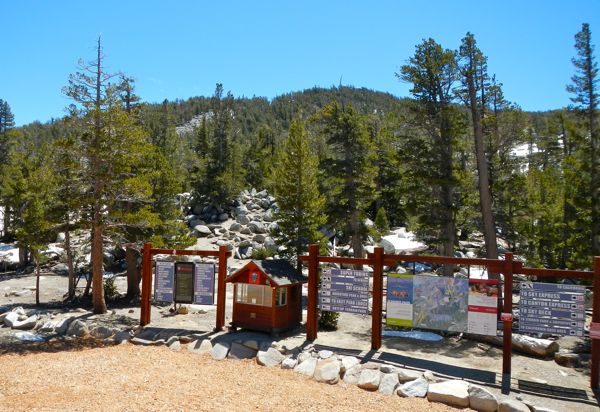
A rope course will be built in the boulders.

A rope course will be built in the boulders behind the signs.

The zipline will be about 1,000-feet-long – nearly one-third the length of the Heavenly Flyer that was taken out after someone riding the Tamarack Chairlift died after being struck by a zipliner. That 2009 incident is still not completely resolved.

One day the resort would like to have a longer zipline.

(At 3,100 feet, the old zipline when built in 2008 was the longest in the lower 48 states; it took 60 seconds to ride.)

The one that will be built this summer is considered more of an introductory zipline. The landing platform is near the north side of Tamarack Lodge.

The Discovery Forest Canopy Tour is slated to be fun and educational, as well as kid-friendly. It will be in front of the lodge between the kids’ ski school building and the Tamarack Chairlift.

The Black Bear Challenge will be just above that in the area now used in the winter for children’s ski school through Black Bear Hollow. Winter use of the challenge course is still being discussed.

It will be more of a straight line and rectangular.
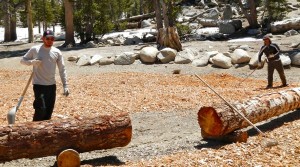
Crews are getting the Adventure Peak area ready for the summer season.

Crews are getting the Adventure Peak area ready for the summer season.

One of the rope courses will be 15 feet off the ground, the other 30. People are harnessed on each one. They will be designed in a manner that the course can be as challenging as the participant wants it to be. Various ages from varying physical abilities will be able to access the apparatuses.

The other rope course is Boulder Cove Challenge. This area is behind the sign at the base of the gondola stairs where the boulder field is. This will be a self-guided challenge course with vertical wood columns, ropes, bridges and platforms.

Pricing for everything remains an unknown. Package deals are likely.

Down the road

Vail Resorts has said it wants to spend $100 million in the next few years developing summer recreation at what were originally just ski resorts. Vail and Breckenridge are also getting upgrades this summer, as is Northstar.

With the U.S. Forest Service owning most of the land Heavenly sits on, it must sign off on new uses and infrastructure, and even tree felling. Tahoe Regional Planning Agency has a say in most things, too. But a portion of Heavenly is outside the Lake Tahoe Basin. That area is where mountain biking might one day be allowed. But to get there it would require going up the gondola.

For now, mountain biking at Heavenly is something that is just being talked about.

A plot of land to the left of the gondola stairs (when descending) is where a climbing wall five times the size of the current one is slated to go. Preliminary designs include 18 routes, with the base to mimic Sierra granite. It would be a permanent structure. That, too, requires USFS approval.

Expanded hiking is in the works – just not this year. One day a single-track trail to the top of East Peak is likely.

To date, the Forest Service has signed off on specific items that are in the Ski Area Recreational Opportunity Enhancement Act of 2011 and nothing more.

This summer

The gondola is running this long weekend for scenic excursions. It will operate seven days a week beginning June 14 from 10am-4pm, with seasonal closure in October.

The climbing wall, tubing hill and hiking will be open this summer as they have been in past years. And the Tamarack Lodge will be open with food service.

Heavenly bans all types of burning during the summer. This includes cigarette smoking and barbecuing.


Unknown life form found at Fallen Leaf Lake

By Ky Plaskon, Capitol Public Radio

A Lake Tahoe area scientist has found an unidentified life form in Fallen Leaf Lake.

Now agencies in the area are trying to figure out what it is.

UNR professor emeritus, John Kleppe, pilots a remotely operated vehicle, or “ROV,” into the frigid depths of the South Shore lake. Particles whiz by the ROV’s lights like stars.

Life form found at Fallen Leaf Lake. Photo/Capitol Public Radio

Life form found at Fallen Leaf Lake. Photo/Capitol Public Radio

“It is sort of amazing because when you think about it no humans have seen a lot of what we see. It is like walking on the moon,” said Kleppe.

He discovered a 3,000-year-old hidden forest still standing. He says it’s evidence of past mega droughts. As if that’s not strange enough, he has found something living in the forest.

“What we are seeing here is a thing, which is like a balloon of green jell and it will eventually look like a baggie and then like it is creating a gas in it and then float away,” said Kleppe.

He’s collected samples and sent them to scientists who disagree on what they might be. Last week he got confirmation that they are not jellyfish. Researchers don’t yet know whether they are plants or animals or a combination of both. Researchers are trying to figure out if they are an invasive species that should be wiped out. Kleppe doesn’t think so.

“They only found them in very clean lakes that were high altitude, maybe it is a natural indicator of clarity. Wouldn’t that be a concept. In other words, you wouldn’t want to get rid of them, you would want to observe them,” said Kleppe.

He had only found them in July in the ancient submerged forest until last year when one of the blobs actually attached itself to his pier.

“We should know what they are and so far nobody does so I am going to find out,” said Kleppe.


Future of Chateau up to S. Tahoe City Council

By Kathryn Reed

While the South Lake Tahoe Planning Commission on Thursday spent hours listening to testimony about the parceled down Chateau project, it will ultimately be up to the City Council on June 11 to decide what happens.

Much of the dialogue had nothing to do with what the commissioners were asked to take action on. History of what was to be a $410 million two hotel-convention center-retail project was hashed out, along with talk about how many locals have lost millions of dollars because of their misplaced trust in believing original developer Randy Lane would complete the project and not leverage their property.

City Manager Nancy Kerry, at the end of the meeting, said, “A lot of mistakes were made. A lot of people’s lives were harmed. We can’t undo the mistakes of the past. We agree it was a process problem.”

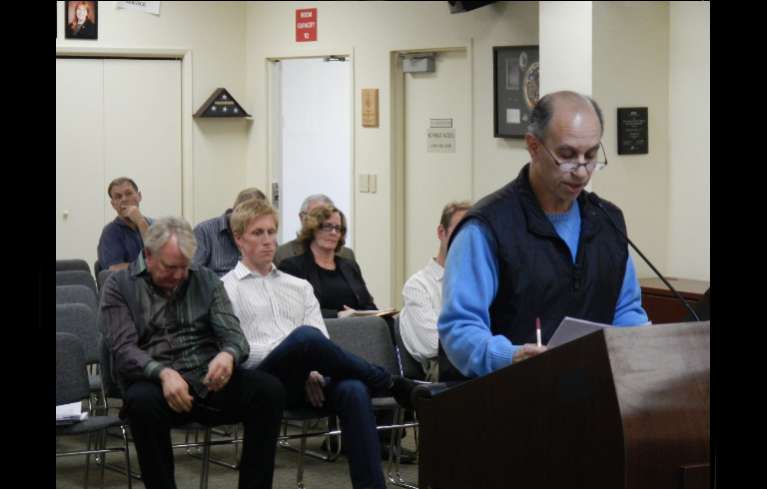
Harry Segal, an original property owner who is still in litigation, talks while current property Bill Owens (head down) listens. Photo/Kathryn Reed

Harry Segal, an original property owner who is still in litigation, talks while current property owner Bill Owens (head down) listens. Photo/Kathryn Reed

She said this time around staff is being more prudent and skeptical so those same mistakes are not repeated at the 11-plus acre site near Stateline.

This was evident when city engineer Sarah Hussong-Johnson and Deputy City Attorney Nira Feeley repeatedly said it is not up to the city to make a decision about the Caltrans right-of-way. An encroachment permit, per city regulations, is needed from Caltrans before the new building permit could be issued.

Lew Feldman, the attorney representing the developer, advocated the commission say that construction could begin without it. Staff said no way and that it is not up to the commission.

Kerry also said no authorization to go forward will be granted – assuming that is the course council takes – without proof the six parcels the applicant wants to build on this summer are consolidated into one map.

It was repeatedly brought up how the 29 parcels’ never becoming one led to many of the financial woes and problems that exist with property owners.

Rick Edwards, one of the original property owners, said, “Until we are made whole, this project should not go forward. I will do everything and anything to stop this project from going forward.”

He said a handful of locals are owed about $10 million.

Before the meeting he told Lake Tahoe News he felt bullied and threatened by Lane back when the developer was trying to shore up financing.

About 30 people attended the meeting, including all City Council members except JoAnn Connor. Seven people spoke, including a representative from City National Bank, which owns nine of the 29 parcels. The entrance off Cedar Avenue will affect a couple of those parcels. That person said so far they are not taking a position on the proposed project.

Three hours after all the talk the commission twice voted 3-1 to approve staff recommendations. Commissioner Tammy Wallace was the dissenter both times, but she didn’t explain her vote. Commissioner Jason Drew was absent.

The commissioners recommended to the council that:

• The original environmental documents be found valid;

• That 10,000 square feet of commercial floor area be designated to the project but that an additional 1,705 square feet of CFA that would come from a special projects pool be denied;

• The design review permit be granted;

• The special use permit for the increase in number of compact car parking spaces be granted.

The second vote involved abandonment of the right-of-way of a portion of Laurel Avenue and Poplar Street.

What is expected to be a two-year project is the building of retail along Highway 50 and a much larger McP’s restaurant at the corner of Stateline Avenue.


Red poppies — a symbol of patriotism

By Mike Crowley

Have you ever asked yourself while passing by some stores in May, why are these men and women in military dress handing out red poppies made of paper? Yes, it’s to commemorate and remember the loss of men and women who died in wartime for our freedom. But why a red poppy?

On May 3, 1915, during World War I, a young Canadian physician and lieutenant colonel named John McCrae was presiding over the funeral of a fellow soldier, killed in the western part of Belgium in a region known as Flanders Fields. McCrae composed a poem for the service titled, “In Flanders Fields.” He did not think it was a very good poem. He wrote it in 20 minutes, just before the service.

However, his fellow soldiers thought he had written an all-inspiring poem perfect for the battlefields in times of war. Over the next few months the poem became very popular throughout the free nations at war. On Dec. 8, 1915, the poem was first published by the British magazine Punch. It was so popular during World War I, it became the most quoted poem of its time. Here it is in full, from a 1919 published collection of McCrae’s works:

 “In Flanders Fields,” by John McCrae

 In Flanders fields the poppies blow

Between the crosses, row on row,

That mark our place; and in the sky

The larks, still bravely singing, fly

Scarce heard amid the guns below.


We are the Dead. Short days ago

We lived, felt dawn, saw sunset glow,

Loved and were loved, and now we lie

In Flanders fields.


Take up our quarrel with the foe:

To you from failing hands we throw

The torch; be yours to hold it high.

If ye break faith with us who die

We shall not sleep, though poppies grow

In Flanders fields.

According to writers, the reference to poppies is the red poppies that sprung up quickly from the ground around the graves of buried soldiers. These red poppies have been associated with battle since the Napoleonic Wars. A writer of the time noted that poppies grew in abundance over the graves of soldiers lost in battle. Research indicates that bombings of the landscape at Flanders fields increased the deposit of lime into the soil, which greatly increased the growth of poppies. After World War I ended in 1918, wearing a red poppy symbolized the remembrance of those who had died in war.

Wearing a Red Poppy today is the continuance of a great American tradition – remembering those who made the ultimate sacrifice so we could live in freedom. So now you know, why a red poppy.

Sources used: Article: In Flanders Fields, Wikipedia, the free encyclopedia; American Legion, Legion Auxiliary, and War Veterans.

Mike Crowley is a resident of South Lake Tahoe.


TRPA building allocation policy confounds board

By Kathryn Reed

INCLINE VILLAGE – It was obvious during a lengthy and at times heated discussion Wednesday that the Tahoe Regional Planning Agency Governing Board does not fully understand the building allocation policy. And they are the policymakers.

After last month’s meeting where staff enlightened the board about how 86 of a possible 130 allocations would be doled out, there was a bit of an outcry by local jurisdictions and contractors.

What was introduced at the May 22 meeting was a plan to distribute the remaining 44 allocations. Seventy-five percent will be given to South Lake Tahoe and the four counties at the lake (Douglas, Placer, Washoe and El Dorado) where building takes place. (Carson is also in the basin, but it’s all forest.) The remaining 25 percent, or 11 allocations, will be used for sensitive lot retirement and development right transfer programs that TRPA staff will be in charge of.

While this scenario was created in a month, associate planner Patrick Dobbs and other staff members told the board there isn’t enough time to alter plans for 2014 because there are more pressing matters to be dealt with. He didn’t say what those are.

At one point board member Steve Robinson said, “It’s complex. We are asking the public to jump through hoops when we don’t understand it. If we have to throw it out and start over, then do so.”

Member Nancy McDermid said, “This decreases the ability of local jurisdictions and their residents to have options.”

Elizabeth Carmel, who was at her first board meeting, thought the 25 percent figure could be increased because those allocations would better serve the environment.

The point of having allocations is to limit development in the basin. Before the updated Regional Plan was passed last year, 300 residences could be built each year. Executive Director Joanne Marchetta said it was in the 1980s that all 300 were last used.

In 1987, when the previous Regional Plan was adopted, 6,000 allocations were created for the more than 17,000 vacant parcels in the basin. The 2012 plan has 2,600 allocations available for about 4,700 vacant parcels. This comes to the 130 a year. (Government agencies own more parcels today than in 1987.)

Part of the allocation decision process is that jurisdictions get a set number based on a formula that deals with how well they met TRPA mandated environment improvement goals.

Board member Hal Cole has a huge issue with this criterion because he believes it punishes residents who want to build a house on land they own, but are not able to get an allocation based on things that are beyond their control. Instead of a city being punished for not meeting its environmental goals, individuals are hurt based on the jurisdiction not receiving its full allotment of allocations. Cole keeps saying this is unfair and wants staff to change it.

While economics are now supposed to be a factor in decision-making by the board, the lone contractor who spoke Wednesday believes the board is thwarting economic growth. John Adamski said his math shows the reduction of allocations from 300 to 130 year will impact the Lake Tahoe Basin by millions of dollars.

Jennifer Merchant with Placer County told the board that local jurisdictions have been talking since the April meeting, with the consensus being that all potential allocations should be distributed. She also enlightened the board that staff already takes 10 percent of the allotted allocations for the same pool where the newly created 25 percent of the leftovers will go for sensitive lot transfers. Staff never mentioned this in their spiel.

Merchant said a sensitive lot has not been retired in exchange for an allocation since 2005, so she questions the need to build up that supply.

McDermid said if the 11 allocations are not used this year, then a new system needs to be created.

By the end, the board said the way staff wants to give out the remaining 44 is fine. The Advisory Planning Commission will look at what is proposed and then the Governing Board will vote on it in June.

The board said flexibility needs to be incorporated into future policies

After the meeting, TRPA spokesman Jeff Cowen told Lake Tahoe News, “Too much development too fast slams the system and does not allow enough time for mitigation strategies like stormwater and transportation improvements to catch up and then keep up.”

But it was said by board members that development on vacant lots is good for the environment because it means people are putting in erosion control measures instead of allowing all of those dirt lots to send sediment into Lake Tahoe. It’s fine sediment that TRPA and others say is the biggest contributor to the decline of Lake Tahoe’s clarity.


Sue Huff — 1954-2013

Longtime South Lake Tahoe resident Deborah Sue Huff died May 21. She was 59.

She was born April 4, 1954.

Sue and Curt Huff were married in their hometown of Benton Harbor, Mich., on Nov. 16, 1974. For their honeymoon they packed up their Chevy van and moved west to California.

They spent six years in Long Beach, where their two children were born, Dustin Huff (1975) and Jennifer Huff-Derks (1980).

Sue Huff

Sue Huff

In fall 1980, they decided it was time for a new adventure and moved to South Lake Tahoe. The following year they experienced a true Tahoe winter. With obscene amounts of snowfall, the neighborhood banded together creating lasting friendships that eventually grew into their Tahoe family.

Sue worked for the Tahoe Daily Tribune for eight years. In that time more endearing friendships were made and their love for this community grew.

In 1988, Sue began to work for Lake Tahoe Community College. Sue worked at LTCC for 19 years before retiring in 2007. In that time she earned her associate of arts in Liberal Arts, a goal she worked hard for and was proud of achieving.

Sue was an avid outdoor enthusiast, spending summers exploring the Sierras, searching for hot springs and mountain lakes to camp by. Her love for singing songs with her kids as her husband played the guitar around the campfire has been carried on by her children.

When winter set in Sue enjoyed knitting while watching her family enjoy football or cross country skiing with friends.

In 2006, Sue was diagnosed with mesothelioma, a cancer caused by exposure to asbestos. She did not let cancer slow her down. During the last seven years Sue has witnessed her daughter, Jennifer, marry Todd Derks in 2008 and her son, Dustin, marry to Hillary Wilson in 2009. She was the first to hold her three beautiful grandchildren, Attigen Wilson Huff (2010), Paxson Hill Derks (2012) and Anaya Sue Huff (2012).

Sue’s love of travel took her to Alaska, Hawaii, Bahamas, Nicaragua and all over the United States.

Sue will forever be missed by all those who knew her. Her beautiful smile would light up a room. Sue leaves a strong legacy of love behind with her husband, children and grandchildren.

Please join us in a celebration of life on May 26 at 2pm at Lake Tahoe Golf Course in Meyers to honor an amazing woman, mother, and wife.

In lieu of flowers, please make a donation in Sue Huff’s name to: Mesothelioma Applied Research Foundation (MARF) or the I.A.T Cancer Clinic West, Atlantic Blvd., Freeport, Grand Bahamas.