Re-introduction of Lahontan cutthroat trout displacing rainbow trout at Fallen Leaf Lake

By Kathryn Reed

It may come down to Lahontan cutthroat trout vs. rainbow trout. And if the Lahontan trout don’t take hold and the rainbow is basically eradicated, there may be no fish left.

That is the worst-case scenario for Fallen Leaf Lake and Glen Alpine Creek. It’s also one the U.S. Fish & Wildlife Service is not talking about.

When directly asked Wednesday night at the El Dorado County Fish & Game Commission meeting, the feds didn’t have an answer to what happens if the Lahontan are not successfully reintroduced to this water body.

“Never did we hear until this year that the long-term goal would be to not have rainbow trout. We were assured of the cohabitation of rainbow, lake and Lahontan cutthroat trout,” Jane Mitchell, who lives most of the year at Fallen Leaf Lake, said during the May 29 meeting at the U.S. Forest Service office in South Lake Tahoe.

While a USFWS rep vehemently refused to say the goal is eradication of the rainbow trout, a fact sheet created by her agency asks and answers a question in such a manner that complete elimination is the presumed goal.

Why do all the rainbow trout have to be removed from Fallen Leaf Lake and Glen Alpine Creek?

• Rainbow trout are not native to the Tahoe basin

• LCT and rainbow trout are ecologically similar and will spawn together and hybridize

• Hybridization results in the loss of the native, lacustrine LCT delaying and creating additional challenges for the reintroduction and recovery program at Fallen Leaf Lake

• Rainbow trout currently occupy the same feeding level as LCT in Fallen Leaf Lake and their presence is slowing the growth rate of LCT

• Rainbows removed during the spawning season are donated to the food bank

• Data such as food habits, age, and reproductive maturity.

Source: USFWS

The U.S. Fish & Wildlife Service proposed the reintroduction of the native species to Fallen Leaf Lake in 1999, with the first stocking occurring in 2002. The plan from the start was to stock the lake with 30,000 to 50,000 Lahontan yearlings each year.

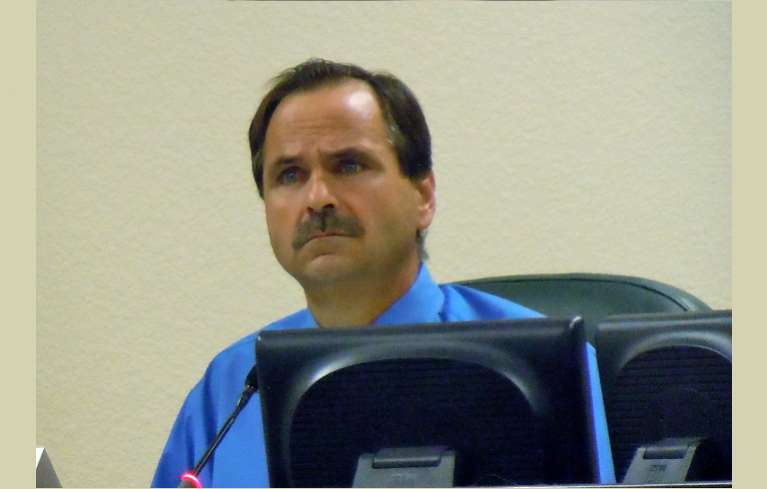
Jane Mitchell talks May 29 about how the information coming out now about the Lahontan cutthroat trout program has changed, while Victor Babbitt listens. Photo/Kathryn Reed

Jane Mitchell talks May 29 about how the information coming out about the Lahontan cutthroat trout program has changed, while Victor Babbitt listens. Photo/Kathryn Reed

This strain of the LCT is the Pilot Peak. It doesn’t exist outside the Tahoe area. And it’s on the federal threatened species list.

After researchers in 2012 documented spawning of LCT, they also realized this trout was breeding with rainbow. According to Lisa Heki with the USFWS, allowing crossbreeding to continue would eventually wipeout the LCT.

Two weirs have been installed in the creek in March – one near the mouth and one by the bridge at Stanford Camp – to separate the two species. The rainbows that are caught are killed to see what’s inside. The fillets are given to a food bank. So far this has only happened to a handful of rainbow.

The USFWS would not answer why the rainbow weren’t relocated to another section of Glen Alpine Creek or into Fallen Leaf Lake.

Tom Barnes, a local resident, said, “It sounds like you want to destroy the rainbow trout fishery. It sounds like there is no recovery plan if this doesn’t work.”

Even though the LCT have not had a presence in this area for about 100 years and the rainbow are well established, government policy is for the native to take precedence over the non-native.

Some in the room wanted the USFWS to set an end date for what everyone calls an experiment. An end date defining success or failure.

“I’m not going to go there at this point because we have not given them a fair opportunity,” Heki said.

Even though the project has been going on for a decade, Heki said much of the first five years was not effective and involved a lot of learning.

It surprised most people in the room that the area where the LCT spawn can still be fished. Working on getting a temporary ban or at a minimum placement of signs discouraging the practice was talked about.

Victor Babbitt, who is on the local fish and game commission and runs a fly fishing business in South Lake Tahoe, is most frustrated with the economics of the situation.

He believes the decimation of rainbow trout in the Fallen Leaf Lake area along with what has been done to other local fisheries has the potential to cripple the local fishing industry and cost the area millions in lost revenue. The revenue is from fishing expeditions, sales of fishing supplies and tourists just not coming to town.

The reintroduction program has cost taxpayers about $2.5 million to date.

No action was taken May 29, but it was agreed better communication between the USFWS and the community is needed.


Berkshire Hathaway unit buys NV Energy

By Kristin Jones, Wall Street Journal

A unit of Berkshire Hathaway Inc. has agreed to buy NV Energy Inc. in a deal that values the Nevada-based utilities company at $5.59 billion.

The deal has an enterprise value of about $10 billion, the companies said. Representatives from the companies weren’t immediately available to comment on what is included in the enterprise value.

MidAmerican Energy Holdings Co., the Berkshire Hathaway subsidiary, has agreed to acquire the energy company at $23.75 a share, a premium of around 23 percent to NV Energy’s Wednesday closing price.

The transaction, which is subject to state and federal approval and other conditions, is expected to close in the first quarter of 2014.

“Part of what attracted MidAmerican to NV Energy is its solid commitment to the state of Nevada” and its performance as a high-quality energy company, said MidAmerican Chief Executive Greg Abel, adding that the company is impressed with the strategic direction of NV Energy Chief Executive Michael Yackira.

Abel said MidAmerican brings stability, expertise and competitively priced capital to NV Energy.

NV Energy will operate under its current name as a separate corporate subsidiary of MidAmerican, and it will continue to be based in Las Vegas.

NV Energy supplies power to residents on the Nevada side of the Lake Tahoe Basin.

Upon completion of the deal, MidAmerican Energy Holdings will have assets of around $66 billion and its regulated utilities will serve 8.4 million customers.

NV Energy’s Sierra Pacific and Nevada Power units have cut expenses, particularly fuel purchases, in an effort to counterbalance lower revenue recently. The company’s first-quarter earnings rose 76% as it sharply reduced expenses.

NV Energy shares rose 23 percent after hours to $23.75.


Vail Resorts enters the Utah ski market

The Canyons is first Utah resort for Vail Resorts to operate.

The Canyons is the first Utah resort Vail Resorts will operate.

By Kathryn Reed

While Vail Resorts has not had a presence in the Utah ski market until today, the president of the company’s mountain division used to run The Canyons.

Blaise Carrig, who was also the top guy at Heavenly Mountain Resort, was at the Park City resort when some of the Olympic events were staged at the Utah mountain in 2002.

Now The Canyons is part of the Colorado-based company’s portfolio. The 4,000-acre resort will be part of the Epic Pass for the 2013-14 season. The management team has not been named.

This brings the number of Vail Resorts ski areas to 10, which include: Heavenly, Northstar and Kirkwood in California; Vail, Breckenridge, Beaver Creek and Keystone in Colorado; Afton Alps in Minnesota; and Mt. Brighton in Michigan.

In the deal announced today, Vail entered a 50-year lease agreement with Talisker, a Toronto-based privately held real estate firm, to operate the ski area. There is an option for six 50-year renewals.

Vail will pay Talisker a $25 million annual base payment, which will grow with the consumer price index, plus 42 percent of earnings over $35 million. Vail expects earnings of about $15 million in fiscal year 2014, with that increasing to $25 million in 2017.

Vail Resorts CEO Rob Katz said during a May 29 conference call that the structure is similar to what it entered into at Northstar in Truckee in 2010.

He anticipates being able to tap into the Los Angeles and Salt Lake City markets, which have historically not been big players for Vail Resorts. Katz called Los Angeles “the most underserved market.”

“We do feel The Canyons is on a higher growth projector than other resorts,” Katz said.

The Canyons has about 450,000 skier visits a season, which Katz described as being “traditionally hard to make a profit.” Vail Resorts anticipates through its pass programs and centralizing some operations, that The Canyons’ skiers and bottom line will increase.

Talisker retains the rights to the 4 million-square-feet of developable real estate.

“The Canyons has more real estate opportunities than any other resort in the country,” Katz said. “Because of the recession it has not monetized in the six or seven years.”

Katz also added that this arrangement is similar to Northstar in Vail not having real estate rights, but expecting to benefit from it in terms of people accessing the mountain.

Another caveat to the deal in Utah is Vail Resorts has the rights to the potential lease of the land on which Park City Mountain Resort sits. That ski resort is owned by Powdr Corp., the same company that owns Boreal and Soda Springs on Interstate 80, Copper Mountain in Colorado, Mt. Bachelor in Oregon and other resorts.

Talisker and Powdr Corp. are involved in litigation regarding the 2011 lease renewal. That must be resolved before Vail Resorts would be more of a player with that acreage. But in the meantime, Vail is assuming responsibility of Talisker’s side of the lawsuit.

Vail Resorts first looked at The Canyons six years ago, but the Park City resort land was not part of the equation then.

Park City Ski Resort sits next to The Canyons, which could open the opportunity to linking the resorts.


State budget not good news for LTUSD

By Kathryn Reed

While much of the news that comes out of Sacramento is school districts will fare better in the next fiscal year, this is not the message Lake Tahoe Unified School District Chief Financial Officer Deb Yates presented Tuesday night to the board of education.

Yes, there is more money. In large part the additional $4.5 billion comes from November’s voter-approved Proposition 30. But what changes for school districts is how the state will distribute the money. That is why LTUSD could be hurt.

Gone in the governor’s budget is the $1.4 million the district has flexibility with for categorical programs. Those dollars will be under the supplemental and concentration grants categories.

“That’s a real problem for our district,” Yates told the board May 28.

After the meeting, Yates told Lake Tahoe News when the initial budget came out in January using the Local Control Funding Formula (LCFF); it looked like the district would benefit from the new spending mechanism.

She said now it appears districts like LTUSD that have a high percentage of English language learners, foster youth and those receiving a free or reduced lunch will be hurt. This is because of the formula for how the money can be spent, not that the overall pot is necessarily different between districts. Most education dollars come with strings attached, thus giving individual districts little discretion.

“Under LCFF we are not whole and we can’t spend it the same way,” Yates said.

The LCFF also proposes reimbursing districts $723 per student for K-3 class-size reduction. Right now LTUSD receives $1,000.

The state Senate has proposed implementing LCFF in 2014-15.

What is on the table is the funding levels would be restored to 2007-08 allocations. This means districts are still owed millions of promised funds by Sacramento lawmakers.

And with projections for revenue growth expected to be less in 2013-14, the financial picture is not getting brighter.

It’s possible some of this year’s “surplus” could be a one-time payment to help pay back what is owed districts instead of being sustained dollars.

Gov. Jerry Brown and the Legislature have until the end of June to figure out a compromise and pass a budget that takes effect July 1. The California Teachers Association is backing the governor’s plan.


Study: Conventions, entertainment hurt gaming revenue

By Richard N. Velotta, Las Vegas Sun

There’s no significant relationship between convention attendance and gaming revenue in Las Vegas, according to research by students at UNLV.

But conventions drive occupancy rates higher — and higher occupancy rates generally mean higher room rates and higher gaming revenue, UNLV student researcher Kristin Malek said in a session on casino performance research.

Casino industry leaders, theorists and academicians today began debating issues surrounding a business that thrives on people’s willingness to take risks, with wide-ranging presentations and panels on the social implications of the industry that has made Las Vegas famous.

The 15th International Conference on Gambling & Risk Taking begins four days of academic presentations, addresses and panel discussions on the proliferation of the gaming industry, how the industry is viewed in different countries by different cultures and the challenges of problem gambling.

A sold-out concert like Lady Antebellum doesn't mean concert-goers spend money at the casino, too. Photo/LTN file

A sold-out concert like Lady Antebellum doesn’t mean concert-goers spend money at the casino, too. Photo/LTN file

Malek said three hypotheses have evolved on the impact of conventions on gaming — they help drive casino play, they’re detrimental to casino play and that they have no positive or negative effect.

She said further research is needed on the impact of whether midweek or weekend convention dates affect casino revenue and whether different types of convention attendees play more aggressively than others.

Another UNLV study reviewed the contribution of non-gaming amenities to casino performance.

Professor Sarah Tanford presented student Elena Shampaner-Ghiassi’s research and concluded that food and beverage and retail amenities tend to drive higher gaming revenue, while hotel rooms and golf don’t.

Entertainment amenities tend to hurt gaming revenue, the research found, but entertainment acts can generate their own revenue.

In a case study involving an unnamed Las Vegas casino studied from Jan. 1 to Dec. 31, 2011, research found, an entertainment event needed to make $3 million in profit to compensate for the loss of revenue at slot machines and table games. The research noted that entertainment could also drive additional food and beverage profits.

The International Conference on Gambling & Risk Taking was first developed by Bill Eadington, the former director of UNR’s Institute for the Study of Gambling and Commercial Gaming. Eadington died earlier this year, and leaders at UNLV’s International Gaming Institute agreed to take the reins.

More than 450 people from around the world are attending the conference at Caesars Palace.

The conference is being attended by mathematicians, anthropologists, psychologists, political scientists, sociologists, technologists and regulators.

It’s the 15th edition of the conference held every three years. Las Vegas has hosted the event five times previously.

The conference began with a stroke of bad luck — the opening keynote speaker from South Africa broke his ankle and canceled his appearance.

David Schwartz, director of UNLV’s Center for Gaming Research, pinch-hit for speaker Peter Collins and contrasted the gaming industry today with the year of the first conference in 1974.

Nevada had just approved two corporate gaming acts and corporations were taking over the management of casinos from mobs.

Since then, commercial gaming has proliferated on the Strip with lotteries, riverboats, racinos and tribal casinos nationwide.

The two biggest changes in the industry have been the explosion of two new markets in Asia — Macau, which had $38 billion in revenue last year, and Singapore — and the United States playing catch-up to Europe in online gambling in the midst of concerns about that industry increasing problem gambling.


DA files charges against El Dorado County supervisor

By Bill Lindelof, Sacramento Bee

El Dorado County Supervisor Ray Nutting has been booked into jail on an arrest warrant alleging perjury and other charges.

A press release from the El Dorado County District Attorney’s office today said Nutting was arrested Tuesday on two counts of filing false documents, perjury relating to failure to disclose income and having a financial interest in a county contract and failing to recuse himself from voting.

Nutting is scheduled to be arraigned June 10 in El Dorado County Superior Court in Placerville.

Nutting has been under fire after reports surfaced that he took state money for clearing brush on his 340-acre property.

El Dorado County Supervisor Ray Nutting has been arrested. Photo/LTN file

El Dorado County Supervisor Ray Nutting has been arrested. Photo/LTN file

Several local leaders have spoken out against Nutting, whom they accuse of subverting state funds for personal use.

At issue is whether Nutting legitimately obtained taxpayer dollars for fire prevention work he did on his own Happy Valley Road property in Somerset.

Nutting has denied any wrongdoing.

The supervisor applied for the funds through the California Forest Improvement Program, which is administered by the state’s Department of Forestry and Fire Protection through local conservation agencies. Under the program, landowners with plots between 20 and 5,000 acres can seek reimbursement – usually 75 percent – for the cost of fire prevention work, such as brush clearing.

The invoices Nutting submitted show that the state paid a total of $70,000 for two projects in 2003 and 2009. A third proposal is pending and will cost just under $50,000.

CalFire spokesman Daniel Berlant noted that the program allows landowners to get paid for doing work themselves on their own property.

One controversy stems from the way Nutting applied for reimbursements. A May 2009 invoice appears to have been written by the supervisor himself, according to public records obtained by the Bee.

El Dorado County Auditor-Controller Joe Harn said he believes the invoice is invalid and violates the California False Claims Act.

As a part of the fallout from the controversy, the El Dorado County District Attorney’s Office launched its own investigation into the matter.

The state has reimbursed property owners for fire prevention work since the late 1970s, Berlant said.

Since 1999, the state has distributed about 1,000 grants for fire prevention work to various individuals. The funding source varies year to year, but most recently came from Proposition 40, a measure passed by voters in 2002 that provides local grants to protect California’s water and air.


Douglas County’s push to lure businesses is working

Douglas County is reaping the benefits of a marketing campaign the Board of Commissioners approved nearly two years ago.

In June 2011, commissioners approved a contract with Northern Nevada Development Authority to support recruitment of energy, science and advanced engineering businesses. The campaign is structured to target Sacramento, Stockton, San Francisco, Modesto, San Jose, Merced, Santa Cruz, Monterey and Oakland.

New businesses added to the region include Franklin Armory specializing in producing local firearms; Cristek Interconnects — an aerospace and defense industry manufacturer; Global Aqua Solutions — a manufacturer of proprietary organic, biodegradable, non-toxic chemicals; and Eastbiz — a mail forwarding and small packaging shipping company.

General Electric has an office in Douglas County. Photo/NNDA

General Electric has an office in Douglas County. Photo/NNDA

Since the contract was approved in 2011 NNDA’s efforts from the campaign have brought 10 companies to Douglas County and three expansions. This translates to 250 jobs, with more jobs pending in the area.

Douglas County staff has also assisted in working with the newly relocated businesses and the public to provide adequate job placement.

“We want to continue to grow the number of jobs and continue to diversify the types of businesses in Douglas County, growing our overall wealth to the community,” said Lisa Granahan, economic vitality manager for Douglas County, said in a statement.

Stockton was the initial test market. The campaign recently dispersed Douglas County specific marketing materials including mailers, email, digital ads and a national press release announcing the launch of the . The campaign includes material specific to Douglas County.

The website helps companies make a case for the transition and has brought national media attention to the county and Nevada as a whole.

— Lake Tahoe News staff report


STHS sports med center rivals college facility

By Kathryn Reed

High school or physical therapist’s office? The latter is what it looks like, the former is what it is.

The newest building at South Tahoe High School is more like a medical facility than a traditional high school classroom. The professional nature of all of the recent construction at the school makes it look like a college campus, with equipment and programs that rival and surpass some businesses.

While all the equipment isn’t in at the Sports Medicine building, it will be by the time the 2013-14 school year starts in August. (The school board is getting a tour of the site this afternoon before its regular meeting at 6pm.)

STHS sports med students will have a therapy pool as part of their learning experience. Photos/Kathryn Reed

STHS sports med students will have a therapy pool as part of their learning experience. Photos/Kathryn Reed

When complete, this will wrap up the multi-year construction project at the school. This campus received the bulk of the $64.5 million facilities bond that voters passed a few years ago and that was subsequently matched with more than $30 million in state grant funds.

While students who go through this career pathway could take enough classes to test to be a physical trainer at age 18, the slate of coursework is not solely for someone pursuing a career or college track related to sports medicine.

STHS Principal Ivone Larson says all of the specialty programs have something for everyone to try so they can get exposure to a variety of disciplines beyond math, English, science and social studies. And, yet, the work ties into those basic disciplines.

With California transitioning to Common Core framework, it involves more critical thinking.

All skill levels are expected to learn something in this facility. For instance, special education students can be taught how to do laundry onsite.

Earlier this year the school board approved hiring someone who will essentially be the director of the program. That person is expected to be hired at tonight’s meeting.

Teachers already at the school can teach most of the classes. But experts in disciplines like massage therapy will be brought in when appropriate.

“There is a particular need for this up here,” Larson told Lake Tahoe News while touring the facility this month. “If you are going into the health field, there is relevance.”

Beyond STHS

In designing what the nearly $8 million facility and program would be like, the school and district reached out to professionals in the community and beyond.

Sports medicine will not be taught in a silo at South Tahoe High.

Sports med at STHS is a community endeavor.

Larson, Chris Proctor (director of Tahoe Center for Orthopedics) and Tim Johnson (Lake Tahoe Community College instructor) toured Stanford University’s sports medicine facility to get ideas for what STHS could have.

Proctor told Lake Tahoe News it is difficult finding qualified people for entry-level jobs, so having training in town is attractive to him and his associates with Barton Health.

Johnson is working on developing an associate of arts degree at LTCC in sports medicine-kinesiology.

“The program will augment the physical therapy aide and personal trainer short-term certificates currently in place at LTCC and will provide a pathway for high school students to continue their education and possibly continue on to a bachelor or master’s degree program,” Virginia Boyar, LTCC dean of Career and Technical Education, told Lake Tahoe News.

It’s rare for a community college to have a physical therapy program.

Proctor said, “It could be a medical clinic like what we saw at Stanford.” This could be where all high school students and staff get their medical care in the future.

Larson, Boyar and Proctor all envision the facility being used when STHS is not in session. Who would use it, well, that remains to be seen. It could be conferences, training or something that no one has yet imagined.

Proctor, who has coached basketball at the high school, said, “To handle injuries from diagnostics to treatment is a challenge for all high schools.” He said he would have loved to have sent a player through the double doors for pre- or post-competition assessment.

“There will be equipment in there that is collegiate level,” Proctor said.

High-caliber facilities

The therapy pool has cameras in the water to study body mechanics.

There will be two whirlpools – one cold, one hot.

The facility is designed as a teaching medical facility.

The facility is designed as a teaching medical facility.

An area that looks like most any medical office is in many ways just that – an office. But it doubles as a teaching facility. Students will learn medical coding. The dental teacher already teaches a medical office class.

Three therapy rooms make one forget they are at a school.

Barton and Emerald Bay Physical Therapy personnel gave input as to what the hand therapy room should be like.

A large room could be to be divided into multiple classrooms.

A bank of computers still needs to be installed.

The building connects to the gym and weight room that already existed.

“This replicates a college environment,” Larson said of the entire transformation of the school site. Students are changing classes in an orderly manner, seldom are they late because they want to be part of what is going on inside, they aren’t ruining what’s there because they are proud of their school.

“We have unique education opportunities you won’t find anywhere else,” Larson said.

—-

Note:

There will be a grand opening of the Sports Medicine building on Aug. 23 at 10am. This is open to the public. It will also be a time to tour the other facilities at South Tahoe High School.


Federal seizures anger right and left

By Stewart Powell, Hearst Newspapers

A nationwide network of agents and attorneys is working around the clock to seize cash, stocks, real estate, vehicles and other valuables from people and businesses.

In 2012, their average daily take was almost $13 million – for a total of more than $4.7 billion.

The vast money-harvesting machine they work for? The federal government.

Federal asset forfeiture is both an effective crime-fighting tool and a civil-liberties nightmare, a Hearst Newspapers investigation has found. It has retrieved millions of dollars stolen from victims of complex financial crimes. But it has also victimized innocent citizens who have lost their property without criminal charges or even a courtroom hearing.

Fifteen federal agencies have the power to seize assets. Over the past dozen years, those agencies have taken more than $20 billion in cash, securities and other property from scruffy drug dealers, pinstriped Wall Street tycoons – and ordinary Americans who have not been accused of a crime, much less convicted.

“The government is going seizure crazy,” said attorney Philip Hilder, former head of the Houston field office of the Justice Department’s organized crime strike force. “Law enforcement budgets are shrinking. … The government is counting on budgets being supplemented by these seizures.”

In 2001, seizures totaled $640 million. In the next decade, the total increased by 641 percent.

Once used mainly against mobsters and drug dealers, forfeiture is now employed in many contexts. About a dozen recent mega-cases – each taking $100 million or more – involved assets forfeited by cybercrime rings, offshore gambling scams, and banking and corporate miscreants.

The expansion of forfeiture has brought criticism from civil-rights advocates on the left and libertarian, anti-big-government activists on the right. But there is little impetus to change the system because of the enormous cash flow it generates for seizing agencies.

Federal agents often pursue forfeiture through sealed documents – or avoid the court system entirely by seizing assets without charging the owners with any crime, a procedure called administrative forfeiture. The result: thousands of cases each year where the feds take cash, guns or other items from U.S. citizens without fact-finding by a jury or oversight by a judge.

When seizure cases do reach the courts, they have often been criticized by judges as examples of government intrusion and overreaching.

Nowhere has the federal government’s formidable asset-seizure operation been on more prominent display than across California, where four U.S. attorneys appointed by President Obama are threatening landlords who lease space to medical marijuana dispensaries. California is among the 18 states and the District of Columbia that have legalized medical marijuana; the federal government has considered it a controlled substance since 1970.

The unprecedented campaign has closed hundreds of dispensaries across the state, leaving about 1,000 still in operation, according to advocacy organizations.

One of the largest targeted is Oakland’s Harborside Health Center, a large operation that provides more than $20 million worth of products a year to almost 108,000 patients. The case is heading toward trial after U.S. Chief Magistrate Judge Maria-Elena James rejected an attempt by the city of Oakland to protect the community enterprise from the Justice Department onslaught.

The practice has ensnared more than dispensary landlords.

Russ and Pat Caswell have owned their mom-and-pop motel in Tewksbury, Mass., for three decades. They live next door, and the motel with $56-a-night rooms is both their livelihood and their life savings. The Caswells own it outright, with no mortgage.

That made it all the more attractive to the federal government.

The couple were shocked when the feds filed papers to seize the motel in 2009, based on an assertion that frequent drug activity occurred there.

Veteran Drug Enforcement Administration agent Vincent Kelly testified that his job as the asset-forfeiture specialist in the DEA’s Boston office was to locate properties allegedly being used for criminal purposes that carried little or no debt, making them lucrative forfeiture targets. So he singled out the Caswells’ motel.

After years of legal fighting, U.S. Magistrate Judge Judith Gail Dein heard testimony that only 15 low-level drug cases had been recorded at the motel over a seven-year period, during which the Caswells logged 196,000 room rentals.

The motel, valued at between $1.5 million and $1.8 million, would have been a bonanza for the Tewksbury Police Department, which stood to gain 80 percent of the proceeds under its arrangement with the DEA.

In denying the forfeiture this year, Dein rebuked federal prosecutors. “Having failed to notify Mr. Caswell that he had a significant problem, and having failed to take any steps to advise him on what to do, the government’s resolution of the crime problem should not be to simply take his property,” she concluded.

Forfeitures provide agencies a self-sustaining source of money for a variety of law-enforcement expenses, including running the forfeiture programs themselves, without relying on Congress to appropriate taxpayers’ money.

“Asset forfeiture can be a valuable tool, but it can also be abused,” said Sen. Charles Grassley of Iowa, the ranking Republican on the Senate Judiciary Committee. “It seems like there are places where we can take a hard look to improve the program instead of simply providing a slush fund for the federal government.”

Some seized assets, such as vehicles and electronic equipment, are directly transferred to law-enforcement use. Others are sold, the proceeds often shared among federal agencies and local or regional law-enforcement entities.

A portion of the take has been handed off to victims of the crimes, including families swindled out of savings by financial wheeler-dealers such as Allen Stanford, serving a 110-year prison sentence for running a Ponzi scheme, and Bernard Madoff, serving a 150-year sentence for bilking investors out of at least $18 billion.

Justice Department records show it has distributed an average of $300 million a year to victims over the last decade – and $1.5 billion to more than 400,000 victims over the past 16 months, much of it seized from Wall Street scammers. Among the latest beneficiaries: 8,727 victims of the Adelphia Communications fraud who divvied up $729 million and 128,200 victims of the Enron securities fraud, who received shares of $65 million.

Little scrutiny of seizures

Attorney General Eric Holder, whose department has booked the largest increase in seized funds, said federal forfeiture “has been transformed from a collection of centuries-old laws designed to fight pirates, enforce customs laws and fight illegal contraband into an array of modern law-enforcement tools designed to combat 21st century criminals both at home and abroad.”

The Justice Department released limited data about the past three years of asset-forfeiture cases in response to a public records request by Hearst Newspapers. The department declined to link the data to court cases with the docket numbers needed to track individual cases. The Treasury Department refused to release any data for the five law enforcement agencies that report to the Treasury Forfeiture Fund. Follow-up requests to the individual agencies under Treasury resulted in only one – the Secret Service – releasing data.

The federal agencies also often actively undermine tough state laws designed to prevent agencies from policing for profits.

Eight states bar the use of forfeiture proceeds by law-enforcement agencies. In the 42 other states, at least 50 percent of forfeiture proceeds can go to the seizing agencies – including 26 states that allow 100 percent of the proceeds to go to law enforcement. California allows 65 percent.

But even the states with tough laws can do nothing when the federal government decides to award proceeds from federal cases – often as much as 80 percent of the take – directly to local agencies. Therefore, agencies in those states frequently seek out the feds’ assistance in forfeiture cases.

That happened to Steven Skinner and Jonathan Breasher, a father and son, who were headed to Las Vegas in September 2010 when they were stopped by a New Mexico state trooper for driving 5 mph over the limit. The trooper issued a written warning for speeding, got permission to search their rental car, and found $16,925 in cash in their luggage. He notified the Drug Enforcement Administration and other federal agencies, then released the pair.

When the father and son got to Albuquerque about 230 miles later, local police pulled them over, saying they had made an improper lane change. The police officer summoned an officer from U.S. Customs and Border Protection, who seized the cash and the car. Neither Skinner nor Breasher was charged with a crime.

Turning the case over to the federal officers bypassed New Mexico’s stringent restrictions on policing for profit, which require seized assets to be deposited in the state’s general fund rather than in the coffers of the seizing agency.

The New Mexico chapter of the American Civil Liberties Union intervened to win back the seized cash after a two-year battle.

Despite controversy over aspects of the federal forfeiture machinery, there is little push within the federal government to revamp the process.

Justice and Treasury department forfeiture officials have said only that they are willing to “study” Government Accountability Office recommendations to streamline operations, without committing to consolidation that the agency first sought in 1990.

“The forfeiture system is running itself,” said Brenda Grantland, a prominent forfeiture defense attorney in Mill Valley. “I don’t think it matters who is president. Prosecutors have so much autonomy, they’re free to seize whatever they want.”




Tahoe travel company connects people to the world

By Jessie Marchesseau

Marching with penguins in Antarctica, swimming with sea turtles in the Galapagos, standing atop an active volcano in the South Pacific. These are the things dreams are made of.

Taking that into account, one could say Tahoe City-based AdventureSmith Explorations specializes in making dreams come true.

Todd Smith founded the company in 2003 to introduce people to a relatively new kind of travel. Having worked on a small cruise ship in Alaska, been a wilderness guide and worked in eco-tourism, Smith had a passion for adventure travel. AdventureSmith was his way of helping others discover that passion, too.

SmithTravel is about providing unique experiences for tourists. Photos/SmithTravel

AdventureSmith is about providing unique experiences for travelers. Photos/AdventureSmith

On the verge of its 10th anniversary, the adventure travel company served more than a thousand clients last year, with more than $3.5 million in total sales. That is a pretty big jump from just 56 bookings the first year.

AdventureSmith does not actually operate any tours or cruises. Instead, it acts as more of a wholesaler, booking small ship cruises and land tours with a variety of companies, offering expert advice and travel planning, and taking care of all the necessary paperwork along the way.

They will not book just any cruise, though. This is not a traditional travel agency where you call and ask for a cruise to the Bahamas. The company works almost exclusively with small-ship cruises, meaning generally between eight and 150 people per boat. Many of their destinations are not your usual cruise routes. Think Belize, Antarctica and Easter Island. Even then, trips are only added to the lineup upon personal approval from Smith or one of his staff.

“We won’t sell anything until we have experienced it firsthand,” he said. “Not every trip makes the grade.”

Small ship cruising is decidedly different from the major cruise lines that can fit upward of 3,500 passengers on their enormous oceanliners. The small ships AdventureSmith specializes in can go to more remote places compared to big ships and are almost always equipped with kayaks and canoes for guests, and a naturalist onboard to offer knowledge and guidance about the surrounding area.

“The quality of the education of these trips is the equivalent of going to school for a week,” Parky May said.

May and his wife have done numerous trips through AdventureSmith, including Alaska, Mexico and the Galapagos. He said they do all their traveling these days exclusively as small ship cruises. Like many of the company’s clients, the Mays possess a certain curiosity and desire to learn about the places they are visiting.

In its first decade, AdventureSmith has received recognition for its expertise in expedition cruising and wilderness travel from National Geographic Traveler, Outside magazine, the Outdoor Channel and more. Smith has even been featured on television shows including “Lonely Planet” and “Jack Hanna’s Animal Adventures”.

However, the national recognition is not what keeps clients coming back again and again.

A small cruise ship plies the waters of Alaska

A small cruise ship plies the waters of Alaska

“We could do it ourselves, and have in the past, but it’s nice to know they will take care of every little thing,” said Mel Weiss who, along with his wife, Paula, has booked at least half a dozen trips through AdventureSmith.

Weiss said he likes the fact that Smith and his staff have been to the destinations before and done this kind of traveling themselves. It adds a layer of trust for him. The couple recently returned from an expedition in Vietnam and Cambodia, but Mel Weiss, an anthropologist and world-traveler, declared Antarctica his all-time favorite: “It’ll blow your mind.”

In addition to the uniqueness of their travel offerings, AdventureSmith does something else a little out of the ordinary for a travel company. They call it “carbon free cruising.” Based on the gas, oil, mileage and a host of other factors, AdventureSmith calculates the amount of carbon emitted for each passenger on each trip they book. This is converted to a dollar figure which is then invested in climate-friendly projects around the world. The company is not required to do this, nor do they tack on an extra cost to their clients. Smith said it’s “just something we believe in.”

Though none of the company’s tours includes Lake Tahoe, and few of their clients are local, Smith has no regrets on choosing Tahoe City for the AdventureSmith home base.

“Me and my staff are very lucky to do what we do and go all these places around the world, but there’s nothing quite like coming home to Tahoe,” Smith said, “… it puts a smile on your face.”