S. Tahoe storm chaser dies in Oklahoma

By Kathryn Reed

Storm chaser Carl Young of South Lake Tahoe is one of several people who died Friday in an Oklahoma tornado. He was 45.

Young worked on Discovery Channel’s defunct “Storm Chasers” series.

“We are deeply saddened by the loss of Tim Samaras (55) his son Paul (24) and their colleague Carl Young,” Discovery Channel said in a statement. “Our thoughts and prayers go out to their families.”

The network is dedicating tonight’s documentary premiere of “Mile Wide Tornado: Oklahoma Disaster” to the three men.

Carl Young of South Lake Tahoe died May 31 chasing a tornado in Oklahoma.

Carl Young of South Lake Tahoe died May 31 chasing a tornado in Oklahoma.

The three died while tracking the EF3 tornado that ripped through El Reno, Okla., on May 31. Six other people died in that tornado, too.

This is Young’s bio on the Discovery Channel website: “Although Carl is a native Californian, he was called east in 2000 after a spell working on Hollywood film crews. He decided to take off on a two month storm chasing adventure in the Great Plains hoping to catch a glimpse of a few tornadoes but ending up with over a dozen twister encounters. Experiencing the raw force of nature in Nebraska was unlike any pyrotechnic display on a high-tech Hollywood set! This inspiration led Carl to the study of tornado dynamics and ultimately a master’s degree in atmospheric science from the University of Nevada, Reno. While attending a meteorological conference, Carl met Tim Samaras who encouraged him to collect meteorological data from inside tornadoes as the principal focus of his thesis research. Every spring since 2003, Carl has headed out with Tim, and together the team has tracked down over 125 tornadoes.

“Carl’s finest moment came on June 11, 2004, near Storm Lake, Iowa. Working with Tim, they defied the odds and deployed their probes right in the path of a tornado. The six-camera video probe captured amazing footage from multiple angles while the sensor probe recorded data that revealed just how fast wind speeds are close to the ground. Since then Carl remains eternally optimistic that they can repeat the same feat despite the huge challenges for successful deployments.”

Young taught geology on occasion at Lake Tahoe Community College. He was one of the school’s distinguished alumni. He earned a bachelor’s in economics at Cal and a master’s in atmospheric science at UNR.

He worked for a while at the League to Save Lake Tahoe on the program team.

“Carl was a very good analyst and passionate about Lake Tahoe and doing the right thing to protect the environment. He had lot of integrity and concerns for things being done the right way,” John Friedrich told Lake Tahoe News. Friedrich hired Young.

Young took over as program director at the League when Friedrich left.

“Carl did lot of good for Lake Tahoe and the world. He wanted to make the world a better place and gave a lot of himself to make things better,” Friedrich said.


It’s all about the water along the Rubicon

By Kathryn Reed

EMERALD BAY STATE PARK – It says something about a trail when the camera still comes out and the oohs and ahhs are endless even after being on it so many times.

That’s the thing about the Rubicon Trail; it never gets old. It connects Emerald Bay State Park to D.L. Bliss State Park.

It’s all about the scenery on what turned out to be a 7.5-mile one-way trek. It’s a mile down from the parking lot at Vikingsholm to the trailhead, then 4.5 miles along the water’s edge. The worst part of the hike was the end. It was an unexpected 2-mile climb from the beach to the Jeep. D.L. Bliss State Park does not open until June 15 (because of budget cutbacks), so right now it’s not possible to park closer.

Still, Sue, Brenda and I would do it all again, just like we have before.

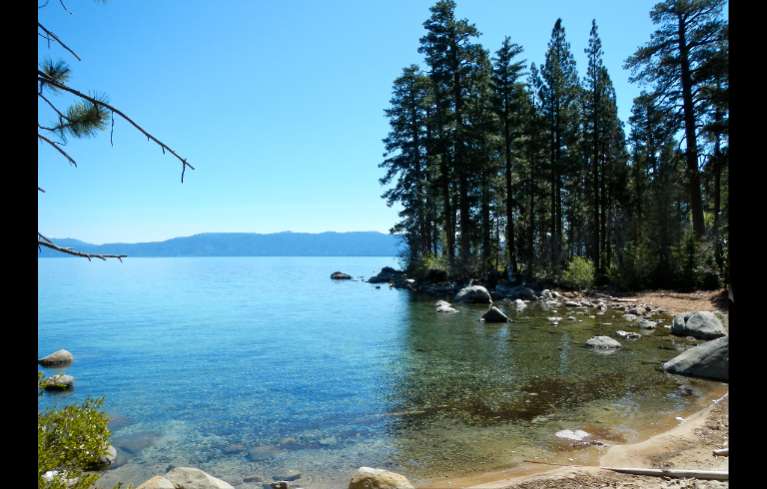
We are still in awe of the endless hues of blue and the depths to which we can see the floor of the lake.

Plenty of photo opportunities along the Rubicon Trail. Photos/Kathryn Reed

Plenty of photo opportunities along the Rubicon Trail. Photos/Kathryn Reed

It’s calm on this particular day. The lake looks inviting, but we don’t even want to dip our toes because we know how cold it is.

A motorboat goes along the shore. Kayakers are in Emerald Bay.

A treat was discovering what we think was an osprey’s nest. Brenda pulled out her binoculars, which showed us there was movement in the nest perched on top of a dead tree.

Only a few yards down the trail and overhead we see an osprey. We guessed she was hunting for her little one.

The odd-looking snow plant is out. Otherwise, not much colorful flora. This hike really is about the water.

It’s a great early season trek, especially in heavy snow years, because it is at lake level. Plus, there are no crowds. On a weekend day in mid-May we saw a handful of other people.

And no one is in the boat-in campground.

It’s not a difficult hike, but there also aren’t a ton of places to take a break. Much of the route is flat, though there are spots with slight undulations.

Closer to the D.L. Bliss side is an offshoot trail to an old lighthouse. We opted to skip it this time. The Rubicon Point Lighthouse is the highest elevation lighthouse in the United States.

—-

Nuts and bolts:

This can be a roundtrip trek starting at either state park or a one-way if a car if left at each park.

It costs to park at each state park. Some free parking can be found near Eagle Falls on the other side of Highway 89.

From South Lake Tahoe, take Highway 89 north, through the hairpin turns, around Emerald Bay and park in the Vikingsholm lot on the right. Go down the paved trail toward the castle. Before reaching the castle, the Rubicon Trail is to the left.

Dogs are not allowed.

ngg_shortcode_0_placeholder (Click on photos to enlarge.)


Study: Climate change may eliminate 82% of Calif. native fish

By Matt Weiser, Sacramento Bee

Climate change may cause the extinction of 82 percent of California’s native fish species, including iconic ones such as Central Valley salmon and Delta smelt, according to a new study.

The peer-reviewed study by fishery experts at UC Davis created a framework to measure how vulnerable numerous species are to climate change. It assesses habitat conditions, climate change projections and temperature sensitivity for the 121 native and 50 non-native fish species that inhabit California.

It found that 82 percent of the native species are at risk of extinction in the next 100 years, largely because climate change will make water temperatures too warm. For nonnative fish, which are generally more adaptable to warm water, only 19 percent are likely to die off.

A Kokanee swims to its natural death in Taylor Creek. Photos/LTN file

A Kokanee swims to its natural death in Taylor Creek. Photo/LTN file

The top 20 vulnerable native species identified include Delta smelt, Central Valley late-fall run chinook salmon, upper Klamath-Trinity River spring chinook salmon, Clear Lake hitch, Kern River rainbow trout, Central Coast coho salmon and Southern Oregon-Northern California Coast coho salmon.

Peter Moyle, lead author of the study and a UC Davis professor of fish biology, said the mix of cold-water fish species that define California’s aquatic environment are at risk. Decades hence, they could be largely usurped by invasive species such as carp, largemouth bass and green sunfish.

He said some native species could avoid extinction if changes are made to store more cold water behind existing dams and release it at times important to each species.

Also, plans to restore access above large dams for some species, such as salmon, may help. But it remains to be seen if these efforts will help enough fish to preserve entire populations.

“All the climate change projections suggest that water temperatures are going to get significantly warmer as time goes on,” Moyle said. “We’ll be making choices. Either we have these species around for the future, or we don’t.”

Options are much more limited for species such as Delta smelt, which spends its entire life well downstream from dams in the Sacramento-San Joaquin Delta. Cold water releases are unlikely to help so far downstream.

Smelt begin to experience stress when water temperatures exceed 68 degrees, Moyle said, and temperatures above 77 degrees are considered deadly.

“The prognosis for Delta smelt, frankly, is just not very good,” Moyle said. “It’s going to be really stressed.”

Delta smelt, already an endangered species, are at the vortex of a decades-long battle over statewide water supplies. The species is considered an important indicator species for the health of the entire estuary.

Jon Rosenfield, a conservation biologist at The Bay Institute, said the study’s results are not a complete surprise. That is because many of the species at issue, especially salmon and steelhead, are known to be vulnerable to climate change because they live at the southern end of their range, and are more vulnerable to warmer weather as a result.

But Rosenfield called the study “an overwhelming and historic call to action.”

“A misinterpretation that I’d be concerned about is that there’s nothing we can do, therefore we should give up: Build more dams, divert more water, because they’re all going extinct anyway,” he said. “We have the ability, and some would say the mandate, to change what needs to change to save these fish, and all the other resources that go along with them.”

The study is available .


Washoe County part of multi-state hepatitis A outbreak

By USA Today

Health officials have linked an outbreak of acute hepatitis A that has sickened at least 30 people in five states to a frozen berry and pomegranate mix.

Washoe County is among the areas where people have gotten sick, according to this item from the Washoe County Health District.

Cases have been reported in Colorado, New Mexico, Nevada, Arizona, and California. In a release Friday, the Centers for Disease Control and Prevention said the first victims fell ill on April 29 and the most recent case was May 17. It is believed more will come.

The outbreak appears to be linked to a frozen berry blend sold by Costco called The Townsend Farms Organic Anti-oxidant Blend Frozen Berry Mix, a frozen berry and pomegranate seed mix. Costco is notifying all members who purchased the product since late February and has removed it from its shelves.

Health officials don’t yet know if the product was sold at other stores or markets. They do know that frozen berry blends are often used to make smoothies, frozen bar drinks and other types of desserts and drinks. One concern is that smaller businesses might have bought bulk frozen berries at Costco and then used them in other products.

Hepatitis A is a highly contagious liver infection caused by the hepatitis A virus. Of the people who’ve been sickened in this outbreak 47 percent have been hospitalized, CDC said. Some people who contract it have no symptoms but many have fever, fatigue, nausea, vomiting, abdominal and joint pain.

The virus is most often transmitted when an infected food handler prepares food with dirty hands. Food contaminated with hepatitis A can also transmit the disease to people who ate or handled it.

According to the label, the berry blend contained pomegranate seeds and other produce from the U.S., Argentina, Chile, and Turkey.

The strain of hepatitis A in this outbreak is rarely seen in the United States, said CDC’s Lola Russell. It’s known to circulate in North African and the Middle East. The same type of hepatitis A was identified in a 2013 outbreak in Europe linked to frozen berries and another one in 2012 in Canada linked to a frozen berry blend with pomegranate seeds from Egypt, she said.


South Lake Tahoe educator leaves legacy of enriching lives of multiple generations

By Kathryn Reed

It won’t just be the students at Mount Tallac High School who will be graduating June 7. So will their leader.

Susan Baker is calling it quits after 23 years in Lake Tahoe Unified School District. She is no ordinary educator in charge of ordinary students. She is a force at the continuation high school who when she sees a problem, she solves it.

In the late 1990s she was well aware that girls who became pregnant dropped out of school. There was no program for them. There was little future.

“The most important thing we needed to do was create an atmosphere that fostered academic success,” Baker told Soroptimist International Tahoe Sierra. (The service club has been a huge financial supporter of the program. She gave them one last recap last month.)

Susan Baker is retiring after 23 years with Lake Tahoe Unified School District. Photo/LTN file

Susan Baker is retiring after 23 years with Lake Tahoe Unified School District. Photo/LTN file

For many of the girls, this has been the first time they have found academic success. The theory is that it won’t be the last time.

Baker calls the Young Parents Program the crown jewel of her tenure with the district. It all started 13 years ago in the Viking Lodge as an independent study program.

Now there is a comprehensive academic program for them at Mount Tallac.

In the first year there were 33 teenage moms in the program. In fall 2012 she started with one baby and one pregnant girl. She is ending the school year with three more pregnant girls.

Baker quickly realized getting the girls to school was a necessity. A taxi service helped with that. Then there were the social services, which were brought to the girls in large part through Early Head Start via the El Dorado County Office of Education.

Most of these young girls do not have good role models for being a mom. The Soroptimist pay for a nurse to be on site who teaches the girls about diet, the importance of birth control, and caring for themselves and their baby.

Nationally, 70 percent of teen moms have more than one baby. Baker has seen two girls get pregnant more than once in her 13 years. She attributes this to the nurse and the girls seeing the value of an education.

On campus is a high quality day care so mom and child are not far from each other during the school day. This also allows breast feeding, and for the two to bond throughout the day.

Just because Baker is retiring doesn’t mean she is leaving everything behind. She wants to collect data on where the babies of these girls are now. She also envisions sharing her knowledge and expertise with others.

—-

Notes:

Others retiring in June from LTUSD include:

• JJ Clause (38 years)

• Linda Kurek (33 years)

• Eric Allmeroth (18 years)

• Don Borges (37 years)

• Mary Burns (24 years)

• Gini Gunsch (13 years)

• Kris Hakenson (25 years)

• Linda Loughrin (25 years)

• Eileen McEwen (36 years).

Classified staff who retired at the end of last year:

• Romeo Alaoen (36 years)

• Andy Balwing (35 years)

• Wane Blaylock (26 years)

• Sandy Bobman (35 years)

• Jerry Buckley (18 years)

• Cathy Crabtree (25 years)

• Steve Dorman (18 years)

• Cindy Farmer (27 years)

• Ken Gerrard (15 years)

• Pam Giordano (22 years)

• Birgie Lukins (21 years)

• Sandy Hood (26 years)

• Kathy Humphreys (20 years)

• Jerry Lufrano (26) years

• Cheryl Walters (33 years)

• Holly Weber – (28 years).

The school board will honor all of the retirees at the June 11 6pm board meeting.


Wildlife management — an ongoing debate

By Jon Beckmann, National Geographic

In the original poem-turned-song “Home on the Range”, Dr. Brewster Higley affectionately recalled building his Kansas cabin in a place he shared with buffalo, deer, and antelope. Notably absent from his poem are the other species of large mega-fauna that at one time called his region home, including grizzly bears, black bears, wolves, and mountain lions.

Bears in neighborhoods are common in Tahoe. Photo/Judy Brown

Bears in neighborhoods are common in Lake Tahoe. Photo/Judy Brown.

When Higley wrote his popular ballad in the late 1800s, most of these species were gone, and by the early 1900s species such as grizzly bears and wolves were absent from more than 90 percent of their original range. However, over the last 40-50 years large carnivores have slowly begun to reclaim both their range and their numbers in the United States and across North America.

This recovery is a conservation success for these species, but it presents new challenges for people living with them, particularly in many western states.

Since the mid-1990s I have worked in the Lake Tahoe Basin in Nevada. Using historical records, several colleagues and I recently published a paper confirming that black bears were present throughout the state until about 1931, despite the fact that Nevada has not previously been recognized in the historical distribution maps for black bears in North America.

The lack of historical references after 1931 suggests that black bears were extirpated from Nevada’s interior mountain ranges by then. While over-hunting and conflicts with domestic livestock contributed to the bear’s local extinction in the Great Basin, the clear-cutting of forests throughout western and central Nevada for timber used in mining played a key role as well.

Two primary factors have led to bears’ return back to parts of Nevada. First, as fossil fuels replaced timber as a heat and energy source and as forestry and grazing practices evolved, habitat regeneration occurred in the bears’ former range in the Great Basin. Second, an investment in bear-proof garbage cans and dumpsters has lowered mortality rates of bears stemming from conflicts with people.

From the late 1990s to 2008 the Nevada population of black bears grew at an average annual rate of 16 percent. One result is that bears have been deemed fair game for hunters. In fact, the data we collected with the Nevada Department of Wildlife documenting growing bear numbers was the basis for the Nevada Board of Wildlife Commissioners’ decision to approve the state’s first-ever bear hunt in 2011.

The new hunt, which allows the killing of 20 bears in a year, set off a fierce debate in Nevada over how the state wildlife agency would manage recovering populations of large carnivores. Concerns included the role of hunting in management plans and determining which communities in the state were comfortable having recovered bear populations nearby.

All stakeholders – from hunters and ranchers to the larger agricultural community and environmentalists/wildlife preservationists – must determine together how we manage and live with these species. The recovery success of bears in Nevada could inform efforts with grizzlies and wolves in places like Idaho, Wyoming, and Montana – or mountain lions as they begin to recover in the Dakotas, Nebraska, and perhaps even Higley’s home state of Kansas.

A complete hunting ban on grizzly bears and wolves, both no longer protected under the U.S. Endangered Species Act due to population recovery, is doomed to fail and disenfranchises hunters, who have contributed much to conservation during the last century. More useful is finding a consensus on the number and distribution of large carnivores we hope to sustain.

Hunting regulations can then be formulated and adjusted to reach mutually recognized goals. Communities will need to grapple with how to live with big predators rather than simply whether or not to hunt them. Clear definitions will likely be needed of where large carnivores should never occur in a given landscape, something that has been poorly done if at all previously.

Hunting of large carnivores must be done under sound monitoring, not simply to remove animals that kill big game species or livestock. If done sustainably, we need not fear that these predators will slide back onto threatened species lists. And as they begin to recover, it will be up to each community and state to decide whether their songs and poems will express longing for a home where, like deer and antelope, bears get their chance to play.

Jon Beckmann is a Conservation Scientist for the Wildlife Conservation Society’s North America Program.


Plastic bags remain legal in California

By Laurel Rosenhall, Sacramento Bee

A proposal to ban plastic grocery bags in California went the way of so many plastic bags – into the trash can – on Thursday when it failed to garner enough votes in the state Senate to move ahead in the lawmaking process.

Senate Bill 405 by Sen. Alex Padilla, D-Pacoima, would have prohibited supermarkets and drugstores from providing plastic shopping bags to consumers beginning in 2015. Paper bags would be available for purchase. Padilla argued that the ban would be good for the environment, reduce litter and help local governments that now deal with cleaning them up. Many senators said the bill would promote good habits among Californians, who would get used to carrying their own reusable shopping bags.

But several of Padilla’s Democratic colleagues opposed the measure, saying it would cut jobs for constituents who work in Los Angeles-area bag factories and would hurt consumers who re-use their plastic bags for garbage, dog waste and other household needs. Republicans also opposed it, saying the Legislature had more important things to work on.

“I think there is an education campaign necessary,” Padilla said after the final 18-17 vote on his bill.

Four senators did not vote – Democrats Ben Hueso, Curren Price, Lois Wolk and Rod Wright. Padilla said he hopes to persuade them to vote for his bill and wants to move it from the Senate’s trash can to its recycling bin, so it can get another vote next year.


River restoration to displace recreationists

By Kathryn Reed

A popular recreation area is about to be off-limits while the U.S. Forest Service works on rerouting the Upper Truckee River.

Sections of much of the river are being restored as land managers have the resources to do so. The end result is to make this body of water flow like it did before ranchers, loggers and others changed the natural meander.

The goal for each reach and for the entire river is that meadows will again thrive by having the water from the river flood the banks on a regular basis, thus increasing the groundwater table, providing better habit, improving the entire watershed, and particular to the reach — revegetating about 5.6 acres of floodplain and restoring 120 acres of floodplain. Ultimately, it will also mean less sediment reaching Lake Tahoe.

Forest Service personnel on Thursday night spoke about what people can expect during the four-year project on this stretch of land that is near Lake Tahoe Airport and goes into the meadow by Elks Club Road.

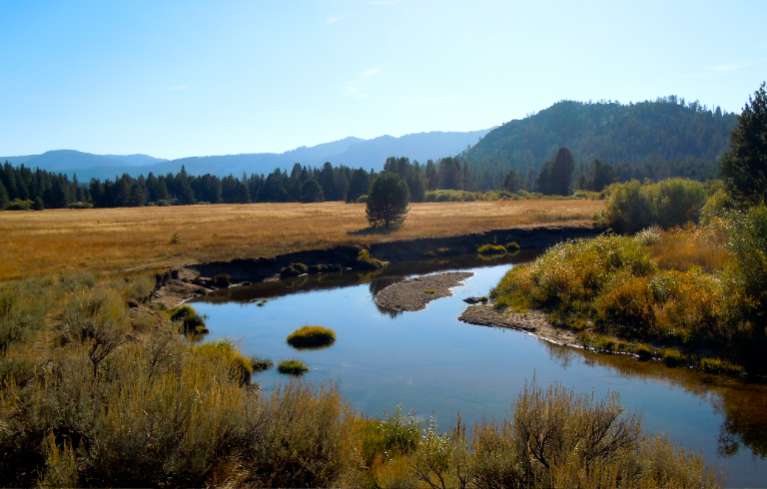
Restoring this section of the Upper Truckee River will begin in mid-June. Photo/LTN file

Restoring this section of the Upper Truckee River will begin in mid-June. Photo/LTN file

For the most part, the river will be moved farther away from the runway.

The area will be closed for safety reasons beginning June 15 and lasting until Oct. 15. Signs will be posted.

Popular biking and hiking trails nearest the river will not be accessible. A trail on the far side of the meadow will remain open.

When the project is complete, some of the user-created trails are likely to disappear because a river will occupy them or the meadow will be so wet that the trails will naturally disappear.

The Forest Service does not intend to decommission any trails. A route must be maintained because South Tahoe Public Utility District has a line in the area. It will be relocated next year.

The river will remain accessible, however there will be an area where kayakers and other boaters will have to portage because a temporary bridge will be built that they will not be able to go under. The bridge, which will be about 5,000 feet below the Elks Club bridge, will be one of the first things to be built this season. It will provide access from the Sunset Stables staging area to the meadow.

“The channel will be smaller, but the flow for rafts and kayaks will be greater,” Theresa Cody, USFS project manager and hydrologist, said of what the experience will be like when the work is completed.

For a few days fishing could be impacted as block nets are in place.

A little more than half of the 7,340 feet of new river channel will be built this season, with the remainder to be done in 2014.

While the California Tahoe Conservancy also owns part of this section of river, the Forest Service is the lead agency, and the one paying for and doing the work. How the properties connect would not allow for the project to be separated.

The actual work is costing the Forest Service $4.5 million. This money came from the Southern Nevada Public Lands Management Act.

Tree removal for the project is necessary. The plan is to use that wood for structures in the river. (The USFS and CTC also have fuel reduction projects scheduled that are not related to the river project.)

Cody said the Forest Service has gone to great lengths to make sure those structures look natural – having learned from work done on other sections of the river.

“Most of the woody material is intended to be below the low water line,” she said at the May 30 meeting.

In 2015, there will be a break in construction. This will be the summer of irrigation and making sure the vegetation has taken hold.

In 2016, the channel tie-ins will be constructed if the vegetation is intact. This will likely result in more temporary area closures.

When it’s all done, access will be as it is today – just with a “new” river and not all the same trails.

Public tours of the area are planned for Aug. 2 and Oct. 25.

More information about the project is online.


Settlement in casino comped meals lawsuit

By Anjeanette Damon, Las Vegas Sun

CARSON CITY — The Nevada Tax Commission signed off on a $233 million settlement with the state’s largest casino resorts to free them from paying sales taxes on the comped meals they provide their patrons and employees in exchange for the resorts dropping their lawsuit seeking a refund on back taxes they’ve already paid.

In agreeing to the settlement, which will also require the Legislature to pass a new law in the last seven days of session, the commission is essentially reversing its long held position that such free meals given to customers are subject to sales tax in order to free the state from a quarter billion dollar potential liability.

The issue has been winding its way through the court system since 2003, when a Sparks casino sued, arguing it shouldn’t be required to pay the tax on comped meals. The courts have issue conflicting opinions on the issue, which is worth millions to casinos and state government. The case is now pending before the Nevada Supreme Court.

Gov. Brian Sandoval’s staff helped broker the deal, which involves more than 150 casinos that will be giving up their refund requests in exchange for a law guaranteeing they no longer have to pay the tax through 2019. If a future Legislature were to try to implement the tax before then, the casinos could resume their lawsuits and the state would be liable for the refunds.

“I can tell you from the governor’s perspective, and from my discussions with him, the real piece is that $233 million in liability,” said his general counsel Michon Martin. “The governor indicated, and these are his words, it’s almost a quarter of a billion in liability this state is exposed to. The governor wants to make sure we resolve that liability.”

Martin said it is uncertain how the Nevada Supreme Court will rule in the case brought by Boyd Gaming and Harrah’s Casino. If the state lost, it would have to pay $233 million in refunds. If it won, it would be able to continue collecting sales tax amounting to as much as $4 million a month, or $48 million a year.

“I can tell you as a litigator for a very long time, we just can’t predict the outcome of these cases with any certainty,” Martin said. “If we lost, we just can’t tell what will happen. It would require a special session. It would require a whole host of things. It would put the state in a position that would be exceedingly difficult to recover from.”

For perspective, the refunds are almost twice what Sandoval has proposed spending on new education programs over the next two years.

The commission voted 7-1 to ratify the settlement, after minor adjustments to the language in the agreement is made.

Commissioner Craig Witt, a former dairy farmer from Minden, voted against the settlement, arguing it’s been the commission’s intent, and, he believes the court’s intent, that the sales tax be applied to free meals given to casino patrons. He said he may have voted in favor of a deal that exempted employee meals.

“Our intent, as far as the gaming card patrons, that is a taxable issue,” Witt said. “I don’t get a choice to tax ourselves in agriculture because we are not an entity or a business like gaming. We can’t afford the attorneys.

“In this case we start to look at both sides and it’s give and take and there’s no end to the gaming card abuse.”

The settlement doesn’t take effect unless the Legislature passes a law affirmatively stating that comped meals are not subject to the sales tax. No such bill has been introduced yet, with seven days left in the session. Since the issue began working its way through the court system, the Legislature has refused to clarify the law one way or the other.

Under the agreement, a handful of smaller casinos and companies that have gone out of business would be eligible for refunds of up to $5 million. The Nevada Board of Examiners would have to approve the refunds.


Summer economic travel expectations — fair

By Scott Mayerowitz and Jonathan Fahey, AP

NEW YORK — The forecast for summer travel 2013: Partly sunny.

Airlines, hotels and campgrounds are commanding higher rates and seeing more customers than a few summers ago, and luxury hotels are selling out. Local businessmen and state officials are optimistic.

But for a travel industry still stinging from the Great Recession, the best it can likely hope for is another summer of steady, but slow, recovery. The blockbuster crowds seen in 2007 have become a distant memory.

Americans’ plans for summer travel mirror the current state of the economy. Rising home prices and a soaring stock market are encouraging those at the top of the income ladder to take more lavish trips. But large segments of the population are staying close to home because wages are stagnant, rents are high and the end of the payroll tax holiday has shrunk their take-home pay.
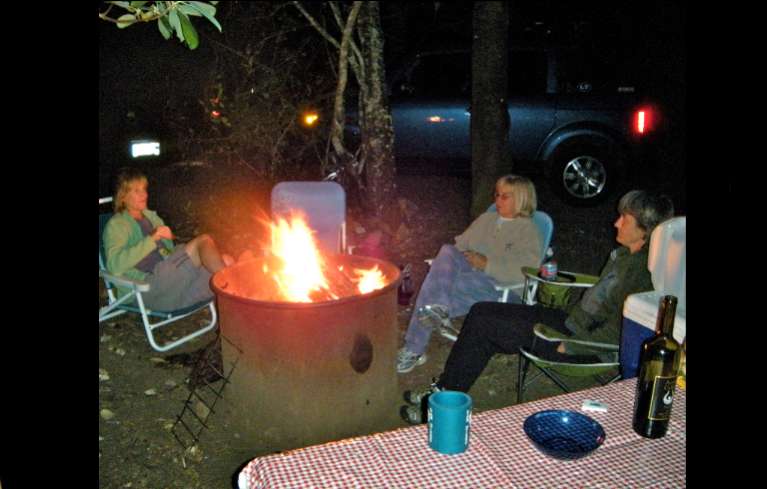
Camping is expected to continue to be popular this summer. Photo/LTN file

Camping is expected to continue to be popular this summer. Photo/LTN file

As vacationers set out this summer, here’s what they can expect:

• Gas prices about the same as last year. The national average price of gasoline was $3.66 a gallon Thursday, 2 cents higher than during last year’s Memorial Day weekend.

• More-expensive hotel rooms. The average hotel will cost $112.21, before taxes and any other add-on such as resort fees. That’s up 4.4 percent from last year’s $107.52, according to hotel research firm STR. Hotels are also expected to be slightly fuller, with occupancy rates climbing from 69.3 percent last summer to 70 percent this year.

• Packed planes, steady airfare. Airlines for America, the industry’s lobby group, expects 208.7 million people to fly, up 1 percent from last year. About 87 percent of airplane seats will be filled with paying passengers. Domestic fliers will pay $421 on average for a round trip ticket, down $6 from last summer. International fliers will pay $1,087, up $8, according to the Airlines Reporting Corp.

• Amtrak expects to meet or exceed the 8.3 million passengers it carried last summer. But the taxpayer-backed railroad wouldn’t disclose how fares compare with last summer’s average one-way ticket of $66.39.

Mike Klopp, a commercial insurance salesman in Irvine is starting to feel better about the economy. He and his wife plan to take their three kids on a vacation up the coast to Monterey in August — a trip they skipped last year.

But Klopp says local trips are the limit because they’re cheaper. Like many others, he’s not yet willing to splurge on a dream vacation.

“The kids would love to go to Hawaii, but there’s no way I’m going to do that. We’ve been hunkering down; money is tight right now,” he says.

“I’m not sold that things are better,” he says.

Other Americans likely agree. Although the unemployment rate has dropped to 7.5 percent, compared with a post-recession high of 10 percent, the Federal Reserve doesn’t see it falling below 7.3 percent this year. And economic growth still isn’t as strong as it has been after previous recessions. The economy grew at an annual pace of 2.5 percent from January to March. Economists expect the rate to slow to 2 percent from April through June, partly because of the federal budget cuts that started taking effect March 1.

Those with higher incomes never stopped traveling, but thanks to new highs in the stock market they now feel secure enough to take longer vacations.

Patrick Veling, the owner of a California real estate data analysis and consulting business, says he’s taking his “most expensive vacation ever” this year. Instead of the normal one-week vacation, he and his wife, Susan, are taking their two adult kids on a three-week vacation through northern Europe that will include a 12-day cruise. They’ll see Denmark, Norway, the Shetland Islands, Ireland and the Netherlands.

“My confidence in the economy and my business is now strong enough that my wife and I have pretty much insisted we make this trip,” says Veling.

“The improvement in confidence is all in the upper income brackets,” says Diane Swonk, chief economist at Mesirow Financial.

During the worst days of the recession, travelers mostly stayed home. Hotels desperate to fill rooms started marketing “staycations” to local families who couldn’t afford to drive or fly somewhere. Summer air travel fell by nearly 8 percent in two years, from 217.6 million passengers in 2007 to 200.3 million in 2009. Luxury hotels saw their occupancy levels plummet during that period from 72.5 percent to 59.3 percent. More than half the rooms at economy and midscale hotels sat vacant.

There has been a slow and steady climb back, but not all parts of the recovery have been equal.

Luxury hotels such as Four Seasons, Park Hyatt, Ritz-Carlton and Mandarin Oriental are filling 73 percent of their rooms on average, surpassing their pre-recession peak, according to an Associated Press analysis of data from hotel research firm STR.

But budget hotels like Days Inn, Econo Lodge and Motel 6 are still below their 10-year occupancy average, more than 3 percentage points below their peak.

The same pattern holds for fliers.

Domestic traffic is projected to grow 0.7 percent this summer, while the number of people buying more expensive international tickets will climb 2.6 percent, according to Airlines for America.

“Expect luxury travel to continue to rebound — consistent with luxury across all industries — while the rest of summer travel will be flat” as the economy still weighs heavily on middle-income families, says Adam Weissenberg, who heads the travel and hospitality consulting group at Deloitte.

But some less-expensive destinations are seeing a recovery.

Campgrounds fared well during the downturn because they are relatively affordable. Some are now doing better business than ever because the operators have retooled their facilities to entice visitors beyond the typical outdoor types.

Steve Stafford, general manager of North Texas Jellystone Park Camp-Resort in Burleson, Texas, has attracted a broader swath of people with “homesteads.” These are recreational vehicles that look like cottages. Now the camp can accommodate campers with tents, who only have to pay $32 a night for an empty patch of ground, and those who want to stay in the comfort of the largest homesteads for $209 a night.

His 37 homesteads were booked solid last year. So he is adding a dozen more, which are already booked.

The hunt for inexpensive vacations is helping companies that rent recreational vehicles, too. Traveling by RV means families don’t need to pay for hotels and can cook most of their meals. Families may not be ready to buy one — sales are only up slightly — but more are choosing to rent one this summer for as little as $100 a day, or $300 during peak weeks.

At El Monte RV, one of the country’s largest RV rental companies, summer bookings from domestic customers are up 20 to 25 percent over last year.

“It has stunned us,” says marketing director Joe Laing. “We’re looking forward to this year. We think it’s going to be a good one.”