Hackers hit Raley’s grocery stores

By KOLO-TV

WEST SACRAMENTO — The Raley’s chain of supermarkets has recently discovered that a portion of its computer network systems may have been the target of a complex, criminal cyber attack.

According to a news release, the company immediately initiated an investigation to determine whether cyber criminals may have obtained customer credit and debit card information. So far, the company has not confirmed any unauthorized access to payment card data, but its investigation remains ongoing.

Raley’s does not believe that debit PINs could have been accessed, as it does not collect Social Security or drivers’ license numbers in association with payment card transactions.

A company spokesman says a series of immediate steps has been taken to enhance the security measures already in place to protect customer data. The company is confident that customers can continue using their payment cards in its stores.

“Our customers’ peace of mind is our top priority. We take protecting our customers’ privacy seriously and sincerely regret any inconvenience that the attack on our network may have caused,” says Mike Teel, Raley’s president and CEO. “We are working around the clock to gather details to determine the extent of any possible compromise of customer information.”

Raley’s has a dedicated response team available to answer customer questions and is providing customers updates online as they become available. The company encourages customers who have used credit and debit cards at Raley’s, Bel Air, Nob Hill Foods, Food Source stores or Aisle One fuel stations to take the following steps to protect their accounts:

• Check and monitor your bank and credit card statements for evidence of unauthorized transactions;

• Contact your bank or credit card company if you identify suspicious charges; and,

• Know that cardholders are not held responsible for fraudulent charges made by unauthorized parties if reported promptly to the card issuer.

Customers can reach Raley’s dedicated response team from 7am to 10pm every day at 800.925.9989.


Effort under way to overhaul California State Parks

By Matt Weiser, Sacramento Bee

California officials on Monday launched a new program to analyze and overhaul the state parks system, to be led by a volunteer commission.

Called Parks Forward, the effort is required by the California State Parks Stewardship Act, passed last year in the wake of a financial scandal that upended the leadership ranks at state parks headquarters.

The system has been under scrutiny since the Bee revealed last year that top officials at the Department of Parks and Recreation hid $20 million in “surplus” money even as they set about closing 70 parks due to budget cuts.

Among its other troubles, the department has a deferred maintenance backlog at its 280 parks that exceeds $1 billion.

That is partly because the state general fund subsidy for parks has declined over the past 20 years, and revenues from visitor fees have not filled the gap.

California Natural Resources Secretary John Laird said Monday that Parks Forward aims to make the parks department “sustainable” over the next century.

“We would like to get to a point where we are not deferring maintenance and we are adequately funding the stewardship of the parks,” he said.

Laird will appoint the commission members, to include park users as well as experts on conservation and finance. The only commissioner named so far is Lance Conn, a venture capitalist and former investor for Microsoft co-founder Paul Allen.

Conn vowed to confront the “brutal facts” about state parks operations and funding. He said the commission will produce a report by the end of next year. The process will be public and will draw from examples of park management around the nation and world.

“I love California parks, and I love tough problems,” Conn said. “We’re not going to toss the report over a wall and sneak away under cover of darkness. We’re going to stick around and see that the measures are implemented.”

Many of the problems confronting California’s parks system have been studied for years and are well understood.

The Parks Forward initiative, for instance, follows a Little Hoover Commission report released in March that recommended a number of operational changes. Among them was the idea of divesting some parks, to reduce operating expenses, and turning them over to other entities, such as local governments.

Carrying out such ideas, however, is fraught with controversy.

“I don’t know that any of us know the right steps to get us there,” said Carolyn Schoff, president of the California League of Park Associations, a coalition of nonprofits that assist individual parks. “But I think all of us know there needs to be a paradigm shift.”

Parks Forward will be funded by grants from the David and Lucile Packard Foundation, the S.D. Bechtel Jr. Foundation, the James Irvine Foundation and others, under the auspices of the Resources Legacy Fund.


LTUSD board wants a handle on STHS’ club debt

By Kathryn Reed

When the Lake Tahoe Unified School District board of education meets later this month, the five electeds will be asked to decide how to deal with the debt incurred by South Tahoe High School’s Associated Student Body and what the future policy will be.

Consultant Terri Ryland gave a presentation last week about the audit she did regarding the continued deficit. This has been a multi-year problem. (Board member Sue Novasel was not at the May 28 meeting.) The total balance from the various clubs that make up the ASB account is negative $20,892. Plus, the yearbook has a loan from the district totaling $30,397.

“No one wanted to see the kids go without. I think that is what started the negative balances,” Ryland told the board.

LTUSD is studying the books for South Tahoe High's clubs. Photo/LTN file

LTUSD is studying the books for South Tahoe High’s clubs. Photo/LTN file

One of her recommendations is no club or individual class can spend money until it is in the account. Today it’s OK to fund raise after the fact or after the event has been planned and deposits made. This is partly what has led to the debt because the money raised has not always met the expenses.

The classes of 2010, 2011 and 2012 all graduated and left a negative balance in their respective accounts. There are no consequences for having done so.

An issue that was brought up by Roy Benavidez, who heads the ASB, is that ASB is responsible for paying the salaries of the adults who are tasked with doing the bookkeeping.

Ryland said she did a check and could not find a single instance where any other ASB was saddled with the entire bookkeeping expense. Most districts incur the cost, with some charging a percentage to the ASB.

Twenty hours a week – just for the ASB books – have been allocated and is what the student group must pay. The position was supposed to be for 15 hours, but 20 is what it turned out to be.

“Prior to 2010, several positions at the high school performed various parts of the ASB bookkeeping function. Costs for approximately 11 hours per week were $27,000-$34,000,” Ryland wrote in her presentation.

STHS Principal Ivone Larson pointed out that if the district were to incur the expense of the salaries from the last two years for the bookkeeper, then that would essentially wipe out the debt that is on the books.

CFO Deb Yates told Lake Tahoe News after the meeting, “I’ll recommend we bring it in house to assess how many hours are really needed (for bookkeeping.)” (It will be on the board agenda June 25.)

It will be up to the board if the debt is paid off through general fund dollars or some other way and if policy as to how ASB is managed in the future is changed.

On the June 11 agenda is the hiring of administrative intern Cindy Martinez as interim principal at Bijou Community School for 2013-14.

The meetings start at 6pm in the district office on Al Tahoe Boulevard.


Study: Calif. needs the most water infrastructure upgrades

By Bettina Boxall, Los Angeles Times

California could use $44.5 billion to fix aging water systems over the next two decades, according to a federal survey that placed the state at the top of a national list of water infrastructure needs.

Texas, at nearly $34 billion, and New York, with about $22 billion, were next in line.

The assessment, conducted by the U.S. Environmental Protection Agency in 2011 and released Tuesday, is used to document the capital investment needs of public drinking water systems across the country. The EPA relies on the results to allocate grants through the Drinking Water State Revolving Fund.

All told, the survey revealed a $384-billion wish list of infrastructure projects through 2030 — $4.5 billion more than in the 2007 assessment.

In California and elsewhere, the biggest need was for repairing and upgrading water transmission and distribution lines. That will come as no surprise to residents of Los Angeles, where old mains routinely break, sending gushers of water flooding city streets. Treatment projects were next on the list.

“The nation’s water systems have entered a rehabilitation and replacement era in which much of the existing infrastructure has reached, or is approaching, the end of its useful life,” EPA acting Administrator Robert Perciasepe said in a statement. “This is a major issue that must be addressed so that American families continue to have the access they need to clean and healthy water sources.”

In April, the regional EPA administrator sent a letter of noncompliance to the California Department of Public Health, complaining that the state had failed to spend $455 million of federal money in another state revolving fund used to improve drinking-water quality in small rural communities with contaminated wells or other problems.

The EPA said the state had set much of the funding aside for projects that were not shovel ready, while other, ready-to-go projects languished.


Nutting silenced for bulk of supervisors’ meeting

By Peter Hecht, Sacramento Bee

It was an awkward public spectacle Tuesday for El Dorado County Supervisor Ray Nutting.

One week after the district attorney had him arrested on four felony charges of violating political disclosure and conflict of interest laws, the veteran supervisor publicly declared his innocence. Then he recused himself from participating in nearly every vote by the Board of Supervisors indefinitely.

Free on $55,000 bail in a criminal case stemming from his alleged concealment of state income for brush-clearing on his family ranch, Nutting took his seat Tuesday with his fellow supervisors as usual.

But then he agreed not to vote on anything involving the county budget, state and federal contracts – or even approving minutes of board proceedings.

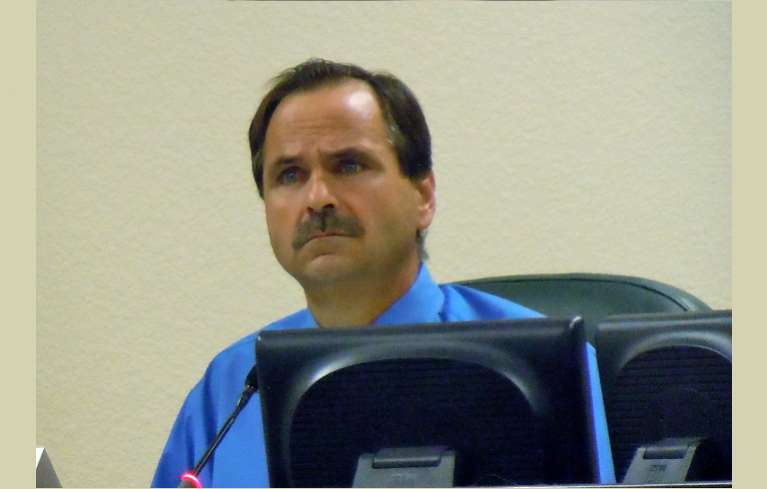
Ray Nutting

Ray Nutting

Wearing a gray suit, Nutting listened as County Counsel Ed Knapp delivered a lengthy address to the board asserting that it would be imprudent for Nutting to participate in any vote involving expenditure of taxpayer funds or any matter that could raise a specter of conflict of interest due to the supervisor’s criminal case.

“The county recognizes that all persons accused of a crime are presumed innocent until proven guilty in a court of law,” Knapp said at the opening of the board meeting. “However, the standards for the operation of the county’s business are different, and the county will take all necessary steps to ensure that the recent developments involving Supervisor Nutting do not interfere with the proper functioning of county government.”

A criminal complaint against Nutting, 53, charged that he broke the law by failing to list on statements of economic interest – required for public officials – that he received some $70,000 in income from the state in 2003 and 2009. He received the money from the California Forest Improvement Program for clearing brush at his 340-acre family ranch and is due to receive another $49,348 grant.

The supervisor also was charged with violating conflict of interest laws by failing to recuse himself from votes on county contracts with conservation districts that distribute the funds.

Nutting is due to be arraigned on the criminal charges next week. He said in an interview Tuesday, “I look forward to a speedy trial and being exonerated.”

At the board meeting, he promised to confine his votes to ministerial items – such as two declarations at Tuesday’s session in support of local Independence Day fireworks extravaganzas and a third item affirming an administrative list of surplus county property.

Nutting had pledged last week that he wouldn’t vote on any budget matters involving the District Attorney’s Office, which is prosecuting him. But Supervisor Ron Briggs, the board chairman, said supervisors were advised that no elected county officer facing indictments or complaints for political corruption could vote on county claims involving federal and state contracts.

In agreeing to recuse himself from most board votes, Nutting said Tuesday, “Although I am innocent, I believe my constituents want me to do what is in the best interest of the constituents – and protect those dollars.”

He added, “I do not believe there should be such a law that puts an innocent person in this situation.”

Amid sudden confusion over Nutting’s participation, the board on Monday had tabled a special hearing on the county budget. It also voted to hire the San Francisco law firm of Hanson Bridgett to advise the Board of Supervisors on how to handle the matter.

In his address to the board Tuesday, Knapp said that “due to the nature of the charges against Supervisor Nutting and various regulations involving use of state and federal funds, county counsel advises that Supervisor Nutting not participate in any board items that involve funding.”

Knapp also said Nutting should “recuse himself from any other items where his participation might give rise to an appearance of a conflict of interest.”

That infuriated one of Nutting’s constituents, Linda Columbo. A member of the Nashville-Sand Ridge Fire Safety Council in Nutting’s district, Columbo let the board have it for silencing his vote.

“I would like to see a little bit of fairness here, a little bit of compassion,” she told supervisors. “Stop the witch hunt. He (Nutting) represents my district and, for you to take away his right to represent me fairly, I can’t believe it.”

Nutting spent the day joining board members in passing noncontroversial items, honoring Boy Scouts and praising a presentation by a local skateboard park operator. But when most votes came up, he retreated to the audience or the hallway outside the supervisors chambers.

Nutting insisted Tuesday he will continue to work a full schedule. He outlined a public schedule including a community meeting tonight in Shingle Springs, where residents are protesting a proposed subdivision, and meetings with county school officials, the El Dorado County Chamber of Commerce and local fire districts. He also will listen to community groups focused on mining and the federal Endangered Species Act.

“I’m trying to be as good of a supervisor as I can,” he said.

Then he recused himself from an afternoon discussion on a board letter to the U.S. Fish and Wildlife Service over the proposed federal status of the Sierra Nevada yellow-legged frog and the Yosemite toad.

Nutting said it was suggested to him that he sit this one out, too.


Affordable housing complex may be S. Tahoe’s last

By Kathryn Reed

The nearly $9.5 million Aspens affordable housing project is likely to be the last such project to be built in South Lake Tahoe for decades.

This 48-unit development at the corner of Pioneer Trail and Ski Run Boulevard has been talked about for years. Then the state did away with redevelopment agencies. With that maneuver went $2.5 million the local redevelopment agency was going to put toward the project through the housing authority.

Then for a time it was thought the project would not get off the ground.

“The community should understand it has been a really long, arduous, expensive process,” Shellan Rodriguez, with Idaho-based Pacific Companies, told Lake Tahoe News. But in the same breath she praised the city and other agencies for staying at the table to make this a reality.

Work is under way on a 48-unit affordable housing complex in South Lake Tahoe. Photo/LTN

Work is under way on a 48-unit affordable housing complex in South Lake Tahoe. Photo/LTN

Ground was broken in May. It’s anticipated all the grading-type work will be done by the Oct. 15 deadline to stop moving dirt. During the winter the interiors will be completed, with the best-case scenario that leases could be signed in late spring 2014.

City Manager Nancy Kerry hopes this project will encourage others to step up their game to be more competitive. The neighboring Bart’s Tahoe complex has long been an eyesore and subject of fines, and was condemned at one time because several units were a health hazard.

Some of the more desirable affordable housing complexes in the city have waiting lists. Rodriquez anticipates that happening at Aspens, too.

This will bring the number of affordable housing units in the city to a little more than 300.

“We have more people who need that kind of low rent than we have supply,” Kerry told Lake Tahoe News. “I think people have varying perspectives for the need for controlled rent, which is what affordable housing is.”

There will be multiple buildings at the Aspens, with three-stories the tallest. The dormered roof is designed so it doesn’t appear that tall. They are energy efficient and being built to California’s Build it Green criteria.

“A community doesn’t want housing that looks low income and low income folks don’t want housing that looks low income,” Rodriquez said. This is a rendering of the Aspens project.

The company also has similar completed projects in Truckee, Mammoth and Carson City, as well as Jackson Hole, Wyo.

There is almost an equal number of one-, two- and three-bedroom units. Based on today’s formula, which is set by the state and federal governments, the apartments would rent from between $330 and $840 a month.

To qualify for one of the units, people will have to meet certain income requirements. Service industry workers are most likely the people who will qualify to live at the Aspens. But it’s also possible a single parent at an entry-level professional job could meet the requirements.

Half of the project site will not be developed; it will be open space.

Other amenities include bike storage and bike parking, play structures for little and bigger kids, a community building that will have laundry facilities and a common fitness area.

While high-end appliances and the like are not being installed, neither is the cheapest product. After all, Pacific Companies expects to own the complex for the next 55 years, so it wants things that will last a reasonable time. That is the time period in which these units are deed-restricted low income.

Because these types of projects are government subsidized and California eliminated its funding mechanism when it dissolved redevelopment agencies, the projection is these types of projects are a thing of the past.


Aquarium — a living museum where learning is fun

By Susan Wood

MONTEREY – Still evolving while turning 30 in 2014, that’s the Monterey Bay Aquarium.

The Central Coast’s famed aquarium plans to go dark Labor Day weekend on one of its most popular exhibitions to date – the Secret Life of Seahorses. The 15 species of these elusive creatures and kin – the surreal-looking sea dragons and alligator pipefish — danced and fluttered in their tank, spawning “ooohs and ahhhhs” among many visitors on a recent Saturday visit to the 322,000-square-foot attraction located alongside Monterey’s Cannery Row.

“It looks pretty leafy,” one man declared, staring at one of the spindly sea dragons.

The exhibit gets more fascinating at every turn. When they court, sea horses lock tails – as shown in a beautifully-crafted silhouette display that looks more loving than erotic. The pot belly males may butt heads to vie for a female’s attention. But then their warrior instinct transforms into the nurturing as they also later give birth. Yes, the males give birth. From that, a visitor also learns the young sea horses eat constantly.

A white-spotted jelly at the Monterey Bay Aquarium. Photos/Kathryn Reed

A white-spotted jelly at the Monterey Bay Aquarium. Photos/Kathryn Reed

Many saucer-eyed children pointed and stood in awe alongside the adults. Beyond appreciating the sea life, all learned of the hazards these gentle creatures face – from the souvenir trade to fishing nets. An entire exhibit is dedicated to the perils of trash deposited in the ocean.

The aquarium is a kid’s paradise, with plenty of interactive displays such as a quiz that compares the number of baby bottles a young gray whale consumes in a day in contrast to a human – 2,000 versus six. Many displays are designed to pique children’s interest in the enjoyment and conservation of sea life along the Pacific Coast. And that’s no accident.

As public relations coordinator Mika Yoshida put it: “We start them young (with the message of protection).”

Moreover, the aquarium highlighting 35,000 creatures representing 550 species in 34 major galleries walks the talk by “greening” up the place. For example, plastic bags at the large gift shop are a no-no.

A big part of the aquarium’s conservation message focuses on its seafood watch – which comes with a handout of types of fish to avoid and others bearing no threat to overfishing or mercury content.

The Monterey Aquarium also backs up its signs in Spanish for a broader appeal.

Target marketing aside, the massive aquarium has brought in the masses, and apparently has shown no sign of slowing down during the recessionary years.

“We’re not seeing any impact because we usually end up getting a bump from locals and day trippers from San Francisco,” Yoshida told Lake Tahoe News in discussing any drop off of the destination visitor who may stay multiple nights.

Ken Peterson, the aquarium’s communications director, expanded the response.

“We’ve actually had a fairly strong attendance in recession years. For a lot of folks, Monterey and the aquarium are an affordable California vacation option in years when they aren’t going to plan a big cross-country trip,” he said.

Last year, the aquarium recorded 1.8 million visitors. Many have taken in the psychedelic “Jellies Experience,” which opened in March 2012 as one of three evolutions of jellyfish displays. The aquarium even built a laboratory to grown its own.

Each visitor could spend hours at the practically laid-out, airy site — taking in puffins and penguins swimming and waddling over their turf, capitalizing on special, behind-the-scenes tours or experiencing the magnitude of a three-story kelp forest benefitting by the aquarium pumping in a billion gallons a year of seawater from the bay.

It’s like having the ocean within walls.

One can even get up-close-and-personal by touching bat rays or starfish.

“They’re slimy,” was the common response when touching the rays.

The touching pools host large crowds around them.

“These are whatever we find in tide pools in the bay,” said Roberta, one of the aquarium’s 1,200 volunteers who support the 425 staff members. “They’re OK to touch, but just don’t move them. You wouldn’t want to be moved from your home,” she reminds a group.

Much of the aquarium’s recent activity has occurred outside its walls.

“We’ve had a lot of whale activity,” volunteer Fred said. He was managing transmitters on the patio overlooking Monterey Bay that record sightings of sea life. That morning, dolphins, seals, sea lions and sea otters made the list.

The sea otters are the stars of a new auditorium program launched this year.

Another star is of the culinary variety. Chef Cindy Pawlcyn has substantially upgraded the aquarium’s oceanfront restaurant. (Foodies will know her from Fog City Diner in San Francisco, Mustards in Yountville and her two other restaurants in St. Helena.) Menu choices follow the seafood watch guidelines and use many types of local produce, dairy and proteins.

If you go:

• Off Highway 1, south of the Bay Area

• Tickets: $35 adults; $31.95 students; $21.95 children; kids under age 3 admitted free

• Information: (831) 648.4800.

ngg_shortcode_0_placeholder Click on photos to enlarge.


Nev. Legislature kind to gaming industry

By Anjeanette Damon, Las Vegas Sun

CARSON CITY — A bill to legalize online poker after Congress failed to do it? Check.

A bill to protect big casino resorts from slot machine parlors and bars with sports betting kiosks? Check.

A $233 million lawsuit settlement that eliminates a disputed tax on comped meals? Check. (Well, almost check, the bill hasn’t yet been passed by the Senate but appears poised to do so.)

“So far, it’s been an OK session,” said Pete Ernaut, lobbyist for the Nevada Resort Association, who has been at the helm of many of the industry’s legislative initiatives this year.

These days, it’s good to be a gaming lobbyist.

The state’s most powerful industry is poised to come out of this legislative session the victor in a number of key battles that it asked lawmakers and Gov. Brian Sandoval to broker for them.

The industry racked up its first win early in the session, when the Senate and Assembly unanimously passed an online poker bill that was signed immediately by Gov. Brian Sandoval.

The entire process, from hearing to signature, took seven hours. Sandoval declared it a “historic day.”

Next up, a bill that would prohibit sports betting on kiosks, an emerging technology proliferating in Las Vegas bars and taverns that big resorts saw as a threat to their bottom line.

The measure, Senate Bill 416, also imposes new requirements on so-called slot parlors such as Dotty’s, which have been offering gambling without any other real business operation.

“The nonrestricted people, they came out like bandits,” said Sen. Tick Segerblom, D-Las Vegas. “The restricted guys, they are the big losers.”

Ernaut argued at the time that hotel resorts, which are required to make significant investments, including building 200 hotel rooms, in exchange for a nonrestricted gaming license, are in danger from smaller gaming operations who aren’t subject to as many requirements. Restricted gaming licenses are supposed to be reserved for a business that offers gambling that’s “incidental” to its primary activity.

“Protection of this industry: There can’t be a higher priority of this body than getting the No. 1 industry in this state right,” Ernaut said during one of the hearings.

That rankled some lawmakers, but the sentiment was generally shared under the oft-repeated premise that what’s good for the state’s biggest industry is good for the state.

“I think the Legislature has the primary duty to meet the needs of the citizens,” said Sen. Ben Kieckhefer, R-Reno. “But a thriving gaming industry is certainly a component of that.”

“I agree that we absolutely have to look out for the well-being and viability of the gaming industry,” said Sen. Greg Brower, R-Reno. “But not at any cost. We have to strike the right balance, and I think we’ve done that.”

Senate Bill 416 passed the Assembly unanimously and the Senate with only three opposed. It’s pending Sandoval’s review.

The industry’s last task: passage of a long-fought settlement of a $233 million court case on whether casinos should pay sales tax on the free meals they comp employees and patrons.

The battle, which dates to 2003, has been the subject of lawsuits, conflicting court opinions and intense behind-the-scenes settlement negotiations. The case is now before the Nevada Supreme Court.

The result: Casinos will stop pursing $233 million in refunds on taxes they’ve already paid in exchange for lawmakers passing a law that free meals for employees and customers are not subject to the sales tax.

In the last days of the session, lawmakers introduced just that bill, which passed the Assembly unanimously and appears poised to pass the Senate.

Sandoval, whose staff helped negotiate the settlement, backs the move as a way to protect the state from a massive liability that could blow a hole in the budget if the Supreme Court ruled against the state.

Not all lawmakers are happy about the settlement.

“It’s a settlement, so I’ll probably vote for it,” Segerblom said. “But it’s really disappointing they didn’t let the court decide. That’s a huge amount of money we’ve historically made the hotels pay. To let them off the hook is really a disservice, and we should revisit it.”

But if the Legislature revisits it before 2019, the state would be in breach of contract and would be forced to pay a pro-rated portion of the $233 million back to casinos, according to the settlement.

Many lawmakers, however, think the settlement is a good deal for the state, which will no longer be under the threat of the $233 million liability.

“I don’t have a problem deeming (the meals) untaxable,” Kieckhefer said.


South Tahoe golf course — oldest in the basin

Bijou Golf Course first opened in the 1920s. Today a mix of locals and tourists play the 9-hole course. Photo/Kathryn Reed

Bijou Golf Course opened in the 1920s. Today a mix of locals and tourists play the 9-hole course. Photo/Kathryn Reed

By Kathryn Reed

While modern golf dates to the Middle Ages in Scotland, Tahoe’s links history isn’t quite 100 years old.

“There were kids around in the neighborhood who would get odd jobs as caddies. I did that. One time I caddied for Max Baer the fighter. He trained in the summertime with Mr. Goldman at Al Tahoe,” Knox Johnson told Lake Tahoe News.

The 88-year-old Johnson grew up on the course, but said he was never much of a golfer. Instead, he and his friends would find errant golf balls. On occasion they’d hit balls on the ninth hole after everyone had gone home.

It was the 1920s when the Bijou Golf Course first opened on land owned by Johnson’s parents – Knox William Johnson and Stella (Van Dyke) Johnson. Virgil Gilcrease of San Leandro leased the land from the Johnsons and operated the course.

Johnson and South Lake Tahoe officials say Bijou is the oldest golf course in the Lake Tahoe Basin. He believes Brockway is the second oldest and Glenbrook third.

“When it first opened there was just sand greens,” Johnson said. “The clubhouse was right where it is now.”

At the time there were living quarters above the clubhouse.

This was at a time when his family was running cattle and owned much of the land in that area. He still owns 5 acres by the clubhouse, including a house his mother had built in the 1940s. It has a view of Freel, including the No. 27 that the snow makes on the peak. “It’s our lucky number,” Johnson said.

The Bijou area was the hub of South Lake Tahoe and the place to be. Most summer nights there was a dance at Bal Bijou – at what is now the CVS drug store.

Johnson, along with his brother, Bill, and sister, Marjorie Springmeyer – who are both still alive – had to raise some money after their mother died. That is when the city of South Lake Tahoe bought the land where the golf course still resides.

Johnson says it was the late 1950s that the city took over the course. The city says it was November 1983.

He said there was talk of extending the course beyond the cemetery – other land that once belonged to the Johnsons – to make it an 18-hole course, but that never materialized. Instead, the 9-hole course remains much the way it did nearly a century ago.

“They used to irrigate it with ditches,” Johnson said. It was after World War II that the first sprinkling system was put in.

“The pipes that they used came from Perkins where steam engines were. This is where they redid the boilers for trains. They salvaged pipe from there,” Johnson explained.

Then it became possible to water the greens and some of the fairways.

In 1991, the city put in a modern irrigation system.

Today, the city continues to operate Bijou Golf Course.


CalFire to bill Nutting for putting out fires

By Peter Hecht, Sacramento Bee

Ray Nutting, the embattled El Dorado County supervisor who collected state money to clear brush from his family ranch, is going to get a bill for causing a wildfire while performing the work.

Nutting, 53, faces four felony charges for failing to properly disclose about $70,000 in income received under two state contracts for clearing his own property for fire prevention. Through his attorney, he has denied any wrongdoing in the case announced Tuesday.

Now, CalFire says it is going to seek restitution from Nutting for unspecified costs of a Jan. 21 fire that erupted from an unattended burn pile on Nutting’s 340-acre timber ranch.

The fire burned 5 acres and required 65 firefighters and inmate crew members to put out. It occurred as Nutting was performing work on his ranch under a third state contract due to pay him another $49,348 once that job is done.
El Dorado County Supervisor Ray Nutting's problems are escalating. Photo/LTN file

El Dorado County Supervisor Ray Nutting’s problems are escalating. Photo/LTN file

State investigative reports and email correspondence, received by the Bee under a public records request, indicated the fire was the fourth that state crews had responded to on Nutting’s property on Happy Valley Road in Somerset since 2001.

At least three of the fires occurred while Nutting was performing work under California Forest Improvement Program grants given to private property owners to clear vegetation and other fire hazards. On three occasions, he was said to have been burning on “no burn” days set by local air quality officials.

Internal CalFire emails suggest a level of exasperation by agency officials over calls for assistance on Nutting’s property and dealings with the four-term supervisor.

“Yesterday, a fire occurred at the Nutting Ranch,” CalFire Battalion Chief Mark Brunton wrote his superior a day after the Jan. 21 blaze. He added: “Seems like an annual event and somehow I always end up there.”

A separate fire investigator’s report on the incident said Nutting had been burning brush on multiple days during a Jan. 15-22 burning ban set by the El Dorado Air Quality Management District.

The report from fire prevention Battalion Chief Christopher Anthony said hot embers from one of Nutting’s burn piles set off a blaze that jumped a road and burned up a mountainside. Anthony said Nutting told responders he walked off to have some lunch, then returned and “looked up and went, ‘Uh-oh.'”

No one was injured and no structures were damaged in the fire, which required 20 firefighters, 45 inmate hand crew members, five engines, two water tenders and two bulldozers to extinguish.

In his email, Brunton said he told Nutting that day that he would be held responsible. Brunton also wrote that, “During fire suppression activities, Ray Nutting was, to put it bluntly a pain in the rear” by barking orders to firefighters.

“I eventually got face to face with him and had a discussion on responsibilities of the landowner and the fire suppression personnel,” Brunton wrote CalFire’s El Dorado-Amador County unit chief, Mark Kaslin. “This was no different than past experiences with him.”

CalFire spokesman Daniel Berlant said last week the agency will file a claim against Nutting for the firefighting costs – still to be calculated.

“The decision has been made that we’re going to seek civil cost recovery for that fire,” said Berlant, who said investigators concluded that Nutting was negligent.

In emails to CalFire officials, Nutting expressed contrition after the incident – as well as concerns that he could be financially ruined if forced to pick up the firefighting costs.

“I have lost a lot of sleep over this fire that escaped on my ranch,” Nutting wrote in a Jan. 24 email. “As you know, I am being punished with the costs of putting out the fire.”

The supervisor, a longtime timber harvester, wrote that his property had become a “money pit” and he hadn’t sold any timber in 10 years. He said being held liable for the fire would “put my family’s financial stability at risk.”

According to records from the El Dorado County Air Quality Management District, Nutting was ordered to pay a $150 fine for burning on an unauthorized day. He was directed to complete an online safe-burning course.

Even if he ends up paying for the fire itself, Nutting is due for payment if he finishes work under a 2012 forest improvement grant. Under the contract, he is to receive the $49,348 for clearing brush, pruning and thinning out trees and removing flammable bark and wood debris on 277 acres of his ranch.

Nutting was paid $47,425 for brush-clearing and tree-planting work completed on his property in 2003 and $22,423 for work finished in 2009.

The state program is intended to reimburse private property owners to clear brush and remove hazards that can cause wildfires and damage watersheds.

While the grants are routinely awarded whether property owners hire contractors or do their work themselves, Nutting has come under political fire in El Dorado County in recent months for taking taxpayer funds for personal use.

On Tuesday, El Dorado County District Attorney Vern Piersen announced charges against Nutting alleging he broke the law by failing to disclose the state income on statements of economic interest required for public officials.

The charges also alleged that Nutting violated conflict-of-interest laws by failing to recuse himself on votes on county contracts with conservation districts that distribute funds for fire prevention.

Nutting attorney David Weiner called the charges “horse puckey.” He said the supervisor, whom he advised not to comment, made innocent paperwork errors but committed no crime.

Yet while taking state money for fire prevention, Nutting has drawn heat for causing fires.

In 2009, CalFire crews responded to his ranch to put out a 2-acre fire resulting from burning debris on a no-burn day. In 2002, crews extinguished a blaze that started during brush-clearing, a year after they put down a 2001 fire from an unattended burn pile on the Nutting property.

In a 2002 email to a CalFire superior, a state fire investigator noted that Nutting had a bulldozer and water tender on site but lacked sufficient water or easily reached fire hoses for safe on-site burning.

“This is a carbon copy of a problem we had with Ray last year at this time,” the investigator wrote. He said he told Nutting “that we could not continue to drive out there every time an old burn pile went active.”