Calif. budget increases healthcare, education funding

By Chris Megerian and Anthony York, Los Angeles Times

SACRAMENTO — California lawmakers passed a budget Friday that lays the groundwork for the largest expansion of public healthcare in the country, placing the state at the leading edge of President Obama’s federal overhaul.

The budget, which the governor has until June 30 to sign, will also increase funding for schools, public universities and social services — a dramatic turnaround after years of deficits and cuts.

The Legislature approved the $96.3-billion spending plan after a relatively smooth series of negotiations between Gov. Jerry Brown and Democratic leaders that maintained much of the fiscal restraint urged by the governor.

California still faces financial problems, including the spiraling cost of public employee pensions. But lawmakers welcomed the change of fortune fueled by the improving economy and new taxes approved by voters in November at Brown’s request.

Senate budget chairman Mark Leno, D-San Francisco, called the spending plan “the most encouraging and positive budget I’ve seen in my 11 years in the Capitol.”

Lawmakers were scheduled to return to work Saturday to consider more budget-related bills, most of them involving implementation. But the bulk of the spending legislation, which takes effect July 1, now heads to the governor’s desk.

The expansion of health coverage is a core part of the budget.

The state’s public healthcare program, known as Medi-Cal, is expected to grow by 1 million enrollees and could soon cover roughly one in four Californians. Millions more people will be able to buy insurance through a state-run market.

Most of the changes will be funded with federal money. The state will pick up $196 million of the $2.1-billion tab for the Medi-Cal growth. The $381.6-million price of the state-run marketplace, called an exchange, will be almost completely funded by Washington.

Although the federal overhaul still faces opposition in many states, California was an early supporter, and Obama was in San Jose earlier this month to tout the state’s progress. Californians can begin buying health insurance through the exchange in October, and officials plan to enlarge Medi-Cal membership in January.

Drew Altman, president and chief executive of the Kaiser Family Foundation, said the success of the federal healthcare law hinges largely on the outcome in California.

“California is pace-setting, and everyone in health reform is watching very closely,” he said. “It’s hard to imagine its success until it succeeds in California.”

Many of the healthcare changes are riding on this year’s budget and a series of related bills among those lawmakers are expected to take up Saturday.

“California really couldn’t move full speed ahead” until the budget passed, said Chris Perrone, a director at the California HealthCare Foundation. “It clears the path to a lot of work that needs to happen.”

That work includes computer upgrades to process new patients and outreach efforts to ensure that more people enroll in health plans.

Healthcare was one of the final sticking points in budget negotiations this year. Brown insisted on allowing the state to scale back its coverage if federal money is reduced.

The issue was resolved Monday afternoon, when the governor met in his office with Assembly Speaker John A. Pérez, D-Los Angeles, and Senate leader Darrell Steinberg, D-Sacramento. The three agreed that the state would stop the Medi-Cal expansion if federal funding dropped below 70 percent of the cost in the next four years.

Steinberg said the expansion “only works if it continues to be a true partnership.”

The budget includes a controversial plan to redirect county healthcare money to other state programs. Brown has said counties won’t need the funds to care for the poor because they will soon be covered by the state or by private insurance. But county officials and activists say there will still be millions of uninsured Californians.

Republicans were sidelined during budget negotiations, and the final spending plan represents a series of compromises between Brown and the Democratic leaders, whose party holds supermajorities in both houses of the Legislature.

In addition to the $96.3 billion in general fund spending, the budget includes $42 billion from accounts funded by dedicated taxes and fees, $7 billion from bond funds and $87.6 billion in federal money. Almost $1.1 billion will be held in reserve.

The governor was able to include a slightly modified version of his K-12 education plan, which will shift some money from wealthy schools to districts with larger numbers of students who are poor or are learning English. The measure received bipartisan support.

But Brown backed off a plan to tie some higher education funding to changes he wanted state universities to make, such as improving their graduation rates and freezing tuition for four years, when university officials and key lawmakers balked. The UC and CSU systems each receive $250 million more than last year.

Brown persuaded Democratic lawmakers to use his more conservative revenue estimates to help limit spending in the upcoming fiscal year. But he accommodated some new spending pushed by Steinberg and Pérez: hundreds of millions of dollars in future funding for welfare grants, mental health care, college tuition aid, dental care for poor adults and other programs.

Much of that spending won’t start until next spring or summer, giving the economy more time to recover. There could also be raises next year for roughly 95,000 employees in California’s largest state worker union.

Republicans said the new spending would be unsustainable, especially after Brown’s tax hikes begin expiring in 2017.

“With this budget, we have positioned ourselves perfectly to repeat the mistakes of the past,” said Assemblyman Jeff Gorell, R-Camarillo.

Assembly Budget Chairman Bob Blumenfield, D-Woodland Hills, said poor Californians needed the help.

“Our duty is to prioritize where we can spend the public’s money for the greatest good,” he said.

Divided Sky keeps the beat alive in Meyers

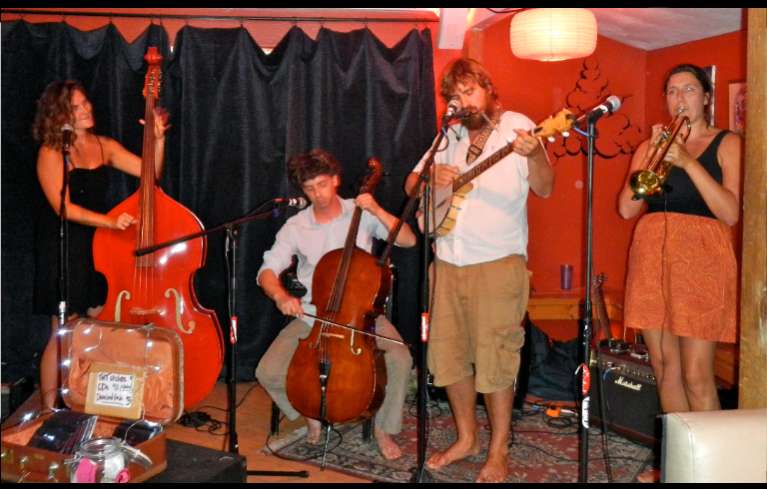
The New Thoreaus play at Divided Sky on June 8. Photos/Kathryn Reed

The New Thoreaus play at Divided Sky on June 8. Photos/Kathryn Reed

By Susan Wood

MEYERS – They say music is the universal language.

If that’s indeed true, then Divided Sky would be understood by many to be a unifying business in the Tahoe region. The restaurant-bar located above the Downtown Café west of South Lake Tahoe has brought in several musical acts during the 10-plus years it has been open, and it shows no signs of slowing down.

“We have not survived off our music, but people associate us with music,” owner Brian Levy told Lake Tahoe News. “Every year we feel a little busier. Fortunately, people took to it right off the bat.”

Levy admits milestones in years one, three and then 10 prompted him to evaluate the business, which began with three staffers. Now eight people work there.

“We thought: Well, we made it to one year, then three. Then, we felt established at 10 years,” he said.

But there’s no letting the guard down. He believes in “keeping the game up.”

The customer base on a given weekend night may range significantly from 20 to 100 people for the after-dinner bands, which often take the small stage around 9 or 10pm. (Hint: get there at a decent hour to be assured a seat. Or, stand in the middle of the room and sway with others.)

Small, nightclub lights are strung around the room. By the time a band takes the stage, dinner tables are moved to make room for those who want to dance or stand. A curtain is hung behind the band to give it that cozy look – and keep the neon lights from being a distraction.

The bar is busy and some of the conversations in the booths are so focused the music serves as background for a locals’ gathering. The place has Meyers written all over it.

The locals’ joint has developed such a reputation that bands seek it out to play there. Levy will get at least a few emails a week from prospective bands looking to simply cash in on the small bar cover at the door. It averages $5 to $10. It appears the venue is small enough for startup bands with no fan base.

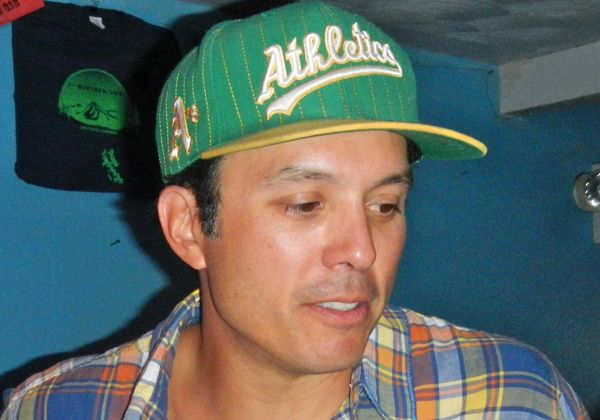
Divided Sky owner Brian Levy mixes music, food and drinks into a successful business in Meyers.

Divided Sky owner Brian Levy mixes music, food and drinks into a successful business in Meyers.

These bands now have other venues to play in around town like Lakeview Commons on Thursday night. And, Levy notes this.

“Now we have the luxury of sorting through them. The bands will play for the door – enough to pay for their gas,” Levy said. One band went quasi professional. ALO – known to cater to the hippie-beatnik circuit – got its start at Divided Sky and now plays larger arenas.

“We’re waiting for the day Bob Dylan comes in to play,” Levy joked.

Stranger things have happened. Legendary singer-songwriter Van Morrison spent years popping in to small pubs in San Francisco.

“These aren’t the bands making a living of this, but it’s what they love to do,” Levy said.

Indeed, this is how guitar-banjo player Ian Patton may characterize his band that played there this month.

The New Thoreaus, as in writer Henry David, consist of a group of special education teachers from Oakland who play music when they’re out of school for the summer. As English majors, the band of five members values reading. There’s one philosophy major.

A barefoot Patton, who leads the indie-folk band with a bluegrass twist, returned to the South Shore with his wife, stand-up bass player Lauren Hernig. While they played into the hours of the night, their daughter, 2-year-old Izola, was being babysat by his father who still lives in Tahoe.

Levy could relate. His parents were in town to witness his baby (the business) thriving.

Patton told Lake Tahoe News he fondly recalls going to Divided Sky when he lived here seven years ago. He and his wife enjoyed seeing Victor Barnes Insurgent Bluegrass. A year later, his band formed in Oakland. Now, bluegrass has experienced a resurgence – with “Mumford and Sons” and “Lumineers” leading the airwaves.

“It’s great to hear that type of music on the radio. Now you can hear bluegrass on four different stations (in the Bay Area),” he said. Still, he admits the band aims for an original sound, with a chance to make its own path.

Like Levy, Patton and the rest of the New Thoreaus are enjoying relative success these days. The band has a debut album, “Neon Americana”, just released this year.

“When we started, I didn’t think we’d get this far,” Patton said.

In the meantime, the band seeks to remember its roots. To Patton, that means coming back to Tahoe, where he met his wife and developed a love of music.

“(Divided Sky) has a sentimental place in my heart. It’s where I always wanted to play,” Patton said.

The music venue’s success has not gone unnoticed. The Meyers Community Alliance, which is responsible for a genuine revival of the western South Shore enclave, has gotten in on the act.

“There are many ways to build a community. The easiest way is through music,” said Josh Welch of the Alliance.

Apparently, the strategy has worked for Divided Sky, according to longtime Tahoe resident Julie Threewit.

“The Divided Sky is one of the reasons we are lucky to call Meyers home. It is one of my favorite places to see live music,” Threewit said, also mentioning local bands that have either gotten their start there or made it part of their concert circuit. They are Blue Turtle Seduction – a Tahoe favorite, Huckle, Wisebirds, Trespassers, Delta Nove and more recently Birds of Chicago. “As we travel, we look for the local bar that feels like the Divided Sky; the place where locals meet to visit, eat and hear great music – where visitors feel comfortable and welcome. Brian (Levy) told us if we did that, we’d always feel like we were home.”

And more events are on tap for all to experience those homespun values.

Divided Sky is hosting a mountain bike festival on Aug. 18 – with demonstrations, a shuttle, beer garden and a stage where bands can play.


Air quality improving in California

By Julie Cart, Los Angeles Times

Despite a threefold increase in people and cars in the last 50 years, California’s strict vehicle emissions standards have managed to significantly clear the state’s air, according to new research.

The study also found that Southern California’s air chemistry has changed for the better. The amount of organic nitrates in the atmosphere — which cause smog’s eye-stinging irritation — has drastically fallen off, according to federal researchers.

Ozone and other pollutants have been monitored in the state since the 1960s. Since then the population in Southern California has tripled, as has the number of cars on the road. Nevertheless, tailpipe emissions have decreased.

The National Oceanic and Atmospheric Administration’s Cooperative Institute for Research in Environmental Sciences at the University of Colorado led the research, which analyzed decades of data and collected air samples from overflights in 2010.

The researchers credited the state’s stringent emissions standards with bringing about the pollution reductions, although they note that automobiles remain the dominant emissions source in Los Angeles.


Wilderness survival involves common sense, preparation

By Kathryn Reed

STATELINE – Improvise, be creative and definitely be prepared. That was the overriding message delivered Wednesday night by Tamara Burns.

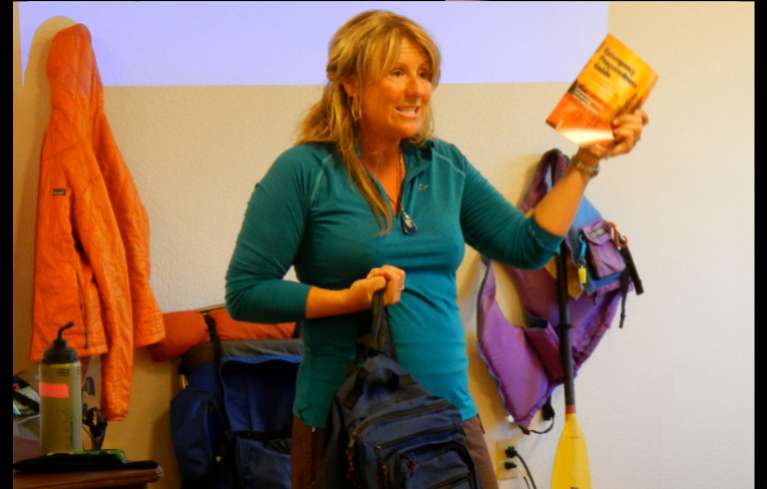
Burns is registered nurse with Barton Health who has had to use some of the advice she dispensed June 12 during a lecture at Kahle Community Center.

Tamara Burns explains ways to survive an expected emergency while playing outdoors. Photo/Kathryn Reed

Tamara Burns explains ways to survive an expected emergency while playing outdoors. Photo/Kathryn Reed

The 10 essentials she says people should carry with them when playing outdoors include:

• Map

• Compass

• Sun protection

• Clothing/hat

• Headlamp/flashlight

• First aid supplies

• Fire starter/matches

• Emergency shelter

• Knife/tools/repair kit

• Food/water.

Burns said people tend to be prepared for bigger excursions compared to a routine bike ride or short hike. But accidents and emergencies can happen at any time.

She is a firm believer duct tape can save the day in almost any situation. Shoes or equipment can be repaired with it. Blisters can be covered with it.

Super Glue is another one of her essentials. Burns says to use it on blisters and cuts. It can be used to seal together a wound.

“The solution to pollution is dilution,” Burns said when it comes to cleaning a wound. Most people aren’t going to carry saline solution with them. So, creating a device that can “shoot” water into the dirty wound to flush it out is the best. This could include a plastic bag filled with water, then puncturing a small hole to squirt water through.

That small hole could be pricked with a safety pin – another tool Burns suggests taking. And take several.

They might be needed to piece together equipment that is falling apart. Or if a splint needs to be devised by wrapping the arm into the bottom of a shirt, pins could be use to immobilize the limb to secure the wrap job.

Hiking and ski poles can be transformed into splints. Stringing a jacket through them creates a litter to haul someone out. Sticks can also do the trick.

A fender on a bike tire can also work as a splint.

For chest wounds, Burns says use gauze on three sides to cover the area. Most likely it’s better to leave the foreign object for a professional to remove.

Don’t move a person with a cervical spine injury. If touching the back of the injured person’s neck hurts them, it’s a serious injury. Roll up a jacket and put it behind them for stability.

“Make sure they are breathing and calm,” Burns said.

Extra clothing can be used to soak up blood.

“You can bleed to death from two things – a fractured femur or fractured pelvis,” she said.

Zip ties and parachute string are other things she likes to have in her pack. Dental floss is another item. It has more uses than just teeth cleaning.

Putting dryer lint in a small waterproof container is all one needs to say they have a fire starter.

Burns recommends testing what you would do in an emergency with family and friends before the real thing happens. Make sure someone knows where you are going and don’t play alone.


Casinos frowning on Google Glass

By Dara Kerr, CNET

It’s looking like gamblers aren’t going to be able to use Google Glass to enhance their poker face.

Even though the high-tech eyewear has not yet been released to the general public, casinos across the U.S. are banning Google Glass, according to the Associated Press.

Taking photos or videos is strictly prohibited in most all casinos, so it makes sense that a gadget touted as being able to record a video with a slight head movement or snap a photo with the wink of an eye wouldn’t be allowed.

According to the Associated Press, casinos in New Jersey, Nevada, Pennsylvania, Ohio, Connecticut, and other states have banned Google Glass because they say it could help players cheat at card games.

Google co-founder Sergey Brin wearing Google Glass. Photo/James Martin/CNET

Google co-founder Sergey Brin wearing Google Glass. Photo/James Martin/CNET

“If these eyeglasses were worn during a poker game, they could be used to broadcast a patron’s hand to a confederate or otherwise be used in a collusive manner,” the New Jersey Division of Gaming Enforcement director David Rebuck wrote in a memo to the state’s casinos, according to the Associated Press.

“Even if the glasses had not been used for cheating… their presence at a gaming table would lead to the perception that something untoward could be occurring, thereby undermining public confidence in the integrity of gaming,” he continued.

Casinos aren’t the only places banning Google’s augmented reality eyeglasses. West Virginia lawmakers are working on a bill that would prohibit drivers from wearing Google Glass while on the road and even a bar in Seattle has announced that it’s a Glass-free zone.


California budget overhauls school funding

By Sharon Noguchi and Mike Rosenberg, San Jose Mercury News

Seven months after his tax initiative refueled funding for California’s beleaguered public schools, Gov. Jerry Brown has orchestrated what’s being billed as a major overhaul of how the state funds K-12 education.

The deal, scheduled for a vote Friday as part of the state’s 2013-14 budget plan, gives districts more control over their own spending and props up schools that teach the most disadvantaged kids.

The new formula will untangle four decades of growing mandates that created more than 60 pots of money for programs like school lunches and libraries. After years of state deficits focused the school funding debate on budget cuts, the proceeds from Brown’s Proposition 30 and rebounding economy positioned the state to change the conversation.

Starting this fall, most of California’s roughly 1,000 school districts will receive a larger base grant to spend as they see fit — supplemented by money for hard-to-educate students. Districts where more than 55 percent of students are poor, English learners or foster kids will receive even more money.

“It’s a huge change,” said David Plank, a Stanford education professor. “The system is clear, transparent and efficient in a way it has not been in the past.”

“I’m elated,” said Michael Kirst, president of the State Board of Education and a key Brown adviser who helped draft the blueprint for the governor’s Local Control Funding Formula.

However, critics say the change falls short.

With funding growing slowly, schools won’t be able to immediately restore the librarians, counselors, music and arts programs cut over the years. Even by 2020-21, the year the full funding formula kicks in, California will not be up to the national average in education funding.

Still, Brown has received much credit for engineering the change in school funding.

“A change in the formula that will strengthen local school districts, help poor kids and kids that have serious language barriers — this is a real step forward,” Brown said Tuesday at a news conference with legislative leaders at the state Capitol. He noted that, along with health care, one of his top two priorities during budget talks was “improving educational opportunity.”

Not only will Brown’s plan allow schools more latitude in how they use state money, it will hold them accountable for results.

How and what schools will have to prove — maybe minimum test scores, narrowing the achievement gap or reducing dropouts — will be set by the State Board of Education beginning next month.

“I think that’s going to be a very lively conversation over the next year,” said Plank, who directs the Policy Analysis for Education group.

How that plays out worries some. “We need to make sure that the accountability is clear and transparent,” said Patty Scripter of the California State PTA. The public, she said, should be able to keep track of how schools spend money and what they achieve.

The plan’s increases will be modest.

“It doesn’t resolve at all the grossly inadequate under-funding of our public schools,” said John Affeldt, lead attorney with Public Advocates, a party to one of two lawsuits filed against the state over the adequacy of education funding. That suit is in the state appellate court.

And other remnants of California’s old funding system won’t change. Most glaring is the dual level of funding: Tax-rich districts like Palo Alto, Mountain View-Los

Altos High, San Mateo Union High and others will retain the property taxes that help boost their schools funding beyond the level that the state would otherwise fund.

Under the new plan, revenue will grow more quickly in districts with high poverty levels, like Oakland Unified, West Contra Costa in Richmond and East Side Union High in San Jose, than in districts with fewer poor children and language learners.

But that is by design: Brown was insistent that schools get more resources to educate more challenging students.

The goal is to improve student performance. But some challenge the significance of the funding change.

Student achievement lags not because of the complicated funding formula but because of overall education spending, said Ron Bennett, executive director of School Services of California, which advises school districts.

“If we will remain last in the nation in per-student funding, it won’t matter that we have this new distribution mechanism,” he said.

Legislators had initially challenged Brown’s goal to give more funding to poor students. But they came around when Brown granted some legislators’ priorities. Assembly Speaker John Perez won phased-in university scholarships for middle-class students while Senate President Pro Tem Darrell Steinberg secured money for mental health programs and dental services for the poor.

“The governor has insisted on fiscal balance and a fundamental reform of how we finance public schools,” Steinberg said. “Those objectives are in this budget, and we’re very proud to join him.”

Sherry Bebitch Jeffe, senior fellow at the USC Price School of Public Policy, called it “refreshing, how (California leaders) actually sat down and came to some kind of compromise. But of course it’s easier now” with the surplus.

The Legislature created the old system in 1972, after the state Supreme Court in Serrano vs. Priest ruled school funding unconstitutional. So the state tried to equalize base funding — which in those days varied with each district’s property tax rate — and provide money for special needs.

“Over time, the old system became very unwieldy because of these 70-some categorical” programs, some of which came and went, Bennett said.

After Proposition 13 limited property tax increases, the state stepped in again to rescue school funding.

In that landmark change in school funding, the governor at the time was none other than Jerry Brown.


El Dorado County Fair retains ag roots as entertainment grows

By Kathryn Reed

Agriculture – it was the common thread of communities that led to the creation of fairs.

The selling of livestock and the celebration of the harvest are not what they once were. But fairs, they are still going strong.

The four-day El Dorado County Fair opens today with the theme Blue Jeans and Country Dreams.

El Dorado County’s fair dates to 1859 when it was in Coloma. The current site in Placerville was first used in 1939.

Mutton bustin is usually a crowd favorite at the El Dorado County Fair. Photo/LTN file

Mutton bustin is usually a crowd favorite at the El Dorado County Fair. Photo/LTN file

The fairgrounds have grown to 47.77 acres. Loren and Mary Forni once owned this land. The $6,196.50 needed to buy the land came from a horseracing pari-mutuel tax account created by the Legislature in 1933. Today the fair is run by a nonprofit, with no money coming from the county’s general fund.

“The importance of fairs is that they instill a sense of community. The community is coming together not only to run into each other at the fair, but to look forward to seeing the animals the kids have raised and to the auction to see how the community comes together for the kids,” Jody Gray, CEO of the fair, told Lake Tahoe News.

While plenty of livestock can be viewed – from cows to rabbits to goats – and an abundance of pies, jams and knitting to marvel over, many who attend this fair and others are doing so for the entertainment.

South Lake Tahoe Mayor Tom Davis, who has been on the fair board for almost nine years, said, “There is a lot less agriculture and more entertainment and bands.”

The board members, though, buy one of the pigs each year and then in the fall have a barbecue. It’s their way of supporting the kids.

Through FFA and 4-H many youngsters on the West Slope participate in a way of life that today is foreign to those living at Lake Tahoe. Cattle no longer have a presence in the basin and few horses are here. The rabbits that are hopping around are wild and tend to be a nuisance to gardeners.

It’s the non-animal contests that Tahoe residents tend to participate in.

Gray, who graduated from South Tahoe High in 1980, said with the growing interest in locally sourced foods more people are competing in the pie and preserved goods competitions.

Plenty of eggs have come in as well because of the proliferation of backyard chicken coops.

Photography entries have also been escalating now that digital is the norm.

Most of the events at the fair are covered with the $9 entrance fee. The carnival rides are separate.

—-

Fair details:

Dates-times: Opens at noon today and goes until midnight. Continues noon to midnight Friday; 10 am to midnight on Saturday; and noon to 10pm Sunday.

Location: El Dorado County Fairgrounds, 100 Placerville Drive, Placerville.

Tickets: $9 for ages 13 and older, $7 for ages 7-12 and seniors, free for children 6 and under and attendees in military uniform. Ride wristbands are $30.

More info: Website or (530) 621.5860.


Full assault on wildland fire keeps it from reaching structures

By Susan Wood

STATELINE – Swirling winds gave firefighters chills Wednesday afternoon as they quickly battled a nearly 15-acre blaze on the top of Kingsbury Grade.

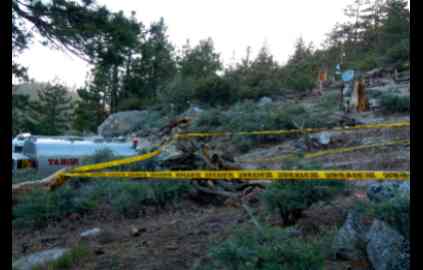
The June 12 blaze started at a spot where fire officials said a property owner is planning to build a home on a private road. A satellite dish erected on a pole and an iron bench mark the potential point of origin. Fire officials told Lake Tahoe News they believe the fire may be human caused. However, as reported earlier, it is possible a smoldering fire ignited from a lightning strike earlier this week could be the cause.

Tahoe Douglas Fire found out about the fire about 3pm when a motorist came into the station at the top of Kingsbury Grade saying smoke was visible while driving from the Carson Valley.

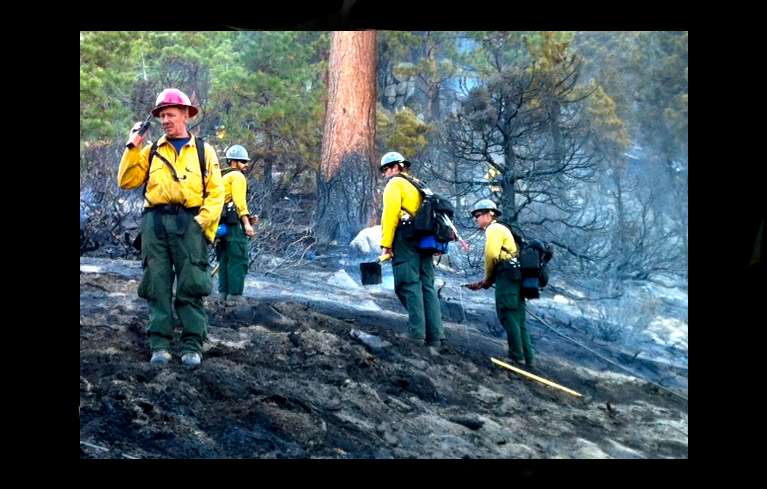
Firefighters on the evening of June 12 work the King Fire. Photos/Susan Wood

Firefighters on the evening of June 12 work the King Fire. Photos/Susan Wood

It took about 200 firefighters, 12 engines and two hand crews nearly five hours to contain the blaze. One firefighter suffered smoke inhalation. No air tankers could be used because of the high winds. A red flag warning is in effect until 11 tonight.

“It started here about 1 acre and moved pretty fast,” said Tahoe Douglas Capt. Bob Child as he showed Lake Tahoe News where the fire started.

Flames at times shot up 30 feet and high winds sparked spot fires farther down the slope toward the valley.

Child said, “If there was no wind, we would have eliminated this to 1 acre. But we got on this really fast.”

He told his crew this morning, “I hope we don’t have a fire today (because of the wind).”

Assisting Tahoe Douglas were the U.S. Forest Service, Genoa, East Fork, and Lake Valley firefighters.

Most of what burned was Forest Service land. Much of the flora was manzanita, which is highly combustible and burns extremely hot. The terrain is a mixture of brush, rocks and pine trees.

Had the fire gotten out of control, it could have reached the town of Genoa. Had the winds changed, Ridge Tahoe would have been in the path if the fire crossed Kingsbury Grade.

“If the wind changes, we have procedures to follow,” Sharon Graham with the resort told Lake Tahoe News. The management team met to make sure everyone was prepared.

Tape outlines the potential point of origin of the 15-acre King Fire.

Tape outlines the potential point of origin of the 15-acre King Fire.

The fire was about three miles north of the ridgetop tourist area. The Ridge knows all about evacuating. Guests had to flee during the 2002 Gondola Fire. And the Ridge was home to firefighters fighting the blaze while it burned toward the resort that Fourth of July weekend.

No evacuation of tourists or residents was necessary with the King Fire.

“We were lucky the wind was headed in the direction it was, blowing northeast,” Child said.

Dave Pereira, assistant fire management officer with the Forest Service, agreed, and was impressed with the “great job the crews did.”

Pereira is concerned about the dry winter the Sierra and all of California and Nevada experienced because fire season has arrived earlier than normal.

No structure beyond the shed on the property where the fire may have started was ever threatened.

Kingsbury Grade was closed for several hours between Tramway on the Tahoe side and Foothill Road on the Carson Valley side.

Firefighters are expected to spend the night to fully extinguish the fire.

— Kathryn Reed contributed to this story.


Novasel wants to be El Dorado County supervisor

By Kathryn Reed

Sue Novasel made it official at Tuesday night’s school board meeting – she is running for El Dorado County supervisor in 2014.

“The biggest issue for people in Lake Tahoe is we need strong representation,” Novasel told Lake Tahoe News.

She said she is working on her platform.

The primary will be in June 2014, with the top two finishers squaring off in November. Official filing is not until February.

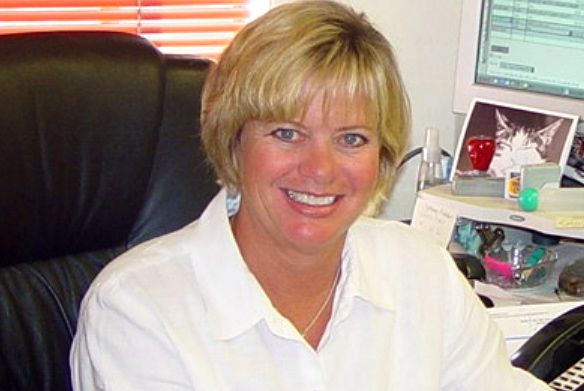
Sue Novasel is the first declared candidate for the 2014 El Dorado County Board of Supevisors. Photo/Provided

Sue Novasel is the first declared candidate for the 2014 El Dorado County Board of Supevrisors race. Photo/Provided

“I want to get the word out early because there is a lot to do,” Novasel said. She did not want to comment on the current turmoil on the board involving Supervisor Ray Nutting.

She said it’s important the next supervisor from Tahoe has a strong community background who understands the issues in the basin.

The 57-year-old is a longtime resident of Meyers and active member of the community.

She has been on the Lake Tahoe Unified School District board since 2003. Her term was supposed to end in 2015, but with the change in elections to even years, it goes to 2016. This means if elected to the full-time county seat, she would have to give up her LTUSD seat and that board would have to decide how to fill the vacancy.

Norma Santiago, who currently represents the county’s 5th District, is termed out.

What will be different in the next election is that District 5 will no longer be a Tahoe-only entity. Redistricting based on the 2010 Census has the district extending to Pollock Pines. This means it’s possible for someone outside of Tahoe to represent this area. There was a time when Tahoe had two reps in the halls of Placerville.

Novasel was instrumental with the first Meyers Community Plan, and has been part of the current one that is wending its way through the governmental process.

She is the incoming president of Soroptimist International South Lake Tahoe – with the induction being June 26.

Novasel is vice president of both the Lake Tahoe Wildlife Care board and South Lake Tahoe Wedding and Honeymoon Association. She owns Tahoe Dream Events, a wedding and event planning business.


South Lake Tahoe council unanimously approves next phase of multimillion dollar Chateau project

By Kathryn Reed

While the four votes by the South Lake Tahoe City council on Tuesday concerning the Chateau project were 5-0, they did not come easily or without some reservations.

What it means is part of the concrete and rebar on the northwest corner of Highway 50 and Stateline Avenue will be covered starting next month, with completion of that phase expected next year.

SMC Contracting, which built what exists today, has been hired by the property owner to do the next phase.

“The design is based on continued vertical construction. Basically it’s a temporary roof that could be permanent,” SMC’s Joe Stewart told the council June 11.

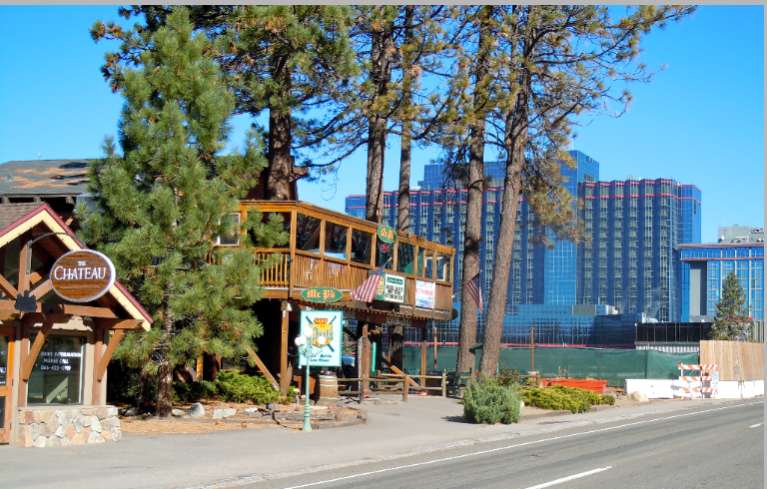
The Chateau project is about to become a partial reality beyond rebar and concrete. Photo/LTN file

The Chateau project is about to become a partial reality beyond rebar and concrete. Photo/LTN file

The next phase is all retail along the highway from the state line to almost the existing McP’s Pub. McP’s will take over the corner location, as was originally planned.

This building was three-stories in its original concept. The top two floors were to be roughly 80 tourist accommodation units of some kind. They still will be, but in another phase of construction that today is called Phase 3.

“I think the whole building is what is best for the community,” Councilwoman Brooke Laine said.

But if that were to happen, the top two floors would be shells. Plus, it would add about another $8 million to construction costs.

The nearly $11 million project that is slated to break ground in July is called Phase 2. Phase 4 would be the convention center and high-end hotel. A stipulation is that before Phase 4 can begin, Phase 3 must be finished.

Owens Financial operating as Tahoe Stateline Ventures is developing the 27,868-square-feet of retail. No leases have yet to be signed, but discussions are under way. Owens Realty Mortgage is the sole investor of TSV, according to Lew Feldman, who represents the developer. Owens Realty Mortgage is a publicly traded REIT.

After 5½ hours of discussion June 11, the council agreed to modify the phases. This means one story instead of three will be built.

The developers had asked for 10,000 square feet of commercial floor area from the Stateline-Ski Run Community Plan to be transferred to the project. While this was always the plan, the amount was for the entire project and not just this segment. What will initially be built is about half of the total commercial floor area for the entire project.

Councilwomen Laine and JoAnn Conner initially proposed half of those 10,000 square feet be used in this phase and the remainder down the road.

Feldman said his client had no other source of CFA.

The Tahoe Regional Planning Agency has made CFAs a commodity with value instead of letting free market dictate how much can be built. The same goes with tourist accommodation units – or hotel rooms. That will likely to be an issue with future phases.

The council agreed to take CFA out of the environmental cache – which has not been tapped in the decade since the Safeway was built – along with half of the community plan CFAs. This leaves the developers needing to find 2,858-square-feet.

Owens Financial has some CFA on other parcels it owns in the project area, but had not wanted to use those for reasons that were not disclosed at Tuesday’s meeting.

Of the $11 million to construct the retail, about $2 million will be spent on stormwater (aka environmental improvements), landscaping, Highway 50 improvements and other upgrades.

Performance and construction bonds are required at a minimum of $10 million each. This means if the developer is unable to finish the project, the city would be able to trigger the bond to get the job done.

Such bonds were not required by the city before the now bankrupt Lake Tahoe Development Company (LTDC) broke ground in 2007.

Putting the developed parcels under one map was also never done. This in turn led to much of the problems that exist today – 29 parcels for one project. The six parcels that will be built on will have one map, all sides say, but the remaining parcels are owned by Owens and City National, with Randy Lane of LTDC in litigation with the McP’s parcel.

Randy Faccinto, attorney for City National, told the council his client is looking for a buyer of the property it owns and is not interested in becoming a developer.

Owens has spent about $30 million in loans on the original project, another $11 million to buy additional land and to pay back taxes.

Swanson said the project is estimated to bring in between $200,000 and $300,000 in sales and property taxes to the city each year.

On Tuesday, the council approved the design changes, commercial floor area allocations, abandonment of city owned roads that will be built on, and acceptance of the right-of-way from Caltrans.

—-

Here are renderings of the latest Chateau project.