Doctors not prescribing best meds for back pain

By Nancy Shute, NPR

The misery of low back pain often drives people to the doctor to seek relief. But doctors are doing a pretty miserable job of treating back pain, a study finds.

Physicians are increasingly prescribing expensive scans, narcotic painkillers and other treatments that don’t help in most cases, and can make things a lot worse. Since 1 in 10 of all primary care visits are for low back pain, this is no small matter.

What does help? Some ibuprofen or other over-the-counter painkiller, and maybe some physical therapy. That’s the evidence-based protocol. With that regimen, most people’s back pain goes away within three months.

But when researchers at Beth Israel Deaconess Medical Center in Boston looked at records of 23,918 doctor visits for simple back pain between 1999 and 2010, they found that doctors have actually been getting worse at prescribing scientifically based treatments.

Read the whole story


El Dorado’s Pierson, Nutting escalate distrust

El Dorado County District Attorney Vern Pierson and county Supervisor Ray Nutting have long been adversaries.

El Dorado County District Attorney Vern Pierson and county Supervisor Ray Nutting have long been adversaries.

By Kathryn Reed

Two El Dorado County elected officials are accusing the other of improprieties in their respective offices.

District Attorney Vern Pierson says Supervisor Ray Nutting may have more conflicts of interest than what a grand jury indicted him on. Nutting believes Pierson is on a witch-hunt and is wasting taxpayer money in a vendetta that goes back several years between the two men.

Pierson sent a letter July 29 to board Chairman Ron Briggs that was copied to all supervisors except Nutting. It was sent to Nutting’s attorney. It also went to county counsel and the chief administrative officer.

In it Pierson says, “Last week our office discovered that District II Supervisor Nutting applied to be certified for Public Housing (Section 8), Housing and Urban Development (H.U.D.) as a landlord for property he owns in El Dorado County. On August 31, 2010, county staff correctly rejected his request due to a statutory conflict of interest: As a supervisor he also sits on the Public Housing Authority, and the federal regulations state that no member of the PHA is eligible to receive Section 8 funds as a landlord. (24 CFR 982.161).”

Nutting told Lake Tahoe News he is being criticized for looking into whether he could have a tenant at his Grizzly Flats rental who qualified for Section 8 housing. He said he was told he couldn’t have such a renter because of being on the Board of Supervisors and added that he has never had such a tenant.

“His actions speak for himself. He blurts things out and doesn’t think about what he is doing,” Nutting said of Pierson. “He is criticizing me for looking into it.”

Nutting further told Lake Tahoe News, “Again, he is abusing his office. I did all the right things. He blatantly wastes taxpayer money. It is unbelievable.”

Pierson was not available for comment. However, a reason for writing the letter is contained in the document: “I am expressing my concern so that you can take the actions you consider appropriate. … Given the pending charges and this new information and Supervisor Nutting’s seemingly cavalier attitude toward conflicts of interest, I felt an obligation to advise the board.”

The letter goes on to say, “Further, records indicate, unlike an ordinary property owner, Supervisor Nutting used his position to appeal this denial to the then Director of H.H.S. who serves at the will of this board. Supervisor Nutting then, on county official letterhead, apparently desperate to secure this rental income ($1,400 for a detached residence in Grizzly Flats), sent a letter to the regional H.U.D. Director seeking a waiver of an obvious conflict of interest. It appears this waiver was never granted under federal law; even if it had been, there is no such waiver of Section 1090 violations under state law.”

After seeing Pierson’s letter, Nutting emailed Lake Tahoe News, “I read the letter. I should be praised for asking the question for the single mom with children. I received the answer and that is the way it should work. I did everything right!”

Nutting is being prosecuted by Pierson as well as the state Attorney General’s Office.


Sandoval spins Nevada’s economic message

By Anjeanette Damon, Las Vegas Sun

If you received all of your economic news from Gov. Brian Sandoval’s campaign Twitter feed, you’d be exuberantly optimistic about the jobs outlook and overall business climate.

As the Republican governor prepares to run for re-election on the strength of his economic record, you won’t see him tweet that Nevada has the highest unemployment rate in the nation.

Instead, you’ll see that Nevada has had “non-stop job growth” and that the state’s unemployment rate is falling faster than almost anywhere else in the country.

You won’t see that Nevada continues to have the highest foreclosure rate in the nation.

Instead, you’ll see that Nevada is in “the top three performers of overall economic performance and growth” — as measured by a U.S. Chamber of Commerce report focused on tax burdens, tort reform policies and business lending.

Read the whole story


West Slope fire department nearly out of money

By Richard Chang, Sacramento Bee

The El Dorado County Fire Protection District is teetering on the verge of insolvency after running deficits for years, according to documents obtained by the Bee.

The district’s reserve fund is down to $130,000, from a peak of $1.4 million in 2008. The department serves 74,000 residents spread over 281 square miles, including the communities of Placerville and Shingle Springs.

“We’ve been using our reserves to balance our budget,” said Michael Hardy, the fire chief who was appointed in June.

Read the whole story


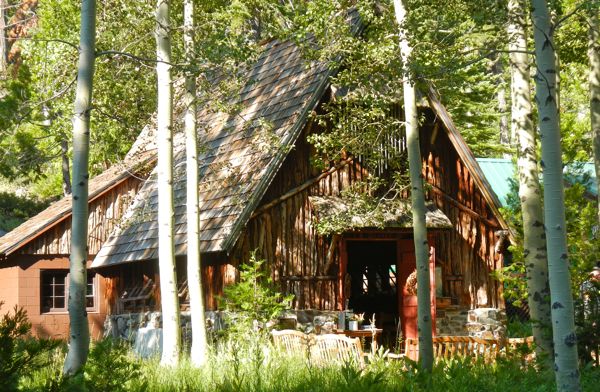
Fallen Leaf Lake church steeped in history

Services have been delivered at St. Francis of the Mountains for 90 years. Photos/Kathryn Reed

Services have been delivered at St. Francis of the Mountains at Fallen Leaf Lake for 90 years. Photos/Kathryn Reed

By Kathryn Reed

FALLEN LEAF LAKE – Many people say their church is found outside immersed in the mountains. The chapel at Fallen Leaf Lake takes that to another level.

Bells ring through the forest to announce the start of the 8am service on Sunday.

And while St. Francis of the Mountains is a traditional church in most ways, it embraces nature. Walking up the slate path it’s like being in a lush green garden. A chill is in the air on this last Sunday of July.

This seasonal church welcomes more than those who call Fallen Leaf Lake home.

This seasonal church welcomes more than those who call Fallen Leaf Lake home.

Inside it’s like the walls are a warm coat – even for those who prefer a church of granite.

The stone – even on the floor – and the wood interior bring the outdoors inside.

This chapel was a vision of those who helped establish the enclave at the base of Desolation Wilderness on the South Shore. It was in 1921 that the stone foundation was laid by William Price and Walter Hansen.

A variety of fundraisers were conducted to raise the money to make the sanctuary a reality.

The Rev. David Evans delivered the first service in 1923; with the chapel being dedicated to Price.

When first built, the church was non-denominational. It was in 1978 that the Price family deeded the chapel to the Episcopal Diocese of Northern California.

“The cross upon the altar came from the temporary chapel at Grace Cathedral in San Francisco after the earthquake and the fire of 1906. The marble credence table is made from the only unbroken pillar of the communion rail of the old Stanford University Chapel that survived the quake,” Janet Beales Kaidantzis writes in the book “Fallen Leaf: A Lake and Its People 1850-1950”.

The interior is simple – proving that opulence is not needed to commune with God.

Debra Warwick-Sabino, second from left, welcomes first-time congregate Cleo Reed of Paradise, and Sue Wood and Pam Valentine.

Debra Warwick-Sabino, in white, welcomes first-time congregates Cleo Reed, Sue Wood and Pam Valentine.

Guest ministers deliver sermons on a rotating basis. On July 28 it is Debra Warwick-Sabino from Grace Church in Fairfield at the pulpit. She has been coming to Fallen Leaf Lake for 13 years.

“We are all one. We really get that at this place,” Warwick-Sabino tells the more than dozen people gathered for the first service.

Most people have attended previous services. This is also a more packed room than usual for the early session. Warwick-Sabino asks how long people’s roots at Fallen Leaf Lake go back. Fifty years for two people.

Someone has requested music. Warwick-Sabino’s husband, Rob, is quick to accommodate. He is a music director at a Catholic church. He uses the tiny piano off in the corner to provide the accompaniment for the small congregation.

A memorial garden is to the left of the chapel. Names of those who have died line a wall of stone. One area is dedicated to volunteers for Fallen Leaf’s fire department. A large round is set aside for remembrance to people’s four-legged family members.

This area is a bit overgrown in a natural way that allows one to commune with Mother Nature while remembering those who are gone.

—-

Notes:

• The chapel is located at the far end of Fallen Leaf Lake just before the fire station.

• Services are June-September at 8am and 10am; and are open to anyone.


Human impact on Yosemite may be reduced

By Norimitsu Onishi, New York Times

YOSEMITE NATIONAL PARK — Far humbler corners of America have faced a similar dilemma: How much human activity should be allowed in a natural setting that is also promoted as a tourist destination?

The National Park Service is proposing a significant makeover of Yosemite National Park that would change the way future generations of visitors experience the park, especially the seven-mile-long Yosemite Valley at its heart. The Park Service’s plan would restore more than 200 acres of meadows, reorganize transportation and reduce traffic congestion. To shrink the human presence along the Merced River, park officials are also proposing closing nearby rental facilities for bicycling, horseback riding and rafting, as well as removing swimming pools, an ice rink and a stone bridge.

As with most things related to one of the nation’s most beloved national parks, the plan has ignited fierce debate among environmentalists, campers, and officials in California and Washington.

Rep. Tom McClintock, a Republican whose district includes Yosemite, said at a recent House hearing that the idea of removing commercial facilities was meant to satisfy “the most radical and nihilistic fringe of the environmental left.” But some environmentalists said the plan did not go far enough in protecting Yosemite Valley and the Merced River, which flows through 81 miles of the park.

Read the whole story


Study: Satisfaction in life all depends on age

By Vanessa Allen, Daily Mail

If you’re middle-aged and miserable, don’t despair: Give it a decade or two and you’ll be feeling like a carefree young person again.

Researchers have revealed that life satisfaction peaks at 23 and 69. People in their early 20s overestimate their future life satisfaction by an average of around 10 percent, before the disappointments of life kick in.

They face decades of declining expectation before hitting their lowest point in their mid-fifties, when regrets over unrealized dreams are at their greatest.

Satisfaction levels finally start to rise again after 55 and peak once more at 69, according to a study by the Centre for Economic Performance at the London School of Economics.

Those aged 68 underestimate their future happiness by 4.5 percent, meaning they no longer face disappointment, the researchers found.

Previous studies have found that human contentment follows a U-shaped pattern, with those in their early 20s and the retired ranking highest.

The pattern has been observed in more than 50 nations and across class and financial divides.

And a study by the National Academy of Sciences in the U.S. found evidence that even great apes can suffer a mid-life crisis.

The CEP paper, published last week, is the first to examine how our expectations compare to reality at different life stages.

Researcher Hannes Schwandt, 30, analyzed happiness levels for 23,161 Germans aged 17 to 85.

Schwandt, who is based at Princeton University, but is a visiting researcher at the London center, said: “One theory is that the U-shape is driven by unmet aspirations which are painfully felt in midlife but beneficially abandoned later in life.

“People in their 50s could learn from the elderly, who generally feel less regret. They should try not to be frustrated by their unmet expectations because they are probably not feeling much worse than their peers.”


CPR device frees paramedics to give other care

By Kathryn Reed

It may not be a paramedic doing chest compressions when the ambulance arrives. Instead, it could be Auto-Pulse.

“It has definitely been a game changer in how we run our CPR calls,” South Lake Tahoe firefighter Scott Blasser told Lake Tahoe News. “Auto-Pulse will provide more consistent profusion pressure across the board.”

It’s the size of a boogie board and is heavy, so it’s not something that would be carried by search and rescue crews.

A band is placed over the patient’s chest and the machine does compressions on the heart instead of an EMT or paramedic.

This shows a mock patient on the Auto-Pulse board with the compression strap on. Photo/Provided

This shows a mock patient on the Auto-Pulse board with the compression strap on. Photo/Provided

The devices are on South Tahoe and Lake Valley fire departments’ three primary ambulances. They were bought earlier this year at a cost of about $15,000 each.

It’s something that can be used on most any cardiac call. The limitations of the machine are based on the size of the person – if they are too small or too large.

When a man who nearly drowned earlier this month in one of the canals in the Tahoe Keys was pulled from the water crews used the Auto-Pulse to help revive him.

South Tahoe Fire Chief Bruce Martin has been aware of the devices for about a decade and said they made a world of difference when he worked in Fremont.

“Now we have a machine that takes the place of human labor. It does it consistently and it doesn’t get tired,” Martin told Lake Tahoe News. “We think it contributes to the successful outcome in cardiac care.”

Blasser explained that the evolution of cardiopulmonary resuscitation is that compressions are more important than breaths. And that consistency and depth of the compressions is critical to the recovery of the patient. This machine and others like it can provide pressure and consistency better than a person.

This in turn allows the paramedic to be doing other things like administering drugs, working on wounds, starting an IV, intubation and other vital medical care.

It would also usually take two people to perform CPR because one person can only go so long, so they trade off.

“Given the circumstances we encounter, people have done CPR for an hour,” Martin said.

And if a battery runs out on the Auto-Pulse, manual labor is still possible.

Blasser said another good thing about Auto-Pulse is that is able to keep doing the compressions when the crews are lifting the patient onto a gurney or if they have to be turned.

So far, the Auto-Pulses is being used about a handful of times a month.

“It improves the quality of job we can do,” Blasser said.


Farm pesticides found in Sierra frogs

By Becky Oskin, LiveScience

Pesticides from California’s valley farms are collecting in the tissues of a singing treefrog that lives in pristine national parks, including Yosemite and Giant Sequoia, a study finds.

The chemicals include two fungicides never before found in wild frogs, said Kelly Smalling, lead study author and a U.S. Geological Survey research hydrologist. The study was published July 26 in the journal Environmental Toxicology and Chemistry.

“Fungicides have been registered for use for many years, but for some reason, they haven’t really been on anybody’s radar screen until recently,” said Smalling, who is based at the USGS California Water Sciences Center in Sacramento.

A Pacific treefrog, also known as a Pacific chorus frog. The frog is about the size of a silver dollar. (Photo: USGS)

The Pacific treefrog is about the size of a silver dollar. Photo/USGS

California’s Central Valley is one of the country’s most productive agricultural regions; crops include stellar wine grapes, nuts and kiwis. Agricultural pesticides and fungicides have been detected more than 100 miles (160 kilometers) to the east, in the rural Sierra Nevada’s snow, water, air and amphibians. But valley farmers aren’t the only source of agricultural chemicals: Illegal marijuana gardens hacked into public lands also expose wildlife to fertilizers and toxic rat poison, other studies have shown. Rare predator species, such as spotted owls and fisher cats, eat the poisoned mice and die.

“The marijuana cultivators make trail systems to go in, and put toxicants at every clearing,” said Mourad Gabriel, a UC Davis wildlife disease ecologist who studies the effects of rodenticides on rare species. “A lot of predators will use any type of trail system, so you can imagine the potential risk to multiple different species.”

Scientists first noticed sharply declining frog populations in the Sierra Nevada starting in the 1980s. (The problem is global. Amphibians everywhere are suffering steep population losses and strange deformities.) Earlier studies by the USGS researchers found toxic pesticide concentrations in several frog species living in the national parks. In 2009 and 2010, the scientists resurveyed many of the same sites, Smalling said.

Their species of choice was the bright-green Pacific chorus frog (also known as the treefrog). On spring nights, males gather on the shores of ephemeral ponds and lakes to sing for mates. That’s when biologists headed out with flashlights — to spot the frog’s eyes — and scooped up the silver-dollar-size suitors. “They’re very focused on attracting a female, so they don’t pay much attention to what’s around in their environment,” Smalling said.

Researchers collected Pacific chorus frogs on a north-south transect across Lassen Volcanic National Park, Lake Tahoe, Yosemite National Park, Stanislaus National Forest and Giant Sequoia National Monument. They tested frog tissue, water and sediment samples for more than 90 different pesticides and fungicides.

The most common chemicals in the frogs were the agricultural fungicides pyraclostrobin and tebuconazole and the herbicide simazine. DDE, a byproduct of the pesticide DDT, was also frequently found.

“This hammers home the point that even if you’re in an area that looks wild and natural, it can have very serious impacts from human activities 100 miles, or even more, away,” said Brad Shaffer, director of the UCLA La Kretz Center for California Conservation Science, who was not involved in the study.

The chemical concentrations were often higher in frog tissues than in the environment. “The contaminants in the water and sediments were ridiculously low,” Smalling said.

The frogs may store up small exposures over time, or there simply wasn’t any pesticide when the water and sediment samples were taken, the researchers suggest. “We don’t really understand the biology of these compounds and how they interact with the amphibians,” Smalling said.

While scientists agree that pesticides likely contribute to the dramatic decline in amphibians, there are many reasons that frogs are disappearing. The heavyweight is habitat destruction and degradation, followed by an infectious disease called chytridiomycosis. In the Sierras, introducing trout into mountain lakes also hit frogs hard, because the fish gobbled up tadpoles and tiny frogs.

Climate change is another factor.”The complexity is very hard to deal with,” Shaffer said. “These kinds of field surveys at least tell us what’s out there in those habitats and what’s accumulating in at least some frogs, and that gives you candidates to simplify the problem.”

Most pesticides in the Sierra come from the Central Valley. The pesticides travel to the mountains as aerosols, tiny particles that waft into the atmosphere on warm, rising air currents. Winds coming off the Pacific Ocean blow the aerosols west to the mountains, where they fall out of the atmosphere in rain and snow.

However, a boom in illegal pot farms in the past five years has brought a new chemical source into the parks. The cultivators spray pesticides and fertilizers and spread rat poison. Rodents that eat the poison live for two to seven days before keeling over, giving predators plenty of time to capture their dazed prey.

UC Davis’ Gabriel and his colleagues are seeing the effects of these chemicals on the fisher cat, a carnivore being considered for Endangered Species Act listing. Fisher cats nibble on everything from acorns to deer carcasses. The scientists found rat poison in 85 percent of fisher cat carcasses collected on public and tribal lands, according to a study published in June in the journal Conservation Letters. The animals are also passing the poison on to their kits when the babies nurse, Gabriel said.

The UC Davis group is now testing barn owls, which rely more heavily on rodents for food than fisher cats do. Spotted owls have tested positive for rodenticides in Oregon, and Gabriel said preliminary data indicates barn owls are snaring poison-laced mice.




FDA wants to enforce standards for imported food

By Sabrina Tavernise, New York Times

WASHINGTON — The Food and Drug Administration proposed sweeping new rules on Friday that would require food importers like Walmart and Cargill to make sure that their foreign growers and processors were following American food safety standards to prevent contamination in an increasingly globalized food supply.

About 15 percent of food that Americans eat comes from abroad, including nearly two-thirds of fresh fruits and vegetables.

The rules, if made final, would shift the responsibility for ensuring that food is safe from the FDA to companies. American companies would have to prove that their foreign suppliers had controls in place through actions like auditing the foreign facilities, testing food, and reviewing records. American importers would have to keep their own records on foreign suppliers. They would be allowed to hire outside auditors to make on-site inspections.

These are the last major rules needed to implement the Food Safety and Modernization Act, a landmark law passed by Congress in 2010 that was the first significant update of the agency’s food safety authority in 70 years. The administration has been criticized for not moving more quickly to carry out the law. The first set of rules, which applied to domestic producers, was proposed in January. The new rules proposed Friday exempt importers of seafood and fruit juices.

Read the whole story