The importance of youth snow safety education

By Jack Foersterling, Powder
 
Every year, our sport progresses as new ski and binding technologies emerge to enable us to go bigger and faster, while new lifts bring us to higher peaks and steeper terrain. But with these rapid advancements in technology, one thing remains constant. Skiing is, and always will be, an inherently dangerous activity to take part in.

That’s why, over the last decade, there has been an increased emphasis on education and safety within the ski industry. For many, this can be seen in the increasing number of adult skiers getting their Level 1 avalanche safety certification or taking other various safety courses. Others, however, are looking to take on the issue from the ground up, focusing their attention on an often overlooked demographic of the ski population–the youth.

“The biggest risk today is that there are so many amazingly talented kids going out there with little to no snow education,” said Chris Anthony, a professional skier and the founder of a nonprofit, Chris Anthony Youth Initiative Project, that focuses on the younger generation of skiers.

Read the whole story


Truckee cross country skier an Olympic hopeful

By Giuliana Rende

TRUCKEE — When asking homeowners and visitors what they love most about Tahoe Donner, one might expect them to start with praises for the majestic scenery, the convenient accessibility and the huge array of activities and programs. Yet, what you’re more likely to hear from both long- and short-term residents is that it’s the people. The personal connections. The chance to unplug from their devices, and swap their online “communities” for a real-life community, taking place in real-time, with real people.

Tahoe Donner residents are bonded together under one powerful passion – love for the outdoors. And no one understands the strength of this community and its bond better than Hannah Halvorsen.

Born and raised in Tahoe Donner, Hannah Halvorsen is a 19-year-old cross country skier on the U.S. Ski Team. She’s a member of the 2017 World Junior Championships bronze medal-winning relay team, and has her sights determinedly set on representing the U.S. at the 2018 Olympic Games in PyeongChang, South Korea.

When talking with Halvorsen, it quickly becomes clear that she credits Tahoe Donner’s warm community and world-class programs as integral parts in helping her get where she is today, and reaching her goals for the future.

Hannah Halvorsen of Truckee is a contender for the 2018 Winter Olympics. Photo/Provided

Where it all began

“My first introduction to cross country skiing was being pulled in the back of a sled by my parents at the Tahoe Donner Cross Country Center,” Halvorsen says. Her successful career began not only on the cross country trails here, but also in the many places and programs throughout the community.

A big smile overtakes her face when she talks about getting up, snow or shine, every weekend for a family ski, hitting the trails not only with her parents and brothers, but also with the other kids and families in the community.

Halvorsen also talks fondly about her elementary school memories of attending the cross country after-school ski program, crediting it as a vital part of her development as a junior skier.

“The weekend family ski became constant, as did the people we ran into. The same people were always out there to a level of consistency that if we didn’t run into Mark Nadell we would ask him the following week where he was last Saturday,” Halvorsen said.

It was there that she began to form life-long bonds with other skiers who were also becoming passionate about skiing.

Hannah Halvorsen and her teammates celebrate their bronze medal at the 2017 World Junior Championships. Photo/Provided

Passion grows, talents flourish

Halvorsen continued her development as a competitive ski racer throughout middle and high school, spending countless hours training on and off the snow. She worked tirelessly, honing her cross country skills and her fitness levels to become a serious competitor on the international stage. According to Halvorsen, it was during this time that she quickly realized the rare and valuable opportunity she had to be training at one of the world’s premier Nordic ski training centers.

“Older teammates of mine who had traveled the world for racing would confidently name Tahoe Donner as the most spectacular place to cross-country ski. We could go for hours without repeating a single trail,” Halvorsen said.

She recalls hitting the trails daily, often twice per day, for hours at a time. Her common routine was to start at the break of dawn doing hard intervals to Hawk’s Peak before school, and then back to the trails after school, often training past sundown. In fact, Halvorsen estimates that she probably did several hundred evening recovery jogs around Lion’s Leap.

From junior racer to Olympic hopeful

Throughout high school, Halvorsen continued to develop as a ski racer, and began reaching goals that proved she was on track toward realizing her Olympic dreams. In her sophomore year she qualified to represent the U.S. in Finland at the Under-18 Nations Cup, and in her junior year she competed in Sweden and Norway. In her senior year, Halvorsen qualified for and competed in the Youth Olympic Games in Lillehammer.

After graduating high school in 2016, Hannah was nominated to the U.S. Development Ski Team. She and her relay team went on to compete at the World Junior Championships in Park City, Utah, where they earned the first U.S. bronze medal in the event’s history.

Just this past June, Halvorsen moved to Anchorage to join the Alaska Pacific University Ski Team and enroll as a psychology major. As much as she loves her amazing new surroundings, she is already eagerly anticipating her visits back to Truckee.

Support Halvorsen

Although Halvorsen is now a member of the U.S. Ski Team, her ski training and travel are not fully funded. Halvorsen and her family are working to raise funds, and hoping that the Tahoe community can help. To donate, go online.


Dense blob has kept California weather dry

By Dale Kasler And Ryan Sabalow, Sacramento Bee

Think of it as a dense blob of air. When it parks itself over the Pacific Ocean, it can act like a wall – and prevent rain and snow from reaching Northern California.

When meteorologists say a “high pressure system” or a “ridiculously resilient ridge” is keeping the West unseasonably dry, this is what they mean.

A series of persistent high pressure systems over the Pacific factored heavily in the five-year drought that ended last spring. The latest high pressure system produced one of California’s driest Decembers on record, left the Sierra Nevada snowpack woefully thin and raised fears of a drier-than-average winter. Although the system appears to be fizzling out, allowing some precipitation to hit California this week and next, the outlook for the rest of winter remains uncertain.

Climatologists say California is essentially at the mercy of high pressure systems.

Read the whole story


Road salt, other pollutants may disrupt circadian rhythms

By Jennifer Marie Hurley

Every winter, local governments across the United States apply millions of tons of road salt to keep streets navigable during snow and ice storms. Runoff from melting snow carries road salt into streams and lakes, and causes many bodies of water to have extraordinarily high salinity.

At Rensselaer Polytechnic Institute, my colleague Rick Relyea and his lab are working to quantify how increases in salinity affect ecosystems. Not surprisingly, they have found that high salinity has negative impacts on many species. They have also discovered that some species have the ability to cope with these increases in salinity.

But this ability comes at a price. In a recent study, Rick and I analyzed how a common species of zooplankton, Daphnia pulex, adapts to increasing levels of road salt. We found that this exposure affected an important biological rhythm: The circadian clock, which may govern Daphnia‘s feeding and predation avoidance behaviors. Since many fish prey on Daphnia, this effect could have ripples throughout entire ecosystems. Our work also raises questions about whether salt, or other environmental pollutants, could have similar impacts on the human circadian clock.

Daily biological rhythms and the circadian clock

In studying how road salt affects aquatic ecosystems, the Relyea lab showed that Daphnia pulex can adapt to handle moderate exposures in as little as two and a half months. These levels ranged from 15 milligrams of chloride (a building block of salt) per liter of water to a high of 1,000 milligrams per liter – a level found in highly contaminated lakes in North America.

However, an organism’s ability to adapt to something in its environment can also be accompanied by negative trade-offs. My lab’s collaboration with Rick’s began in an effort to identify these trade-offs in salt-adapted Daphnia.

In my lab, we study how our circadian rhythms allow us to keep track of time. We investigate how the molecules in our cells work together to tick like a clock. These circadian rhythms allow an organism to anticipate 24-hour oscillations in its environment, such as changes from light (daytime) to dark (nighttime), and are essential to an organism’s fitness.

Rick and I hypothesized that adaptation to high salinity could disrupt Daphnia’s circadian rhythms based on recent evidence showing that other environmental contaminants can disrupt circadian behavior. One important behavior in Daphnia that may be controlled by the circadian clock is the diel vertical migration – the largest daily biomass migration on Earth, which occurs in oceans, bays and lakes. Plankton and fish migrate down to deeper water during the day to avoid predators and sun damage, and back up toward the surface at night to feed.

Given what we know about circadian function, it would be logical to assume that exposure to pollution would not affect an organism’s circadian rhythms. While circadian clocks can incorporate environmental information to tell the time of day, they are heavily buffered against most environmental effects.

To understand the importance of this buffering, imagine that the timing of an organism’s day length responded to environmental temperature. Heat speeds up molecular reactions, so on hot days the organism’s 24-hour rhythm could become 20 hours, and on cold days it might become 28 hours. In essence, the organism would have a thermometer, not a clock.

Adaptation to pollution affects key circadian genes

To determine whether clock disruption is a trade-off to pollutant adaptation, we first had to establish that Daphnia is governed by a circadian clock. To do this, we identified genes in Daphnia that are similar to two genes, known as period and clock, in an organism that serves as a circadian model system: Drosophila melanogaster, the common fruit fly.

We tracked the levels of period and clock in Daphnia, keeping the organisms in constant darkness to ensure that a light stimulus did not affect these levels. Our data showed that the levels of period and clock varied over time with a 24-hour rhythm – a clear indication that Daphnia have a functional circadian clock.

We also tracked the same genes in populations of Daphnia that had adapted to increased salinity. Much to my surprise, we discovered that the daily variation of period and clock levels deteriorated directly with the level of salinity the Daphnia were adapted to. In other words, as Daphnia adapted to higher salinity levels, they showed less variation in the levels of period and clock over the day. This demonstrated that Daphnia’s clock is indeed affected by pollutant exposure.

Daphnia and other plankton are among the most abundant organisms on Earth and play critical ecological roles.
We currently don’t understand what causes this effect, but the relationship between salinity levels and decreased variation in the levels of period and clock offers a clue. We know that exposure to pollutants causes Daphnia to undergo epigenetic regulation – chemical changes that affect the function of their genes, without altering their DNA. And epigenetic changes often show a gradual response, becoming more pronounced as the causal factor increases. Therefore, it is likely that high salinity is inducing chemical changes through these epigenetic mechanisms in Daphnia to suppress the function of its circadian clock.

The broad effects of circadian clock disruptions

We know that environmental conditions can affect what the clock regulates in many species. For example, changing the sugar that the fungus Neurospora crassa grows on changes which behaviors the clock regulates. But to our knowledge, this study is the first to show that genes of an organism’s core clock can be directly impacted by adapting to an environmental contaminant. Our finding suggests that just as the gears of a mechanical clock can rust over time, the circadian clock can be permanently impacted by environmental exposure.

This research has important implications. First, if Daphnia’s circadian clock regulates its participation in the diel vertical migration, then disrupting the clock could mean that Daphnia do not migrate in the water column. Daphnia are key consumers of algae and a food source for many fish, so disrupting their circadian rhythms could affect entire ecosystems.

Second, our findings indicate that environmental pollution may have broader effects on humans than previously understood. The genes and processes in Daphnia’s clock are very similar to those that regulate the clock in humans. Our circadian rhythms control genes that create cellular oscillations affecting cell function, division and growth, along with physiological parameters such as body temperature and immune responses.

When these rhythms are disrupted in humans, we see increased rates of cancer, diabetes, obesity, heart disease, depression and many other diseases. Our work suggests that exposure to environmental pollutants may be depressing the function of human clocks, which could lead to increased rates of disease.

We are continuing our work by studying how the disruption of Daphnia’s clock affects its participation in the diel vertical migration. We are also working to determine the underlying causes of these changes, to establish whether and how this could happen in the human brain. The impacts we have found in Daphnia show that even a simple substance such as salt can have extremely complex effects on living organisms.

Jennifer Marie Hurley is an assistant professor of biological sciences as Rensselaer Polytechnic Institute.


Lukins rates affected by third party contamination

By Kathryn Reed

Lukins Brothers water customers are likely to have higher water bills in order to deal with contaminants in the groundwater that the company had nothing to do with.

If only it were as easy to get rid of the “stain” on South Lake Tahoe’s groundwater as it is to dry clean a blouse.

It is PCE – tetrachloroethylene – a solvent used at the old Lake Tahoe Laundry Works at the Y that is blamed for polluting the aquifer and contaminating wells used by Lukins, South Tahoe Public Utility District and Tahoe Keys Water District.

While Lahontan Regional Water Quality Control Board is tasked with determining who is responsible for remediation, what that would then look like and how it will be paid, progress is moving at a glacial pace.

PES Environmental out of Novato has been in South Lake Tahoe this week near the Y using “remote sensing equipment to see what the subsurface swales are like and where potential contamination is,” Jeff Brooks, an engineer with Lahontan, told LTN. These are screening instruments. This work will be followed up with water samples; results could be ready by the end of the month.

The state first mandated water companies test for PCE in 1989.

Lukins was the last of these three companies to be affected, with detection coming in July 2014. Since that time the family-run business that has 975 customers has been trying to solve the problem with the cooperation of the other water districts and various regulatory agencies.

Lukins lost use of four of five wells, though the biggest producing one is still in operation. Tahoe Keys had to shut down two of its three wells. South Tahoe PUD had to shut wells, but has since drilled new ones.

Lukins is in the process of requesting approval from the California Public Utilities Commission to go out for a $2.1 million loan that would be used to build a treatment plant. In the long run, this will be cheaper so the company could stop buying water from STPUD.

At the same time Lukins is applying for a state grant that would do the same thing, and in turn would be less of a burden to the ratepayers.

The loan route would on average add $15 to customer’s monthly bills for the next 20 years. This would make monthly bills about $91.

The public comment period has closed and now Lukins has about another week to respond to the 10 letters that were submitted regarding the loan request/rate increase.

“In general they are protesting the increase, saying the amount is too much. They say they should not pay for something they did not cause, which I agree with. But at this point and time we have to get the wells up and running,” Jenn Lukins, who runs the water company, told Lake Tahoe News. “I’m doing everything in my power to find alternate solutions, to get the responsible parties to pay, and to get a grant.”

She’d like the public to direct their frustration/concerns to Lahontan and the Division of Drinking Water to prod those state agencies to do more and do it faster.

“We are working to get a plan up to our standard,” Brooks, the senior engineering geologist with Lahontan, said. “We are trying to do what we can as fast as possible. These cases generally are not fast.”

Some believe there have been plenty of studies, that now is the time for real cleanup of what is out there. Compounding the problem is there are at least two plumes and the original source undetermined. Even though the dry cleaners is being blamed, where exactly it oozed from is a mystery, so it’s not like anyone can plug a hole or turn off a spigot.

While there is somewhat of a remediation plan in place, it is not all encompassing. Part of this has to do with the plume moving, lack of consensus if all of the contamination is from the former dry cleaner, and then who associated with that business and building should be liable.

The system in place near the site that is supposed to treat the water was offline between August and November because of a dispute with the electric bill. The state didn’t learn of this until an email was sent Nov. 10 by those responsible for the remediation. The local water companies were never advised more pollutants were headed their way.


Calif. homeowners struggle to get fire insurance

By Johnathan J. Cooper, AP

California’s top insurance regulator said Thursday that insurers are increasingly refusing to offer homeowner’s policies in areas prone to wildfire — a problem that’s likely to get worse as companies respond to last year’s devastating blazes.

Insurers in 2016 refused to renew more than 10,000 policies in the 24 counties most prone to wildfires, according to a report issued by Insurance Commissioner Dave Jones. That was up 15 percent from the prior year, when fires in Lake and Calaveras counties destroyed more than 3,000 buildings and became some of the most destructive in state history.

Read the whole story


Where do those snowfall totals come from?

By Bill Syrett, The Conversation

The Blue Hill Observatory, a few miles south of Boston, recorded the deepest snow cover in its 130-year history a couple of years ago, an incredible 46 inches. In February 2015, Bangor, Maine tied its record for deepest snow at 53 inches. Mountainous locations will sometimes see triple-digit snow depths.

Impressive numbers for sure, but assuming you have a measuring stick long enough to reach the ground beneath all the white, really, how hard can it be to measure? You stick a ruler or yardstick into the snow and get a number, right? Well, not so fast. It’s a little more complicated than you might think to get those oh-so-important snow totals for winter storms.

Since 1890, the National Weather Service has relied on a network of volunteer observers, all strictly adhering to the NWS guidelines, to come up with snow measurement numbers over a region. There are over 8,700 cooperative observers across the country who send in their weather data to the NWS daily, some who have done it for over 75 years!

Snow measurement is inherently inexact, but attention to one’s surroundings and sticking to the guidelines help those of us who do it on a regular basis stay consistent – and with long-term weather records, consistency is arguably just as important as accuracy.

First, we do need to differentiate between snow depth and snow fall.

How deep is your snow

Snow depth should be a measure of the average depth in a given location and its immediate surroundings. It’s usually rounded to the nearest whole number. To get a representative number, you need a site with minimal drifting (not always easy to find) and several measurements should be averaged to get a final number. I like 10 because it makes the math easy.

Careful measurement is vital so we can make reasonable estimates for the amount of liquid contained in the snowpack. As hard as it is to believe at times, the snow will eventually melt, and rapid melting could cause problems with flooding. Also, hydrologists’ models to predict water levels critically depend upon good initial data collection (though improved satellite data has helped reduce their reliance on any individual measurement).

Snow depth is like the sum of individual snowfalls, if one assumes no sublimation – snow turning into water vapor – or melting from the first snowfall until the present day. That assumption would almost always be wrong, of course, but if we suspend reality for a moment, the depth will still never exceed the sum of all snowfalls because snow is compressible. So, two 10.5-inch snowfalls may only accumulate to a depth of 17 inches. It’s the compressibility of snow that causes the greatest consternation and controversy with snowfall measurement.

How much snow did a storm bring

Snowfall is the amount of snow that accumulates during a given time, usually a 24-hour period. In a perfect world this 24-hour period would end at midnight, but the vast majority of National Weather Service cooperative observers take their daily observation in the morning.

To properly measure snowfall, you need a level and flat surface. As with snow depth, measuring snowfall should be unaffected by drifting. The National Weather Service suggests the use of a snowboard, which is a white surface that will absorb very little sunlight and stay close to the ambient air temperature, but any “cold” surface will do. Keeping in mind that consistency is critical, the goal here is to make a measurement that is representative of the surrounding area and consistent with others making snowfall measurements.

More complicated cases…

So, let’s consider three common scenarios. Here in the East, we often have to deal with snow that changes to rain during the course of a storm. Imagine 6.0 inches of snow falls, then an inch of sleet which compacts the snow to a 4-inch depth. Then, on top of that we have an inch of freezing rain which further compacts the snow to 2.6-inch depth by the end of the observation period. What should be listed as the daily snowfall? The snow depth?

In this situation, when the snow transitions to sleet, the snowboard should be cleared and the maximum depth of snow recorded, which is 6 inches in this case. Do the same with the sleet and this will add an inch to the snowfall (technically, “solid precipitation”) total. Freezing rain is never added to the daily snowfall total because it is in liquid form when it reaches the ground. Thus, the daily snowfall is 7.0 inches (measured to the nearest tenth of an inch) while the snow depth at observation is rounded to 3 inches.

In the case where, say, three heavy snow showers occur one afternoon, each dumping 1.5 inches before melting completely, the daily snowfall would be 4.5 inches with an observed depth of zero at the daily observation time. This assumes an observer is there to measure each short-lived accumulation. But because most observers are volunteers that’s not always the case, unfortunately.

 Finally, we come to the controversy. Let’s assume a steady snow falls for the entire 24-hour period at a rate of 2.0 inches per hour. If the snow board were cleared every hour, the daily snowfall would be 48.0 inches. But what if the observer could only be there at the daily observation time? By then the snow will have compacted some, depending upon the temperature and the amount of liquid in the snow, which can vary between about a quarter inch and three inches of liquid water for every 10″ of snow.

This observer would log significantly less snowfall – for the exact same event – than the person who cleared the board every hour. This is a problem. The National Weather Service addresses it by mandating that no more than four snowfall measurements should be made in any 24-hour period. Ideally then, an observer who went to the snowboard every six hours and cleared 10.5 inches, 9.3 inches, 11.5 inches and 10.8 inches would get the officially correct snowfall measurement of 42.1 inches.

Several years ago, an observer in New York measured 77.0 inches of snow in a 24-hour period, which would have broken the record for heaviest one-day snowfall in U.S. history. However, it was determined that he cleared the snowboard much too frequently, thus inflating the daily total and invalidating the record.

Intrigue, suspense, mystery, controversy! So much more than just sticking a ruler in the snow. If it all sounds like a daily dose of meteorological fun to you, maybe you’ve got what it takes to volunteer for the NWS’s Cooperative Observer program, where it’s not all about the white stuff. Daily high and low temperatures and precipitation of all forms are also measured, to strict NWS standards, of course.

Bill Syrett is a senior lecturer in meteorology and manager of the Joel N. Myers Weather Center, Pennsylvania State University.


Poison at Truckee golf course nearly kills family pet

By Linda Fine Conaboy

Late fall was an unfortunate time for Bob, a Bernese Mountain dog. He didn’t know that big danger prowled as he cavorted near the golf course close to his family’s home at Schaffer’s Mill in Truckee. Bob was less than a year old when he happened upon, and ingested, zinc phosphide, a poison so lethal that it requires multiple permits just to have it in possession.

It’s generally used to kill rodents—that’s what Schaffer’s Mill Golf Course had in mind. Like many other golf courses, its use is just business as usual to get rid of varmints who burrow and plow the greens pursuing for food and making homes for themselves.

Bob is a well-loved member of the Daniel family. According to Bob’s master, Mike Daniel, on this fateful day early in November, Bob picked up a scent and was off in search of something known only to him. Along the way, he found and ingested the poison, and the rest of the story has become an all too familiar saga in the war against burrowing pests. Bob became seriously ill, hovering near death for several days.

Two months after ingesting poison, Bob is still on the mend. Photo/Mike Daniel

When Daniel realized how sick Bob was, he started a GoFundMe account to help defray the nearly $12,000 it would take to nurse Bob back to health. As it turns out, to date, close to $3,500 has been donated for Bob’s cause.

According to Daniel’s GoFundMe page, Bob was treated by internal specialists, receiving plasma infusions and untold numbers of additional medications. At one point, as the family prepared for the worst, Bob started to improve, ever so slightly and miraculously was able to go home. He’s now known as Bionic Bob by the veterinarians who treated him.

In mid-December, Daniel told Lake Tahoe News that Bob was doing well at home, although he continues to need additional lab work. “He drained my entire back account,” Daniel reported. “The bills are still going up, not to mention the travel costs.” He added that to his knowledge, at least one other dog was harmed, not to mention that many wild animals may also have ingested the poison.

“Our main goal is to stop Schaffer’s Mill Golf Course from using this pesticide. It’s apparent that other animals are eating it,” he said, in reference to pictures of tracks leading to and from the site of the scattered pesticide pellets on the ground.

“We live in a place that is extremely environmentally conscious and to be using this stuff that is potentially harming our wildlife is not good. The wildlife in the area don’t deserve this all in the name of gophers,” Daniel said.

At Lake Tahoe and Truckee, not much golf is played this time of year, but winter’s cold doesn’t keep pesky critters, like voles and gophers, from going about their daily lives. It’s just that when the ground is covered with snow, no one really knows what they’re up to.

Whether it’s your lawn, someone else’s lawn or a golf course, when the snow melts, the evidence presents itself—vole trails of freshly milled earth loop around the grass looking like a drunken waiter dribbling hot chocolate on his way to the kitchen—and then there’s the gopher holes, not to mention those fuzzy creatures called marmots scurrying around always on the prowl in search of their next ration of chow.

The internet is fraught with vendors offering traps, poison and bait to ward off these pests; judging from the plethora of ads, lawn owners need not suffer holey or roughed-up lawns; there are a multitude of ways to get rid of the culprits.

But in the case of Schaffer’s Mill, the poison of choice is highly lethal and not selective in who or what it may kill.

The poison used for rodents at the Truckee golf course. Photo/Mike Daniel

According to Joshua Huntsinger, Placer County agricultural commissioner, his office is responsible for the regulation and the use of poisons such as zinc phosphide, an inorganic compound that combines phosphorous with zinc and is used for rodent bait.

The National Pesticide Information Center states that when an animal eats the substance, the acid in the animal’s stomach turns it into phosphine, a highly toxic gas. The phosphine then crosses into the body’s cells and stops the cells from producing energy, causing them to die. It affects all cells, but targets specifically those in the heart, lungs and liver.

It’s been used in the U.S. for rodent bait since 1947 and is made to ensure that it will attract pests such as gophers, ground squirrels and field mice.   

Some of the signs of zinc phosphide poisoning include headache, dizziness, vomiting, difficulty breathing as well as potential liver and kidney failure, convulsions and delirium. It affects animals the same way it does humans.

Because it is a highly toxic substance California closely regulates it.

“Schaffer’s Mill has a restricted materials permit,” Huntsinger told Lake Tahoe News, adding that in addition to the permit, two other restrictions on users are in place: 1) the materials must be used by a certified pesticide applicator, or be supervised by a certified applicator, and 2) prior to application, the permit holder must file a notice of intent.

“It’s site specific and permits are evaluated for appropriateness,” said Huntsinger. “If it’s a spray, we would check the weather and maybe disallow it.”

In addition, the methodology on the label must be strictly followed, the application rate is carefully spelled out and should a carcass be discovered, it must be quickly disposed of to eliminate spread of the poison.

In general, Huntsinger said, standards of care—was it applied in a careful and specific manner under proper conditions to avoid contamination—are stringently enforced.

“This can’t be used if persons, animals or property may be damaged,” he said. “An applicator shall not make or continue application if there is a reasonable possibility of non-targeted animals [being harmed].”

Huntsinger said he’s aware of the complaint that was made and that his office is investigating whether a dog was actually harmed. “We need to satisfy all aspects,” he said.

“Did a violation really occur? Maybe the golf course did everything right. Maybe the dog’s owner was negligent. If there is a complaint about affected wildlife, we would investigate it. In this case, wildlife could have been involved.”

Fast forward to late December, at the investigation’s conclusion when Huntsinger contacted Lake Tahoe News to deliver the outcome of the investigation.

It was concluded, he said, that although Schaffer’s Mill does have the necessary permit in hand and does have a certified person to apply the poison, they failed to file a notice of intent in a timely manner.

In addition, “It (zinc phosphide) was lying on the surface and it was ingested by one or two dogs. The question is, did Schaffer’s Mill follow the rules and the label? Were there violations of the California law and regulations?”

Of the outcome of the investigation, Huntsinger said his office was unable to evaluate the pesticide for appropriateness or weather conditions. “In general, with restricted material, wind is not an issue. We’re more worried about secondary poisoning. Is there a carnivore in danger?”

He added that the investigation concluded that the applicator complied with the label instructions at the rate of 1 teaspoon per burrow, placed inside the burrow and covered up.

“Rodents evidently pushed some of the bait on to the surface, but the golf course did monitor for dead rodents and bait on the surface. They did comply with the label’s directions,” Huntsinger said.

It was concluded that although dogs are prohibited on the golf course, Schaffer’s Mill failed to enforce the prohibition. “The golf course knows dogs walk on the golf cart path. In this case, the dog was off leash, which is illegal in Placer County, and it strayed to an area where it shouldn’t have been. Even though the golf course made an effort to do due diligence, it was the dog owner’s negligence,” Huntsinger said. “The bottom line in the case revealed one violation of the California Code of Regulations. But the larger issue is that the golf course appears not to be at fault. They did take specific steps to keep the bait out of the reach of dogs.

“We take it seriously when people don’t comply. Our typical response is to issue administrative civil penalties when violations of this nature are documented.”

As of today, no judgment has been issued; however, Huntsinger said his agency is required to take action.

“Although we haven’t issued anything yet, typically, this is a Class B violation carrying a fine of between $250 and $1,000. It may be many months before anything is actually resolved, even though action will be taken against Schaffer’s Mill,” Huntsinger said.

Repeated calls to Schaffer’s Mill have gone unheeded, although Lake Tahoe News spoke with Brent Haygarth, the organization’s general manager, who said he would prepare a statement for Lake Tahoe News addressing the situation.

No statement has been forthcoming.

There are several questions that come to mind regarding the future use of zinc phosphide—mainly, will Schaffer’s Mill continue to use the stuff? Do they feel a responsibility for the injured animals and do they worry about other wild creatures that may have also been harmed or killed?

According to Daniel, both Lahontan Golf Course and Martis Camp Golf Course have suspended use of the substance, but calls to course managers to verify this have not been returned.



Should we eat snow? Probably not

By Matt Blitz, Food & Wine

With winter upon us and snow coming down in delicious flakes (in some parts of the country), it’s hard to fault the hungry people who are racing outside to scoop up the fluffy white stuff by the spoonful. OK, maybe you haven’t filled up a natural snow cone yet this winter, but humans have been eating the stuff for thousands of years.

Legend has it that Cleopatra served her lover Mark Antony a frozen slush treat after a rare Egyptian snowstorm and the extravagant Roman emperor Nero had snow transported from the tops of nearby mountains to his table for a sorbet-like dessert. Even Marco Polo may have brought back a snow ice cream recipe from his Far East travels that Kublai Khan kept a closely guarded secret.

While we always knew not to eat yellow snow, unfortunately recent studies now say that perhaps we should avoid eating this wintery treat falling from the heavens altogether.

Read the whole story


U.S. to crack down on legal marijuana

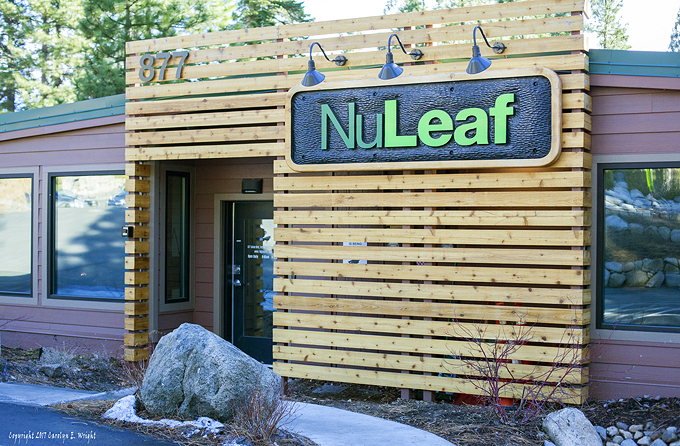
Stores like NuLeaf in Incline Village could be targeted by the feds. Photo Copyright 2018 Carolyn E. Wright

By Kevin Johnson and Trevor Hughes, USA Today

WASHINGTON – As part of a crackdown on legal marijuana, the Justice Department is set to roll back an Obama administration policy to not challenge state laws that allow people to use pot for medical and recreational uses an official familiar with matter said Thursday.

The move represents a dramatic shift in marijuana enforcement policy. The official, who is not authorized to comment publicly ahead of a formal announcement, said details of the new policy to reverse a 2013 Obama administration directive of non-interference would be outlined later Thursday.

Read the whole story