Bear caught and released in Stateline

Bear activity is increasing in heavily populated areas of the Lake Tahoe Basin.

A 3-year-old female black bear was trapped near a condo-time share complex July 31 and released the following day in Stateline. Two other traps on the Nevada side of the South Shore remain.

The released bear, which was not nursing so there are no cubs to worry about, had not previously been tagged by the Nevada Department of Wildlife. She weighed about 150 pounds.

Bears in neighborhoods are common in Tahoe. Photo/Judy Brown/File

Bears in Lake Tahoe neighborhoods are common. Photo/Judy Brown/File

“We were able to give her a healthy dose of aversion conditioning treatment during the release. When we can shoot a bear with rubber bullets and chase her with the Karelian bear dogs, it gives us a real chance to change the bear’s behavior and keep it from becoming too acclimated to humans,” NDOW biologist Carl Lackey said in a press release.

Dry conditions can mean less natural food for bears in the high country. This has them coming into populated areas in search of food, where they often find people food.

July in western Nevada was the hottest in recorded history and the area is now in year two of a drought. This is affecting bear behavior.

Now and going forward is the time bears will dramatically increase their food consumption in an effort to put on layers of fat in preparation for hibernation in late November or early December.

“We will see more and more bears searching for food. It is the responsibility of people living in bear country to not attract the bears by poorly handling garbage or leaving other attractants like bird and pet food available,” Lackey said.

— Lake Tahoe News staff report


Brown has the money to run for 4th term

By Anthony York and Patrick McGreevy, Los Angeles Times

SACRAMENTO — Gov. Jerry Brown has amassed a political war chest of more than $10 million for a potential re-election effort next year, far outpacing two possible GOP rivals and putting him in a strong position if he decides to seek a fourth term as California’s governor.

Brown has an additional $3 million left over from the campaign to pass his tax measure, Proposition 30, last fall, according to reports filed with the state Wednesday.

Each of Brown’s two potential GOP rivals has less than $50,000 in campaign cash.

Abel Maldonado, the former lieutenant governor, has just $45,000 on hand, having spent more than $200,000 during the first six months of this year.

GOP Assemblyman Tim Donnell, another potential Brown challenger, reported just $27,000 in the bank.

Read the whole story


Senators keep trying to get money for Tahoe

By Kathryn Reed

For the fifth consecutive year, senators from California and Nevada are asking their colleagues to come up with $415 million to fund environmental projects at Lake Tahoe.

The last four years the answer was no – or it didn’t even make out of committee for there to be a vote. When it was introduced in 2009 the cash was to be spread over eight years; this time it’s for 10 years.

Since the inaugural Lake Tahoe Environmental Summit in 1997 that was convened at the request of then-President Bill Clinton, nearly $2 billion has come to the basin to primarily help with lake clarity. Money from California, Nevada, local jurisdictions and the private sector came up with the bulk of that dollar figure.

Congress is being asked to give Lake Tahoe $415 million over the next 10 years. Photo/Kathryn Reed

Congress is being asked to give Lake Tahoe $415 million over the next 10 years. Photo/Kathryn Reed

Clinton is the one who launched the environmental improvement program.

In 2000, the first Lake Tahoe Restoration Act was funded at $424 million across 10 years. Sen. Dianne Feinstein, D-Calif., reintroduced the act on Aug. 1, with the support of Sens. Barbara Boxer, D-Calif, Harry Reid, D-Nev., and Dean Heller, R-Nev.

Money has been used to improve the clarity and quality of Lake Tahoe, thin forests in an attempt to reduce the threat of wildfire, help fight aquatic invasive species, improve air and water quality, build bike trails, and improve wildlife habitat.

The new money would do much of the same.

“I strongly believe we have a duty to protect Lake Tahoe, one of the most beautiful and pristine spots in our country,” Feinstein said in a press release. “Even in times of fiscal austerity, we cannot ignore the natural wonders that define our country. Lake Tahoe continues to suffer from pollution and sedimentation that reduces the lake’s remarkable water clarity, the potential for devastating wildfires remains high and a variety of invasive species threaten to devastate the region’s economy.”

Her family has had a second home on the West Shore for decades.

With the annual enviro summit being Aug. 19, the LTRA will undoubtedly be a topic of conversation – especially with former Vice President Al Gore attending the Sand Harbor event.

“Having the authorizing legislation (LTRA) allows legislators to appropriate funding to protect our lake for future generations, with assurances the money is being used responsibly,” Cheva Heck with the USFS told Lake Tahoe News.

Also in the bill is $2 million that would be used to transfer all of the urban lots owned by the U.S. Forest Service on the California side to the California Tahoe Conservancy. The USFS would get some CTC parcels outside the urban area so its ownership is more contiguous.

The current USFS parcels would be deed restricted so the CTC could not put them in their rather recently created “asset lands bank”; which allows the CTC to sell them for development purposes.

Nevada did not want to be part of the urban lot transfer.

The Forest Service manages more than 3,200 urban parcels throughout the basin.

This version of the LTRA would also allocate $20 million to bring back the Lahontan cutthroat trout.

The legislation requires an annual report to Congress detailing the status of all projects undertaken, including project scope, budget and justification and overall expenditures and accomplishments.

Here is a copy of Feinstein’s statement that she read into the record.

This is the LTRA summary of how the $415 million would be spent.


U.S. beef supply at 21-year low

By Elizabeth Campbell, Bloomberg

U.S. beef production is plunging to a 21-year low after surging feed costs spurred ranchers to cut herds, signaling record prices for consumers and higher costs for buyers from McDonald’s Corp. to Ruth’s Chris Steak House.

Production in the U.S. will decline 4.9 percent to 10.93 million metric tons in 2014, retreating for a fourth year, the government says. The herd on July 1 was the smallest for that date since at least 1973, according to the average of four analyst estimates compiled by Bloomberg. The most-active cattle futures will rise 6.1 percent to $1.33 a pound next year, a level last seen in February, the median of nine forecasts shows.

McDonald’s, the world’s largest restaurant chain, probably will pay 2.5 percent to 3.5 percent more for beef this year, according to Jack Russo, a St. Louis-based analyst at Edward Jones & Co.

Global meat prices rose 2.1 percent in June, the most in nine months, while the overall cost of food dropped 0.9 percent to the lowest since February, United Nations data show.

Ranchers still haven’t recovered from last year’s drought that sent grain costs to a record and spurred them to slaughter more cattle. While feed costs are now slumping as U.S. farms prepare to reap the biggest corn crop ever, it takes more than two years to raise enough animals to expand supply. Retail ground-beef prices in June were up 13 percent from a year earlier and near a record set in January.

“The drought has really affected the cow herd,” said Tucker Hughes, a 65-year-old rancher in Stanford, Mont., who predicted the number of animals he retains for breeding may drop as much as 20 percent over the next two years. “Some people had to downsize their herds. When you get these droughts, you have to reduce your numbers.”


Questions remain if Zodiac Killer struck in Tahoe

By Mike TeSelle, KCRA-TV

Why did Donna Lass disappear?

Was the then-25-year-old nurse killed?

Is she the 12th victim of Northern California’s infamous Zodiac Killer?

zodiac poster“We don’t know. … Of course it captures one’s imagination, because it’s such an intriguing case,” said Lt. Brian Williams with the South Lake Tahoe Police Department.

On Sept. 6, 1970, Williams said Lass signed a worker’s log inside the old Sahara casino (now the Horizon) about 1:50am.

Shortly after that, Lass was never seen — nor heard from — again, Williams said.

Six months after her disappearance, Williams said Lass’ case took a turn that, to this day, is still generating new tips, leads and theories of what happened to her.

“The Zodiac sent a postcard to the San Francisco Chronicle newspaper. It suggested a Lake Tahoe location for his 12th victim,” Williams said. “Donna Lass would’ve been his 12th victim.”

The postcard contained phrases and symbols similar to Zodiac mailings.

One phrase read “Peek through the pines.” Another was written upside down: “Around in the snow.”

In 2007, acting on a tip related to the Zodiac killings, South Lake Tahoe police participated in a dig of a possible burial site near Lake Tahoe, but found nothing.

To this day, even though one investigator said his hunch is that Lass’ disappearance is not linked to the Zodiac, Williams said the department still can’t rule out that possibility.

“Stranger things have happened, as we have seen with the Jaycee Lee Dugard case. We will never give up hope in solving this case for Lass’ family,” Williams said.


Tallac Site — Tahoe from more than a century ago

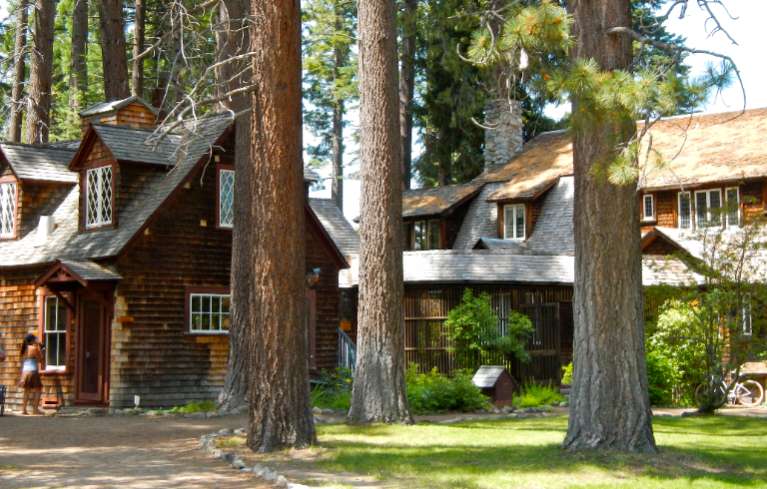
The kitchen at the Pope estate, left, was separate from the main house for fear of fire. This was customary during that era. Photos/Kathryn Reed

The kitchen at the Pope estate, left, was separate from the main house for fear of fire. This was customary during that era. Photos/Kathryn Reed

By Kathryn Reed

CAMP RICHARDSON – Do you have what it takes to work for the wealthy on a seasonal basis along the shore of Lake Tahoe?

A new tour this summer at the Tallac Historic Site is designed to give visitors a glimpse into what it was like to be part of the hired help at the estates.

“The Servant’s Tour is from the perspective of the servants. They act like you are there for a job,” Tami Africa, who works for the U.S. Forest Service at the Tallac Site, told Lake Tahoe News. She said visitors find out what was expected of people who worked for the Popes.

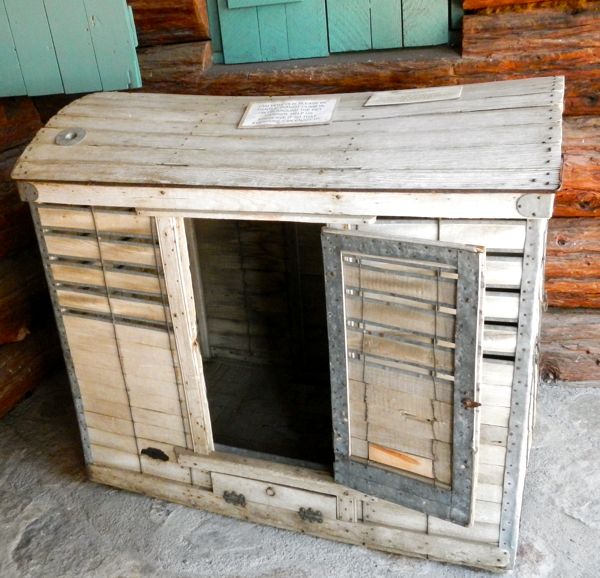
Pets in 1880 came via these carriers.

Pets in 1880 came via these carriers.

While it’s the maid or butler who gives the tour of the Pope estate, other servants at the time would have included a nanny, tutor, cooks, gardeners, blacksmith, seamstress and others.

The Pope, Baldwin and Heller estates make up the Tallac Historic Site on the South Shore near Camp Richardson. The 150 acres have been on the National Register of Historic Places since 1986.

While the site is open year-round to meander through, the buildings are only open seasonally.

These sprawling lakefront compounds were summer homes for wealthy San Franciscans in the late 1800s and early 1900s.

At one time Lucky Baldwin, who was the first president of the Pacific Stock Exchange, had 8,000 acres on the South Shore. He also owned more than 50,000 acres in Southern California.

He came into the Tahoe property in 1880, and developed what was there into a resort that included a hotel and outbuildings that could house 250 people. Remnants of the tennis court still exist. And long before men with the name of Harrah and Gross built casinos in Stateline, Baldwin has his own in Tahoe – in California.

What is now the museum at the Baldwin property was the home Dextra Baldwin, granddaughter of Lucky Baldwin, had built in 1920 when she was 19. Her bedroom has been turned into a gift shop. Another room is devoted to the Washoe Indians who before the wealthy arrived called the shore of Lake Tahoe their home.

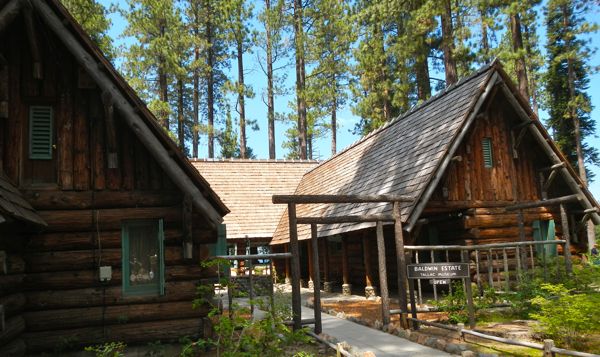
The main house on the Baldwin estate.

The main house on the Baldwin estate.

But even the expanse of the kitchen and what are now antiques prove these were people with money who could afford a 5,000-square-foot home.

The Pope house remains more like it would have been nearly a century ago. (Tours are available.) George Tallant built it in 1894, with George Pope acquiring it in 1923. It is the largest of the three estates. The main house is also more ornate than the others.

Walter Heller built Valhalla in 1924. Today it is better known as the Grand Hall – which is used for weddings and other events that Tahoe Tallac Association puts on.

The TTA also uses the old boathouse on the property as a theater for summer performances.

Today the U.S. Forest Service owns the Tallac Historic Site. A cadre of volunteers keeps it running and helps maintain the grounds.

Things to know:

• Baldwin Museum is open daily through Sept. 2 from 10am-4pm, then Thursday-Sunday from Sept. 5-Oct. 6 from noon-4pm.

• Pope tours run daily through Sept. 2 except Wednesdays. Times are 11am, 1pm and 2:30pm. Cost is $8 for adults and $3 for children.

• Servant’s Tour is weekends at 3pm and Wednesdays at 11am and 2:30pm until Sept. 1. Cost is $5.

• The Tallac Site is 2½ miles north of the Y in South Lake Tahoe on Highway 89.


Sub exploring Tahoe sputters with mechanical problems

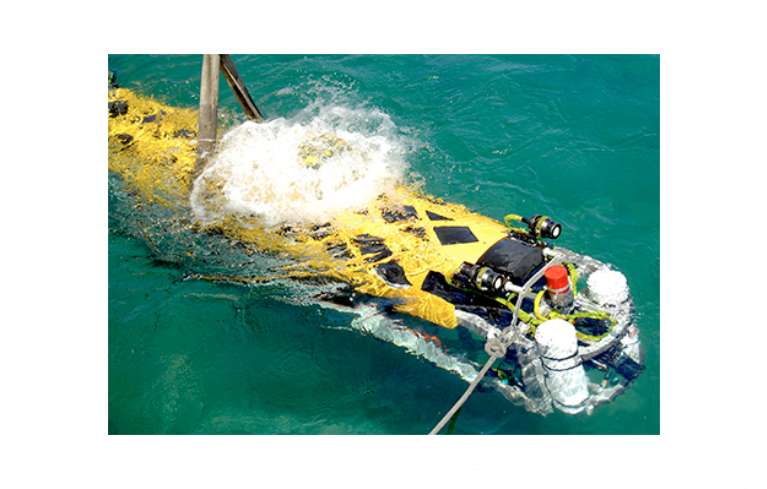
The remotely operated vehicle’s vertical thrusters are tested. Its two lights, high definition video camera and two ballast tanks can be seen at its bow. Photo credit: Ross Powell, NIU

The remotely operated vehicle’s vertical thrusters are tested when it was put into Lake Tahoe in early July.
Photo/Ross Powell/Northern Illinois University

By Rosanna Xia, Los Angeles Times

An unmanned submarine set to dive more than 1,000 feet to scour the bottom of Lake Tahoe didn’t quite make it all the way.

During shallower test dives earlier this month, the submarine encountered complications with a few of its motors, said Gordon Seitz with the California Geological Survey. The engineers who created the vessel considered the problems serious enough that they didn’t want to risk diving it all the way to the bottom of the lake, he said.

The 28-foot-long, 2,200-pound submarine, designed to explore beneath the ice shelves of Antarctica, was diving Lake Tahoe in its first test run. Seitz and his team hoped to capture valuable data and high-definition images of an earthquake fault along the lake’s bottom that scientists have wondered about for years.

Since 1998, when the West Tahoe fault was first put on the map, engineers have tried various ways to decipher the underwater fault, which they estimate — based on shore studies — is capable of producing a magnitude 7.1 to 7.4 earthquake and tsunamis up to 30 feet high every 2,500 to 4,000 years.

The last massive temblor was about 4,000 years ago, and scientists say now is the time to get better data.

“I wouldn’t say the earthquake’s overdue. But if it happened tomorrow, I wouldn’t be surprised,” said Seitz, who is leading the Lake Tahoe study. “It’s urgent enough that we want to look at it and figure it out.”

Read the whole story


Obama proposes more cash for community colleges

By Paul Fain, Inside Higher Education

President Obama may have strong words for colleges about tuition prices, but he continues to push for more federal funding for community colleges.

In a major speech Tuesday on job creation Obama repackaged a February budget proposal for an $8 billion “Community College to Career Fund.” The address follows the president’s vow six days ago to “shake up” higher education to ensure better value for middle-class students and their families.

Both speeches were grounded in the economy and middle-income jobs. And the event Tuesday, which Obama held at an Amazon.com warehouse in Tennessee, was aimed at bringing Congressional Republicans to the table.

The president included a suggestion to slash corporate tax rates, a move Republicans support. The overhaul of business taxes would also generate revenue through a fee on the foreign earnings of U.S. companies, The Washington Post reported, which would help pay for the community college plan and other proposals.

Another idea the administration unveiled Tuesday that involves higher education is the creation of 45 manufacturing innovation institutes, which link companies, colleges and government. That proposal builds on a pilot program in Youngstown, Ohio, as well as three new manufacturing institutes that are slated for creation later this year.

“We’re getting businesses, universities, communities all to work together to develop centers of high-tech industries all throughout the United States that allow us to be at the forefront of the next revolution of manufacturing,” Obama said, according to a written transcript of his speech.

The president dubbed his plan a “grand bargain.” But the GOP doesn’t appear to be buying. Congressional Republicans quickly signaled that they opposed the jobs deal, according to news media reports.

Obama’s proposed community college fund would support job-training programs in growing and high-demand fields, according to a written statement from the White House. The accompanying fact sheet did not include a price tag, but Obama asked Congress for $8 billion for the program in February.

A more detailed description of that proposal, which the administration released when it was announced, described a “blueprint to train two million workers.” The plan included money for apprenticeships and other on-the-job training for community college students, like internships that would lead to college credit for work-based learning.

The fund would also include performance-based incentives. For example, states might set aside money for job-training programs at colleges that successfully place graduates in good-paying jobs.

The American Association of Community Colleges backs the job-training fund, not surprisingly. David Baime, the association’s senior vice president for government relations and research, said campus officials strongly support the proposal.

“If enacted, it would dramatically bolster the work that our colleges are already doing to help address the skills gap and to provide economic opportunity for the many people still struggling in today’s economy,” he said in a written statement.

But advocates for community colleges are realistic about the slim odds of multibillion-dollar plans going anywhere while federal lawmakers on both sides of the aisle are pushing budget austerity.

However, the White House keeps trying to find more money for the two-year sector. And it has succeeded before, even if at levels smaller than those first sought.

Obama in 2009 announced a $12 billion proposal directed at community colleges. The American Graduation Initiative failed, but morphed into $2 billion in U.S. Department of Labor funding for workforce development at two-year institutions.

That program, which has a name that is too long to include here, appears to be having a substantial impact. Community college officials have said that the money has led to lasting, ambitious changes on their campuses, particularly around career services.



STHS grad juggling life’s dreams in LA

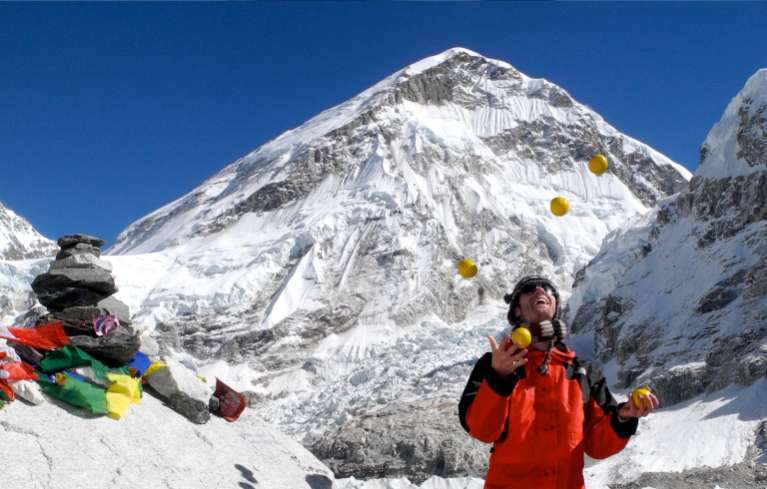
Wherever Chris Smith is in the world -- even at Everest base camp in November 2011 -- is juggles. Photos/Provided

Wherever Chris Smith is in the world — even at Everest base camp in November 2011 — he juggles. Photos/Provided

By Kathryn Reed

Some people send postcards, others text a picture. But those modes of communicating one’s adventures are ordinary, especially if you are Chris Smith.

The South Tahoe High School grad – who was in town last weekend for his 10-year reunion – has had some sort of camera in his hands or strapped to him for years. And since he was 12 he has been juggling almost anything that he picks up.

While he was in Iceland this year he decided to use a GoPro camera with a wide-angle lens to film his juggling exploits in that country. It was a way to share with family and friends what he was seeing.

A lot more people than he expected have joined in on the fun. Nearly 700,000 people on YouTube have viewed Juggling Around Iceland. This got the attention of producers at NBC’s “Today Show”.

They tracked Smith down in Hawaii, where he was wrapping up the Blue Man Group tour. He put together a similar video for the morning show from Hawaii to Studio 1A in New York – which includes some footage of Lake Tahoe.

The “Today Show” segment aired July 29.

The start and the future

Smith was 18 when his dad, Phil Smith, and St. Theresa Catholic School student Michael Bank Jr., 14, died off the Mendocino coast. It was that tragedy that led him to write the screenplay “Shadow in the Trees”. The movie is fiction, but there are truths in it about what he and his family went through following the Jan. 11, 2004, drownings.

Netflix and iTunes picked up the movie, which he finished before he graduated from UCLA in 2007.

This was the third year the proceeds from the movie have been used as a scholarship for a STHS graduate who has overcome adversity and who is pursuing a degree in film.

Hollywood film director Stephen Herek, who helped Smith with the final edit, is still a mentor to him.

Writing-directing-acting – he wants to do all three, even though he knows it’s more common to specialize.

South Tahoe High grad Chris Smith lives in Los Angeles pursuing his dreams of being an actor-writer-director.

South Tahoe High School grad Chris Smith lives in Los Angeles where he is pursuing his dreams of being an actor-writer-director.

“I could do any one of those things and feel like I am happy and successful,” Smith told Lake Tahoe News.

But, he added, it’s the juggler in him that makes him want to have more than one career “ball” going at a time.

Smith has applied for a director fellowship through Universal NBC that he will find out about in September.

He takes off for Copenhagen next week where he’ll spend three weeks. Part of the adventure is to visit the country he was born in – even though he grew up in South Lake Tahoe – and visit with his mom’s side of the family, while also wrapping up an action-adventure-comedy script.

Smith has an agent and manager for the writing side of his career.

He considers the year with the Blue Man Group – which included 10 months in 51 cities – as a significant segment of his acting career.

Directing is Smith’s long-term goal.

But what is most important to the 28-year-old is that whatever he is doing, he is storytelling.


Jeepers mix ruggedness with modern conveniences

By Ed Fletcher, Sacramento Bee

When it comes to camping, there are generally two types – car campers, who cling to modern conveniences, and backpackers, who sacrifice convenience to reach secluded destinations.

Jeepers insist on having the best of both worlds.

For 61 years, off-road enthusiasts have sandwiched a two-day campout and party at a modest “valley” that was once the home of the Rubicon Mineral Springs Resort between their sometimes-treacherous 7.5-mile treks in and out on one of the world’s most iconic jeep trails.

This year, 543 people paid more the $350 a person to take part in last weekend’s Jeepers Jamboree. While most of the participants were from California, some came as far as Norway to experience the Rubicon Trail.

Read the whole story