Vineyard managers expect early grape harvest
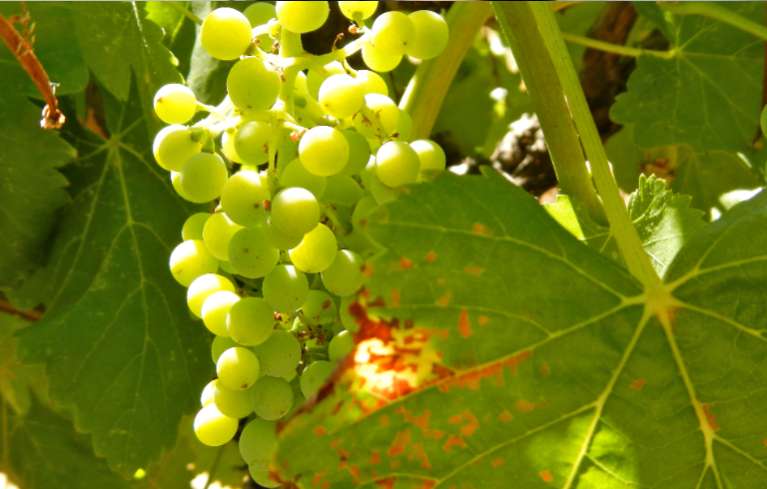
The wine grape harvest is expected to be early this year in El Dorado County. Photos/Kathryn Reed

The wine grape harvest is expected to be early this year in El Dorado County. Photos/Kathryn Reed

By Kathryn Reed

PLACERVILLE – Coming off one of the warmest Julys on record, a June that saw several triple digit days and an August that has a forecast for the 80s later this week – being a winemaker can cause one’s head to spin or the need to open another bottle to take off the edge.

No one said growing grapes was easy. Mother Nature makes sure of that.

But with all the heat that has been absorbed by the grapes in El Dorado County, it’s looking like the harvest will be early this year. And that means some of the white varietals will be picked this month.

What the end result will be remains to be tasted.

The last time temps were like this was in 2007. And oenophiles remember that year for California wines – especially the reds. There are not enough positive superlatives for many of those bottles.

Wine is big business throughout the state. In 2012, the grapes were worth $3.2 million, which became $34 billion worth of wine.

Debbi Bogen, tasting room manager for Fenton Herriott Vineyards in Placerville, told Lake Tahoe News, “This is going to be a phenomenal harvest. Everything is perfect. The grapes are looking fantastic.”

Veraison is already occurring. This is the “onset of ripening” when the grapes begin to turn red.
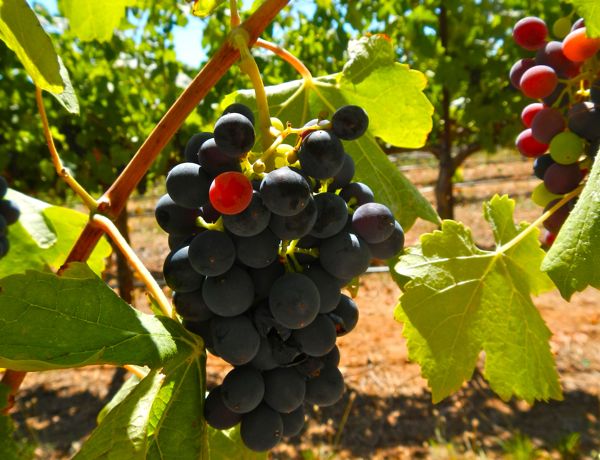
Veraison -- when grapes turn red -- is happening at Fenton Herriott and other vineyards.

Veraison — when grapes turn red — is happening at Fenton Herriott and other vineyards.

Vineyard managers will soon start to use a refractometer to check the brix – or sugar content – of the grapes. It must be at a certain degree for optimum flavor. The brix changes. So one day a vineyard might be ready to pick and the next it isn’t.

With the slope and elevation variations of many vineyards in the county, it means the harvest can be staggered. It already is when it comes to varietals. And depending who grows what where, the “normal” time to harvest already varies.

Mari Wells Coyle, winemaker with David Girard Vineyards in Placerville, said it could be the third week of August when the first grapes are picked.

“The warm weather is helping grapes that grow in this climate,” Coyle told Lake Tahoe News.

But too much heat can be a problem. That stops the grapes from continuing to ripen.

Diane Stading, co-owner of Auriga Wine Cellars in Placerville, said there were seven days in June when the mercury topped 100 degrees, with one day hitting 114.

“The heat has not been nice to us. They won’t take up water when it’s 100-plus degrees,” Stading said while pouring wine on Saturday.

She said this could lead to there being no canopy to protect the grapes, which causes the grapes to be burned by the sun and shrivel like a raisin.

Auriga typically starts harvesting at the end of September, but this year it’s more likely to be early next month.

At Narrow Gate they’ve been known to pick a vineyard twice if clusters don’t come in evenly. While it’s twice the work, their philosophy is quality is of the utmost importance. The Viogner was picked in stages last year.

Besides dealing with the heat this summer, the valley that Narrow Gate sits in in Placerville sustained a major frost on May 24 that overall damaged 35 percent of its vines. It took out at least 50 percent of the Primitivo.

Most vintners point to 2010 and 2011 as being difficult years because of the coolness that delayed the ripening process.

Two years ago Fenton Herriott was wrapping up its harvest as snow was falling.

If the grapes crack they are useless because mildew can ruin the fruit.

With the harvest expected to be early, it also means a lot of bottling is going on now to free room for the next vintage to begin its fermentation process.

NDOW kills ‘problem’ Glenbrook bear

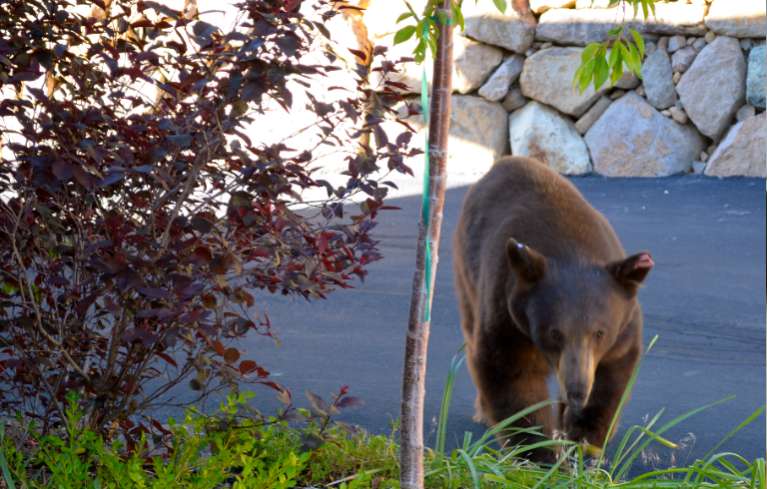
This bear was killed Aug. 5 by Nevada wildlife officials. Photo/Provided

This bear was killed Aug. 5 by Nevada wildlife officials. Photo/Provided

Nevada Department of Wildlife officials today killed a 3-year-old male black bear they said was a threat to public safety.

The bear had initially been caught in Glenbrook on June 24. A tag was put in its ear so it could be identified in the future if it caused problems. It was released in the Mount Rose area.

It was photographed by a homeowner in the south Reno area on June 28.

“One person in that Galena neighborhood tried to shoo the bear away from his house but the bear actually tried to follow him during this encounter,” NDOW biologist Carl Lackey said in a statement. “This kind of behavior shows a level of habituation to humans that can be very dangerous.”

By Aug. 4 it was back in Tahoe causing problems. It was seen again Sunday near the Glenbrook golf course, which is where it was trapped.

Glenbrook has been dealing with bear issues for much of the summer.  This particular bear had been reported as the one that had broken into an outbuilding and was implicated in the death of a goat, according to Lackey.

But not everyone believes killing bears is necessary.

The BEAR League on its Facebook page says, “Soon there will be no bears left in Nevada, thanks to NDoW and especially Carl Lackey.”

This is the third bear NDOW has killed this year for what it calls public safety reasons. In that same time period 22 bears have been handled and released.

“We will see more and more bears searching for food. It is the responsibility of people living in bear country to not attract the bears by poorly handling garbage or leaving other attractants like bird and pet food available,” Lackey said.

— Lake Tahoe News staff report


CalFire fee angers rural Californians

By Jack Newsham, Sacramento Bee

Foothill residents, as well some property owners in the Lake Tahoe Basin, are bracing for the second year of “fire prevention fees,” a $150 charge that a class-action lawsuit alleges is an illegal tax.

The state Board of Equalization began sending bills two weeks ago to more than 700,000 Californians who own land in the 31 million-acre “state responsibility area” where the California Department of Forestry and Fire Protection is responsible for fire protection.

In October, El Dorado County joined the Howard Jarvis Taxpayers Association’s lawsuit seeking to block the state’s fire fees on rural properties, but hearings have barely begun.

Read the whole story


Children’s memorial in S. Tahoe given a new life

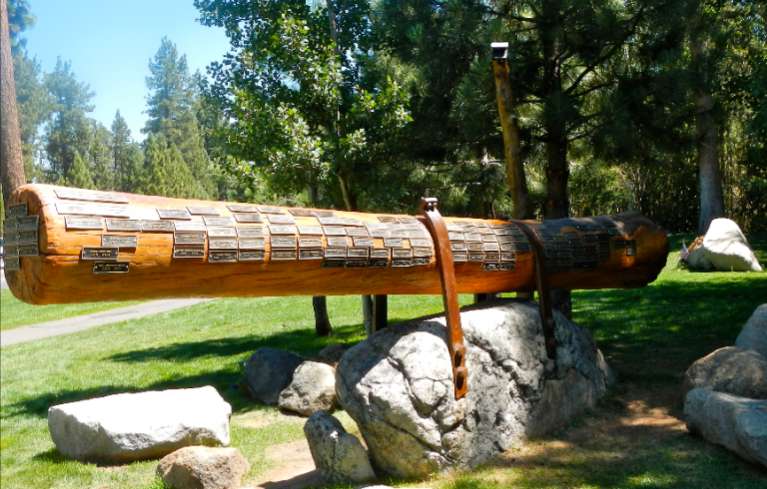
The log has names of children from South Lake Tahoe who have died. Photos/LTN

The log has names of children from South Lake Tahoe who have died. Photos/LTN

Publisher’s note: The children’s memorial on Highway 50 and Wildwood Avenue in South Lake Tahoe will be rededicated on Aug. 9 at 6pm. Tahoe Production House is filming the ceremony as part of a documentary that will be available on DVD. The following is from the committee that has spearheaded the replacement of the log that contains the names of children in the area who have died. 

When and how was the Children’s Memorial founded?

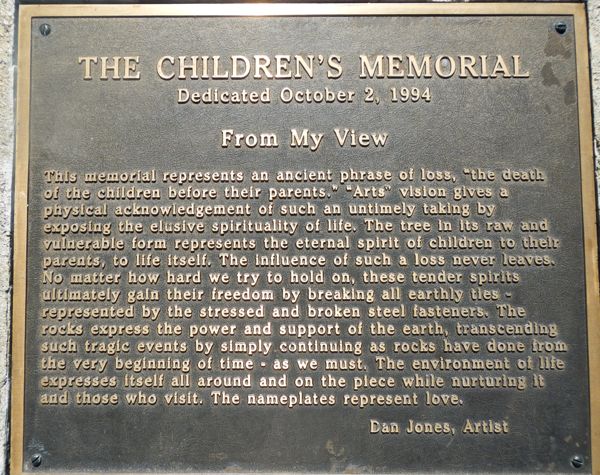
Driven by the tragic death of her son, Rory, along with his two friends Sandy Haynes and Casey Wells in an automo¬bile accident, Sue Hrbacek-Miller hoped to place, in a public location, the tree that the car struck on the night of Feb. 2, 1991. City Manager Kerry Miller offered a resting place for the tree in its present location. Artist Dan Jones donated the design and work to create the tree that was dedicated on Oct. 2, 1994. When dedicated, the tree had plaques representing 36 lost loved ones. After Sue turned over the memorial to the city of South Lake Tahoe in 2003 it has managed the tree. The tree currently has 226 plaques, in remembrance of loved ones from 11 states and four foreign countries. The original tree endured 20 seasons of exposure and was no longer able to accomplish its purpose. The new tree will last permanently.

Why the new permanent tree and its dedication?

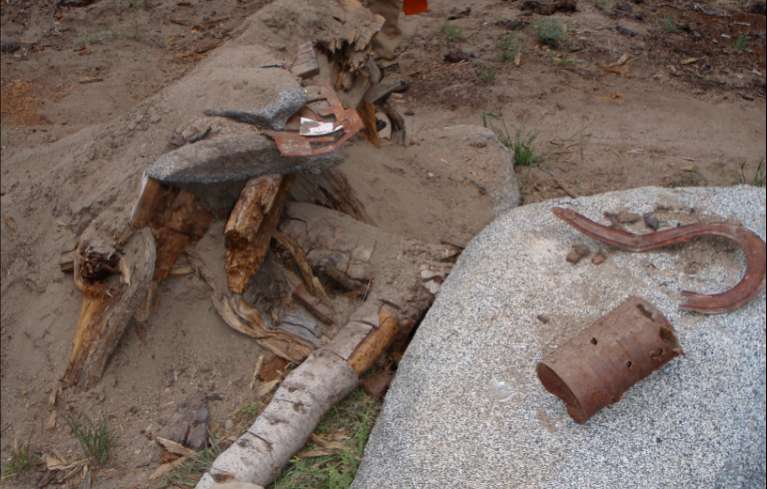
The Memorial Tree Committee could have replaced the original tree with another wood tree of similar size. However, the committee also recognized that doing so would necessitate again doing a replacement in another 20 years. The ability to repeatedly do that would be doubtful and artist Dan Jones was available now to re-create the tree in a manner consistent with the original. The new tree, recre¬ated with a concrete-polymer material, will be a permanent memorial.sign-1

What are the goals and plans of the Memorial Tree Committee?

Mission: First, to establish a tree that will be a permanent memorial to the loved ones recognized with plaques on the tree. Further, to establish a permanent Memorial Park that will be an asset for use by resi¬dents and visitors to our South Lake Tahoe community.

Funding: The permanent Memorial Tree and Memorial Park will be entirely funded by private contributions from individuals and organizations. The funding is overseen by the city of South Lake Tahoe’s GIFT (Great Ideas For Tahoe) program. This is a 501(c)3 nonprofit corporation. To date, the committee has been successful in raising the funds to accomplish the tree replacement. The success of the tree replacement effort was heavily dependent on donated and/or at cost discounted labor and materials. The committee expects the Memorial Park part of the mission to also be accomplished with a large component of donated assistance. The city of South Lake Tahoe will maintain the tree and memorial park when they are completed.

DSCN3895What is the schedule for completion of the Memorial Park?

The committee is already working on the necessary permitting for construction in conjunction with the city of South Lake Tahoe to obtain the funds for the new Memorial Park of South Lake Tahoe. The goal is to have sufficient funding in place to begin work on the park in 2014. Complete park construction will be entirely dependent on the combination of funds raised and volunteer commitments of materials and labor for the work to be done.

How can you help make the Memorial Park a reality?

Funding: Please make contributions in whatever amount you can afford to GIFT Inc., Memorial Park and mail to: 1901 Airport Road, South Lake Tahoe, CA 96150. Your funds will be in the custody of the city of South Lake Tahoe who will maintain supervision of the program.

Volunteer Assistance: Visit the website to understand the work involved in the Memorial Park’s construction and establish in what ways you might assist.


Gold rush-era discards may have new use today

By Tracie Cone, AP

SACRAMENTO — Across the West, early miners digging for gold, silver and copper had no idea that one day something else very valuable would be buried in the piles of dirt and rocks they tossed aside.

There’s a rush in the U.S. to find key components of cellphones, televisions, weapons systems, wind turbines, MRI machines and the regenerative brakes in hybrid cars, and old mine tailings piles just might be the answer. They may contain a group of versatile minerals the periodic table called rare earth elements.

“Uncle Sam could be sitting on a gold mine,” said Larry Meinert, director of the mineral resource program for the U.S. Geological Survey in Reston, Va.

The USGS and Department of Energy are on a nationwide scramble for deposits of the elements that make magnets lighter, bring balanced hues to fluorescent lighting and color to the touch screens of smartphones in order to break the Chinese stranglehold on those supplies.

They were surprised to find that the critical elements could be in plain sight in piles of rubble otherwise considered eyesores and toxic waste. One era’s junk could turn out to be this era’s treasure.

Read the whole story


Housing market improving in El Dorado, Placer counties

By Hudson Sangree, Sacramento Bee

The first six months of 2013 brought a remarkably fast recovery to the regional real estate market.

Figures from DataQuick, a San Diego real estate information firm, show median single-family home prices jumping anywhere from 15 percent to 50 percent across much of the four-county Sacramento region.

There were a few exceptions, mainly in the region’s most sought-after residential areas. The college town of Davis, the leafy neighborhoods near downtown Sacramento, and the upscale foothill communities of Granite Bay and El Dorado Hills held their value better in the crash, LePage said. Those areas saw more moderate price increases during this year’s rebound, he noted.

In Sacramento County, the number of homes on the market that were foreclosures dropped from 41 percent in the first half of 2012 to 16 percent in the first half of this year. El Dorado, Placer and Yolo counties also saw the percentage of foreclosures on the market drop by more than half.

Read the whole story


Illegal trails cropping up in Lake Tahoe Basin

By Kathryn Reed

A new bike trail is going in at Carnelian Bay. Trees are being felled, berms created and gap jumps installed.

And whoever is creating this trail on U.S. Forest Service property could wind up in jail and having to pay a fine.

Cultural resources have been disturbed in the process of creating this unauthorized trail, which found on the South Shore several years ago.

Cultural resources like these were unearthed in the process of creating this unauthorized trail on the South Shore several years ago. Photos/Provided

“When we have to obliterate unauthorized trails, it takes crews away from building other projects,” Cheva Heck, USFS spokeswoman, told Lake Tahoe News.

This is one of a few trails that has been discovered this summer in the Lake Tahoe Basin. Others are near Tahoma and Cave Rock. The Carnelian Bay trail is the most destructive because trees have been cut down. It was about a half mile long when crews discovered it.

While the feds don’t have any suspects at this time, surveillance has been set up.

“I would rather have the Forest Service spend its limited trail budget on new trails than destroying illegal trails that are perhaps causing resource damage,” Kevin Joell, president of Tahoe Area Mountain Bike Association, told Lake Tahoe News.

TAMBA has been working with the Forest Service to create trails throughout the Lake Tahoe Basin. While working through the government process can take time, the end result is a trail built to current standards that takes safety and other issues into consideration.

“If someone has the energy to build trails, if we can harness that, we can talk to them on a peer level to find out what they want and explain what it would take to do it legally,” Joell said.

Illegal trails are not built to safety or other standards.

Illegal trails are not built to safety or other standards.

The problem with illegal trails is that they can cause erosion problems, disturb cultural resources and not be safe.

The illegal trails are often built near an existing trail but do not directly tie into it. This is so it won’t be detected so easily. It’s by word of mouth that the illegal trail is discovered. It might require carrying a bike or a bit of cross country.

“We want people to work with us if they want to make trails,” Heck said.


Expense of managing Colo. River will impact Nev.

By Andrew Doughman, Las Vegas Sun

Federal water experts and climatologists on Friday issued a grim report on the future of the Colorado River watershed to lawmakers from around the West in Las Vegas.

But perhaps no other state has as much at stake in the river’s declining conditions as Nevada.

Managing the Colorado River will cost billions of dollars over the next 50 years, according to the panel of experts at the Council of State Governments West conference.

Demand for the Colorado River’s water exceeds supply, meaning governments will likely have to spend from $4 billion to $7 billion to ensure a stable water supply in Nevada, Arizona, California, Utah, Colorado, Wyoming and New Mexico.

Federal government experts see population growth in these states as increasing demand for water. The billions of dollars would be put toward increasing supply — through re-use, importation, or desalination of water — and decreasing demand through conservation in residences, industry and agriculture.

Read the whole story


Millennials slow to move away from parents

By Ricardo Lopez, Los Angeles Times

They aren’t leaving the nest.

More than one-third of millennials still live with their parents, the highest share in their age group in at least 40 years, according to a Pew Research Center analysis released Thursday.

Last year, a record 21.6 million adults ages 18-31 lived in their parents’ homes, Pew said. That’s up from 18.5 million in 2007.

The reasons why millennials are living with their parents vary, Pew said. It’s a combination of economic, educational and cultural factors.

But one striking detail shows that men are more likely than women to still be living with their parents, according to Thursday’s analysis.

Read the whole story


Forest Service explains river restoration work

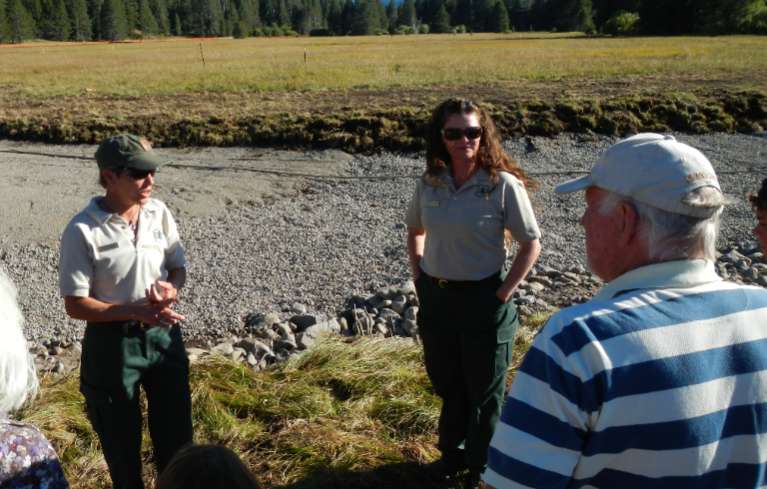
Sue Norman and Stephanie Heller with the U.S. Forest Service talk in front of the new channel of the Upper Truckee River. Photo/Kathryn Reed

Sue Norman and Stephanie Heller with the U.S. Forest Service talk in front of the new channel of the Upper Truckee River. Photo/Kathryn Reed

By Kathryn Reed

Not everyone is buying what the U.S. Forest Service is selling.

What the feds are selling is that changing how the Upper Truckee River flows is a good thing. What many on a tour of the project weren’t buying is whether this four-year $4 million project is needed.

Seventeen people on Aug. 2 meandered through the meadow on the other side of Lake Tahoe Airport looking at the work that is under way and how the current river flows.

“How do they know it will be what they say?” Louise Wigart said to Lake Tahoe News.

The Forest Service points to High Meadow and Cookhouse Meadow as being successful restoration projects.

Wigart’s husband, Corky, called it “overkill.” He’s been canoeing, fishing and hiking on and along the river for decades and sees no need to create a new channel. If something needs to be fixed, fix the existing channel is his philosophy.

But that strategy isn’t being used on any section of the river. Instead, the respective owners are each gradually rerouting the river in an attempt to restore the meander to what it was before humans changed it decades ago. Officials say working in the existing river is cost-prohibitive and would lead to greater degradation of lake clarity.

The goal is to put more curves in the river. Some sections had been straightened during grazing, logging and quarry operations. Curves will slow down the rate at which the water travels. This in turn is designed to lessen the erosion on the banks.

The Upper Truckee River, according to scientists, is the No. 1 contributor of fine sediment to Lake Tahoe. That sediment is what the same scientists claim contributes to the decline of lake clarity.

While this project is about keeping the lake clear, that is not the primary goal.

“This is mostly an ecosystem project,” Stephanie Heller with the U.S. Forest Service told those on the Friday tour. She said raising the water table and providing more habitat are critical components of the project.

The channel today is deep. The eroding banks impossible to miss. The meadow bone dry.

And while the meadow may be dry in August in the future, that will not be the case in early summer. The new channel is being designed so it will be shallower, flow at about one-fourth the rate of the current channel, all with the expectation it will flood the meadow two out every three years.

Some people along the tour questioned whether the project is going to really have an impact on lake clarity.

It is the overall reduction of sediment that is measured, not individual reaches.

There will be another tour of the project on Oct. 25.