Companies slow to initiate online gaming

By Cy Ryan, Las Vegas Sun

CARSON CITY — Some casinos that gained prior approval from state regulators are taking a go-slow approach in entering the online poker market.

The state Gaming Control Board Wednesday recommended approval to three companies to extend their license for another six months before they offer the computer poker business in Nevada.

Board chairman A.G. Burnett said the law requires companies to activate their licenses within six months. He said these firms are in a “holding” mode, waiting to see how the market emerges.

And he said some companies are still developing their product or waiting for the control board’s staff to clear their interactive game system.

Read the whole story


Needle miner turning section of Tahoe orange

By Kathryn Reed

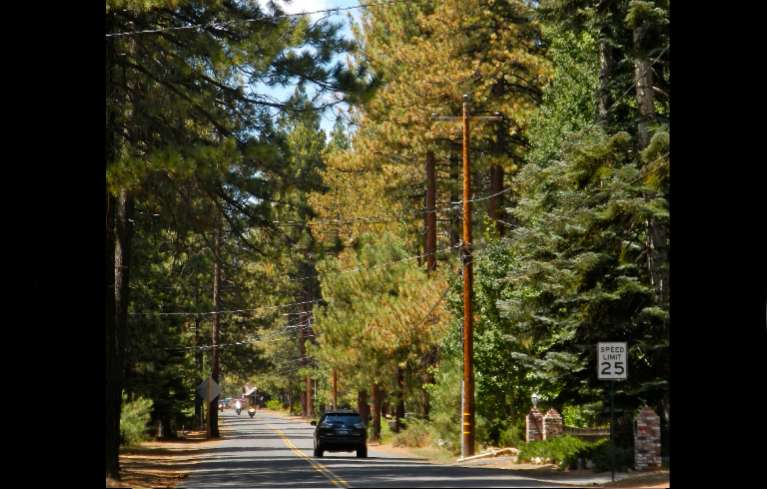
An orange tinge appears to be hovering over parts of the Al Tahoe neighborhood. It’s needle miner.

Needle miners are small insects that are in the moth and butterfly family. And they are native to Lake Tahoe. But this is the first time there has been noticeable activity of the insect in the basin.

Bob Harms, who lives in the South Lake Tahoe neighborhood, said he first started noticing the discoloration of trees last year, with it being even more evident this spring.

Trees in the Al Tahoe area of South Lake Tahoe are orange from the needle miner. Photo/Kathryn Reed

Trees in the Al Tahoe area of South Lake Tahoe are turning orange from the needle miner. Photo/Kathryn Reed

This led him to do some calling and learn that it’s the Jeffery pine needle miner doing the damage.

The bulk of the brown-orange needles can be seen on Los Angeles Avenue, along Oakland Avenue and with spotty sections heading into the neighborhood toward the lake.

Beverly Bulaon, forest entomologist for the Southern Sierra region of the U.S. Forest Service, is tasked with dealing with such critters. She works out of the Stanislaus National Forest office in Sonora.

“It is a very small little insect that feeds in the needles,” Bulaon told Lake Tahoe News. “Why it is occurring in the Al Tahoe neighborhood we don’t know.”

She said there is the possibility it will spread to other areas in the basin, but with this being the first year her team has been aware of the outbreak on the South Shore, it’s too soon to know many details other than the insect is active in this one location.

The insect is killing the needles, but not the whole tree. And because much of the damage is at the crown, limbing the tree is not an option to rid it of the needle miner.

Bulaon said what could eventually kill a tree is a secondary insect coming in and injuring the pine. How healthy and strong the tree is before the needle miner comes will determine its resiliency because trees can survive after being attacked by the insect.

Drought is a possible reason for the recent infestation, Bulaon said.

On July 30, Bulaon and a group from the California Pest Council toured the Al Tahoe neighborhood looking at the needle miner damage. Some neighbors tagged along. Now the neighbors are forming a loose knit group to keep an eye on whether the needle miner damage spreads or goes away.

Bulaon suggests people call their local U.S. Forest Service office if they are concerned needle miners are infecting their neighborhood.


Report: Global warming already impacting Calif.

By Paul Rogers, San Jose Mercury News

Rising ocean waters. Bigger and more frequent forest fires. More brutally hot summer days.

These aren’t the usual predictions about global warming based on computer forecasts. They’re changes already happening in California, according to a detailed new report issued Thursday by the California Environmental Protection Agency.

Climate change is “an immediate and growing threat” affecting the state’s water supplies, farm industry, forests, wildlife and public health, the report says. The 258-page document was written by 51 scientists from the University of California, Scripps Institution of Oceanography, Lawrence Berkeley National Laboratory, U.S. Geological Survey and the National Oceanic and Atmospheric Administration, among other agencies and institutions.

A report released Aug. 8 points out how global warming is affecting California. Photo/LTN file

A report released Aug. 8 points out how global warming is affecting California. Photo/LTN file

“Climate change is not just some abstract scientific debate,” said California EPA Secretary Matt Rodriquez. “It’s real, and it’s already here.”

Most Californians seem to agree. In a poll last month by the nonpartisan Public Policy Institute of California, 63 percent of the state’s residents said the effects of global warming are already being felt, while 22 percent said they will happen in the future. Eleven percent said they will never happen.

Read the whole story


2012 one of 10 warmest on record

By Neela Banerjee, Los Angeles Times

WASHINGTON — Last year was one of the 10 hottest since global average temperatures have been recorded, according to an assessment of worldwide climate trends by the National Oceanic and Atmospheric Administration.

“The State of the Climate in 2012,” released Tuesday, paints a sobering portrait of vast swaths of the planet transformed by rising temperatures. Arctic sea ice reached record lows during the summer thaw. In Greenland, about 97% of its ice sheet melted in the summer, far greater than in years past.

Greenhouse gas emissions continued to rise. In early May, the ratio of carbon dioxide in the Earth’s atmosphere surpassed 400 parts per million in an average daily reading at Hawaii’s Mauna Loa Observatory, thought to be the highest concentration in millions of years.

The report is a like “an annual check-up for the planet,” said Kathryn Sullivan, undersecretary of Commerce for oceans and atmosphere and NOAA’s acting administrator. It documents “remarkable changes” in crucial areas like Arctic ice, sea levels and greenhouse gas emissions, she said.

Read the whole story


South Tahoe cracking down on hoarders

Hoarding issues become health and safety issues. These are before and after pictures of a South Lake Tahoe residence. Photos/Provided

Hoarding issues become health and safety issues. These are before and after pictures of a South Lake Tahoe residence. Photos/Provided

By Bill Potts

Hoarding! We’ve all seen it, and shows like “Extreme Hoarders” have brought us up close and personal with some of the people and places afflicted with pathological collecting disorder.

I encounter residences affected by hoarding while investigating complaints of substandard housing or during required inspections under the Multi-Family Dwelling Inspection Program.

Typically, the heavy clutter within a hoarder’s residence constitutes a violation of several health and safety codes and represents a potential hazard to all of the building occupants. Excessive storage of combustibles, blocking of exit pathways and obstruction of egress windows in bedrooms are some of the fire code violations observed. There may also be violations of health code, due to the propensity on the part of some hoarders to collect food and other perishables.

Ultimately, it comes down to evaluating the effect of the hoarder’s habits on the building as a whole.

In high density apartment complexes many walls are shared and unfortunately one occupant’s habits can have a profound effect on their neighbor’s health and safety. In situations where an imminent fire and health hazard is present and the hoarder is unwilling to take immediate action, condemnation of the dwelling may be the only practical choice.

In such cases, removal of the hoarder and other occupants from the dwelling is necessary, followed by mandatory abatement (clean-up) of the premises.

The good news is that in the majority of cases, conditions are not severe enough to warrant immediate drastic intervention. Working with hoarders is difficult and may require the involvement of several government regulatory agencies, including county Adult Protective Services (APS), Child Protective Services (CPS), Mental Health, Environmental Management and, of course, the South Lake Tahoe’s Building Division.

However, using a firm, coordinated approach with monitoring and well defined goals, progress can be made until compliance is eventually achieved.

The pictures were taken in the residence of a hoarder that came to the attention of the building division nearly two years ago. I prescribed a prioritized, incremental method for reduction of combustible materials and clearing of exit pathways and egress windows. This gentleman still has work to do, but as you can see from the pictures, he has come a long way toward compliance and everybody is safer now.

I’m proud of what he has done so far.

Bill Potts is the senior housing inspector for South Lake Tahoe.


Preparation key before getting on water

By Joseph Dowdy

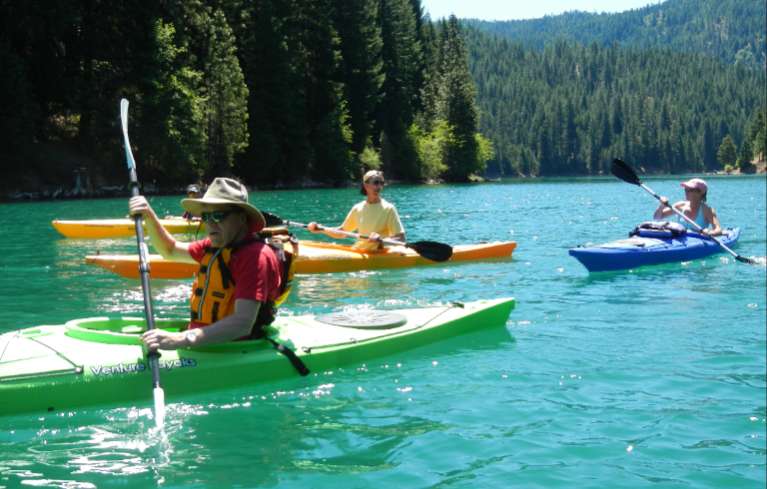
Kayaking is a versatile activity. It can be as peaceful as floating on calm water as you soak in nature or as adrenaline pumping as navigating class five rapids.

For me, I try to keep my kayaking experiences simple and more on the peaceful side of things. One of my favorite things to do on summer weekends is to throw my kayak in the lake and spend the entire day on the water. What I learned over time is that sometimes I tried to keep things too simple and ignored common sense preparation and paid the price with sunburns, loss of gear and other mishaps that could have been avoided. No matter how you intend your kayak experience to play out, every kayaker should adhere to a checklist.

I’m talking about 10 items that every kayaker needs before getting on the water to ensure they’ll be prepared for anything and have a positive experience. You may modify this list depending on what you plan on doing but let’s start here.

Common safety tips can ensure a kayak goes smoothly. Photo/LTN

Common safety tips can ensure a kayak goes smoothly. Photo/LTN

Life vest (AKA personal flotation device or PFD) — It goes without saying that every kayaker needs to wear a PFD when they go paddling. It’s a safety precaution usually required by law and it’s always better to be safe than sorry. They’ll help you stay afloat should a capsize occur and provide an access point for those on a boat or dock to pull you up by the shoulder strap. Many will be brightly colored or have integrated reflective materials so that you can be seen from afar or at night. Every PFD should include a place to clip in a whistle or noise-making device, which can also be required by law.

Paddle — Of course you know you need a paddle to go kayaking. You won’t get very far without one. Like PFDs, kayak paddles have been designed for every type of paddler and you should take time to find the one that fits you best. Higher end models will be more expensive but are made of lightweight, durable materials that’ll leave you feeling like you can paddle forever.

Paddle keeper — Having a place to secure your paddle is important, especially when partaking in any activity that involves you getting in and out of your kayak, rapids, fishing or photography. Why is it important? Because you don’t want to lose your paddle! You can also substitute the paddle keeper with a leash.

Leashes, hooks and clips — A piece of gear escaping overboard is the easiest way to damper an otherwise great day on the water. Save yourself some worry and lake bottom searching by securing all of your gear onto your kayak. Use a combination of leashes, hooks and clips or carabineers to attach items around your kayak.

Water bottle — It’s smart to bring along a bottle of water or Camelbak to drink from even if you’re just going out for a light paddle on a cool overcast day. Camelbaks are a great investment for kayakers because they are hands free and allow you to drink while you paddle. Otherwise, any water bottle will do.

Sandals or water shoes — I can’t remember the last time I went kayaking without my sandals and that’s because I don’t like coming home at the end of a day with a pair of ruined tennis shoes. Unless you capsize or just decide to jump in, you won’t get soaked when you go kayaking but it is almost guaranteed that your feet will.

Dry bags and boxes — Whether you’re planning on bringing a pair of keys and wallet or a complete change of clothes, you’ll need to make sure this stuff stays dry. Kayak and kayaking accessory manufacturers make a wide variety of options and sizes from bags and boxes to small pouches designed to fit the shape of your phone. It’s always a good idea to keep the items you use more often in a separate location.

Emergency kit — I started off with a red dry bag (red signifying emergency) and stuffed it with a small first aid kit, flashlight, matches, knife, rope, sunscreen, bug repellant and a rain jacket. Hopefully you’ll never have to open this bag, but when you do, you’ll know you’ve got what you need.

Phone — Yes, your phone. While I realize for some the idea of getting outdoors means leaving your electronics behind, bringing your phone with you is a good idea should you get into an emergency situation and need to make a call. It can also serve as your camera too. Protect your phone with dry bag, pouch or box. Trying to avoid emails, texts and phone calls? Simply turn it off and stow it inside your kayak.

Paddling apparel — A pair of cotton shorts and a T-shirt may be just fine, but using apparel designed to get wet and dry quickly will make your paddling experience a more comfortable and safer one. Shop for apparel that is made of synthetic materials that are capable of wicking sweat off your body and dry quickly. If paddling during the colder part of the year, also stick to synthetic materials but don’t forget to layer up.

It shouldn’t be hard to find these basic kayaking accessories. Specialty retailers will have all of these items and most will be fairly inexpensive too.

So, next time you go kayaking, be prepared with the right gear and don’t learn the hard way like I did.

Joseph Dowdy is an avid kayaker based out of the central Texas area. He has paddled many of central Texas’ waterways and has attended and/or participated in many kayak fishing tournaments, races and paddling festivals. He’s currently employed at Austin Canoe and Kayak and loves that he gets to spend time working with his favorite toys.


Tahoe clarity improves; climate change a concern

Lake Tahoe's clarity improved for the second consecutive year. Photo/Kathryn Reed

Lake Tahoe’s clarity improved for the second consecutive year. Photo/Kathryn Reed

By Kathryn Reed

While Lake Tahoe’s clarity improved for the second straight year, no one is ready to throw a victory party.

“The data shown reveal a unique record of trends and patterns – the result of natural forces and human actions that operate at time scales ranging from minutes to decades. These patterns make clear that Lake Tahoe is a complex ecosystem, behaving in ways we don’t always expect. This was exemplified this year by the decrease in the abundance of (the algae) Cyclotella in the lake, and the corresponding increase in summer clarity,” Geoff Schladow, director of UC Davis Tahoe Environmental Research Center in Incline Village said in the Tahoe: State of the Lake Report 2013 that was released today. “While Lake Tahoe is unique, the forces and processes that shape it are the same as those acting in all natural ecosystems. As such, Lake Tahoe is an analog for other systems both in the western U.S. and worldwide.”

Schladow will be talking tonight at 6 at Sierra Nevada College about the report and lake clarity.

Jeff Cowen with the Tahoe Regional Planning Agency said the results of the report confirm a lot of trends the bi-state regulatory has known about.

“It underscores the approaches we have established,” Cowen told Lake Tahoe News.

In 2012, Lake Tahoe’s annual clarity improved 6.4 feet compared to 75.3 feet. Clarity improved in the summer and winter.

Scientists attribute the improvement to:

• 2012 being dry year in the basin. This means less runoff carrying sediment reaching the lake.

• The lake water not mixing. In winter, surface waters cool and sink downward, mixing with deeper waters. This brings nutrients to the surface, promoting algae growth, while also moving oxygen to deep waters, promoting aquatic life. A lack of deep mixing can contribute to warmer lake temperatures.

• Reduced numbers of tiny Cyclotella algae. An abundance of the microscopic algae over the past five years has been linked to climate change and coincided with reduced summertime clarity.

Since 1968 a Secchi disc – which resembles a white dinner plate – has been used to measure the clarity. That year the disc could be seen at depth of 102.4 feet. People stand on a boat, look in the water and decide how far down they can see the disc.

Schladow said this report is the first to use “other environmental and water quality factors that all provide indicators of the lake’s condition.”

Some of the new tools include an underwater glider that was in the lake for 11 days in May. It provided the first “snapshots” of water quality across an east-west transect. The data confirmed the presence of giant “internal waves” deep in the lake that could move algae and pollutants vertically over 150 feet.

A water-quality monitoring station was placed at a depth of 360 feet off the West Shore that provides data from top to bottom every 30 seconds. This is the first such station in any lake in the world and is expected to provide a better understanding of climate change impacts on Lake Tahoe.

Climate change is a growing concern for Lake Tahoe. The annual average surface temperature was 52.8 degrees, the highest ever recorded for Lake Tahoe.

The lake dropped a foot in 2012 because of the lack of snowfall.

The report says, “In a dry year lake Tahoe typically loses 1.5 feet of water level. Predictions of future climate conditions in the basin point to more extreme events in the future. A five-year drought could conceivably reduce the lake level to 6215.5 feet, or 5 feet below the record 1992 levels.”

Air temperatures are also increasing in the Lake Tahoe Basin. This in turn will mean more rain and less snow. All of this will affect lake clarity, too.

“Although the date on which peak snowmelt occurs varies from year to year, since 1961 it has shifted earlier an average of two weeks (16.3 days). This shift is statistically significant and is one effect of climate change on Lake Tahoe. In 2012, peak discharge was one of the earliest recorded, occurring around May 4,” the report says. “Peak snowmelt is defined as the date when daily stream flows reach their yearly maximum. Daily stream flows increase throughout spring as the snow melts because of rising air temperatures, increasing solar radiation and longer days. The data here are based on the average from the Upper Truckee River, Trout Creek, Blackwood Creek, Ward Creek, and Third Creek.”

While most of the attention in the past half-century has been focused on the disc in the middle of the lake, it’s the gunk growing along the shoreline that has the average resident and tourist concerned. This is what scientists call the near shore.

“Periphyton, or attached algae, makes rocks around the shoreline of Lake Tahoe green and slimy, or sometimes like a very plush white carpet. Periphyton is measured eight times each year. In 2012, concentrations at Sugar Pine Pt. (no urban influence) and Zephyr Pt. (low urban influence) were below the long-term average. The site with the most periphyton (Pineland) is close to an urban area, and was relatively high this year,” the report says. “The Tahoe City value was about average for that site. To date, no statistically significant long-term trend in maximum periphyton biomass has been detected at any of these individual locations. Monitoring periphyton is an important indicator of near-shore health.”

—

Here is the full 2013 State of the Lake report.


SnowGlobe returning to S. Tahoe in December

By Kathryn Reed

SnowGlobe, the three-day outdoor music festival in South Lake Tahoe, is coming back.

The City Council on Tuesday approved the agreement for the event to return Dec. 29-31. But this third year is most likely the last time it will be at the ball fields next to Lake Tahoe Community College.

While Chad Donnelly, who produces the event, is going to put heavy mats on the high-traffic areas, he said it’s cost-prohibitive ($800,000) to cover the entire field. That field was paid for by taxpayer dollars through Measure S/R. And with the city wanting to preserve the integrity of the field as long as possible, City Manager Nancy Kerry is recommending “it never come back to this location.”

SnowGlobe will return to South Lake Tahoe for the third year over New Year's Eve weekend. Photo/LTN file

SnowGlobe will return to South Lake Tahoe for the third year over New Year’s Eve weekend. Photo/LTN file

The thinking is that by telling Donnelly now that he has to find a new location for 2014, that a location on the South Shore will be found.

Horizon had considered having it. The North Shore expressed strong interest when Donnelly started fishing around for cash to come back. But the South Shore always wanted it. It’s all about money.

The Aug. 6 staff report says, “An overall economic impact analysis was provided by a consultant contracted by SnowGlobe, which estimated the direct economic benefits to South Lake Tahoe community at $5.8 million.” Strategic Marketing Group then analyzed those findings, saying the consultant should have included indirect economic impacts, too, which would bring the financial benefit of SnowGlobe to between $11 million and $14 million.

Jack Fisher, general manager at MontBleu casino, told the council he thought $10 million was “a little light”. His casino has had multiple after parties that have been popular with SnowGlobe attendees.

He broached the possibility of having SnowGlobe at multiple locations in the future.

On the Aug. 8 Lake Tahoe Visitors Authority board meeting agenda is an item to allocate up to $75,000 to the producer of SnowGlobe. The board opted earlier not to vote on the funding until a location on the South Shore had been secured.

Lake Tahoe Community College in April had directed staff to negotiate a multiyear contract with Donnelly. But that won’t be necessary with the city’s not wanting to subject the field to an event like SnowGlobe. The college board, though, will have an item about SnowGlobe on its Aug. 13 agenda.

Donnelly will be responsible for cleaning the field once the snow melts. Under consideration is adding warming huts by the line for buses and near food vendors.

He must put up a $25,000 deposit.

The city is going to absorb about $25,000 in soft costs, which includes time for police and parks and rec staff.

The city believes that $25,000 is an investment in the event with a return many times over via hotel and sales tax revenue generated from concert-goers.


Tom Wendell — 1951-2013

Tom Wendell will be remembered as a voice for recreation.

Tom Wendell will be remembered as a voice for recreation.

Long before economics dictated that recreation must be the focal point of the Lake Tahoe Basin, there was a man shouting from the mountaintops, the bike trails, the lake and everywhere he went that recreation is what Tahoe is all about.

That message will be carried on even though the original voice has been silenced.

Tom Wendell died Aug. 5. He was 62.

Mr. Wendell had been associated with recreation and environmental stewardship for most of the quarter century he called South Lake Tahoe home.

Born in Montreal on April 13, 1951, Mr. Wendell soon moved with his family to Southern California. He grew up in Los Angeles. The family started spending vacations in Lake Tahoe in the mid-1950s. They all fell in love with the Sierra.

Mr. Wendell’s environmental influence came in large part from his mother, Inge, who was from Germany. Besides being fluent in the language, Mr. Wendell learned about that country’s efficiencies when it came to transportation, cycling and recycling. He brought what he learned during his travels back to Tahoe.

It was rare to see Mr. Wendell on anything but his bicycle. And he had the scars to prove it. When he was a bicycle courier in the mid-1970s while attending Santa Barbara Community College he was in an accident that resulted in his first knee surgery.

That surgery is what led him to learn how to maneuver a mono ski. It was much easier on Mr. Wendell’s knees than the traditional two planks. And this was at a time when fat skis were not available.

Mr. Wendell was often seen skiing at Heavenly Mountain Resort on that mono ski. Within the small community of mono skiers, his abilities were praised.

When Mr. Wendell first moved to South Lake Tahoe full time in 1987 he worked as a certified massage therapist at Lakeside Nautilus, where Sierra Athletic Club is now. He worked at Ridge Tahoe and other places as a CMT, but mostly had private clients.

He perfected an original massage move that with his long arm span went from the client’s toes to head in one fell swoop. And for those who experienced it, they remember it still today.

Mr. Wendell also worked for Sports Ltd. starting in 1992 and continued until 2012. He took some time off to care for his ill mother and when the store at the Y closed.

In the early 1990s, Mr. Wendell was the recycling coordinator for El Dorado County. A state law had been passed that required jurisdictions to reduce the waste being taken to landfills.

Mr. Wendell was proud to see people recycle in earnest. He was instrumental in removing the waxy, nonrecyclable material from phonebook covers.

In 2001, with the help of Bob Kingman, Karen Fink, Peter Fink, Jeff Miner and Gary Bell, TRAC – or Tahoe Region Advocates for Cycling – was formed. The goal of Mr. Wendell and others was to promote on- and off-road cycling, along with safety. Grants were secured to help with bike trail improvements.

This group eventually morphed into the Lake Tahoe Bicycle Coalition, of which Mr. Wendell was part.

Mr. Wendell was usually seen commuting to work and any destination on his hybrid bike. It was more of a road bike, but could handle dirt trails. Weeks would go by without him driving his car.

He had a separate mountain bike he used when he didn’t want to be around the masses and especially vehicles. Anywhere in the Cold Creek-Powerline area was a favorite of his.

Kayaking was another big part of Mr. Wendell’s life. In the last year he had also learned how to commandeer a standup paddleboard.

Mr. Wendell was on the South Lake Tahoe Sustainability Commission until the City Council’s recent disbanding of it. He also helped form Compost Tahoe.

At meetings around the basin he lobbied for more recreation opportunities, more and better bike trails, and for people to live a sustainable lifestyle.

Mr. Wendell’s voice of advocacy has finally been heard based on the direction the basin leaders say they want move. Perhaps one day there will be a bike trail named after Mr. Wendell and a plaque to acknowledge the efforts of this man who never stopped fighting for the words “recreation” and “Tahoe” to be synonymous.

Mr. Wendell is survived by his brother, Ted Wendell, of South Lake Tahoe and an army of friends.

In lieu of flowers, donations may be sent to Sustainable Tahoe, Barton Hospice, Lake Tahoe Bicycle Coalition or TAMBA .

Services are pending.


South Tahoe homes sales, median prices rising

By Dan Spano

We are still seeing a lot of action in the South Lake Tahoe real estate market. The July figures were just released and they continue to show that interest in buying a home in Lake Tahoe is still growing.

During the last year we saw homebuyers flock to Lake Tahoe for a few reasons: low interest rates and an increased interest to buy something before they felt it was too late. When we saw more home listings enter the market this summer we saw the sales frenzy subside a bit.

The chart shows sales figures:

July 2013

July 2012

July 2011

Closed sales

80

68

53

Median sales price

$297,000

$234,050

$235,000

No. of homes for sale

363

422

693

No. of new listings

120

93

126

The month’s supply of homes for sale in Lake Tahoe has started to increase. The ideal balance between buyers and sellers is a six-month inventory of homes to get a balanced market between buyers and sellers. Our current month’s supply is 5.8 so this is the closest to a balanced market we’ve seen in months.

The future

Demand for homes in South Lake Tahoe has started to slow down, but we won’t see those figures for another two to three months once escrows start to slow. I continue see a lot of clients from Northern California who really want to own a vacation home in Lake Tahoe. This is a great place to own a vacation home and/or a vacation rental.

I see the number of closed sales starting to level off and the interest rates starting to climb slightly. The 3 percent interest rates are now gone and we’re seeing rate up to 4.7 percent. For the future I see a more balanced real estate market in Lake Tahoe, more inventory available, the median prices continue to increase and still more good opportunities for buyers.

Many cities are already back to where home values were before the slump of the last few years but that isn’t the case in Lake Tahoe. Since we’re still below our high price point of pre-2007 there is still room to grow and home buyers realize this.

Dan Spano is with Paradise Real Estate.