Developers have eyes on Old Jackson Highway area

By Tony Bizjak, Sacramento Bee

Old Jackson Highway has had many personalities. Once a lazy path to the foothills past strawberry and hop fields, the east Sacramento County road today is a busy commute and truck route flanked by pit mines, rural ranchettes, small industry and encroaching suburbs.

Now, Sacramento-area leaders are in talks with Caltrans to take control of the road, also known as Highway 16 and Jackson Road, so they can prep it for the biggest remake yet.

Officials in Sacramento County, the city of Sacramento and Rancho Cordova want to turn 11 miles of the two-lane highway into an urban street to serve as the spine for massive development.

The Jackson Highway area is being promoted as one of the Sacramento region’s potential urban growth areas for the next 20 to 30 years. Developers are drawing up plans for as many as 30,000 housing units between South Watt Avenue and Grant Line Road.

Read the whole story


Celios keep Tahoe heritage alive on private ranch

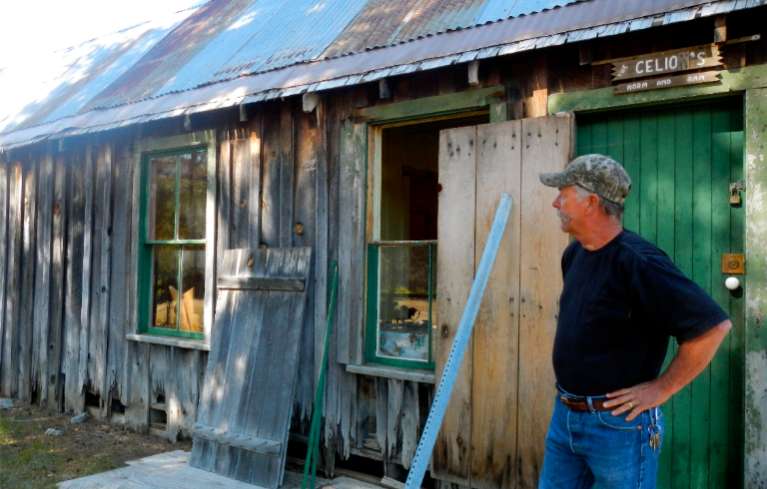
Tom Celio outside the home where his grandparents lived, which is part of the 103 acres he owns. Photos/Kathryn Reed

Tom Celio outside the home where his grandparents lived, which is part of the 103 acres he owns. Photos/Kathryn Reed

By Kathryn Reed

MEYERS – Not everyone struck it rich during the Gold Rush. Many of the men who came to California in search of gold ended up returning to work they knew.

Carlo Guiseppi Celio was one of those men.

He came to the United States from Switzerland. When he didn’t strike gold, he began a dairy farm in Placerville.

In 1863 he homesteaded on property in what was known as the Upper Lake Valley area of the South Shore. The valley with its towering granite walls reminded him of his home in the Old World. Celio’s first 160 acres on the South Shore were bought for $300, which he paid for in gold.

At one point the Celio stake in Lake Tahoe was about 4,000 acres, making them one of the largest landowners. They ran 500 head of beef cattle from Meyers into Meiss, Big and Freel meadows. During the fall cowboys drove the cattle on horseback to the West Slope of El Dorado County. It was a five-day journey.

Today, the Celios own 103 acres on both sides of South Upper Truckee Road, to the center of the Upper Truckee River, and crossing the Old Meyers Grade twice.

On Aug. 24-25 the property is going to be the site of a 150-year celebration of the ranch. This is one of the largest private property holdings in the Lake Tahoe Basin. Tours of some of the outbuildings will be available, stories of what life was like years ago will be told, and an old-fashioned cowboy barbecue will take place.

Recent history

Cattle no longer roam the property, but a handful of horses do.

Tom and Chris Celio in 2011 were deeded the property from Shirley Taylor. Taylor and Tom Celio are second cousins.

Taylor inherited the property from her mother, Hazel Taylor, who was a Celio. This was in 1985.

Taylor spent years refurbishing much of what had gone into disrepair. She inherited what she calls “13 old buildings and three outhouses.” The house had always been a summer home. Taylor winterized it so starting in 1988 she could live there year-round.

Since Tom and Chris Celio moved in full time they have put in a picture window above the sink that looks up to Echo Summit. Sitting at the kitchen table it’s hard to have eye contact with the people on the other side of the table with that view just above their heads. They have also taken out a wall that divided the kitchen and living room to open up the area more.

In 1986, Taylor was granted Timberland Preservation Zoning from the state Department of Forestry. This zoning restricts development and preserves the timberland. Selling wood was one way she could pay to bring the ranch back to life in at least a habitable manner.

In 1991, Taylor received the Forestland Stewardship Sward. Five years later she was honored with the California Tree Farmer of the Year award.

Through the 1990s many of the old buildings were reroofed, resided, and two foundations were reinforced.

But it was never going to be what it was based on the number of acres and environmental regulations that bind private property owners.

“My goal was to preserve the Celio ranch property as a tribute to the pioneering Celio family and hope that is continued in the future,” Taylor told Lake Tahoe News. “The Celio mural on the Meeks building (in Meyers) scheduled for a September completion, is my last effort to recognize the family.”

Various members of the nine generations of Celios who are in the United States have spent time at the ranch. Tom and Chris Celio are continuing that tradition with their children, grandchildren and great-grandchild.

There will even be Celios at the celebration next weekend who haven’t met each other.

What it used to be like

In 1903, the Celios bought the town of Meyers, which consisted of a variety of businesses occupying 22 buildings. They were the largest employer at the time in this area.

The 125-head of dairy cattle required five people to milk them twice a day. Butter was made on site, which was then sold to locations as far away as San Francisco.

The family incorporated in 1905 and established a lumber company.

Lumber from the first mill built in 1910 provided the lumber for the house where Tom and Chris Celio live today. It was built in 1914.

But Carlo Guiseppi Celio knew better than to clear-cut the forest area, even though others were doing so.

The slaughterhouse was built in 1912. Beef was sold to the various resorts around the lake and at stores in Meyers.

Tom Celio points to how the circular metal contraption in the ceiling would hold the cattle upside down after they were shot and killed. The blood drained into a catch area that flowed into a bathtub on wheels that was under the building. The carcasses stayed there chilled for a couple weeks before being sold for eating.

The room was chilled from ice blocks that had been cut the previous winter from area creeks and lakes, and even from a pond at Tahoe Paradise Golf Course.

A stone’s throw from the main house is the house Norm and Ann Celio lived in when they were first married. They are Tom Celio’s grandparents and Taylor’s uncle and aunt.

Celio recalls the story of when his grandmother found out there was no indoor toilet. She nearly lost it and was ready to leave. Norm Celio had been a bachelor at the lake and he was fine without that modern convenience. Still, he quickly added a bathroom to accommodate his new bride.

Today the house needs some work. Remnants from the past remain – old appliances, dishes and handmade furniture.

But the Celios were a clan of practical workers. Fancy antiques are not to be found here.

The Depression took its toll on the Celio operations. There wasn’t as much family to keep things going, so some of the businesses were leased out.

By the 1950s developers were taking an interest in Lake Tahoe. That is when much of the property that became Tahoe Paradise and Christmas Valley was sold off. They were given those names by developers to entice people to buy houses in the area.

A series of gifting-inheritance-gifting transactions have kept the current 103 acres in the Celio family.

“This is one of the last pieces of old Tahoe,” Tom Celio said with pride looking at the ranch.

Notes:

• Tickets for the 150-year celebration are $35 for Lake Tahoe Historical Society members, $40 for non-members. They may be purchased at the museum – 3058 Lake Tahoe Blvd., South Lake Tahoe, or call (530) 541.5458.

• Tours are Aug. 24 from 10:30am-1pm, Aug. 24 1:30-4pm, Aug. 25 10am-1pm, and Aug. 25 1:30-4pm.

• Proceeds benefit the Lake Tahoe Historical Society.

ngg_shortcode_0_placeholder (Click on photos to enlarge.)


Barton on cutting edge with surgeries

No longer are multiple incisions necessary for hysterectomies or gall bladder removal.

Barton Memorial Hospital last week performed its first single-site hysterectomies. This means it is the first hospital in Northern California and Northern Nevada to offer the single-site surgery for both procedures. It has been doing gall bladders for more than a year.

Gynecologist John Missanelli and members of Barton’s da Vinci surgical team on Aug. 15 performed the specialized surgery through the belly button.

This means one scar for women. Until now, hysterectomies often left multiple, visible scars.

“Our physicians are among a very small group of surgeons in the region who have received training to perform this type of advanced surgery,” Clint Purvance, Barton’s chief medical officer, said in a statement.

Purvance told Lake Tahoe News only the da Vinci allows for this single-site surgery for these two procedures – no other medical device can do so. Surgeons enter the body via the bellybutton.

In addition to fewer scars, this technique may reduce pain, involves less loss of blood, allows for a faster recovery and shorter hospital stay.

— Lake Tahoe News staff report


Vegan hiker sets PCT speed record

By Mercy for Animals

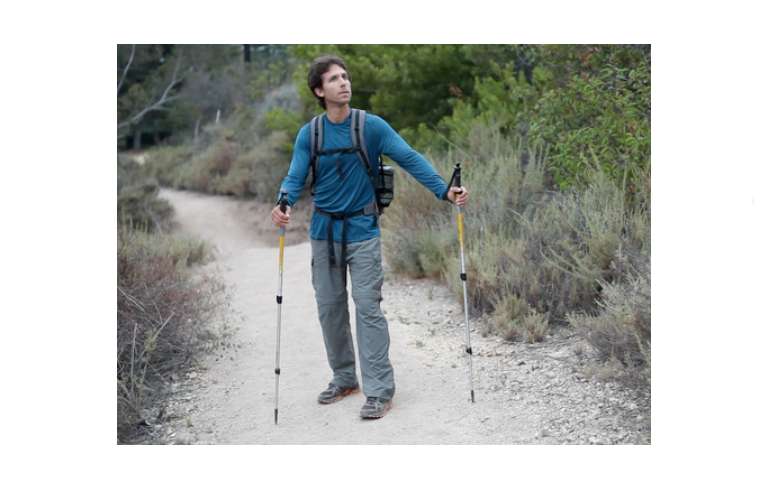
On Aug. 8, Josh Garrett — a dedicated vegan and proud Mercy For Animals member — smashed the previous held world record for through-hiking the grueling Pacific Crest Trail, a 2,655-mile trek from Mexico to Canada, with an official time of 59 days, 8 hours, 14 minutes.

But Garrett, a Santa Monica College track coach and exercise physiology instructor, didn’t just shatter records; he also broke barriers by raising awareness of farmed animals and funds for Mercy For Animals along his incredible journey.

We caught up with Garrett before he set out on his mission drive adventure to get the scoop on his heroic hike.

MFA: What made you decide to embark on this hike?

Josh Garrett set a speed record this month for the Pacific Crest Trail. Photo/Provided

Josh Garrett set a speed record this month for the Pacific Crest Trail. Photo/Provided

I hiked the Pacific Crest Trail back in 2009 and it was one of the greatest experiences of my life. About a year ago, I met John Mackey, the CEO of Whole Foods. He is an avid hiker, who has section hiked the Big Three trails (Appalachian, Continental Divide, and Pacific Crest). When we talked about the Pacific Crest Trail, he was really surprised, I guess impressed, to learn that I had hiked it in 88 days.

We got to talking and he had this idea that with the right support, I could probably break a hiking record. He asked me if I wanted to give the Pacific Crest Trail record a shot. I had mixed feelings. I loved the idea of the challenge, but didn’t want to let anybody down if I didn’t make it. And I was nervous. Hiking the trail was uncomfortable enough — painful sometimes — even when I wasn’t trying to do it within any particular time limit. But, I went vegan about eighteen months ago, and have become more and more concerned about what’s happening to the animals.

Suddenly it hit me that I could use this hike as a way to get the word out on their behalf. So I teamed up with Mercy For Animals and now this is so much more than a personal quest.

Read the whole story


Dogs gather for play day in S. Lake Tahoe

Bear's humans help find the treat on the cup. Photos/Kathryn Reed

Bear’s humans help him find the treat under the correct cup. Photos/Kathryn Reed

By Kathryn Reed

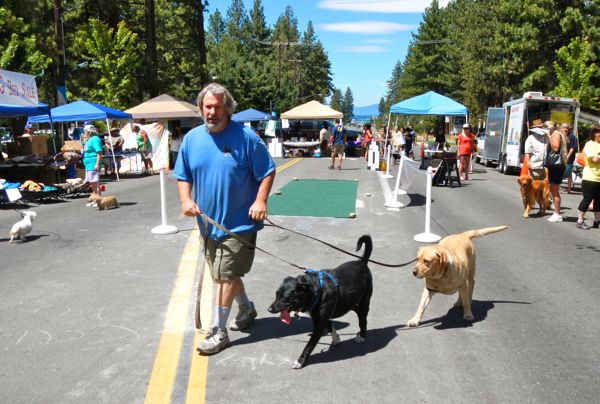
A whole lot of sniffing was going on Saturday on Ski Run Boulevard in South Lake Tahoe. And plenty of tail wagging, too.

It’s a good bet many of the dogs who attended the second annual Dawgs on the Run on Aug. 17 weren’t going to need dinner. Every booth seemed to have treats, and then there were also the food contests.

One event had owners put the handle of a spoon in their mouth. Their dog was practically in their face licking off the peanut butter on the other end.

Howie Nave take Mo and Brody to Dawg on the Run on Aug. 17.

Howie Nave takes Mo and Brody to the various booths at Dawgs on the Run in South Lake Tahoe on Aug. 17.

And if being up-close-and-personal with your dog wasn’t enough, for a buck a boxer would give you seemingly endless kisses. The money went to a rescue foundation.

“The primary purpose is to educate people about how to be better pet owners and be responsible,” Mireya Ortega, one of the organizers, told Lake Tahoe News.

Lake Tahoe Humane Society along with dog boarders, dog trainers and dog groomers all had information to give out.

But Ortega also knew to get people to listen and to attend it had to be fun. That’s why it turned into a canine carnival of sorts.

Other activities included bobbing for tennis balls, playing dead, agility course, best costume, best trick and karaoke for dogs.

Kisses worth more than a dollar.

Kisses worth more than a dollar.

There was a dog treat contest with Après Win’s Tahoe Kokanee Krunch Dog Treats the winner. (See recipe below.) Nepheles entered Peanut Butter and Bacon, Apple-Cheddar, and Puppy Pumpkin Molasses doggie treats.

Five testers, all on four legs, decided the winning treat. The four treats were placed in front of each judge. The treat that the dogs went to first was the winner. The Kokanee won 3-2.

Tahoe Kokanee Krunch Dog Treats by Après Wine

2 medium Kokanee, pan-fried, filleted and finned, skins on (or substitute one 15-ounce can of salmon)

¼ C chicken broth (omit if using canned salmon)

2 C flour

2 eggs

Parchment paper and cooking oil spray

Preheat oven to 350 degrees. If using canned salmon, open but don’t drain. Put salmon and juices into a large mixing bowl.

Crack and add two eggs. Flake Kokanee, including skin and mix in with the eggs and broth.

Take the flour and mix it into the salmon-egg-broth mixture. You may add more or less flour than recommended to get a consistency similar to human biscuit dough.

Line a baking sheet with parchment paper and spray with no-stick cooking oil. Dump the dough onto the sheet. Sprinkle some flour on top of the dough and flour your hands to keep the dough from sticking as you press it flat.

Press the dough out until it about ¼ inch thick. For moist Kokanee Krunch, make it thicker. For crunchy treats, make it thinner. You don’t need to make perfect corners, as this will later be broken into small pieces for the dog. Just flatten it out into any shape. With a knife, makes lines in the dough about the size of small treats so it will be easier to break.

Place the baking sheet in the center of the oven. Cook for 25-35 minutes, depending on whether your dog prefers moist or crunchy treats.

Use a spatula to lift your treat off the parchment before cooling, otherwise it may stick. You can let it cool on a rack or in the cookie sheet.

Once cooled, divide into desired portions, bag and freeze.


Placer County expected to pass budget 3 months late

The $715.2 million budget for 2013-14 that the Placer County Board of Supervisors are expected to approve Sept. 24 is 2.1 percent less than last year’s budget.

Supervisors were updated Aug. 15 on what the next fiscal year looks like during a budget workshop. A public hearing on the budget is scheduled for Sept. 10, with adoption two weeks later.

In June, the board approved an interim budget of $690.5 million since the 2013-14 fiscal year began July 1.

Supervisors postponed making a decision Thursday on how to allocate more than $8 million in unallocated one-time funds, a total that includes almost $5.8 million in the general fund and $2.3 million in the public safety fund. That decision could be made at the Aug. 20 board meeting.

Staff is recommending the bulk of the funds be used to help return county reserve and contingency funds to pre-recession levels.

“We have some reasons for optimism,” Chief Assistant County Executive Officer Holly Heinzen told the board. “At the same time, we have some reasons for caution.”

Key reasons for optimism include the county’s improving revenue picture and past board actions that have helped keep costs pressures under control.

Reasons to be cautious include the expense of employee benefits, state and federal actions that affect counties and the need to open and operate Placer County’s new jail in Roseville.

During the workshop departments made presentations to the board.

Priority-based budgeting is an approach that seeks to increase transparency in the budget process while helping ensure county resources are allocated based on board and public priorities.

— Lake Tahoe News staff report


Bear activity expected to spike in Tahoe basin

By Chris Healy

It is mid-August and the appetite of the Sierra Nevada black bear is about to take a dramatic swing upward. Motivated by signals from nature known as zeitgebers, the bears will spectacularly increase their daily caloric intake from 3,000 calories per day to upwards of 25,000 calories per day.

This physiological wonder is known as hyperphagia. Nature’s dinner bell is ringing.

“Hyperphagia is a period where bears eat as much as they possibly can so they can put on as much fat as possible to carry them through winter hibernation,” said biologist Carl Lackey. “Nothing much gets in the bear’s way when they are this hungry.”

Bears in Tahoe sometimes like to forage for people food. Photo/Janice Eastburn

Bears in Tahoe sometimes like to forage for people food. Photo/Janice Eastburn

Armed with that big appetite and motivated by zeitbegers like decreased daily sunlight and cooler morning temperatures, the bears will search far and wide in the hunt for food. Those 25,000 calories are the human equivalent of eating about 50 cheeseburgers per day over the next three months.

The moon will be full or nearly full for 10 days beginning this weekend (Aug. 17-24) just at the time that the bears begin to ratchet up their appetites.

“They will eat up to 20 hours per day during a full moon period as they pile on the fat,” stressed Lackey. “People living in bear country should not be tempting these already hungry bears with easy access to garbage, bird feeders, bowls of pet food or ripened fruit falling from trees.”

Areas most at risk of attracting bears by granting access to garbage and other attractants are the Lake Tahoe Basin (especially Incline Village), west Carson City and the foothill areas of Douglas and Washoe counties.

Nevada has had two dry winters in a row and the natural foods that the bears desire are not in abundance in the wild lands.

“Plants that create nuts and berries like manzanita, squirrel tail, snowbush, desert peach and rosehips are highly desired but not always abundant in dry years,” Lackey said. “It will be a busy next three months in bear country.”

People needing to report nuisance bear activity can call the NDOW’s Bear Hotline telephone number at (775) 688.2327. For information on living with bears, go online.

Chris Healy works for the Nevada Department of Wildlife.


Study: 18% of premature deaths linked to obesity

By Melissa Healy, Los Angeles Times

The death toll of the nation’s obesity epidemic may be close to four times higher than has been widely believed, and all that excess weight could reverse the steady trend of lengthening life spans for a generation of younger Americans, new research warns.

More than 18 percent of premature deaths in the United States between 1986 and 2006 were associated with excess body mass, according to a team of sociologists led by a Columbia University demographer. That estimate, published online Thursday in the American Journal of Public Health, is far higher than the 5 percent toll widely cited by researchers.

The new figures do not reflect newly discovered facts about obesity’s effects on health. Rather, they emerged after the researchers applied a finer-grained approach to examining obesity across the U.S. population.

Using historical survey data, the study authors toted up differences in excess weight status across different gender, ethnic and age groups. They combined that data with existing “mortality risk” statistics to estimate how many Americans over age 40 who died during that 20-year period did so because of weight-related causes.

Read the whole story


Guidelines help keep high school athletes alive

By Deborah Franklin, NPR

For all the benefits of exercise and teamwork to the heart and head, high school athletes still lead the nation in athletics-related deaths. And it doesn’t have to be that way, sports medicine specialists say.

Many student deaths from head and neck injuries, heat stroke, sudden heart trouble and exertion-related sickle cell crises can be prevented, according to a scrum of leading sports doctors, athletic trainers, research physiologists and high school administrators who have endorsed a detailed set of guideline for keeping high school athletes safe.

“The idea was to create something that schools could almost use as a checklist,” says Douglas Casa, who helped shape the consensus guidelines published in the August issue of the Journal of Athletic Training. Casa, who led a similar effort to produce conditioning guidelines for college athletes in 2012, is a sports physiologist at the University of Connecticut in Storrs, and chief operating officer of UConn’s Korey Stringer Institute.

Read the whole story


Looking to curtail U.S. police militarization

By Radley Balko, Huffington Post

When the FBI finally located Whitey Bulger in 2010 after searching for 16 years, the reputed mobster was suspected of involvement in 19 murders in the 1970s and ’80s, and was thought to be armed with a massive arsenal of weapons. He was also 81 at the time, in poor physical health, and looking at spending the rest of his life in prison. Of all the people who might meet the criteria for arrest by a SWAT team, one might think that Bulger would top the list.

Yet instead of sending in a tactical team to tear down Bulger’s door in the middle of the night, the FBI took a different appraoch. After some investigating, FBI officials cut the lock on a storage locker Bulger used in the apartment complex where he was staying. They then had the property manager call Bulger to tell him someone may have broken into his locker. When Bulger went to investigate, he was arrested without incident. There was no battering ram, there were no flash grenades, there was no midnight assault on his home.

That peaceful apprehension of a known violent fugitive, found guilty this week of participating in 11 murders and a raft of other crimes, stands in stark contrast to the way tens of thousands of Americans are confronted each year by SWAT teams battering down their doors to serve warrants for nonviolent crimes, mostly involving drugs.

On the night of Jan. 5, 2011, for example, police in Framingham, Mass., raided a Fountain Street apartment that was home to Eurie Stamps and his wife, Norma Bushfan-Stamps. An undercover officer had allegedly purchased drugs from Norma’s 20-year-old son, Joseph Bushfan, and another man, Dwayne Barrett, earlier that evening, and now the police wanted to arrest them. They took a battering ram to the door, set off a flash grenade, and forced their way inside.

As the SWAT team moved through the apartment, screaming at everyone to get on the floor, Officer Paul Duncan approached Eurie Stamps. The 68-year-old, not suspected of any crime, was watching a basketball game in his pajamas when the police came in.

By the time Duncan got to him in a hallway, Stamps was face-down on the floor with his arms over his head, as police had instructed him. As Duncan moved to pull Stamps’ arms behind him, he says he fell backwards, somehow causing his gun to discharge, shooting Stamps. The grandfather of 12 was killed in his own home, while complying with police orders during a raid for crimes in which he had no involvement.

The Obama administration has begun talking about reforming the criminal justice system, notably this week, when Attorney General Eric Holder announced changes to how federal prosecutors will consider mandatory minimum sentences. If government leaders are looking for another issue to tackle, they might consider the astonishing evolution of America’s police forces over the last 30 years.

Today in America, SWAT teams are deployed about 100 to 150 times per day, or about 50,000 times per year — a dramatic increase from the 3,000 or so annual deployments in the early 1980s, or the few hundred in the 1970s. The vast majority of today’s deployments are to serve search warrants for drug crimes. But the use of SWAT tactics to enforce regulatory law also appears to be rising. This month, for example, a SWAT team raided the Garden of Eden, a sustainable growth farm in Arlington, Texas, supposedly to look for marijuana. The police found no pot, however, and the real intent of the raid appears to have been for code enforcement, as the officers came armed with an inspection notice for nuisance abatement.

Read the whole story