Crews tally damage from Calif.’s 3rd largest fire

By Tracie Cone, AP

Scientists are assessing the damage from a massive wildfire burning around Yosemite National Park, laying plans to protect habitat and waterways as the fall rainy season approaches.

Members of the federal Burned Area Emergency Response team were hiking the rugged Sierra Nevada terrain Saturday even as thousands of firefighters still were battling the four-week-old blaze, now the third-largest wildfire in modern California history.

Federal officials have amassed a team of 50 scientists, more than twice what is usually deployed to assess wildfire damage. With so many people assigned to the job, they hope to have a preliminary report ready in two weeks so remediation can start before the first storms, Alex Janicki, the Stanislaus National Forest BAER response coordinator, said.

Team members are working to identify areas at the highest risk for erosion into streams, the Tuolumne River and the Hetch Hetchy Reservoir, San Francisco’s famously pure water supply.

Read the whole story


Presidio caters to the comforts of civilians

The national cemetery at the Presidio with Angel Island in the San Francisco Bay. Photos/Kathryn Reed

The national cemetery at the Presidio with Angel Island in the San Francisco Bay. Photos/Kathryn Reed

By Kathryn Reed

SAN FRANCISCO – Who slept here? What were their communal meals like? What were there conversations? If only walls could talk.

The Inn at the Presidio used to be where single officers would reside when this was an Army base. Today it is upscale lodging for civilians.

Since the Army left in 1994 the entire Presidio has slowly been evolving into a neighborhood of its own in San Francisco, historical landmark and recreation destination. The Presidio is a national park site within the greater Golden Gate National Recreation Area.

(The Presidio Trust manages most of the Presidio. The trust is not within the Department of Interior like the National Park Service so officials differentiate the Presidio by referring to it as a “park site.”)

The 22-room inn opened in 2012 and is the first lodging – other than camping – within the 1,491-acre park.

The three-story brick building built in 1903 is on the National Registrar of Historic Properties. The white columns along the front porch give it a Southern feel.

A sense of history fills the inn without its feeling old and musty. Adding an authentic charm, some of the décor came from the salvage yard. Walking in one notices the display of bugles. Old photographs transport you to another era.

Despite its age, the renovation is modern without being over the top. An eye toward today’s traveler with the appropriate lighting, a desk for those needing to do a bit of work and enough outlets for gadgets make it contemporary.

Warm colors, soft fabrics and a plush robe have guests collapsing onto the comfortable couch or bed.

Each night wine, cheese and other snacks are put out. Dreaming Tree, the Geyserville winery in which musician Dave Matthews is a partner, is the featured wine. We share conversation around an outdoor fire pit with a woman from El Dorado Hills on a repeat visit, a woman moving back to San Francisco wanting to relax before unpacking, and a family of four from Texas on their first trip to The City.

Cookies and milk are available for the younger crowd. A few families are staying at the inn. Some of the rooms have couches that fold into a bed.

To take off the chill from the evening and morning fog we turn on the gas fireplace. Reclining on the couch or sitting in the chair by the fire we finish off a glass of wine we brought up from the evening reception.

It’s hard not to feel at home. The empty mantel above the fireplace made me have thoughts of adding personal items. But then I might not have left.

The bathroom is plenty large enough for two to use at the same time, though the tub is ordinary in size. It’s doubtful any soldier ever bathed in this exact tub based on the newness of the fixtures. And why change the plumbing? After all, a bachelor in the Army would have no need for an oversized tub.

In the morning we sit at the long communal table as we eat what is more of a traditional European continental breakfast.

The staff is unobtrusive, yet accommodating.

From the shared balcony part, of the western tower of the Golden Gate Bridge is visible. Expanding from the front of the inn are myriad buildings that once bustled with men and women in uniform.

The Presidio has been home to three armies dating to 1776 – Spain, Mexico and the United States. The U.S. Army occupied the site from 1846-1994.

The only negative of the inn is how early trucks arrive. Both mornings at about 5:30 that annoying beep-beep-beep of a truck backing up woke us up. We heard others complain about it as well.

Rooms start at $195 per night. But two of the nice things about pricing at the inn are parking is $6 per night and the taxes are much less, being on federal land so guests aren’t paying The City’s hotel tax.

Things to do

One of the best things about the inn is the proximity to trails. Out the back door is the Ecology Trail that leads to Inspiration Point and Mountain Lake. The lake, which is one of two natural lakes in The City, is being rehabbed.

We end up walking about seven of the 24 miles within the park. (Some of the trails allow mountain bikes.)

We connect with the Bay Area Ridge Trail that takes us through a massive eucalyptus grove where artist Andy Goldsworthy’s Spire is located. His third piece of art in the park is slated to be installed this fall.

Most of the trees in the Presidio are not native. Still, as ones die off some non-native trees are being replanted to keep with the historical nature of the area that people are accustomed to. There are, however, 300 native plant species in the park. And more than 300 bird species call the Presidio home.

Walking along it’s peaceful, even when we’re by a road. The traffic is so light.

With eight scenic and historic overlooks, it’s hard to keep walking. Instead we just want to absorb the surroundings. Breathtaking is an understatement. At one point we are halfway between Baker Beach and the Golden Gate Bridge. This has us seeing the bridge looking into the bay instead of out to the ocean, which is the common view.

Concrete bunkers are artifacts from days gone by when the military had weapons at the ready to attack anyone who might invade.

Those iconic towers scratch the blue sky. A day without fog. We opt not to walk the 1.7 miles across the bridge, but instead get on the Presidio Promenade.

This leads us past the national cemetery. Row after row of white tombstones bring back memories of Arlington National Cemetery. It is a stark reminder of what this plot of land was originally used for.

Around the bend is Crissy Field. This area has been completely renovated. It would be hard to know it was once an airstrip. This was the military’s first Air Coast Defense Station on the Pacific Coast.

Presidio Trust

The Presidio Trust was established in 1998 to be the caretaker of the Presidio after the Army left. A nonprofit board, staff of 340 and army of volunteers run the operation much like this were a city unto itself.

This is the first year the Presidio Trust has not received a subsidy from the federal government to keep it functioning.

Most of the money comes from rent collected from the 3,000 people who live in one of the 1,200 houses. Housing that was for soldiers is available to anyone. It ranges from apartment style to a seven-bedroom house that used to be the home of a general that goes for about $15,000/month.

The trust brings in about $5 million a year from Lucas Films, which opened a 23-acre digital arts campus in 2005.

Rehabbing old buildings, bringing in commercial entities, attracting the public and creating easier access from the Golden Gate Bridge are all ongoing endeavors of the trust. At the forefront is preserving the historical integrity of the buildings and the land.

The trust is balancing the need to refurbish buildings while keeping the historical nature of them. It also means dealing with current building codes and seismic standards.

When the Army pulled out there were those who wanted to keep the base’s golf course just for military use – something about needing it for national security reasons. That argument didn’t have legs and the course is open to the public.

One of the bunkers on the grounds has been transformed into storage for wine. Collectors and restaurants rent the storage facility.

Talks are under way with a chef – whose name is not being disclosed – about creating a fine-dining restaurant.

More tourist accommodations are likely in the future, too. It’s the trust that runs the Inn at the Presidio. And the response to it has been greater than expected.

ngg_shortcode_0_placeholder (Click on photos to enlarge.)



Boomers finding new ways to stay fit

By Shan Li, Los Angeles Times

Greta Goplen stood in position with a cane at the ready, like a ninja warding off invisible foes.

As an instructor yelled out directions to the class — “left, left, jab, jab, nose! right, right, jab, jab, nose!” — the 59-year-old raised her walking stick and nimbly thrust it out kung-fu style, swinging it to either side before jabbing it backward.

Half an hour later, the class ended. A dozen women quickly sat down to rest artificial hips and arthritic knees.

“But I’m not done killing yet,” Goplen said, bashing an imaginary mugger on the ground. “We got ’em! Yeah! Yahoo!”

Exercise for baby boomers has gone trendy.

As the oldest baby boomers turn 67 this year, the same generation that sent crib sales zooming in the 1950s and ’60s and snapped up cars in the 1980s is now changing the fitness market in the same way it influenced music, fashion and politics.

Gone are the days when seniors could only stroll around the park or do low-impact aerobics. Now, a slew of new gyms and exercise programs are catering exclusively to the gray-haired set.

Read the whole story


Employment numbers don’t tell the whole story

By Neil Irwin, Washington Post

If you only looked at the headlines on Friday’s August jobs numbers, you’d think “Not bad!”

You would also be completely wrong.

Yes, the unemployment rate fell a notch to 7.3 percent, from 7.4 percent in July. Yes, the nation added 169,000 jobs, broadly consistent with the pattern of recent months.

But in almost all the particulars, you can find signs that this job market is weaker than it appeared just a few months ago, and maybe getting worse. The drop in the unemployment rate was caused by 312,000 people dropping out of the labor force. The number of people actually reporting having a job actually fell by 115,000 in the survey on which the unemployment rate is based.

And while the overall August jobs number was OK, the Labor Department revised down its estimates of June and July job creation by a combined 74,000 positions. In other words, through the summer, hiring has been quite a bit shakier than it had appeared.

Read the whole story


Water line replacement to bring fire suppression capability to Lukins Brothers customers

Terry Havey with Penhall Co. cuts lines Sept. 6 on 12th Street. Photos/Kathryn Reed

Terry Havey with Penhall Co. cuts lines Sept. 6 on 12th Street. Photos/Kathryn Reed

By Kathryn Reed

A multimillion-dollar waterline project to bring Lukins Brothers Water Company customers fire protection started this week.

The 4-inch lines are being replaced with 12-inch lines.

Because the bank loan was secured later in the summer than anticipated, the first phase is being broken into two segments to accommodate the limited time contractors may move dirt or asphalt in the Lake Tahoe Basin.

The first 3,400 lineal feet will go in this year along 12th Street, Tahoe Island and almost to Big Pine. Another 2,600 lineal feet will be put in next summer along James Avenue and by Highway 89 and down West Way. This two-year first phase is $2 million. This will give 40 percent of the 963 customers adequate fire protection.

Sixteen fire hydrants are also being installed.

Customers can expect to see a $15 to $25 surcharge on their bills starting in 2014. The CPUC guarantees the loan will be repaid via the 20-year surcharge.

Another change is that as the line goes in so will meters at the residences and commercial properties on those streets. State law says all customers must have meters by 2025.

“Customers will have more consistent water pressure,” Jennifer Lukins, who runs the company, told Lake Tahoe News. She said on peak days there are times when people don’t have full pressure.

Jennifer Lukins goes over the water line replacement plans.

Jennifer Lukins goes over the water line replacement plans.

When water districts first came about in Lake Tahoe and other places it was all about domestic use. Not fire protection.

The Angora Fire of 2007 helped Lukins get the attention of the California Public Utility Commission. As a private water company, it is the CPUC that oversees Lukins. The city manager of South Lake Tahoe at the time filed a complaint with the CPUC saying Lukins didn’t have adequate capacity to handle a fire. That in turn allowed Lukins to begin planning the massive water line replacement.

The delay from 2008 planning to 2013 implementation has been money. While all phases of the project are not funded, the entire first phase is. In 2008, this was estimated to be a 20-year project. Starting five years later, Lukins won’t venture a guess as to when all the work will be done.

Phase 2 is estimated to cost $6.1 million. This would bring fire coverage to 75 percent of Lukins customers. This phase includes storage tanks and booster pumps.

If Phase 1 comes under budget, those dollars will go to Phase 2.

“Completion of Phase 1 opens up (funding) opportunities,” Lukins said. “It opens the door to explore other opportunities.”

With Tahoe Valley Elementary School now a customer of Lukins, it might mean a collaborative project with the school district. The school has two fire hydrants.

The possibility of a joint project with South Tahoe Public Utility District to put a tank on Gardner Mountain has been talked about.

The interties Lukins and STPUD have will remain. Those are in place in case the other needs an emergency supply of water. In Phase 3 another tie on Ruth Avenue is penciled in.

Local contractor Thomas Haen Co. hopes to have as few interruptions in water service as possible.

Lukins will be paying $300,000 to repave the streets it tears up. The city a couple years ago put a law on the books making utility companies do more than a patch job after digging.


Nevada delegation lacks experience with questions of war

By Karoun Demirjian, Las Vegas Sun

WASHINGTON — Asking Congress whether the U.S. should strike Syria put President Obama in an unusual position among U.S. presidents, who have usually engaged in military conflicts first and asked lawmakers for their opinions later.

It’s also put the Nevada delegation in an awkward position. Thanks to the presidential history of asking Congress’ forgiveness instead of permission, few of Nevada’s representatives have ever had to decide to authorize a military strike before.

“No one knows how to do it. No one wants to do this,” said David Damore, UNLV political science professor. “But the president throwing this back to Congress is forcing them to answer the question: Hey, you want me to do all this stuff, now let’s see what you have to say.”

That Nevada’s delegation would be green when it comes to this once-in-a-blue-moon issue is hardly surprising: Four of its six members haven’t even logged three years in Washington yet.

Read the whole story


California celebrating its rich viticulture history

Publisher’s note: The following is California Gov. Jerry Brown’s proclamation declaring September California Wine Month.

By Jerry Brown

The first vineyard in Spanish California was not planted within the area that would become our state, but rather at the short-lived Misión San Bruno in what is now the Mexican state of Baja California Sur. The Italian Jesuit priest Eusebio Francisco Kino established this mission in 1683 at the beginning of his long career exploring and proselytizing in the region that would become the Southwestern United States.

Although a drought caused him to abandon San Bruno less than two years after its establishment, the vines that Padre Kino planted — optimistically, perhaps — speak to the great cultural and religious significance of grapes and wine in the Mediterranean cultures that produced our state’s first European settlers.

Grapes are being harvested in California this time of year. Photo/LTN file

Grapes are being harvested in California this time of year. Photo/LTN file

In 1768, King Carlos III expelled all Jesuits from New Spain, and administration of the Baja California missions passed to the Franciscan order. That same year, the Catalan Franciscan friar Junípero Serra, beatified by Pope John Paul II in 1988, embarked on his historic expedition to Alta California and established the first mission in the future Golden State at San Diego in 1769. While there is some dispute as to when and where the first vines were planted, it is clear that California viticulture was flourishing by the late 1770s. The first winery was established at Mission San Gabriel during this period.

Nearly all grapes grown in California at the time were of a hardy, disease-resistant strain that came to be known as the “mission grape,” a mainstay of the early commercial industry that is still used in some fine California wines and sherries today.

In the 19th century, Americans and Europeans arriving in California expanded viticulture beyond the missions and brought grape varietals and winemaking traditions from various parts of the Old World.

The “good pirate” Joseph Chapman, who was captured in a raid on Monterey in 1818 and settled in California after his release from prison, founded the territory’s first commercial vineyard in Los Angeles in 1824.

The Frenchman Jean-Louis Vignes was first to introduce French vines in the 1830s, and his products quickly surpassed the mission-grape wines in quality.

However, much of the credit for the amazing diversity of Vitis vinifera grapes grown in our state today goes to the Hungarian Count Agoston Haraszthy, who introduced scores of varietals that may have included Zinfandel, one of the most iconic California wine grapes. Haraszthy was the founder of the Buena Vista Winery — the oldest winery in the state that still makes wines — in Sonoma in 1857.

The first cultivated grapevines in Napa Valley are thought to have been planted in 1836 by the early settler George Calvert Yount, in the area that would come to be called Yountville. Noticing a large number of native Californian grapes growing on his property, Yount decided to try his hand at viticulture, setting in motion the chain of events that led to the establishment of one of the world’s most acclaimed wine-growing regions. Some of the best-known names in the valley today date back to this era, beginning with Charles Krug, a former employee of Haraszthy, who is credited with founding the first commercial winery in Napa Valley in 1861.

By then, the Gold Rush and subsequent population booms had created a large market for wine within the young state. As the quality of our industry’s products improved, foreign markets took note, setting California on the path to becoming one of the world’s top exporters of wine. A Frenchman, Capt. Gustave Niebaum, founded the Inglenook Winery in Rutherford in 1879 to produce the state’s first Bordeaux, and 10 years later these wines won gold medals at the World’s Fair of Paris. By the turn of the 20th century, California wines were already world-renowned and had won medals at numerous European and other international competitions.

The greatest setback in the development of our modern wine industry occurred during the federal prohibition of alcohol from 1920 to 1933. Much of the diversity and quality that the industry’s founders had built was lost during this period as growers replaced wine varietals with table grapes. Others shipped concentrated products for the home production of grape juice, accompanied by “warnings” detailing the steps one would avoid if one did not wish the product to ferment into wine.

The industry also returned to its religious roots, in a way, as shipments of sacramental wine increased substantially under the new laws. Some California vintners were able to remain in continuous operation by shifting production to this market.

After the repeal of Prohibition, the industry did not recover quickly. The majority of Americans drank beer or spirits, and fine wine was still the province of high society on the one hand and, on the other, ethnic and religious groups that maintained their Old World traditions. Even as the industry made great technical strides and the quality of some California wines became superb in the mid-20th century, the bulk of sales were still of low-quality fortified wines.

It is a testament to the pioneering efforts of industry leaders like Robert Mondavi that today, the number of Americans identifying wine as their alcoholic beverage of choice is on a par with the number who choose beer. Our public universities have also played a prominent role in advancing the science and technology that have helped make wine one of the Golden State’s most successful and beloved industries.

This month, millions of tourists will come to our state from around the world to sample our vintages and enjoy the many other attractions that our several distinct wine regions have to offer. I hope that many Californians will join me in raising a glass to the pioneers, beginning with Padre Kino, who helped bring this amazing bounty to California, and the many diligent and innovative workers today who help the industry continue to thrive.


LTUSD, California ready to be rid of NCLB

By Kathryn Reed

It might not matter that Lake Tahoe Unified School District didn’t do well on the latest round of standardized tests.

On Sept. 4 the governor’s office, state Superintendent of Public Instruction Tom Torlakson, legislative leaders and the California Teachers Association agreed to amend Assembly Bill 484 so any school district could opt into the computer-based Common Core test this school year instead of just the 20 percent of the state’s schools that were selected to be part of the trial.

“AB484 shows California’s commitment to implementing Common Core standards and helping every student succeed,” Evan Westrup, a spokesman for Gov. Jerry Brown, said in a statement.

While there is supposed to be one more year of testing under the federal mandated No Child Left Behind, California wants to end it one year earlier. This is because nationwide the move in education is to implement Common Core standards. People no longer see relevance to NCLB. That mandate called for all students to be at a proficient level by 2014. It has not happened. And most educators never believed it would in part because the numbers included special education and English learners, as well as it’s unrealistic to believe everyone would ever be at a proficient level.

Only 14 percent of California schools made it to that level on the 2013 tests. Statewide, schools dropped two points on the Academic Performance Index to 789. The target is 800.

Lake Tahoe Unified followed the state’s pattern by having all but one school lose ground compared to 2012. And even then that school did not make the 800 goal.

Lake Tahoe Unified API scoresSchool      2012 score         2013 score

STHS                     762                     753

STMS                     809                    789

Bijou                      697                    720

Magnet                  941                     929

Sierra House         835                      804

Tahoe Valley          814                      786

Source: LTUSD

Part of the problem with the NCLB tests is that they didn’t track a grade level. The results for this year’s third-graders are compared to last year’s. This doesn’t allow for measuring a class’ progress. Schools and districts were then penalized or rewarded for backward or forward movement that wasn’t ever comparing apples to apples.

“It is unfortunate that officials in Washington continue to enforce a program they have acknowledged is deeply flawed and that paints schools with the same broad brush,” Torlakson said in a statement of NCLB.

The U.S. Department of Education is going to have to approve California’s desire to abandon NCLB because it’s supposed to be in effect through the end of the school year.

Lake Tahoe Unified started Common Core this school year.

“Common Core is a national objective where industry and colleges were saying they are having kids not coming in with critical skills they need,” LTUSD Superintendent Jim Tarwater told Lake Tahoe News. “The government came up with Common Core standards across the nation.”

What Tarwater likes about Common Core is that it teaches critical and strategic thinking, has students reach conclusions based on understanding the concept instead of rote memorization.

LTUSD is ahead of the curve compared to many districts because for years it has been incorporating technology into everyday school life. Students have computers in their classrooms and most have Netbooks to take home.

Part of Common Core is that tests would be online. The idea this could cut down on cheating (no taking pictures of test questions and texting friends) and it puts students in the digital age, which is where the professional world is.

The new test is called Measurement of Academic Performance and Progress. This year schools could voluntarily take the test. It will be mandatory for the 2014-15 school year. And for the first three years a paper and pencil version will be devised.

California budgeted $1.25 billion this year to help school districts train teachers, acquire materials and upgrade their computer systems.

LTUSD is using the money at each school site for teacher training called Shared Decision-Making. Some of the money is also being used for instructional material for math that will be for 2014-15.


Internet protection bill on Brown’s desk

By Patrick McGreevy and Melanie Mason, Los Angeles Times

SACRAMENTO — Internet users would get more protection for their confidential information under a bill that lawmakers sent Gov. Jerry Brown on Wednesday.

The legislators also want Brown to extend carpool-lane access for owners of hybrid plug-in vehicles and to toughen state rules for storing guns.

The Internet bill is an effort to keep up with technology, lawmakers said. Existing law requires that consumers be notified when database operators find breaches that disclose Social Security, driver’s license and credit card numbers or medical records.

But California does not require customer notification when passwords, user names or security questions and answers are breached.

Read the whole story


Thousands of Martis Valley acres to be preserved

By Hudson Sangree, Sacramento Bee

Nearly 6,400 acres of land in the scenic Martis Valley between Truckee and Lake Tahoe would be preserved under an agreement announced Wednesday among conservation groups, landowners and developers.

The pine forests and sagebrush meadows to be protected flow down the slopes of Martis Peak, which borders the Tahoe basin and has striking views of Lake Tahoe and Donner Summit.

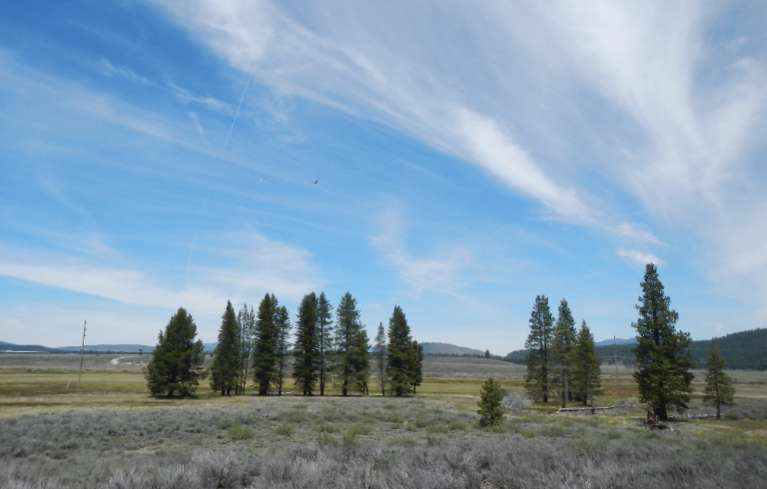
An agreement means less development and more open space in Martis Valley. Photo/LTN

An agreement means less development and more open space in Martis Valley. Photo/LTN

If Placer County officials approve the deal, the land, now owned by lumber giant Sierra Pacific Industries, would be the largest parcel yet preserved in an effort to protect the 70-square-mile Martis Valley from large-scale development.

“This is the biggest piece of the conservation puzzle in Martis Valley,” said Tom Mooers, executive director of Sierra Watch. The conservation group helped negotiate the agreement and previously has been involved in similar deals in Martis Valley, including preservation of the 1,400-acre Waddle Ranch.

The efforts came about after Placer County approved the Martis Valley Community Plan in 2003. The plan would have allowed 6,000 homes along with commercial and recreational development on the county’s 45-square-mile section of the valley, once home to cattle ranches.

Read the whole story