Snow removal fee in South Tahoe may increase

By Kathryn Reed

It will be up to voters if snow removal fees double in South Lake Tahoe.

The City Council on Sept. 17 unanimously agreed to have staff draw up a ballot initiative for 2014 that would increase the fee from $20 to $40.

“The equipment is desperately in need of upgrades,” City Attorney Tom Watson told the council.

The average age of the fleet is 19, with the oldest piece of equipment being a 43-year-old blower.

South Lake Tahoe voters will be asked in 2014 to tax themselves to replace snow removal equipment. Photo/LTN file

South Tahoe voters will be asked in 2014 to tax themselves to replace snow removal equipment. Photo/LTN file

The proposal brought forward Tuesday was for the additional fee to cover equipment, maintenance and operations.

“The spirit of the original ordinance was to fund equipment,” Councilman Hal Cole said. “I’d rather see a ballot measure for equipment and maintenance than operations.”

His colleagues all agreed – they don’t want the tax to go for operations.

“It’s $20 a year. I can’t believe many people in the community wouldn’t see the need for it,” Councilwoman JoAnn Conner said. “This is a simple thing. We need better equipment.”

In saying this, she was also against forming a subcommittee at this early stage to deal with public outreach.

Councilwoman Brooke Laine pointed out if it were such a simple thing, then the 2005 ballot initiative would have passed.

That year the proposed increase failed with 54.3 percent of the voters against it. Like all tax initiatives, it will take two-thirds of the voters for it to pass. That increase would have made the original 1989 assessment $40 per year per parcel in the city limits.

The 2014 proposal is a separate $20 tax that would likely increase based on inflation. For that to happen, it needs to be written into the ballot measure. It would leave the current $20 assessment in place.

“… while today’s capital costs are covered by the 1989 assessment, there are no available resources for capital reserve for equipment replacement,” Watson wrote in his staff report. “Without additional revenue, future capital purchases will have to be funded out of reserves, new debt or the general fund.”

If passed, the measure would bring in about $440,000 a year from the nearly 11,000 parcels that would be paying $40/year.
S. Lake Tahoe changes arts-crafts policy — again

By Kathryn Reed

In a heated debate Tuesday that included council members making snide remarks at one another, the regulations involving arts and crafts fairs in South Lake Tahoe was changed for the second time this month.

On a 3-2 vote the City Council decided to allow 10 arts and crafts fairs in 2014 and eight in 2015. What the number will be beyond that was not discussed.

At the Sept. 3 council meeting the five had agreed to change the number of these annual events from 12 to four.

On Sept. 17, with the council chambers full of arts and nonprofit advocates, the council changed its mind. Councilmembers Angela Swanson and Brooke Laine wanted to stick with the four weekends. Their contention is that it is time for the city to start looking better and less junky with all the tents cluttering town every summer weekend.

Swanson is also concerned the promoter does not have to donate to nonprofits because of a U.S. Supreme Court case. The promoter of past events has verbally committed to continuing donations, but there is no guarantee he will get all the fairs or that he will continue to do them.

Councilmember Hal Cole’s main problem is with the transient shows taking money out of brick and mortar establishments, as well as perceived lack of sales tax collected.

Councilmembers Tom Davis and JoAnn Conner believe the arts and crafts fairs are good for the economy and put money in nonprofits’ coffers.

The city has a number of regulations on the books that allow for different types of arts and crafts events. The main way is through the ordinance that was amended this week. Nine such vendors may be part of another event where the main emphasis is not crafts. The Tahoe Regional Planning Agency allows special event districts – such as Heavenly Village and Ski Run Boulevard. These districts have other guidelines to follow beyond the contentious city ordinance.

Beyond the change in the number of arts and crafts events that will be allowed, the city agreed to work with those who want to have special events at their sites to see how best to make it beneficial for everyone.

In other action:

• The council unanimously approved the 2013-14 budget that takes effect Oct. 1.

• A tentative agreement was reached regarding the MV Transportation case. Details will be announced at the Oct. 1 meeting when the council is scheduled to ratify the settlement.

• City Manager Nancy Kerry was given her review. “She has done a wonderful job,” Mayor Tom Davis told Lake Tahoe News. Her initial contract from June 2012 was for three years. Her new contract, which will be voted on at the Oct. 1 meeting, has the contract expiring in 5½ years. It moves the expiration and review to the spring so an election does not interfere with the process. Kerry would not allow discussion of a raise. If she were to be terminated, she would receive nine months severance instead of six, which is what was in the original contract.


Caesars to launch online poker site this week

By Richard N. Velotta, Las Vegas Sun

Caesars Entertainment’s online poker website, using the World Series of Poker brand, will launch Thursday morning, company officials said Monday.

Caesars Interactive will capitalize on the brand with online tournaments feeding into the company’s annual competition at the Rio that runs from late May to mid-July.

The site, WSOP.com, will launch with a variety of poker games, including stud and Omaha hi-lo as well as Texas hold ‘em. And unlike its lone competitor — Station Casinos’ Ultimate Poker — it will offer Mac-friendly computer compatibility.

Only residents or visitors to Nevada will be eligible to play, but Caesars — which is the parent company of Harrah’s Lake Tahoe and Harveys —  is supporting efforts to enable “shared liquidity” that would involve compacts to allow players from others states to play in Nevada’s games.

Read the whole story


CDC: Drug-resistant bacteria a growing threat

By Brady Dennis and Brian Vastag, Los Angeles Times

The nation faces “potentially catastrophic consequences” if it doesn’t act quickly to combat the growing threat of antibiotic-resistant infections, which kill an estimated 23,000 Americans each year, the Centers for Disease Control and Prevention warned Monday.

In a 114-page report, the agency detailed for the first time the toll that nearly two dozen antibiotic-resistant microbes are taking on humans — ranking the threat of each as “urgent,” “serious” or “concerning.” Should the trend continue, it said, some infections could become essentially untreatable.

“More than two million people are sickened every year with antibiotic-resistant infections, with at least 23,000 dying as a result.“

“If we’re not careful, the medicine chest will be empty when we go there to look for a life-saving antibiotic,” CDC Director Thomas R. Frieden told reporters Monday in a telephone news conference. “Without urgent action now, more patients will be thrust back to a time before we had effective drugs.”

One family of bacteria atop the agency’s “urgent” list of infections is carbapenem-resistant Enterobacteriaceae (CRE), which typically strike patients in medical facilities and have become resistant to nearly all existing antibiotics. Known as the “nightmare bacteria,” CRE cause life-threatening diarrhea. They have continued to proliferate, showing up in medical facilities in 44 states, including the National of Institutes of Health’s Clinical Center in Maryland, where seven people died from one type of CRE in 2011 and 2012.

Likewise, Neisseria gonorrhoeae, which causes the sexually transmitted disease gonorrhea, has begun showing resistance to the antibiotics typically used to treat it, the CDC said. The condition, which can cause severe reproductive complications, shows up in an estimated 800,000 cases annually in the United States.

Read the whole story


Restoration brings out charm of Ward Creek Park

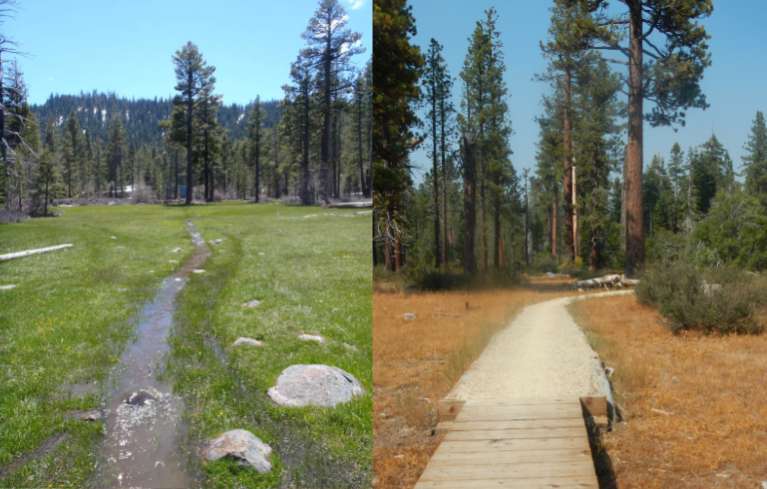
The trail through the meadow, left, before restoration; and after work was completed. Photos/Stat Parks and LTN

The trail through the meadow, left, before restoration; and after work was completed. Photos/State Parks and LTN

By Kathryn Reed

TAHOE CITY – A thick overgrown forest with logging roads that became gullies during the wet season that would then carry sediment into Ward Creek and Lake Tahoe.

That was what these 179 acres near Tahoe City were like in the early 1980s when the McClatchy family deeded the property to California State Parks.

Today, Ward Creek Park is probably the least used state park in the Lake Tahoe Basin. Restoration began in 2009, with the network of trails completed in 2012. Still to come this fall are interpretive signs.

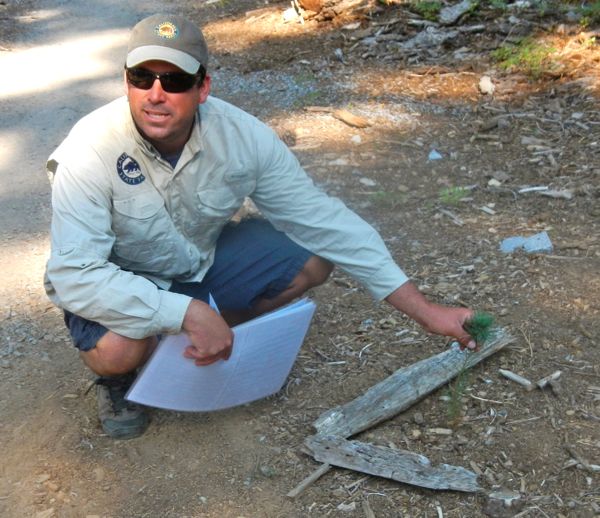
Nathan Shasha points out a newly planted sugar pine. Photo/Kathryn Reed

Nathan Shasha points out a newly planted sugar pine. Photo/Kathryn Reed

Part of the restrictions with the land is no pavement can be put in and a campground cannot be developed.

It was the Angora Fire of 2007 on the South Shore that freed up money for this project. Reducing hazardous fuels has been the mantra in the basin since then. And that is what enabled State Parks to turn this plot of land into something officials want to promote and no longer worry about being a fire hazard.

“We tried to keep the larger trees,” Cyndie Walck with State Parks explained. “There was massive thinning to decrease the fire hazard.”

This area was commercially logged in the 1930s and 1960s, so many of the large trees were already long gone.

The 12- to 15-foot-wide roads went straight up. This is just the opposite of how trails are designed, so they have been rehabbed. This will prevent erosion. And in a few years the shrubs will grow in and the rocks and logs used to make the roads impassible will not be noticeable. Much of the infill needed came from the neighboring California Tahoe Conservancy project at Blackwood Canyon. The roads in places were 2 feet below grade.

Two stands of more dense trees were left.

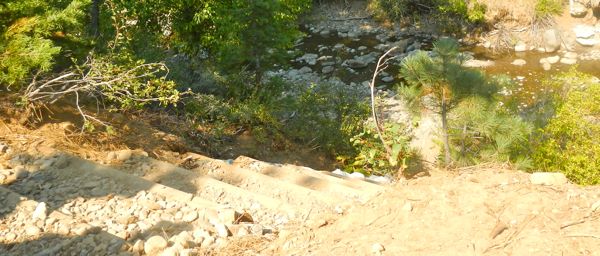
Stairs now allow access to Ward Creek. Photo/Kathryn Reed

Stairs now allow access to Ward Creek. Photo/Kathryn Reed

“The best thing for habitat is variability in age and density instead of treating the park all the same,” Walck said.

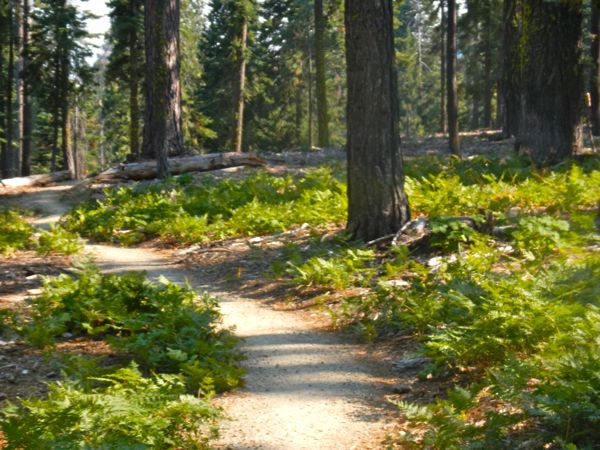
The Sugar Pine Foundation has planted thousands of trees in Ward Creek Park. And the grove of ferns adds to the diversity.

A network of about 3 miles of trails meanders through this once secret gem. While some of the user-created trails are gone, the things people like most are still there. This includes access from the bike trail along Highway 89 to the park, two locations to get to Ward Creek, and trails that connect to the U.S. Forest Service trails that lead to Stanford Rock, and a connection to the Tahoe Rim Trail. The upper part of the watershed is where the Sherwood chairlift at Alpine Meadows is.

“It’s a complete watershed with recreation,” Walck told Lake Tahoe News.

California Conservation Corps members did much of the work.

Ferns create a diverse landscape. Photo/Kathryn Reed

Ferns create a diverse landscape. Photo/Kathryn Reed

“We maintained all the major access points to the park,” Nathan Shasha with State Parks said while walking along some of the trails. He oversaw the construction.

While there is a larger loop, it’s not just one trail. Several offshoots are part of the network.

One spot leading to Ward Creek now has stairs to help with ease of access and to prevent erosion. Before people scrambled up and down a steep embankment.

The first part of the trail from the Rideout Community Center is designed to comply with American with Disabilities Act requirements.

Different types of material were used to get people across the meadow. Part is boardwalk. This elevated path allows water to freely flow under it in the spring or other wet times.

The boardwalk then becomes a turnpike that has logs on the sides and a coarse trail.

The goal was to be able to experience the meadow without impacting it.

Sod plugs have been put in to help restore the meadow.

Walck and Shasha have pictures of what the meadow looked like before the work. At times it was impassable because of the amount of water. People would ride bikes and make grooves. Water would pond.

Restoration work was designed so the water will flow more evenly, this in turn should restore the water table. And with an elevated trail it keeps people from harming the ecosystem.

—-

Notes:

• Getting there: From South Lake Tahoe, take Highway 89 north. Turn left on Timberland Lane. Turn right at the Rideout Community Center. Park. Trail starts in the right rear of the center. There is also access a bit farther up off Timberland; with a gate on the right.

• Parking is free.

• Mountain bikes OK.

• Dogs on leash OK.


Plenty of reasons why to retire in Nevada

By Anya Martin, MarketWatch

Nevada conjures up images of glitz, glamour and gambling, thanks to the reputation of the state’s largest city, Las Vegas. But many retirees set their stakes on the Silver State for entirely different reasons — including breathtaking landscapes, outdoor activities, affordable homes and low tax rates.

With a population of about 2.8 million in 2012 — a 30 percent rise since 2000 — Nevada is the second-fastest-growing state in the nation and a favorite location for boomers who want a quieter pace, as well as a more reasonable cost of living than they’re likely to find in neighboring California or Oregon.

Its diverse geographic areas range from mountain valleys in the cradle of the snow-capped peaks of the Sierra Nevada to the hot, dry Mojave Desert where Las Vegas is located. And although the state is landlocked, those who love to live by water have many options, including Lake Mead in the south and Lake Tahoe to the West.

One of Nevada’s biggest draws for many is that it has no state income tax and no inheritance tax, leaving retirees with more money to enjoy. “Low taxes are the underlying driving factor of anybody I talk to that is considering a move to Nevada from California,” said Cole Smith, owner of Sierra Nevada Realty Group, based in Minden.

Read the whole story


Walkabouts slow to catch on in United States

By Sam McManis, Sacramento Bee

Atop Wolf Ridge on a clear day in the Marin Headlands several years ago, Tom Courtney paused to take in the view. Hikers always stop there, mostly to gawk at the Pacific Ocean to the west and Mount Tamalpais to the north, but also to catch their breath after a steep climb.

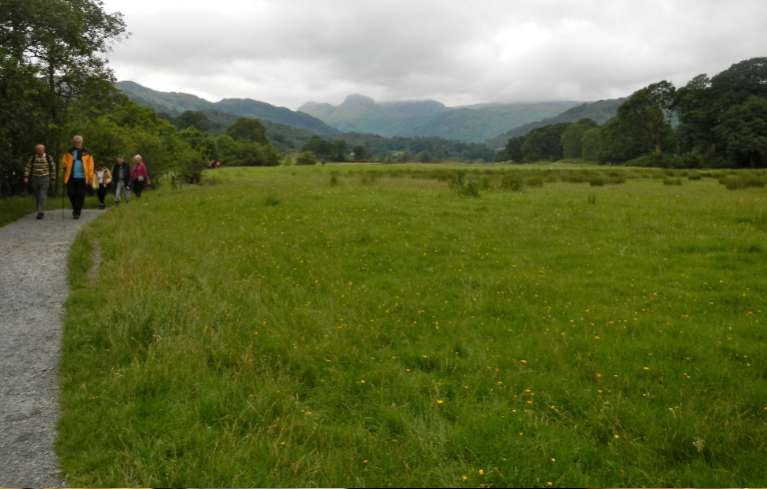
Going on walkabouts in England is common. Photo/LTN file

Going on walkabouts in England is common. Photo/LTN file

But Courtney had other reasons for peering pensively into the distance that day. Once, years before, he had completed a multiday hike in the Cotswolds in west-central England, hoofing it from inn to inn as part of a pastime Europeans call “walkabouts.”

So, as he gazed beyond verdant Tennessee Valley and over Mount Tam’s foothills, he wondered whether it was possible — logistically, not athletically — to string together a “walkabout” from Rodeo Beach to Point Reyes without resorting to pitching a tent and camping. Nothing wrong with roughing it, of course, but occasionally a guy likes to soak his weary feet in a hot tub, sip a fine Merlot alongside a juicy steak, and sleep in high-thread-count sheets along the way.

Read the whole story


Settlements being reached in MV-STATA bus case

By Kathryn Reed

Whether MV Transportation ever gets the $2 million it believes it is owed by a slew of South Shore entities may never be known because details of settlement agreements are only trickling out.

Lake Tahoe News has been told the casinos and lodging property involved in the legal dispute have settled. TRPA has confirmed it has settled.

“I am not at liberty to discuss this with you,” Dan Garrison, senior vice president-general manager of Ridge Tahoe, said when asked if it’s true the Ridge has settled. He would neither confirm nor deny a settlement was reached.

“Heavenly does not comment on open litigation,” Heavenly Mountain Resort spokeswoman Sally Gunter told LTN.

Neither Mike Bradford nor Stacy Noyes with Lakeside Inn responded to questions. Noyes had been on the transportation board that was sued. At one time all the board members were named as defendants, but they were eventually dropped from the case.

The defendants are:

• STATA

• Tahoe Regional Planning Agency

• Douglas County

• South Lake Tahoe

• Heavenly Mountain Resort

• Tropicana Entertainment

• Harrah’s Operating Company

• Harvey’s Tahoe Management Company

• Lakeside Inn

• Horizon Casino

• Lake Tahoe Casino Realty

• Columbia Properties Tahoe

• Ridge Tahoe Property Owners Association

• Tahoe Transportation District.

The quagmire has been going on for three years.

Fairfield-based MV had signed a three-year contract in summer 2009 to run the day-to-day operation of the bus service on the South Shore that included BlueGo, Heavenly ski shuttles, Nifty 50 Trolley, routes to Carson City, and service into Carson Valley.

MV filed a lawsuit against South Tahoe Area Transit Authority – which was the overseer of the bus operations – after the agency severed the contract within a year. STATA filed for bankruptcy on Sept. 13, 2010. MV that year filed a complaint saying it was owed $2 million for services rendered and another $1 million in lost revenue.

(Tahoe Transportation District has since taken over the operation of the bus service.)

In January this year U.S. Bankruptcy Court Judge Gregg Zive sent the case to mediation. Mark Shinderman with Milbank Tweed, Hadley & MCloy LLP in Los Angeles was selected to be the mediator.

The last settlement hearing was Sept. 3.

More news could be forthcoming this week. The South Lake Tahoe City Council will discuss the matter in closed session on Sept. 17. To date the city has spent more than $100,000 on outside legal counsel to defend the case. City Attorney Tom Watson says his policy is to not talk to the media about anything.

South Lake Tahoe City Manager Nancy Kerry told Lake Tahoe News, “The city hopes to find a resolution, but if we are unable to find a resolution, we are willing to litigate.”

Most of the government agencies’ transportation dollars are from the state or federal governments. That money is called a pass-through as it is given to an agency like STATA or TTD. Government entities contend they paid the money they were supposed to pay and should not have to pay more.

That was not El Dorado County’s philosophy at the time. At the get-go the county settled for $160,000.

It has not been disclosed how much MV would like from each entity.

The TTD board is having a special meeting Sept. 18 at 1pm to only discuss the settlement with MV. One of the agenda items it take possible action.

The Tahoe Regional Planning Agency Governing Board has agreed to settle its two issues that amount to writing a check for $16,000. Scott Lichtig, attorney for TRPA, said the bi-state agency was once a creditor and it was agreed that it would receive $34,000, while at the same time having to settle the other portion of the case for $50,000.

TRPA was a non-voting member on the STATA board. It also leased space to STATA like it does now to TTD.

Attorney David Thompson, the federal bankruptcy trustee appointed by Zive, was not available for comment, nor was the MV attorney.

Sources have told Lake Tahoe News more settlements are likely this month, while some defendants will choose to have their day in court.


USFS, Coke agree to watershed protection deal

By Tammy Webber, AP

CHICAGO — The U.S. Department of Agriculture and Coca-Cola signed a five-year agreement Friday to restore watersheds that have been damaged or altered by development, wildfires and agriculture as part of an initiative to slow runoff and replenish groundwater on federal lands.

Such efforts are increasingly important to corporations and farmers who rely on water and to tens of millions of people whose drinking water originates in the national forest system, Agriculture Secretary Tom Vilsack said. But federal budget cuts and the wide scope of the problem have the USDA turning to partnerships with nonprofit groups and corporations for help.

“We need to look creatively at ways to leverage our resources or attract outside resources,” said Vilsack, who along with Coca-Cola Americas President Steve Cahillane will announce the partnership at the Midewin National Tallgrass Prairie outside of Chicago. A wetland at the 18,000-acre site is being restored by removing old agricultural drain tiles that divert almost 14 million gallons per year into waterways — and eventually down the Mississippi River — rather than allowing it to soak back into the ground.

It’s one of six projects that Coca-Cola has helped fund through a pilot program with the USDA’s U.S. Forest Service over the past two years, said Chris Savage, assistant director of the agency’s Watershed, Fisheries and Wildlife office. Others included restoring a wetland in the Sierra Nevada Mountains that helps supply water to San Francisco and restoring the landscape along Colorado’s South Platte River that was devastated by fire a decade ago.

Under the new agreement, the company and the Forest Service will work with two nonprofit foundations — the National Forest Foundation and the National Fish and Wildlife Foundation — to identify projects on federal lands. Corporate funding will go through the foundations, which also contribute money to the projects, officials said. There is no specific amount committed to the projects, but Vilsack said he expects “millions” will be spent.

Coca-Cola will emphasize projects that can be done fairly easily and improve resources in areas where the company withdraws water for production, said Bruce Karas, the company’s vice president of environment and sustainability for North America.

“Water stewardship is a key focus because … it’s in every product,” Karas said, adding that the company has pledged by 2020 to replenish as much water as it uses. The company has worked with universities and other organizations in the past, but partnering with the USDA could help it get the most from its investment because national forest lands often are the headwaters for important watersheds, Karas said.

The importance of restoring watersheds can’t be overstated, especially with climate change leading to weather extremes such as flooding and drought — and potentially more frequent and larger fires — at the same time manufacturers, residents and farmers increasingly compete for water, Vilsack said.

That’s particularly true in the West, he said, where wildfires have stripped the land of trees and other vegetation that once helped absorb water. The land, he said, “hardens like cement so rain runs off in a torrent” with ash, sludge and debris that makes its way into rivers and reservoirs. What’s more, the drinking water for about 60 million Americans originates in the national forest system.

“It’s about the quantity of water and availability,” he said.


Climate change warning issued at Tahoe conference

By AP

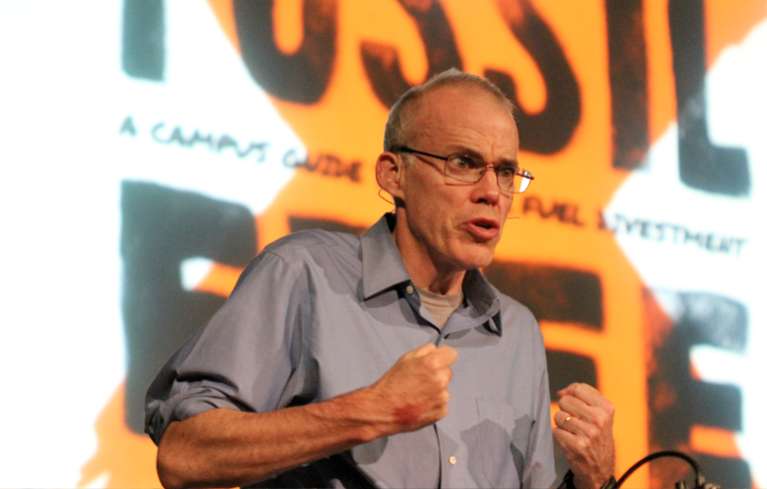
Author Bill McKibben has opened a Sierra Nevada conservation conference with a call for a “coordinated, global” effort to deal with climate change.

McKibben, in a keynote address at the Sierra Nevada Alliance’s annual conference in South Lake Tahoe, said change being made on the local level to deal with climate change will do little good unless it’s accompanied by change on a global level.

“Scientists are quite clear that we will raise the temperature 4 to 5 degrees in the course of this century on our current trajectory,” he said. “If that happens, then we can’t have civilization in the places and ways we’ve had them.”

Bill McKibben

Bill McKibben

The three-day conference, which began with McKibben’s speech Friday, also features a session on the impact of climate change on Western wildfires as well as workshops and field trips.

The alliance consists of over 85 member conservation groups that work to protect the Sierra.

“This year marks the Sierra Nevada Alliance’s 20th anniversary, and we are celebrating all our great work protecting and restoring the Sierra at this year’s conference,” said Joan Clayburgh, executive director of the alliance.

McKibben is founder of 350.org, an international movement aimed at solving the climate crisis with representatives in some 190 countries. He also is author of “The End of Nature” and other books and articles on climate change.

The activist said his group plans to stage 145 events in 25 states across the country on Sept. 21 to “draw the line” against the Keystone XL oil pipeline, which would carry oil derived from tar sands in western Canada to refineries along the Texas Gulf Coast.

Opponents are demanding that President Obama reject the pipeline, saying it would carry “dirty oil” that contributes to global warming.

Many business and labor groups support the 1,700-mile pipeline as a source of jobs and a step toward North American energy independence.

“At this point, 70 to 75 percent of Americans understand that global warming is very real, and the need to do something about it,” McKibben said. “The trick at this point is not to convert the other 25 percent. The fight is to get those who do know what’s going on as active and engaged as possible.”