Census: Median income, poverty rate unchanged

By Annie Lowrey, New York Times

WASHINGTON — For the first time in half a decade, median household income did not decrease and poverty did not increase in 2012, the Census Bureau said in the release of a major annual report on poverty, insurance and earnings.

The report depicts an economy that has so far failed to improve the lot of most households, with growth failing to lift incomes and leaving about 46.5 million Americans in poverty.

Median household income, adjusted for inflation, halted its fall at $51,017, about where it was the previous year. That is down about 9 percent from an inflation-adjusted peak of $56,080 in 1999, though the real economy has grown about 28 percent since then. Income is also down about 8.3 percent since 2007, when the economy started to contract.

Read the whole story


Farmers question what weed killers do to soil

By Stephanie Strom, New York Times

ALTON, Iowa — The puny, yellow corn stalks stand like weary sentries on one boundary of Dennis Von Arb’s field here.

On a windy day this spring, his neighbor sprayed glyphosate on his fields, and some of the herbicide blew onto Mr. Von Arb’s conventionally grown corn, killing the first few rows.

He’s more concerned, though, about the soil. During heavy rains in the summer, the runoff from his neighbor’s farm soaked his fields with glyphosate-laden water.

“Anything you put on the land affects the chemistry and biology of the land, and that’s a powerful pesticide,” Von Arb said.

But 20 miles down the road, Brad Vermeer brushes aside such concerns.

He grows “traited,” or biotech, corn and soy on some 1,500 acres and estimates that his yield would fall by 20 percent if he switched to conventional crops and stopped using glyphosate, known by brand names like Roundup and Buccaneer.

In short, it is just too profitable to give up.

“Local agronomists are starting to say we have to get away from Roundup,” Vermeer said. “But they’re going to have to show me that conventional genetics can produce the same income.”

The local differences over glyphosate are feeding the long-running debate over biotech crops, which currently account for roughly 90 percent of the corn, soybeans and sugar beets grown in the United States.

While regulators and many scientists say biotech crops are no different from their conventional cousins, others worry that they are damaging the environment and human health. The battle is being waged at the polls, with ballot initiatives to require labeling of genetically modified foods; in courtrooms, where lawyers want to undo patents on biotech seeds; and on supermarket shelves containing products promoting conventionally grown ingredients.

Now, some farmers are taking a closer look at their soil.

Read the whole story


LTCC engages locals to pave future path

By Kathryn Reed

Build dorms. Be a cultural center. Become a destination college. Be an economic engine for the community. Provide students with the skills local businesses need. Keep classes for lifelong learners.

Those are some of the overriding themes that emerged from a daylong visioning session at Lake Tahoe Community College.

More than 90 people spent the better part of Sept. 20 addressing six main issues. Nearly half in attendance work at the college, with the remainder being community members, K-12 representatives from both sides of the state line, agency folks, and businesspeople. The emphasis was to find out what they want the South Lake Tahoe institution to look like in 2020. The attendees were divided into groups and then reconvened in the afternoon to go over what each had come up with.

First the participants individually answered questions and then discussed them as a group before presenting responses to everyone.

Virginia Boyar, LTCC dean of Career and Technical Education, leads one of the groups Sept. 20 in coming up ideas of the college's future. Photo/Kathryn Reed

Virginia Boyar, LTCC dean of Career and Technical Education, leads one of the groups Sept. 20 in coming up ideas for the college’s future. Photo/Kathryn Reed

Questions were:

• What role does LTCC have in the community? And what does the community need LTCC to become?

• Who are the students of LTCC? Who should we be serving that we are currently not reaching? What does the student body of LTCC look like in 2020?

• What are the educational programs that LTCC should offer? What signature programs should LTCC be known for? What are the workforce training needs of this community? What are other community needs that LTCC can help address?

• What does the learning environment of the college look like in 2020? What technology should the college have to support the educational programs laid out?

• What does the LTCC campus look like in 2020? What new buildings does it have? What is housed in those buildings?

• What are sources of revenue for the college? What are the opportunities that the college needs to be aware of? In what ways is the community willing to work together with the college to make this vision a reality?

“Overall it was very rewarding to see all the energy in the small group sessions. People truly have a vision of what they believe Lake Tahoe Community College should look like in 2020,” LTCC President Kindred Murillo told Lake Tahoe News after the day was over. “We accomplished what we set out to do which was to learn how people see the college in the future. The faculty, staff, and board of trustees will work very hard to make Lake Tahoe Community College that ‘center of the arts, cultural, and educational activity’ for the south Tahoe basin.”

Friday’s community message will be massaged in the coming months, with the plan for a more defined vision to be unveiled June 7 when the college celebrates its 40th anniversary.

Murillo started the day by saying the reason for the visioning was primarily for the students. Then she added, “If we don’t know where we are going, how do we get there?”

She went into detail about the changing demographics of the college – a good thing, she said, because it’s starting to better mirror what the community looks like.

Murillo touched on how the state funds community colleges and how many of the classes people like to take – arts and physical education – aren’t reimbursable by the state so they can’t be offered in the way people have been used to. The lifelong learners are not part of the state’s plan anymore – in many ways Sacramento has removed the community part of community college.

But LTCC is striving to find a way to retain that community element.

Certificate, associate of arts or even bachelor degrees in disciplines that lead to jobs in Tahoe was an overriding theme in groups. Expanding the fire academy into an AA and incorporating it into a larger public safety program has been talked about on campus. Creating programs involving environmental sciences, snowsports, hotel and restaurant management, and forestry were broached in the visioning workshop.

Some people foresee the bulk of classes being offered online in the future, while others aren’t sure the traditional teacher-classroom will go away.

LTCC staff members are in different places when it comes to what the future will look like. Some were shocked to learn how technologically evolved K-12 is on the South Shore.

“Some of the best teaching I see is a teacher going from an interactive white board to YouTube to slides to a child’s presentation,” Lisa Noonan, superintendent of Douglas County School District, said. “They’ve used six or seven different devices by the end of class.”

Lake Tahoe Unified Superintendent Jim Tarwater said how students in second grade are learning how to do PowerPoints.

In a different group, it was agreed that standing at the front of a classroom lecturing ad nauseam is not going to work with the students entering college today. Simple things like having round tables instead of traditional individual desks was suggested.

More than once it was suggested that any new building should meet LEED certification to be environmentally the best it can be.

Student safety, improved parking, providing technical language classes for English learners, allowing corporations to have naming rights to buildings or facilities to raise money, being the thread that binds the community – those were just a few of the suggestions or areas to focus on that came out of the visioning session.


Nutting pleads not guilty; trial set for Feb.

By Kathryn Reed

El Dorado County Supervisor Ray Nutting pleaded not guilty to all charges Friday in El Dorado County Superior Court in South Lake Tahoe.

Nutting, 53, faces four felony counts regarding more than $70,000 he received from the state to clear brush from his 350-acre ranch in Somerset. (His brother owns an adjacent 350 acres.) He is accused of not reporting the income, voting on contracts that affected him financially and perjury. After those felony charges were leveled in May, the district and state attorneys general offices filed seven misdemeanor charges against Nutting regarding how he got his $55,000 in bail money. He is accused of taking loans from county employees.

On Sept. 20, Judge Tim Buckley denied the motions to dismiss the charges, as Nutting’s attorney David Weiner had requested.

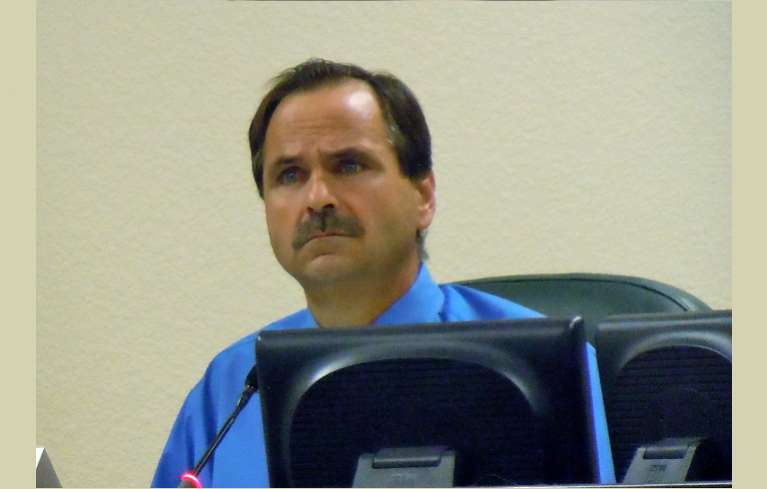
Ray Nutting

Ray Nutting

“No surprises here,” Nutting told Lake Tahoe News as he left the courtroom. He directed further questions to his attorney.

“(The judge) said the standard was reasonable suspicion. It’s the lowest of all standards. Anything lower is a mere guess,” Weiner told Lake Tahoe News after the hearing.

Weiner has a matter of days to file an appeal to Buckley’s decision regarding the felony counts. He would not say if he intends to go that route.

After the judge rendered his decisions on the motions to dismiss he asked Nutting to enter a plea to all charges. To which Nutting pleaded not guilty.

Buckley had no trouble concluding three of the four counts should proceed to trial, but count two troubled him. This involves the nearly $72,000 Nutting received from the Sierra Coordinated Resource Management Council in 2009 that he attempted to report 4½ years after the fact.

Buckley said the grand jury that leveled the indictment against Nutting was not properly instructed and that because those 18 people had been disbanded without being told not to talk about the case it would be impossible to reconvene them to reconsider that specific count.

Assistant District Attorney James Clinchard said he would not issue any comment about the case. He is trying the case with Deputy Attorney General Peter Williams.

Nutting represents the southern part of El Dorado County, including parts of El Dorado Hills and Cameron Park, Pleasant Valley, Somerset and Grizzly Flat. In the courtroom were his wife, family members, friends and constituents.

Weiner believes the accusations are politically motivated and that the grand jury was “misled by inaccurate, incomplete and prejudiced information.”

“We are looking forward to a jury trial to present the truth,” Weiner said.

The trial is slated to begin Feb. 4 in Placerville. Jury selection could take a week and the trial two weeks.


Economic recovery bypassing most Americans

By John McCormick, Bloomberg

More Americans continued to take on roommates or boarders than before the recession, women had fewer children, and people were still flocking to college or graduate school as a way to postpone their entry into the job market.

Those are just some measures of a tepid U.S. economy recorded last year in new Census Bureau reports that offer a portrait of a nation struggling to fully rebound from the worst downturn since the Great Depression. The data show a geographically uneven recovery in which the middle class is slipping and, on the basis of median household income, no better off than it was in 1989.

Unless there’s significant progress in the next few years, that reversal could be a watershed in American history.

“There is a remarkable disconnect between overall macroeconomic growth and the prosperity of middle- and low-income Americans,” said Jared Bernstein, a onetime chief economist for Vice President Joe Biden who’s now a senior fellow at the Center for Budget and Policy Priorities in Washington. “We’re not just talking about a fringe group being left behind. We are talking about the broad middle class.”

Amid the still shaky economy, demographers say they see a few positive trends — including an uptick in people moving — even if they appear to reflect a bottoming-out of measures collected last year, three years into the recovery.

Read the whole story


CTC sells 2 public properties to raise cash

By Kathryn Reed

TAHOE CITY – The California Tahoe Conservancy realizes it created a public relations nightmare for itself when it put 330 parcels in the asset lands program.

“We created a perception with some in the public that all 330 parcels are ready to go,” Patrick Wright, CTC executive director, said at the Sept. 19 board meeting at Granlibakken.

He wants to come back to the board with revised guidelines for the program. The original guidelines were devised in March 2012. Wright added that he doubts more than a dozen of the parcels would be sold in the next decade.

“It does seem to me parcels incorporated into neighborhoods should remain open space,” Wright told the board. “We really need to move very slowly and very carefully. That is why you only have two in front of you.”

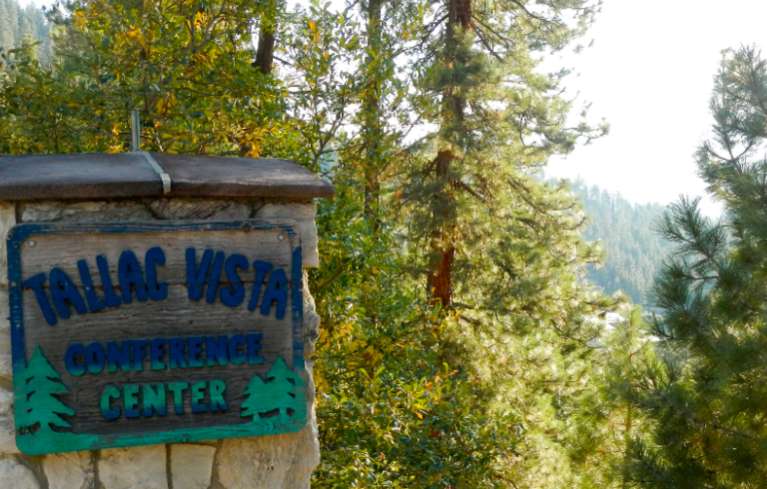
The one-time conference center near Heavenly is now private property. Photo/LTN

The one-time conference center near Heavenly Mountain Resort is now private property. Photo/LTN

The board unanimously agreed to sell the Tallac Vista site on Sherman Way and the old drive-in movie theater property on Glenwood Way to Jack and Walsie Jennings. Both properties are in South Lake Tahoe. The couple submitted the higher of two bids on the first property at $1.4 million, and was the only bidder for the second property at $355,000.

The city and El Dorado County will benefit a bit because the 15.46-acre and 8.43-acre sites will generate property tax for those entities now that they will be privately owned.

The Conservancy owns 4,890 parcels in the Lake Tahoe Basin. They have been acquired in a variety of ways – through a litigation settlement and a trade with South Lake Tahoe for the two properties that were just sold. Some have been deeded to the state agency and others bought with bond money.

In the 30-plus year history of the Conservancy this is the first time it has disposed of property for cash.

“Asset lands are parcels of land within the Conservancy’s ownership which are not essential to carrying out Conservancy goals, which could have significant market value, and which are not otherwise restricted from disposal by law or board policy,” according the CTC’s program guidelines.

Ann Nichols, who has been a real estate agent in the basin for years, told the board the public needs to be informed it will no longer have access to property and that a much greater area than those within 300 feet of the property need to be notified of the potential sale.

“I was told you weren’t going to sell sensitive land,” Nichols said in regard to the Sherman Way property. “It shouldn’t be that you can sell sensitive parcels just because you put on conservations easements.”

The Sherman Way site is on a steep hill that was once going to have 150 condominiums on it. It borders Heavenly Mountain Resort and has views of Lake Tahoe.

CTC is requiring no more than 3.15 acres of this property be developed and that the remaining 12-plus acres forever be a conservation easement. At most a single-family residence, guesthouse and outbuildings could be built on it. Either that, or the existing structure could be upgraded. The restrictions are to forever remain with the property.

At the old drive-in location the same building restrictions apply along with a conservations easement over stream zones.

The Conservancy plans to use the money from the sale of these properties for land management activities in the basin and environmental improvement projects.


Caesars begins $4.85 billion debt financing

By Sridhar Natarajan, Bloomberg

Caesars Entertainment Corp., the largest owner of U.S. casinos, is raising $4.85 billion in bonds and loans to refinance debt, according to a regulatory filing Wednesday.

Citigroup Inc. is arranging a $3 billion term loan for the Las Vegas-based company as well as a $269.5 million revolving credit facility, according to a person with knowledge of the transaction who isn’t authorized to speak publicly and asked not to be identified. Caesars also plans to issue $1.35 billion of second-lien notes and $500 million of first-lien debentures, according to the filing. The proceeds will be used to repurchase commercial mortgage-backed securities and a $450 million senior-secured facility.

Caesars is the parent company of Harrah’s Lake Tahoe and Harveys in Stateline.

The most indebted U.S. gaming company, which is controlled by Apollo Global Management LLC (APO) and TPG Capital, is refinancing debt through the Caesars Entertainment Resort Properties at the PropCo unit, with most of its more than $23 billion of debt held by the operating company, or the OpCo. The move signals its parent’s plans to shift assets away from lenders at the OpCo in the case of a bankruptcy, according to Fitch Ratings analyst Alex Bumazhny.

Read the whole story


Now is not the time to be lax about wildfires

By Gwen Ernst-Ulrich

In spite of last weekend’s weather that caused 10 small lightning-ignited fires across all four Tahoe National Forest ranger districts, the majority of the 76 reported fires on the TNF since the beginning of 2013 have been either human-caused or of undetermined origin, prompting officials to urge everyone to use extra caution to prevent uncontrolled wildfires, especially as drying weather patterns increase fire danger.

Human activity ranging from debris burns, equipment heat or sparks, juvenile mischief, and unmanaged campfires are some of this year’s specific actions that have caused crews, engines, and other resources to race to the scene of a fire start. Even though fewer campers are enjoying the forest now that summer is ending, fall brings hunters along with those who like to gather firewood or ride off-highway vehicles, all of which are activities that could cause a fire.

Sparks or heat from equipment are leading wildfire causes. People can prevent these types of fires by following a few principles.

· Make sure equipment and off-road vehicles, such as chainsaws, portable generators, and all-terrain vehicles, have a working spark arrester.

· When touring the forest in a vehicle, including trucks, motorcycles, and so on, stay in designated areas and on established roads and trails to avoid exposing your vehicle’s hot parts to dry vegetation.

· Sparks from dragging chains and flat tires can also ignite nearby dry grasses.

Improperly handling stoves, lanterns, and heaters in the forest can also cause wildfires.

· When filling, place them on the ground in a cleared area and move the appliance to a new clearing before lighting it.

· Recap and store flammable liquid containers in a safe place.

· Never light lanterns or stoves inside a tent, trailer, or camper.

People should follow a few simple rules to reduce the risk of an escaped campfire.

· Stay with your campfire at all times.

· Always keep water nearby to extinguish uncontrolled flames.

· Before leaving the area, thoroughly douse your campfire with water and mix (stir) the water in with ashes and embers to ensure the fire is completely out.

Careless smoking in the forest is another wildfire danger.

· Smoke in at least a 3-foot clearing and grind out cigarettes, cigars, or pipe tobacco in the dirt.

· Do not smoke while walking or riding a horse or trail bike.

· Use your ashtray while in your vehicle.

Through the “One Less Spark, One Less Wildfire” interagency fire prevention campaign, the California Wildland Fire Coordinating Group is working to raise awareness, and agencies, businesses, and Fire Safe councils across the state are engaged and supporting this effort. More information is available on the Forest Service Pacific Southwest Region’s website.

“Everyone pays the cost of uncontrolled wildfires,” said Tahoe National Forest Supervisor Tom Quinn. “The costs come in the form of lost lives and damaged or destroyed property and natural resources in addition to tax dollars that could be used for efforts other than fighting fires.”

Quinn encourages people to be aware of wildfire conditions and to take appropriate prevention measures while helping protect their own property by creating defensible space around their homes.

For more fire prevention information, go to the Tahoe National Forest website or the Forest Service National website.

Gwen Ernst-Ulrich works for the Tahoe National Forest.


Bijou putting the community back in school

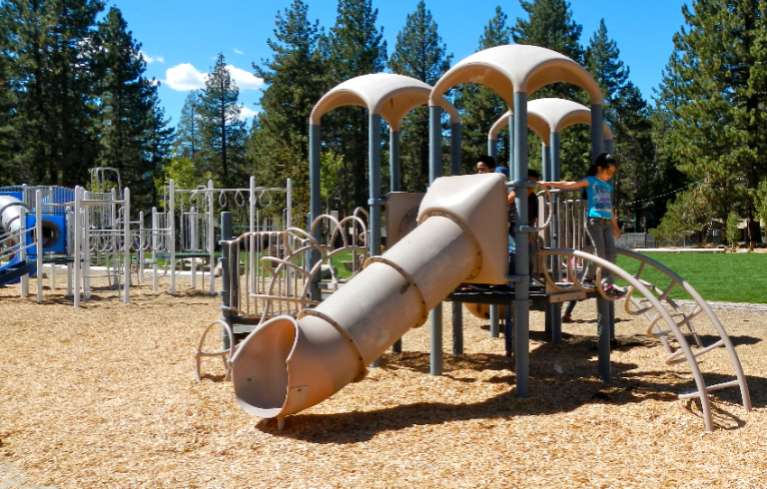
Proposed playground equipment for Bijou Community School. Photos/Provided

Proposed playground equipment for Bijou Community School. Photos/Provided

By Kathryn Reed

The “community” in Bijou Community School is real; it’s not just a name.

In part this has to do with how the South Lake Tahoe school site is used. It is the only park-like area with grass and a playground between Stateline and the city’s recreation center on Rufus Allen Boulevard.

And the community aspect is demonstrated with the support the school receives from people with children at the school and community members with no familial connection.

While it is a school, go around back and the park setting is evident. It has been a gradual transformation in the last few years. Gone is the dirt field where children would play. A large grassy area is now fenced off from the ball field. A fitness course has been installed. The blacktop has been repaved.

Children play on outdated equipment at Bijou Community School. Photo/Kathryn Reed

Children play on outdated equipment at Bijou Community School. Photo/Kathryn Reed

And it’s not just kids playing here during school. People in the neighborhood use Bijou long after the last bell of the day and on weekends.

But what sticks out is the play equipment – some of which was first installed in the 1950s. It’s old and doesn’t meet today’s safety standards.

A fundraising effort is under way to have all of that taken out and replaced with state-of-the-art play structures. It’s estimated that $100,000 will be needed to buy what parents groups want.

Next week is the annual walk-a-thon. It’s usually a $20,000 moneymaker. The goal is to double that amount this year and earmark all of it for playground equipment. Ideally, the equipment would be installed next spring.

Edgewood Companies has pledged $5,000, $20,000 in grants have been secured, and two anonymous donors have each committed $5,000 toward the project.

“It should be a community effort,” parent Kathy Haven said of the playground project. She has been spearheading this project and has a team of parents helping solicit donations.

The Bijou PTA is a nonprofit that has been able to rally parents and others to get a ton of work done that the school district doesn’t have the funds to do. This includes the benches that are now around the school and some of the landscaping.

Now, even the front of the school looks inviting.

A dry lakebed that was put in this last year was tested in August during a deluge. There’s a good chance had it not been there the rainwater would have reached classrooms. Last weekend volunteers were cleaning out the debris so it will be able to sustain the next downpour or spring runoff.

Bijou gets a substantive amount of volunteer time from parents. To have a child in the two-way immersion program one parent must spend 30 minutes a week in their child’s classroom and 30 minutes on one of 14 committees. There are 260 students in the Spanish-English program.

The committees are designed to help the whole school, not just TWI kids. They range from reading in English or Spanish at the library to working during recess to doing landscaping.

TWI started just in kindergarten, so there were 20 volunteers. Now the program has multiple classrooms in grades K-6, which has grown the volunteer pool. There are 60 new volunteers starting each fall as kindergarten TWI parents come onboard.

Bijou has also benefitted from taxpayer funded Measure G, Lake Tahoe Educational Foundation, Rotary of South Lake Tahoe, and a slew of businesspeople who have donated supplies and work hours to get things done.

Another example of Bijou being a community school is the number of after school clubs that nearly two-thirds of the students partake in. This year there are 18 clubs with 356 students participating.

Parents volunteer their time by sharing their expertise with groups of kids. Clubs range from cooking to cycling to ballet.

To donate to Bijou’s playground fund, email khaven@gmail.com.


Snow at higher elevations possible this weekend

Snow is in the forecast. Yes, really.

Not much is expected to fall on Saturday and what does is likely to stay above 7,500 feet, according to the National Weather Service in Reno.

A low-pressure system will be moving into the Lake Tahoe Basin on Sept. 21 that will bring wind, rain and snow. The bulk of the precip and coldest temps are forecast to be north of Tahoe.

It’s supposed to be a fast moving system that will arrive in the morning.

While the mercury fell to the low 30s overnight Tuesday, no records were broken.

The low in South Lake Tahoe for Wednesday and Saturday nights is expected to be 30 degrees, with it in the 40s in between those days.

The highs are expected to fluctuate Thursday to Sunday from 73-to-70-to-59-to-62.

The Weather Service says the temperature swings are normal for the basin this time of year.

— Lake Tahoe News staff report