Federal shutdown doesn’t threaten ski season

By Steven K. Paulson, AP

DENVER – A group representing the nation’s ski industry said Monday it expects no major impact on this year’s ski season because of federal furloughs, even though about a third of the more than 350 resorts are located on federal land regulated by the U.S. Forest Service.

Michael Berry, spokesman for the National Ski Areas Association, said most expansion projects and construction that require federal approval have been completed as opening days approach in the $6 billion a year industry. Delays could occur as a result of other projects in the pipeline, he said.

Berry said he talked with Forest Service chief Tom Tidwell to clarify how the shutdown would affect the 121 ski areas operating on federal land and was assured resort leases are not immediately affected.

“The fact of the matter is, this will have no impact on ski area operations. Having said that, there are certain things in progress, and Forest Service furloughs may slow things like that down,” he said.

The federal government regulates expansion projects, environmental reviews and lease agreements that are subject to public review.

The ski association sent a memo last week to all ski areas operating with a special use permit on public lands administered by the Forest Service, advising them about the federal agency’s decision.

“Ski areas may continue to operate, as the improvements are not government-owned. Privately owned improvements are not to be affected by the shutdown,” the memo said.

The ski areas were advised that the U.S. Forest Service will work with areas that are under construction on a case-by-case basis if an agency inspection or other action is needed.

Jeff Hanley, spokesman for Aspen Skiing Co. in Colorado, said hiring is under way and this year’s projects have been completed.

“We’re fired up and ready to go,” he said.

However, the shutdown could affect plans by the company to create a better exit route off Burnt Mountain into the Snowmass Ski Area, which has already been tentatively approved. The project is now in a 45-day public comment period, which still has to be reviewed by the government before construction can begin next year.

He said because of the shutdown, he doesn’t know where members of the public should go to turn in their comments.

“Right now, we have no property or anything impacted, but we don’t know what we might see in the future. Hopefully, this won’t last too long,” Hanley said.


Recreation, transit unite South Shore politicos

By Kathryn Reed

Multiple jurisdictions providing the same services in a small geographical area. That’s a huge problem in the Lake Tahoe Basin.

Some of the bravado and territorial issues that have existed between South Lake Tahoe, El Dorado County and Douglas County went by the wayside on Monday when the elected officials from each of those areas met at Lake Tahoe Resort Hotel.

A simple way to show solidarity is to eliminate the out-of-state fee that is charged at city and county recreation facilities – at least for those in the area.

Recreation and transportation dominated the discussion. And while South Tahoe Mayor Tom Davis, who was chairing the Oct. 7 meeting, at first tried to stifle conversation for the sake of time, ultimately he was convinced by his peers that they had no problem turning what was supposed to be a two-hour meeting into four hours.

South Tahoe, El Dorado and Douglas elected convene for the first time on Oct. 7. Photo/LTN

South Tahoe, El Dorado and Douglas electeds convene for the first time on Oct. 7. Photo/LTN

Many said that while everyone was gathered it was best to get things out on the table instead of waiting for who knows how long. After all, this was the first time these three bodies had ever met together.

(El Dorado County Supervisor Ron Briggs went home sick after lunch and South Lake Tahoe Councilman Hal Cole was in Placerville meeting with county staff.)

No action items were on the agenda. But the group decided that two members (to be named later) from each elected body would be named to an ad hoc committee to work on South Shore issues. Future meetings between all of the electeds are possible.

The three entities are already working in partnership to devise a recreation master plan. An economist is on the consulting team to analyze return on investment. This is being created as a to-do manual, not a theoretical document.

City Manager Nancy Kerry revealed some of the results of a recreation survey that was taken this year that is part of the master plan. People love Lakeview Commons, want more bike trails and definitely want signature events.

Part of the problem with having any kind of substantial athletic tournament here is the various entities to deal with, which equates to time and money for the organizer.

“Chaos happens” is how Scott Morgan, Douglas County community services director, described the process for someone wanting to schedule a tournament or special event here.

Depending on the event the organizer may have to deal with the three jurisdictions, possibly three school entities, the Tahoe Regional Planning Agency, and maybe two state departments of transportation. And each of those usually has a fee they want to charge and permits – aka paperwork – to secure. When people learn this, many start calling other places with less cumbersome processes.

And then there is the issue of getting people to and from the various locations. BlueGo, the public bus system on the South Shore, doesn’t go to Meyers or Zephyr Cove Park. And it doesn’t go to Lake Tahoe Community College on Sundays.

Carl Hasty, executive director of Tahoe Transportation District, said to provide the current bus service for free it would take $700,000. That is what is collected each year in fares. It doesn’t include the money private and public agencies contribute.

“Successful resort communities have free transit,” Hasty said. He also pointed out how when TTD has received money to have free bus days the number of riders doubles.

TTD is also tied to recreation. It is the lead agency for the Stateline-to-Stateline bike trail. The second mile that links Rabe Meadow to Round Hill Pines will be finished this month.

Hasty said the problem on the South Shore is there are no dedicated transit funds. On the North Shore, Placer County uses part of the hotel tax for transportation. South Shore relies on state and federal dollars.


Personal info can easily be used against you

By G.W. Schulz and Daniel Zwerdling, Center for Investigative Reporting

For some, revelations that the National Security Agency has been collecting vast amounts of personal information on U.S. citizens might seem as far removed as the city of Moscow.

But it’s not just an ultrasecret spy agency that can create a dossier on you.

Many Americans would be surprised by how easily local law enforcement, IRS investigators, the FBI and private attorneys can reach into the vast pool of personal information about their lives with little more than a subpoena, which no judge needs to review.

And it’s not just for selling you more products or services. It can be wielded against you.

“We used to have to rely on private investigators,” said Lee Rosen, a divorce attorney in North Carolina whose office averages dozens of subpoenas each month. “Now everything we need is more or less on the other side of the keyboard.”

Often, a simple form is all that’s required to access prescription histories, credit card purchases, monthly banking statements, ATM withdrawals, wire transfers, tax returns and, perhaps most importantly, the rich digital portraits we keep on our smartphones.

Law enforcement can create a map or timeline of a person’s whereabouts by accessing data from license-plate scanners, toll-bridge crossings and mobile phone carriers and, without much trouble, access records on your power consumption, purchasing habits and even snail mail.

The more we leave heaps of digital detritus behind, privacy advocates say, the more we may have to answer for it to someone with an ax to grind, an investigation to close or a client to represent.

“The digital world has suddenly given us a wealth of information like we never had before,” Rosen said. “The floodgates of data have opened up.”

To illustrate this, the Center for Investigative Reporting teamed up with NPR to craft a typical day in the life of personal information. Along the way, we’ll explain how it is amassed and how it can be vacuumed up.

First, consider your IP address, a unique identifier used to connect your phone or laptop to the Web. Perusing the Internet before you shower in the morning, you might not know that the government or a private lawyer can start with your IP address and determine your name. Or, starting with your name, the government can determine your IP address.

Although precision can be limited, private lawyers have used IP addresses to unmask alleged movie and music pirates.

Voltage Pictures, makers of “The Hurt Locker,” subpoenaed the IP address of a 69-year-old woman believing it linked her to Internet downloads that infringed on the movie’s copyright. She and numerous others targeted in the suit said they weren’t guilty of piracy accusations. The lawsuit eventually died.

Say, however, you’re streaming Internet radio as you move about the house, listening to a shock jock or political talk show host considered obnoxious by some. Smartphone apps like TuneIn and Pandora will store data on their servers on the talk shows and music you enjoy.

If you’re like millions of other Americans, you might use dating sites like JDate.com or OkCupid.com to find romantic matches. Many users rely on pseudonyms until they’re comfortable giving out more personal information to a potential date, but digital anonymity is often an illusion.

In 2011, Google acquired facial recognition software company PittPatt, which has been used by researchers to link dating profiles with full identities on other social media sites. Google already uses “computer vision technology” to power its image searches, Picasa photo platform and Google Goggles.

“Any attempt to set up a dating profile – even if you’re using a pseudonym and even if you’re not uploading photos you put in other places – can result in (someone being able) to find you,” said Rainey Reitman, activism director at the Electronic Frontier Foundation.

OkCupid’s privacy policy says personal information could be disclosed “in response to a subpoena or similar investigative demand, a court order, or a request for cooperation from a law enforcement or other government agency.”

Little-known third-party advertisers and marketers can observe your dating activity, too. Software privacy specialist Ashkan Soltani offered a recent demonstration using a tool called Collusion, which visualizes the array of companies that monitor our activity online, watching as we click from one place to the next in order to better understand consumer behavior.

Collusion can be downloaded to your browser – Firefox, Chrome or Safari. Clicking on an icon while visiting a site will display an interconnected web of bubbles that represent companies collecting information about your activities. The companies have names like Lotame and Criteo. The tracking is largely invisible without an add-on like Collusion.

Soltani offers this metaphor: a phone call in which you dial OkCupid.

“In responding to my phone call or connection to OkCupid, (the site) brought all of its friends on to listen to my phone call,” Soltani said. “I’m on speakerphone at OkCupid, and all of these other people are also listening to my conversation.”

While many tracking companies insist they don’t need personally identifying information in order for the data to be useful, Soltani and others say trackers know enough about your behavior from pseudonymous “cookies” to profile you and make decisions about you online, such as how to target ads or special deals.

Reading the network traffic – the language that exists behind Internet activity – Soltani showed how answers to sensitive profile questions on OkCupid’s site covering drug use, religious beliefs and more were transmitted to the data tracking company Lotame, along with the user’s IP address.

When you log in with a username and password to sites like Gmail, Amazon or OkCupid, your behavior can be linked to your real name or email address. Soltani said personally identifying information also can unintentionally “leak” to third parties, even if companies say they have no need for such data, and it’s not clear what happens to the information once it falls into their hands.

Stanford University’s Center for Internet and Society showed in a 2012 paper how usernames or IDs leaked to third parties on 113 popular websites out of 185 tested.

Jonathan Mayer, a graduate student at Stanford who worked on the study, offered another demonstration. He first logged in to the video-sharing site Dailymotion with the username “jonathanmayer” and showed how a unique ID number assigned to him by the data tracker Criteo followed him to another site about sexually transmitted diseases.

Even a generic name like “stanfordguy” used to log in on multiple sites could be used to determine one’s real identity and theoretically be exploited by law enforcement, Soltani and Mayer said.

Officials with OkCupid declined an interview, and Lotame did not respond to phone calls and emails.

Alexandra Pelissero, a spokeswoman for Criteo, said the company wouldn’t know that “jonathanmayer” or “stanfordguy” correspond to the same technology researcher at Stanford. She also said Criteo does not store IP addresses.

“Criteo’s cookie-based technology recognizes events, i.e., products viewed, and does not create individual user profiles based on them,” Pelissero wrote. “It assigns Criteo IDs, which are based on a user’s interests, i.e., online browsing behavior, and (doesn’t) allow us to identify the individual user, so that we can serve more personalized ads that correspond to those interests.”

Jules Polonetsky, executive director of the Future of Privacy Forum, said many such companies have good intentions and wish only to better-tailor advertising for products consumers want.

The forum bills itself as a “think tank that seeks to advance responsible data practices” and is supported by Amazon, Facebook, Netflix, Bank of America and a host of other major companies.

“I think companies haven’t figured out how to talk to people about data or privacy,” Polonetsky said. “ … There’s nothing to be ashamed of if what they’re doing is fair and honest.”

Accessing personal information

Logs of seemingly innocuous everyday activities – like your power usage – can be obtained and used against you.

There are typically three ways the government and civil attorneys can try to access personal information. A search warrant is the toughest standard and requires the government to convince a judge there’s probable cause of a crime. Next is a court order, and the easiest to obtain is a subpoena.

“A subpoena, unlike a warrant, doesn’t come from a court,” said Kevin Bankston, senior counsel at the Center for Democracy & Technology, a nonprofit organization that advocates for Internet freedoms. “No one has to go to court. No one has to make a showing to a judge. A subpoena in the criminal context is issued directly by a prosecutor.”

Bankston said all investigators must do for a subpoena is state that the information is relevant to an ongoing investigation.

Law enforcement agencies often argue all they need is a subpoena. Drug agents issued a subpoena in 2010 demanding that the Golden Valley Electric Association turn over the power consumption records, customer names, telephone numbers and credit card numbers for three addresses. For drug investigators, big power surges in a private house could mean the resident is cultivating marijuana with grow lights.

But the Alaska energy cooperative balked at the subpoena, citing its customer privacy policy. A federal court decision overruled the company’s position and directed it to give up the records.

“It’s kind of like looking at you through an open window and seeing what you do in your home,” said Cory Borgeson, president of the company. Borgeson said that if the government wants your power records, it should have to show probable cause of a crime and get a search warrant.

When you head to work, your data portrait will continue expanding. Surveillance cameras in subway stations and on city buses watch you board and depart.

Chicago police for the first time successfully nabbed a suspect in May using facial recognition software known as NeoFace that connected a surveillance image of the man from the city’s train system to a massive database of booking photos.

To automatically identify celebrities and regular customers when they enter a store, some retailers reportedly are using another facial recognition technology originally developed in the U.K. for spotting terrorists and criminals.

Meanwhile, smart cards log when and where you travel using public transportation.

Police departments in the Bay Area and elsewhere around the country have used license-plate scanners to identify stolen cars and outstanding warrants. But the devices are designed to photograph vehicles and record the location, date and time of everyone who passes by without discriminating between criminals and innocent people.

The American Civil Liberties Union recently found that departments have widely ranging guidelines for how long they’ll store this data, from 48 hours to five years to indefinitely.

Toll records remember when you crossed a bridge or used a particular interstate, and divorce attorneys are fond of them for that reason.

E-ZPass records, for example, will tell divorce attorney Jacalyn Barnett when someone has driven from the island of Manhattan, and paying cash makes her more suspicious that a spouse has something to hide. Another sign is odd departures from routine.

“People are very, very ritualistic,” Barnett said. “Most people go to the same bank (branch) to do their transactions. If all of a sudden they’re going to a different area, that tells you something.”

Gray area around technology

One of the most powerful sources of information is your mobile device, which creates a rough approximation of your whereabouts by checking in with nearby cell towers or a more precise pinpoint when the GPS function is enabled.

The government doesn’t believe it needs a warrant for historical tracking with a mobile device. Instead, investigators have said the law requires only a court order, which is slightly more demanding than a subpoena but still less protection than the Constitution affords under a warrant.

Judges so far have handed down a patchwork of rulings on locational privacy, and the issue is far from resolved. In a Baltimore case that has civil liberties groups worried, police were able to obtain more than seven months’ worth of location data without a warrant from two cellphones belonging to robbery suspects. Most people would applaud catching robbers, but the advocacy groups argue that such prolonged tracking violates a reasonable expectation of privacy.

By the time you reach work, a mound of unopened emails awaits. Those, too, are part of a fierce debate over what requires a warrant. As its name suggests, the Electronic Communications Privacy Act of 1986 was designed to protect Americans who at the time were using the Internet increasingly to communicate. But the government has interpreted the law to mean that once your emails are opened or older than 180 days, no warrant is required.

Even if an investigator faces some hurdles with your inbox, such as Google insisting on a warrant, email is not entirely protected. With a court order that doesn’t reach probable cause, Google will give up your name, IP address, the dates and times you’re signing in and out, and with whom you’re exchanging emails.

Google said in a statement: “We are committed to keeping people’s information safe and helping them control their personal data. Google Dashboard shows what’s stored in your Google Account. From one central location, you can easily view and update your settings for services such as Blogger, Calendar, Docs, Gmail, Google+ and more.”

Email nevertheless is at the center of a long-simmering legal dispute between environmentalists and Chevron over drilling in Ecuador. A federal judge this year granted Chevron’s subpoena seeking metadata from Microsoft email accounts of activists, including names, dates and possible locations. The company also has requested access to accounts on Google and Yahoo.

Last year, Twitter fought a subpoena from prosecutors in New York who were seeking information about a user charged with disorderly conduct among hundreds arrested by police during Occupy Wall Street protests in 2011. A judge threatened Twitter with fines if it didn’t give up the information, and the company handed over the data.

Digging into medical records

While many Americans are under the impression that their medical records are protected by privacy laws, investigators and private attorneys enjoy special access there, too.

The USA Patriot Act, passed shortly after the Sept. 11, 2001, hijackings, prohibits medical professionals from telling you if the FBI seeks your medical records as part of a national security or intelligence-related probe.

In some states like North Carolina, attorneys are considered officers of the court and issue subpoenas on their own as long as the information is connected to an ongoing dispute.

Divorce attorney Rosen tells the story of one client in a child custody case. The woman suspected that the father had mental health problems, so a subpoena was issued directing his psychiatrist to turn over notes about the man’s treatment, relationship with his child and prescription medications.

“Medical records are very private and need to be protected, but there’s a balance,” Rosen said. “Sometimes, your medical records need to be made public in order to do what’s best for a child.”

Credit card purchases are similarly illuminating. Rosen calls them a “table of contents” for your life. Your financial records enjoy some amount of protection that requires the government to notify you when it seeks information about your purchasing habits.

That is, unless the FBI uses a so-called national security letter – which the Congressional Research Service calls “roughly comparable to administrative subpoenas” – to demand details about your financial transactions. Then the bank is barred from notifying you.

The FBI’s authority to issue such letters was expanded by the Patriot Act, and the letters’ use has exploded to the tens of thousands each year, targeting telephone billing records, bank transactions, credit reports, names of employers and more.

Perspective on privacy

Many Americans still might ask why they should care, following the recent news of NSA snooping. After all, asks Paul Rosenzweig, a former deputy assistant secretary at the Department of Homeland Security, why would we fear giving personal information to the government if we’re willing to give police the power to kill and arrest?

“I tend to think that this is a manageable problem along the lines of cops with guns,” he said. “Anybody who denies the U.S. government has made mistakes in the past is a moron. My own sense, however, is that our system is wonderfully self-correcting.”

Former President Richard Nixon and former FBI Director J. Edgar Hoover were known for their widely documented eavesdropping abuses. But even Nixon became angry when his daughters’ privacy was violated, according to John Dean, a lawyer for the former president.

“If Richard Nixon were alive today, I’d have a lot of concern about the data that’s being collected, because I don’t think Nixon would have any reservations about going into anything that was available to pursue his enemies,” Dean said.

One such “enemy” of Nixon was Morton Halperin, a senior policy official in the administrations of Nixon, Bill Clinton and Lyndon B. Johnson. Halperin eventually fell out of favor with the Nixon White House, so much so that his phone was bugged for two years.

During a recent interview, transcripts and summaries of the intercepted calls rested on a table in front of Halperin. But all these years later, he still was reluctant to read aloud from the personal communications.

“There were many conversations between me and my then-wife,” Halperin said, “none of which I would have wanted to be made public and some of which would have been a little embarrassing.”

G.W. Schulz works for the Center for Investigative Reporting and Daniel Zwerdling is a correspondent for NPR’s Investigations Unit.



Study: Exercise as good as drugs to fight heart disease

By Makiko Kitamura, Bloomberg

Physical activity may be as effective as drugs in treating heart disease and should be included as a comparison in the development of new medicines, according to a review published this month in the British Medical Journal.

No statistically detectable differences were evident between exercise and drug treatment for patients with coronary heart disease or prediabetes, and exercise was more effective among patients recovering from a stroke, according to a review of 16 meta-analyses that included 305 studies involving 339,274 participants. The review was conducted by researchers at Harvard University and Stanford University.

The analysis adds to evidence showing the benefit of non-medical approaches to disease through behavior and lifestyle changes. Given the cost of drug treatment, regulators should consider requiring pharmaceutical companies to include exercise as a comparator in clinical trials of new medicines, according to authors Huseyin Naci of Harvard and John Ioannidis of Stanford.

“In cases where drug options provide only modest benefit, patients deserve to understand the relative impact that physical activity have on their condition,” Naci and Ioannidis said in the published paper. In the meantime, “exercise interventions should therefore be considered as a viable alternative to, or, alongside, drug therapy.”

Read the whole story


Martin, Brickell and dazzling fiddler delight fans

Steve Martin and the Steep Canyon Rangers featuring Edie Brickell played a sold-out crowd Out. 5 in Stateline. Photo/Provided

Steve Martin and the Steep Canyon Rangers featuring Edie Brickell played to a sold-out showroom Out. 5 in Stateline. Photo/Provided

By Kim Wyatt

STATELINE — A few minutes into the finale, “Auden’s Train,” I wondered if Nicky Sanders had sold his soul — the Steep Canyon Rangers’ fiddler stole the show at the MontBleu showroom Saturday night. Mashing up songs from “Norwegian Wood” to the “Nutcracker Suite March” and bluegrass is no small feat, and it’s the song I wanted to track down long after the curtain fell.

Despite the headliners being Steve and Edie (this joke almost seems intentional), the sold-out show should have been billed Steve and Nicky. Steve Martin and the Steep Canyon Rangers featuring Edie Brickell in An Evening of Comedy and Music played a tight, funny 90-minute show to an appreciative audience of fans old and new. But it was the fiddler on fire who carried the 14-song set featuring classics and freshly penned tunes alike.

Martin kicked off the night by welcoming in the crowd at MontBleu in his best Inspector Clouseau accent — MontBleu does sound better when said this way — taking note of the median age of the audience. Noting he’d first played in Tahoe 40 years ago, he said it was good to see them again. “There are lots of familiar faces in the crowd, and I’m not kidding,” he joked. There was no shortage, however, of bearded young men, facial piercings and fedoras. Some came for the comedian, others for the music, and all got their money’s worth at a smokin’ hot show, punctuated by a cool Brickell.

After a round of jokes, Martin and the five-man bluegrass band Steep Canyon Rangers blasted into “Katie Mae,” a number that allowed each band member to showcase his instrument, including a memorable mandolin jam by Mike Guggino. Rousing tunes followed in which each musician had a chance to shine: Woody Platt providing luxurious vocals and guitar, Graham Sharp on the five-string banjo, Charles R. Humphrey III on the upright bass rounding out the band.

Martin and friends ran through songs from Martin’s solo Grammy-winning album “The Crow” and “Rare Bird Alert,” recorded with Steep Canyon Rangers, who met at a party in North Carolina four years ago, about the same time Martin began to play the banjo professionally. The pace was raucous, broken up only by Martin’s comedic banter, and it was as welcome as the tunes.

His humor was topical: Divining messages from his “banjo tuner,” Martin claimed to receive an email stating, “They just turned off Niagara Falls,” referring to the government shutdown. Some of the heartiest laughs of the evening came during the tune, “Atheists Don’t Have No Songs” – a Martin-penned nod to the influence of gospel in bluegrass —“They’ll never sing a song of faith/In their songs, they always have a rule/Their ‘he’ is always lowercase.”

Wearing suits like accountants at a hoedown, Martin led the Rangers in toe-tapping, hand-clapping fun. Against a line-up of banjos, guitars and seldom-used stools, these cats worked it. When Martin excused himself for a beer from the standing bass that doubled as a refrigerator, the Rangers held their own with divine vocals that got some of the biggest applause of the night.

Martin is no slouch as a musician, showing range on Scruggs-style and clawhammer tunes, and particularly worthy on a duo with Sanders, homage to banjo great Earl Scruggs called the “Fiddle and Banjo.” This crowd loved this number, with many in the audience unable to take their eyes off master fiddler Sanders.

The entrance of Brickell, previously with the New Bohemians, was understated. The Texas-native’s songwriting prowess is the foundation of her collaboration with Martin; the pair just released an album, “Love Has Come For You.” Performed to enthusiastic audience, the title track featured a rootsy vocal that sounded straight from the holler, and the haunting “Remember Me This Way” showcased Brickell at her melancholy best.

But back to the fiddler on fire.

As the band crested “Auden’s Train,” — yes, homage to W.H. Auden, and to trains — band members crowded to the right of the stage opposite Sanders, seemingly in awe of his heat, building to a standing ovation, followed an encore with two numbers that brought another standing O.

Even though the jokes were polished to a fine grain, Martin delivered them as if for the first time, making it feel like an intimate jam session. The blend of stellar musicianship and comedy made this a show to remember, and not to be missed if this train passes through again.

Martin, upon bidding adieu to MontBleu as Inspector Clouseau, agreed, as the group claimed the International Bluegrass Association Entertainer of the Year Award in 2011.

“If you didn’t enjoy the show tonight, you’re wrong.”

He was right. I’ve never seen such a happy crowd file out of the MontBleu showroom. When asked of what could have made this show better, one concert attendee said, “A dance floor!”


Federal shutdown took months of GOP planning

By Sheryl Gay Stolberg and Mike McIntire, New York Times

WASHINGTON — Shortly after President Obama started his second term, a loose-knit coalition of conservative activists led by former Attorney General Edwin Meese III gathered in the capital to plot strategy. Their push to repeal Obama’s health care law was going nowhere, and they desperately needed a new plan.

Out of that session, held one morning in a location the members insist on keeping secret, came a little-noticed “blueprint to defunding Obamacare,” signed by Meese and leaders of more than three dozen conservative groups.

It articulated a take-no-prisoners legislative strategy that had long percolated in conservative circles: that Republicans could derail the health care overhaul if conservative lawmakers were willing to push fellow Republicans — including their cautious leaders — into cutting off financing for the entire federal government.

“We felt very strongly at the start of this year that the House needed to use the power of the purse,” said one coalition member, Michael A. Needham, who runs Heritage Action for America, the political arm of the Heritage Foundation. “At least at Heritage Action, we felt very strongly from the start that this was a fight that we were going to pick.”

Last week the country witnessed the fallout from that strategy: a standoff that has shuttered much of the federal bureaucracy and unsettled the nation.

To many Americans, the shutdown came out of nowhere. But interviews with a wide array of conservatives show that the confrontation that precipitated the crisis was the outgrowth of a long-running effort to undo the law, the Affordable Care Act, since its passage in 2010 — waged by a galaxy of conservative groups with more money, organized tactics and interconnections than is commonly known.

With polls showing Americans deeply divided over the law, conservatives believe that the public is behind them. Although the law’s opponents say that shutting down the government was not their objective, the activists anticipated that a shutdown could occur — and worked with members of the Tea Party caucus in Congress who were excited about drawing a red line against a law they despise.

A defunding “tool kit” created in early September included talking points for the question, “What happens when you shut down the government and you are blamed for it?” The suggested answer was the one House Republicans give today: “We are simply calling to fund the entire government except for the Affordable Care Act/Obamacare.”

The current budget brinkmanship is just the latest development in a well-financed, broad-based assault on the health law, Obama’s signature legislative initiative. Groups like Tea Party Patriots, Americans for Prosperity and FreedomWorks are all immersed in the fight, as is Club for Growth, a business-backed nonprofit organization. Some, like Generation Opportunity and Young Americans for Liberty, both aimed at young adults, are upstarts. Heritage Action is new, too, founded in 2010 to advance the policy prescriptions of its sister group, the Heritage Foundation.

The billionaire Koch brothers, Charles and David, have been deeply involved with financing the overall effort. A group linked to the Kochs, Freedom Partners Chamber of Commerce, disbursed more than $200 million last year to nonprofit organizations involved in the fight. Included was $5 million to Generation Opportunity, which created a buzz last month with an Internet advertisement showing a menacing Uncle Sam figure popping up between a woman’s legs during a gynecological exam.

Read the whole story


Water rights war trickling into Calif. vineyards

By W. Blake Gray, Wine-Searcher

Two large harvests in a row are masking a scramble for vineyards in California that is only going to intensify in the next five years.

America’s thirst for wines – and premium wines – continues to grow, while the prime areas in Napa and Sonoma counties are basically already planted out. Water rights in other areas of California are a huge issue, says vineyard appraiser Tony Correia.

“Water is the greatest limitation to the growth of our industry,” Correia said last week at the Wine Industry Financial Symposium in Napa. “I think we’ll see state control or at least state monitoring of groundwater use in the next few years.”

Paso Robles, one of the hottest areas on California’s coast both figuratively and literally, has seen its water level drop 70 feet in some areas. Local residents are complaining as their wells have run dry. And Paso is no isolated case.

“The city of Cambria just passed a law making it illegal to use district water for anything but human consumption,” Correia said. “If you water your azaleas with it four times, the city cuts off your water.” Cambria is in wine-producing San Luis Obispo County.

Read the whole story


Arctic vs. Antarctica — contrasting the poles

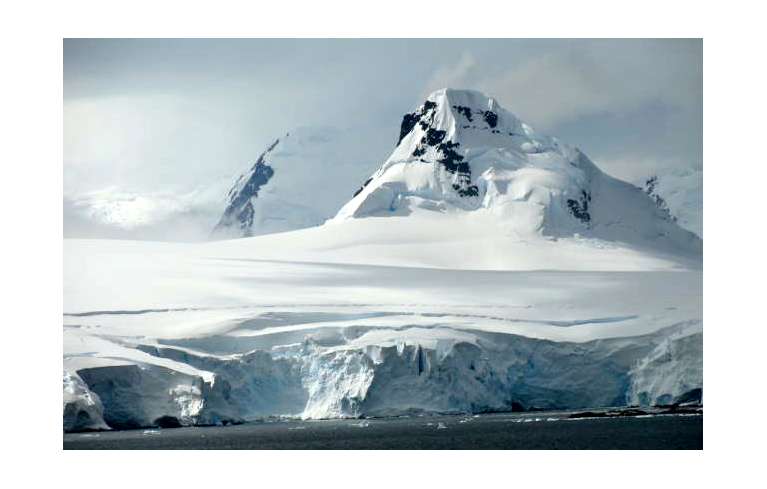
Mountains of Antarctica from a cruise ship. Photos/Robert S. Wood

Mountains of Antarctica from a cruise ship. Photos/Robert S. Wood

By Robert S. Wood

I never thought I’d get to Antarctica. Way too expensive, though I’d lived and worked in the Arctic and traveled Patagonia as far south as the tip of South America. I badly wanted to compare the two polar regions, which I knew to be vastly, wildly different.

In the north one travels mainly on land and by bush plane; in the south it had to be by ship or air. But just flying over all that ice didn’t interest me. Tours by ship commonly start at $15,000 per person and as much as $65,000 if you want to actually set foot on land. That’s partly because of stiff entry requirements to prevent pollution like double-hulled ships with a special expensive fuel. And it’s a long way from California.

My wife, Deanne, and I had cruised with Holland America Line (HAL), so we kept an eye on its Antarctic offerings. We spotted a coming three-week cruise in January 2013 that started in Valparaiso, Chile, on the South Pacific, dove deep into Antarctic waters for four days cruising, then sailed north up the Atlantic to Buenos Aires. It sounded good, though way too expensive at $14,500 each.

What especially attracted me was that it cruised the Sarmiento Canal in Argentina where my buddy Jack Miller, with whom I’d camped in Patagonia, had made a handful of first ascents on inaccessible wilderness peaks. I’d always wanted to see those mountains. That made the HAL itinerary sound especially great. So did the dozen of glaciers emptying into the sea along the way.

Fortunately, cruise industry economics make it mandatory to somehow fill every cabin even if they have to cut prices to the bone. We talked to our agent at HAL and he offered us a decent discount, but the price was still way too much. The sailing was still three months away and we expected the price to drop a little further as time grew shorter. But there was always the risk that the boat would suddenly fill up and our chance would be gone.

We had just about decided to save our pennies and wait hopefully for next year, when in late November our agent called us, breathless. HAL was unexpectedly offering a special on “our” cruise. An ocean view cabin, he told us, would cost us just $2,400 each, barely $100 bucks a day. We grabbed it – our Christmas present to each other – and started planning. Bulky parkas wouldn’t fit in our suitcases, so the strategy was to wear multiple layers of thinner winter garments for the warmth we’d need out on deck in Antarctica.

Our American Airlines jet landed in Santiago, Chile, in January, where the suddenly summer temperature was 90 degrees. Coming from winter in the U.S., it felt like our blood was boiling. A bus took us west through farmland for two hours to the seaport of Valparaiso, where we boarded the 1,300-passenger HAL Veendam. The next morning we set sail down the mostly wild Chilean coast of Patagonia, behind which rose the shadowy spine of the Andes.

We had been promised a chance to go ashore at small fishing towns every other day to see the sights, but the notoriously stormy Patagonia weather threatened those excursions. Since the villages were all too small to have a dock that could accommodate the Veendam, the only away ashore was to climb into bobbing oversized lifeboats called tenders and plow through harbor waters to small fishing boat piers.

At Puerto Montt, two days sail south of Valparaiso, we planned to take an 11-hour bus-launch-bus excursion through the remote famed Chilean Lake District. But the captain decided the stormy bay’s whitecaps made it too rough, and we were not allowed to attempt a landing. Sigh.

So we sailed on south. Every day it grew a little cooler, while at the same time the days grew longer as the latitude grew higher. So, paradoxically we got more sun as we approached Antarctica.

In the next four days, we managed to get our tenders ashore at several fishing villages, where we enjoyed barbecued lamb and Pisco sours and wine at one remote rancho/estancia behind the town of Chacabuco. On the way back to the ship our driver stopped at a local market where he helped us buy more wonderful Chilean wine — $30 on the ship — for four bucks a bottle.

Jack had warned us to watch out for the dreaded Trancura Fly, a giant bee native to Patagonia that was extremely aggressive and had a nasty sting.

On a driving excursion on a rocky road in the Simpson River Valley, we stopped to walk to a waterfall when suddenly we were attacked by a swarm of Trancuras. We ran for the van and got inside without being stung, but several bees came in with us and zoomed angrily around inside, everybody cringing and swatting, until the frantic driver could kill the last of them.

The next day, when the captain announced we would be entering Sarmiento Canal around 11am, I made my way with my camera to the highest deck in the bow. Jack’s photos of his climbs in the National Geographic had showed nothing but snow. Now in mid-summer there wasn’t a flake in sight. We did, however, see the impressive Brujo Glacier, with its spawn of ice floes and bergs floating at its foot, as well as the landmark rusty red shipwreck of the Santa Leonor.

Punta Arenas, which I had visited almost 40 years before, had grown from a village to a seaport city. From it, I sent Deanne on a strenuous inland 12-hour bus-flight-bus excursion to see beautiful Paine National Park, a highlight of my trip back in the ’70s. It was a gamble on the Patagonian weather, which thankfully held fair, and she returned beaming but weary with wonderful pictures.

Punta Arenas was our last civilization on the mainland. After that we made our way through thousands of Argentine uninhabited islands, weaving our way toward Tierra del Fuego. The next day we enjoyed a series of blue-tinged icefalls in Glacier Alley cruising through the fearsome Beagle Channel – tame that day as a lake – to the final island, Tierra del Fuego, planning to go ashore at Ushuaia, the continent’s southernmost city that I had previously visited on our ’70s camping trip.

When it came in sight I was astonished. The little village I remembered had also tripled in size into a large town, but again stormy seas prevented us from landing or even tendering ashore. Double sigh.

So we continued south through open empty seas in a twilight that refused to turn to darkness, through the feared Drake’s Passage where the Pacific and Atlantic oceans angrily meet. Our first sight of Antarctica, only hours from Ushuaia, were the black humps of islands that extend out from the tongue of Antarctica known as the Palmer Peninsula, some of which is actually outside the Antarctic Circle.

Everyday now there were several lectures by a pair of Antarctic expert brothers named David and Chris Wilson, whose famed uncle had accompanied the legendary Shackleton in the race to be first to reach the South Pole more than a century ago.

By now it was cold all the time, though the sun never set, and when the wind blew it was decidedly chilly on deck. Fortunately, there were ample heated, glassed in public lounges where views were better than those from our portholes and exposed balconies. Then a thick fog rolled in, obscuring the sun, providing a strange pearly gray lighting affect.

At St. George’s Island on Admiralty Bay we passed three of the lonely stations that are the only man-made sights in Antarctica, beside wrecked vessels. Here, sharing a slightly sheltered bay, were the Polish, Russian and Chilean bases – forlorn clusters of low huts and crude blocky buildings set in clearings in the snow. A few figures in bulky dark clothing could be seen moving like ants between the buildings. Many of them stopped and waved at us, the only signs of distant civilization they were likely to see.

Offshore stood several small supply ships and research vessels. The only other boats we saw on the whole voyage were a big yellow German cruise ship blaring beer hall music and a small sailboat, not more than 30-feet long, dwarfed by the bergs it was sailing amongst. I shivered to think of living conditions on board, compared to our cozy cabins.

Now well inside the Antarctic Circle, the myriad islands were simply mounds and blocks of snow rising from pitch-black seas flecked with ice floes and small icebergs. The only place we saw the black rock that revealed land in that world of white was on slopes so steep that the mantle of snow had avalanched off into the sea. It was a desolate sight that shouted cold, cold, cold. The sun had disappeared the night before behind a layer of fog and cloud that made a backlighted ceiling of gray at about 1,000 feet above the water.

The following day we began to pass bigger islands and more glaciers. It was sometimes possible to see three at one time. The old glacier ice was distinct from the snow by its pure blue glow. Mostly the weather was mild and cold, with low clouds that obscured the sun but revealed the moderate snow-covered dark peaks.

We saw hundreds of penguins strutting comically ashore from a distance through binoculars and dozens more looking up at us on passing icebergs, close-up.

We passed immovable-looking icebergs far bigger than the ship, explaining what had easily sunk the unsinkable Titanic. Often they were larger than the islands and topped with snow, but their baby blue ice looked much different. They rose hundreds of feet above the seas, meaning nearly a thousand feet of ice lay underwater – only the proverbial “tip of the iceberg” being visible. Hitting one would be like driving the ship into a sheer granite wall. Being summer, it never got completely dark.

Obviously, our 1300 passengers could not be taken ashore at any of these tiny stations, but several scientists arrived one morning in inflatable Zodiacs from the out-of-sight Palmer Station, one of three bases run for research by the United States. They delivered fascinating illustrated lectures and told us what life was like in the stations. If you weren’t passionately dedicated, as they were, life would definitely be grim.

These talks supplemented the excellent daily lectures and slide shows by the Wilson brothers and frequent reports on the loudspeaker from the captain, announcing glaciers, whale sightings, penguin colonies, etc., keeping us well informed. While on board the scientists clearly enjoyed basking in our spas and eating gourmet food in our warm dining rooms.

A map of our course looked like a can of worms, as the ship zigzagged among islands. And after showing a landmark to the starboard side of the ship, the captain would rotate it 180 degrees to show the port side cabins the sights.

The Argentine Station sat right next door to an Adele Penguin rookery. That might sound like good company, a source of entertainment, a floorshow for the lonely residents. But there was a price. “Eau de Penguino,” a stink said to clear one’s sinuses, was never absent. We could smell it from the ship. Adele Penguin poop, we learned, is pink, the only color we were to see in this black and white movie of the Antarctic.

As we pushed farther south toward the pole, the pack ice got thicker and icebergs were crowding us as the captain put the Veendam through some narrow straits on the way to Iceberg Alley. Pack ice finally blocked our entry into the Weddell Sea lying east of Palmer Land. At dinner, through the dining room windows, we often were treated to some lovely endless sunsets when the sun sank below the layer of fog and seemed to move sideways.

After cruising Antarctic waters for most of four sunless days, we headed north into the Atlantic, and immediately the sky turned blue and the sun came out. It was fun to run in our robes across the open aft deck and jump laughing into the deck hot tubs, despite the icy wind, to watch the last of the glittering snowy peaks recede in the distance.

We were supposed to go ashore at Stanley in the nearby Falkland Islands, but weather forecasts from there convinced the captain (and his cost-conscious bosses ashore) to cancel that port, too – saving the ship substantial fuel money. Boo! Instead, we sailed into and landed at Puerto Madryn on the flat, bleak Argentine coast, where we got a taxi to take us to an Eco Museum (closed) with its giant outdoor whale skeleton and then on to a lively sea lion colony where the rare giant Albatross flew.

Two sea days later we docked in Montevideo, Uruguay, for a city tour. It was a beautiful European metropolis with many parks and gardens and bronze statuary commemorating its endless heroes. The following day came another city tour, this time of bustling cosmopolitan Buenos Aires whose gigantic soccer stadium, dwarfed most of our football arenas. That evening we disembarked, bused to the airport and began the long flight home.

I had been curious about how the Antarctic would stack up against the Arctic, to which I’d taken two great summer Alaskan trips. Except for the cold temperature, they were different in every way. Back in college a pal and I had built a camp trailer and drove it up the just opened Alcan Highway (then just a muddy trail) to Fairbanks.

There we got jobs in Point Barrow, then the northernmost year-round community in the world at the top of Alaska on the Arctic Ocean, working in the oil exploration camp kitchen and hanging out at the Arctic Research Laboratory, where we got to go on great field trips. We lived in wolf fur-lined parkas, but it didn’t seem especially cold. We worked there two months under the circling midnight sun, enjoying the abundant wildlife (millions of caribou migrating, polar bears, musk oxen, endless birdlife) and the still intact thriving native Eskimo culture.

We loved the vast sweeping Arctic vistas, the lush green permafrost tundra bursting with color, light and wildlife. Contrast that with the Antarctic where the only plant life is rare hair grass and lichen. The ice pack at the mountainous South Pole is over a mile thick, and the only creatures to be seen in that black and white world are penguins and whales.

Then just 10 years ago, Deanne and I rode a series of bush planes from Fairbanks to Gates of the Arctic National Park, where we crash-landed on a sandbar in the Alatna River under the mighty Brooks Range. There we blew up rafts and rafted south through the snow-free Arctic, portaged the rafts over a hill to a large lake where we were picked up by bush floatplanes for the flight back to Fairbanks.

The greatest similarities we found were between the beautiful windswept wonderland of Patagonia, where the natives have been extinct for a century, and busy northern Alaska where Eskimos still exist and still hunt seals and whales.

Of course we only saw a small slice of Antarctica on our cruise, and were unlucky with the foggy ceiling that hid the sun, but when it comes to choosing between which end of the earth to travel, I’ll take the Arctic every time.

Robert S. Wood and his wife spend half the year in Lake Tahoe and the other half in Sedona. He is the author of a dozen books, including the original trail guide to Desolation Wilderness.

ngg_shortcode_0_placeholder (Click on photos to enlarge.)


Snack food industry trying to be healthy

By Anne Marie Chaker, Wall Street Journal

Is a seaweed flake the new potato chip?

Hoping to elevate snack foods out of junk territory and into a healthier zone, more companies are offering munchables made from ingredients with ironclad nutritional credentials, including black beans, brown rice, seaweed and parsnips.

Never mind that recommended serving sizes in many cases are minuscule, or that calorie, fat or sodium profiles can rival or exceed those of old-school pretzels and potato chips.

The snack-food aisle’s neon-colored bags contain cheesy, spicy fare designed mainly for guys in their teens and 20s. The new munchies are directed at a potentially larger group—consumers who want to eat better but also love salty chips.

The proportion of consumers reporting that they eat three to four snacks a day in addition to meals rose to 31 percent in 2013, up from 19 percent in 2010, according to Chicago market research firm IRI.

Read the whole story


Brown gets rid of federal standardized test

By Sharon Noguchi, Bay Area News Group

SACRAMENTO — A bill ending the standardized tests that California public school students have taken in reading, math and social science since 1999 received Gov. Jerry Brown’s signature on Wednesday, despite a threat by the U.S. secretary of education to withhold federal funds if the state moved forward with the plan.

Assembly Bill 484 replaces the pencil-and-paper, multiple-choice STAR tests with new language and math tests taken on computers. The new assessments, called Measurement of Academic Progress and Performance, were designed with other states to follow a set of national curriculum standards known as Common Core.

“I’ve said from the beginning, California needs tests that measure how ready our students are for the challenges of a changing world,” said California Superintendent of Public Instruction Tom Torlakson, who championed the rapid shift away from the STAR tests. “… we have taken a huge step in that direction by creating an assessment system focused on improving teaching and learning and by sending a clear signal about our commitment to this urgent work.”

Read the whole story