Political veteran wants to be Douglas sheriff

By Kathryn Reed

Dave Brady believes there are plenty of ways to change the Douglas County Sheriff’s Department. He would start with the budget.

Brady is challenging longtime incumbent Ron Pierini for the job of sheriff. The primary is in June, with a runoff in November 2014 if necessary. They are the first two to declare their candidacy.

“I served as a reserve (deputy) initially in 1986. The (department’s) budget was $3.1 million and there were 24,000 residents. Now the population has about doubled, the budget is $16 million and they are still running with five cars. I see that as an issue that needs to be addressed,” Brady said.
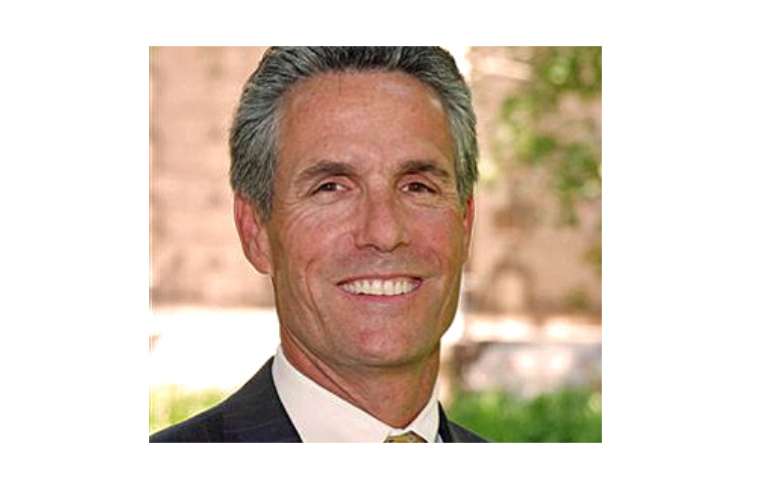
Dave Brady

Dave Brady

He doesn’t understand why the budget has grown and services have not.

Brady resigned as a reserve deputy when he declared his candidacy this month. This is a volunteer position.

He wants to take his experience in law enforcement and the financial world to do something so the sheriff’s office budget no longer represents 40 percent of Douglas County’s general fund. He believes the department is in need of leadership change.

“I think we can safely reallocate resources. I would want to add a car to the lake at peak hours,” Brady said.

Most times of day there are two Douglas sheriff’s vehicles covering the Lake Tahoe portion of the county.

“I don’t see the lake as being an afterthought. I see it as being a vital and critical element to Douglas County both in the short term and long term,” Brady told Lake Tahoe News. “I see the lake in transition. There are a lot of things being done to reinvent that area. I want to make sure the sheriff’s office is onboard and willing to provide support.”

As a reserve, Brady was on the patrol boat this summer at Tahoe. He works Fourth of July and New Year’s Eve, so he knows all about the influx of tourists to the South Shore.

Brady and his wife moved to the Carson Valley in 1985 after their daughter was born. (They have five adult children.) They had been living in Southern California where he was a police officer in Redondo Beach for eight years. He worked patrol and was primarily a K9 officer.

When the president of the police association said they needed someone to manage the money Brady realized he didn’t have the skills to do so. This led him back to the classroom where he became a certified financial planner.

He also has an associate of arts degree in criminal justice, a bachelor’s in public affairs from USC, as well as a master’s in public administration from USC.

Today he blends law enforcement with finance by managing several police associations in Nevada and California. He is president of Brady & Associates, a financial services firm in the Carson Valley.

When he first moved to Nevada he worked for the state Gaming Control Board.

“When I began my career in law enforcement I did so with the expectation I would lead a law enforcement agency,” Brady said. “Along the way I took on careers that distracted from the typical way up the ranks that people would pursue.”

Brady was appointed to the Douglas County school board in 1995 and resigned in 2004 when he moved out of the district. He was a Douglas County commissioner from 2005-10.

When he isn’t working, Brady likes to compete in ocean sailing races in Southern California – in 2011 he sailed to Hawaii, and once a week he likes to ride his bike up Kingsbury Grade.

Odds gamblers will win — 30%

By Mark Maremont and Alexandra Berzon, Wall Street Journal

The casino billboards lining America’s roadways tantalize with the lure of riches. “Easy Street. It’s Only a Play Away,” screams one in Arizona. “$7.1 Million Every Day. We’re a Payout Machine,” reads another.

But how often do gamblers really win? What are the chances that a gambler will win on a single day or over a longer period? Don’t bother to ask the casinos. Although they gather vast quantities of data about their customers for marketing purposes, including win and loss tallies for many regulars, casinos keep such information a closely-guarded secret.

Now, thanks to an unprecedented trove of public data detailing the behavior of thousands of Internet gamblers over a two-year period, the Wall Street Journal can provide some answers.

On any given day, the chances of emerging a winner aren’t too bad — the gamblers won money on 30 percent of the days they wagered. But continuing to gamble is a bad bet. Just 11 percent of players ended up in the black over the full period, and most of those pocketed less than $150.

Read the whole story


Millennials driving change in transportation

By Mantill Williams

The largest generation in U.S. history and the most multi-modal could be a game changer for public transportation and America’s transportation network as a whole.

The millennial generation chooses the most practical transportation mode (driving, public transit, biking or walking) for each trip, and this flexible concept of mobility is spreading. According to the study Millennials and Mobility, nearly 70 percent of millennials, people 18 to 34, use multiple travel options several times or more per week.

The study shows that while car-sharing, bike-sharing, walking and car ownership will all play a part in the multi-modal network, public transportation is ranked highest as the best mode to connect to all other modes, according to 54 percent of millennials polled.

Smartphone applications allow public transit users to be increasingly spontaneous and flexible with their travel decisions. This is a game changing element because it closes the gap with the perceived benefit of auto use.

According to the study, the top five reasons and motivations for choosing public transportation are pragmatic, as 46 percent state that a need to save money drives their choices, 46 percent note convenience, 44 percent want exercise, and 35 percent say they live in a community where it just makes more sense to use public transportation.

Millennials say the key advantages of public transportation is the ability to pay-per-use (58 percent), protecting the environment (50 percent), the ability to socialize online (44 percent), and creating community (44 percent).

Because of the future demands of this millennial generation, transportation systems and public transportation systems in particular, will be built around the smart phone.

Mantill Williams works for the American Public Transportation Association.


Dogs strut through S. Tahoe with their people

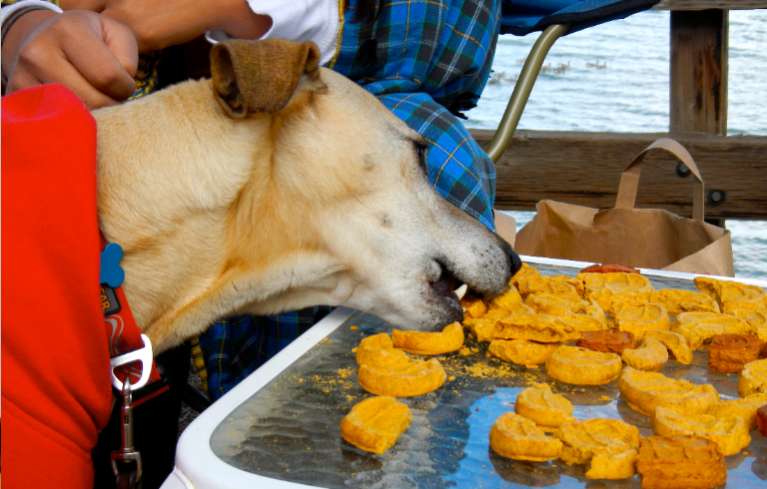
AJ has no problem helping herself to treats along the Mutt Strut route. Photos/Kathryn Reed

AJ has no problem helping herself to treats along the Mutt Strut route. Photos/Kathryn Reed

By Kathryn Reed

Mutts of all kinds – and a few pure breds – strutted their stuff as they paraded through South Lake Tahoe on Sunday.

With the temperature close to freezing at the start of the ninth annual Mutt Strut, dogs and their people were bundled up for the 1.3-mile walk from the library to the beach at Timber Cove. By the time the beach party started, the sun was out, and dogs kept sniffing and playing.

Labradoodle, pit bull, King Charles Cavalier, bulldog, Bassett, collie, Cockapoo, Dachshund and many other breeds were represented.

Although their people were collecting a poker hand along the route, the day was about the canines. More than 100 poker hands were sold. All the money goes to the Animal Coalition of Tahoe.

The all-volunteer group spends the bulk of the money that is raised on veterinary bills for the spay-neuter program. More than 1,500 families have benefited from these services in the last nine years.

The route of the strut occasionally changes. Some years it has been at the Y, other times on Ski Run Boulevard. This year dogs took their people from the library, through Campground by the Lake, across Highway 50 at Tallac Avenue, down Harrison Avenue to Lakeview Commons, along the beach and then back on the trail to Timber Cove.

At the finish the dogs bonded in their usual way.

Then it was time for the games. With hotdog pieces in a tub of water, it took all the strength of some owners to keep their canine from gobbling up the goods before the start. Pearl the black Lab emerged the winner.

Then it came time to see how well the four-leggeds did sitting on command as they played a version of musical chairs – only they had squares to sit on.

A wag-off was necessary to determine whose tail enthralled the people the most. Toby edged out Sadie for the title.

Colin and Susan Melville were at the Mutt Strut with their three dogs for the first time because they love doing stuff with their furry family members. Plus, Susan Melville is a volunteer at the animal shelter so she knows about the work ACT does.

Jim Burkett had no issue with having a pink leash for his bulldog.

“It’s the only way to tell she is a girl,” he said as Princess sat patiently at his feet.

Note: Animal Coalition of Tahoe is having fundraiser Nov. 8 at Tahoe Bowl.

ngg_shortcode_0_placeholder (Click on photos to enlarge.)


Tahoe women set to summit, ski Mount Kenya

When most people think about Africa, they don’t think of snow. Two Lake Tahoe women will change that as they attempt to summit and ski Mount Kenya in November.

They are climbing to make a statement about climate change and raise funds for micro-loans in an expedition they call Summit for our Sisters.

Mount Kenya is home to the first and only skiing competition in the country, which was in 1936. Africa’s second highest mountain after Kilimanjaro, it rises above the country’s highlands to 16,355 feet. Due to recent global warming trends, only a handful of mountain enthusiasts have accomplished this trek on Lewis Glacier, one of the last permanent snowfields in Africa. Studies show the snow and ice on the volcanic peak of Mount Kenya are melting away so fast scientists estimate they will disappear in the next two or three decades.

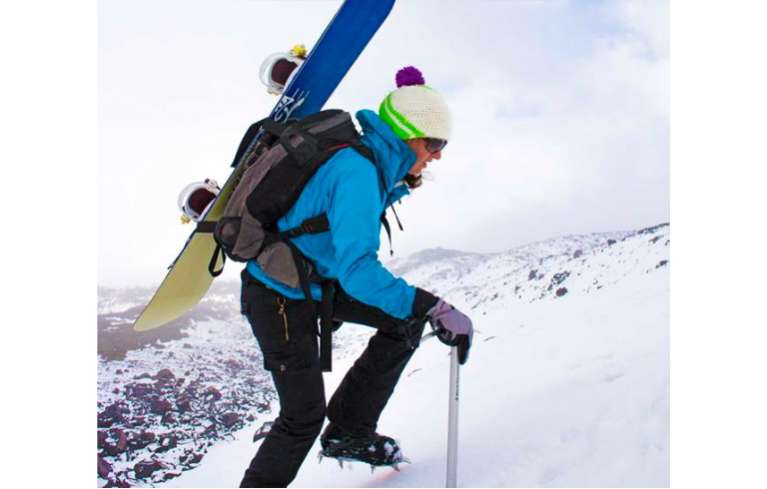
Jen Gurecki trains for her Africa expedition. Photo/Provided

Jen Gurecki trains for her Africa expedition. Photo/Provided

Given this trend, Jen Gurecki and Meghan Kelly are following their passion and jumping on the opportunity to become part of the select few to accomplish such a large feat. The expedition, sponsored by Coalition Snow, an emerging ski and snowboard company for women, and will benefit Zawadisha.

The Zawadisha Fund is a micro-credit organization started in Lake Tahoe, whose mission is to empower, entrust, and expand opportunities for women in Kenya.

“The women I work with in Kenya are incredibly impacted by climate change. Many of them are farmers and other sell food staples at the local market. Drought, caused by climate change, leads to less productive crops, decreasing daily incomes and increasing food costs. While I sit and contemplate the effects of climate change, these women are living it day in and day out,” Gurecki said in a statement. “At Zawadisha, we are actively developing strategies on how we can support our members in adapting to climate change. Through this expedition we are hope to raise awareness about the issue, while also raising funds for the small business loans Zawadisha provides to women living in poverty.”

Kelly added, “At Coalition Snow, we’re passionate about three things: snowsports, women’s empowerment, and the environment. The expedition to Mt. Kenya combines all three and really shows the world what we’re all about. While we partner with Zawadisha, we hope to share our experiences in entrepreneurship with the micro-loan recipients and learn from their experiences. We’re environmentally and socially conscious, but we’re also unique in the snowsports industry — we’re launching a skiing and snowboarding company in Africa.”

The two adventurers have been passionate about playing in snow since moving to the Sierra Nevada nearly a decade ago. They also have been equally passionate about empowering women, both locally and internationally.

Note: Summit for Our Sisters fundraising campaign begins Oct. 14. More information is online.


Study: Yelling is as harmful as spanking

By Mari-Jane Williams, Washington Post

It’s hard to discipline children. You can’t hit them. Timeouts are not effective. Now, a study out of the University of Pittsburgh says yelling at teens and tweens — particularly when it involves cursing or insults — can be just as harmful as hitting. So what can you do?

Remember that the word “discipline” originally meant to teach, so look for opportunities to coach your child, not just punish him for a misstep.

“Discipline implies setting limits and boundaries,” said Vicki Hoefle, mother of six in Middlebury, Vt., and author of “Duct Tape Parenting.” “But the way we do it is, ‘I’m going to punish you when you do something I don’t like.’ It’s a completely wasted moment.”

No one wants to yell at their kids, and we usually feel bad when it happens. But most of us didn’t know it could be as damaging as the spankings we got when we were growing up.

The University of Pittsburgh study released in September looked at 967 middle school students over a two-year period. Those whose parents used “harsh verbal discipline” such as yelling, cursing and using insults were more likely to be depressed or have behavior problems. The study found it was also not effective in getting children to stop what they were doing, and that it was damaging even to children in homes that were generally warm and loving.

Read the whole story


History in the middle of an alpine meadow

Meiss Meadow with the old house and barn in the distance. Photos/Kathryn Reed

Meiss Meadow with the old house and barn in the distance. Photos/Kathryn Reed

By Kathryn Reed

A golden meadow stretches for what looks like miles. It’s barren and beautiful at the same time. Stevens Peak (10,059 feet) and Red Lake Peak (10,063) are nearby.

A cabin and barn are remnants of civilization from an era long gone.

Meiss Meadow.

Besides being the starting point of the Upper Truckee River, this section of Alpine County was once bustling with cattle.

A couple women on horseback offer a glimpse of what this area might have been like a century ago. Hitching posts are still out front.

Water flowing in the river behind the house is good for the dogs that have come along with their people.

The buildings were constructed by Louis Meiss (pronounced mice) who emigrated from Germany in the 1800s with his parents. Meiss bought 1,000 acres – which included what is now known as Meiss Meadow – in 1878. It was all about cattle crazing at that time.

In 1936 the land was sold to another family. In 1965 the U.S. Forest Service acquired the property. The structures are of historical significance.

Today is it a hikers paradise. There are a few ways to get to Meiss Meadow – after all it is an intersection of the Pacific Crest and Tahoe Rim trails. For those on the PCT, they have 1,000 miles to get to Mexico or 1,400 more miles and they’ll be in Canada.

We started on a recent Sunday from Big Meadows trailhead off Highway 89. Signs of fall are evident from the start as aspens and other flora are turning shades of yellow.

Big Meadows never disappoints. It’s like being in a bowl of beauty with 360-degree views of Sierra serenity.

But the trail in front of us is a bit congested even though it’s the off-season. Mountain bikers and horses share this trail with those on two legs. Numerous backpackers are headed home, most having stayed overnight at Dardanelles Lake. Once we get beyond the turn off for that lake we see very few people. We are headed toward Round Lake.

We don’t fish, but reports are those with poles can find Lahontan cutthroat trout at Round Lake.

We stop briefly for a bite to eat and to let AJ have a swim. The chill in the air and slight breeze have us moving on soon.

The terrain after Round Lake changes from typical Tahoe pines to a more expansive, openness with varied foliage. It feels a bit more like the Alps with the meadows at this elevation. Though at the same time thoughts of “Little House on the Prairie” come to mind.

We stop again at Meiss Meadow; by the barn to enjoy the scenery. Then we walk a short ways toward Carson Pass to see the golden grasses in that section of the meadow. It’s almost like there is too much to see, that you want to stay a little longer to make sure you capture it all in your mind. It’s both peaceful and rugged.

—-

Notes:

• It is 2.7 miles from Big Meadows trailhead to Round Lake, 2 miles from Round Lake to Meiss Meadow. And it’s another 2 miles to Showers Lake from the meadow.

• To get there from South Lake Tahoe, take Highway 50 west, turn left onto Highway 89 toward Hope Valley. The Big Meadows trailhead parking is about 4 miles from the intersection of highways 50 and 89. The trailhead is back down Highway 89 on the other side of the road. There are a few wide spots to park on the highway.

ngg_shortcode_1_placeholder (Click on photos to enlarge.)


More money spent on adults at Halloween than kids

By Catey Hill, MarketWatch

Forget trick-or-treating. This year, the kids may be twerking for candy.

Americans will spend $2.6 billion on Halloween costumes this season, according to data released this week by the National Retail Federation. While that’s down slightly from last year, they’ll still shell out $1 billion for children’s costumes, $1.2 billion for adult costumes and $330 million on pet costumes.

So what will we be for Halloween this year? As usual, traditional costumes like witches and Superman are among the most common for both adults and children.

The retail federation finds that 5 million adults are planning to dress up as witches, by far the most common costume for adults, followed by Batman, whom 2.9 million Americans plan to be. Other popular adult costumes include: vampire, zombie, pirate, action/superheros, Superman, Dracula and cat. For children, the most popular costumes, in order of popularity, include princess, animal, Batman, action/superhero, Spider-Man, witch, zombie, Disney princess, Superman and fairy.

While those may be the most popular costumes, you’re likely to see a lot of surprising ones as well, including a twerker, meth dealer and dragon-birther. “Costumes related to TV shows are more popular than ever,” says Mark Bietz, the vice president of marketing for HalloweenCostumes.com, who’s seeing a ton of people buying Duck Dynasty costumes.

Read the whole story


Calif. water officials to go after illegal pot grows

By Matt Weiser, Sacramento Bee

California water quality regulators will soon begin inspecting illegal marijuana growing operations in the Central Valley and Sierra Nevada, reversing an earlier ban intended to protect employees.

At a meeting Friday in Rancho Cordova, the Central Valley Regional Water Quality Control Board directed staff to begin cooperating with other agencies to inspect marijuana grows, which have emerged as a major source of environmental damage in many rural counties.

The board and its staff are charged with protecting streams and groundwater in the state’s vast interior, a region encompassing 37 counties and 40 percent of California’s land area. It also includes the western flank of the Sierra Nevada, a sparsely populated and rugged region favored by marijuana growers.

“The environmental impacts are significant,” said Pamela Creedon, the water board’s executive officer. “If we don’t get some kind of control over this, we’re going to have some serious damage being done.”

Marijuana growers encompass a spectrum of individuals, from gravely ill cancer patients growing their own small supply of medicinal marijuana under the legal authority of California’s Proposition 215 to undocumented immigrants working on behalf of violent multinational drug cartels.

Read the whole story


Old South Shore campground being rehabbed

By Kathryn Reed

TAHOE CITY – While work has been going on at the 8.117-acre former Tahoe Pines Campground since the California Tahoe Conservancy purchased it for $4.018 million in 2008, more substantive improvements could come late next summer.

The CTC board at its September meeting was given an overview of what staff is contemplating to do to this area long the Upper Truckee River in Meyers. Definitive plans will be forthcoming at the March or June meeting at which time funding will be sought.

The former Tahoe Pines Campground includes 915 linear feet along the Upper Truckee River. Photos/Kathryn Reed

The former Tahoe Pines Campground includes 915 linear feet along the Upper Truckee River. Photos/Kathryn Reed

Peter Eicher, who is spearheading the project for the CTC, said a guesstimate at this time is about $400,000 will be needed.

“There will be a lot of ripping out of old pavement, and (adding) new pavement and a new bridge,” Eicher told the board at the quarterly meeting. It’s likely the bridge will not be built for vehicle use.

The goal is to provide river access for the public. While people could put in there to kayak or canoe along the Upper Truckee River, that isn’t going to be encouraged. This is because this section to Elks Club is more difficult to navigate, includes snags across the river and the need to potentially dodge golf balls.

A trail to the river is planned, along with casual spots to sit. No restroom facilities will be installed. A gate will prevent access during the winter – at least to vehicles. About 12 parking spaces are planned.

Eicher said his crew is trying to strike a balance of providing access, but not needing to provide daily maintenance to the area because the Conservancy doesn’t do that sort of thing. It is considered a low-level use site.

Making the land function better is a primary goal.

In 1932 Alma Mater started the campground. From 1983 until when the CTC bought the land the Poulen family ran it. Little evidence of the 59 campsites remains.

When the Conservancy board was given a tour of the area in 2008, Greg Poulen told many stories about the flood of 1996. A loud clang would echo through the campground. Another barbecue pit had been dislodged and was banging along the rocks in the raging river.

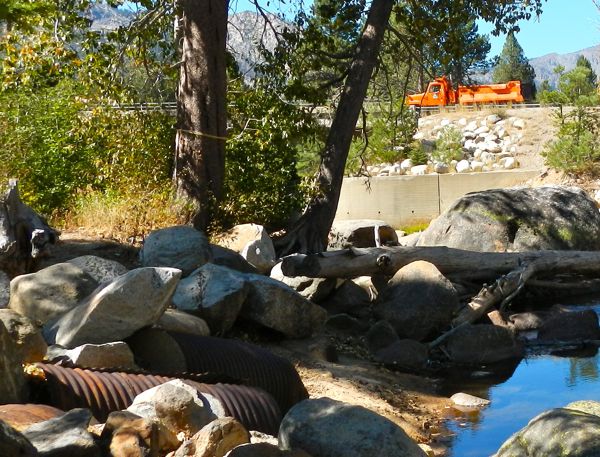
A cement filled culvert, foreground, is near the river. And vehicles on Highway 50 roar by the property.

A cement filled culvert, foreground, is near the river. And vehicles on Highway 50 roar by the property.

What is left today is compacted and disturbed land, a bridge that is sketchy at best, concrete filled culverts, and boulders in the river.

The Conservancy has put up some fencing, has taken down trees and is already seeing vegetation start to naturally re-establish in some locations.

“This area is prone to flooding. Our designers are looking at that,” Eicher said. The floodplain will be worked on so the groundwater table rises and the ecosystem works in a way that would be reminiscent to before the campground was put in.