Brown’s actions define a less liberal Calif.

By Jessica Calefati, Josh Richman and Paul Rogers, San Jose Mercury News

SACRAMENTO — At first glance, it might seem that California lived up to its reputation for unmitigated liberalism in 2013.

Gov. Jerry Brown signed bills to let illegal immigrants get driver’s licenses and practice law; raise the minimum wage to $10 an hour, the highest of any state; and make California the only state this year to increase access to abortions.

But look a little closer, and the year wasn’t as far to the left as many think — or as it might’ve been had the Democrat-dominated Legislature and governor not reined themselves in.

Brown gave the National Rifle Association seven of the 11 vetoes it wanted, including a controversial bill to ban all semi-automatic rifles with detachable magazines. He angered many environmentalists by signing a bill to regulate, not ban, oil and natural gas fracking. And of 38 bills deemed “job killers” by the California Chamber of Commerce, only one — that minimum wage hike — made it to Brown’s desk and became law.

“We saw Jerry Brown this year weave a very cautious path, carefully picking and choosing his battles,” said Bruce Cain, a political science professor at Stanford University. “Any concern he has about an issue now will only intensify next year when he most likely runs for reelection.”

Read the whole story


Recreation advocates want South Shore to function better

By Kathryn Reed

Coordination and connectivity are two of the main items missing when it comes to recreation on the South Shore.

People don’t know what’s available, where things are, how to find out about them and once they figure it out things are not linked together.

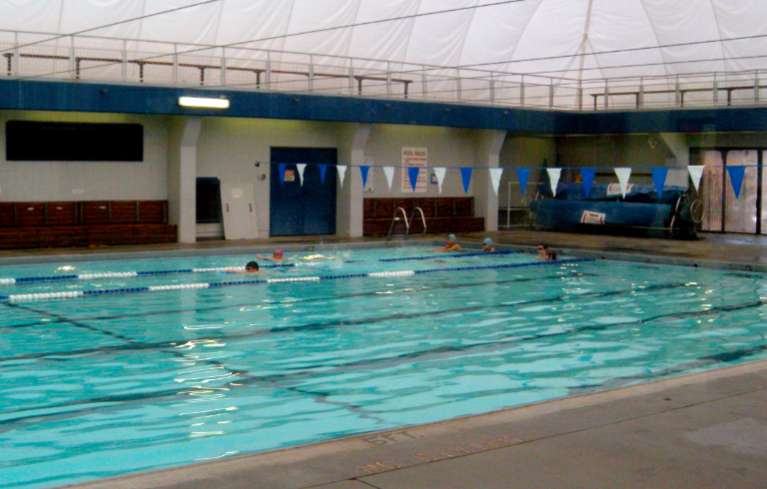
Survey takers said South Lake Tahoe's pool is an important asset. Photo/LTN file

Survey takers said South Lake Tahoe’s pool is an important asset. Photo/LTN file

An example is bike paths don’t lead to the parks that do exist on the South Shore.

Consultants putting together the recreation plan for the area found that 85 percent of the survey respondents believe it is either essential or very important for South Lake Tahoe and El Dorado County to offer recreation facilities, programs and public parks to residents.

“If it should be us, then the resources should be provided. It’s the only way to meet that demand,” Lauren Thomaselli, South Lake Tahoe recreation manager, said at a recreation commission meeting Oct. 17.

But the county does not provide any recreation services in the basin. It’s facilities are limited at the lake with owning Lakeview Commons and the rest of the 56-acre project area which it leases to South Lake Tahoe, and there are parks in Tahoe Paradise and Tahoma, but not run by the county.

El Dorado County Recreation Commissioner Bob Smart pointed out how the basin wasn’t even included when the county did its master plan for recreation.

Now officials are acknowledging this part of the county matters.

The South Lake Tahoe and El Dorado County recreation commissions met Thursday to get an update on where the joint Parks, Trails and Recreation Master Plan is at as well as to figure out how their respective entities could help. (Commissioner Rebecca Bryson from the city and Commissioner John Hidahl from the county were absent.)

It’s possible Douglas County will be at the table in the future because it has hired the same consultant to work on a complementary rec plan so the entire South Shore is tied together.

The master plan the city and El Dorado are putting together goes from the state line, to Tahoma and out to Twin Bridges.

Vickie Sanders, parks manager for El Dorado County, explained how the county is looking to hire a firm to create an all-encompassing website for recreation. The goal is to have links to relevant recreation partners like the U.S. Forest Service and Tahoe Rim Trail Association so it’s not just city or county provided recreation – but all recreation in the county. It would also have a calendar of events.

But it was pointed out how the end product is only as good as what gets submitted to the site for inclusion.

Because it is an El Dorado County product it will not have Douglas County information. This means the coordinated-connectivity piece for the South Shore will still be missing, at least online for the public through this future site.

City Commissioner Bonnie Turnbull expressed concern about yet another website when there are so many now.

Some of the discussion on Thursday centered on the results of the survey that asked people a slew of recreation questions. It was brought up how the city’s ice rink was not deemed very important by people but before it was built it ranked higher than bike trails and ball fields. But that was 13 years ago and demographics and items to choose from in the survey were much different.

In ranking the top three recreation items in order of importance out of a list of 18, bike trails had 55 percent of the votes, Lakeview Commons 41 percent and the recreation-swim complex 39 percent.

City Commissioner Scott Valentine mocked the 8 percent who said there is nothing to be done to improve access to parks and recreation facilities on the South Shore.

It is possible people don’t want their tax dollars spent to upgrade facilities, or they don’t use them, or all of their time is spent on the lake or in the mountains and not on/at man-made recreation entities, or maybe they don’t recreate.

What survey takers said the top three things they want are parks to connect to bike trails (62 percent), improve sidewalk access (44 percent) and provide more neighborhood parks (38 percent).

The two volunteer boards expressed a desire to meet more often. There was a time when they had meetings twice a year. They are also going to begin to share their respective minutes and agendas with each other.

Future happenings:

• In the next couple weeks the full survey will be available online via the city and county’s websites.

• A meeting on Dec. 11 at 6:30pm (location still being determined) will be the public’s opportunity to participate in a roundtable discussion about the recreation master plan.

• In January subcommittees made up of the commissioners from both jurisdictions and those on the recreation master plan committee will meet to work on six specific areas.
Debating what to do with all the wood in the forests

By Lauren Sommer, NPR

The record-breaking wildfire in Yosemite National Park is almost fully contained, two months after it started. The blaze calls attention to a problem across the Western U.S. — after a century having its fires routinely extinguished, the forests are overloaded with fuel.

A heated debate has flared up about what do to with that forest fuel. California is hoping to reduce its fire risk through renewable energy, but some worry about the environmental costs of thinning the forests.

The forest right after a big fire is incredibly quiet. There are no birds. No bugs. No pine needles rustling in the breeze. Just row after row of blackened trees. Their bark feels like charcoal.

At more than 400 square miles, the Rim Fire is the largest Sierra Nevada fire in recorded history.

For decades, the Forest Service tried to put out every fire by 10 in the morning after it started. Small trees grew in, and during the Rim Fire they became ladders, carrying flames up to the tree tops and leaving just charred trunks. But just across the road, it looks entirely different.

Brett Storey thinks there’s a solution. He’s a program manager for Placer County and he’s showing me around a recycling facility between Tahoe City and Truckee.

The plant would turn tree branches and scrap into a gas that runs a generator, supplying about 1,500 homes with electricity. It would be fueled by Forest Service projects within 30 miles.

Read the whole story


Shutdown — a $24 bil. hit to U.S. economy

Publisher’s note: Sens. Dianne Feinstein (D), Barbara Boxer (D) and Harry Reid (D) voted to end the government shutdown and raise the debt ceiling, Sen. Dean Heller (R) voted against it; Reps. Tom McClintock (R) and Mark Amodei (R) voted against it.

By Toluse Olorunnipa, Kathleen Miller and Brian Wingfield, Bloomberg

Gum Tong owns a diner in Washington, D.C., and Matt Bellinger charters fishing boats in the Florida Everglades. They have this in common: The shutdown of the U.S. government cost them money they will never get back.

Pete’s Diner & Carryout, a 50-year-old Capitol Hill eatery frequented by House Speaker John Boehner, lost about 80 percent of its usual business, said Tong, surrounded by empty seats and Halloween decorations. Bellinger missed out on $1,000 a day in canceled charters because Everglades National Park was closed.

“What people have been doing in droves is saying ‘We’ll go to Disney World,’ or ‘We’ll cancel our trip and go home’,” Bellinger said in a telephone interview. Nineteen groups dropped plans for four-hour fishing trips.

“I can’t make that money back,” he said. “It’s gone.”

The U.S. economy is big and resilient. Now with the 16-day shutdown ended and the threat of a U.S. default at least delayed, economists will probably look back on this as a glitch, one of those passing crises that seem so common nowadays.

For people like Tong and Bellinger, and for thousands of small businesses, this was no glitch. It’s money that can’t be easily recovered, creating a long-term ripple effect — with the holidays approaching — that will be difficult to forget.

Business leaders say they are nervous. Companies from Knoll Inc. to NCI Inc. have said they expect the shutdown to affect fourth-quarter revenue. Knoll, an officer furniture maker, expects about $10 million of government business to be pushed into next year, Chief Executive Officer Andrew Cogan told analysts Wednesday on a conference call.

Americans were the most pessimistic about the nation’s economic prospects in almost two years in October, as concern mounted that continued political gridlock will hurt the expansion. The monthly Bloomberg Consumer Confidence Index expectations gauge plunged to minus 31, the lowest level since November 2011, from minus 9 in September, a report showed today.

Standard & Poor’s Ratings Services yesterday said the shutdown has shaved at least 0.6 percent off of fourth-quarter 2013 gross domestic product growth, or taken $24 billion out of the economy.

Read the whole story


Lake Tahoe unfolds along slice of Rim Trail

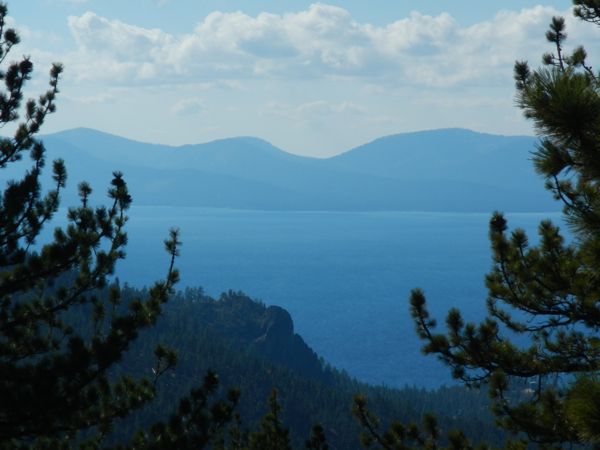
Outstanding views of Lake Tahoe along the Tahoe Rim Trail near Spooner Summit. Photos/Kathryn Reed

Outstanding views of Lake Tahoe along the Tahoe Rim Trail near Spooner Summit. Photos/Kathryn Reed

By Kathryn Reed

SPOONER SUMMIT – If you think Spooner Summit is busy now, you really would not have liked traveling this route more than a century ago.

A dirt road and a railroad line were in this area in the late 1800s. This was a critical link between Placerville and Virginia City during the Comstock era. It was all about logging and silver in those days. Much of the wood that was harvested was used to build the mines in Nevada.

Today Spooner Summit the road – or Highway 50 – is the main path between South Shore and Carson City. But the summit itself is the gateway to some spectacular hiking.

At the trailhead on the south side of the highway are numerous signs depicting the history of the area.

“In 1860, French-Canadian entrepreneur Michele E. Spooner acquired about 640 acres of land with the idea of starting up a sawmill, a shingle mill and a hotel. He named the area Spooner Station. Ten years and several business partners later, Spooner had acquired interest in flumes, a toll road, and other businesses, and controlled a total of 1,840 acres surrounding the summit that now bears his name,” reads one of the signs.

Spooner sold his flumes and toll road in 1872 to Duane Bliss and H.M. Yeringon.

It was President William McKinley who in 1899 created the Lake Tahoe Forest Reserve. This agency predated today’s U.S. Forest Service. When that government body came into being in 1905 this land became part of the USFS.

The four-lane road was built in the 1950s.

A spectacular aspen grove marks the start of the trailhead. Yellows and oranges were shimmering in the sun last Saturday. The day use area is awash in autumn colors.

We had our choice of destinations: Genoa Peak Road 3 miles, Ridgetop Lake View 5 miles, Kingsbury Trailhead 12, Kingsbury Grade 14, or Tahoe City 102.

These are all along a section of the Tahoe Rim Trail that neither Sue nor I had been on before. One day we’ll hike all 165 miles. We might set a record for the most number of years for full-time residents to do so.

I was hoping to do an out-and-back to the Ridgetop Lake View. However, my pulled muscles from a tennis match a couple weeks earlier said, “You have got to be kidding.” We did the 6-mile roundtrip to Genoa Peak Road.

We are thinking of finishing the other side of the trail to Kingsbury on our bikes next year.

A couple mountain bikers passed us and there was clear evidence equestrians had been out recently. Those who were hiking were bundled up to ward off the crisp chill in the air, which became more pronounced as an afternoon breeze picked up.

While the largest dose of fall colors is at the start of the hike, evidence of the changing seasons dots various spots along the way.

“It’s a collision of seasons,” is how Sue described the mountainside in the distance with the aspens and snow.

Various groves of Douglas fir made her want to pick out a Christmas tree right then and there. Many were not more than a Charlie Brown tree.

While we didn’t make it to the ridge view, there are ridges and there are views. And they are outstanding views of Lake Tahoe. And being so high, they are also vast views.

Spooner Summit is at 7,150 feet and the hike is a gradual climb, with the steepest (and it’s not really steep) section at the start.

Briefly the colorful tree-lined Spooner Lake on the other side of the highway is visible.

The single-track trail is in great shape. Splotches of snow on the ground are a clear sign winter is closer than summer. Just don’t be fooled by the first road you come to. It’s not Genoa so you have not gone 3 miles.

—-

Getting there:

From South Lake Tahoe, take Highway 50 east. At the top of Spooner Summit on the right before descending into the valley is a parking lot. If the lot is full, there are also spaces on the highway.

ngg_shortcode_0_placeholder (Click on photos to enlarge.)


Calif. water managers urging conservation

By Bettina Boxall, Los Angeles Times

Water managers Monday urged Californians to step up their conservation efforts, warning that many parts of the state could face water shortages next year if this winter proves to be another dry one.

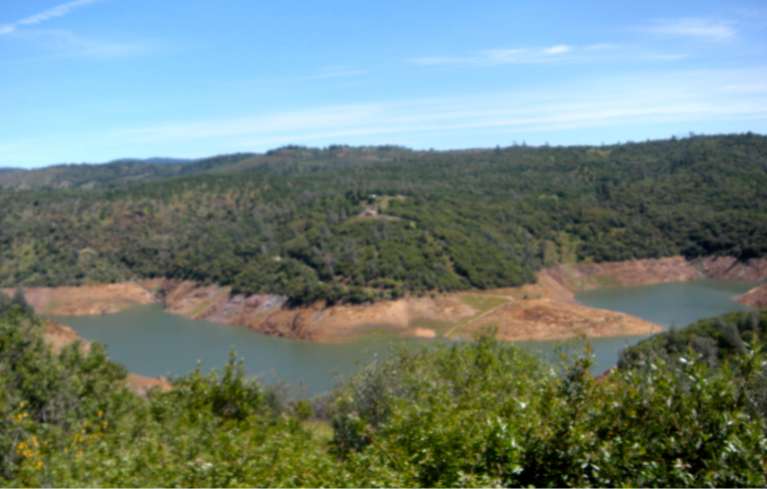
Lake Oroville in April 2010. Photo/LTN file

Lake Oroville in April 2010. Photo/LTN file

Officials are not ready to declare a statewide drought. And managers of the Metropolitan Water District of Southern California, the region’s wholesaler of imported water, said they have sufficient supplies in regional storage to avoid mandatory cutbacks for at least another year.

But two dry years in a row have pushed water levels in the state’s biggest reservoirs to below normal. Lake Shasta is at 66 percent of the average for this time of year and Lake Oroville is at 73 percent of average.

Read the whole story


Head of Tahoe Area Sierra Club dies on safari

By Charles S. Johnson, Billings (Montana) Gazette 

Bob Anderson, chair of the Tahoe Area Sierra Club, died in a rollover accident Friday in Serengeti National Park in Tanzania, Africa.

His wife, Grace, was injured in the accident but survived. They were among the passengers in a Land Rover that rolled over.

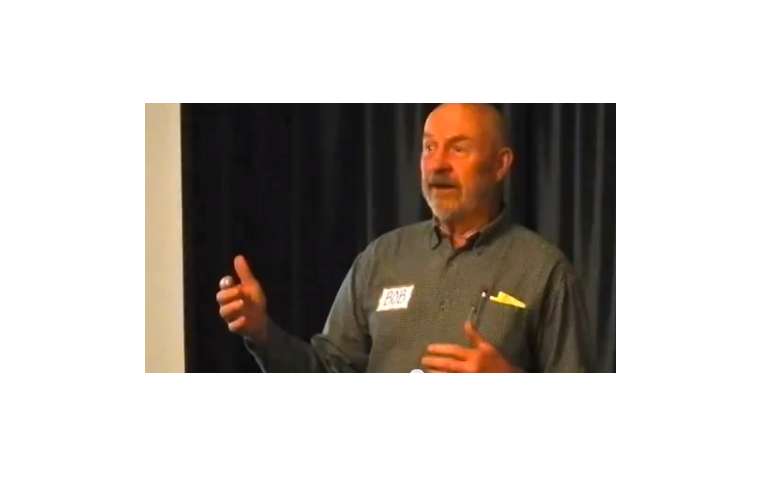
Bob Anderson

Bob Anderson

Anderson was a leading Montana conservationist and a former state public service commissioner. He had lived in Helena for many years, but more recently resided in Meyers.

He and his wife were celebrating his 70th birthday in Africa and had completed a successful ascent of Mount Kilimanjaro, reaching the 19,400-foot summit.

“Bob Anderson was a great citizen of the wilderness,” said one of his friends, Bob Decker, of Helena. “He wasn’t just a lifelong recreationist in the backcountry, but a dedicated conservationist who always returned to town to organize and lead efforts to win community support and political protection for wild public lands.”

Read the whole story


S. Tahoe reaffirms decision to ban plastic bags

By Kathryn Reed

Advocates for banning plastic bags in South Lake Tahoe got a partial win Tuesday.

While the ordinance for the ban was on the consent agenda as a second reading, it got pulled for discussion.

Tim James, manager of the California Grocers Association, wanted time to explain how without putting a fee for paper bags in the ordinance, the council would hurt businesses.

“When you only ban plastic, there is a move to paper,” James told the council on Oct. 15. “In South Lake Tahoe, if you go without a fee, it will be about a $60,000 increase in bag costs to have free paper and no plastic available.”

James represents the two Raleys and one Safeway in town.

Ryan Schouten, whose family owns the Grocery Outlet, agreed with most of what James had to say.

“We don’t offer paper bags because of the cost. They are 9 to 10 cents for us,” Schouten said. He expects his store alone will take a $50,000 hit each year to provide paper bags.

Plastic grocery bags on average cost 3 cents each.

The ordinance takes effect Jan. 15 for all grocery stores in South Lake Tahoe and on Oct. 15, 2014, for all other retail establishments.

Resident Norm Strobel told the council he and his wife would shop outside the city if the ban were approved.

Eleven of the 13 people who spoke at the meeting favored the ban. One of those advocates was B Gorman, CEO of Lake Tahoe South Shore Chamber of Commerce. She said not putting the fee in for paper was a vote against business.

Many of the 80-plus jurisdictions in California that have implemented plastic bag ordinances also impose a fee for paper. This is designed to be an incentive for people to switch to reusable bags that they would bring to the store.

Councilmember Hal Cole believes charging a fee for a bag is a tax that shoppers should not have to endure. He was the deciding vote Tuesday as well as earlier this month.

Councilmembers Tom Davis and JoAnn Conner have been adamantly against the ban. He believes there is not a plastic bag issue. She believes there are health concerns with reusing canvas bags or the like. He would support the state taking the lead. She doesn’t believe stores have been part of the discussion.

The bag ban has been discussed for four years in South Lake Tahoe. And stores like Safeway, T.J. Maxx, Kmart and Big 5 operate stores in jurisdictions that have banned plastic bags and have managed to survive.

Councilmembers Angela Swanson and Brooke Laine wanted the fee for paper. But what they wanted more was for plastic to be banned, so they voted for the ordinance without the fee.

It was the same 3-2 vote as two weeks ago to ban plastic bags, with Davis and Conner in the minority.

It was agreed that a few months after the plastic ban has been in effect the council would revisit the ordinance to see how it is working.

In other action:

• The second reading of the tourist core area plan was voted on. This time Conner voted for it. It passed unanimously, where it was a 4-1 vote at the first reading earlier this month.


Decaying roads add to economic woes in U.S.

By Bob Tita, Barron’s

America’s road to recovery may face a costly detour due to a fraying transportation network.

One in nine of the country’s 607,380 bridges are structurally deficient and 42% of the country’s major urban highways are congested, according to an American Society of Civil Engineers estimate, the result of years of inadequate funding and deferred maintenance.

Trucks ship the bulk of the country’s goods. But trucking companies and their customers complain those shipments are being rerouted—sometimes by hundreds of miles—or traveling at lower speeds over deteriorating or traffic-clogged highways. That causes higher costs for fuel, maintenance and other expenses, including drivers.

In some cases, the higher transportation costs end up on consumers. “We try to price our products to what our costs are,” said Donald Maier, senior vice president of global operations for Lancaster, Pa.-based Armstrong World Industries Inc., which makes floor and ceiling tiles.

He said fully loaded truck trailers traveling to or from its Marietta, Pa., ceiling tile plant will have to use a 25-mile detour, mostly to avoid a two-lane state highway bridge over a tributary of the Susquehanna River that will no longer be rated to accommodate fully-loaded heavy-duty trucks. Armstrong projects the additional miles will add about $200,000 to $300,000 a year to the Marietta plant’s transportation costs “These costs will get passed on to our distributors and it’s a cost that will get passed on to the consumers too,” Maier said.

The burden is greatest in industries and regions where heavy loads are the norm, such as steel, energy, construction and automotive. But the impact percolates through the broader economy as well. Inadequate surface transportation is projected to cost U.S. businesses $430 billion more in operating expenses by 2020 and cause $1.7 trillion in lost sales opportunities, according to the ASCE.

Read the whole story


Alternative energy program in Calif. scrutinized

By Ralph Vartabedian and Evan Halper, Los Angeles Times

California is spending nearly $15 million to build 10 hydrogen fueling stations, even though just 227 hydrogen-powered vehicles exist in the state today.

It’s a hefty bet on the future, given that government officials have been trying for nine years, with little success, to get automakers to build more hydrogen cars.

The project is part of a sprawling but little-known state program that packs a powerful financial punch: It spent $1.6 billion last year on a myriad of energy-efficiency and alternative-energy projects.

Even as California has scaled back education, law enforcement and assistance to the disabled in this era of financial stress, the energy program has continued unrestrained and is expected to grow significantly in coming years.

Read the whole story