FDA banning most artificial trans fats

By Sabrina Tavernise, New York Times

The Food and Drug Administration last week proposed measures that would all but eliminate artificial trans fats, the artery clogging substance that is a major contributor to heart disease in the United States, from the food supply.

Under the proposal, which is open for public comment for 60 days, the agency would declare that partially hydrogenated oils, the source of trans fats, were no longer “generally recognized as safe,” a legal category that permits the use of salt and caffeine, for example.

That means companies would have to prove scientifically that partially hydrogenated oils are safe to eat, a very high hurdle given that scientific literature overwhelmingly shows the contrary. The Institute of Medicine has concluded that there is no safe level for consumption of artificial trans fats.

“That will make it a challenge, to be honest,” said Michael R. Taylor, deputy commissioner for foods at the FDA.

Dr. Margaret A. Hamburg, the agency’s commissioner, said the rules could prevent 20,000 heart attacks and 7,000 deaths from heart disease each year.

Read the whole story


Calif. has worst poverty rate in the nation

By San Jose Mercury News

A new way of measuring poverty reveals California has by far the biggest share of people in economic despair, eclipsing states such as Mississippi and Louisiana, when housing and other costs are factored.

The alternative yardstick, known as the supplemental poverty measure, found nearly 2.8 million more people are struggling across the country than the traditional benchmark shows.

This is how some people get to Bread & Broth in South Lake Tahoe. Photo/LTN file

This is how some people get to Bread & Broth in South Lake Tahoe. Photo/LTN file

That makes a big difference in California, where the broader measure counts more than 8.9 million people living in poverty between 2010 and 2012 — a report released Wednesday by the U.S. Census Bureau shows — far higher than the 6.2 million living in poverty tallied the official way.

“Anyone who has moved to California from somewhere else knows the dramatic increase of the cost of living,” said Ann Stevens, director for the Center for Poverty Research at UC Davis. “It’s not more surprising that California looks more impoverished. It is really driven by the cost of housing. California is a very expensive place to live.”

Using the alternative measure, California had the highest poverty in the country between 2010 and 2012 — 23.8 percent — followed by the District of Columbia and Nevada. The official measure ranked Louisiana, Mississippi and New Mexico at the top during that period.

Read the whole story


Veteran massage therapist calling it quits

By Kathryn Reed

In another week there are going to be a whole lot of aching bodies on the South Shore. That’s because certified massage therapist Rosemary Manning is retiring after 30 years in the business – all of which were spent tending to bodies in South Lake Tahoe.

“She has radar in her fingertips” is how longtime client Virginia Glenn describes Manning. “She knows when to dig deep and when not to. I’m going to miss her thumbs and elbows in my muscles.”

Glenn, like hundreds of others, isn’t quite sure whose hands they’ll trust next.

Manning doesn’t know how many clients she has worked on through the years, but many have been with her for decades. And it’s a local clientele. She would only work on visitors if they came via a referral from someone she knew.
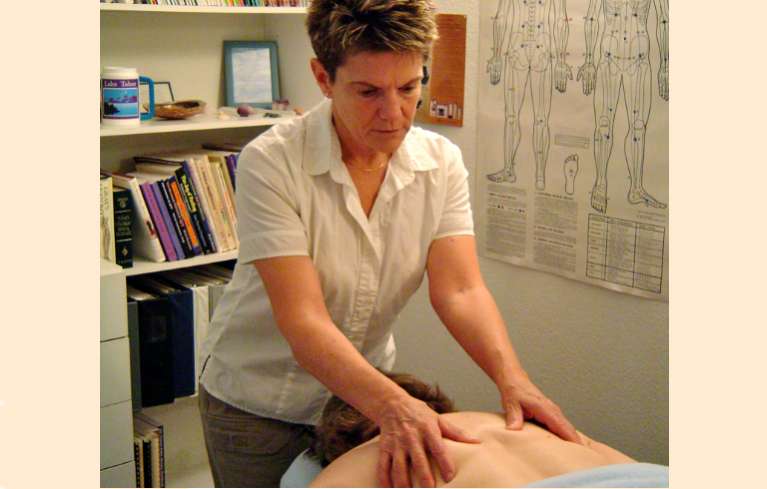
Rosemary Manning is retiring after 30 years as a massage therapist in South Lake Tahoe. Photo/Provided

Rosemary Manning is retiring after 30 years as a massage therapist in South Lake Tahoe. Photo/Provided

Manning didn’t set out to be a massage therapist. She was getting her master’s degree in clinical psychology to be a marriage counselor when she met Gil Ralston who owned a massage school in Carson City. He mentioned a workshop he was offering. She went. And soon she was on her way to being a massage therapist.

“I’ve always been interested in the mind-body connection,” Manning told Lake Tahoe News. “I believe most illnesses and injuries have an emotional component to them. This allowed me entry into hands-on work with people.”

Manning finished her master’s, and while she never became a counselor, in some ways a massage therapist does more than body work. It’s about listening to what the client says as well as what their body says.

“I think that Rosemary has that intuition. She knows what you emotionally need and what you physically need,” client Melissa Bornstein said. “Maybe it’s a gift others don’t have. They go through the motions. She has an inner sense.”

Many of her clients have become friends outside of the office. She has watched young women become moms, and has seen clients go through all the good and bad that life brings.

“You are so intimate with clients. You know so much about them. I will miss that trust,” Manning said.

“I’m not suggesting massage is medical, but so many times when you go see a medical professional they have not read our chart, they don’t know who we are. When a client walks in they are the only thing matters for that hour or 90 minutes. They are my world.”

She asks if they are still being bothered by an ailment they had at the last visit, how vacation was, inquires about family.

“I want them to feel listened to and taken care,” Manning said. It’s all part of tying the mind, body and spirit together.

“When I work I can visualize tissues in my brain. It’s like sculpting. I can see what I want to achieve. It’s like an art form,” Manning said.

She has seen quite a few changes in her three decades as a massage therapist. Twice Manning worked with a group of massage therapists to rewrite the South Lake Tahoe ordinance for practitioners.

“I’ve seen (massage) become more accepted by the general population and by the medical community,” Manning said.

Before becoming a massage therapist Manning worked for Voluntary Action Center as the executive director. She surprised quite a few people when she left that job to work in a casino as a massage therapist.

She started at what was Caesars Tahoe, then went to a chiropractor’s office before opening a practice with another therapist. For the past 16 years she has been the sole proprietor of Tahoe Health Touch on Emerald Bay Road.

There was a time when she did six or seven massages five days a week. In the past couple years she has cut back the days and hours.

“After 30 years, it’s hard on the body,” Manning said. “You are standing, you have to use body mechanics. I’m fortunate I don’t have carpal tunnel. That’s what a lot of massage therapists get. There’s a lot of pushing, heavy work … it can affect your neck and your back.”

The 61-year-old said she just knew now was the time to walk away from massage.

Manning intends to continue her emotional freedom technique work, which uses tapping on pressure points and conversation to assist with fears, grief and other issues clients may have.

She will also have time for scrapbooking, drinking wine, cross country skiing and reading.


Rethinking who provides medical care

By Bloomberg

One obvious way to address the shortage of primary medical care in the U.S. is to train more people who can provide it. Even if this could somehow happen overnight, though, it wouldn’t necessarily solve the problem: Only 1 in 4 medical-school graduates goes into primary care (the least lucrative area of medicine), and no more than half of nurses and physician assistants do.

Just as important, those who do practice general medicine are rarely drawn to work in the rural and inner-city areas where people most lack access to medical treatment.

What’s needed is a strategy to lure people who already live in underserved communities to practice health care there. One clever way of doing that, just proposed by a group of authors writing in the November issue of Health Affairs, is inspired by the successful model of emergency medicine — that is, give people the level of training that emergency medical technicians and paramedics receive, but aimed at primary rather than emergency care.

After all, what do EMTs and paramedics do but bring medical skills and equipment to places where doctors and nurses aren’t readily available? In their case, the places are wherever car crashes, heart attacks or other sudden medical catastrophes happen. EMTs and paramedics are also trained relatively quickly and paid relatively modestly, with a mean annual salary of less than $35,000.

Read the whole story


Destruction of gaming chips a regulated process

By Ed Komenda, Las Vegas Sun

All poker chips expire.

But unlike with sour milk in a fridge, casino bosses choose when chips go bad. It can be months, years or decades after they are issued.

“It’s a personal choice,” said Mark Lipparelli, a gaming consultant and former chairman of the Gaming Control Board.

Caesars Entertainment and MGM Resorts International recently ran newspaper ads warning people that the chips used in several of their casinos will be discontinued in six months. After that, anyone holding onto them will be out of luck.

Expired chips lose their face value. Gaming regulators made the law in the late ’80s to try to cut down on fraud and counterfeiting.

Before 1987, the state didn’t care much about what casinos did with their chips. Today, the process is very different.

Read the whole story


S. Tahoe Realtor to speak at national convention

By Kathryn Reed

Two dynamic women will be addressing the National Association of Realtors today – Deb Howard and Hillary Clinton.

Howard, who owns D. Howard & Company real estate in South Lake Tahoe, is one of the panelists of a breakout session focusing on referrals. Clinton is the keynote speaker.

Howard’s talk is not expected to be controversial. Clinton’s already is because she isn’t letting the media in even though NAR would have welcomed the coverage. The San Francisco Chronicle earlier this week called Clinton out for her decision.

The 1 million-strong real estate group has not met in California for a number of years. It’s expected that 22,000 will attend the Nov. 8-11 conference, including many from the Lake Tahoe Basin. Howard will be speaking at one of the 100 workshops.

Deb Howard

Deb Howard

For 10 years she has been on the NAR Resort and Second Home Committee. Her topic today is how to make money through referrals.

“I think it’s easy. Everyone you meet is a potential referral,” Howard told Lake Tahoe News.

She said it’s important to be nice to everyone, hand out business cards, and follow-up with an email to remind people who you are and how you might be able to help them.

To her peers Howard says it is important to be involved in the community and know what is going on. In Tahoe, this means understanding Tahoe Regional Planning Agency regulations, what may be built where, attending community planning meetings and being educated.

“We can work together to raise the level of professionalism, the customer service we provide clients, and know what the TRPA Code of Ordinances means, land coverage rules, and how entitlements works, that is other dark closet people don’t want to go in because it is scary. But that is the kind of stuff that helps us all,” Howard said.

She takes advocacy a step further by going to Washington each year to bend the ear of federal lawmakers. Banking and lending regs have a tremendous impact on the real estate industry.

For instance there are few loan options for condos that double as hotel rooms. An FHA loan is about the only option other than cash. Lakeland Village in South Lake Tahoe is an example of such a property where individuals own the unit but there is a traditional hotel front desk because so many people put their place in the rental pool. Getting a conventional loan for one of those units is near impossible.

Howard said it is critical to ensure there is a“ healthy flow of money to the borrowers.”

Overall, reports from NAR show the housing market improving. Prices are going up between 5 to 10 percent, with greater gains in markets that were severely hurt by the recession.


Reports: Higher education is worth the money

By Scott Carlson, Chronicle of Higher Education

In recent years, folks as different as Mitt Romney, Peter Thiel, William J. Bennett, and the disaffected people of the Occupy movement started turning their attention to the cost of college—and the underlying question always seemed to be whether college was still worth its cost.

There has been a lot of evidence to suggest that college is indeed worth it, and plenty of studies and pundits lining up to tout the evidence.

One of the latest comes from College Summit, a nonprofit group that promotes broader college access. Its report, “Smart Shoppers: The End of the ‘College for All’ Debate?,” notes that people have for years predicted a glut of “overeducated” Americans, an environment where college graduates would not be able to get jobs that reflected their years in higher education. But the opposite has happened, the report says: There is more demand for college education in the workplace, and college graduates in fields that might not normally require college—like plumbing or hairdressing—make substantially more. The report puts the college wage premium—the amount that college graduates make compared with mere high-school graduates — at 80 percent.

However, another new report, from three researchers, examines the question again, with a closer look at economic outcomes and more ambivalence. It considers the individual and societal economic returns of a bachelor’s degree, using data from California’s higher-education system.

Read the whole story


Supplement labels and contents not always the same

By Anahad O’Connor, New York Times

Americans spend an estimated $5 billion a year on unproven herbal supplements that promise everything from fighting off colds to curbing hot flashes and boosting memory. But now there is a new reason for supplement buyers to beware: DNA tests show that many pills labeled as healing herbs are little more than powdered rice and weeds.

Using a test called DNA barcoding, a kind of genetic fingerprinting that has also been used to help uncover labeling fraud in the commercial seafood industry, Canadian researchers tested 44 bottles of popular supplements sold by 12 companies. They found that many were not what they claimed to be, and that pills labeled as popular herbs were often diluted — or replaced entirely — by cheap fillers like soybean, wheat and rice.

Consumer advocates and scientists say the research provides more evidence that the herbal supplement industry is riddled with questionable practices. Industry representatives argue that any problems are not widespread.

For the study, the researchers selected popular medicinal herbs, and then randomly bought different brands of those products from stores and outlets in Canada and the United States. To avoid singling out any company, they did not disclose any product names.

Among their findings were bottles of echinacea supplements, used by millions of Americans to prevent and treat colds, that contained ground up bitter weed, Parthenium hysterophorus, an invasive plant found in India and Australia that has been linked to rashes, nausea and flatulence.

Read the whole story


S. Tahoe making dent in unfunded liabilities

By Kathryn Reed

South Lake Tahoe’s unfunded liability for health care was dramatically decreased by having retirees join Medicare. If they all go this route, the figure will drop even more.

Before the change was implemented earlier this year, the city was on the hook for $52 million. That amount would have to be paid if the city closed its doors today. In actuality there will always be a balance due. But it can be lowered if the city sets money aside for the future and implements changes to the program.

That $52 million becomes $37 million when all retirees who are 65 and older switch to Medicare. This is a program City Manager Nancy Kerry implemented.

John Bartel, president of Bartel Associates, gave a presentation to the City Council on Nov. 5 about where the city stands with its health care and pension obligations. He took a more conservative approach. There could be another $7.5 million reduction depending on what plan the retirees choose.

Changes have been implemented throughout the years to trim retiree health benefits. There was a time when the city worker and that person’s family could be on the plan forever – even after the employee died.

Employees heard the numbers at a mandatory meeting Nov. 6.

Depending on which medical program employees enroll in, there could be an annual cost savings to the general fund of $300,000. This is money the residents could see reinvested in the community.

Reasons public entities are caring more about unfunded liability is that under a new government accounting standard all unfunded liability has to be accounted for. It could affect the ability to borrow money or issue debt through a bond because it is now a debt on the books.

City staff is in talks with employee groups about potential changes to the health care plan. It had been hoped the Affordable Care Act would have played a roll, but it does not allow an employer to pay part of the fees.

“Every city that is in bankruptcy is in bankruptcy because of benefits problems. You have to stop the runaway train,” Kerry told Lake Tahoe News.

In total, the city has 140 retirees it is responsible for when it comes to funding pension and health care benefits. This doesn’t include their dependents on the health program.

On the pension side, the liability is $53.6 million.

“The bulk of your liability rests with the people not providing services,” Bartel said of the Public Employee Retirement System, or the state pension fund.

Public employees are guaranteed a defined paycheck when they retire no matter how well the money was invested by PERS officials and what the return is. That is why public entities have to keep paying more. The pension is a lifetime commitment and investments don’t always go up.

The city’s hands are tied when it comes to making changes to PERS. The state Legislature controls the rulebook. That means cops and firefighters can keep retiring at age 50, and all other employees at 55.

Cities across the country are dealing with this issue of unfunded liabilities. The Wall Street Journal launched a series looking at the fiscal health of the country’s 250 largest cities.


Boots are the key to better skiing

By Larry Olmsted, Forbes

I can’t say this clearly enough: there is nothing you can do to instantly improve your skiing as much as getting a pair of perfectly fitted boots. And for most skiers, that means custom.

So if you have an avid skier on your holiday list, look no further than the gift of custom ski boots, a gift that will keep giving back for many years to come.

I’ve written about this here at Forbes.com before in much more detail, but the long and short of it is that perfectly fit ski boots have four immediate and very tangible benefits: they are more comfortable, as result of better fit they are warmer and best of all they make you a better skier. This combination of increased comfort and warmth coupled with skiing that requires less energy adds up to the fourth benefit, a longer ski day with less fatigue.

The science is simple – to turn a ski you apply pressure to the edges, and today’s highly responsive shaped skis are edgier and “easier” to carve than ever, but this is a double edged sword. The problem is that few people have “average” or neutral feet and most have low or high arches. Anyone in these groups is putting pressure on the edge of their skis – usually in opposite directions – all the time without knowing it.

If your feet pronate (lean in) as most do, you are constantly turning your skis towards each other. Your body and mind intuitively understand and adjust, using a lot of leg muscles, so you are fighting yourself and your turns all day long while burning out your legs. Get correctly fit with boots that puts you in a neutral stance and voila, it’s easier to turn with much less effort.

Many people are amazed the first time they ski in such boots, like a weight has been lifted from their shoulders. The beauty is this happens regardless of ability and everyone from a beginner to expert can enjoy the instant benefits of better fit.

Read the whole story