Candidate wants to trade law practice for bench

By Kathryn Reed

Being able to balance business and the law is what David Combellack believes will set him apart from the other candidates running for El Dorado County Superior Court judge.

The 64-year-old is vying for the seat of retiring Judge Doug Phimister.

The El Dorado County native has run his own law firm for the past 30 years. He has been in private practice for 37 years. The cases he has taken on have run the gamut from criminal to domestic relations to juvenile cases to a broad spectrum of civil cases, as well as probate.

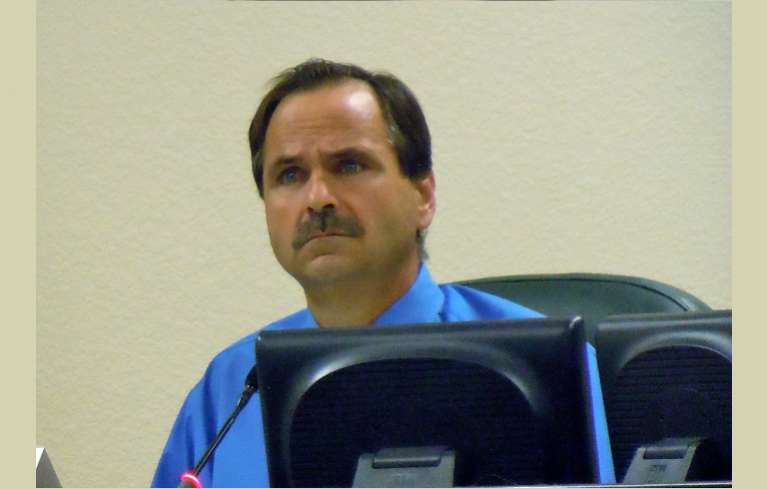
David Combellack

David Combellack

“I understand the importance of making things practical and making things profitable, not that the court will be profitable, but running the court in an efficient manner I think is important to the public,” Combellack told Lake Tahoe News.

El Dorado’s courts are known for being backlogged and many have pointed to how judges are running their courtrooms for the inefficiencies and delays in cases being heard.

Combellack has been toying with the idea of being a judge for more than a decade. He said until now the timing had not been right.

He has some experience of what it would like to be on the bench.

“I’ve been involved as a volunteer as a judge pro tem in family court, traffic court, and civil court. (You are) attempting to resolve cases that were on the road to trial through an alternative dispute resolution process,” he explained.

His involvement with Teen Court is one of the things Combellack is most proud of.

Combellack looks forward to going from being advocate for a client to being unbiased.

“I am prepared to listen and I am prepared to make decisions,” he said.

Combellack has also been president of the El Dorado Bar Association, on the Community Foundation board, and Marshall Hospital board as well as involved with other volunteer organizations.


Net college tuition not keeping pace with inflation

By Douglas Belkin, Wall Street Journal

Nearly half of the nation’s colleges and universities are no longer generating enough tuition revenue to keep pace with inflation, highlighting the acceleration of a downward spiral that began as the recession ended, according to a survey by Moody’s Investors Service.

The survey of nearly 300 schools reflects a cycle of disinvestment and falling enrollment that places a growing number at risk. While schools for two decades were seeing rising enrollments and routine increases of 5 percent to 8 percent in net tuition, many now are facing grimmer prospects: a shrinking pool of high-school graduates, depressed family incomes and precarious job prospects after college.

The softening demand for four-year degrees is prompting schools to rein in tuition increases while increasing scholarships. Those moves are cutting into net tuition revenue—the amount of money a university collects from tuition, minus school aid.

For 44 percent of public and 42 percent of private universities included in the survey, net tuition revenue is projected to grow less than the nation’s roughly 2 percent inflation rate this fiscal year, which for most schools ends in June. Net tuition revenue will fall for 28 percent of public and 19 percent of private schools.

Read the whole story


Health care changes not a big deal in Nevada

By Andrew Doughman, Las Vegas Sun

Republicans nationwide are assailing President Obama for the deeply flawed rollout of his health care law.

But that campaign is muted somewhat in Nevada, where Republican Gov. Brian Sandoval has expanded the federal-state Medicaid program and has embraced a state-based health insurance exchange marketplace to serve about 600,000 uninsured Nevadans. Both programs are tenets of the Democratic president’s health care law.

Nevada Democrats were happy with the decisions, and most Nevada Republicans have been mum — with the exception of former Senate candidate Sharron Angle, who led protests against Sandoval’s exchange this month.

Such proposals have been controversial in other states with Republican governors. But Nevada is an outlier in both the decisions Sandoval made and the political comity surrounding his decisions.

New Mexico Gov. Susana Martinez is the only other Republican governor to have fully implemented both the Medicaid expansion and a state-run health insurance exchange, according to the Kaiser Family Foundation, a national nonprofit focused on health policy.

Read the whole story


Thanksgiving wine — a bottle for each course

Dessert and sparkling wines are perfect on Thanksgiving. Photos/Apres Wine

Dessert and sparkling wines are perfect on Thanksgiving. Photos/Après Wine Company

By Barb Tenney

With so many dishes on the table, it can be challenging to find the perfect wines to pair with Thanksgiving dinner.

And with only five days until the big meal, now is the time to figure out what you will be drinking.

There is still time to sample wine before Thanksgiving.

There is still time to sample wine before Thanksgiving.

Since the only turkey on the table should be the bird, here’s a simple guide to help you find the right wines to serve.

White wines are the usual “go to” Thanksgiving selection, but there are a number of reds that work well for the occasion. The best red wines for Thanksgiving are fruit forward varieties like Pinot Noir, Zinfandel or Grenache/Rhone blend. They don’t overwhelm the day’s star (Mr. Turkey) and marry well with the sweeter side dishes like cranberries and sweet potatoes.

Suggested whites include Riesling, Gewürztraminer, Pinot Grigio or Chardonnay. They also complement the main dish and pair nicely with savory sides like green beans and Brussels sprouts.

To add festiveness on Thanksgiving, don’t hesitate to add bubbly and dessert wines to the mix. Champagnes and sparkling wines go with every course and are the perfect vehicle to toast your hosts.

Like pumpkin pie, dessert wines are a sweet way to end the day.

In the end, pick the wines you like best whatever the varietal. It’s a celebration of thanks and a day of enjoyment. Cheers!

Thanksgiving wine pairing suggestions:

• Turkey, Stuffing, Gravy and Cranberries

White: Riesling, Gewürztraminer

Red: Pinot Noir, Zinfandel, Grenache/Rhône blends

Bubbly: Champagne, Sparkling Wine, Prosecco

• Potatoes, Yams, Sweet Potatoes and Corn

White: Chardonnay

Red: Zinfandel, Grenache/ Rhône Blends

• Green Beans, Broccoli, Brussels Sprouts, Other Greens

White: Pinot Gris, Pinot Grigio

• Pumpkin Pie, Apple Pie, Pecan Pie, Desserts

Dessert: Port, Ice Wine

Bubbly: Champagne, Sparkling Wine, Prosecco.

For specific suggestions please see us at Après Wine Company. Many wines are available to sample before you buy to ensure they’re the perfect match.

Barb Tenney is owner of Après Wine Company on Ski Run Boulevard in South Lake Tahoe.


Convicted serial killer sentenced to death

By Gary Klein, Marin Independent Journal

Calling him “an evil and disturbed man,” a Marin County judge sentenced convicted serial killer Joseph Naso to death Friday for the murders of six women, including one from the North Lake Tahoe area.

Judge Andrew Sweet said the evidence proved that Naso inflicted “abhorrent and repugnant levels of suffering and cruelty” on the victims, and humilitated them even more by meticulously documenting the crimes in his diaries and photographs for more than two decades.

“You being in this world, Mr. Naso, has made this world a worse place,” Sweet said.

Naso, who turns 80 in January, insisted that the prosecution had not proved its case, that the DNA evidence was “planted,” that he was the victim of media bias, and that District Attorney Edward Berberian took the case to score political points in Marin.

The case broke open in 2010, when authorities conducted a routine probation search at Naso’s home in Reno. Naso retired there after spending much of his career as a nomadic photographer and property manager in Oakland, San Francisco and rural Northern California.

The probation check revealed piles of incriminating writings and photographs, including a diary that documented a half century of rapes and sex crimes.

In April 2011, Naso was arrested in South Lake Tahoe following his release from the El Dorado County Jail in an unrelated case.

To support their case for the death penalty, prosecutors Dori Ahana and Rosemary Sloat introduced evidence that Naso also killed two other women: Sharileea Patton, whose body washed up in Tiburon in 1981. Patton, 56, was  security guard from the North Lake Tahoe area. Police reported she was strangled and stuffed into two garbage bags. Sara Dylan, a nomadic Bob Dylan groupie who was killed in 1992 in or near Nevada County. The prosecution did not have all the evidence in place to charge Naso with those two murders in time for his trial.

Read the whole story


Costco labels Bible as fiction

By Jason Wells, Los Angeles Times

A Costco in Simi Valley found itself in a flap this week after a local pastor posted a photo on Twitter showing Bibles at the big-box store labeled as fiction.

Caleb Kaltenbach, pastor of Discovery Church, came across the Bibles while shopping for a gift and tweeted the picture on Friday with the comment: “Costco has Bibles for sale under the genre of FICTION Hmmmm…”

That didn’t sit well with members of his congregation.

Read the whole story


Douglas County trying to come up with millions of dollars to repair dilapidated roads

By Anne Knowles

MINDEN – Douglas County is looking for money to repair its crumbling roads.

After years of underfunding road maintenance, and reallocating about $1 million from the current fiscal year’s general fund for repairs, the county now wants a permanent fix to an old problem.

This week the county had two public workshops, in Topaz and Minden, to present possible options for raising at least an additional $4 million annually in order to maintain 171 miles of paved roads. An annual budget of $7.7 million, the county estimates, would also eliminate the county’s $50 million road maintenance backlog in 10 years.

This sign would be common if Douglas County can find a way to pay for road improvements. Photo/LTN file

This sign would be common if Douglas County could find a way to pay for road improvements. Photo/LTN file

A Road Funding Task Force, comprised of about 20 residents created to investigate funding options, has met five times since June and will meet again next month before presenting its recommendations to County Manager Steve Mokrohisky, who will present them to the Board of Commissioners sometime in early 2014.

In the meantime, the county is seeking public input on the issue in an effort to find a solution that sticks and isn’t rejected by residents the way a bump in the gas tax has been in the past. In 1994, voters repealed a 5 cent jump in the tax implemented by the Board of Commissioners the year before. Ten years later, voters denied the 5 cent increase again, that time via a 2004 ballot measure.

“One of our concerns is the board doesn’t want to implement a gas tax only to have the voters repeal it,” said Mokrohisky at the workshop here on Nov. 20.

Residents of the county in Lake Tahoe may not be as aware of or as affected by rickety roads as other county residents. Eight general improvement districts there take care of most local road maintenance and the Nevada Department of Transportation is responsible for the state highways in the area. The county provides signal maintenance and maintains just 2.5 miles of roads, including Lake Parkway, according to the county.

But Lake Tahoe residents may end up paying more in fees or taxes, depending on the mechanisms chosen by the Board of Commissioners to raise the needed cash.

No single option presented at the workshops generates all of the needed funds, so the county will likely settle on a mix of solutions.

“There is no silver bullet,” Mokrohisky said. “One option is not going to fix the problem.

The county manager discussed six possible avenues for additional funds:

• More money could be shifted to road maintenance from the county’s general fund, the amount of which would be determined by the public’s tolerance for a corresponding reduction in other services.

• New road GIDs could be created to pay for local roads within each GID. About 60 percent of the county’s maintained roads are local roads in unincorporated areas such as the Johnson Lane area. The other 40 percent are so-called collector roads that are heavily trafficked such as Johnson Lane and Buckeye Road. Town residents, such as those in Minden and Gardnerville, pay a higher property tax than residents in the unincorporated areas to pay for local road maintenance. Property taxes for those residents in the unincorporated areas, which are below the state cap, could be raised to pay for maintenance of their local roads. The amount of money raised is still to be determined.

• A 1 percent increase in the utility operator fee on gas and electricity would raise about $800,000 annually. By law, the county could push up the fee by as much as 2.5 percent.

• The gas tax, by law, could be increased by as much as 5 cents. A jump of 5 cents would generate $900,000 annually.

• An infrastructure tax would be a 0.25 percent sales tax to produce $1.5 million every year.

• A public Transit and Road Maintenance Tax, which would have to be voted on, could bring in $3 million yearly.

The county may post an online survey on the topic. Details on the issue may be found at the county website. Mokrohisky said the workshop presentation would be made available there along with other documents and anyone interested in commenting may email or call his office.




Nutting loses appeal of motion to dismiss

By Kathryn Reed

El Dorado County Supervisor Ray Nutting’s appeal to have the motion to dismiss overturned was denied Thursday.

Nutting wanted the 3rd Appellate Court in Sacramento to overturn the Sept. 20 El Dorado County Superior Court decision where the motion to dismiss the felony charges against him was denied. The appellate court upheld the lower court’s decision.

Nutting, 53, faces four felony counts regarding more than $70,000 he received from the state to clear brush from his 350-acre ranch in Somerset. (His brother owns an adjacent 350 acres.) He is accused of not reporting the income, voting on contracts that affected him financially and perjury. After those felony charges were leveled in May, the district and state attorneys general offices filed seven misdemeanor charges against Nutting regarding how he got his $55,000 in bail money. He is accused of taking loans from county employees.

El Dorado County Supervisor Ray Nutting's trial starts Feb. 4. Photo/LTN file

El Dorado County Supervisor Ray Nutting’s trial starts Feb. 4. Photo/LTN file

“Our position has been the same all the way through this. We will present this to a jury of his peers in February and trust them with the outcome once they hear both sides and not one side,” David Weiner, Nutting’s attorney, told Lake Tahoe News.

He believes the grand jury indicted Nutting because only one side has to be presented to the grand jury. There is no cross-examination or opposition at those hearings.

“It’s a one-dog show,” Weiner said of the grand jury process. “The grand jury only hears what the DA wants them too hear.”

Prior to the Nov. 21 decision by the court, Nutting had sent out a press release boasting of the appellate court hearing the case.

To this, the District Attorney’s Office, wrote, “Mr. Nutting conversely appears to attempt to stall the proceedings with motion after motion. In the end, this case will be decided in a courtroom based upon the law and evidence, not some silly, misleading press release.”

On Thursday, District Attorney Vern Pierson told Lake Tahoe News, that everything is set on their end to have the trial start Feb. 4 without delay. The proceedings will be in Placerville.


Retailers begin discounts early to entice shoppers

By Cotten Timberlake, Bloomberg

U.S. retailers are discounting earlier than ever as they brace for the weakest holiday shopping season since 2009.

Wal-Mart Stores Inc. is dangling a 32-inch flat-screen TV for $98, down from $148 last year. Sears Holdings Corp. has waived layaway fees and its Kmart chain is introducing a rent-to-own program. More than a dozen retailers are opening earlier, or for the first time, on Thanksgiving Day. Among the attention-grabbing stunts: a $1 million jackpot for one of the first shoppers to visit Gap Inc.’s Old Navy chain on Black Friday.

Faced with wary shoppers and a shorter holiday season, retailers are piling on deals as they jockey for market share during the most important sales period of the year. For the fourth year in a row, disposable incomes in 2013 have only inched up. As result, low-income Americans will again have a less-merry season than affluent consumers, who are more flush thanks in part to surging stock markets.

“We will be seeing promotions significantly above the current 30 percent off, which are the opening table stakes,” said Craig Johnson, president of Customer Growth Partners, a New Canaan, Connecticut-based consulting firm. Stores have too much inventory, which “doesn’t bode well for 2014.”

The disparity between wealthy and lower-income shoppers is already showing up in chains’ fourth-quarter profit estimates, with Tiffany & Co. projected to fare better than Wal-Mart and Kohl’s Corp.

Read the whole story


TRPA OKs S. Tahoe’s blueprint to revitalization

By Kathryn Reed

STATELINE – A sense of hope filled the packed room Wednesday as the Tahoe Regional Planning Agency Governing Board unanimously approved South Lake Tahoe’s Tourist Core Area Plan.

Of the 16 people who spoke Nov. 20, only Jennifer Quashnick representing the Tahoe Area Sierra Club and Friends of the West Shore was against the plan. She represents the two groups suing the TRPA over the Regional Plan that was adopted nearly a year ago.

Nearly every person who spoke after her later mocked Quashnick, who said she had the support of the more than 2.4 million Sierra Club members. The speakers then said how many people they represent.

South Tahoe officials want more of the town to be visually appealing like Heavenly Village. Photo/LTN file

South Tahoe officials want more of the town to be visually appealing like Heavenly Village. Photo/LTN file

Even Governing Board Member Bill Yeats, who is an ardent supporter of the Sierra Club and has been the group’s attorney, said he was pretty sure not every member was in lockstep with her.

He went on to say, “I find it difficult to agree with (the Sierra Club), but find no problem with this plan.”

Coverage and height issues have been some of the concerns with the plan. These are some of same concerns people raised as the Regional Plan was being updated. Today’s thinking is that if there are town centers, then people will park once and walk to places. The goal is also have mixed uses in these areas.

“No new coverage can be created,” Hal Cole, South Lake Tahoe’s rep to the board, said. “Since 1987 we have been trying to repair the damage done since the 1960s.”

1987 was when the first Regional Plan was adopted. While it limited growth, it also was a stumbling block to redevelopment. The 1960s brought shoddy construction, an abundance of hotel rooms for the Winter Olympics that were at Squaw and unprecedented development without any concern for the environment.

South Tahoe’s plan complements the area plan approved earlier this fall for Douglas County’s commercial area at the South Shore.

While the area plans do not have specific projects associated with them, they do provide incentives for private landowners. Part of this has to do with swapping land coverage from sensitive areas to the town centers, streamlining the permitting process, and access to commodities like commercial floor area and tourist accommodation units.

The South Lake Tahoe plan covers the same area as the community plan adopted in 1994 that went from Stateline to Ski Run Boulevard. The area plan is a new tool that TRPA wants jurisdictions to use in conjunction with the Regional Plan.

Hilary Roverud, who runs the city’s planning department, told the board since the 1994 document was approved more than 1 million square feet of coverage have been removed from that area, vehicle miles have been reduced, and stormwater runoff has been captured so not as much sediment is reaching Lake Tahoe.

“Without redevelopment, today we are looking toward the Tourist Core Area Plan to help create public-private partnerships,” Roverud said.

The city on this same day took a major step in stimulating cash flow from that area. The $7 million parking garage bonds were refinanced Nov. 20 at an average interest rate of 4.94 percent. The 30-year bonds have a 5.1 percent interest rate. The old rate was more than 7 percent. This means a more than $250,000 annual savings to South Lake Tahoe.

The area plan will come back to the City Council because TRPA made some changes. One item deals with strengthening coverage reduction and stream environmental zone restoration strategies, and another centers on improving total maximum daily load coordination. Here are the area plan modifications.

The City Council has one meeting in December – on Dec. 10.