Long-term forecast: Dry in California

By Matt Weiser, Sacramento Bee

Despite a hint of rain and snow in the forecast next week, the region and California as a whole can expect a third dry winter ahead.

That’s according to an “experimental” long-range forecast released this week by the California Department of Water Resources. The forecast covers the 2014 water year, which runs from Oct. 1, 2013, through Sept. 30, 2014. It calls for “mostly dry conditions for most of California,” with dry conditions being especially likely in the south state.

While moisture is in the forecast next week for Tahoe, it may be a dry winter overall. Photo/Susan Wood

While moisture is in the forecast next week for Tahoe, it may be a dry winter overall. Photo/Susan Wood

The forecast was done for the state by Klaus Wolter, a Ph.D. meteorologist and research associate at the Cooperative Institute for Research in Environmental Sciences, at the University of Colorado, Boulder.

Wolter made a similar dry prediction for the state last year, which at first appeared “destined for failure,” he said.

In a hint that suggests a similar outcome this year, the near-term forecast calls for a major change in the weather for Lake Tahoe and Northern California on Monday. A storm is expected to drop out of the Pacific Northwest, bringing a chance of rain to the Valley through Wednesday and snow in the Sierra Nevada through Thursday.

Read the whole story


Calif. lawmakers receive pay hike Monday

By Patrick McGreevy, Los Angeles Times

SACRAMENTO — California lawmakers are set to receive a 5.3 percent pay raise Monday, but a dozen say they won’t accept it in the wake of a tax hike approved last November and while many residents are still struggling to recover from the recent recession.

The raises were approved by the citizen panel that determines state officials’ compensation. The base salary for most legislators will go from $90,526 to $95,291 — still below the $116,208 that lawmakers received in 2007, before their pay was cut during California’s budget crises.

Many rank-and-file state workers will receive pay hikes of 4.5 percent phased in through July 2015, but some lawmakers note that many in the private sector are hurting.

Read the whole story


USFS, resorts want to regulate uphill skiers

By Kathryn Reed

The U.S. Forest Service is looking at solidifying policy for the 122 ski resorts in the country that are on federal land when it comes to allowing people to access the mountain without paying to go uphill.

Walking, hiking, and skiing uphill (usually done with skins) are activities that are gaining in popularity. Many times people want to access backcountry terrain. Other times people just want to play for free.

“We’ve seen a significant increase in uphill skier traffic over the past few seasons, so with safety in mind we recently launched a new uphill use policy,” Jeff Monson, spokesman for Sugar Bowl ski resort, told Lake Tahoe News. “While we won’t be charging a fee, we do expect all uphill skiers to adhere to these rules, respecting the fact that there’s nearly constant work being conducted out on the mountain. By obtaining our new uphill season pass, signing the waiver and ultimately familiarizing themselves with the rules and regulations of uphill use, skiers are more educated on the hazards involved, and the level safety is improved as a result.”

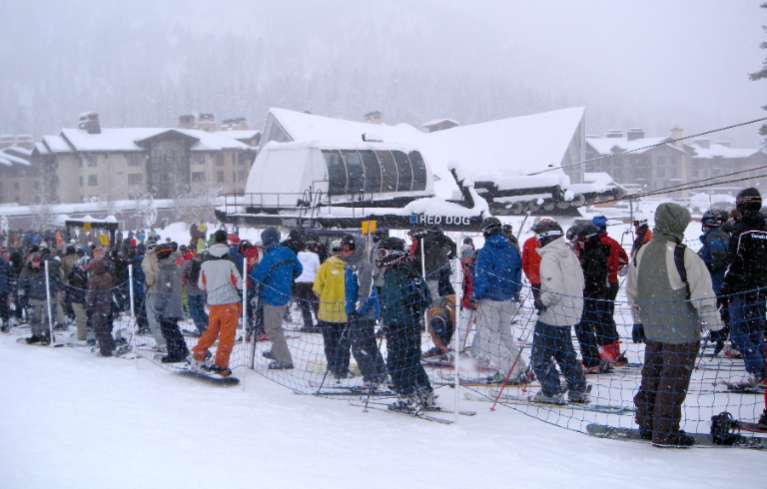
While Squaw doesn't allow access except a lift, one reason people like the choice to avoid lift lines. Photo/LTN file

While Squaw doesn’t allow access except via a lift, one reason people like the choice is to avoid lift lines. Photo/LTN file

Heavenly Mountain resort doesn’t allow people to be on the mountain when chairlifts are spinning unless they have a lift ticket.

“We have no plans to charge for uphill access to Heavenly. As a company, we have instituted policies to ensure the safety of our guests who choose to access the mountain under their own will,” Sally Gunter, with Heavenly, told Lake Tahoe News. Here is the resort’s policy.

Squaw Valley and Alpine Meadows do not permit any uphill travel during winter operations except via the lifts.

Lake Tahoe Basin Forest Service officials said the intention of the national directive is to strike a balance between the resorts and those who want to use the resort without taking a chairlift.

Proposed changes “would preclude authorization of an entrance fee at ski areas, and would allow authorization of fees for facilities and services the holders provide, such as lifts, parking lots, and slopes and trails that have been cleared, graded, groomed or covered with manmade snow. Additionally, this paragraph would encourage authorized officers to ensure that some portions of the permit area remain open to the public without charge, so that the holder’s charges do not constitute de facto entrance fees.”

Comments on the policy are being taken until Dec. 2. It’s part of revising the Ski Area Recreational Opportunity Enhancement Act. Clarifications are being made to the 2011 legislation. More information is available online.

In part wording is being changed “to clarify that ski area permit holders may be allowed to charge fees for use of improvements and services in which they have made capital investments, such as ski trails or other facilities they constructed, groom, or otherwise maintain, and to clarify that ski area permit holders may not be allowed to charge for use of non-motorized or motorized trails that are constructed and maintained by the Forest Service.”

While Sierra-at-Tahoe intends to follow whatever rules come from Washington, the South Shore resort does not promote uphill skiing.

“We do not encourage uphill skiing and recommend that guests who want to uphill ski, safely explore other areas of the Tahoe basin,” Steven Hemphill, Sierra’s spokesman, told Lake Tahoe News.


Calif. lawmakers focus on labor laws

By Marc Lifsher, Los Angeles Times

SACRAMENTO — Big issues in the workplace — wages, overtime, time off, working conditions — are also major topics in the state Legislature. And this year, lawmakers delivered some tangible changes that will be felt in the pocketbook.

At the top of the list, of course, is an increase in the minimum wage that swept through Democrat-dominated Sacramento, despite opposition from powerful business interests. But workers didn’t get all of their agenda passed into law.

“We were able to improve upon existing protections as well as support workers in a number of new ways, including increasing the minimum wage,” said Steve Smith, a spokesman for the California Labor Federation. “If you look at this year, compared to over the past decade, it would be hard to argue that there’s been a better year for worker legislation.”

Many of the latest changes, Smith said, might seem incremental. But all are important, he explained, because “the cumulative effect is to make it harder for employers to violate the rights of workers, which is a good thing.”

Read the whole story


Leftovers ensure Thanksgiving feast continues

By Jenn Harris, Los Angeles Times

It’s the morning after Thanksgiving and you’re still in your flannel pajamas. You creep into the kitchen and open the fridge to find what’s left of last night’s turkey. It’s too tempting not to tear off a couple pieces of the leg meat to eat cold before the rest of the family comes down to attack and grab their share to put in sandwiches, pot pies and omelets.

The thought of Thanksgiving leftovers is reason enough to roast a turkey twice the size needed to feed your dinner party. And the possibilities for what to do with that leftover meat are endless.

If you’re looking for sandwich ideas, Deputy Food Editor Betty Hallock has some suggestions. She asked three Los Angeles chefs how they would reinvent the turkey sandwich. Ricardo Zarate of Mo-Chica and Picca came up with a recipe for a roasted turkey sandwich with fried sweet potatoes, jalapeno-cilantro aioli. It comes piled high with avocado on a buttery brioche bun.

Read the whole story


Barton puts emphasis on destination medicine

By Kathryn Reed

Traveling to receive medical treatment. More people are doing it every year and Barton Health wants to tap into that market in a more significant way.

Three representatives from the South Shore health care conglomerate recently attended the sixth annual World Medical Tourism and Global Healthcare Congress in Las Vegas.

More than 2,000 people were at the conference. The 200 exhibitors represented locales from around the world.

Barton sent gynecologist John Missanelli; Chris Proctor, director of Tahoe Center for Orthopedics; and Monica Sciuto, director of public relations and marketing. This is the first time anyone from Barton has attended one of the conventions. This is also the first year Barton has belonged to the association.
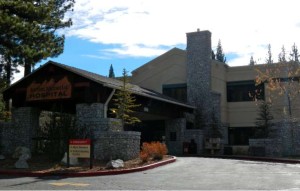
Barton Health wants to attract patients from outside the Lake Tahoe Basin. Photo/LTN

Barton Health wants to attract patients from outside the Lake Tahoe Basin. Photo/LTN

“With the large number of travelers to our area, we have an opportunity to share with them the incredible team we have and serve them well should they have a medical need. We already have a destination program for orthopedics where we have many traveling from out of the area for our care,” Sciuto told Lake Tahoe News. “It is prudent for us to continue to provide a program that serves their needs as well as our locals’ needs. Both will benefit from the improvements we make.”

Barton has a contract with a travel concierge to work with people who are coming from outside the area for medical care. The service is free. It includes booking flights, shuttles from the airport and hotel reservations.

“This service is also used by patients who were initially tourists and find themselves staying in Tahoe for unforeseen medical care,” Sciuto said.

Orthopedic care is the No. 1 service Barton is pushing. Second is the Da Vinci surgery service.

The Centers for Disease Control and Prevention website says, “Medical tourism is a worldwide, multibillion-dollar phenomenon that is expected to grow substantially in the next five to 10 years. However, little reliable epidemiologic data on medical tourism exist. Studies using different definitions and methods have estimated there are 60,000–750,000 medical tourists annually from around the world.”

But not everyone agrees that medical tourism is growing. “Market size, market share and market strategy: Three myths of medical tourism” will be published in 2014 by Policy Press at the University of Bristol in the journal Policy & Politics.

The International Medical Travel Journal said of the research, “They describe three myths of medical tourism: the rise and rise of medical tourism; enormous global market opportunities; and that national governments have a role to play in stimulating the medical tourism sector through high-tech investment. The researchers say these three widely held assumptions cannot be backed up with hard evidence but are encouraged by interested parties such as associations, healthcare providers, and intermediaries between providers and patients.”

Many of the locations considering themselves medical destinations are places people would want to vacation – such as Thailand, Argentina and Costa Rica.

“Patients have a choice on where they go for their health care. Providers must compete to provide the best care to attract patients. Best care, in our vision, includes high quality care, exceptional patient experience, best outcomes, proactive follow-up and convenience,” Sciuto said. “There are a lot of international hospitals going after the American patient. They say they provide the newest facilities, the best doctors and comparable procedures. There is a big concern by patients, employers and insurers about how these facilities are measured, how a patient follows up if there is an issue with their care and coordination with the patient’s primary care provider back home. It is important for us to consider the concerns of patients and address these same issues locally and with our destination patients.”

To fill the beds with people from out of town Barton has been investing in its infrastructure. This includes upgrading and remodeling patient rooms at the hospital, buying the latest MRI and CT scanners, and improving doctors’ offices and the emergency room.

Creating a personalized experience for patients is one way Barton wants to set itself apart from other health care providers. Patient satisfaction is an ever-increasing priority.

“We do not believe that we will receive a significant return on investment from this program. Our hope is that by providing the best service to our community and its visitors that we will create a reputation that will sustain a healthy amount of patients to our health system,” Sciuto said. “By consistently investing in our services, we stay ahead of the curve to provide the best care to our patients and continue the loyalty that we have created. Word of mouth has provided us our best marketing.”



Study: Calif. kids regularly eat fast food, soda consumption declining

By Cynthia H. Craft, Sacramento Bee

The good news is that overall soda consumption is on the decline among California’s young children. The flip side? A new UCLA survey says kids are still being fed fast food meals on a regular basis.

Though kids’ fast food meals and sodas usually come packaged together, there’s been a sharp decline in kids ages 2 to 5 drinking sugar-sweetened beverages, UCLA researchers said. Ten years ago, about 40 percent of young children drank soda the previous day of the survey. By 2009, that proportion dropped to 16 percent.

But the decrease in soda drinking, seen as a positive by nutritionists, is offset by a steady rate of fast food meal consumption, the survey found. In both 2007 and 2009, about two-thirds of California children ate at least one fast food meal daily, and about 29 percent ate the meals twice a week or more.

Researchers concerned about children’s health say the fast food habit is a factor in rising obesity rates for children. About one-fourth of California kids ages two to five are overweight or obese.

Read the whole story


Invasive species adapt to change faster than natives

By Michelle Nijhuis, Smithsonian

Since the beginning of the 20th century, the growing season in many areas of the lower 48 states has expanded by about two weeks. Frosts end earlier in the spring and begin later in the fall. To gardeners in Maine, Wisconsin and Montana, that might seem a blessing. What’s not to like about more lettuce or riper tomatoes?

The longer seasons, however, are also helping invasive plants annex American soil; extended springs mean they can more quickly push aside native species and transform ecosystems.

Researchers found that many nonnative species are changing their flowering schedule in concert with the longer growing season. By contrast, indigenous species have been, on average, much slower to react to the new conditions.

Read the whole story


Editorial: It’s getting harder to be thankful

We seem to have forgotten how to give thanks. It’s not about what’s on the table or even who is around it. And it’s certainly not about what is on sale today.

Thanks and giving are two things we should embrace every day – not just the fourth Thursday in November.

We seem to have become a society more of takers than givers. We keep what’s ours and don’t share. And we begrudge those who can’t provide for themselves.

Sometimes it’s a struggle to be thankful when you don’t know where the rent or the mortgage payment is going to come from, or if any meal, let alone a well-balanced one, will be on the table, or if that threadbare jacket will survive one more winter. Thanksgiving can seem like an afterthought.

It’s hard to be thankful when the basic necessities of life – food, shelter, clothing – are hard to come by.

Sometimes it’s a struggle to be thankful when we get used to abundance – the full table, the overflowing shopping bags – we expect it – having forgotten to be thankful for what we have.

Ironically, some of the biggest givers are those without abundance.

While economists say we are out of the recession, ask your neighbor if that’s true. Hundreds of millions of dollars were spent this year in the greater Lake Tahoe area on public and private infrastructure improvements. Ask around how many locals were working those jobs. So many in the basin work for the government – steady employment with outstanding benefits. The other spectrum is minimum wage jobs filled with uncertainty and decreasing benefits.

Ours is not a robust economy. The chasm between the haves and have nots is growing. Middle class – it hardly exists in the basin and is diminishing elsewhere as well. This group is on the fringe, barely hanging on – one step from qualifying for aid, one step from losing their home, one step from being a have not.

But perhaps for today we can find some common ground to be thankful for. Take a look outside. Something brought you to Lake Tahoe or keeps you here. Those mountains, that lake. We are lucky and should be thankful to live in such an incredibly beautiful place.

While nature’s beauty will not solve our problems, it can lead us to a place of happiness. From there, perhaps we begin to look at things with less despair. Perhaps we reach out to our neighbors and break bread together, or just say hello or wave for a change. It won’t get the bills paid or put food in our stomachs, but social scientists say attitude is a huge contributor to how things can affect us.

There is no better day than Thanksgiving to take a look around and be grateful for what you do have. Don’t think about what you don’t have. And take another moment to share with someone why you are thankful they are in your life. It might require picking up the phone, sending an email or text, or even writing a note to that person.

It’s time we all give a little more thanks.

Happy Thanksgiving from Lake Tahoe News!


California losing its stature as turkey producer

By Phillip Reese, Sacramento Bee

There’s an ever-dwindling chance each year that the turkey on your Thanksgiving table was raised in California.

California farmers will produce about 13.5 million head of turkey this year, the lowest number since 1956, according to the latest estimates from the National Agricultural Statistics Service.

It’s not that turkeys are getting a reprieve; several other states have seen turkey production increase over the last few decades.

In 1990, California produced 30 million head of turkey, more than all other states except Minnesota and North Carolina. Last year, California ranked seventh.

Read the whole story