Pearl Harbor survivor shares his stories

By Ryan Parker, Denver Post

COLORADO SPRINGS — No one asked Navy Lt. James Downing to hurriedly memorize the names on the dog tags of the dead and injured during the attack on Pearl Harbor.

But Downing, then 28, did it because he could not bear the thought of families not knowing the fate of their loved ones. He wrote to as many families as he could.

A memorial in Honolulu commemorates those who died Dec. 7, 1941. Photo/LTN file

A memorial in Honolulu commemorates those who died Dec. 7, 1941. Photo/LTN file

The Colorado Springs resident, who celebrated his 100th birthday in August, is the oldest known survivor of the Dec. 7, 1941, Japanese sneak attack that killed more than 2,400 Americans .

Downing fought to save lives that day, all the while wondering whether it was the day his own life would end.

Downing was a gunner’s mate 1st class and postmaster, assigned to the USS West Virginia. The battleship had just returned to base after more than a week on patrol.

His wife of five months, Morena, was cooking Sunday morning breakfast for a few servicemen in the couple’s home near the harbor when they heard explosions in the distance, Downing said.

“Then an anti-aircraft shell landed right outside and blew a crater about 25 feet across,” Downing said, illustrating with outstretched arms.

Read the whole story


3 bouncers at Mo’s Place may get plea deal in 2012 beating death of out-of-town patron

By Kathryn Reed

It is likely the three Mo’s Place bouncers will serve less than four years behind bars for their role in the death of Derek “Zippy” Penaranda.

Penaranda, who was from Ripon, was in South Lake Tahoe in May 2012 to celebrate his 30th birthday. He never recovered from the injuries he sustained from a fight at the Highway 50 bar. He died in October 2012.

Rodolfo Hernandez, 44, is charged with involuntary manslaughter. He has been in custody since he turned himself in after being indicted. He is on an immigration hold and could be deported if found guilty. If Hernandez is guilty, he faces a maximum of four years in county jail. (Because of changes in California prison rules a conviction of manslaughter is no longer a prison term.)

Derek "Zippy" Penaranda and Katie Musselwhite had hoped to one day marry. Photo/Provided

Derek “Zippy” Penaranda and Katie Musselwhite had hoped to marry  one day. Photo/Provided

Sean Canilao, 49, and Ruben Lizzaragga, 41, are charged with assault with force that is likely to cause great bodily injury. Both are out on their own recognizance. They face a maximum four-year prison sentence.

“One of the inconsistencies in the legislation is punishing of different types of crimes,” Joe Alexander, El Dorado County deputy district attorney, said of the new sentencing rules set by the Legislature.

Hernandez, Canilao and Lizzaragga are scheduled to be tried at the same time. The trial date is Feb. 11 in Placerville. However, a readiness and settlement conference is set for Jan. 3 before Judge Daniel Proud.

“I believe there is some likelihood of it settling on that date,” Alexander said in reference to next month’s hearing.

“There is evidence the crime was committed, but also other things occurred that to some extent mitigate the crime itself. Evidence that makes it more difficult than appears on the surface,” Alexander told Lake Tahoe News.

If a settlement were reached, that would mean the three men would be serving less than the four-year maximum for each of their crimes. Canilao and Lizzaragga until now had clean records, so they would benefit from good behavior allowances.

“Early on I told my family don’t be surprised if they only get probation. That is something the judge can initiate. We are in a wait-and-see mode,” Wayne Penaranda, the victim’s father, told Lake Tahoe News.

Penaranda has been at every court hearing. He is in regular contact with prosecutors. Now he wants it all to be over. His family wants closure.

“No amount of punishment will do anything or bring my boy back. It is kind of an academic situation. We are not real happy with it, but it’s the letter of the law,” Penaranda said. “All of the laws are built to protect the criminals’ rights.”


Calif. economy recovering at uneven pace

By Shan Li and Andrew Khouri, Los Angeles Times

California continues to be a story of two economies: coastal regions with healthy job growth and inland areas that are still struggling to recover, according to a UCLA report released Thursday.

UCLA economists said in their quarterly forecast that coastal counties stretching from Marin to San Diego have enjoyed employment gains that outpaced the U.S. In contrast, inland areas such as the San Joaquin Valley and the East Bay are showing little or even negative growth.

Years of economic turmoil have especially been hard on the Inland Empire, which includes Riverside and San Bernardino counties. The region’s October unemployment rate was 9.8 percent, down from 11.7 percent a year earlier. But its jobless levels were still well above the 7 percent in San Diego County and 5.8 percent in Orange County.

Read the whole story


Douglas County — one of Nevada’s jewels

By Ed Vogel, Las Vegas Review-Journal

Douglas County must be the best-kept secret in Nevada.

Lying just south of Carson City, here one finds the lush, green, 20-mile long Carson Valley dotted with ranches covered by grazing cattle. And 1,400 feet above the valley floor lies the southern half of Lake Tahoe, with some of the most beautiful scenery in the world.

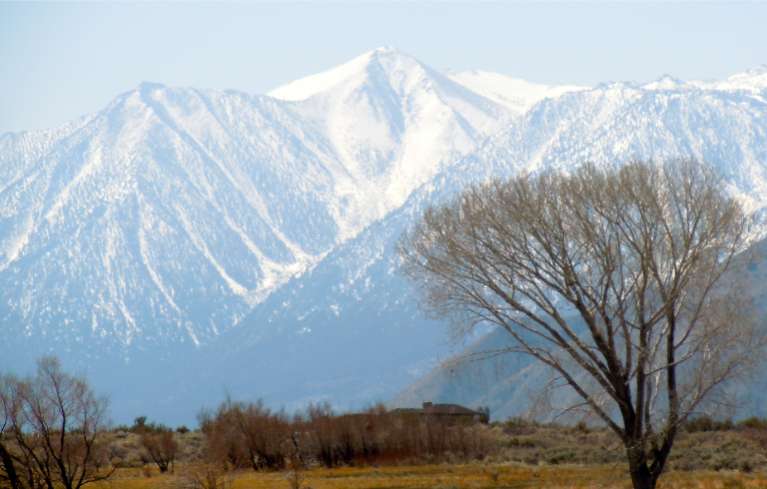
View of the Sierra from Genoa. Photo/LTN file

View of the Sierra from Genoa. Photo/LTN file

This is where Nevada’s first Anglo residents settled in 1851 — although that was about 9,000 years after the Washoe Indians arrived to live a nomadic life of gathering pine nuts and hunting rabbits in Carson Valley, except for fishing and summering at Lake Tahoe. They knew a good place when they saw it.

But outsiders slowly are discovering this place of clean air and beauty. Until the Great Recession five years ago, wealthy California retirees — like the late Bing Crosby’s wife Kathy — were buying ranches near pricey Genoa. Ever hear of Friesian horses, the horse used in European wars? There are ranches here full of the beautiful and costly black horses.

Others were purchasing multimillion-dollar homes at Lake Tahoe and in the pine forests on the west side of Carson Valley. The boom brought skyrocketing land and home prices that priced many people, particularly those with children, out of Douglas County.

Read the whole story


Grieving can be a lifelong journey

Sandy Amish and Susan Wood

Sandy Amish and Susan Wood

By Susan Wood

STATELINE – By the looks of the Christmas tree filling up with ornaments, there appears to be no shortage of loss and grief on the South Shore of Lake Tahoe this season.

About 60 people showed up at MontBleu on Wednesday night to mark an evening of remembrance called “Light Up a Life,” an event hosted by Barton Hospice.

I entered the convention center room with an open heart as well as tear ducts as the emotion set in. I was honoring my beloved sister, who, at 55, died unexpectedly July 4. As I walked up to the microphone to announce her name, I let the room know that she wasn’t the average sister. She was “the best” to me. And with that, my clear ball ornament with her name in gold metallic ink found the perfect branch on the memorial tree. When the tree was lighted, I was sure her name glowed.

As hospice registered nurse Natasha Stone put it after the ceremony: “There’s something about a sister.”

That’s all she needed to say. Sandy and I grew up together – as children and adults. I’m still growing up as I deal with such a significant loss. Stone reminded me that loss is all part of the human experience and helps your heart evolve beyond our day-to-day joy.

Whether it’s for a sister, brother, mother, father, child or spouse, grief hits all members of the family, albeit differently. Many filled this room as groups, with lots of hugs to go around.

South Shore local Judi Brown got a long one from a family member after setting the ornament on the highest branch.

“I love you Dad. I always will,” she said, choking back the tears.

She later told Lake Tahoe News that her father, Mack Brown “was everything to me.” He succumbed to cancer last August. Brown admitted the experience was “quite overwhelming.”

She seemed to find peace that evening.

“I’m glad we did this,” she said.

The ceremony started 14 years ago as a way for loved ones to honor those who have died. The event evolves a little bit each year, with 2013 being the first one at the casino. The memorial tree stood out in a sea of trees the hospital erects for its annual Festival of Trees and Lights.

Even hospice’s director of patient care services, Barbara Kaufman, was affected and couldn’t make it as the Dec. 4 event fell on the same day as the anniversary of losing her mother.

“It’s just a little tender,” hospice services coordinator Tina Bruess told the crowd, before leading them into the “Blessing of the Hands.”

Everyone raised their hands, as the sacred words rang true.

“Bless these hands that have held and felt pain. …

Bless these hands that have comforted grieving families and friends. …

Bless these hands that have reached out in caring and have been received with gratefulness.”

An instant kinship came over the room. This was indeed a safe place to be at the holidays – grieving with other family members who are dealing with loss.

After Bruess offered the group sprigs of rosemary because the herb is considered one of remembrance, I let out a sigh. I had stared my grief in the face and embraced it. I knew the holidays would be difficult.

“With the holidays, there are so many long-term traditions and memories, and they’re all brought up again. Holidays resonate family, and the grief is accentuated by the one place that’s missing at the table,” Bruess told me after the ceremony. She was dead-on correct.

Bruess runs grief workshops using the book “Understanding Your Grief.” I was comforted by this since that’s the book I turned to months ago when I felt I was living a sad parallel life to the one the rest of the world participated in.

The most striking thing about the book?

All grief is unique and needs to be honored that way. Bruess and I agreed with the message. And there’s no rush to “get over it” because I’ve surrendered to the idea that I never will.

My grief still lingers and can overwhelm me at significant as well as insignificant times. I use writing as therapy.

For one excruciatingly difficult time, my sister’s birthday on Nov. 15, I wrote an ode to her life even though I could barely see the keyboard through the tears. It goes like this:

Today is my sister’s birthday, and even though she has left the Earth, I feel closer to her than I ever have.

Death works that way. It makes us appreciate what we have – in the moment. I must say, I’ve never felt so alive or more keenly aware of how precious life is since July 4, when she was ripped from the living. My heart was ripped to pieces. How could I even live without my only sister?

We protected each other for so many years. What kills me is that I couldn’t protect her this time. I didn’t know it was her time. I wish I did. I would have told her how much she meant to me. Then again, my words would have seemed shallow. It didn’t seem to matter that I showed her and told her that I loved her at each visit. For every goodbye, there was a long hug – as if one of us was leaving the country or thought that later we’d become disinterested in each other’s lives.

Yesterday, I inadvertently ran across some pictures of a time she lived in Colorado and I lived in California. We didn’t stay in touch. We were so different 35 years ago. At least we learned to embrace our differences in the last 25 years. It was like we were kids again when we got together. We danced and joked and shared small pleasures. Her smile was radiating. Her essence was the epitome of joy. She trusted people in a way that I never could. She looked for the good in everyone. She lived to love.

How I miss her. I can’t even begin to tell you what this deep pain is like. Thank God it’s not consistent.

Even now, I can barely restrain my tears. I probably have cried a thousand of them in the last few months, sometimes bellowing in a too-sad-to-describe moan that only the grieving know of.

My memories will have to sustain me.

Mostly, I remember how we could talk about anything and often confided in each other. She had a hard life and was often under so much stress that I took some comfort in seeing her at peace when I decided to view her body with her children. It took everything I had to not break down. They lost their mother. My mother lost her child. The sorrow is overwhelming.

I think what gets to me is how beautiful she was inside. I see her now through the heart of her children. I will never take their love for granted. I guess that’s the message here.

Hug those who matter most to you because our time together is finite.

So in spirit: Happy birthday, Sandy. I’ll love you every day forever.



Millennials want modern, less rustic ski lodges

By John Marshall, AP

SNOWMASS, Colo. — The rustic ski lodge has been a staple of ski towns pretty much since the first resort was erected on the side of a mountain.

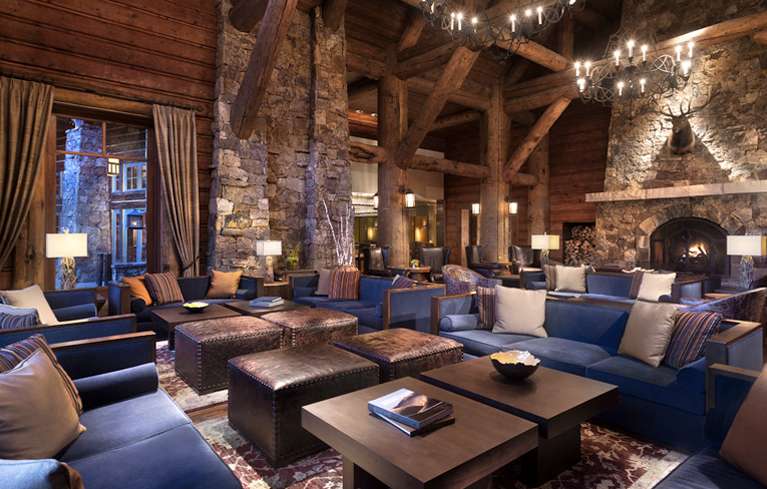
A drastic design shift has taken place the past few years. Chandeliers made of antlers, animal trophies on the wall, paintings of cowboys and snow-covered buffalo are out. Clean lines, contemporary art and open floor plans are in.

The Ritz-Carlton Bachelor Gulch in Beaver kept the dear above the fireplace even after the remodel this year. Photo/Provided

The Ritz-Carlton Bachelor Gulch in Beaver Creek kept the deer above the fireplace even after the remodel this year. Photo/Provided

After decades of rustic traditions, the ski lodge is getting a modernist upgrade to keep up with the new breed of traveler.

“Things are changing so fast in our business world that even keeping up in the hotel world is very difficult,” said Hugh Templeton, general manager of the Viceroy Snowmass in Snowmass, Colo. “That younger person is expecting to have something in their travel experience that reflects who they are, not who the hotel wants them to be. I think that’s been a very big change.”

The transformation has been relatively recent in the ski resort industry, following a generational shift in clientele. Baby boomers grew up with rustic, chalet-style ski lodges, so ski resorts stuck with those designs because that generation was where the money was coming from.

But over the past several years, there’s been a shift in demographics as so-called millennials came of age and started spending money. They’re more tech-savvy than their parents, and so plugged-in at home that they expect fast Internet connections in hotels and just as many cable channels.

Their tastes in design are different too, often preferring clean, minimalist decor over quaint and cozy. In response, some ski resorts feature stone floors instead of wood, contemporary lighting and furniture, and art and decorations that are not necessarily themed on winter scenery.

Hotels like Viceroy Snowmass, Hotel Terra in Jackson Hole, Wyo., and the Ritz-Carlton Bachelor Gulch in Beaver Creek are examples of U.S. resorts that have gone a more contemporary design route. The trend is taking off internationally as well, seen in places like The Omnia, Chedi Andermatt and the W Verbier in the Swiss Alps, and the Hotel Altapura and Hotel Le Kaila in the French Alps.

Viceroy Snowmass and Hotel Terra also sometimes offer a twist on the rustic look, encasing the typical-for-a-ski-lodge wooden beam in steel, painting rock walls in a variety of colors, and featuring artwork with wildlife — but as abstract images instead of the typical moose standing next to a pond in the snow.

Some resorts are updating in sections instead of a major overhaul to keep from overwhelming their returning guests.

“The aging baby boomers who are now retired, semi-retired or the empty nesters, they have a little bit more of an old-fashioned design desire because of when and where they grew up,” said David Kingston, general manager of Hotel Terra. “I think the millennial population, which is large and starting to spend money, is going to dictate how seriously or deeply that design concept goes.”

Some of the older design concepts were the result of necessity. Resorts and lodges built on mountainsides had to be made from wood and small stones because it was too hard to get materials or machinery up winding roads and too difficult to build with large, bulky materials on the slopes.

Advances in technology have made construction easier these days, even in tight mountain spaces. Builders can now take a pair of 10,000-pound (4,500-kilogram) concrete walls and piece them together with relative ease instead of building wooden frames with enormous cedar or oak I-beams across the ceiling.

The new designs are not only “stylish and contemporary,” said Templeton, but they allow hotels to be more energy efficient with easier upkeep. “You try to maintain an all-wood building, it’s very difficult,” he added.

And because skiers expect the familiar rustic look, anything different makes an impact.

“Not having that, we create a lasting memory,” he said, adding, “You can’t wait to get back because it’s so different.”


Tweaks to skis put snowboards on the shelf

By Tony Chamberlain, Boston Globe

Like most young men who work part time in ski and board shops, Adam Sanchez is a student of the products he sells. A junior at Bridgewater State, he has also seen plenty of changes in snow sports, despite his young age.

He started as a skier in junior high, then took the almost inevitable turn teenagers do into snowboarding.

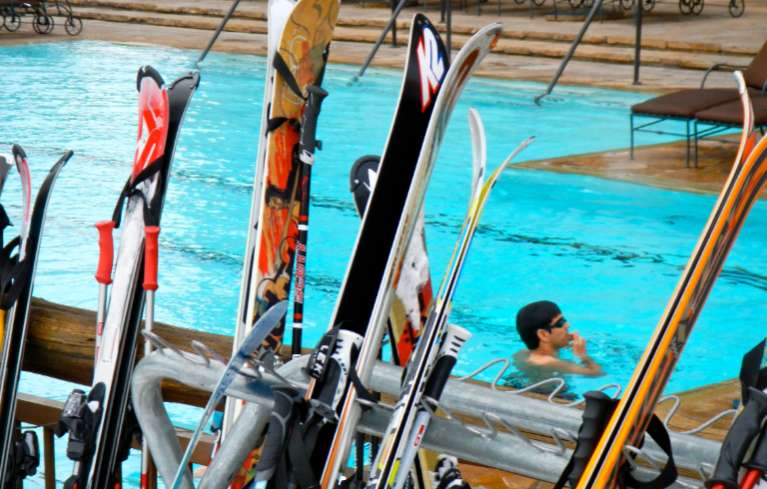
More skis than snowboards are found in racks. Photo/LTN file

More skis than snowboards are found in racks. Photo/LTN file

For about two decades, that was the way of the winter world: Snowboarding was by and for kids — at one point it rescued a moribund ski industry in the 1990s — and was seemingly destined to grow forever.

But with Sanchez and thousands of other young people, the ball has taken another unexpected bounce, as snowboarders have been bailing out in droves.

“I snowboarded for four seasons,” said Sanchez. “The skis then were pretty traditional, and the technology was not advancing. But the past couple of years, the new designs have made skiing much easier, especially in powder and the woods. So I went back into skiing.”

The new technology?

It’s called rocker, or reverse camber (tech details later), and it allows skiers to take advantage of another of the sport’s trends: skiers and boarders skiing the groomed trails in sometimes densely wooded glades where making quick turns in loose snow is the required art form du jour.

To Sanchez and other young skiers, the new rocker generation of skis simply work better.

Read the whole story


Ferry service on Lake Tahoe getting closer

By Kathryn Reed

Twenty-five minutes to get from the South Shore to the North Shore? Yes, by ferry.

That is the goal of the Tahoe Transportation District, the lead agency trying to bring ferry service to Lake Tahoe. By summer 2016 two 120-passenger ferries could be traveling year-round between South Lake Tahoe and Tahoe City.

It is being called an environmental asset as well as a transportation tool.

“It would be equivalent to a light rail corridor for Tahoe,” Alfred Knotts, project manager, told Lake Tahoe News. “This is part of the long-term vision and how each piece creates a regional transit system.”

A ferry like this might one day ply the waters of Lake Tahoe. Photo/Provided

A ferry like this might one day ply the waters of Lake Tahoe. Photo/Provided

Comments are being taken until Jan. 3 on the notice of intent/notice of preparation for the project. Comments will be incorporated into the draft environmental impact report and draft environmental impact statement. Those are expected to be released in a year. The final EIR/EIS could come out in summer 2015, with permitting that fall, and upgrades to the piers and other land improvements done in the 2016 building season, and service starting when that is completed.

Knotts gave a presentation Dec. 4 to the Tahoe Regional Planning Agency’s Advisory Planning Commission. He will do the same Dec. 13 at the TTD board meeting.

Parking concerns at both ends of the lake were brought at the meeting, as were greenhouse gases, scenic impacts, dredging and fisheries.

The goal is to not have everyone drive to one of the marinas, but instead take another form of transportation – bus, bike or foot power.

“We don’t want parking spilling over to business or residential areas that could be adversely impacted,” Knotts said. It may mean increasing the bus service to make this happen.

According to TRPA, piers are a scenic concern. That is one reason the Grove Street Pier is being looked at instead of the Tahoe City Marina. It’s possible piers at both ends of the lake will need to be extended and possibly widened to accommodate the boat, people and existing services.

Marina owners have been consulted and are privy to what is being contemplated.

Ski Run Marina has a dredging permit. Dredging might be required in low water years or to cope with the seasonality of the lake level. Officials are looking into what might be required in Tahoe City.

It’s estimated that during peak summer travel the boats would make eight trips a day, carrying 120-passengers. It could be a tool for commuters, skiers, people wanting to dine at the other end of the lake, or tourists looking for something fun to do.

Preliminary plans are for 10 spots for bikes, but people who spoke Wednesday said that number should be increased. Ensuring skis and snowboards can be secure will also be worked into the design, and maybe golf clubs.

Transit officials have been looking at Washington state ferry service to come up with a vessel that could handle the needs and conditions of Lake Tahoe. Ideally, the boat will be able to weather the high seas that during storms have the lake looking like the ocean. However, the contingency plan would be to bus people back to the originating marina if need be.

TTD would hire an operator much like it has done for the South Shore bus service BlueGo.

Cost of the boats and marina upgrades are estimated to be $33 million. Annual operating costs come to $3.3 million. Federal transportation subsidies would help pay the operating costs. State and federal money are likely to pay for the capital expenses. Until the environmental documents are completed funding cannot be secured.

—-

Notes:

• More information is available online.

• TTD board meeting is Dec. 13 at 9:30am at Granlibakken in Tahoe City.

• Future workshops and meetings about the ferry will in part be determined based on the comments received so they can be addressed.


S. Tahoe brothers vie for U.S. boardercross team

By John Gibb, Daily Mail

CHARLESTON, W.Va. — West Virginia and Lake Tahoe will be represented this week as the 2014 Sochi Olympic qualifier for boardercross gets under way in Austria.

Bobby and Jarod Minghini, formerly of Snowshoe Mountain in Pocahontas County, will be two of the 12 American hopefuls for the four-man U.S. BX team. They are the only siblings competing for a spot.

BX is where four boarders start simultaneously and ride over a series of features trying to reach the finish line first.

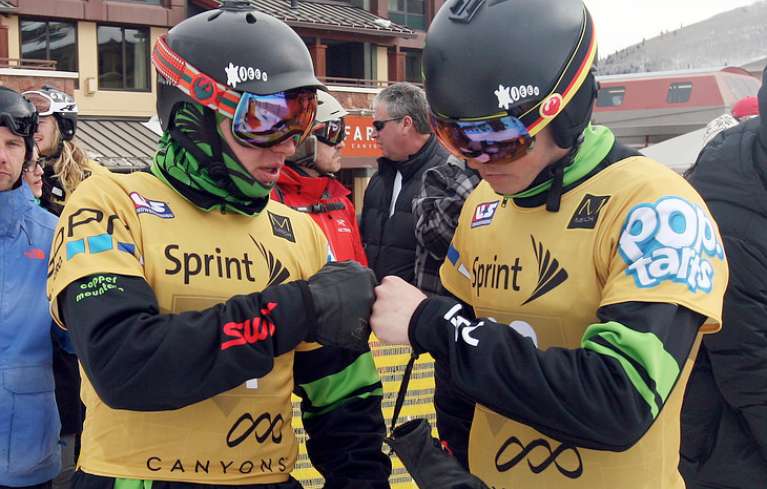
arod and Bobby Minghini fist-bump each other before the Sprint U.S. Grand Prix event earlier this year. The brothers are attempting to qualify for the 2014 Sochi Winter Olympics in February. Photo/Provided

Jarod and Bobby Minghini are attempting to qualify for the 2014 Sochi Winter Olympics. Photo/Provided

BX became an Olympic sport in 2006 and has been a sport at the Winter X Games since 1997. BX has also been referred to as snowboarder X, SBX and snowboard cross.

The brothers were born and raised in West Virginia. They lived near Snowshoe Mountain Resort, adjacent from the slopes. Bobby, 27, began snowboarding as a 5-year-old. Jarod, 25, picked up the sport shortly after Bobby. Both currently live in South Lake Tahoe.

Bobby moved to Lake Tahoe in 2004 upon graduation.

“I visited my brother in Lake Tahoe in 2005,” Jarod said. “I knew I needed to be there with him so I made the move after my junior year. I finished school at South Tahoe High and graduated from there in 2006.”

Bobby said he moved to Lake Tahoe because of the high concentration of snowboarding professionals there.

“I knew that if I were to succeed in snowboarding, I needed to be somewhere with better mountains and training opportunities,” Bobby said. “Lake Tahoe has amazing snow and insane beauty. It’s also a place many professionals congregate so it was just the ideal place.”

Since moving to Lake Tahoe, the two have qualified for multiple Junior World Championships, received first and second overall in North American Cup standings, received wins at NorAms and the Europa Cups, earned spots for World Cups, competed in multiple Winter X Games and began competing on the World Cup Tour. The brothers have received an invitation to compete in the 2014 Winter X Games in Aspen.

Read the whole story


Heavenly agrees to settle zipline death case

By Andy Furillo, Sacramento Bee

After a honeymoon hike at Heavenly Mountain Resort, Mark and Rebecca Dickson were riding the chairlift down the hill, laughing and talking about their lunch plans, when the newlyweds saw a blue rope flutter ahead of them in the stiff afternoon.

“And then I heard my husband say, ‘This is not good,’” Rebecca Dickson recalled in an interview Tuesday.

The rope had broken off from Lake Tahoe’s Heavenly Flyer ZipRider line that ran parallel to the lift about 100 yards away. The fluttering rope wrapped around the couple’s chair, which swung back and forth so violently in the entanglement that Mark Dickson, who was 51, fell out of his seat and to his death in the rocks about 40 feet below.

Rebecca Dickson and Mark Dickson’s two sons from a previous marriage sued, and in September they settled the wrongful death case in El Dorado County Superior Court.

A confidentiality agreement has kept the financial terms of the settlement under wraps. The plaintiffs had asked for $15 million in a settlement conference in June, according to documents they filed ahead of a court hearing.

But, while the payout has been kept secret, the settlement does allow the Dicksons’ attorneys to reveal a list of Heavenly’s acknowledgments about the facts surrounding the Aug. 31, 2009, accident.

Under terms of the deal, Heavenly’s owners agreed to make a number of safety-related changes, including ones that call for strengthened drug and alcohol testing of the people who run the Heavenly Flyer, regular equipment inspections and shutting down the ride in high winds.

Read the whole story