LTCC hires winning coaches for soccer teams

By Kathryn Reed

Lake Tahoe Community College’s soccer teams won’t play their first games until next fall, but already enrollment is up because of the program.

Many of the players who have played for Ben Wade at Lassen Community College in Susanville are transferring to the South Lake Tahoe school. They want to be with a winning coach. Lassen won its conference this year, and the men’s and women’s teams have been ranked in the top 10 nationally under Wade’s leadership.

The board of education this week approved the hiring of Wade as the men’s coach and Chris DeLeon as women’s coach. DeLeon has most recently been the coach of the girls’ and boys’ South Tahoe High School soccer teams.
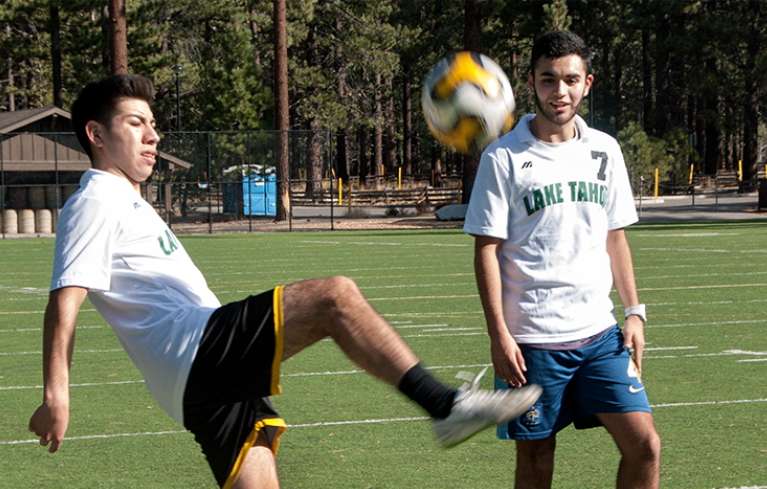
Lake Tahoe Community College will have men's and women's soccer teams in fall 2014. Photo/Provided

Lake Tahoe Community College will have men’s and women’s soccer teams in fall 2014. Photo/Provided

Impacts on the college

“We are excited about this program. We think it’s a perfect match for Tahoe,” LTCC President Kindred Murillo told Lake Tahoe News. “I think it will bring students to Tahoe as well as serve our local students well.”

Soccer is the only sports program LTCC has.

Thirteen students from Lassen have already signed up with LTCC. To be on the team it requires being a full-time student and having the grades. Many of the students transferring from Lassen are not U.S. residents. This has meant the college has had to make some changes.

“When you have one or two (international students) it’s no big deal. When you go from two to 20 or more it requires developing an international student program,” Tom Greene, vice president of academic affairs and student services, told Lake Tahoe News.

It means working with the students to find housing, ensuring they have the legal documents to be in the country, and that LTCC student ambassadors are at the ready to help. All foreign students must have a certain amount of English proficiency, and have the means to pay for college and their living expenses.

College officials will also make sure these students are integrated into the college and community to better ensure their academic success, which could be hampered if they felt isolated.

England, Scotland, Ireland, Sweden, Brazil, Germany and Australia are some of the countries where these young men hail from.

It’s possible they won’t all play soccer.

“They do need to be enrolled this spring to be enrolled in the fall competition. We’ll have some students join us winter term, some spring term, and some will take online classes in the winter and then join us in the spring,” Greene said in regards to the Lassen athletes.

Greene cited studies from 2004 and 2011 that show college students who play sports are more likely to do well academically.

Students interested in playing on LTCC’s soccer teams will find more info online.

LTCC’s men’s coach

Wade has been a head coach for the past 17 years – mostly in Northern California. And he has a penchant of developing programs.

“In some ways it is a benefit because you can put your blueprint on a program and set expectations as high as possible,” Wade said of starting the program at LTCC from scratch. “I want a team that will be top 10 nationally ranked and I expect this this year.”

His success as a coach translates to universities recruiting his players. His student-athletes are being sought after by hundreds of four-year universities – like Boston University and the University of Miami.

Wade first saw the LTCC campus and soccer field in 2010 when he was here for a tournament. He knew then he would apply for the coaching job at LTCC if there were ever such a position.

“The focus will be on local talent. It has to be,” Wade told Lake Tahoe News.

Yes, players from Lassen are following him, but everyone will be trying out. He anticipates having between 25 and 28 players on the team. He tried recruiting Tahoe players to Lassen but they either wanted to stay in Tahoe or went to a bigger school and stopped playing soccer. He’s excited to give them an option to play collegiate soccer in Tahoe.

“I’m a very passionate coach, but I really like discipline,” Wade said. He won’t take “bad apples”.

He expects be looking at athletes next month.

“I’m deliciously excited about that,” Wade said of the fact that Lassen is in the same Golden Valley Conference at LTCC.

Wade is also a competitor. He’s been on “Survivor” three times – 2008 he was fifth, 2010 he was ninth and he made the finals in 2012. He said he expects to be asked back for the “Legends Season” but isn’t sure he’ll accept.

“It’s hard on your body,” Wade said. He was the one called “Coach”.

But this tough guy has a softer side. Music is a passion of his. So much so that he will not give up conducting the Susanville Symphony after he moves to Tahoe.

He played trumpet for the New York Metropolitan Opera.

“It got too easy,” he said of the work. Sight-reading music provided the only challenge.

Wade started Susanville’s symphony 11 years from the ground level and would entertain doing the same in South Lake Tahoe. For starters he will be teaching a music class in the spring at LTCC.

“My specialty is brass. I like to create ensembles,” Wade said.

LTCC’s women’s coach

“It’s always been a dream of mine,” DeLeon said of coaching a college team.

He’s been working with Tim Johnson, LTCC’s acting athletic director, for a number of years to get a soccer program. He said this administration is the first one to listen.

DeLeon knows there will be speed bumps along the way as well as a learning curve. But he also knows he will tap Wade for info about the league and how things are done at this level.

DeLeon has been part of state championship teams at South Tahoe High. He credits coaches Joe Winters and Ed McClain for helping him evolve into the coach he is today.

“I’ve taken a little bit from each coach and molded different things into a winning program,” DeLeon told Lake Tahoe News.

He estimates he’ll have a team of 18 to 22 players. And he hopes some will be STHS grads. Recruiting will be the first thing he starts doing after the first of the year.

“You want players that already have established fundamental skills. At high school you (don’t have that). That will be one thing where can move into more tactical stuff (right away),” DeLeon said.

During the day DeLeon is a counselor for a juvenile detention center in Douglas County. His boss understands what it takes to be a coach and is flexible with hours.

“I would love to move up to a four-year school, but Lake Tahoe has a way of keeping you here,” DeLeon said.

Californians’ happiness depends on age, politics, location

By Tracy Seipel, San Jose Mercury News

If you’re a Medicare-age Democrat lucky enough to live near the coast, life in the Golden State looks pretty good.

Californians who live near the coast are happier living in the state. Photo/LTN file

Californians who live near the coast are happier living in the state. Photo/LTN file

But if you’re younger, among California’s dwindling number of registered Republicans or hail from an inland county, not so much.

Those are the results of a Field Poll that tracked how Californians view their state as a place to live. Forty-three percent of registered voters surveyed said it’s one of the best places to live; 26 percent rated it “nice but not outstanding.” Twenty-one percent said it’s about average, with 8 percent calling it a poor place to live.

Driving those numbers, said Field Poll director Mark DiCamillo, is where the voter lives, their age and political bent.

Read the whole story


Online Christmas tree sales gain in popularity

By Katarina Gustafsson and Matthew Boyle, Bloomberg

It’s snowing. The children laugh and prance through the woods. Dad fells the perfect fir and carries it home over his shoulder. The family sings carols and drinks cocoa as they happily decorate the tree.

That yuletide dream, peddled by Hallmark cards and Lifetime movies, is as believable as flying reindeer. For Christine Chen, the reality is often squabbling over the right tree, scratching the car with the branches, and leaving a trail of needles as it’s crammed through the door.

So this year, the new mom went tree shopping exactly where she goes for most purchases: the Internet, where she paid $136.74 for a seven-foot fir. As more consumers like Chen opt for convenience over fantasy, online tree sellers are seeing sales surge this year.

Read the whole story


Cove East, Keys Marina to get more free parking

By Kathryn Reed

Increasing the allowable coverage by 33 percent for parking at Tahoe Keys Marina will require shifting the entrance of Cove East about 20 feet closer to the Upper Truckee River.

The California Tahoe Conservancy board on Dec. 12 agreed to allow the marina to cover up to 60,000-square-feet of the nearly 1.5-acre parcel. In January 2011, the coverage allocation was 45,000-square-feet. And at that time the entrance to the popular Cove East walking path that leads to Lake Tahoe was not going to have to be altered.

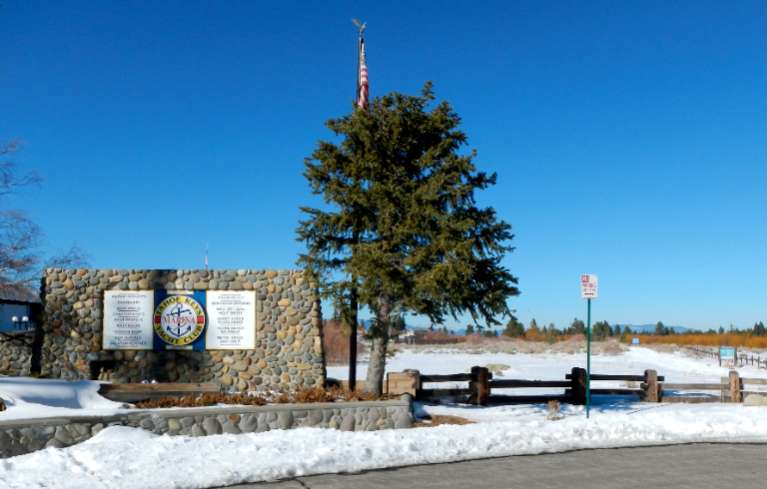
The land behind the fence is destined to become parking at Tahoe Keys Marina-Cove East. Photo/LTN

The land behind the fence is destined to become parking at Tahoe Keys Marina-Cove East. Photo/LTN

The marina plans to build the parking lot this summer. It is designed to be free parking, though there is a caveat in the lease agreement that allows for the marina to charge if it wants to. The Conservancy would receive 20 percent of any revenue generated from paid parking.

“This doesn’t affect what the city is doing and that seems to be changing year-to-year,” Bruce Eisner, with the Conservancy, told the board.

South Lake Tahoe implemented paid parking on Venice Drive, the road to Cove East and the marina, this summer. Now the meters are gone, which the city said was always the plan so they would not be damaged by snowplows.

Councilman Tom Davis, the city’s rep to the CTC board, could not make the meeting for personal reasons so he could not enlighten everyone what the city might do with Venice in the future, especially considering a new free lot is going to be built.

Additional parking by the marina owners is allowed in the master plan that has been approved by the Tahoe Regional Planning Agency. The plan allows for 303 total parking spaces. The new lot will add 120. The spots are designed for marina and Cove East users, not Fresh Ketch patrons.

Eisner said the parking situation would be reviewed annually to ensure people using CTC land have adequate access to the parking spots.

Marina owners must build the lot and bathrooms, a lane for watercraft inspections and then maintain the area per the 30-year lease. Two unisex bathrooms on the north end of the lot, which is closer to the marina, will be constructed.

The parcel is between the current parking area for the marina and the trail. It’s vacant land. The dirt is fill from when the Tahoe Keys was developed in the 1960s.

Laurel Ames with the Tahoe Area Sierra Club was the lone member of the public to talk to the issue.

“It’s the wrong kind of public access in the wrong place,” Ames told the board. “It’s the wrong time to be adding pavement at the lakeshore.”

She believes it would have been more prudent to wait to see what comes of studies on the nearshore that might say what is contributing to the decline in clarity, and questions the increase in vehicle miles traveled. That then becomes an air quality issue.

And the Conservancy anticipates more people will come because parking will be less of an issue and the lot will put people that much closer to the trail.

From the lot there will be links to the Cove East trail so people won’t have to walk back to the entrance on Venice Drive.


Calif. tries to find a balance with water needs

By Karen Weise, Bloomberg

A century after William Mulholland’s Los Angeles aqueduct first began watering the Southland, the water wars in California show no sign of abating.

The state reached a milestone on Monday in its effort to balance equal-but-conflicting goals: channeling more water to dry farmland and cities while restoring the natural habitat already hurt by the state’s thirst.

California has released details of a $25 billion plan to run two tunnels under the Sacramento-San Joaquin Delta. The tunnels would divert water from supplies north of the delta to existing pumps on its southern edge that push water to Southern California and the agricultural land of the Central Valley.

By forcing the water underground for 35 miles, the plan also calls for the restoration of more than 80,000 acres of habitat in the delta, which houses 56 species of plants, fish, and wildlife that have been struggling. The area’s current system of fragile earthen levees are vulnerable to a nightmare scenario known as “California’s Katrina.”

The state’s twin reports explaining the conservation proposal and the impact of the water project span some 34,000 pages; the “highlights” brochures alone total more than 170 pages. The reports look at 14 alternatives but focus on the one favored by Gov. Jerry Brown.

Read the whole story


Poll: Californians have no desire to split state

By David Siders, Sacramento Bee

Officials in Siskiyou and Modoc counties may want to secede from California, but the rest of the state has no desire to see them go.

Just one-quarter of California voters support allowing the state’s northernmost counties to break away from California, according to a new Field Poll.

Fifty-nine percent of registered voters statewide oppose such an effort, according to the poll. Opposition to the effort is bipartisan, with majorities of Democrats, Republicans and independent voters all opposed.

Read the whole story


Trails dominate South Shore rec discussion

By Kathryn Reed

Build the bike path that would link Meyers to Stateline.

That was the idea that received the largest number of votes from the more than 50 people who attended a recreation meeting Dec. 11 at South Tahoe High School.

Consultants putting together the South Lake Tahoe-El Dorado County Recreation Master Plan wanted to hear from the public what they would like the South Shore to look like five and 10 years from now.

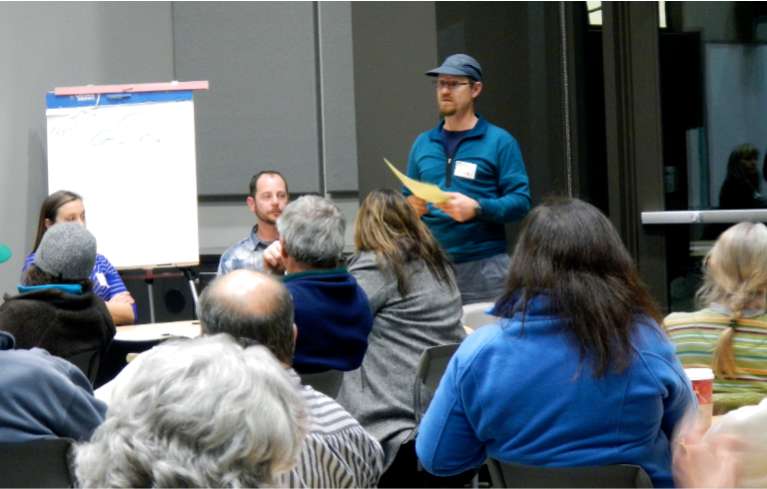
Peter Fink talks Dec. 11 about ideas his table has for recreation on the South Shore. Photo/Kathryn Reed

Peter Fink talks Dec. 11 about ideas his table has for recreation on the South Shore. Photo/Kathryn Reed

There will be another meeting tonight from 6:30-8:30 at Kahle Community Center in Stateline. Douglas County has hired the same firm to work on a recreation plan at the lake. The goal is to have a seamless sense of recreation that eliminates jurisdictional boundaries, at least on the South Shore.

Other areas of interest are building an amphitheater, creating a centralized multi-use facility, expanding the city’s recreation center, eliminating Campground by the Lake and using it for recreation, and providing better information to locals and tourists about what the area has to offer.

Improving what is in the ground, signs pointing to where things are, being known for something other than skiing, homegrown festivals and events, promoting what’s here – those were some the things people envision.

In the end, the summary of the night was, “We envision an accessible interconnected and sustainable system of diverse year-round recreation opportunities. Our parks, facilities, trails, events and programs reflect our character, heritage, environment and shared future for recreation in the South Shore.”

While months ago the powers that be spoke of how this plan would get into the need for ball fields so large tournaments could come to town, that was not broached Wednesday night. Nor did it rise to the top of the list during surveys.

A cohesive, well thought out trail system is what people want. They are tired of bike trails that abruptly end as well as sidewalks. And they want trails that would drop them off at areas of interest, including recreation destinations.

A draft of the master recreation plan is expected to be released in the spring.

More information about the plan is online. From that website it’s possible to signup for email updates from El Dorado County.


Creativity required to get kids exercise at school

By Maanvi Singh, NPR

Avery Stackhouse, age 7, of Lafayette, says he wishes he had more time for phys ed.

“We just have it one day a week — on Monday.” There’s always lunch and recess, he says. “We play a couple of games, like football and soccer,” he tells Shots.

But at Happy Valley Elementary, where he goes to school, recess last only 15 minutes and lunch is 45. Between eating and mingling, he says, “there’s only a few minutes left where we play games and all that.”

In a poll conducted by NPR, the Robert Wood Johnson Foundation and the Harvard School of Public Health, parents reported that their kids aren’t getting nearly as much time in phys ed classes as is recommended.

In a poll conducted by NPR, the Robert Wood Johnson Foundation and the Harvard School of Public Health, parents reported that their kids aren’t getting nearly as much time in phys ed classes as is recommended.

NPR

Fifty-six percent of parents say their elementary school kids are getting just one or two days of physical education a week, according to NPR poll conducted in partnership with the Robert Wood Johnson Foundation and the Harvard School of Public Health.

Fewer than 1 in 5 parents with children in kindergarten through fifth grade said their kids were getting physical education daily.

Read the whole story


Cost of skiing making it an exclusive sport

By Rob Lovitt, NBC News

Skiers and snowboarders searching for “the steep and deep” this winter may find that the concept has taken on a much less appealing connotation: The price of the sport is getting so steep that some believe it may be becoming the exclusive domain of those whose pockets are exceedingly deep.

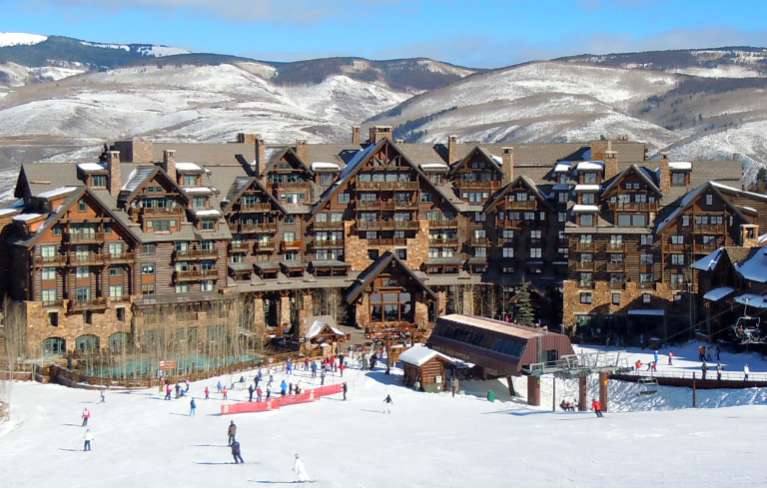
Those with the means can ski in and out at the Ritz-Carlton Bachelor Gulch at Beaver Creek. Photo/LTN file

Those with the means can ski in and out at the Ritz-Carlton Bachelor Gulch at Beaver Creek. Photo/LTN file

“You have the haves and the have mores,” said Douglas Quinby, principal analyst at PhoCusWright, which conducts market research on the travel industry. “When you factor in the airfare of the typical ski trip, the accommodations and the length of stay, you’re talking about a pretty significant penny.”

Coupled with lift tickets that can top $100 per day and clothing and equipment that can cost thousands, it’s not surprising that both the industry and its fans are concerned about the sports’ long-term viability for those of more modest means.

Skiing, of course, has never been considered an inexpensive activity, but the sport has seen a significant upward shift in visitor demographics in recent years.

Last year, 54 percent of skier visits, defined as one skier or snowboarder riding for one day, came from households earning more than $100,000, according to the National Ski Areas Association. That’s up from 48 percent five years ago, a 12.5 percent increase.

In contrast, visits from households earning less than $100,000 during the same period slipped from 52 percent to 46 percent — an 11.5 percent decrease.

Read the whole story


Live at Lakeview concerts coming back in 2014

By Kathryn Reed

With Lakeview Commons still in its infancy, South Lake Tahoe officials are struggling to figure just what it should be.

While the agenda topic Tuesday at the council meeting was to recap the summer concert series run by Rob and CarolAnne Giustina of OnCourse Events, much of the talk was about what else the area at El Dorado Beach could offer.

Family nights, movies, alcohol-free events, different musical acts – all of these were suggestions. Instead of expanding what OnCourse does the council instead directed city staff to come up with events, perhaps with partners, that the city can call its own.

Live at Lakeview will be returning for a third summer in 2015. Photo/LTN fiel

Live at Lakeview will be returning for a third summer in 2014. Photo/LTN file

One of the issues brought up by Lauren Thomaselli, city recreation manager, during her Dec. 10 presentation is that even though the city is a major sponsor of Live at Lakeview, it was not featured prominently in advertising and promotional material. Besides providing $2,500 in cash, the city waived $5,000 worth of staff hours and $3,250 in rental fees.

Top billing went to Coors and Heavenly Mountain Resort. To eliminate the beer sponsor it would cost the city an additional $12,000 per summer. To get rid of alcohol completely would require a $35,000 contribution, according to the staff report.

CarolAnne Giustina told the council the demographics of the audience changes throughout the course of the Thursday night Live at Lakeview concerts. It starts out with many who are older than 50, then families come and the later crowd is younger and tends to drink more.

People smoking pot was another issue that was raised. It was agreed police officers will make a stronger presence early on and that perhaps fewer warnings and more citations will be issued.

It’s against the law in California to smoke marijuana in public even with a medical card. But one thing officers consider is whether the DA’s office will prosecute what amounts to a minor crime.

Next year parking will likely be problematic because the Harrison Avenue project will be under way. Everyone agreed better promotion of the free lot at the rec center is needed. Using a shuttle between the lot and Lakeview was also broached.

More than 1,000 people attended each of the 10 concerts. More than 300 came via bicycle, while a couple dozen were in some type of watercraft.

Despite some of the second-year hiccups, the council had high praise for the event and Giustina said she is willing to make necessary improvements.

OnCourse Events’ two-year contract runs through summer 2014. While the South Lake Tahoe company would like the first rights of refusal for 2015, that can’t happen because it was not in the original request for proposal.