South Tahoe paid parking on divergent paths

By Kathryn Reed

In the same week South Lake Tahoe’s anti-paid parking advocates secured enough signatures to forward their petition to the El Dorado County Elections Department, members were given documents from a 2011 Southern California case that prohibits the initiative process from getting rid of parking meters in any city.

Bruce Grego, who has been retained to work as the attorney for Tahoe4Tahoe for free, had yet to review the documents when contacted by Lake Tahoe News. But he told LTN that in some ways it does not matter what they contain. “The bottom line is the government should do what the people want and they don’t want this particular tax.”

Tahoe4Tahoe collected 1,422 signatures from residents who said they want paid parking to be decided by the voters of South Lake Tahoe. City Clerk Suzie Alessi counted the signatures Jan. 15 and was to take them to Placerville that day. The county must now certify they are valid signatures of registered voters. Then it comes back to the city.
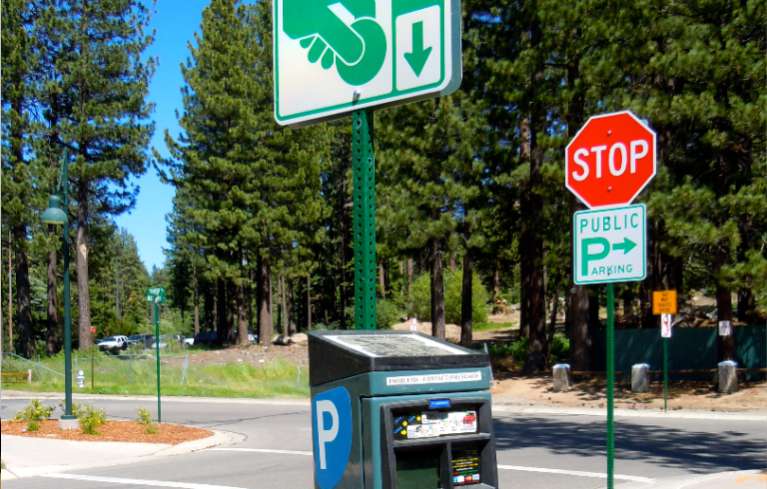
A pilot parking meter program started in 2011 on Bellamy Court. Photo/LTN file

A pilot parking meter program started in 2011 on Bellamy Court. Photo/LTN file

“(The council) can enact the initiative without it going to the people, they could put it on the ballot, or they could have staff review the financial and legal impacts of what the initiative says,” City Attorney Tom Watson said. If the latter position were taken, the city staff has 30 days to do so and then present their findings to the council.

The legal work can be done in house, but it’s undetermined if the fiscal impact would have to be hired out.

Peggy Bourland, spokeswoman for Tahoe4Tahoe, deferred comment on the legal documents to Grego.

It was the City Attorney’s Office that provided the documents to the anti-paid parking group.

“It was simply legal research that my office performed anticipating the initiative may be moving forward,” Watson told Lake Tahoe News.

The case out of Ventura parallels what is going on in South Lake Tahoe. Residents didn’t want parking meters and drew up an initiative to ban them, and had the paperwork all set for the ballot.

Ventura went to court seeking its removal from the ballot and won.

Parking meter jurisdiction has been covered by the state Vehicle Code and upheld by the courts since the 1960s – including the California Court of Appeal.

The court said, “… since the subject of traffic regulation on the public streets and highways of the state is a matter of statewide concern, it is not a ‘municipal affair’ unless the state shall completely abandon all or some part of that field. Under the constitutional and statutory provision here applicable, the initiative can come into play only through its use by all the people of the state, and not by some local segment thereof.”

Courts have ruled that parking programs are an administrative function of a city that does not require voters to have a say.

Grego, though, said, “This paid parking, is it really about traffic regulations or tax revenue? I think that is an important issue.”

Court docs repeatedly say all paid parking comes under the Vehicle Code, so it is a state rule, not a city regulation.

The way the local group – and others – could have legally tried to stop the process is through the referendum process. But the deadline to do so has long since passed. There is a 30-day window after ordinances are passed before they become law so challengers may file a referendum. They could have also asked to repeal the ordinance.

The last clause of Vehicle Code 22508 reads, “Any ordinance adopted pursuant to this section establishing a parking meter zone or fixing rates of fees for such a zone shall be subject to local referendum processes in the same manner as if such ordinance dealt with a matter of purely local concern.”

Paid parking has been discussed as a revenue generator for South Lake Tahoe since 2010. It wasn’t until after the council had adopted previous budgets that included parking revenue that the public became super engaged and enraged.

The first parking meters were installed in summer 2011 – 20 spaces on Bellamy Court near the state line. Last summer parking kiosks were put in on Venice Drive, near Lakeview Commons and by Lakeside Beach.

The council has not changed its mind – to date – about paid parking. Councilman Tom Davis has always been against it and the others for it. The five will discuss the matter again on Feb. 18. A scenario being floated is to abandon the program on Sept. 30 – the end of the fiscal year. This would not impact the current budget. However, $144,000 is projected to be needed to dismantle the program. That money would come from the 2014-15 budget.

Watson said, “The city obviously would like to listen to the community and I think the council has been doing that. On Feb. 18 we are going to bring back a comprehensive review of the program and make appropriate adjustments that folks here think or feel are necessary or appropriate.”

Grego said, “I hope this gets resolved in a more amicable fashion. We don’t need confrontation.”

Grego said when he was on the council he voted in November 2012 against paid parking. He was voted off the council that month and therefore did not have an opportunity to vote at the second reading. (He is planning to run for council again in November.)



Study: Adolescent obesity tied to economic status

By Melissa Healy, Los Angeles Times

From many corners of the United States — Los Angeles, Philadelphia, Mississippi — recent years have brought heartening news about the relentless rise in obesity among American children: Several years into a campaign to get kids to eat better and exercise more, child obesity rates have appeared to stabilize, and might be poised for a reversal.

But a study published Monday in the journal PNAS suggests that among adolescents, the hopeful signs are limited to those from better-educated, more affluent families. Among teens from poorer, less well-educated families, obesity has continued to rise.

Nationally, rates of obesity among adolescents 12 to 19 did not rise between 2003-04 and 2009-10. But during that period, obesity rates among adolescents whose parents have no more than a high-school education rose from about 20 percent to 25 percent. At the same time, the teenage children of parents with a four-year college degree or more saw their obesity rates decline from 14 percent to about 7 percent.

Read the whole story


Arts-culture-publishing contribute more to economy in U.S. than travel-tourism

By Dan Gorenstein, Marketplace

For the first time the federal government has tallied up the arts and culture contribution to the nation’s economy. It turns out that sector, movies, painting, publishing, cable and more, was worth half a trillion dollars — 3 percent to the gross domestic product in 2011. That’s more than the travel and tourism industry.

“Here you have for the first time, comprehensive empirical evidence from the point of view of economists that the arts play a substantial role in the nation’s economy,” says Sunil Iyengar who runs the Office of Research and Analysis for the National Endowment for the Arts.

In an instant, writers, app designers, publishers and painters just got a bunch of “street cred.” Nearly 2 million people work in the arts and culture industry which exported about $40 billion in goods and services in 2011. Some economists say ideas, innovation, and creativity are essential to growing the United States economy.

Read the whole story


S. Lake Tahoe budget flush with ‘extra’ money

By Kathryn Reed

South Lake Tahoe is in the unique position of having about $1.2 million to spend mid-year.

While the numbers are not astronomical, it is a change from the austerity and deficit modes the city has been faced with in recent years. The “extra” money is carry-over from the last fiscal year that ended Sept. 30. It takes time for fund balances to be known based on bills to be paid and money coming in so a dollar figure is not known when the current budget is passed. (This is essentially money that was budgeted but not spent or revenues that came in above what was projected.)

It was known when the current budget was approved last fall that there would be $349,473 in excess. That was immediately put toward the recreation master plan, a police vehicle, actuarial study, computer hardware, improvements at the city pool and few other things.

What was decided Jan. 14 was for $250,000 to be used for a one-time 2 percent salary adjustment for all permanent full-time employees. The city manager and city attorney have declined to be included. Most part-time and seasonal employees will receive $250.

Another $250,000 was allocated for the Harrison Avenue project. That bid will be awarded Feb. 18 and the project will break ground in the late spring.

The council approved this on a 5-0 vote without any discussion. However, all have been meeting with city staff individually. And Mayor Hal Cole and Councilwoman Brooke Laine are the fiscal sustainability committee members and therefore are most active in financial matters.

What isn’t determined yet is how another $534,122 will be spent. Of that amount, $334,122 is in the bank – also from year-end balance excesses. The remaining $200,000 is from anticipated sales tax increases based on what the state has told the city.

City Manager Nancy Kerry pointed out that if the council wants to eliminate the paid parking program, the $534,122 would almost cover the cost of doing so. Eliminating the controversial program mid-fiscal year would create a budget hole of about $600,000. Included in that is the $191,000 to pay off the kiosks.

There will be a public workshop on Feb. 10 at 8am at Lake Tahoe Airport at which time the council is expected to make a decision about where the money goes and to potentially create a policy about how to spend money when there are unanticipated revenues.

Cole said after the council meeting he hopes in February a policy will be set to guide this and future councils about how to allocate surpluses.

“I still think it’s infrastructure. I know that is broad, but without infrastructure improvements people get frustrated,” Cole told Lake Tahoe News.

Kerry suggested some of the money could be put aside to deal with the fluctuating state retirement system.

Much of Kerry’s presentation on Tuesday was about the historical financial situation of the city and how the city has achieved positive cash flow. She stressed the cyclical hiring in flush times, firing in lean times is not an effective way to run a city because is ruins lives and doesn’t help the public.

The turn around from 2010 when the city was facing systemic $3 million annual deficits in part is because one-third of the staff was laid off, employees are paying for some of their benefits, reserves were created in 2003, transient occupancy tax is being collected from vacation rentals and other changes were made to how the city does business.

“Now we have a city that is living within its means,” Kerry told the council. “We’ve fixed the fiscal problem now, but I’m still nervous.”

The local economy is still on shaky ground. While hotel tax numbers have been going up for the past two years, Councilman Tom Davis who is in the lodging business, said with no snow on the ground room nights could come to a screeching halt and cautioned his colleagues to be reserved with expectations.


Bomb threat closes Sierra-at-Tahoe

Updated Jan. 14 7:55pm:

By Kathryn Reed

Sierra-at-Tahoe was evacuated Tuesday afternoon after someone phoned in a bomb threat.

The call came in about 3pm Jan. 14 to the season pass office. Resort and law enforcement officials were not releasing any details about the caller, what was said or potential motive.

El Dorado County sheriff’s Lt. Pete Van Arnum said the scene has been cleared before 8pm and no device was found. Two bomb sniffing dogs from the California Highway Patrol were used.

Steve Hemphill, spokesman for the resort, said he did not know of any other time when a bomb threat had been placed to Sierra. He also said there have been no layoffs and would not speculate on a reason for the threat.

Van Arnum told Lake Tahoe News, “(We’ll be) checking with the phone company and looking at persons who may be disgruntled with Sierra.”

The base lodge was immediately evacuated. Then systematically the lifts were cleared of skiers. Guests were not told why the resort was closing at 3:30pm. Access to the mountain was cut off at 4:30pm.

West Bowl is only open from 10am-2pm, so no one was over there who had to be evacuated.

About 300 people were evacuated, according to Van Arnum.

“In this day and age it’s not worth taking any chances so we are allowing them to do their thing,” Sierra General Manager John Rice told Lake Tahoe News.

Resort officials plan to open as normal on Jan. 15.


Drought could be a political test for Brown

By David Siders and Matt Weiser, Sacramento Bee

As California withered through a drought in 1977, Gov. Jerry Brown called for a 25 percent reduction in personal water use statewide and flew to Washington to press the Carter administration for federal aid. He reduced the spray of his shower head and, in a characteristic moment of stagecraft, replaced a pitcher of water at a news conference with a single cup.

Today Brown is governor again, and California is entering one of the driest winters on record. Two dry years already have depleted many reservoirs. The snowpack is meager, and streams and rivers are running low. Although California has experienced many droughts, historically there have never been clear rules about when to formally declare one. Scientists use the term to refer to abnormally dry conditions, which California is clearly experiencing. But for governors, formally declaring a drought has been largely a political decision based on mounting anecdotal reports of weather-related hardship and evidence that relief is not in the forecast.

If it remains dry – as long-term forecasts suggest – the drought will test the management abilities of a governor who, with the exception of the Rim Fire last year, has largely avoided widespread natural disasters since returning to the Capitol in 2011.

Read the whole story


Brewery brings Old World style to Tahoe-Truckee

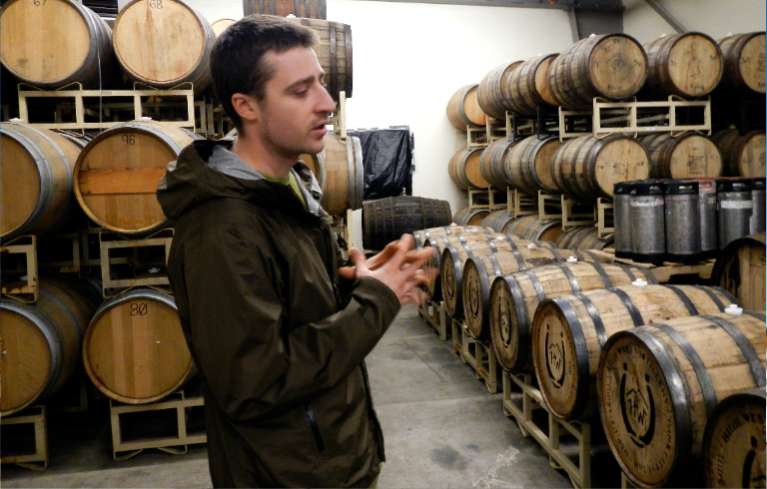
Eli Pasciak, Tahoe Mountain Brewing Co. brewmaster, explains the significance of barrels. Photos/Kathryn Reed

Eli Pasciak, Tahoe Mountain Brewing Co. brewmaster, explains the significance of barrels. Photos/Kathryn Reed

By Kathryn Reed

TAHOE CITY – Some were blondes, others a rich red, some were full bodied, others were classic. All were 3 ounces of liquid enjoyment.

The sampler at Tahoe Mountain Brewing Co. introduces people to eight of the more than 20 varieties of beer at the Tahoe City pub. A few miles away in Truckee these concoctions and others are being made.

“Our goal is to create a more dynamic drinking experience,” Eli Pasciak, head brewer at Tahoe Mountain Brewing Co., told Lake Tahoe News. “We want to accentuate aromas. We don’t want a one-note experience or drink.”

A sampler of beers.

A sampler of beers.

Based on the variety of samples – which come in tiny glasses that are placed on a serving board in the shape of Lake Tahoe – Pasciak has achieved his goal.

Sue liked the Paddle Board, a well-balanced pale ale with hints of fruit. I was most enamored with the Sugar Pine Porter that has a chocolate finish.

The Viejo Rojo is their top seller. It’s a barrel aged sour.

Aaron Bigelow and Tanya Thayer opened the pub on June 2, 2012. There is a small brewery upstairs, but the bulk of the beer is made off-site. Only their beer is sold at the pub. They also run a bottle shop in Truckee that carries 400 beers from around the world. The main brewery, which offers tours by appointment, also has a tasting room.

The couple quit their jobs – he was a custom homebuilder and she a dental tech – to open Tahoe Mountain Brewing Co. The seasonality of the business has been one of the harder things to cope with. But on Saturday the place was packed as snow and rain drove people indoors.

“Even if all the locals came in every day, it’s not enough to support what we are doing. We rely heavily on visitors,” Bigelow said.

The pub is across from Commons Beach in the Cobblestone center. The large picture windows, and interior of wood and rock give it a definite Tahoe feel. TVs in the bar and dining area are muted, but it is definitely loud with just the cackle of conversations. The openness is casual and inviting.

The menu is typical pub food, with limited choices for a vegetarian. Cutting back on the number of items was something the couple had to learn so the kitchen didn’t get backed up. (Neither one had prior restaurant experience.)

The service was excellent. And that’s one thing Bigelow lamented about – the seasonality often means having to lay off quality employees who may have moved on when he is ready to put them back on the payroll.

A pub wasn’t even in the original plans. The couple looked for a place in Tahoe City to start the brewery but could not find the right parcel, so they ended up in Truckee. But when the restaurant space became available they jumped at it. So now they have the dual operation.

Bigelow’s interest in a brewery started with creating beers at home. But he knew he needed to hire experts if he were to be successful. Two brewmasters and an apprentice work in Truckee coming up with beers that are made in the Old World – Belgian style. Maybe a dozen craft beermakers are doing this in California. (Not all the beers are made this way; there are traditional lagers and IPAs.)

Tanks at the Truckee facility.

Tanks at the Truckee facility.

“They call them the Burgundies of Belgium. They are called sours because of the yeast strains,” Bigelow told Lake Tahoe News. “We are the only all grain from scratch not from extract brewery on the lake.”

It takes longer to create this type of beer. But the richness is evident in each sip.

“They drink more like wine. They are more complex, much dryer, have low pH levels like in the 3.2, 3.6 range. That would be similar to a dry brute Champagne,” Bigelow said. “A lot of times we back blend fruits. Maybe for two or three months it sits on fruits – cherries, blueberries, strawberries.”

Pasciak’s experience as a chef contributes to his awareness of what works on the palate. He wants to blend flavors to create complex beers, but also beers that will pair well with food.

“We like different brews from course to course,” he said. It’s much like pairing wine with food.

On the status board at the brewery is a list of what needs to be done, what beers are in which vat, and other details.

Pasciak had been out shopping for the bacon that morning for what will become Bacon Baltic Porter. It will require a longer fermentation process and need to be kept cooler – more like 50 degrees. (An ale is usually at 60 to 70 degrees.)

The 11 tanks are mostly stainless steel, though copper is also used. Some are cone-shaped which allows the yeast to filter out.

In a neighboring building are the more than 300 barrels. Some are from wine, others from Cognac, Bourbon and Muscat. Soon a trip will be made to France to inspect nine Fudore barrels that can store 3,000 to 5,000 gallons.

Bigelow called this a rare find.

“The idea is with less surface area of the oak the oak influence becomes smoother,” he said.

Each barrel has its own peculiarities. For Pasciak he wants to know the entire history of the barrel so he will have better knowledge of what it will do to the beer.

“A barrel to me is an ingredient,” Pasciak said.

French oak offers more spice, sometimes coconut, whereas vanillans come out of American oak.

Each barrel has a different flavor profile.

In trying to be as sustainable as possible, Tahoe Mountain sends its spent grains to a farmer in Reno. It’s fed to his livestock and mixed with fertilizer for the fields. Produce and eggs are delivered to Tahoe Mountain, and some of the farmer’s goods are incorporated into the beer.

About 5,000 barrels, each containing 31 gallons, are produced annually. Capacity is about maxed out. And that’s fine for Bigelow – at least for now.


Study: Non-drinking teens on the rise

By Herb Scribner, Deseret News

It looks like teenagers aren’t hitting the bottle as often as before. On Jan. 10, BBC News Magazine published an article that looked at the teenage non-drinkers, who are finding other ways to celebrate and have fun without sipping the sauce.

“UK teenagers might have a reputation for binge drinking, but in reality the number of young people consuming alcohol has declined sharply,” wrote Catrin Nye and Hermeet Chadha for BBC.

Teenagers are stepping away from alcoholic drinks and finding other ways to spend their time, BBC reported. The article highlighted Liam Brooks, an 18-year-old from east London, who had to put drinkers to bed and said “there is no pretty drunk,” BBC reported.

BBC’s findings are based on a 2012 report by the National Health Service statistics that found 12 percent of those age 11 to 15 said in 2011 they have sipped alcohol within the last week. This number is down from the 26 percent found in the previous decade, BBC reported.

Read the whole story


Terrain-based ski lessons speed learning process

By Holly Ramer, AP

NORTH CONWAY, N.H. — Allison Willette’s first few skiing lessons left her with a sore butt and aching knees but not a lot of skills. But one day’s worth of terrain-based learning made all the difference.

“Yesterday was probably the first day that I enjoyed it,” she said.

The instruction Willette got at Cranmore Mountain Resort is a new approach that uses sculpted zones to control students’ speed and reduce fears and falls. Without worrying about sliding down the mountain out of control, students can focus on building skills because the banks, berms and bumps naturally slow them down.

That means less emphasis on “snowplowing,” or pointing the skis into a wedge shape to slow down. Less time learning to stop, more time learning to go.

“Back in the good old days, we used to get people into a wedge right off the jump, but the wedge was more of a defensive posture, something to slow down and stop with,” said instructor Dave Bartlett. “But we were kind of resisting the forces we’re working with.”

The new method puts the emphasis on shaping those forces, Bartlett said, getting students more comfortable more quickly.

Willette, of Hadley, Mass., tried it out last month with her 8-year-old son. He had never been on skis; the few times she had she’d always felt intimidated. Both made quick progress.

“It allowed you to physically feel what the turn should feel like, and then you just naturally push in the right direction. So you kind of disengage your brain, and you can do it,” she said. “I learned quickly how to make turns there, and I was able to apply that to the flatter field.”

Students start out on flat snow, getting a feel for their skis. The next zone is a mini-pipe, where they slide down one side of a gentle, U-shaped slope and part way up the other. The slope is a bit steeper in the “roller” zone, which is followed by a short section of trail with banks and berms that guide students through three turns. The “traverse trax” zone includes eight turns and is the last stop before students head to the chairlift to try out a beginner trail.

Cranmore, along with Vermont’s Bromley Mountain and Jiminy Peak in Massachusetts, is one of three New England resorts that partnered with the consulting firm Snow Operating LLC to start terrain-based learning this year. Others that have adopted the approach in recent years include Breckenridge and Vail in Colorado, Northstar in California and Mountain Creek in New Jersey.

Kelly Coffey, training manager for the Breckenridge Ski and Ride School, said he has seen a marked improvement in his students, sometimes even before they actually try out the course. A family of four who took a lesson around Christmas were visibly nervous when they put on their skis, but by the time he finished explaining the zones, they were more relaxed.

“I could just see the tension in their bodies just flow out,” said Coffey, who also is a freestyle specialist for the Professional Ski Instructors of America. “From then on, I was able to get them to move a lot easier, and more gracefully, and we could progress more quickly. There were times I wanted them to turn, and they didn’t accomplish it, but they didn’t panic.”

Karen Dolan, director of Cranmore’s snowsports school, said she has seen many trends come and go during her 40 years in the industry, but she believes terrain-based learning has sticking power because it makes learning more fun. And boosting the fun factor makes it more likely that students will return — a key motivator for Cranmore and other resorts given that nationally, 85 percent of skiers never try it again after their first outing.

Mountain Creek saw its so-called conversion rate rise from 17 percent to 65 percent after implementing terrain-based learning. It remains to be seen whether Cranmore will see a similar increase, but Dolan said that kind of improvement would more than justify the $37,500 expense of building and maintaining the new terrain zones. In the meantime, the entire resort, including groomers, snow-makers, instructors and managers, is getting used to the new program.

“They all have to be part of this culture change and understand why we’re doing it. It’s everybody’s job to convert skiers and riders,” she said. “They’re here, marketing spent a lot of time getting them here, so let’s make sure that they’re having fun.”

First-time skiers and snowboarders can try terrain-based learning for free on March 9 at the three New England resorts if they register in advance. The promotion, limited to 150 people at each resort, includes equipment rental, helmet rental, a lesson and a beginner’s lift ticket.


Supreme Court to hear broadcast copyright case

By Andrea Peterson, Washington Post

Aereo is a company that sells access to live television programming over the Internet — without paying broadcasters for the privilege. Unsurprisingly, broadcasters don’t like that. In fact, they dislike it so much that they’ve engaged in a lengthy legal battle to shut Aereo down. And Friday, the Supreme Court agreed to hear their case.

Aereo uses small HDTV antennas to receive over the air broadcasts — just the television any normal consumer with a digital antenna could receive over the air for free, not cable channels — and mirrors their content on their own servers. Users pay a small monthly fee for control of one of those antennas, as well as features including a cloud hosted DVR service. Broadcasters have alleged this counts as “retransmission” — which would require Aereo to pay fees for privilege — or else a public performance that infringes copyright.

But Aereo argues that since each subscriber is assigned their own antenna to control, it doesn’t violate the federal copyright laws. And a majority opinion from New York’s Second Circuit Court of Appeals agreed with the streaming service.

Read the whole story