Low water levels a boon for gold prospectors

By Richard Chang, Sacramento Bee

A small gold rush is taking hold in the foothills of Placer County, where prospectors young and old are taking advantage of record-low water levels to search for precious metal.

The Gold Rush of 1849 it isn’t. But the real possibility of finding new gold – even a few flakes – has people giddy. Prospectors say unusually low rivers are opening up areas that haven’t been touched by man in decades, if not over a century.

“Stuff that’s normally submerged in water is now available. It opens up the possibility for nuggets,” said James Hutchings, Sacramento chapter president of the Gold Prospectors Association of America.

Read the whole story


January in Tahoe more suited for tanning

By Kathryn Reed

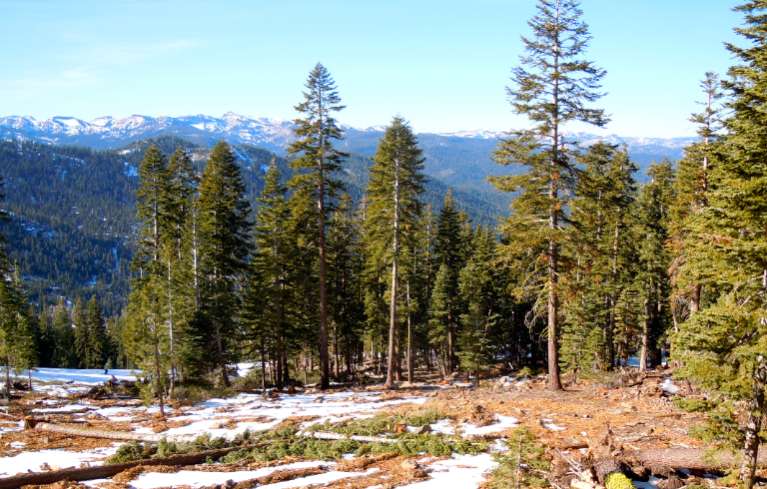
The storm forecast to roll into the Lake Tahoe Basin today is not going to quench the land’s thirst, but it might alter the record books.

Going into the week, this has been the second driest January on record for South Lake Tahoe with 0.17 inches of precipitation. However, those records only date to 2000. The driest was in 2003 when 0.03 inches fell. No. 3 was 2001 with 0.40 inches.

In Tahoe City, where records have been kept for more than a century, this too is the second driest January with 0.35 inches. It is tied with 1985. The driest was in 1991 with 0.08 inches.

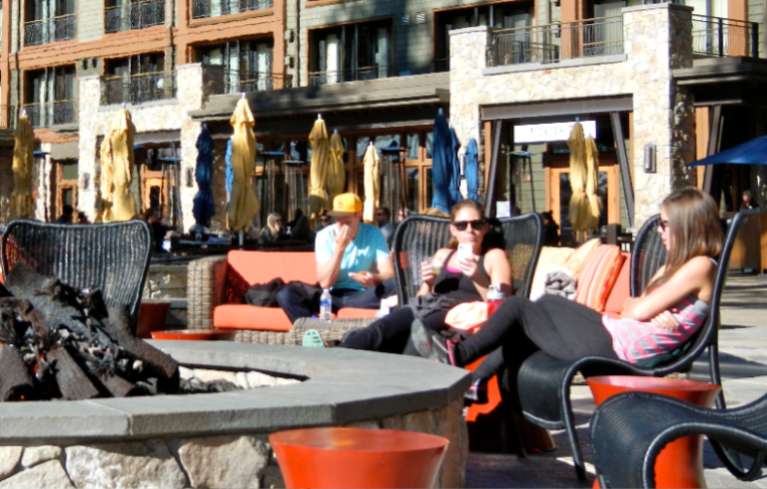
It was so warm a the Ritz-Carlton Lake Tahoe on Jan. 25 that people were lathering sunscreen and taking off clothes. Photo/LTN

It was so warm at the Ritz-Carlton Lake Tahoe on Jan. 25 that people were lathering on sunscreen and taking off clothes. Photo/LTN

Rain is what is forecast for lake level starting today, with a winter storm watch in effect for the basin for a 24-hour period starting Thursday at 4am. One to 2 feet of snow is possible above 8,000 feet, according to the National Weather Service in Reno, 1 foot above 7,000 feet, and 6 inches at the lake.

A “quick punch” is how Jessica Kielhorn with the Weather Service described the storm. A lingering shower may persist into Friday.

The drought of 1976-77 is often compared to what is going on now in California and Northern Nevada. One reason is because now, like then, a high pressure sat over the states that diverted storms elsewhere. The current ridge is 4 miles high and 2,000 miles long.

A silver lining compared to the 1970s is the advent of snowmaking. The overnight temperatures have allowed snowmaking operations to continue most nights through the dry spell. Heavenly Mountain Resort this week opened more terrain on the California side.

Plus, resorts will bring snow from other parts of the mountain to fill in bare spots that have been skied off. And the groomers are also earning their checks this season by ensuring runs are not slabs of frozen hardpack.

But daytime temperatures this month have been balmy. The mean maximum temperature so far for January in South Lake Tahoe has been 51.7 degrees – a record. In 2012 the mean maximum temp for January was 48.8 degrees, 47.3 degrees in 1986 and 47.2 degrees in 2003.

The highest temp for a January was recorded at 61 degrees in 2011. So far South Tahoe has hit 58 degrees as a high this month.

In Tahoe City the mean maximum temp is also at a record this month at 46.9 degrees. The previous record of 46.8 degrees was set in 1961, with 1986 being 46.6 degrees.

The record high for a Tahoe City January was set in 1927 at 60 degrees. This month it’s gotten up to 55 degrees.

While the water content for the Sierra was at 20 percent of normal when it was measured earlier this month, it will be less than that when the next readings are taken Jan. 30.

Gov. Jerry Brown’s proposed 2014-15 budget calls for $618.7 million for water efficiency projects, wetland and watershed restoration, groundwater programs, conservation, flood control, and integrated water management.

“As we work on emergency actions to manage through one of the driest winters on record, we are also taking proactive, long-term steps to prepare California for future droughts and flood,” Secretary for Natural Resources John Laird said in a statement. “Each decade brings improvements, but also significantly highlights what we can do better. The California Water Action Plan gives us clear focus and vision for the next five years.”

The governor’s budget also would allow Department of Water Resources to better monitor the groundwater resources that provide more than one-third of California’s supplies in dry years, and supports the development of a state backstop for sustainable groundwater management practices by the State Water Resources Control Board, should local efforts to do so not materialize.


Opinion: Tahoe dying from being 1 dimensional

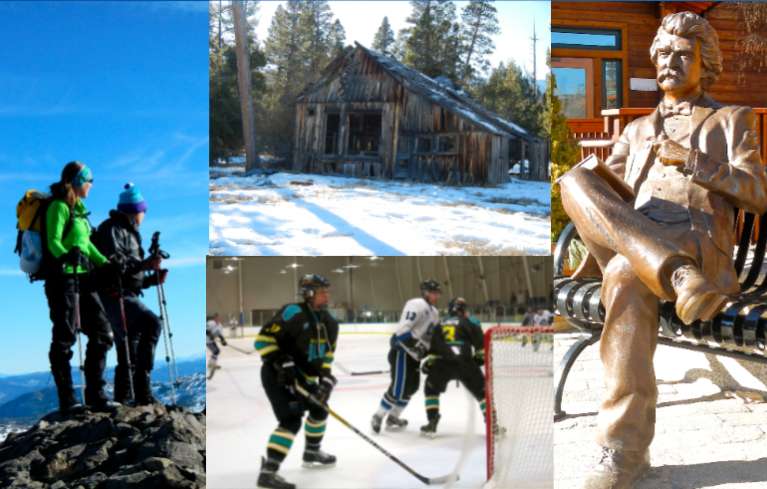
Why isn't the South Shore promoting snowshoeing-hiking, history, art and hockey? It's time to be more than a ski destination. Photos/LTN

Why isn’t the South Shore promoting snowshoeing-hiking, history, art and hockey? It’s time to be more than a ski destination. Photos/LTN

By Kathryn Reed

Unemployment, jobs and the economy were big topics in President Obama’s State of the Union speech on Tuesday night.

“Inequality has deepened. Upward mobility has stalled. The cold, hard fact is that even in the midst of recovery, too many Americans are working more than ever just to get by – let alone get ahead. And too many still aren’t working at all,” Obama said.

They are topics that also resonate in the Lake Tahoe Basin, especially this winter. With the dismal amount of snow, businesses are not hiring the number of people they usually do this time of year. Hours are being cut. It’s getting hard to pay bills.

The national unemployment numbers that came out this week are the lowest in five years at 6.7 percent. California’s unemployment rate is at 8.3 percent, whereas Nevada’s is 8.8 percent.

The good news is unemployment numbers for South Lake Tahoe and Douglas County ended lower than what they started at in 2013. The numbers are also lower than what they had been the previous few years during the height of the recession.

Even though retailers and ski resorts tend to ramp up hiring in December, it’s not unusual for the unemployment numbers to slip a little compared to November.

Here are the 2013 unemployment numbers for South Lake Tahoe:

January 10.2 percent

February 9.6 percent

March 9.4 percent

April 8.6 percent

May 8 percent

June 8.1 percent

July 8.5 percent

August 7.8 percent

September 7.4 percent

October 7.6 percent

November 7.6 percent

December not released.

These are the unemployment numbers for Douglas County in 2013:

January 11.8 percent

February 11.5 percent

March 11.3 percent

April 10.8 percent

May 10.2 percent

June 10.4 percent

July 9.6 percent

August 9.5 percent

September 9.4 percent

October 9.6 percent

November 9 percent

December 9.5 percent.

This all equates to an annual rate for Douglas County of 9.4 percent. Data is not collected in a manner to know the unemployment rate just at the lake portion of Douglas County.

What will be more telling about the local economy is what the numbers are like the first quarter of 2014 because of what the weather has done to hiring practices.

But what does not show up on unemployment charts is people with reduced hours, pay cuts or people who have stopped looking for a job.

People aren’t coming to Tahoe to play and spend money right now because it’s a one-dimensional economy. Tourism works when there is a product. Lake Tahoe is known for its winter snow fun and summer beach-hiking-biking fun.

If spastic, unpredictable weather is the new normal, then the status quo is no longer acceptable from our government leaders and more important our tourism officials. Why isn’t there a push to get people to Tahoe to enjoy what the locals are doing? Talk to hikers and cyclists – trails are pretty incredible. Learning to ski or snowboard is ideal now because roads are clear, skies are blue and those slopes are well covered in white stuff.

Having a chamber official tell a Sacramento television station that people can kayak and paddleboard is dangerous when morning temps are well below freezing. It’s one thing for locals to tackle Tahoe this time of year; it’s another for those unfamiliar with this unforgiving body of water.

Then having her say come to Tahoe to shop because ski gear is cheap isn’t really touting what Tahoe has to offer.

Where was the promotion for the restaurant week that happened earlier this month?

The South Shore needs to be showing people what the area is about, not using gimmicky make-believe characters telling people to come to the wild side.

It has long been proved that events bring people to town. But on the Lake Tahoe Visitor Authority’s website there are no events listed for January or February, and one for March on the “2013 Tahoe South Travel Planner”. Note the year our tourism people are telling visitors about.

What about a big Super Bowl party? It doesn’t matter that there isn’t a California team in the game.

Why not have a mini Olympics or make up sports that locals and tourists could compete in? Why aren’t we embracing our athletes who will be going after gold next month?

Another thing Obama said Tuesday night was, “In today’s global economy, first-class jobs gravitate to first-class infrastructure.”

Are you listening Lake Tahoe?


Olympic fears growing among families, athletes

By Sarah Lyall, New York Times

Athletes and their families are becoming increasingly anxious about possible terrorist attacks at the Winter Olympics in Sochi, so much so that some families have decided not to attend and others plan to curtail their activities once they get to the Games in Russia.

No American athletes have yet canceled plans to compete because of terrorist threats. But with increasing talk about unrest in the region and threats from would-be suicide bombers, some family members say they are reconsidering long-held plans to support the athletes at the Games.

In the most recent in a series of unnerving incidents, the Olympic teams from the United States and some European countries received emails last week warning them that they would be attacked if they took part in the Games. The messages were determined to be hoaxes, but the episode added to the skittishness that is permeating the mood as the Feb. 7 opening ceremony approaches. Members of Congress have recently expressed concern about the safety of the 10,000 or so Americans planning to travel to Sochi.

Read the whole story


Neighbors perplexed about dead coyote

By Kathryn Reed

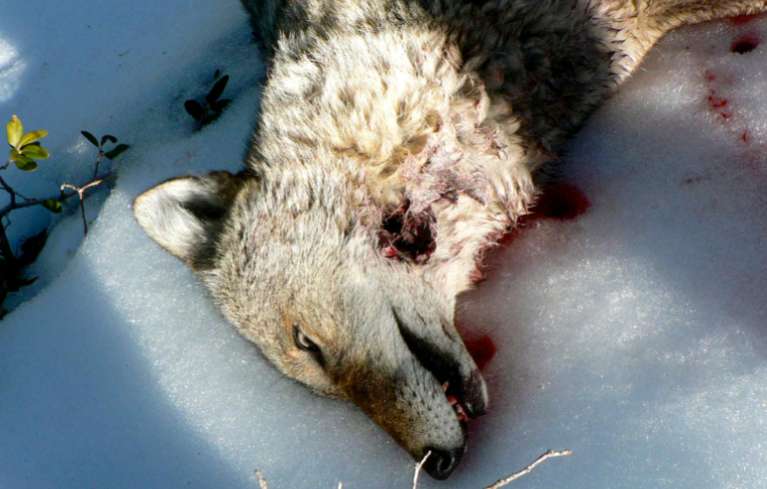
MEYERS – Where is the carcass of the coyote that was shot in Meyers and who shot it? Those are the questions that are still not answered.

Jeff Morales discovered the dead animal Jan. 22 on his routine walk with his dog.

“The blood trail intersects my existing trail,” Morales told Lake Tahoe News.

At first he thought it might have been a Husky that was killed because he just saw a pile of fur. He took his dog home and came back with a camera to document what he saw. This was after he made a series of phone calls to El Dorado County Sheriff’s Department, El Dorado County Animal Control, California Department of Fish Wildlife and Lake Tahoe Wildlife Care.

Who killed a coyote in Meyers and took the carcass a day later is a mystery. Photo/Provided

Who killed a coyote in Meyers and took the carcass a day later is a mystery. Photo/Provided

Lt. Robert Gerat with Animal Control looked around a little that afternoon according to Lynn and John Setnor whose house is the closest to the trail of blood, but reportedly didn’t find anything. Gerat told Lake Tahoe News his agency has no jurisdiction over this incident. “No laws were broken that we enforce,” he said.

Blood was visible Jan. 27 beginning about 100 feet near the Setnor property on Ottawa Drive, with it becoming more prominent where the animal likely ran farther into the forest from its aggressor before eventually collapsing and dying.

The Setnor property is surrounded by California Tahoe Conservancy land on both sides and national forest in the back. It is not fenced, so it looks like acres of open space.

John Setnor and Morales had a conversation last Wednesday, with Morales telling him about the coyote. Their recollections of the dialog as told to Lake Tahoe News are similar. They live in the same neighborhood. What is different is how well they say they know each other. Morales says they wave and are cordial. Setnor said he didn’t know who Morales was when he was behind his house.

They agree Setnor was on his back deck with a gun. Setnor says the only gun he owns is a BB gun. He’s not a hunter. He offered to let sheriff’s officials search his home for weapons, though they declined to do so. Setnor said he had the gun because there had been suspicious people on his street.

Morales said from his vantage point he could not tell what kind of gun Setnor had.

Neither John nor Lynn Setnor have ventured to see the bloody trail. Walking on the slick area is not something they want to chance, especially with John Setnor having a surgically repaired leg. They vehemently deny having anything to do with killing the coyote, professing their love of wildlife.

When Morales was going back to the area the morning of Jan. 23 he ran into sheriff’s Lt. Pete Van Arnum so he offered to show the lieutenant the body. But when they got to the spot the coyote was not there.

Morales said there was no evidence of it being dragged off. Only large bootprints were left in the snow – and the animal’s blood.

“It appears someone with boots removed the coyote,” Van Arnum told Lake Tahoe News. “If someone had taken the coyote legally, they could be entitled to the pelts. There is no evidence Mr. Setnor took it.”

Van Arnum also does not believe Setnor killed the animal.

It is presumed a gun left the large hole in the side of the coyote’s neck. But what type is hard to say because no official has looked at the carcass.

As for the legalities, coyotes may be hunted in the Lake Tahoe Basin with a permit and a shotgun, Van Arnum said. However, U.S. Forest Service regulations prohibit discharging a firearm of any kind within 150 yards of a house or building. This would have been that close.

Van Arnum said the odds of finding the culprit are not very good.

“If nothing else, all this uproar about the incident will probably keep someone from doing it again in that area,” Van Arnum said. “Obviously, it was very close to a residential area. We don’t want people shooting guns in residential areas.”


Drought exposing forgotten towns

By Jim Carlton, Wall Street Journal

EL DORADO HILLS — A severe drought plaguing much of the West is also bringing bits of its past back to life, as long-submerged historic artifacts and natural features are exposed by receding lake levels.

Near this Sacramento suburb, man-made Folsom Lake has receded to less than one-fifth of its capacity amid bone-dry conditions in California, recently revealing outskirts of a ghost town called Mormon Island founded during the mid-19th century gold rush. On an unseasonably warm winter day recently, throngs of visitors descended on the cracked mud flats of the reservoir to inspect hand-forged nails, rusted hinges and other vestiges of frontier life that were inundated when the lake was created in 1955.

California is entering its third year of drought, while much of the West has been abnormally dry for more than a decade.

In Utah, the decline of Lake Powell on the Colorado River to less than half its capacity in the past decade has uncovered artifacts including Native American ruins known as Fort Moki by 19th century pioneers. It has also restored some natural features, such as a towering waterfall called Cathedral in the Desert, that had been buried when the federal government dammed the river to create the giant reservoir in the 1960s.

Read the whole story


Study: Climate change threatens Winter Olympics

By Dominique Mosbergen, Huffington Post

Russia’s Sochi, Canada’s Vancouver, France’s Chamonix, Japan’s Nagano and California’s Squaw Valley all have one thing in common: These former and future Winter Olympics venues are each known as prime sites for cold-weather sports, and as breathtaking havens for sporting enthusiasts. But according to a new study, these winter wonderlands are now under threat from climate change and soon may no longer be cold enough to play host to elite winter sports competitions like the Winter Games.

Northstar on Dec. 20, 2011. Photo/LTN file

Northstar on Dec. 20, 2011. Photo/LTN file

Researchers at Canada’s University of Waterloo and Austria’s Management Center Innsbruck say that if global warming continues at its current rate, only 10 of the previous 19 Winter Olympics host cities will be cold enough to reliably host the Games in the 2050s. By the end of the century, that number could drop to a dismal six. “The cultural legacy of the world’s celebration of winter sport is increasingly at risk,” said Professor Daniel Scott, a Canada Research Chair in Global Tourism and lead author of the study, per a media release. “Fewer and fewer traditional winter sports regions will be able to host a Olympic Winter Games in a warmer world.”

Troublingly, even if the world takes steps to reduce carbon emissions and therefore lessen the impact of global warming in the coming years, the researchers said that the number of cities that could host the games in the middle and end of the century will still fall dramatically (see the infographic below). By the 2050s, at least four Winter Games venues — including Sochi, this year’s host city — will be too warm to host the competition, even if active steps to curb global warming are taken.

Read the whole story


Animals use various strategies to survive winter

By Kathryn Reed

Animals have a way of knowing when to prepare for winter, but if winter doesn’t come, it can be a problem.

Those that use camouflage as a tactic from hiding from their predators are having a hard time of it in the Sierra this year because their white coat is standing out against the brown landscape instead of blending in with the snow.

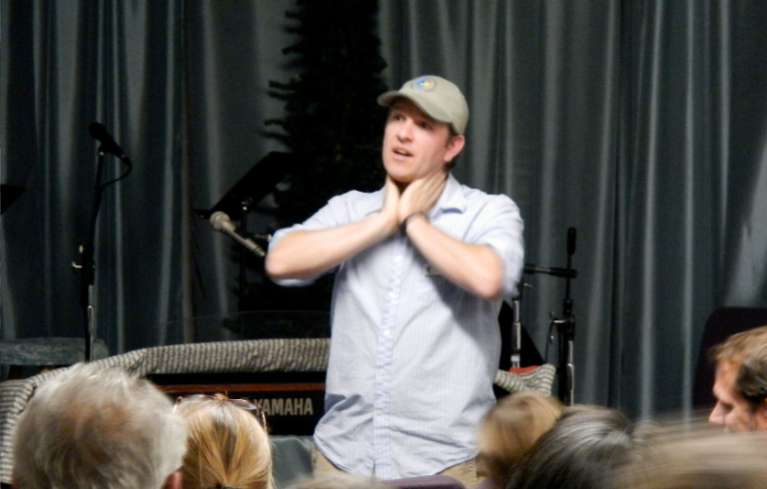
Will Richardson, co-founder and co-executive director of the Tahoe Institute for Natural Science, spoke at the Tahoe Area Sierra Club meeting Jan. 22 about winter wildlife survival strategies.

Will Richardson talks Jan. 22 about how wildlife survive winter. Photo/LTN

Will Richardson talks Jan. 22 about how wildlife survive winter. Photo/LTN

In Lake Tahoe he said five species turn white in winter – two types of rabbits, long and short tail weasel, and the white-tailed ptarmigan.

“Winter presents a lot of challenges for any organism,” Richardson told the crowd of more than 60 people.

Key problems are shelter and food. Animals can choose to leave for the winter, tough it out or lower their metabolism so they can sleep through most of the winter.

Migration is common for birds. But insects and some mammals choose this option, too. Many birds head for the tropics. Millions land in Central and South America.

“What happens when you lose an acre of rain forest? What happens here?” Richardson asked rhetorically.

Facultative migration is a shorter migration; maybe just to the Carson Valley or Central Valley.

A sure sign that animals are confused by the weather this year is a barn swallow was spotted in Tahoe City this month. Richardson said he doesn’t know of any time when any species of swallow has been seen in the basin in January.

Mountain quail walk out of the basin every year. The same goes for deer.

Waterfowl tend to stay in Tahoe through the winter. And they attract eagles. Richardson said this is a big year for eagles; with 15 spotted during the Christmas bird count.

Snakes do what’s called hibernaculum. This means they all are huddled together in the quest to have a consistent temperature.

Frogs have one of the more unusual winter rituals. The Sierra chorus frogs are what Tahoe has the most of. When they touch an ice crystal their body starts to shutdown and their organs freeze.

“They are able to freeze solid. They have no heart, no brain function,” Richardson said.

He showed a video of a similar species of frog to what is in the basin that depicted the freezing process as well as the thaw-warming in the spring. Scientists still aren’t sure how this is possible.

Putting on a winter coat as well as extra weight are other ways animals survive winter. Feathers are a great insulator.

Richardson said no matter what strategy animals employ, preparation is critical – especially to have enough food stored.


2013 one of the hottest years on record

By Deborah Netburn, Los Angeles Times

Never mind the current cold snap in the East or the polar vortex that swept through much of the U.S. in early 2014 — scientists from NASA and NOAA report that 2013 was one of the 10 hottest years on record, and there is a good chance 2014 will be even warmer.

According to the National Aeronautics and Space Administration’s calculations, 2013 is tied with 2009 and 2006 as the seventh hottest year since global temperature record keeping began in 1880. The National Oceanic and Atmospheric Administration’s slightly different calculations say 2013 tied with 2003 as the fourth hottest year on record.

According to NASA, the average surface temperature of our planet in 2013 was 58.6 degrees Fahrenheit, which is 1.1 degrees warmer than the mid-20th century base line. That makes 2013 the 37th consecutive year that the annual global temperature was above average.

Read the whole story


Calif. drought has long-term implications

By Gloria Goodale, Christian Science Monitor

As California faces the worst drought in its 163-year history with no hint of relief in sight, some scientists are calling the event a red flag for the future of the nation.

Gov. Jerry Brown raised the issue in his State of the State address Wednesday, saying “we do not know how much our current problem derives from the build-up of heat-trapping gasses, but we can take this drought as a stark warning of things to come.”

Water shortages have widespread impacts. Agriculture and energy generation account for 80 percent of the nation’s clean water use, says David Dzombak, head of Carnegie Mellon University’s Civil and Environmental Engineering Department. And even when cities meet their water demands during a drought, the costs can leave them “exposed to significant risk of financial failures,” says Patrick Reed, a professor of civil and environmental engineering at Cornell University, in an email.

In that way, crises can led to new policies and new attitudes, and some say the California drought could be just such a catalyst.

“At the state, regional, and federal level, and across the country, people are just starting to come to grips with the fact that our climate is not stationary,” says Dzombak. “We are in a dynamic, changing climate situation that will affect all parts of the country in different ways,” he says, led by the West and Southwest so impacted by drought.

Read the whole story