Tentative paid parking compromise for S. Tahoe

By Kathryn Reed

If the South Lake Tahoe City Council rescinds the paid parking ordinance, the Tahoe 4 Tahoe group is likely to back off from going forward with its initiative.

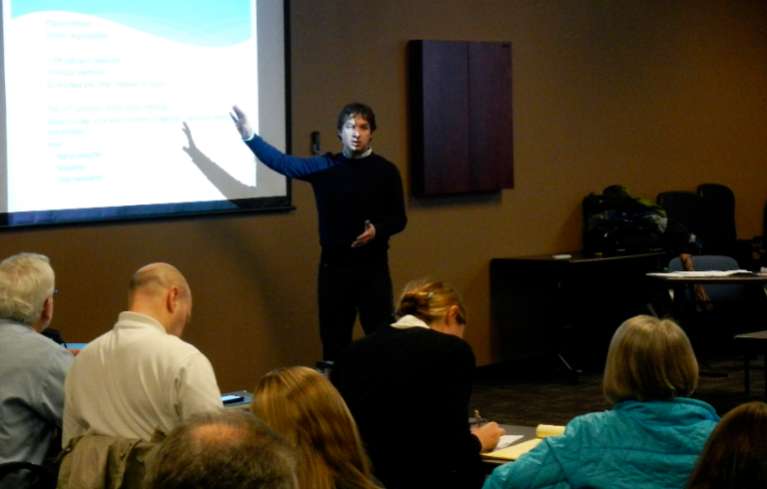
While much of the Feb. 4 council meeting centered on the paid parking controversy, the discussion did not end there. That night Bruce Grego, representing Tahoe 4 Tahoe, and Hal Cole and Brooke Laine from the council met to see if they could come to an agreement.

During the public meeting Laine’s solution to the paid parking strife was for the city to put a legally solid question on the ballot for South Lake Tahoe residents to choose if they want paid parking or not.

There are some in the group who agree something like that could work.

“There is a win-win out there. It is up to the city reps and committee to see if they can reach that agreement to start over,” Dave Jinkens, who has been working with the anti-paid parking advocates, told Lake Tahoe News.

The proposal that came out of Tuesday night’s powwow is largely what Laine proposed at the council meeting. If the Tahoe 4 Tahoe group agrees to this idea, it could come back to the council on the Feb. 10 agenda when the electeds meet to discuss fiscal matters. Grego told Lake Tahoe News it’s possible the current parking ordinance could be turned into the ballot question.

The negotiators now must seek approval from the larger bodies they represent.

Legal questions

At issue is the Tahoe 4 Tahoe group has an initiative that qualifies for the ballot. The problem is case law and the state Vehicle Code say the referendum process, not initiative is the way to deal with parking meters.

Even though the courts and California Vehicle Code have stated the initiative process cannot change parking meter law, the Tahoe 4 Tahoe group wants a judge to tell them that and not rely on what is already written. They believe if they don’t exhaust all of their options, they will have let down the 1,422 people who signed the petition to get the question on the ballot.

The city’s hands are somewhat tied in that it must follow the law even if this initiative could be legally challenged. It is most apt to be challenged once it is on the ballot or if voters approve it.

And while both sides profess to want to compromise, a lack of trust may prevent that from happening. Plus, there has been no vote by the council to scrap the ordinance.

Financial conundrum

Per Elections Code, the council had to act Tuesday on receiving the certificate that states enough valid signatures were gathered for the initiative to move forward. The law states the council must do so at the first regular meeting after the county certifies the signatures.

This then triggered another Elections Code rule where the council had three options:

• Adopt the initiative as is to be the new city code;

• Put the initiative on the ballot;

• Order a fiscal report.

The council unanimously agreed to the last option. The contract with Urban Futures Inc. out of Walnut Creek is based on the number of hours the consultants work, not a flat fee. The amount is to not exceed $25,000. They have 30 days per Elections Code to complete the report.

But it’s possible if a compromise were reached in the next week, the fiscal report could be scrapped. In turn, this means not much money would have been spent by the city. This is because the city will be tasked with gathering the documents requested by Urban Futures, so it’s city time that will have been wasted, not money spent. Urban Futures earns the bulk of its money from its analysis and final report.

The report is designed to show voters the financial impacts if they approve the initiative. It’s written in such a manner that it would tie the city’s hands when it comes to parking rules elsewhere, including at Campground by the Lake; it would also mean money from parking kiosks that is designated for maintenance would be missing from the city budget.

The Feb. 4 City Council meeting was dominated by paid parking. It’s going to take up the bulk of the Feb. 18 meeting too, which is going to consist of a morning and evening session involving the topic. At those sessions the current parking program will be discussed and likely revised.

In other action:

• The fire department’s new ladder truck should arrive Feb. 15. The old one has already been taken out of commission.

• The fiscal workshop on Feb. 10 has been moved to 3pm.

• The council refused to write a blank check for council members to travel as was requested by Councilwoman Angela Swanson. She is on a couple committees for the League of California Cities. But those are optional beyond regular council assignments. Instead of having to get each item approved the compromise was for her to bring back projected expenses for the remainder of her tenure, which expires when her term is up in December.


Mental health patients are increasingly younger

By Jocelyn Wiener and Phillip Reese, Sacramento Bee

In recent years, Dr. Jason Bynum has seen the churn: teens in crisis cycling through his south Sacramento psychiatric hospital, admitted, released, and just a few months down the road, back with another breakdown. Increasingly, he lives with a deathly fear that his young patients are going to commit suicide after he sends them home. He worries even more about the ones who are violent toward others.

“One of these kids that I’m discharging is going to go home and kill somebody,” said Bynum, a psychiatrist at Sierra Vista Hospital who is also president-elect of the Sierra Sacramento Valley Medical Society.

A majority of the children and adolescents he treats are suicidal or self-harming – the rest are violent, homicidal or deeply delusional. He sometimes holds onto the sickest of them for weeks or months, trying to keep them safe while he searches for intensive follow-up services.

Around the state, the picture is much the same: Mental health hospitalizations of California’s youngest residents – those 21 and under – increased 38 percent between 2007 and 2012, jumping from 34,000 to 47,000, according to an analysis of state data by The Sacramento Bee and the Center for Health Reporting. Child hospitalizations also rose nationally, but not as quickly as in California, federal data show.

Read the whole story


Colleges contending with shift in demographics

By Eric Hoover, Chronicle of Higher Education

Demographic projections have inspired doomsayers and daydreamers alike. The sky-is-falling contingent says the declining number of white, affluent high-school graduates will sink many tuition-dependent colleges. Meanwhile, optimistic observers predict that population shifts will compel institutions to transform themselves by embracing underrepresented students like never before.

As any admissions officer could tell you, the number of high school graduates in several Midwestern and Northeastern states will drop sharply over the next decade, according to the Western Interstate Commission for Higher Education.

Nationally, the number of black and white students will decline, and the number of Hispanic and Asian-American graduates will increase significantly. The nation’s already seeing a sharp rise in first-generation and low-income graduates—the very students whom selective four-year institutions have long struggled to serve.

Read the whole story


Improv comics deliver laughs for 50 years

By Kathryn Reed

Comedy is more than making people laugh. It’s also about getting people to think and perhaps letting them forget about their life for an hour or two at a time.

Budd Friedman didn’t seek out to be the master of comedy. But now with 23 Improv clubs across the nation, that is what he is. He’s celebrating 50 years of being in the business.

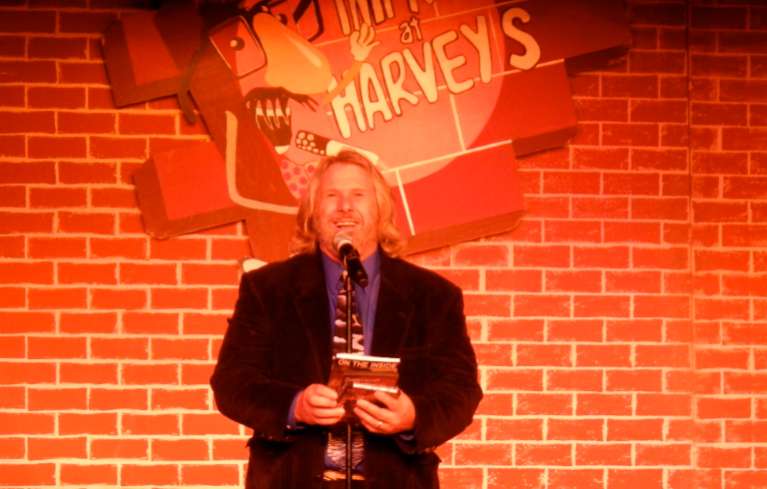
Howie Nave warms up audiences at the Improv at Harveys five nights a week. Photo/LTN

Howie Nave warms up audiences at the Improv at Harveys five nights a week. Photo/LTN

“I really started out opening a coffeehouse in Times Square for Broadway singers after their show. Within a year comedians started coming in. I realized I had a better ear for comedy than singers,” Friedman told Lake Tahoe News.

That was 1963. In 1975, the first California club opened in Los Angeles. In 1985, the push was on to open clubs throughout the country. The Stateline Improv just turned 13, having opened originally at Harrah’s Lake Tahoe on Jan. 15, 2001. Now the show is at Harveys.

Howie Nave has been the emcee at the local club since its inception.

Nave first worked for Friedman when the former Reno Hilton, which is now the Grand Sierra, had an Improv. Nave said the Hilton’s general manager at the time told him he wanted Friedman out and Nave to stay. Nave chose to stick with Friedman. That’s what led to an Improv at the lake.

“Budd has been like a second dad,” Nave said of the comedy maestro. Because of that, Nave’s loyalty has been with Friedman all these years even when other venues have tried to woo him away. Their closeness is evident in the fact Friedman was at Nave’s wedding a few years ago.

It’s Friedman’s voice people hear introducing Nave at the start of the show. The comedy leader comes to Tahoe every now and then. And when he is in town, he’ll often take the stage to say a few words.

Friedman and Nave agree getting comics to Tahoe is easy. Comics are booked through July. They like what Tahoe has to offer and the crowds are always receptive. Plus, it is a diverse audience based on its being a mix of locals and tourists.

But it’s not easy to get into an Improv for comics.

“You have to have a lot of credit,” Nave said. He has freedom with deciding who will be the two other comics joining him each night. The Stateline showroom is dark on Mondays and Tuesdays, while there are two shows on Saturdays.

Nave said even renowned political satirist Will Durst couldn’t get in to the Improv. Durst had helped Nave when both lived in the Bay Area. Nave returned the favor when he got the job in Tahoe and got Durst a gig at the local Improv. Durst was last here in December.

The very first night of the Improv when it opened back in 1998 at the then Reno Hilton. Photo/Provided

Howie Nave, left, and Budd Friedman opening night of the Improv in 1998 at the Reno Hilton. Photo/Provided

There was a time when the emcee got paid more than the headliner. A lot had to do with that person being at the club the entire time.

“The host is the most important job; every comic will tell you because you have to set the table, you set the tone. If it’s a s—– host, you are not going to want to watch the rest of the show,” Nave told Lake Tahoe News. “I am the appetizer for the main course. If the appetizer is bad, you are vomiting before the main course.”

The comedy business has changed quite a bit in the 50 years since Friedman started. In the early days clubs didn’t have liquor licenses. It wasn’t uncommon for teenagers to be in the audience. Now you must be 21 to get in.

“I would love to get in a few more casinos. They are easier to run because they take care of all the liquor and booze that are necessary,” Friedman said.

But now in his 80s, Friedman is most interested in sustaining his business instead of growing it. However, this month he will be opening a 500-seat club in Irvine and closing the existing 300-seater. He said the trend is larger clubs. (The Harveys Cabaret seats almost 300.)

Comedy isn’t completely recession proof, Friedman says, but he has survived. People want and need to laugh.

“With the advent of cable, the audiences are much more sophisticated than they used to be. They know what to expect when they walk into the club,” Friedman said.

But knowing what to expect can be dicey for the comics. Nave half-jokingly says comedy clubs might need to install metal detectors because of the divisiveness of the country. Political humor isn’t always funny depending if you wear blue or red.

For those who’ve never stepped inside a comedy club, this is what Friedman says you’ll get, “I would say you are going to get current events in a palpable, amusing way. It’s educational, yet funny. You will learn a different slant on life. I think that is what comedy does — particularly today. Just look at Bill Maher and Jon Stewart. My wife and I watch them all the time to get the news.”


Nev. farmers, ranchers contend with drought

By Sean Whaley, Las Vegas Review Journal

FALLON — Nevada’s severe drought is a tragedy unfolding in slow motion. But its effects will be far reaching — from rural communities that depend on ranching and agriculture for their existence to the prices we all pay for food at the grocery store.

Carson Valley cows had more to eat a year ago. Photo/LTN file

Carson Valley cows had more natural grass to eat two years ago. Photo/LTN file

Nevada’s wildlife will suffer as food supplies disappear and springs dependent on runoff from snowfall fail. Wild horses will suffer from a lack of forage.

Wildfires could become a major problem throughout the state, from the dry rangelands to the drought-crippled forests of the Sierra Nevada.

But most of all it will be felt by the ranchers and farmers and their families, those eternal optimists who prepare the fields and grow their cattle herds every year with fingers crossed that the rain and snow will come on time.

Read the whole story


Calif. prepping for nasty fire season

By Carmen George, Fresno Bee

Firefighters are bracing for a hot year as California’s drought has forests primed for early wildfires.

CalFire spokesman Daniel Berlant said firefighters already have responded to over 400 wildfires statewide this year. By comparison, there were no wildfires in the first 3 1/2 weeks of last year, he said.

“The conditions we are experiencing right now are similar to what we would be seeing in August — that’s how dry it is,” Berlant said. “Even though the calendar says it’s February and it’s winter, conditions are primed for wildfires.”

In response to the drought, CalFire staffing increased statewide last week. Last year, CalFire declared the official start of fire season on May 1. This year, it’s likely to be much earlier, Berlant said.

Read the whole story


Pro snowboarder transitions to coaching Olympians — including sister Hannah Teter

Elijah Teter, right, will be in Sochi for the Winter Olympics that start this week to coach Kaitlyn Farrington and Hannah Teter. Photo/Provided

Elijah Teter, right, will be in Sochi for the Winter Olympics that start this week to coach Kaitlyn Farrington and Hannah Teter. Photo/Provided

By Jessie Marchesseau

The name Teter is synonymous with snowboarding. Though Elijah Teter’s name may not be on the competitors’ roster for the most recent halfpipe competition and you haven’t seen him stand on a podium lately, he is likely standing not too far away.

Teter, who used to live in Meyers, spent a decade as a pro snowboarder. After just missing a spot on the 2010 Olympic team, he turned his focus from competing to coaching. Now he is watching some of the athletes he trained take their skills to the Olympic playground in Sochi.

Kaitlyn Farrington and Hannah Teter, who have been under Elijah Teter’s instruction, will be representing Team USA in snowboard halfpipe. Ayumu Hirano, the 15-year-old Japanese phenom Teter has been working with since 2012, will be in Sochi riding for Japan.

It was after the 2010 Olympics in Vancouver that Teter began coaching fulltime. Even when he was riding professionally, he remembers always offering tips to other riders. He helped his sister train and coached a little during the summers. Teter said he enjoyed it, but never really considered it as a career option. Then in 2010, his sister Hannah, who had just won a silver medal in Vancouver and already had a gold from the 2006 Olympics, asked him to be her full-time coach. He accepted, and the transition from rider to coach was made. (Hannah Teter lives in Meyers and rides for Sierra-at-Tahoe.)

He now spends his winters in Colorado, and in addition to working with Hannah, is in his third season as a snowboard halfpipe coach with Ski & Snowboard Club Vail, a nonprofit focused on winter sports training. SSCV athletes come from all over the world and have graced many Olympic, X Games and World Cup podiums. (Much of the rest of the year Teter is in Grass Valley.)

Two years ago, when Teter was serving as a judge at the X Games, he was approached about coaching Japanese Olympic snowboarder Kazu Kokubo. Kokubo is possibly the most famous pro snowboarder Japan has seen, both because of his riding ability and his outspoken personality. Teter accepted the offer, and, along with SSCV, later picked up one of Kokubo’s teammates: Ayumu Hirano.

Hirano is being hailed as the one who could possibly dethrone Shaun White in the halfpipe and bring home Japan’s first medal in the event. At last year’s X Games, he brought home the silver, a close second to White. Though Japan will be sending its own coaches to Sochi with Hirano, Teter will surely be cheering him on.

Working as a coach and mentor to athletes at this level is no easy task, but having been in their shoes gives Teter a leg up.

“Coaching at the elite level is about a lot more than just teaching them tricks,” Ben Boyd, program director of SSCV, told Lake Tahoe News. “It’s about getting them in the right mindset.”

Boyd often coaches alongside Teter, and said this is something his fellow instructor is particularly good at. There is always a calmness about him, and he has a way of getting athletes to believe in themselves, said Boyd. Teter learned the importance of the mental aspects years ago as a pro rider. He says he spent time each day meditating and “centering” himself.

“When it comes down to it, we’ve all got good tricks, it’s who can land their run,” Teter told Lake Tahoe News.

These personal experiences as a rider make Teter’s influence as a coach invaluable. Boyd said he is one of the rare few who can break down the technicalities of a complicated halfpipe run and really understand what’s happening.

Teter still spends a lot of time on his board and has no reservations about his decision to get into coaching. “It’s nice to pursue something you’ve been pursuing for 20 years,” he said.

Teter may spend his days training athletes on how to do spins and grabs, flips and jumps, but in the end, he says the most important thing he can pass on is something he acquired a long time ago: a pure and simple love for snowboarding.


2013 best year for Nevada gaming since 2008

By Howard Stutz, Las Vegas Review-Journal

Nevada’s casino industry cracked the $11 billion gaming revenue figure during 2013, the first time the benchmark had been reached since 2008.

The Gaming Control Board released the state’s calendar year-end and December gaming revenue totals Friday.

Statewide, casinos collected $11.14 billion during 2013, a 2.6 percent increase over 2012. The all-time state single-year record remains $12.8 billion in 2007.

Baccarat — a card game favored by high-end customers who travel to Las Vegas predominately from Asia — figured heavily into the numbers.

Read the whole story


Lake Tahoe fisherman reels in lost images

By Brett Prettyman, Salt Lake Tribune

For a few minutes after the splash, Jana LeVitre hoped she could get her camera back from the bottom of the amazingly clear waters of Lake Tahoe.

The Pentax camera was, after all, waterproof.

Courtesy Jana LeVitre More than 1,000 images were found on a camera lost by Jana LeVitre when she dropped her Pentax camera in Lake Tahoe in September of 2011. Angler Stephen Garnett caught the camera while fishing 200-feet deep for lake trout on Jan. 19, 2014 and Jamie Clark pulled the card out of the camera and stuck in a computer. She found the images and decided to find the owner of the camera. It took five days using Facebook to find LeVitre in South Jordan, Utah.

Jana LeVitre thought this and more than 1,000 other images were gone forever. Photo/Jana LeVitre

But when somebody on the sailboat told her the water below was 150 to 200 feet deep, she reluctantly bid adieu to a collection of more than 1,000 photos and videos taken over five years. This was in September 2011.

But last week, she saw an image she had lost — on her Facebook page.

“Is this you? Or a very close look-alike?” asked the Facebook friend who posted the photo.

Stephen Garnett was just hoping to catch a lake trout when he ventured out with a friend for some fishing Jan. 19 on Lake Tahoe. He ended up hooking a fishing story that stretched all the way to South Jordan, Utah.

Read the whole story


Clarity for Lake Tahoe’s near shore being sought

By Kathryn Reed

Lake Tahoe’s clarity is stabilizing and improving, but it is hard to tell just by walking along the shore. That’s because all of the attention has been placed on what is going on in the middle of the lake and not at the edge of the lake.

But now the focus is expanding to include what is called the near shore. For several years the water people most often come in contact with has been going from pristine to looking at times like any other lake – brown and murky.

Regulating bodies and scientists are trying to figure out why this is happening and what can be done to stop it.

Lahontan Regional Water Quality Control Board on Feb. 13 will take up the issue at a meeting in South Lake Tahoe. A draft of the Lake Tahoe Nearshore Water Quality Protection Plan was unveiled Jan. 30 at a meeting hosted by Lahontan, Tahoe Regional Planning Agency, Nevada Division of Environmental Protection and U.S. Environmental Protection. Those are the four agencies that makeup the Near Shore Agency Working Group.

Dan Sussuman with Lahontan on Jan 30 discusses efforts to understand the near shore of Lake Tahoe. Photo/Kathryn Reed

Dan Sussman with Lahontan on Jan. 30 discusses efforts to understand Lake Tahoe’s near shore. Photo/Kathryn Reed

The near shore for Tahoe is defined as 350 feet from existing lake level or 69 feet deep whichever is greater.

Those who attended the Thursday meeting – which ranged from scientists to water purveyors to environmentalists to marina owners to agency employees to the general public – were asked to rate what they thought the focus of limited manpower and financial resources should be spent on.

With everyone getting two votes, there were 27 votes for trophic status, 15 for clarity, 12 for community structure and nine for human health.

Trophic status deals with the fertility of the lake. Tahoe is an unfertile lake. Something that would be studied is periphyton, which is the algae people see sticking to rocks and boats. Phytoplankton is the floating algae. Chlorophyll would also be something to look at. It is an indicator of lake productivity.

Community structure has to do with plant and animal life.

One of the reasons the near shore has not gotten the same attention as mid-lake is that it is more complex. Aquatic invasive species like certain areas more than others, periphyton is more common in some spots than others, and then there are parts of the lake that don’t seem to have problems.

Fine sediment has long been a known contributor to the overall degradation of lake clarity. That is one of the main focuses to upgrade the mid-lake clarity. It is likely to be something to look at for the near shore, too.

“Small particles have more reflecting power. It means light can’t penetrate as deeply into the water,” Jason Kuchnicki with Nevada Division of Environmental Protection said.

An audience member asked why groundwater and stormwater drains were not being looked at. Besides the time and money constraints, they are not constants and would be harder to measure effects.

It was brought up how the regulating agencies have not partnered with the water purveyors who are always testing the water so it meets drinking water standards. Some of their intake valves are within the definition of the near shore.

Climate change impacts are also going to be considered. The temperature of the lake has been increasing. With the near shore being shallower, it will be even warmer. This then allows for better habitat for non-native warm water fish as well as algae.

Lahontan hopes to have a pilot monitoring plan in place starting this year. The problem is that estimates are that it will cost $450,000 a year to monitor the near shore and only $150,000 has been secured. Officials are trying to find ways to close that gap.