Calif. court overturns restrictions on concealed guns

By Maura Dolan and Tony Perry, Los Angeles Times

SAN FRANCISCO — In a significant victory for gun owners, a divided federal appeals court Thursday struck down California rules that permit counties to restrict as they see fit the right to carry a concealed weapon in public.

The 2-1 ruling by a U.S. 9th Circuit Court of Appeals panel would overturn restrictions on carrying concealed handguns, primarily affecting California’s most populated regions, including Los Angeles, Orange County, San Diego and San Francisco.

The majority said the restrictions violate the 2nd Amendment’s guarantee of the right to bear arms because they deny law-abiding citizens the ability to carry weapons in public unless they show they need the protection for specific reasons.

Read the whole story


3 defendants sentenced in Mo’s Place beating

By Kathryn Reed

PLACERVILLE – One life ended while countless others were shattered all because a South Lake Tahoe bar fight culminated in a homicide. The three men charged with crimes related to the death of Derek “Zippy” Penaranda were sentenced Friday.

Penaranda, who was from Ripon, was in South Lake Tahoe in May 2012 to celebrate his 30th birthday. He never recovered from the injuries he sustained from a fight at Mo’s Place. He died in October 2012.

His father, Wayne, told the court through a cracked voice how devastating the loss of his middle son has been. He spoke of the pain that lingers from having watched his son wither away.

Derek "Zippy" Penaranda and Katie Musselwhite had hoped to one day marry. Photo/Provided

Derek “Zippy” Penaranda and Katie Musselwhite had hoped to one day marry. Photo/Provided

“I will close with a vision that did not have to be witnessed; that no one should ever see. A vision of my beautiful son, Zippy, battered, broke, wasting away having lost 100 pounds, in constant excruciating pain, his muscles hard as stone, contorted and gnarled, retreating into whatever place he had taken refuge,” Penaranda said.

As he stood before the judge reading his statement the defendants had no expression. Rodolfo Hernandez looked at Penaranda, while Sean Canilao and Ruben Lizzaragga had their heads down, looking at the defense table

A plea deal was reached last week, with formal sentencing on Feb. 14 for the one-time bouncers of the bar on Lake Tahoe Boulevard. El Dorado County Superior Court Judge James Wagoner did not change the sentence from what had been agreed to by all parties.

Hernandez, 44, pleaded no contest to involuntary manslaughter. He was sentenced to 364 in jail with credit for time served. He has been in custody since he turned himself in after being indicted. He will also be on four years formal probation.

Hernandez will be turned over to federal custody and deported because he is in the United States illegally. His parents brought him to the United States. The 364-day sentence allows him to seek re-entry. If the sentence had been a day longer, that would not have been possible. The maximum penalty was four years in county jail.

He sat with the public defender and a court appointed interpreter in the area normally reserved for the jury. Hernandez chose not to address the court.

Canilao, 49, and Lizzaragga, 41, pleaded no contest to assault with force that is likely to cause great bodily injury. Both have been out on their own recognizance since being indicted. They faced a maximum four-year prison sentence.

Canilao was sentenced to 60 days in custody starting Feb. 24, to be followed by 120 days house arrest. He will only have to be behind bars 30 days. He will be on probation for four years. He will not be allowed to own firearms or ammunition for the rest of his life.

“I feel very regretful and sorry,” Canilao told the court.

Lizzaragga was sentenced to 240 days in jail. However, the time will be split with 60 days behind bars starting Feb. 28 and 180 days of an alternative sentence that has yet to be determined. He is also on probation for four years and will never be allowed to legally own a gun or ammunition.

Lizzaragga did not have anything to say to the court.

Penaranda, the victim’s father, had plenty to say. He had been at every court hearing for the past year and a half. On Friday he read a letter from his wife, Debbie, and one he wrote. He spoke of how his wife has been unable to work, and finally he couldn’t either and was let go. They are cashing out 401(k) accounts to live on. Penaranda has suffered a series of mini strokes he says is from the stress. The entire family has nightmares to this day. One of Zippy’s brothers was at the bar that night. He was beaten up, too.

After the sentencing hearing, Penaranda sat down with Lake Tahoe News.

“It was pretty light,” Penaranda said of the sentences. “Somebody’s life was taken. That to me should mandate the most serious charge.”

While the criminal case is now history, and the sentences much more lenient than Penaranda and his family had hoped for, the next thing to be resolved is the civil case.

“We went after whatever their maximum insurance was,” Penaranda told Lake Tahoe News. He’s expecting a decision to come by the end of the month.

He is finding some solace in writing a short story about the ordeal. Penaranda said he might try to publish it with other short stories he’s written.

What he’d really like to see changed is how the health care and health insurance systems work.

“From Day 1 they should start a comatose patient on physical therapy to prevent them from atrophying,” Penaranda said. “It was disturbing watching him waste away.” Penaranda said it was all about giving his son drugs. They didn’t care for the whole body.

Zippy went from Renown Medical Center in Reno to a specialized rehab place in Marin County to a long-term care facility in Walnut Creek.

“If the insurance company sees a patient is not responding, they stop paying,” Penaranda said. That, too, he sees as inhumane.

Penaranda is exhausted. He tries to console his wife, but she is having a hard time moving on. And while he said it’s been devastating for the entire family, Penaranda is confident they will eventually find a way to move forward without Zippy.




Phyllis Ann Clifton — 1940-2014

Phyllis Ann Clifton

Phyllis Ann Clifton

Longtime South Lake Tahoe resident Phyllis Ann Clifton passed from this life on Feb. 9. She was 73.

Phyllis was born on Sept. 16, 1940, in Modesto to Annabelle and Ernest Farrell.

When she was 8-years-old, Phyllis moved from Hickman to Portola Valley. As a teenager she attended Menlo-Atherton High School; and later studied to become a dental hygienist at the College of San Mateo, where she received an associate of arts degree.

Phyllis wed Lester Clifton in 1960. In 1967, and with two young sons, the family moved from Palo Alto to South Lake Tahoe. For more than three decades Phyllis worked as a certified medical assistant, and was a respected and well-known member of the local healthcare community.

In 1983, Phyllis was elected for the first of two terms as state president of the Nevada Association of Medical Assistants. For years she had been an active member at the local and state levels of the organization, serving in all offices at the local level, and trustee, secretary, vice president and president-elect at the state level.

In addition to an accomplished professional career, Phyllis made time to support her family, including volunteering for several Little League seasons to keep score at games and operate the popular snack shack. For many years she was also active in Beta Sigma Phi, an international women’s social, cultural and service organization.

In 2007, Phyllis joined Soroptimist International of Sierra Tahoe, and was particularly supportive of the organization’s programs that helped children in need.

Phyllis loved to travel, enjoying trips to Mexico and Tahiti with Les, and camping

and road trips exploring America’s many wonders with her family. She and George enjoyed European river cruises and annual excursions to Hawaii. An active, outdoor enthusiast, Phyllis enjoyed hiking, bicycling, and playing golf; and she was also an avid reader. She was quite proud of each of her grandchildren, and loved to attend their school plays and programs.

A fun-loving woman with a great sense of humor, and flair for retelling stories, Phyllis was ever the social butterfly and enjoyed attending parties and celebrating milestones with her friends and family. She was also a gracious and easy-going hostess, and kept an open door for the many friends and family that visited her home.

Phyllis is survived by a loving family: son Chris and daughter-in-law Leigh Ann, grandchildren James, Daniel and Sienna; son Brent and grandchildren Monique, Brittany and Neil; loving companion George Perusits; brothers Ron Farrell and his wife Xylina, Patrick Farrell and his wife Betty, John Farrell and his wife Ila; and many nieces, nephews and cousins.

She was predeceased by loving husband of 39 years, Lester, in 1999.

In lieu of flowers, the family requests donations in honor of Phyllis Clifton to the Student Scholarship Fund of Soroptimist International of Tahoe Sierra. For more info, email sitahoesierra@gmail.com.

A celebration of life is planned for Feb. 22 at 2pm at Lake Tahoe Community Presbyterian Church, 2733 Lake Tahoe Blvd., South Lake Tahoe.


Warm weather makes for slushy Olympics

By John Branch and Sam Dolnickfeb, New York Times

KRASNAYA POLYANA, Russia — Warm weather is threatening the outdoor events at the Winter Olympics, forcing organizers to shuffle schedules, tap into reserve stockpiles of snow and scramble workers into action.

Afternoon temperatures at the ski jumping venue on Thursday reached 63 degrees. A practice session for the men’s aerials competition scheduled for Thursday night was canceled, and the men’s super combined ski race on Friday was moved to 10am local time from 11am to avoid midday temperatures expected to approach the mid-50s. Crews have begun adding snow, some of which was stockpiled from last year, to portions of the course.

For most of the mountain venues, the issue is not the amount of snow, but its condition. Workers at the Laura Biathlon & Ski Complex spread more than a ton of a salt mixture across the cross-country skiing courses on Thursday to help improve the slushy areas, a strategy also employed at the site of Alpine skiing across the valley where all the outdoor events are held.

Read the whole story


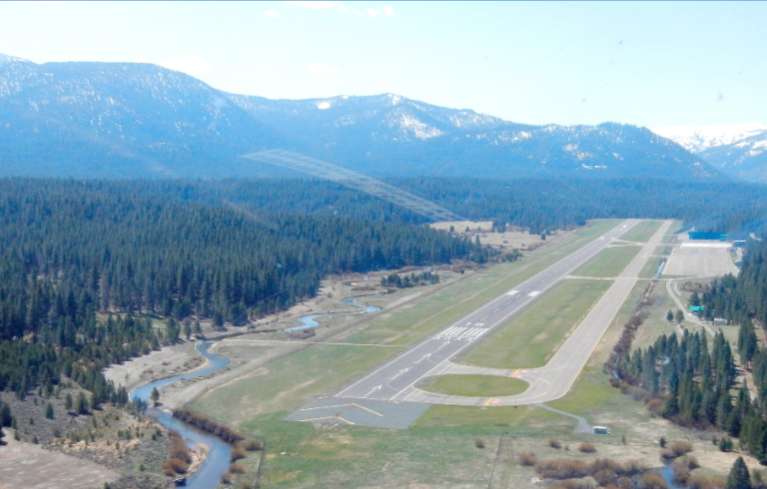
Lake Tahoe Airport master plan taking off

Lake Tahoe Airport's future is being studied. Photo/Kathryn Reed

A master plan is being put together to guide Lake Tahoe Airport for the next 20 years. Photo/Kathryn Reed

By Kathryn Reed

It’s not a noise study. It’s not a comprehensive economic study. It’s not a study to do away with the airport. It’s not a study to bring back commercial air service.

The master plan for Lake Tahoe Airport is a vision for the South Lake Tahoe airfield for the next 20 years.

As Councilman Tom Davis said at the start of the Feb. 13 meeting about the master plan, the airport has a “checkered history”.

The 1992 airport agreement that was the result of multiple lawsuits that involved the California Attorney Generals Office, League to Save Lake Tahoe and Tahoe Regional Planning Agency expired in October 2012. Because the environmental, economic and social fabric of the South Shore is not the same as 1992, the city opted to go forward with a comprehensive master plan for the airport. Plus, the FAA requires a master plan.

The FAA is funding 90 percent of the master plan at a cost of $315,000, with the city picking up 10 percent or $35,000. C&S Companies out of San Diego is the consulting firm doing the work.

Safety is the FAA’s No. 1 priority for all airports. And because it is footing the bulk of the bill, it has the most say in what is studied.

The Tahoe Regional Planning Agency has rules about noise in the Regional Plan, but they remain much the same as when the 1980 RP was adopted. There was talk when the latest RP was adopted in 2012 that noise would be addressed at a later date. That still hasn’t happened. And it won’t be looked at in the master plan.

While the economics of the airport will be considered, it is done on a limited basis. It won’t delve into who regionally is benefiting or being hurt financially by the airport. Nor will it study the feasibility of having festivals or other events there. It’s about the finances of the airport itself.

This was a bone of contention for some of the more than 100 people who attended the Thursday night meeting. Some people want a comprehensive economic study done. The city always has the option to do that at another time, for more money.

Several in the room advocated for closing the airport or keep it just for helicopter service.

To close the airport would require Federal Aviation Approval. It would also mean the city would have to pay back the $27,462,036 the FAA has provided for improvements to the facility since 1999.

The city obtained the 55-year-old from El Dorado County in 1983 for $1. The city’s general fund has been subsidizing the airport at a cost of about $400,000 a year. Half of that expense will go away after this fiscal year when the hangar debt is paid off.

Most South Lake Tahoe city offices are at the airport. This is saving the city roughly $100,000 a year in rent; what it was paying when offices were on Tata Lane.

On the flip side, if commercial air service were to return, those city offices would have to relocate.

City staff and councils have for years said they want commercial service to return. It hasn’t happened since 2000. The peak passenger count was in 1978 at 294,000.

While there was a vocal contingent of people against the airport as it is today and adamant against expansion, many in attendance want a viable, thriving airport.

The FAA will have final say over the Forecast of Demand and the Airport Layout Plan. These are two documents that are part of the master plan.

The Forecast of Demand predicts future levels of service (operations) and the type(s) of aircraft providing that service.

Michael Hotaling with the consulting firm was repeatedly asked where the information was coming from to predict those outcomes. He didn’t have a concise answer, instead differed to the company doing that report. But no one from that firm was in attendance.

The Airport Layout Plan is the other document the FAA must approve. It will show existing airport facilities and provide a blueprint for future airport development. It also goes into safety issues and land use outside the airport.

Hotaling had mentioned the airport’s being an environmental asset. When pressed to explain in what way, Hotaling said only in regards to providing a tarmac and fuel for planes fighting the 2007 Angora Fire and then as a staging area for planes working on slope stabilization post-fire.

Vehicle miles traveled to get to the airport or to the destination after landing will not be studied.

At least two more community meetings are planned regarding the master plan. Public comment would be taken at the City Council and TRPA meetings when approval for the document is sought, but by that time it’s essentially a done deal. The final report is expected to be completed in January 2015, with it going for agency approval the next month.

—

Notes:

• Lake Tahoe News did a three-part series on Lake Tahoe Airport in July 2012. Here are the articles – story No. 1, story No. 2 , story No. 3.

• Information about the master plan process will be on the city’s website.


Terrain-based ski lessons speed learning process

By Holly Ramer

NORTH CONWAY, N.H. — Allison Willette’s first few skiing lessons left her with a sore butt and aching knees but not a lot of skills. But one day’s worth of terrain-based learning made all the difference.

“Yesterday was probably the first day that I enjoyed it,” she said.

The instruction Willette got at Cranmore Mountain Resort is a new approach that uses sculpted zones to control students’ speed and reduce fears and falls. Without worrying about sliding down the mountain out of control, students can focus on building skills because the banks, berms and bumps naturally slow them down.

That means less emphasis on “snowplowing,” or pointing the skis into a wedge shape to slow down. Less time learning to stop, more time learning to go.

“Back in the good old days, we used to get people into a wedge right off the jump, but the wedge was more of a defensive posture, something to slow down and stop with,” said instructor Dave Bartlett. “But we were kind of resisting the forces we’re working with.”

The new method puts the emphasis on shaping those forces, Bartlett said, getting students more comfortable more quickly.

Willette, of Hadley, Mass., tried it out last month with her 8-year-old son. He had never been on skis; the few times she had she’d always felt intimidated. Both made quick progress.

“It allowed you to physically feel what the turn should feel like, and then you just naturally push in the right direction. So you kind of disengage your brain, and you can do it,” she said. “I learned quickly how to make turns there, and I was able to apply that to the flatter field.”

Students start out on flat snow, getting a feel for their skis. The next zone is a mini-pipe, where they slide down one side of a gentle, U-shaped slope and part way up the other. The slope is a bit steeper in the “roller” zone, which is followed by a short section of trail with banks and berms that guide students through three turns. The “traverse trax” zone includes eight turns and is the last stop before students head to the chairlift to try out a beginner trail.

Cranmore, along with Vermont’s Bromley Mountain and Jiminy Peak in Massachusetts, is one of three New England resorts that partnered with the consulting firm Snow Operating LLC to start terrain-based learning this year. Others that have adopted the approach in recent years include Breckenridge and Vail in Colorado, Northstar in California and Mountain Creek in New Jersey.

Kelly Coffey, training manager for the Breckenridge Ski and Ride School, said he has seen a marked improvement in his students, sometimes even before they actually try out the course. A family of four who took a lesson around Christmas were visibly nervous when they put on their skis, but by the time he finished explaining the zones, they were more relaxed.

“I could just see the tension in their bodies just flow out,” said Coffey, who also is a freestyle specialist for the Professional Ski Instructors of America. “From then on, I was able to get them to move a lot easier, and more gracefully, and we could progress more quickly. There were times I wanted them to turn, and they didn’t accomplish it, but they didn’t panic.”

Karen Dolan, director of Cranmore’s snowsports school, said she has seen many trends come and go during her 40 years in the industry, but she believes terrain-based learning has sticking power because it makes learning more fun. And boosting the fun factor makes it more likely that students will return — a key motivator for Cranmore and other resorts given that nationally, 85 percent of skiers never try it again after their first outing.

Mountain Creek saw its so-called conversion rate rise from 17 percent to 65 percent after implementing terrain-based learning. It remains to be seen whether Cranmore will see a similar increase, but Dolan said that kind of improvement would more than justify the $37,500 expense of building and maintaining the new terrain zones. In the meantime, the entire resort, including groomers, snow-makers, instructors and managers, is getting used to the new program.

“They all have to be part of this culture change and understand why we’re doing it. It’s everybody’s job to convert skiers and riders,” she said. “They’re here, marketing spent a lot of time getting them here, so let’s make sure that they’re having fun.”

First-time skiers and snowboarders can try terrain-based learning for free on March 9 at the three New England resorts if they register in advance. The promotion, limited to 150 people at each resort, includes equipment rental, helmet rental, a lesson and a beginner’s lift ticket.


Fire officials rethinking wildland urban interface protection

By Christie Turner, High Country News

Wildfire in the West is getting more severe all the time – burning longer, hotter and more frequently, destroying more homes, stretching federal funds to the limit, endangering more firefighters. Rising temperatures are driving the trend, and there’s no indication things will change course.

Faced with these dire circumstances, 20 of the West’s most influential wildfire experts gathered in Jackson Hole, Wyo., at a closed-door Wildfire Solutions Forum last month in an effort to generate radical ideas on how to lessen future fire danger in Western communities. The theme of the event centered on one question: How can we control the pace, scale and pattern of future development of the wildland urban interface, or WUI? Across the West, 84 percent of this interface – where federal public land abuts private land within a one-third-mile radius – remains undeveloped.

This “84 percent” was a rallying cry for the two-day forum, and symbolized a need to shift wildfire conversation away from the portion of WUI that is already developed. This is breakthrough thinking in the world of wildfire policy, where the priority has been to protect existing communities rather than venturing into the realm of future development.

Read the whole story


LTCC, LTUSD paving smooth path for students

By Kathryn Reed

One day it may be possible for students at South Tahoe High School to graduate with a diploma and the first two years of Lake Tahoe Community College work completed.

Tom Greene, vice president of academic affairs and student services at LTCC, said there is a national movement to create such a curriculum. It’s for students who learn in nontraditional environments. It would also be a highly structured environment of integrated learning.

The two South Shore education systems are in the early stages of looking into this idea.

This is one example of how LTCC and LTUSD are collaborating. The two boards met together for the first time in more than a decade on Feb. 11. Together the boards, staff and administrators are creating what’s called Pathway-20, or P-20 for short. The goal is to create a seamless transition from K-12, through community college and to higher levels of collegiate study.

“We are probably at the first level. We are able to use facilities on both sides. It saves the taxpayers money,” LTUSD Superintendent Jim Tarwater said.

Lake Tahoe Community College and Lake Tahoe Unified School District boards of education meet Feb. 11. Photo/Pat Leonard-Heffner

Lake Tahoe Community College and Lake Tahoe Unified School District boards of education meet Feb. 11. Photo/Pat Leonard-Heffner

Instead of having duplicate infrastructure, the entities share resources. A good example is the state-of-the-art digital arts building at STHS that was put in as part of the $64.5 million facilities bond that was approved a few years ago. The college can use it for classes.

The three areas of study that are linked today are dental assisting, digital media arts-new media, and culinary arts.

Students are the overriding reason to do any of this, according to the educators. It will reduce redundancy in education plans, create a more efficient education system and provide them a road map for life as a student.

Taxpayers benefit by the consolidation of resources. This could also provide more opportunities for students.

With LTCC contemplating a general obligation bond for facilities, it is looking at the possibly of putting lights in at the South Tahoe Middle School field which would benefit LTCC as it grows its sports programs. It has the added benefit of helping LTUSD and the greater community.

The P-20 vision is, “A seamless, efficient educational system that leverages our education, business and community relationships to ensure all students, particularly those underserved historically, achieve their educational goals and enhance their social mobility.”

Already STMS and STHS share a path with digital media. Within LTUSD, the transition will be introduced between the elementary and middle school levels.

Together the education entities are going to apply for a career pathways grant that would provide seed money to help with planning P-20.

Already in hand is a $100,000 grant for the next three years for career technical education pathways that will be used on course articulation and faculty collaboration.

Another $165,000 grant is geared toward adult education. Adult ed fills the needs of those who may have left high school early and need to get their GED, or others who need some help to get into college. The money can be spent on streamlining and leveraging social services, GED-ACT-SAT and other testing services, improved citizenship, English skills, and the creation of short-term CTE training and apprenticeship programs. These are not courses taken for high school or college credit.

The next steps include a formal articulation of career technical education courses, gathering data on students, looking at the cost for high school students to attend LTCC, textbooks, and making the two systems be more aligned.

The expense of textbooks is one of the barriers to college. In college students pay for books, in K-12 they are provided.

In LTUSD almost every student has a netbook. LTCC is not as technologically robust as the K-12. That is a problem that is being addressed.

The idea of selling students the netbook upon graduation has been broached. The ideal scenario is netbooks would be a relevant device when going to LTCC instead of becoming a dust magnet.

Technology is another area where the two institutions have been working. Talks are under way to develop a regional data center that would host equipment for computer servers. Having staffs work together is already taking place.


Nevada ends fight to ban gay marriage

By Jonathan Kami, Reuters

Nevada dropped its defense of a state ban on gay marriage on Monday, saying the U.S. legal landscape had changed and its arguments in support of a voter-approved ban on same-sex nuptials were no longer sustainable.

The move, made by the state’s Democratic attorney general with the support of its Republican governor, does not legalize gay marriage in Nevada but removes the state as an opponent of those fighting to overturn the ban in federal court.

State Attorney General Catherine Cortez Masto said that after careful review, the state had filed a motion to withdraw a brief it filed last month in support of the ban in a case pending before the U.S. Court of Appeals for the 9th Circuit.

Read the whole story


South Tahoe blackbirds die from strychnine

By Kathryn Reed

A flock of birds in South Lake Tahoe was thinned out after ingesting strychnine.

Stella McMillin, senior environmental scientist with the state Department of Fish and Wildlife Service, said it is not known if the poisoning was intentional.

El Dorado County Animal Services was called Jan. 28 regarding a large number of dead birds on the ground. Officers found 34 dead Brewer’s Blackbirds in the Tahoe Keys near the intersection of Lassen Drive and Tuolumne Drive.

Here is the picture of blackbirds taken by Bob Dietz (co-founder of LTWC) off of his back deck, overlooking Mt. Tallac.  In addition to blackbirds, you will also see Mourning Doves.

Blackbirds — and Mourning Doves — on the back deck of LTWC co-founder Bob Dietz. Photo/Bob Dietz

One bird was alive. Lake Tahoe Wildlife Care was able to rehab it, even though it was in convulsions when it was brought in. It was released Feb. 4.

A flock of more than 150 of these birds was seen in the area in late January. They were feeding in people’s yards.

“Why someone would cast it out in their yard and kill birds is beyond my comprehension,” Cheryl Millham, executive director of LTWC, told Lake Tahoe News. “Don’t let your dog lick anything off the ground. A cat, raccoon, coyote that would eat one of the birds that died of this would have secondary poisoning.”

McMillin said the only legal use for strychnine is to control pocket gophers by putting the poison under ground in their burrows.

“Either someone did an application incorrectly and put it above ground or they intentionally were poisoning blackbirds,” McMillin told Lake Tahoe News.

The state agriculture commissioner will conduct an investigation to try to determine who was responsible for the poisoning. At a minimum, McMillin said her department would come out with advice for people who live in the area about using chemicals that can end up targeting household pets and wildlife who were not the intended victims.

Poisoning animals is a crime.

“At this time, animal services does not know how the birds may have ingested the poison; they did not find any evidence of poisoning in the area where the birds were found,” according to Maggie Williams, spokeswoman for animal services.

Millham said if people have issues with gophers, she has a non-toxic solution she will share. For more info, call (530) 577.2273 or email tom@ltwc.org.