Reno’s Wise captures gold in freeski halfpipe

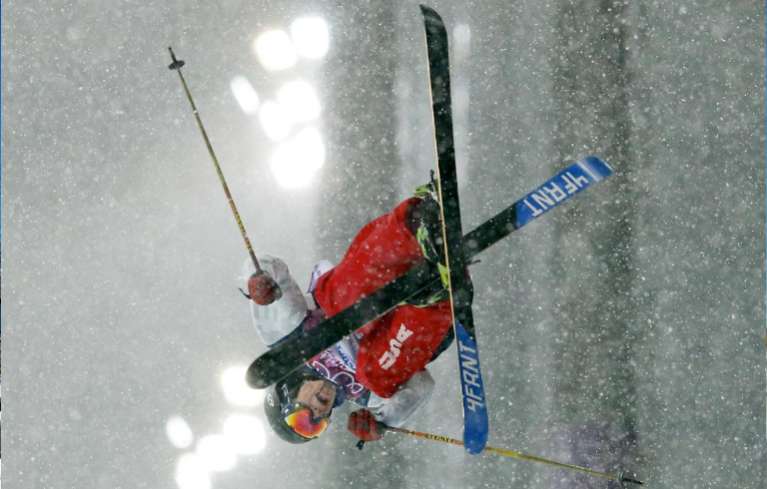
 David Wise of the United States gets air during the men's ski halfpipe final at the Rosa Khutor Extreme Park, at the 2014 Winter Olympics, Tuesday, Feb. 18, 2014, in Krasnaya Polyana, Russia. (AP Photo/Sergei Grits)

David Wise gets air during the ski halfpipe final at the Winter Olympics on Feb. 18 in Krasnaya Polyana, Russia. Photo/Sergei Grits/AP

Reno’s David Wise on Tuesday made history in multiple ways.

The 23-year-old earned a gold medal Feb. 18 in the inaugural freeski halfpipe competition. He is also the first gold medalist from Reno.

Out of an initial field of 35, he made it to the final round of 12 earlier in the day. His first run in the finals was all he needed. He scored a 92. Wise fell on the second run.

Conditions turned a bit more winter-like on Tuesday. Even though it was snowing, the pipe was slushy.

Wise had a small army of family in the crowd for support. His wife, Alexandra, even had a near life-size photo of their 2-year-old daughter. The little one didn’t make the trip to Russia.

Wise, who rides for Northstar, is well decorated in the sport of freeski halfpipe, having won three consecutive X Games gold medals.

Mike Riddle of Canada earned the silver with 90.60 points and France’s Kevin Rolland the bronze with a score of 88.60.

Aaron Blunck was the other American to make it to the finals. He finished seventh with a score to 79.40.

— Lake Tahoe News staff report


Kit Carson left legacy throughout Nevada

By AP

CARSON CITY — When you live in or near the state’s capital city, it’s hard to miss Kit Carson’s influence.

There’s Carson City, the Carson Valley, the Carson Pass and the Carson River. He also merits not just a mountain but the entire Carson Range, west of Reno and Carson City.

A life-size bronze statue of the pathfinder atop his horse stands in the mall between the Legislative Building and the Capitol, and the local library is full of juvenile books about the man who guided John C. Fremont’s expedition when it passed through the largely unknown Great Basin from 1843 to 1844. Kit Carson is our hero.

A life-size bronze statue of Kit Carson atop his horse stands in the mall between the Legislative Building and the Capitol in Carson City. Photo/ Cathleen Allison/AP

A life-size bronze statue of Kit Carson atop his horse stands in the mall between the Legislative Building and the Capitol in Carson City. Photo/Cathleen Allison/AP

Dime novels romanticizing Carson appeared as early as 1849. Author Herman Melville even mentioned him in his classic “Moby Dick.”

It is said that star-struck tourists would visit Carson at his home in Taos, N.M., before his death. Some would walk away disappointed because the 5-foot-5-inch Carson was not the giant they imagined after reading of his exploits.

State archivist Jeff Kintop acknowledged the pride he felt when he first got a job in Carson City.

“There was something cool about being in Carson City,” he told the Las Vegas Review-Journal. “We were brought up on Kit Carson and Davy Crockett. They were the heroes of the West.”

Opening the West

Born in Kentucky in 1809 and raised on the Missouri frontier, Christopher Houston “Kit” Carson gave up any thought of an education at age 9 when his father died. He was forced to help his mother, who had 10 children. He would hide his inability to read throughout adulthood, but he did learn to write his name and speak five Indian languages. Signatures of Carson sell today for $14,700.

At 14, Carson became an apprentice to a saddle maker. He hated the work and fled at 16 with merchants heading down the Santa Fe Trail. He became a trapper and a mountain man with Jim Bridger and over the years became as acquainted as anyone with lands in the unknown West.

In 1842, he met Lt. John C. Fremont by chance when the two were on a steamboat going down the Missouri River. They became lifelong friends after Fremont hired him to be his scout for expeditions into the Mexican-owned West.

Besides Nevada, those expeditions included battles in 1846 in which Fremont took Los Angeles from the Mexicans. Carson also brought 200 fresh personnel through Mexican lines to rescue Gen. Stephen Kearny and his troops in San Diego. That act helped the Americans complete their conquest and contributed to Carson’s legend.

When the United States subdued the “Californios” in the Bear Flag rebellion, Carson rode east to Washington, D.C., to inform President James Polk that the nation stretched from the Atlantic to the Pacific.

After his expeditions with Fremont, Carson decided to settle down as a rancher with wife, Josefa, in Taos.

Around this time, he came across a burned camp where Apache had killed settlers. There he saw for the first time a book on the life of Kit Carson. “Burn the … thing,” was his response.

In 1853, he and a partner herded thousands of sheep through Nevada and across the Sierra Nevada to Sacramento, Calif. He would never see “Carson City,” which received its name five years later. The sale of the sheep in gold rush California made him rich.

Carson became the Indian agent in northern New Mexico and held that job until the beginning of the Civil War in 1861. He led the advance at Valverde, near present day Socorro, N.M., with a group of New Mexican volunteers who subdued the Confederates. But then the Army chose Carson to lead the battle against a new foe: the Navajo.

The Long Walk

This year not only marks Nevada’s 150th anniversary but the 150th anniversary of “The Long Walk of 1864,” when Civil War brevet Gen. Kit Carson on government orders conducted a scorched earth policy of burning cornfields, killing sheep and taking over water holes to force the Navajo to surrender to Army control.

The Army then forced 8,000 American Indians to walk more than 300 miles from northeastern Arizona to Fort Sumner, N.M., or the Bosque Redondo. Three hundred died along the way.

The Navajo today contend that the United States wanted them out of northeastern Arizona to open the area to mining. They also say that Carson paid Ute and other American Indians who were their traditional enemies to burn their hogans, steal their livestock and capture them for slavery.

Starving and without water, the Navajo surrendered to Carson and his troops at Canyon de Chelly in January 1864.

After the Civil War, Carson returned to Taos and tried to expand his ranch into Colorado. When he died in 1868, legend has it, his last words were “Wish I had time for one more bowl of chili.”

Myth of the West

Some historians see Carson as an American Indian killer, a victim of American expansionism and a racist. He may have been all of those things, but he also was a man who shared the views of most white people of his time.

He remains a villain to the Navajo Nation.

“We hold him responsible for the suffering the Navajo people experienced,” said Clarenda Begay, curator at the Navajo Nation Museum in Window Rock, Ariz.

“A lot of people don’t know about the Long Walk. We haven’t changed in our views of him.”

In published works, Carson contended he only killed bad tribesmen, never “a squaw or a papoose,” and despised those who did.

His apologists blame his commanding officer, Gen. James Carleton, for orders to kill all who would not surrender and yield to reservation life.

But as early as 1857, Carson had adopted Carleton’s philosophy that the only way to tame the Navajo was by confining them to a reservation, teaching them agricultural skills and stationing troops nearby to prevent them from leaving.

“As long as these mountain Indians are permitted to run at large, this country will always remain in its impoverished state, and the only remedy is to compel them to live in settlements, cultivate the soil and learn to gain their maintenance independent of the general government,” Carson said.

Sheryln Hayes-Zorn, acting director of the Nevada Historical Society in Reno, says Carson remains in the national consciousness largely because of the 19th century dime novel and the television shows and movies that romanticized him.

Without much accuracy, they created a hero for generations of children who grew up playing cowboys and Indians.

“I think that kept his legend going,” she said.

During a recent public television documentary on Carson, author Dayton Duncan called him the “greatest living symbol of the desire Americans had to mythologize the West and take real things and turn them into something else. He just was who he was and other people projected onto him their own beliefs, their own myths.”

Meyers youngsters learn to snowboard — indoors

By Kathryn Reed

MEYERS – Dry slopes work for British Olympians to learn to ski and ride, so why not indoor snowboarding for Meyers kids?

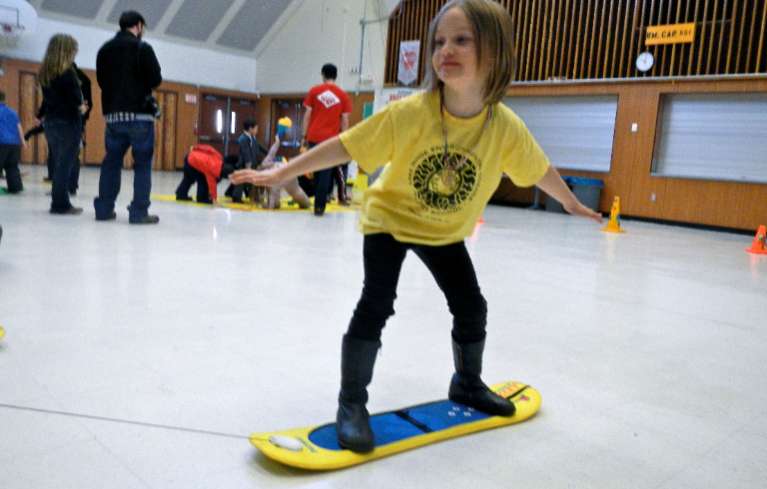
That is exactly what took place two days last week at the magnet school. Four stations were set up in the multipurpose room, which doubles at the gymnasium, so K-2 students could get a feel for what it is like to be on a snowboard.

And while this isn’t how hometown gold medalist Jamie Anderson learned, the youngsters were thrilled to be possibly following in her footsteps. One kindergartner said he had been snowboarding his whole life.

With how well some of the students were able to balance, it was obvious they had either been on a board before or they are naturally gifted.

A handful of Sierra-at-Tahoe employees brought the Burton-certified learning tools to the school as an introduction to snowboarding. But it’s more than that for teacher Kristi Jouett. What was being taught also fits into the state standards for physical education.

“It teaches them balance, changing directions, and moving through space without crashing into each other,” Jouett said of the interactive Burton program. These are all things she teaches in PE.

Sierra would like this to become a permanent component of Lake Tahoe Unified School District’s physical education curriculum at all of its elementary schools. The tools Sierra uses are supplied by Burton. All the equipment is scaled to this age group.

One station had kids on a mini plastic snowboard that was then pulled by one or two classmates who held a handle that looks like it would be used for water skiing.

Kindergartner Avalon Newberry is pulled on a snowboard by classmates at the magnet school in Meyers. Photo/Kathryn Reed

Kindergartner Avalon Newberry is pulled on a snowboard by classmates. Photo/Kathryn Reed

Avalon Newberry was “riding” through the gym as one of the instructors told her: hands out, stay low and spirits high.

A sense of seriousness then came over her, followed by a big smile as she did what she was told to do.

Those on the stage were on a springy mini snowboard that allowed them to get the feel of rocking back and forth as well as side to side. Once the balance part was mastered then they tossed a ball to each to further test their skills.

Like what the pros have been showing off for the judges, the youngsters were grabbing the tail for points.

At the end of the special PE class they were all awarded “Olympic” medals.


Study casts doubts on value of mammograms

By Gina Kolata, New York Times

One of the largest and most meticulous studies of mammography ever done, involving 90,000 women and lasting a quarter-century, has added powerful new doubts about the value of the screening test for women of any age.

It found that the death rates from breast cancer and from all causes were the same in women who got mammograms and those who did not. And the screening had harms: One in five cancers found with mammography and treated was not a threat to the woman’s health and did not need treatment such as chemotherapy, surgery or radiation.

The study, published last week in the British Medical Journal, is one of the few rigorous evaluations of mammograms conducted in the modern era of more effective breast cancer treatments. It randomly assigned Canadian women to have regular mammograms and breast exams by trained nurses or to have breast exams alone.

Read the whole story


Bill would put warning label on sugary drinks

By Patrick McGreevy, Los Angeles Times

SACRAMENTO — Citing studies linking soda to obesity, a state lawmaker and medical experts proposed a first-in-the-nation bill Thursday that sugary drinks sold in California carry health warning labels similar to those on cigarette packs.

They want warning labels on the fronts of all cans and bottles of soda and juice drinks that have sugar added and 75 or more calories per 12 ounces.

The label would read: “STATE OF CALIFORNIA SAFETY WARNING: Drinking beverages with added sugar(s) contributes to obesity, diabetes, and tooth decay.”

Read the whole story


Water quality fine will restore areas of Truckee

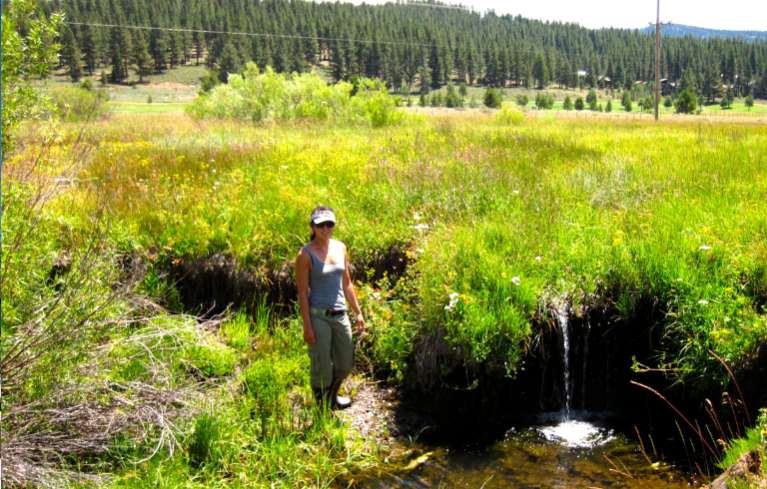
MM_headcut – example of the type of instream erosion caused by excessive flow in Middle Martis Creek.  Restoration would eliminate these peak flows and restore the headcuts. (photo credit, Brian Hastings, Balance Hydrologics).

Erosion causes excessive flow in Middle Martis Creek. Restoration would eliminate these peak flows and restore the headcuts. Photo/Brian Hastings/Balance Hydrologics

By Kathryn Reed

More than $700,000 from stormwater violation fines is going to be spent on three projects in the Truckee area.

Five years after a settlement agreement was reached with Lahontan Regional Water Quality Board and East West Partners, the parent company of Northstar Mountain Properties, the remaining money is going to be put to use.

At the time the $2.75 million penalty was the largest rendered by Lahontan. The fines were for 11 projects that encompassed 325 acres, including work at the Village at Northstar, employee housing and trailside townhomes. Work at the Ritz-Carlton was also part of the fine, though some documents call it Highlands Resort Hotel.

East West later filed bankruptcy, which then lessened the fine by about $1 million.

The Lahontan board in April 2011 allocated the money in part to the Northstar Fire District. That money has been spent. Another portion was for restoration at the Waddle Ranch.

“It didn’t make sense to spend the rest of the money on that site when there are other areas in the watershed that are actively impacting water quality,” Eric Taxer, engineer with Lahontan, told Lake Tahoe News.

That is why the Lahontan board at its meeting last week revisited how best to spend the fine.

Also at the Feb. 12 meeting the board changed the supplemental environmental projects (SEP) protocols. This will give the board more of a say in what goes on instead of being left with a yes/no vote when negotiations are completed.

Spending the Northstar Mountain Properties fine will be the first test of the changes to SEP rules. Board members Amy Horne and Peter Pumphrey helped staff with the SEP revisions.

“The overall concept is transparency so the public has a say in the process,” Taxer said. “Projects were developed through a public input process that consisted of local stakeholders up there.”

The projects approved on Wednesday are restoration at Elizabethtown Meadow, Dry Creek and Middle Martis Creek Wetlands. Those three will use the remainder in the account, or $704,000.

Truckee River Watershed Council will be the lead agency to get the work done.

At Elizabethtown, roads will be decommissioned and drainage will be reconnected, along with meadow restoration. The design should be finished in March, with CEQA documents done in June. Construction should be done by October. This project will cost $79,500.

At Dry Creek there are logging issues that go back to the late 1800s. Taxer told the board that in places the meadow has turned into sagebrush. With stream and meadow restoration, the goal is to return it to its pre-logging conditions.

The $224,500 project will be completed in October 2015.

At Middle Martis Creek the channel will be realigned, old fill will be removed and wetlands replaced. Issues arose in this area when the creek was realigned and confined to go under Highway 267.

This project costs $400,000. It will be done by the end of this construction season. Revegetation will occur in 2015.


Travel marketing proves profitable for U.S.

By Amy Langfield, CNBC

A little marketing can go a long way when it comes to luring travelers, even if you’re a well-known destination like the United States. That’s the message from Brand USA, the public-private partnership created in 2010 to stop the U.S. from shedding its share of the world’s tourists.

The U.S. was increasingly losing out to spots such as Canada, Mexico and the Caribbean.

According to the Department of Commerce, 67 million international travelers visited the United States in 2012.

And Chris Thompson, CEO of Brand USA, said that not all of them would have come without a nudge from a $72 million marketing campaign focused on eight countries. That expenditure elicited 1.1 million trips and $7.4 billion in spending that otherwise would have gone to other destinations, according to a report that the firm released Thursday.

Read the whole story


Coalition not giving up on Tahoe-Reno Olympics

By Ed Vogel, Las Vegas Review-Journal

CARSON CITY — The Sochi Olympics are expected to cost $51 billion. And a study shows that only six of the 19 cities that hosted past Winter Olympics will have enough snow to host them after 2100.

There is a movement for the Olympics to return to Tahoe. Photo/LTN

There is a movement for the Olympics to return to Tahoe. Photo/LTN

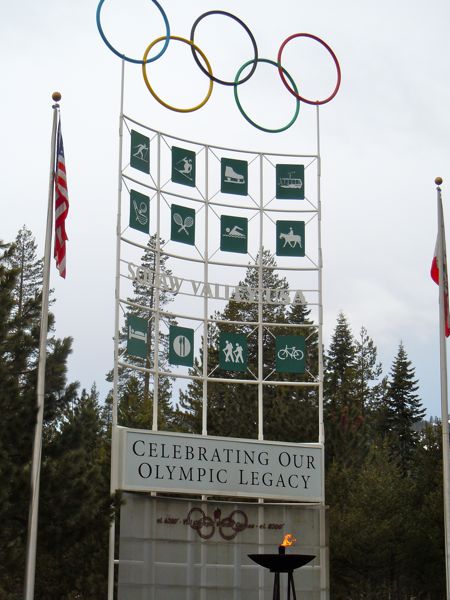
Squaw Valley hosted the 1960 Winter Games, but it won’t have the snow to host another Olympics by 2050, according to a study released in January by the University of Waterloo in Canada.

So what’s going to happen to the dream of Lt. Gov. Brian Krolicki and the Reno Tahoe Winter Games Coalition? They repeatedly have tried to coax the U.S. and International Olympic committees to award a winter games to the Reno-Tahoe area.

“We still believe Lake Tahoe will be the next region in North America to host a Winter Olympics games,” said Krolicki, chairman of the Reno Tahoe coalition for nearly a decade. “It is our passion. It is a dream you have to believe in. It would be an incredible chance to showcase our region and improve tourism and economic development for generations.”

He noted Wednesday that 55,000 tickets were sold for a curling tournament in Las Vegas last month, evidence that even Southern Nevadans would be eager for a Reno-Tahoe Winter Olympics. Corny as curling might be, it has become one of the favorite Winter Olympics sports.

When the U.S. Olympic Committee decided against having an American city bid for the 2022 Winter Olympics two years ago, the Reno Tahoe coalition just changed the year on its T-shirts and immediately began talking about hosting the 2026 Winter Games.

Read the whole story


Former Sierra Ski Ranch owner dies at age 92

Former Sierra Ski Ranch owner Vernon Dewayne Sprock has died. He was 92.

Mr. Sprock, who was living in Bozeman, Mont., died Feb. 10.

Mr. Sprock along with his wife, Bobbie, owned and operated Sierra Ski Ranch for 40 years. In 1953, the couple took over the financially troubled ski area that is now known as Sierra-at-Tahoe.

Vern Sprock

Vern Sprock

It was here that Mr. Sprock gained his reputation as a hard worker, dreamer and innovator. Sierra Ski Ranch was located one mile down Highway 50 from its current location. Sierra was relocated in 1968 due to a proposed highway alignment that never happened.

The first year in that location was one of many challenges due to a very heavy snowfall damaging the new lodge and lifts. However, perseverance and prayer prevailed, and the obstacles were overcome to lay the groundwork for many expansions at this new location. He was an instrumental member of the B77 Code of National Ski Safety Committee for aerial tramways. The couple shared a lifetime of pioneering hardship and hard work, always working together to solve each challenge. The resort was sold in 1993 to Fibreboard Corporation. Three years later Booth Creek acquired it and changed the name to Sierra-at-Tahoe.

Mr. Sprock was born Sept. 3, 1921, in Elk Grove to Hiejo Henry and Bertha (Stubel) Sprock. Following his graduation from Elk Grove High School, he continued to work on the family farm. While doing this he furthered his education in the engineering and surveying field. Mr. Sprock was a World War II veteran, serving in the Army in the culinary department in Texas from 1942-46.

After the war Mr. Sprock spent time with his dog as his only companion near the Tioga Pass as a trapper of marten and bear. He sold the meat and furs from the trappings to make his living. He later relocated to Tamarack Pines on Highway 50.

For a couple of winters he worked for the California Division of Highways, now known as Caltrans. In the summer months he built log cabins, doing all the work from scratch by cutting the trees, skinning the logs, and cementing them together, along with all aspects needed for a completed cabin.

Mr. Sprock met the love of his life, Barbara “Bobbie” Sprock, at Strawberry Lodge on the dance floor in 1950. They were married Oct. 28 that same year in San Francisco. Together they built a log cabin for their first home and raised rabbits to supplement their income. They were married until Bobbie passed 56 years later.

After the ski area was sold, Mr. Sprock took an interest in an innovative and cutting edge pedestrian transport system called the Yantrac People Mover, where he spent much time using his background knowledge in engineering and survey.

Then the couple moved to Montana where they purchased and operated the V & B Ranch located near Wilsall. On their 5,500-acre cattle ranch there were several other businesses operated from this property, such as guided fishing on the property, horseshoeing, and more.

After the loss of Mr. Sprock’s vision due to a stroke, they sold the ranch and moved to Bozeman, Mont. He then took great interest in the activities and accomplishments of his grandchildren and great-grandchildren. Mr. Sprock enjoyed skiing, fishing, hunting and family activities. He enjoyed and attended Kirkwood Baptist Church in Bozeman.

Survivors include children, Kathy (Robert) Pavich, and Peter (Juli) Sprock; grandchildren, Christopher Pavich, and Ty Sprock, all of Zephyr Cove, Richard Pettay and three great-grandchildren (Tyler, Jacob, Sara) of Carson City; sister Nadine Tomlinson of Sioux Falls, S.D.

Funeral Services will be at 11am Feb. 20 at Dahl Funeral Chapel, with interment to follow at Sunset Hills Cemetery.

In lieu of flowers, the Vernon Sprock Athletic Scholarship Fund has been created for the benefit of alpine skiing athletes through Far West Ski Foundation, a 501(c) 3. Checks may be made payable to Far West Ski Foundation, P.O. Box 861, Fallbrook, CA 92088.


Obama pledges millions to help drought-stricken Calif.

By Norimitsu Onishi and Coral Davenport, New York Times

FRESNO — President Obama arrived in the heart of California’s parched farmland on Friday afternoon to offer tens of millions of dollars in federal assistance to the state, where the lack of rain and snow this winter has led to the severest drought in its modern history.

Meeting with farmers and ranchers around Fresno — where electronic signs along highways flash entreatingly to drivers, “Serious drought. Help save water” — Obama pledged $183 million from existing federal funds for drought relief programs in California. Though the announcement won cautious support in this region, Obama also pressed ahead with the more difficult task of enlisting rural America in his campaign on climate change by linking it to the drought.

Obama also spoke of climate change, drawing links to the drought as well as hurricanes in the Atlantic Ocean. Mr. Obama announced that he would ask Congress for $1 billion in new funding for a “climate resiliency” program to help communities invest in research, development and new infrastructure to prepare for climate disasters.

Read the whole story