Santiago looks back on time as supervisor and forward regarding El Dorado County’s needs

By Kathryn Reed

STATELINE – Lean economic times forced El Dorado County to get smarter, according to Supervisor Norma Santiago.

Santiago, who will reluctantly be termed out of office at the end of the year, gave a recap of her experience to Soroptimist International South Lake Tahoe last week at Harrah’s Lake Tahoe.

She said she is against term limits and hopes that regulation will one day be removed or be upped to three terms as a maximum.

“The bottom line is the county is well on its way to be a better partner with the community and finding sustainable solutions,” Santiago said.

El Dorado County Supervisor Norma Santiago has a few months left in office. Photo/LTN

El Dorado County Supervisor Norma Santiago has a few months left in office. Photo/LTN

Consolidating departments, she said, has made for a more efficient way of doing business. It also reduced redundancies.

The county is working on technological upgrades so all the systems talk to each other and therefore manual work would be decreased.

“We need an economic strategy. We need a workforce development strategy,” Santiago said.

She said county residents are finding jobs elsewhere – including in Douglas, Placer and Sacramento counties.

When it comes to the state, she said it’s imperative El Dorado pay attention to decisions about water.

“Agriculture is a big part of our county,” Santiago said. Water storage will continue to be a huge issue, she added.

She also said the county needs to be at the table for the gas tax discussions. A mileage usage fee is being talked about in Sacramento to fund road improvements. This is because the gas tax revenue is not enough to cover the costs to repair state highways as vehicles become more efficient and people go to the gas station less often.

When it comes to Meyers, Santiago again took full responsibility for causing angst over what was called the Catalyst Project. This is no longer an option.

But what the community has is a $250,000 planning grant that will be used to figure out how to make Highway 50 more manageable, and work on improving trails and the connections to them.

What was missing from Santiago’s talk was any reference to the county’s dealings with the city of South Lake Tahoe. That relationship has for decades been precarious.

Santiago stressed the need for Lake Tahoe to elect one of three candidates from the South Shore. Two are from the Pollock Pines area now that the district has been reconfigured to cover areas outside the basin. (Beginning March 25 Lake Tahoe News will be running profiles on the supervisor candidates.)

She said it’s not just about representing Tahoe in Placerville, but how this position is also on the boards for the Tahoe Regional Planning Agency, California Tahoe Conservancy, Tahoe Transportation District, Recreation JPA, Waste Management JPA and other Tahoe-centric boards.

However, Santiago said she was not endorsing any particular candidate.

Three of the major challenges for the county, according to Santiago, are how it is going to define itself, building relationships with the state, and the economy.

She briefly touched on the no-growth initiatives being brought forth by West Slope interests that everyone in the county will have an opportunity to vote on in November.

As for her future, Santiago said she wants to take time off to explore the possibility of running for another office in 2016. While she did not specify which one, there is speculation it will be for state Senate.

Tahoe’s seismic monitoring being upgraded

By Kathryn Reed

Earthquake stations throughout the Lake Tahoe Basin are being upgraded so the Nevada Seismic Laboratory in Reno can create a shake map for first responders.

The information collected will be able to tell emergency personnel what is happening and where to go to provide help.

Graham Kent who heads the lab – and who is a 1980 grad of South Tahoe High School – gave a presentation March 20 to the California Tahoe Conservancy board. The board OK’d a license agreement for a seismic sensor on one of its properties in Placer County.

Sierra Nevada seismograph station being upgraded by John Torrisi, NSL staff.

Sierra Nevada seismograph station is upgraded by John Torrisi. Photo/Nevada Seismic Lab

The Reno lab is upgrading its sensor vaults with modern broadband microwave communications systems.

Kent explained that the cameras would also be able to provide real-time photos that could be advantageous to fire crews.

The goal is that video would all be available to everyone through the lab’s website. This in turn would then ideally be used by the media and through social media to spread information about a disaster.

The cameras will be active 24/7.

While some people don’t think of Tahoe as being a hot bed of seismic activity, it is.

Kent said more seismic research has been in the Lake Tahoe Basin than any other basin in the world.

“Each earthquake we get here causes minor landslides,” Kent told the board.

He showed a simulation of what would happen if there were a major earthquake that then generated a lake tsunami. It wiped out much of what is on land, including Inn by the Lake where the meeting was being conducted.

The West Tahoe Fault hasn’t had major action in 4,500 years. Scientists say it’s due because history shows it erupts every 4,000 to 5,000 years.

Faults lie under Angora, Cascade, and Fallen Leaf lakes. Plus, there are the Incline Village and Stateline faults.

The seismic stations have an 18-foot triangle antenna mast with a solar panel, antennae, equipment enclosures, seismograph and 32-foot connecting cable. It could be installed this spring.

Lab officials are responsible for installation and maintenance. Although this particular CTC property is slated to be traded to State Parks, the negotiations with that state agency are that all agreements that are in place are to be honored.

In other action:

• The board approved guidelines for a volunteer program.

• It was brought up how non-action items did not have an accompanying staff report. Board members are OK with this because the items for the most part are an update. But for the public that is not previously aware of the issue, they are left in the dark.

• Staff is going to focus on 17 parcels – six near the Y in South Lake Tahoe, nine in Meyers on Highway 50 and two in Kings Beach – to be sold under the Asset Lands Program. The board agreed to notify a wider area, include why the parcel had been obtained and what funds were used to acquire it. Of the 333 lots in the program, 227 are residential. At this time there is no plan to sell the neighborhood lots. Tahoe Vista resident Ellie Waller suggested the board visit the sites before they are sold. The board agreed to do so.


Teens not always choosing cheap alcohol

By Maanvi Singh, NPR

For underage drinkers, it’s not always about the cheapest alcohol they can get their hands on. Many of them are brand conscious, researchers say, and they’re not drinking the same stuff as their parents.

Young drinkers do go for sweet malt beverages that mask the taste of alcohol with fruit flavors; 17 percent said they’d had a Smirnoff malt beverage, which comes in flavors like grape and frozen strawberry lemonade.

But it’s not only about cheap and sweet. Teenagers do favor budget beers like Keystone Light, and 28 percent of teen drinkers said they’d had a Bud Light in the past month. But they also drink pricey hard liquor like Jack Daniels whiskey and Grey Goose vodka.

Read the whole story


Becker Peak — short trek for big views

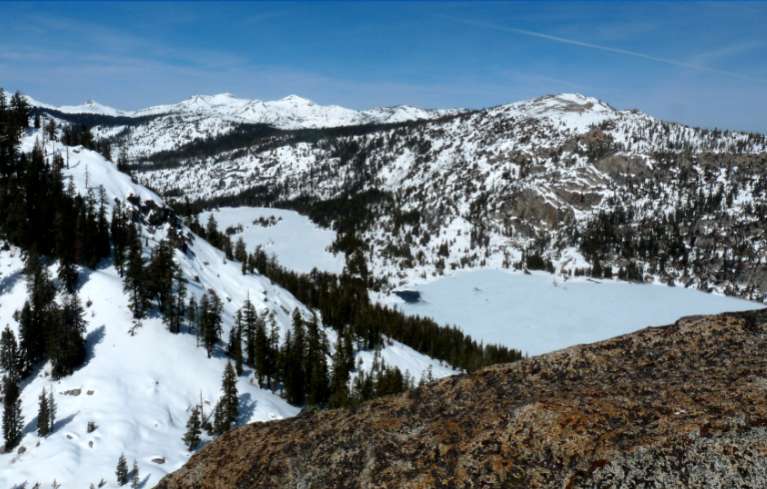
Frozen Echo Lakes from Becker Peak. Photo/Richard Matera

Frozen Echo Lakes from Becker Peak. Photo/Richard Matera

By Kathryn Reed

Crevasses and the refraction of light have Echo Lake looking like it is mirroring a sky filled with puffy cumulus clouds. It’s as though a pale blue marker has been used to draw circles on the white sheet of ice.

From our vantage point atop Becker Peak and then walking along the ridge, Echo Lake is mesmerizing.

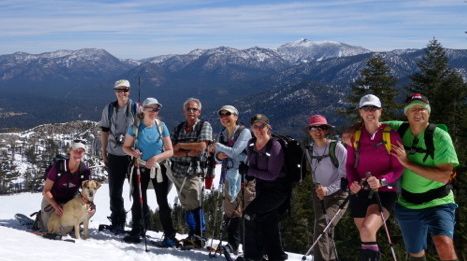
Kae, AJ the dog, Richard, Carol, Stan, Sandy, Sue, Corine, Donna and Craig almost to the top.

Kae, AJ the dog, Richard, Carol, Stan, Sandy, Sue, Corine, Donna and Craig almost to the top.

Nine of us spent last Sunday snowshoeing to the top of Becker Peak – elevation 8,391 feet.

Snowshoeing this year has required seeking out higher elevations because it’s only dirt at lake level. And while some were in shorts and others in short sleeves, the snowshoes were definitely needed. Snow even covers the road leading into Echo Lake.

A late morning start was ideal so the snow had some give to it. Almost everyone used poles, which was good on the steeper sections – for the ascent and decline.

The worst part, at least in terms of exertion, is turning off the road and heading straight up to the ridge. We made the left directly across from the Berkeley Camp and by a few no parking signs.

Some in the group advised that it’s better to start a little farther up the road during hiking season to avoid what is bushy terrain without snow.

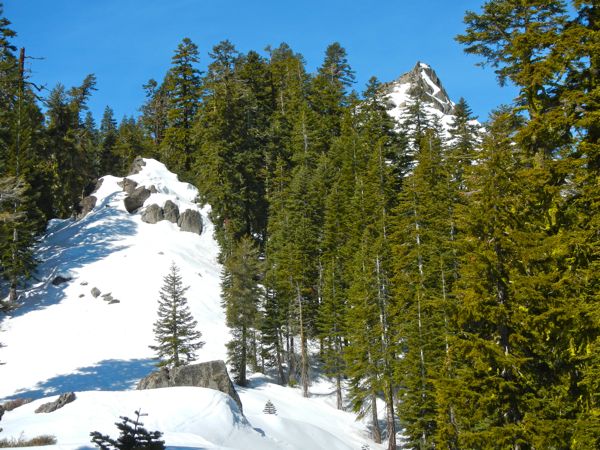
Becker Peak Photo/Kathryn Reed

Becker Peak
Photo/Kathryn Reed

There’s plenty of snow now so those bushes are not visible.

If the route up does not take your breath away, the views on top of the ridge are bound to. Flag Pole, Angora Peak, Dicks Peak, the back of Mount Tallac, Jakes Peak, the Angora burn area and Lake Tahoe all spill forth in an array of winter beauty.

And while it would be possible to call it a day at this point in terms of scenic beauty, the views only get better.

Even though Craig was correct to say the hard part was over, there is still some climbing to do.

I have to say I was glad to be with people who had done this trek before. Even though other snowshoers had laid down a trail before us, their route was a bit sketchy at times. Some said there was no way to get lost, but I’m also of the belief there is a first for everything.

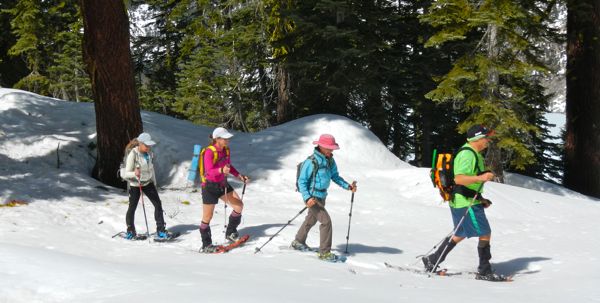
Carol, Donna, Corine and Craig snowshoeing through the wilderness. Photo/Kathryn Reed

Carol, Donna, Corine and Craig snowshoeing through the wilderness. Photo/Kathryn Reed

Not too much farther and we see the slopes of Sierra-at-Tahoe on our left and a frozen Echo Lake to our right.

We get to what could be another stopping point where there is an incredible expansive view of Echo Lake. We pause long enough for photos before making the final ascent up to Becker Peak.

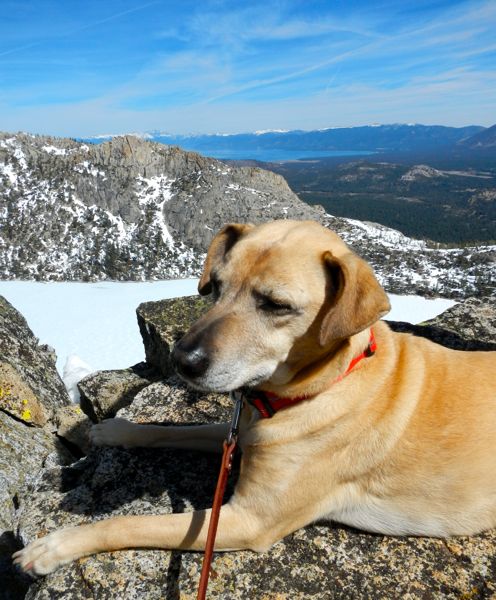
The peak itself is a pile of large rocks. Off come the snowshoes so we can scramble to the top. Even AJ the dog is able to make it up to the top. We sit there a bit, having a bite to eat, taking in the views and putting layers back on to ward off the nippy wind.

AJ with a frozen Echo Lake in the background and Lake Tahoe in the distance. Photo/Kathryn Reed

AJ with a frozen Echo Lake in the background and Lake Tahoe in the distance. Photo/Kathryn Reed

It’s 360-degrees of pure Sierra serenity.

Skiers are along the edge of Echo Lake. Talking Mountain from this vantage point looks like it would be easy to reach.

We climbed about 1,000 feet to get to this point. It’s about 4.5 miles round trip. We chose a lower route back that provided more views of Echo Lake and Lake Tahoe.

—-

Getting there:

From South Lake Tahoe, take Highway 50 west over Echo Summit. Turn right on Johnson Pass Road. Parking is to the right.

A sno-park pass is required from Nov. 1-May 30. They may be obtained online.


Movement under way to reverse online gaming

By Karoun Demirjian, Las Vegas Sun

WASHINGTON — Nevada and Delaware’s recent agreement to launch the nation’s first collaborative, interstate online poker zone appears to have drawn a backlash from gambling’s opponents in Congress, who are planning to drop a bill rolling back the legal opinion underlying the recent deal.

Rep. Jason Chaffetz, R-Utah, is planning on formally releasing legislation to roll back the 2011 Justice Department reading of the Wire Act next week, when Congress returns to Washington.

Unlike many recent online gaming bills, the legislation would include no carve-out for online poker; it would simply undo the Justice Department opinion that determined Internet gaming transactions are legal between states where gambling is legal.

Read the whole story


Growth initiatives before El Dorado County voters

By Tony Bizjak, Sacramento Bee

In El Dorado County, where growth wars have raged for decades, voters may face two or more dueling measures on the November ballot.

A group filed papers Tuesday for a ballot initiative it says will control growth, keep much of the county rural, fight congestion on Highway 50 and encourage more jobs. That petition drive, called Control Growth to Fix Our Local Roads Initiative, is led by Region Builders, a Sacramento group of commercial builders, architects and engineers that recently led the political fight to build a downtown Sacramento basketball arena

The group’s petition, if successful, would extend the county’s Measure Y slow-growth initiative until 2025, allowing the county to continue collecting traffic impact fees, used to improve roads to match development. It would require the county annually to report on how it is spending road money.

Read the whole story


Kings Beach residents want Tahoe Conservancy, State Parks to leave them alone

By Kathryn Reed

KINGS BEACH – If State Parks, California Tahoe Conservancy and North Tahoe Public Utility District officials cannot find a way to work together in a manner that residents can live with, it’s possible state legislation will resolve the issue.

State Sen. Ted Gaines, R-Roseville, said in the next week he wants all parties to come together and figure it out. The it is what to do with Kings Beach State Recreation Area.

State Parks has owned the beachfront area since 1978, but it has always been run by NTPUD. Suddenly, State Parks wants to change how business is done. But neither State Parks nor CTC publicly has said a bad word about what NTPUD has been doing.

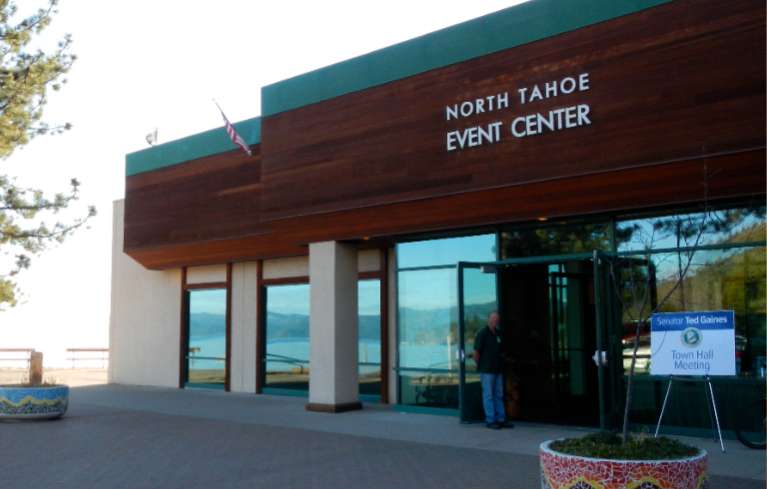
More than 150 people attended a meeting March 20 at the North Tahoe Event Center in Kings Beach. This building used to be a bowling alley, but is now the town’s main gathering place. It is owned by NTPUD, while the parking lot and beach are owned by State Parks.

xxx

Parking could become an issue at North Tahoe Event Center. Photo/LTN

All of the 24 people who spoke want NTPUD to remain the operator of the recreation area.

Gaines and Assemblyman Brian Dahle, R-Bieber, hosted the meeting. They are behind Senate Bill 832, which would transfer ownership to NTPUD and keep it as the operator. A decision by the Legislature is likely to come by July.

Last week State Parks said it would close the area during the winter. On Thursday Jess Cooper, northern division chief for the agency, said it will remain open year-round.

But residents are not convinced. One after another commented on how state budget matters could change the policy.

It was pointed out how Van Sickle Bi-state Park on the South Shore is still gated even though there is no snow on the ground. Van Sickle closed for the season Oct. 31. Gates are set to open May 1.

Van Sickle was supposed to be operated by Nevada and California state parks. Instead it is a Nevada, CTC and Tahoe Rim Trail Association operation. State Parks continues to be a missing partner and the recreation area continues to be open seasonally. State Parks last week said it wants to revisit the possibility of being involved with Nevada.

Cooper, at the meeting, said his agency has the money and manpower to operate the Kings Beach facility. But he did not say why the state has not been investing in the property. There is $600,000 worth of improvements needed to bring the site into compliance with the Americans with Disabilities Act, plus there are more than three-quarters of a million dollars in deferred maintenance that needs to be dealt with.

Paul Schultz, NTPUD general manager, explained that Placer County would not allow the district to go after grants for projects without a 25-year lease in place. He said the district would go bankrupt without assistance to fund improvements.

The contract NTPUD had with State Parks expired in 2008. Since then a month-to-month agreement has been in place.

State Parks has long talked about extending the pier from 140 feet to 545 feet. This would accommodate waterborne transportation. The Tahoe Transportation District is exploring the possibility of bringing a ferry to the lake that would at this time service South Lake Tahoe and the North Shore. It’s said to be more of a commuter vessel than a tourist attraction.

“The biggest thing is we felt we would be in a better position to make improvements if we were in charge of operations,” Patrick Wright, CTC executive director, told the crowd.

CTC owns Kings Beach Plaza, which is adjacent to the Kings Beach SRA. It also owns Coon Street, North Tahoe Beach, Moon Dunes Beach, Secline Beach and Sandy Beach.

It was announced last week that CTC and State Parks would be partnering on the management and operations of Kings Beach State Recreation Area. CTC does not manage entities like parks, that is why it would be State Parks doing the day-to-day grind in Kings Beach.

But the outcry from locals was they don’t trust the state and they don’t believe NTPUD needs to be replaced.

“I like local control. There is more accountability,” Gaines said.

Wright said, “Parks and the Conservancy felt we were in a better position to make investments if we managed the parks.”

But what no one from the two state agencies explained is why improvements cannot be made if NTPUD were to continue to run the facility. It was also not disclosed how taxpayers may benefit or be hurt by operational changes.

Wright and Cooper from the state agencies said there will be a transition team put in place by the time State Parks takes over in November. Neither one said anything after the state senator told the three parties to figure out a compromise.

Placer County would like to have lodging on the beach in Kings Beach. With the Tahoe Expedition Academy in Kings Beach going forward on the lakefront property where Ferrari Crown Motel, Falcon Lodge and Goldcrest Resort properties are, the prime lodging spot is eliminated. That leaves the event center location.

This adds to the distrust locals have when it comes to the state taking over operations. They don’t know that State Parks won’t make it impossible for the event center to operate, especially if access is limited because the state owns the parking lot. This could then open up the opportunity for new development.


U.S. gives up some controls of Internet

By Nextgov

Facing international pressure, the U.S. government has agreed to give up control over important technical aspects of the Internet.

The Commerce Department will no longer oversee the Internet Corporation of Assigned Names and Numbers, a nonprofit group that manages the Internet’s address system.

Larry Strickling, the assistant secretary of Commerce for communications and information, said the “global Internet community” will have the final say over the database of names and addresses that allows computers around the world to communicate with each other.

The Internet was invented in the United States, and the country has long maintained a central role. But as the Internet has grown, other countries have demanded a greater voice in its governance.

Edward Snowden’s leaks about the National Security Agency’s mass-surveillance programs have exacerbated resentment over the central role of the United States in managing the Internet.

Read the whole story


Nev. may regulate elk, deer antler collection

 Elk with trophy antlers. The Nevada Department of Wildlife is looking at regulating the growing practice of collecting the trophies to protect the state’s deer and elk populations. (Tim Torell/Nevada Department of Wildlife)

Nevada Department of Wildlife is looking to regulate collecting the trophies to protect deer and elk populations. Photo/Tim Torell/Nevada Department of Wildlife

By Sean Whaley, Las Vegas Review-Journal

CARSON CITY — There’s gold in them thar antlers, and as a result, the Nevada Department of Wildlife is looking at regulating the growing practice of “shed hunting” to protect the state’s deer and elk populations.

Deer and elk shed their antlers every winter and collecting them has become a lucrative pastime for some and an outdoor recreational activity for others.

The antlers are used in a variety of ways, including as chandeliers, furniture or other decorative items.

Read the whole story


CTC close to closing Alta Mira deal in S. Tahoe

By Kathryn Reed

It doesn’t matter if one is on the street or the beach, the area near the Alta Mira building in South Lake Tahoe is not visually appealing.

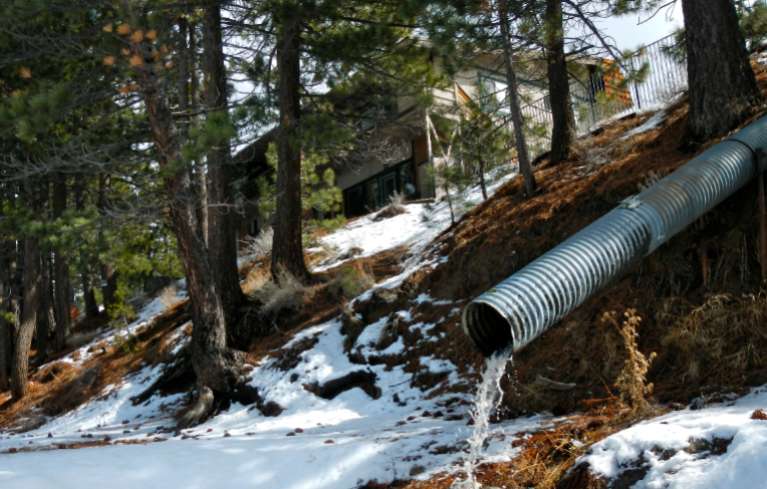
At lake level there is a large pipe coming out of the bluff that is delivering water into Lake Tahoe.

At curbside the structure blocks the view of the lake and the bike path is less than ideal.

Water, this month, flows from the pipe below the Alta Mira building in South Lake Tahoe into Lake Tahoe. Photo/LTN

Water, this month, flows from the pipe below the Alta Mira building in South Lake Tahoe into Lake Tahoe. Photo/LTN

All of that is about to change.

While the California Tahoe Conservancy has been talking about acquiring that 0.55-acre parcel for years, the deal is about to close.

At the CTC’s board meeting March 20 money was allocated for relocation expenses. This is expected to be no more than $40,000, though $120,000 was set aside just in case something goes awry.

The actual purchase could come before the board at the May or June meeting.

In March 2012 the board agreed to enter an 18-month option for the building and land at 3339 Lake Tahoe Blvd. The paperwork was finalized late that year, so the agreement expires this June. The $10,000 was essentially a down payment so the owner – Alta Mira Partnership – did not sell to someone else.

It is going to cost about $2.5 million.

“When we negotiated the option we had about a $500,000 gap. Fortunately, the State Lands Commission stepped up to fill the gap,” CTC Executive Director Patrick Wright told the board.

He said the Tahoe Fund, Soroptimist and other groups are focusing on fund-raising efforts so the parcel will be restored. This will likely include dealing with the pipe.

“There is tremendous interest in that we don’t just buy it and let it sit there,” Wright said.

This area is the end point for what started as the 56-acre project. Beautification from that parcel to El Dorado Beach would complete the Lakeview Commons project. That will take more than $4 million to complete. No money is in the bank to start it. (Lakeview Commons cost more than $6 million.)

The remaining acreage in the bigger project is across the street and includes Campground by the Lake.

Mary McCall told the board she is a bit perturbed because she owns the land to the east of the Alta Mira building and no one from the Conservancy has talked to her about what is going on next door.

McCall is the daughter of Knox Johnson and part of a pioneer family in South Lake Tahoe that still has substantial land holdings. On their property is Don Cheapos ski rentals.

McCall told Lake Tahoe News she does not want the history of the area to be lost. After all, it was on what is now Johnson Boulevard where the railroad would came down to the lake by their property, carrying logs when timber was a big commodity in the basin.

After the item was heard by the board McCall spent a significant amount of time with Bruce Eisner, the point man on the project for CTC.