Survey: Calif. voters support water bond

By Patricia Yollin, KQED-TV

Almost all of the state’s residents have cut their water use because of the drought, half of likely voters will support an $11.1 billion bond for state water projects and a record-high share of Californians, 55 percent, say the water supply is a big problem where they live.

These were among the highlights of a statewide survey by the Public Policy Institute of California, released Wednesday.

The Legislature is considering several new water bond measures for the November ballot, all of them pared back from the $11.1 billion proposal, which has been pulled from the ballot twice because of the state’s fiscal problems.

The revised bond measures are more limited than the expansive 2010 measure and would cost less, with proposals ranging from $5 billion to $9 billion. The PPIC survey found that support for a water bond would increase to 59 percent of likely voters if the measure was for a lower amount.

Read the whole story


Northern Nevada casinos betting property upgrades will keep tourists’ interest

By Rob Sabo, AP

Casino operators in the greater Tahoe-Reno area are doubling down on their properties.

The more than $100 million spent or tabbed for renovations at regional hotel-casinos includes $50 million at JA Nugget, $20 million at Boomtown, $30 million at Grand Sierra Resort, $20 million at the Hyatt Regency Lake Tahoe in Incline Village and more than $40 million at the Horizon at Stateline.

Casino operators are bullish on Northern Nevada for any number of reasons, says Carlton Geer, president and chief executive officer of JA Nugget. First and foremost, Geer says, is the significant rise in year-over-year gaming revenue at large casino properties in northern Nevada.

“If you look at the Nevada Gaming Control Board revenue reports, large casinos in Northern Nevada gained about 6 percent year-over-year through December in gaming win,” Geer says.

That, coupled with other tangible signs that the economy in Northern Nevada has found its legs – solid movement in the residential and industrial construction markets, a rise in revenues from room rates at properties in Washoe County, continued signs of economic recovery from neighboring California – has casino operators scrambling to upgrade their properties to capture greater market share.

“We have a real economic recovery in northern Nevada; it is tangible, we can see it,” Geer says. “And we have the recovery of the northern California economy. We want to deploy capital to reposition ourselves to become more competitive.”

In addition to the regional economic recovery, there’s a continued migration of California residents to Northern Nevada that’s bolstering casino revenues, said Dean DiLullo, chief executive officer of M1 Gaming, which owns Boomtown.

Northern Nevada is a safe bet for casino operators, he adds, because it’s a relatively easy place to run a gambling operation. Reno in particular has tremendous upside because of its proximity to California’s huge population base.

Drawing guests from northern California is a key aspect of the many changes taking places at Grand Sierra, says General Manager Dan Uonites. The property recently unveiled LEX, its new $15 million, 25,000-square-foot nightclub, one of the final pieces of a completely renovated casino floor.

The GSR is banking on the allure of the upscale nightclub experience to pull visitors from the Sacramento Valley and greater San Francisco Bay Area.

“We added this nightclub to attract individuals coming over from the Bay,” Uonites says. “If you look @ Vegas over the course of the years, it started to buy into the entertainment concept. It was about nightclubs, bottle service, and all these different amenities. It worked. They tapped into this new customer base, and that is what our goal is.”

In addition to the extensive renovations, Grand Sierra Resort placed a renewed emphasis on strategic marketing. The combination of those efforts, Uonites says, has better positioned the property for near- and long-term success.

The Horizon on the South Shore is following a similar path. Jon Park, managing member of NevaOne LLC, owner of the Horizon, says repositioning the property built in 1965 isn’t without risk.

However, the Lake Tahoe gaming market still is quite viable – total revenues at South Shore properties increased by $6.2 million to $349.7 million in 2013, the Gaming Control Board reports in its annual Gaming Abstract.

The end goal of the renovation plan is to create a destination with a diverse choice of resort-style amenities, Park says. The property will have multiple restaurant and dining options, as well as upscale bar, lounge and entertainment options similar to competing properties on the other side of Highway 50.

Sometimes upgrades are just a necessary course of business. The Nugget, Geer says, is 58 years old and requires substantial capital expenditure for routine and deferred maintenance that had been delayed over the years.

JA Nugget will paint the entire property in coming months and upgrade behind-the-scenes functions such as its HVAC and mechanical and plumbing systems to increase the property’s airflow and energy efficiency.

In addition to the large-scale renovations, JA Nugget plans to add a new country bar, upgrade its bingo operations and move bingo, gift shop, deli and sports book operations to the main casino floor – all part of a sweeping effort to gain an edge in a crowded marketplace.

The final piece of the puzzle, DiLullo says, is that Northern Nevada continues to be a place where people want to be. Reno-Sparks will never shed its small town roots, but it’s changing and maturing into a more eclectic and vibrant city. DiLullo cites the many small businesses cropping up in Midtown as but one example.

As for Boomtown, DiLullo says the 50-year-old property nine miles west of Reno functions best as a complete package – and that means bringing a truck stop back to the site.

Truckers for decades stopped at Boomtown before passing over the Sierra, but lost that option when Cabela’s opened in early 2008. DiLullo says adding a truck stop component at Boomtown is a near-term goal.

“We are working to put the pieces of Boomtown back,” DiLullo says. “We would like to see the truck stop added back. If we do that, the 700 trucks that park on I-80 during a snowstorm will have somewhere to park, fuel, gamble and stay.”

DiLullo says M1 Gaming currently is reviewing legal and developmental aspects of adding a truck stop to the property. M1 Gaming owns 100 acres at the site and also is mulling plans to develop parcels fronting the Truckee River.

“I could see mixed use development or a riverwalk happing here,” DiLullo says.


Museum captures life inside Folsom Prison

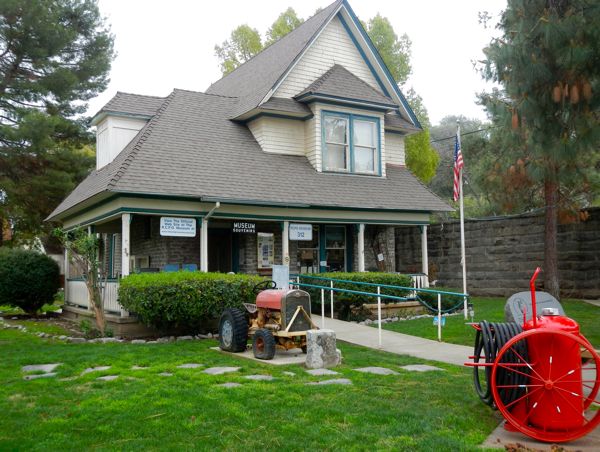
Folsom Prison from across the American River at the Folsom Lake State Recreation Area. Photos/Kathryn Reed

Folsom Prison from across the American River at the Folsom Lake State Recreation Area. Photos/Kathryn Reed

By Kathryn Reed

REPRESA – While Johnny Cash didn’t really shoot a man in Reno just to watch him die, he has been to Folsom Prison. It was to give a concert.

He is credited with making the prison famous beyond the inmates and riots.

The museum is open 362 days a year.

The museum is open 362 days a year.

Every vehicle owner in California is driving around with a piece of Folsom prison. Since 1947 the facility has been making the state’s license plates; 40,000 are made a day.

People can get a sense of the institution’s history and what it might be like today to be behind bars through the prison museum, which is on the prison grounds.

On the road in there is a sign that says, “No stopping or turning on prison road: Warden.” What happens if you do isn’t known.

The 1,000 acres are initially pastoral, welcoming, even.

“In custody inmates do the mowing,” Pino Ramacher tells Lake Tahoe News. Ramacher retired as a correctional sergeant in 2005 and now works at the museum.

Prison labor is also used to maintain the gardens.

Across the river is a walking path with views of the prison. It also means the prisoners have views of freedom that are beyond their reach.

The prison road is inviting.

The prison road is inviting.

Arriving at the prison, the first building is where visitors check in. A long list of attire is not permitted – no blue clothing, no shorts, no hats, no clothes with logos, no toe strapped sandals, and no metal underwire on bras. People cannot take in purses, food, cameras, make-up, pennies or gum.

A line on the ground leads to the museum. And at the far end of the museum is another line. It’s to stop people from going farther onto the grounds. A stone’s throw away is the prison gate. It’s not known if sirens wail and the person stepping across that line would be carted off in handcuffs.

In many ways the outside looks like some ornate castle because of all the stonework. All native stone was used to build the facility and inmates handcrafted it.

Stone for the prison was quarried on site.

Stone for the prison was quarried on site.

Their handiwork can also be seen along Highway 50 leading to South Lake Tahoe. The inmates made the granite mile markers.

“We had our own power plant. We had a quarry where all the stone for the prison came from. Much of it was dug out by hand,” Ramacher said. “There’s a lot of detail in the rock.”

The first inmates arrived on July 26, 1880. They came from San Quentin, which was overcrowded. That is why Folsom was built.

A movie gives some details about the early years as well as a tour of inside the prison.

Artifacts in the museum include a wealth of weapons inmates have made and ones that were smuggled in. The gun used in 1937 during a riot where Warden Clarence Larkin was killed is included in the display.

It used to be that prisoners could be buried on the grounds, but that has not happened since 1959.

The plan is for this 900-square-foot museum to be replaced by a 35,000-square-foot museum that will have information from prisons across the country. That could happen in three years.

Confiscated contraband.

Confiscated contraband.

—-

Other things to know:

• There are other ways into the prison besides committing a crime or visiting someone who did. The annual Race Behind Bars mountain bike race is May 18. More info is online.

• The Johnny Cash Trail broke ground in February. The 2.5-mile trail will cross prison grounds and link El Dorado and Placer counties to the American River Parkway as well as to Folsom’s historic district. It should open in a year.

• The $3.8 million overcrossing at Folsom Lake Crossing Road will be built to resemble the prison’s guard towers.

• Museum fee is $2.

• Museum is open daily 10am-4pm, except for Thanksgiving, Christmas and New Year’s Day.

• More info is online.


No poker exception in online gaming legislation

By Karoun Demirjian, Las Vegas Sun

WASHINGTON — Authors of the new online gaming bill in Congress have issued a challenge to Nevada, where online poker is legal, and any state that may want to legalize it.

“If you want to have online gambling, then come to the Congress. … If you want to have a poker exception, offer an amendment and see if it will pass,” said Sen. Lindsey Graham, R-S.C., who introduced the bill this week along with Rep. Jason Chaffetz, R-Utah.

The bill, on its face, is simple: It would roll back the 1961 Wire Act to the days before late 2011, when all transactions for online gaming were illegal.

But dig into the details, and it seems certain that this three-page piece of legislation is going to inspire some pretty heavy political conflict.

Read the whole story


Survey: Families a growing segment of tourism

By Scott Sonner, AP

Visitors to the Reno-Lake Tahoe area stayed longer, spent more money and brought their children along more often last year than they did two years earlier, according to a new tourism survey that suggests targeting families in future marketing efforts.

The tourists with kids spent more than groups with only adults and stayed nearly twice as long in 2013 — averaging 6.2 days compared to 3.2 days, officials for the Reno-Sparks Convention and Visitors Authority said Thursday.

While gambling “remains the core visitor activity, other events and activities are drawing visitors and their dollars,” concludes a report on the survey being presented Thursday to the authority’s board of directors.

“Families are identified in the data as an exciting opportunity for growth. More adults brought their children with them to the area compared with 2011. They stayed longer, spent more and left wanting to return,” it said.

The share of families traveling with children under age 21 increased from 27 percent in 2011 to 35 percent last year. On average, they spent $773 while adults-only visitors spent $637, the survey found.

“It not only shows that the region is doing a phenomenal job of retaining loyal customers, but it also proves that the message of Reno-Tahoe as a family friendly destination is drawing a new group of multigenerational visitors,” said Christopher Baum, the visitor authority’s president and CEO.

Individual visitor spending increased 9 percent to $685 last year, about one-third of that on gambling. About one-fifth of them came for the day and didn’t stay overnight. Those who stayed averaged 4.3 days in 2013, up from 3.5 in 2011.

Carlton Geer, president and CEO of the JA Nugget hotel-casino in Sparks, said the results are consistent with the private market research affiliates of Global Gaming & Hospitality conducted before purchasing the former John Ascuaga’s Nugget late last year.

“Our research showed the economy was improving in Northern California, the Reno-Sparks area’s main feeder market,” said Geer, who has launched a $50 million renovation of the casino with two hotel towers. He said Northern California’s economic outlook is the “single best indicator of future success” in the Reno-Sparks area.

Seattle-based EMC Research conducted the Internet-based survey of 2,000 visitors to Washoe County in 2013. Although they also could have visited other parts of Lake Tahoe, to be included in the survey they must have visited within the month prior the North Shore towns of Incline Village or Crystal Bay, or Reno or Sparks.

For the first time among Californians, visitation from Los Angeles equaled visitation from the San Francisco Bay Area — 31 percent from L.A. and 32 percent from the Bay Area, which is within the survey’s margin of error of plus or minus 2.2 percent. Two years ago 27 percent came from L.A. Tourism authority spokesman Ben McDonald said Thursday they still are sifting through the data to pinpoint the reason for that uptick.

The biggest visitor “types” remain gamblers (20 percent) and those visiting family and friends (17 percent), followed by about 12 percent each for recreation, sightseeing vacation and vacation in general.

Overall the survey concluded half visited primarily for “fun” (vacation/recreation). Those who do visit mainly to gamble are the biggest spenders as a group, averaging $1,049 in 2013, while those in the “fun” category spent $659.

Rick Murdock, vice president of casino marketing at the Eldorado Resort Casino in Reno, said it reflects their guests’ increased interests in outdoor recreation and entertainment.

Eighty-two percent of the visitors surveyed said they had a good or excellent experience. Half said they definitely will return and another quarter said it was very likely.


Tahoe elementary to be mountain academy

By Kathryn Reed

Sierra House Elementary School is taking the federal Let’s Move initiative a step further.

Principal Ryan Galles this week told the Lake Tahoe Unified School District about his goal of transforming the K-5 school into the Sierra House Mountain Academy.

“I envision a physical transformation,” Galles said.

The goal is fitness, health and mountain sports will be emphasized.

Sierra House is being transformed into a mountain academy. Photo/LTN

Sierra House is being transformed into a mountain academy. Photo/LTN

The initial Health and Fitness Night will be May 1.

The first phase is in place, so the transition to the themed school will not be difficult. It helped that the field was replaced last summer. A grant from Vail Echo had all second-graders at SHES on the slopes this winter. Third- and fourth-graders ride at Sierra-at-Tahoe. The ice rink allowed students to skate in a morning fitness program.

But it’s not just about doing things off campus.

Galles told Lake Tahoe News it’s about creating a more rigorous fitness based physical education program. This will in large part fall on the shoulders of Seth Martin.

“When you are exercising, even as short as 20 minutes, you have a better connection in the brain,” Martin told the school board. He is a physical education specialist for the district, with this being his first year exclusively at SHES.

In 2010, the Governor’s Council on Physical Fitness and Sports named Martin physical education teacher of the year. When Martin was at Tahoe Valley Elementary School in 2011 he had the students try to set a world record for jumping jacks.  In 2012, he was instrumental in Lake Tahoe Community College and Barton’s Tahoe Center for Orthopedics team sports performance summer camps.

The March 25 staff report says, “Research on fitness and the brain indicates that, increased levels of activity stimulates brain activity and increases student achievement. Fitness activities also provide improved attention span, memory and learning, thus reducing stress and the effects of ADHD.”

The goals of the academy are:

• Re-orient to a fitness-based physical education program

• Bring in schoolwide fitness and health events

• Provide access to mountain sports

• Increase parent involvement/communication

• Promote healthy lifestyles, cooperative skills, critical thinking and problems solving.

The next phase is to get the growing dome installed. That could be a reality this spring. Approvals from the state are still needed as well as some coverage issues need to be ironed out.

Last March when Galles was before the board he said the dome would have multiple educational purposes. For one, it would be a hands-on science lab where students would be growing vegetables year-round. It would complement the composting program. It would show kids that food comes from someplace else before it reaches a grocery story. And it will give them something healthy to eat. The state has curriculum in its Garden in Every School program that could be used.

Staff members are going to Truckee in May to visit the dome there and find out about how best to use it as a teaching tool.

A walking path around the school will be the third phase. This will allow for more activities when students are at recess.

Fitness stations and a traverse wall will be in the final phase.

In other action:

• The board delayed action on the proposed preschool center at the former Al Tahoe Elementary School. This would be for transitional kindergarten. It would help with the overcrowding issue at Bijou and Sierra House elementary schools. But parents of little ones are not thrilled with the idea and want more info. The board said more outreach is needed. The topic should be on the April 22 agenda.


Nevadans face higher flood insurance

By Scott Sonner, AP

Washoe County emergency manager Aaron Kenneston has known since Hurricane Katrina slammed into New Orleans and Superstorm Sandy wreaked havoc on the East Coast that Nevada homeowners and businesses eventually would face higher premiums for federal flood insurance.

“It’s unfortunate that you have to balance these major superstorms on the backs of taxpayers who don’t live anywhere near the Gulf Coast or Hurricane Alley,” Kenneston said.

Nearly 1,300 Nevada residents will see such premium increases in the coming years due to changes in the National Flood Insurance Program.

For years, the federal government subsidized flood insurance on homes and businesses built in the days before flood zones were created. But premiums collected haven’t covered the payouts, leaving the National Flood Insurance Program $24 billion in debt.

President Obama last week signed a relief bill that erases the immediate pain of dramatic flood insurance hikes included in a 2012 bill passed by Congress that was meant to reflect the true risk of flooding and end subsidies. Still, policyholders are facing large, repeated rate hikes over the years.

In Nevada, 1,299 flood insurance policies will see double-digit increases. Of those, more than 900 homeowners will see their premiums rise by up to 18 percent each year, and nearly 400 businesses and owners of second homes will see increases of 25 percent annually.

Washoe County, Reno and especially Sparks are among the areas that could feel the sting of rate hikes along the banks of the flood-prone Truckee River, according to an Associated Press review of records from the Federal Emergency Management Agency.

The analysis shows more than one-third of the 383 owners of subsidized policies in Sparks can expect 25 percent increases in their premiums. About one-fourth of the 1,161 policyholders in Reno and one-fifth of the 1,014 in rural Washoe County face increases of up to 18 percent each year.

“I’m concerned we could start to price people out of the market who really should have flood insurance,” Kenneston said.

Kenneston and insurance agents said it’s hard to persuade people to buy flood insurance if it’s not required by a mortgage lender.

“Nobody wants to buy it until after they have a flood,” said Tom Wilkins, a longtime Reno insurance salesman.

The Reno-Sparks area has experienced significant floods at least once a decade since the 1950s — the biggest a New Year’s Day flood in 1997 that caused $1 billion in damage across six counties, $700 million in Washoe County alone.

“It is a citywide concern,” Sparks city spokesman Adam Mayberry said. “The 100-year flood seems to come around every 10 years.”

The effects of the rate increases won’t be clear until FEMA adopts regulations to implement the changes, but the association of Nevada Independent Insurance Agents is starting to hear concerns and plans to launch a series of classes to help educate its members.

The impact will vary across Nevada, where 14,871 policyholders paid collectively $8.9 million for $3.46 billion worth of federal flood insurance in 2012.

For example, unincorporated areas of Clark County had 3,675 federal flood insurance policies in place on Dec. 31, 2012, but only 100 of them were receiving the discounted rates and will be subject to increases.

In Douglas County, 129 of the 1,115 — or 12 percent — were receiving the subsidy in 2012 and now will be subject to similar increases. The same for 96 of 644 in Carson City (15 percent), 63 of 158 in Fallon (40 percent), 54 of 167 in Lander County (32 percent) and 43 of 77 in Elko County (56 percent).

Wilkins said most people who need flood insurance don’t find the cost to be prohibitive, typically about $500 annually for a homeowner.

“It seems like a whole lot of money if you never use it but it’s really not as expensive as a lot of people think it is,” Wilkins said.

After the 1997 flood, he said his company paid a $500,000 claim to one Sparks business that had an annual premium of $2,300 and a $1 million claim to another that paid about $6,000 a year.

“You could spend about $30,000 over 10 years and get a half-million dollars back,” he said. “Because it is a guarantee the river is going to flood.”


Census: Moderate growth in El Dorado, Placer counties

By Phillip Reese, Sacramento Bee

The four-county Sacramento region added 22,000 residents between July 2012 and July 2013, a slightly faster rate of growth than during several prior years, according to U.S. Census Bureau figures released Thursday.

Like much of California, the Sacramento region experienced a slowdown in population growth during the recession. Couples put off having children. Fewer people came here because there were fewer jobs.

As a result, average year-to-year growth from 2009 to 2012 in Sacramento, Placer, El Dorado and Yolo counties was about 20,500, a far cry from the 50,000 to 60,000 new residents seen each year during the housing boom.

Last year’s numbers represent only a slight uptick, and they are a far cry from the boom years, but several experts said they may herald a return to annual, healthy population growth of 25,000 to 30,000 residents.

Read the whole story


Library making case for June ballot measure

By Kathryn Reed

Will the South Lake Tahoe library be able to continue to provide the resources and programs that it has been?

That is a question a group of concerned residents were discussing this week as they gathered to talk about the role of the library, what it provides and how to get voters to say “yes” in June to Measure L.

Measure L is specific to the South Lake Tahoe library. It asks resident to continue paying the $20 year fee per parcel. This not a new tax, but would be continuing the one already in place. The amount could go up based on the Consumer Price Index of no more than 3 percent per year. It will never exceed $28.50 per year. It would expire in 12 years. It will require two-thirds of the voters’ approval for passage.

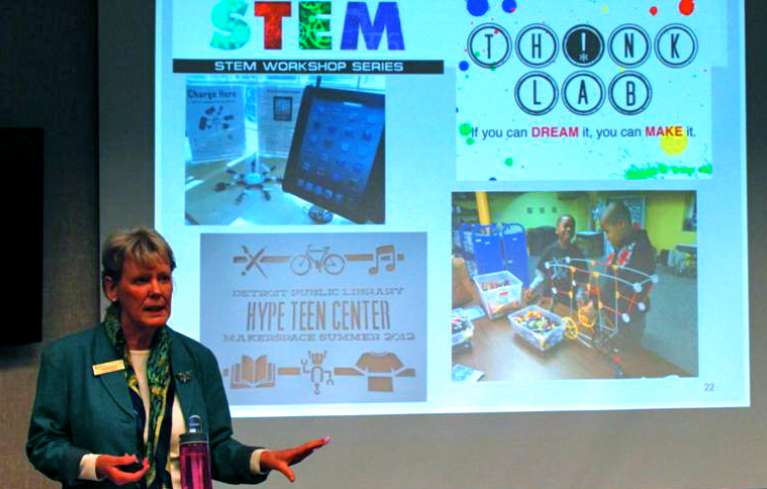
Jeanne Amos talks March 25 about the importance of libraries and what they have to offer. Photo/Denise Haerr

Jeanne Amos talks March 25 about the importance of libraries and what they have to offer. Photo/Denise Haerr

Jeanne Amos, El Dorado County library director, on March 25 went over what is going on locally, in the county and beyond.

Amos pointed out how out of the current $513,711 fiscal budget that $420,551 – or 82 percent – is from the local tax. Other revenue sources are fines, Friends of the Library, the county’s general fund, grants, and ending fund balance.

The bulk of the expenses – 74 percent – goes to salaries and benefits, then materials, utilities, and services/supplies.

While the debate of whether print books will one day be obsolete continues, the reality is books in general are still being written and published. Amos said 300,000 new titles were published in 2013.

“All the Internet has done is accelerate book reading, buying and publishing,” Amos said.

The library has traditional books to check out, but e-books may also be checked out. A nice thing about those is there won’t be a late fee because the book just disappears from the user’s device.

A grant has allowed the South Tahoe branch to purchase iPads that are loaned out.

“If people are closed off from the Internet, they are closed off from the world,” Amos said. “I can’t emphasize enough that we are a lifeline for people.”

The second half of the meeting was more of a roundtable format where the nearly 20 people discussed two questions:

• What makes the library a vital community hub and asset?

• How can the library and Friends of the Library better serve the community?

Denise Haerr, who is active in FOL, said she saw people during SnowGlobe using the computers to buy tickets.

It was mentioned more than once that the library caters to people of all ages and socio-economic backgrounds.

Alexis Foley, case manager for CASA, said she has witnessed the library as a refuge for those reaching out for help and as an outlet for those to give help.

This plays into how Amos said the library is a resource for people looking for work. So many jobs now require an application and supporting material be filled out online. Computers are a big part of the library.

Lee Vestal finds the library to be a quiet space to get work done away from distractions.

Bonnie Turnbull, who home schools her daughter, uses the library on a regular basis.

The only thing people wished for were more evening hours. The library is open Tuesdays-Wednesday from 10am-8pm, Thursdays-Fridays-Saturdays from 10am-5pm.


1-week reprieve to save South Tahoe fireworks

By Kathryn Reed

STATELINE – Light up Lake Tahoe may be redefined. There’s a good chance it will be the stars that people will be enjoying this Fourth of July instead of fireworks in South Lake Tahoe.

The Lake Tahoe Visitors Authority board of directors at an emergency meeting March 27 decided that if the lawsuit brought against LTVA and Pyro Spectaculars by a Marla Bay couple cannot be resolved or dismissed by April 4, then there will be no fireworks on the South Shore this July 4 or Labor Day weekend — or ever again.

The resolution that was unanimously adopted after 2½ hours of testimony and deliberations further states, “LTVA shall not contract for events, including, but not limited to, the fireworks displays.”

Fireworks on the South Shore of Lake Tahoe may be a thing of the past. Photo/Howie Nave

Fireworks on the South Shore of Lake Tahoe may be a thing of the past. Photo/Howie Nave

The issue has been percolating since shortly after last year’s July 4 fireworks show when debris started washing up on Pinewild Beach where Joan and Joe Truxler live. They filed a lawsuit last fall with the goal of getting some agency to have oversight of the displays and to have better cleanup at the lake. They repeatedly say they want the lake protected, not to shutdown the 35-year-old show.

Carol Chaplin, LTVA executive director, said the Truxlers never contacted her agency. And she is of the belief that a lawsuit was always planned because legal documents arrived so soon after the Labor Day show that the Truxlers had to have already retained their attorney.

But there is no agency that issues permits involving the fireworks and the lake. Fire departments permit the barges and the actual explosives.

The lawsuit

The Truxlers are invoking the federal Clean Water Act. The lawsuit claims each mortar launch is a separate violation and should come with a fine of $37,500. More than 100 rockets are set off just on July 4. The fines can be retroactive up to five years. If they were to succeed, that penalty would be more than $70 million.

And it was repeatedly stated that this would bankrupt the South Shore’s tourism agency.

“The risks to the LTVA are so overwhelming it would be better to get out of the fireworks business,” Lew Feldman, attorney representing LTVA, said.

Even if the LTVA says no more fireworks, the lawsuit is still active.

The expense of fighting the litigation could possibly bankrupt the agency, too. This is because it would be a case of first impression, meaning no court in the country has issued an opinion that fireworks violate the Clean Water Act. It could take years to resolve, especially if appeals and higher courts are involved.

Kim Gallick, executive director of the Rudolph Monte Foundation in Aptos, was one of the 36 people to speak Thursday. Everyone who spoke was in favor the fireworks, wanting to keep the lake and beaches clean; with most speaking of the economic impact if the fireworks go away; as well as the desire to work with the Truxlers.

What Gallick brought to the table is the experience of running an organization that also has a fireworks display in a pristine area – the Monterey Bay Sanctuary. She offered to share their procedures for cleanup, but also is worried the lawsuit will impact her group.

“I believe the lawyer is the problem,” South Lake Tahoe City Manager Nancy Kerry said of Mike Lozeau who is representing the Truxlers. “This would be precedent setting.” She said it would affect fireworks displays from coast-to-coast.

Kerry said she spoke with Joe Truxler this week and believes a resolution can be found. She believes Lozeau is the stumbling block because he wants to make a name for himself.

Lozeau is well known with many in Tahoe. He has often represented the League to Save Lake Tahoe and has successfully sued the Tahoe Regional Planning Agency.

Impacts to the community

Mediation between the two sides fell apart this month. Now there is one more week to find a resolution before the LTVA will be out of the fireworks business and the South Shore out of millions of dollars in revenue.

B Gorman, Lake Tahoe South Shore Chamber of Commerce executive director, said $34.672 million is what the Fourth of July weekend represents to the area just in terms of lodging dollars. At a minimum, most businesses said that holiday represents 15 percent of their annual income.

Some who spoke said they are getting inquiries about whether they should cancel their reservations because it’s the fireworks they come for. Wait a week is the answer.

Possible oversight

Part of the lawsuit is that the Truxlers want the fireworks to be regulated. Tahoe Douglas Fire Chief Ben Sharit said his agency is willing to be the permitting agency. That offer was presented during mediation and rejected.

On the California side of the lake, where the South Shore pyrotechnics are shot off from, it would be the Lahontan Regional Water Quality Control Board that would issue a permit.

“Water boards are allowed up to 140 days to issue a permit once we have received a complete application. The soonest we could consider a permit is about 90 days from receipt of a completed application,” Lauri Kemper with Lahontan told Lake Tahoe News.

The fee would likely be $1,452, which is category 3 – the lowest threat to water quality.

The San Diego Water Board is the only agency that has issued a permit for fireworks. It’s for the Sea World display.

“The permit requires a BMP plan, including requirements for debris removal and consideration of pyrotechnics with lower quantities of perchlorate, and completion of a post fireworks report, found here – estimating quantity of debris cleaned up/removed,” Kemper said. “This example would be similar to a permit that the Lahontan Water Board might develop and consider if an application were received. The board may consider imposing additional monitoring requirements.”

One way to avoid the Lahontan requirements would be to move the barge closer to Edgewood Tahoe or anywhere in Nevada.

“The Nevada Division of Environmental Protection encourages the Lake Tahoe Visitors Authority and its contractors to continue compliance with any applicable local permits, plans or requirements. NDEP does not require additional oversight of the twice a year firework displays,” JoAnn Kittrell with the Nevada Department of Conservation & Natural Resources told Lake Tahoe News in January.

The EPA is above Lahontan and the NDEP. That agency has not received a fireworks permit to review.

Discrepancies and other issues

While the Truxlers claim to have collected thousands of pieces of debris, it is not all from the LTVA show.

Sharit said debris was from illegal displays and that some of the trash was just that – trash like bottles, shoes and other items. He added that the Truxlers did not contact his agency after the Labor Day show.

Cherise Smith’s family has had a house on the first privately owned beach past Nevada Beach on the Nevada side since 1946. For 35 years she has watched the Fourth of July fireworks.

“I have never experienced debris,” she told the board. “We think you have done a great job. And our water comes straight from the lake into our pump. If we felt there was a problem of any type, if there were pollution, we would be the first to complain.”

Cameron McKay, general manager of Kingsbury General Improvement District, said, “I’m willing to commit resources to LTVA to do water sampling. The lake is our water supply.”

The district does regular testing.

“We test for parts per billion and we get non-detect,” McKay said.

Going forward

It was left Thursday that Feldman would work with the courts to try to reactivate the mediation process. The course of action is for the community to try to engage the Truxlers. Their phone number was being handed out as the more than 100 people in attendance left the meeting.

It’s also possible a group of community members will meet with the Truxlers. Nevada Lt. Gov. Brian Krolicki and California state Sen. Ted Gaines, R-Roseville, spoke first and both urged that a resolution be found to keep the fireworks alive. They also offered their offices as a means to work on compromise.

Another casualty in all of this is the fireworks show that NBC and American Century had planned for the 25th anniversary of the American Century Championship Golf Tournament in July.

The lawsuit does not, at this time, affect any other fireworks around the lake.