SLT city attorney bill far exceeds contract limit

By Kathryn Reed

South Lake Tahoe is in uncharted territory with having a firm doing its legal work instead of having an in-house attorney, as had been the protocol for 50-plus years until last fall.

When Tom Watson submitted his resignation in August which became effective in September, the city also employed a deputy city attorney and a legal secretary. The city still has a legal secretary.

Nira Doherty

Burke, Williams & Sorensen LLP out of Oakland was brought on board to take the place of Watson and his deputy.

This firm had been used as outside counsel, so the city was familiar with their work. Plus, Nira Doherty, the attorney assigned to South Lake Tahoe, had been the deputy city attorney before becoming a partner with the private law firm. She had also worked as outside counsel for the city, so her familiarity with local issues was a bonus.

Outside counsel is usually brought in for specific cases much like in the medical profession when a specialist is needed because the general practitioner’s knowledge has been exhausted.

The firm’s contract calls for 80 hours of legal work a month at a rate of $19,500/month or $234,000/annually. They actually bill in six-minute increments.

However, the actual monthly bills from the law firm are:

·      October – general municipal services — $40,046.24

·      October – retiree association lawsuit — $16,726.12

·      November – general municipal services — $34, 097.44

·      November – retiree association lawsuit — $6,037.38

·      December – general municipal services — $21,961.44

·      December – retiree association lawsuit — $4,762.84.

That’s a total of $123,631.46 for three months. Without the retiree lawsuit fees, the total is $96,105.12. Either way, the monthly bill exceeds what the contract calls for. Multiply that last quarter by four and the annual bill will actually be $384,420.48.

Watson was making more than $160,000 a year. His hours per week, month, year were unlimited. Even if one tacks on 25 percent for benefits, that total is just more than $200,000 a year. An in-house attorney is essentially available 24/7, with no overtime.

Lake Tahoe News through a public records request asked about the details of the bills from Burke, Williams & Sorensen. City Clerk Suzie Alessi responded that that information was protected by client-attorney confidentiality.

Lake Tahoe News then requested all phone records and all emails every city employee and every council member has had with anyone at Burke, Williams & Sorensen. Redacted emails would be acceptable. The deadline per the Public Records Act has not been met, so the information will likely be published at a later date.

Ironically, though, it is Doherty who has some say over what records are released. She is not a fan of the media, not even when she was on the city’s staff full time. She has a history of not responding to questions no matter the forum in which a reporter asks.

All of this is relevant because this is taxpayer money. The public has a right to know what it is paying for and if it is worth it. The council also has an obligation to explain its actions.

Doherty’s review was on the Jan. 23 council agenda, as was the city manager’s. There was no reportable action regarding either official.

Mayor Wendy David had no response to LTN’s question as to why nothing is on the Feb. 6 agenda about the city attorney when the city manager’s review is on it again.

At some point the council has to decide what it is doing regarding the city attorney position – in-house, outside counsel, and if outside, is this the attorney and/or law firm to stick with?

Each of the City Council members was asked a series of questions and given a deadline. Only Tom Davis responded. He told Lake Tahoe News, “I too have the same questions. I will be asking that these items be put on the agenda so we can discuss in public with the council.”

Here are the unanswered questions:

·      Regarding the future of the city attorney position … when does the council expect to make a decision regarding retaining the current law firm and/or interim attorney or deciding to have someone in-house full time?

·      How was the current firm/attorney hired without an RFP? How is that not a violation of Government Code?

·      Is the reason there is no contract for the current firm on the next agenda because you realized there needs to be an RFP? If that isn’t the reason, what is the reason?

·      Is there an expiration date, so to speak, in the current contract?

·      What happens when the financial limits of the contract are met? Does that mean the city is without legal counsel? Please explain how that works.

·      There was no reportable action from the last council meeting regarding the city attorney’s review. Why? What is the next course of action?

·      How does the council justify the expense of this firm?

·      How often do each of you contact anyone at the law firm on a weekly/monthly basis? Please estimate how much time is by phone, email, text or in person?

·      Do you find this form of city attorney more efficient or in-house counsel more efficient? Why?

A question just for Councilman Jason Collin was:

·      Do you believe you should recuse yourself from any discussions regarding the city attorney when you socialize with her and are good friends with her husband? Why or why not?
Calif.’s other drought: Major earthquake is overdue

By Richard Aster, The Conversation

California earthquakes are a geologic inevitability. The state straddles the North American and Pacific tectonic plates and is crisscrossed by the San Andreas and other active fault systems. The magnitude 7.9 earthquake that struck off Alaska’s Kodiak Island on Jan. 23 was just the latest reminder of major seismic activity along the Pacific Rim.

Tragic quakes that occurred in 2017 near the Iran-Iraq border and in central Mexico, with magnitudes of 7.3 and 7.1, respectively, are well within the range of earthquake sizes that have a high likelihood of occurring in highly populated parts of California during the next few decades.

The earthquake situation in California is actually more dire than people who aren’t seismologists like myself may realize. Although many Californians can recount experiencing an earthquake, most have never personally experienced a strong one. For major events, with magnitudes of 7 or greater, California is actually in an earthquake drought. Multiple segments of the expansive San Andreas Fault system are now sufficiently stressed to produce large and damaging events.

The good news is that earthquake readiness is part of the state’s culture, and earthquake science is advancing – including much improved simulations of large quake effects and development of an early warning system for the Pacific coast.

The last big one

California occupies a central place in the history of seismology. The April 18, 1906, San Francisco earthquake (magnitude 7.8) was pivotal to both earthquake hazard awareness and the development of earthquake science – including the fundamental insight that earthquakes arise from faults that abruptly rupture and slip. The San Andreas Fault slipped by as much as 20 feet (six meters) in this earthquake.

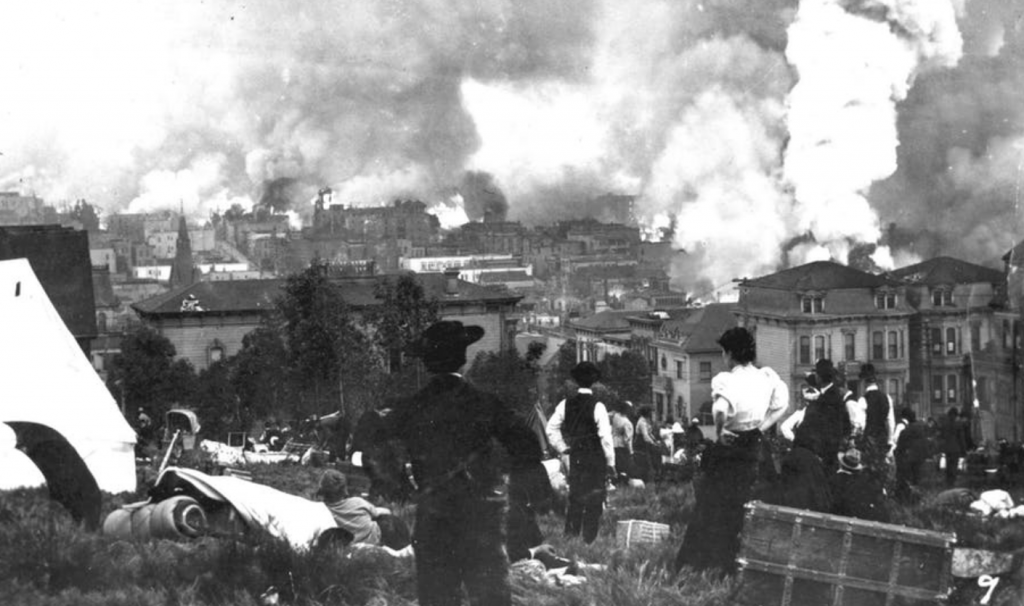
Although ground-shaking damage was severe in many places along the nearly 310-mile (500-kilometer) fault rupture, much of San Francisco was actually destroyed by the subsequent fire, due to the large number of ignition points and a breakdown in emergency services. That scenario continues to haunt earthquake response planners. Consider what might happen if a major earthquake were to strike Los Angeles during fire season.


Fires break out across San Francisco after the 1906 earthquake. Photo/USGS

Seismic science

When a major earthquake occurs anywhere on the planet, modern global seismographic networks and rapid response protocols now enable scientists, emergency responders and the public to assess it quickly – typically, within tens of minutes or less – including location, magnitude, ground motion and estimated casualties and property losses. And by studying the buildup of stresses along mapped faults, past earthquake history, and other data and modeling, we can forecast likelihoods and magnitudes of earthquakes over long time periods in California and elsewhere.

However, the interplay of stresses and faults in the Earth is dauntingly chaotic. And even with continuing advances in basic research and ever-improving data, laboratory and theoretical studies, there are no known reliable and universal precursory phenomena to suggest that the time, location and size of individual large earthquakes can be predicted.

Major earthquakes thus typically occur with no immediate warning whatsoever, and mitigating risks requires sustained readiness and resource commitments. This can pose serious challenges, since cities and nations may thrive for many decades or longer without experiencing major earthquakes.

California’s earthquake drought

The 1906 San Francisco earthquake was the last quake greater than magnitude 7 to occur on the San Andreas Fault system. The inexorable motions of plate tectonics mean that every year, strands of the fault system accumulate stresses that correspond to a seismic slip of millimeters to centimeters. Eventually, these stresses will be released suddenly in earthquakes.

But the central-southern stretch of the San Andreas Fault has not slipped since 1857, and the southernmost segment may not have ruptured since 1680. The highly urbanized Hayward Fault in the East Bay region has not generated a major earthquake since 1868.

Reflecting this deficit, the Uniform California Earthquake Rupture Forecast estimates that there is a 93 percent probability of a 7.0 or larger earthquake occurring in the Golden State region by 2045, with the highest probabilities occurring along the San Andreas Fault system.

Can California do more?

California’s population has grown more than twentyfold since the 1906 earthquake and currently is close to 40 million. Many residents and all state emergency managers are widely engaged in earthquake readiness and planning. These preparations are among the most advanced in the world.

For the general public, preparations include participating in drills like the Great California Shakeout, held annually since 2008, and preparing for earthquakes and other natural hazards with home and car disaster kits and a family disaster plan.

No California earthquake since the 1933 Long Beach event (6.4) has killed more than 100 people. Quakes in 1971 (San Fernando, 6.7); 1989 (Loma Prieta; 6.9); 1994 (Northridge; 6.7); and 2014 (South Napa; 6.0) each caused more than $1 billion in property damage, but fatalities in each event were, remarkably, dozens or less. Strong and proactive implementation of seismically informed building codes and other preparations and emergency planning in California saved scores of lives in these medium-sized earthquakes. Any of them could have been disastrous in less-prepared nations.

Nonetheless, California’s infrastructure, response planning and general preparedness will doubtlessly be tested when the inevitable and long-delayed “big ones” occur along the San Andreas Fault system. Ultimate damage and casualty levels are hard to project, and hinge on the severity of associated hazards such as landslides and fires.

Several nations and regions now have or are developing earthquake early warning systems, which use early detected ground motion near a quake’s origin to alert more distant populations before strong seismic shaking arrives. This permits rapid responses that can reduce infrastructure damage. Such systems provide warning times of up to tens of seconds in the most favorable circumstances, but the notice will likely be shorter than this for many California earthquakes.

Early warning systems are operational now in Japan, Taiwan, Mexico and Romania. Systems in California and the Pacific Northwest are presently under development with early versions in operation. Earthquake early warning is by no means a panacea for saving lives and property, but it represents a significant step toward improving earthquake safety and awareness along the West Coast.

Managing earthquake risk requires a resilient system of social awareness, education and communications, coupled with effective short- and long-term responses and implemented within an optimally safe built environment. As California prepares for large earthquakes after a hiatus of more than a century, the clock is ticking.

Richard Aster is a professor of geophysics at Colorado State University.


Deal with SnowGlobe regarding field up to council

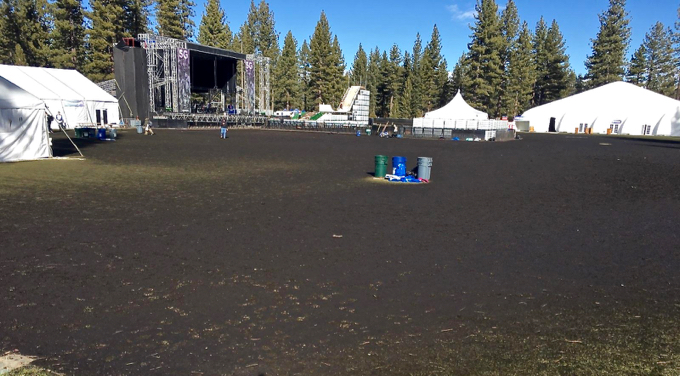
The grass field post-SnowGlobe. Photo/LTN

By Kathryn Reed

A settlement agreement with the producer of SnowGlobe regarding the damaged field is on the Feb. 6 South Lake Tahoe City Council agenda.

It is on the consent agenda. This is where slam dunk items that are not discussed get placed. However, it is possible for anyone – even a member of the public – to pull a consent agenda off so there can be dialogue.

The agreement states that Chad Donnelly, who owns the three-day music festival, will pay the city $250,000 until it is determined how much it will actually cost to repair the field.

The original contract stated that SnowGlobe must return the field to the condition it was in prior to vendors setting up. The city took pictures of what the site looked like before the concerts so there would be proof.

The performance bond secured from SnowGlobe was for $250,000, which is how that figure in the settlement came to be.

“The settlement agreement allows the city to manage and oversee the restoration of the field to ensure the field is restored to the city’s expectations and more easily access the $250,000 deposit,” City Manager Nancy Kerry told Lake Tahoe News.

The Dec. 29-31 festival was on grass fields. By the time it was over the fields were dirt, with little evidence any sod ever existed.

While some protective covering was used, it did not cover the entire area. More than 10,000 people were walking and dancing on the cover/grass/dirt for three straight nights. And there was no snow to act as another layer of protection.

Tuesday’s staff report written by interim City Attorney Nira Doherty states, “In 2017, the fields were finalized with installation of the turf, including soil preparation. The cost for soil preparation and turf installation was approximately $270,000. Initial damage to the field as a result of the festival indicate approximately 20 percent to 30 percent of the turf may need to be replaced, other portions of the field may need leveling utilizing top dressing and importation of other materials for restoration.”

The settlement agreement calls for the city to determine by June 30 the exact cost of repairing the field. If the bill is less than $250,000, the city will have 30 days to return to SnowGlobe the difference between that quarter million dollars and the exact cost.

The settlement further states if the cost to repair the field were to exceed $250,000, SnowGlobe would not be liable for it.

The City Council at some date will have to decide if the controversial festival that just concluded its seventh year has a future at that location or anywhere in the city limits.

Staff is expected to present the council with a more comprehensive report on SnowGlobe at the Feb. 20 or March 6 meeting.


Sierra Nevada snow a fraction of normal

An inversion this week over Lake Tahoe is keeping temps too warm to make snow. Photo/John Gomez

By Dale Kasler, Sacramento Bee

The last time California officials conducted their snow survey near Echo Summit, a month ago, the ground was practically barren.

This time there was snow. Just not a lot of it.

The Department of Water Resources’ monthly snow survey at Phillips Station revealed a meager 13.6 inches of snow, or 14 percent of historical average. It was the latest evidence of a dry winter that has conjured up fears of another drought.

Read the whole story


Trifecta moon event over Lake Tahoe

Photo/John Gomez

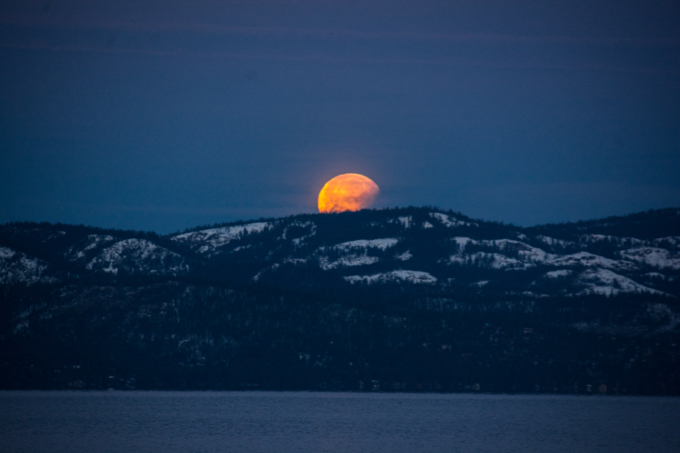
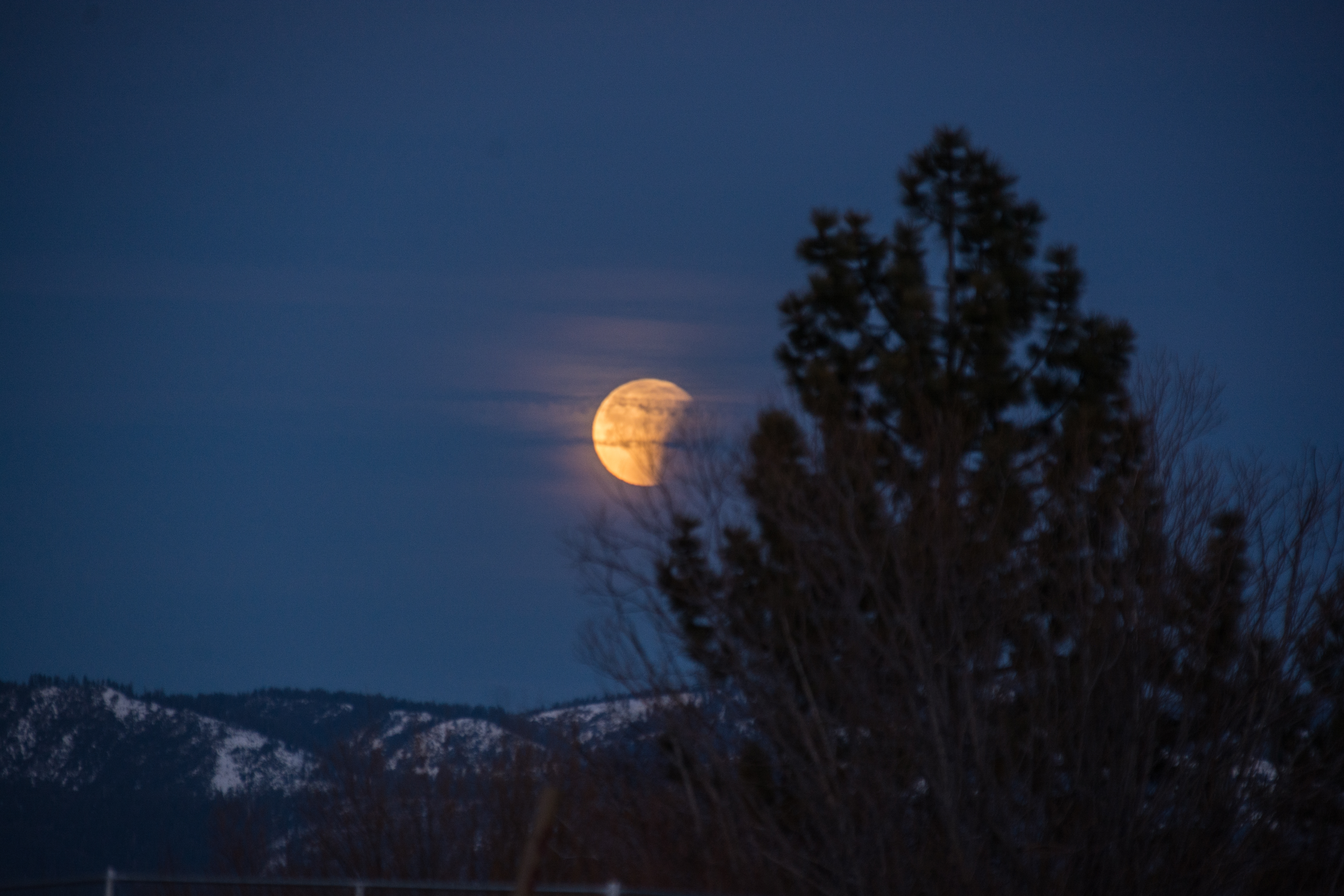
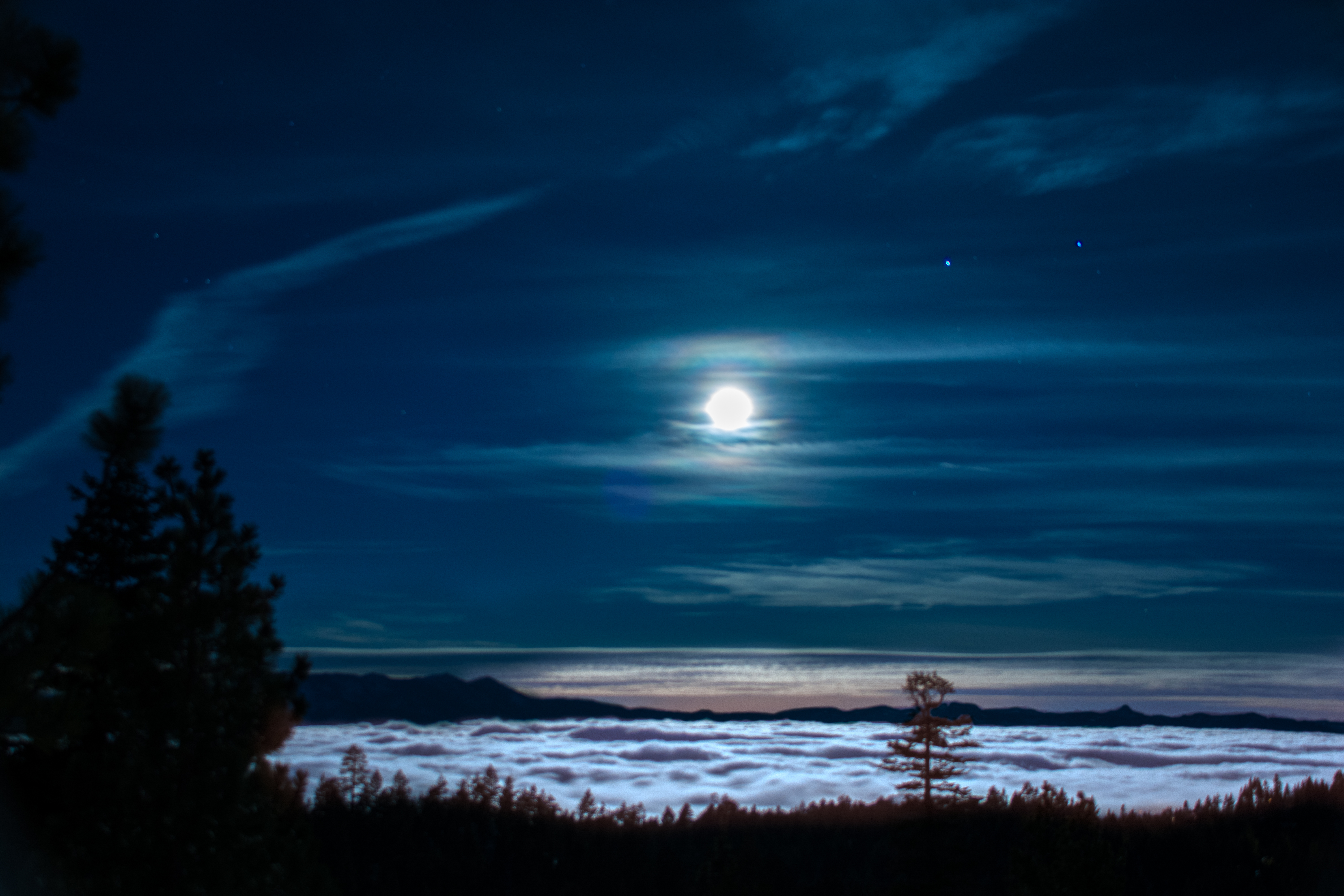
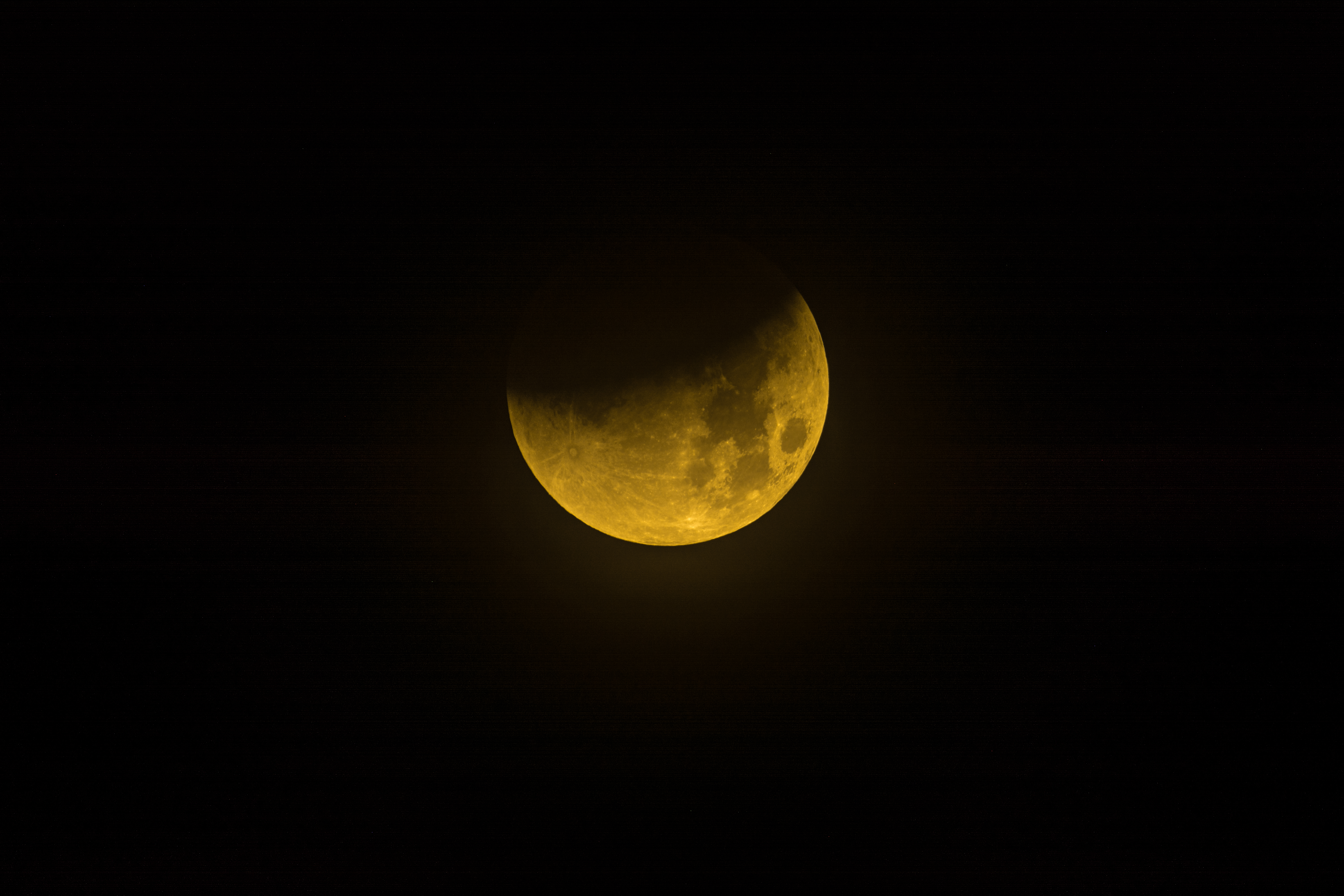
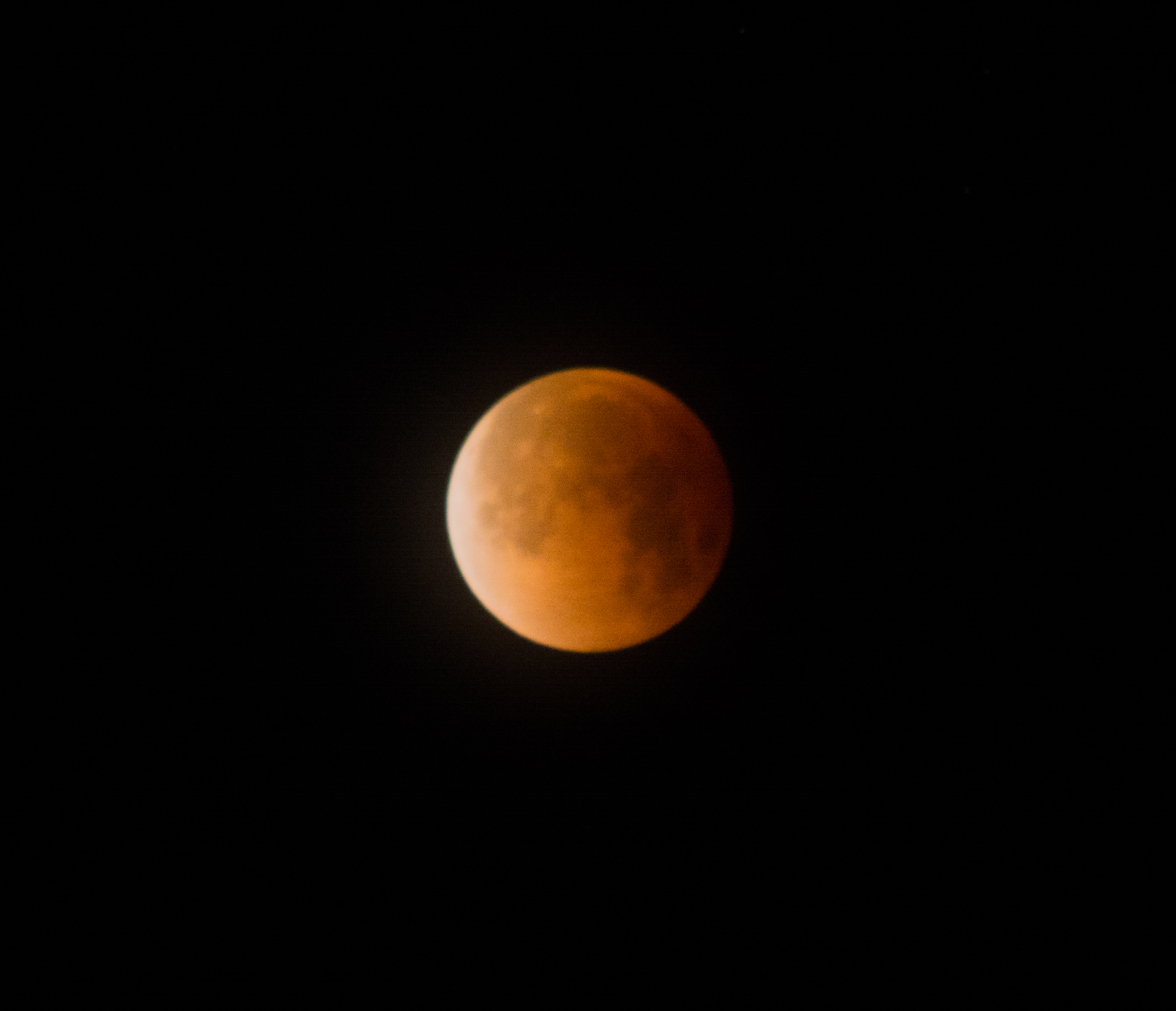
South Shore resident John Gomez captured the lunar trifecta this week in a series of photos.

Photo/John Gomez

He shot them from the top of Kingsbury Grade.

Photo/John Gomez

The Jan. 31 full moon was the second of the month, making it a blue moon. It was also a supermoon, meaning it was at its closest point to the Earth. Then there was a total lunar eclipse, known as a blood moon.

Photo/John Gomez

The next time all three will happen at once again will be in 2037. The previous occurrence was in 1982.

— Lake Tahoe News staff report


Nev. sports books win record $248.7M in 2017

By Todd Dewey, Las Vegas Review-Journal

Nevada sports books won a record $248.7 million in 2017, a hold of 5.1 percent from a record betting handle of $4.8 billion, according to a year-end report released Wednesday by the Gaming Control Board.

The win eclipsed the previous record set in 2015 by almost $17 million. The handle increased for the eighth consecutive year. It has climbed from $2.5 billion wagered in 2009 to $3.4 billion in 2012 to $4.2 billion in 2015 to almost $5 billion last year.

Read the whole story


LTN Book Club: ‘Steady’ words by Dan Rather

By Susan Wood

“The arc of the moral universe is long, but it bends toward justice.”

Martin Luther King Jr. made the powerful statement with such poise about a time of social movement, I wished I had written it. It resonates with me to this day.

Venerable journalist Dan Rather used it near the end of his new book “What Unites Us” (Algonquin Books of Chapel Hill, 2017) to describe a society full of strife needing “Courage” (the name of the chapter) to overcome the chaos of injustice. He wrote it with Elliot Kirschner.
This work of nonfiction is one to learn from. For the battle for truth and justice is not clean and simple. Take Jackie Robinson, Eleanor Roosevelt or countless others who committed their lives to the quest for distinguishing right from wrong.

“What Unites Us” is an easy read and hard to put down.

Maybe it’s me, but I can’t help but think others would be as interested as I was.

I needed this book at this particular point in time. When truth, decency, democracy and the free press is under attack, I turned to someone I trust to be a patriot.

Rather has practically seen and experienced it all. With a career spanning six decades, he’s covered every president since Dwight Eisenhower. He’s been on the scene for about every important dateline around the globe. He joined CBS News in 1962, launching a decorated career as anchor, managing editor and major contributor to “60 Minutes.” He was forced out when a bad source took him down the wrong path. 

Still, his wisdom and steady hand provided the news for millions of television viewers – a few stories hard to stomach because of their sheer impact on our lives and their senseless nature.

He even incorporates a personal flair, as when he recounted a chat with his wife as he struggled to cover the assassination of President John F. Kennedy. Rather was especially moved.

After all, this was a leader who came to Rather’s hometown of Houston in 1962 to “issue a call to explore space.” The journalist was so enthralled with the notion he remembered the grass at the stadium where Kennedy spoke was damp.

Who knew he would return to Texas to be cut down at his prime? 

So, when Rather told his wife, Jean, how he was hanging in there when she asked about his wellbeing, he told her “steady.”

One of Rather’s favorite go-to words, “steady” as she goes is a word Americans trying to maintain their sense of dignity and duty could live by. He borrowed it from his father after catching rheumatic fever as a boy. He coined it to describe a grieving country in 1963. He maintains it today as a veteran journalist trying to make sense of a divided nation.

When we face what seem to be insurmountable odds, steady is a condition that a reasonable patriot should have.

In chapter after chapter and section after section – from the “Freedom” to vote to the “Character” of courage – Rather makes the case for Americans to build off our love of country and principles we believe in to carry us.  

And to borrow from an old chant from the gay rights movement, “our strength is our diversity.” As clarified in the book’s chapter on immigration, this means we can learn from our unique nature as a people united by a common good.

Rather recognizes this and reminds us to hold on to these self-evident truths.

—–

  • Please join in the discussion via commenting. Feel free to pose questions.
  • Questions:
    What is the parallel between the “What Unites Us” and the divisive politics we witness today? What do you think unites us as U.S. citizens? What does it mean to be a patriot?
  • The next book will be the novel “Dying Words” by K. Patrick Conner. Synopsis: “Written with humor and pathos, ‘Dying Words’ is a novel about mortality and remembrance, the story of an aging newspaper reporter less afraid of dying than of being forgotten. For the past 11 years, Graydon Hubbell, an aging reporter for the San Francisco Chronicle, has been assigned to write obituaries, working in a corner of the newsroom that has long been referred to as Section Eight, an oblique reference to the section of the U.S. military code that provides for a discharge on the grounds of insanity.” The review will be posted March 1.


Study: Half of Calif.’s trees at risk of dying

By Ezra David Romero, Capital Public Radio

Half of California’s vegetation is at a risk of dying because of warming temperatures, according to new UC Davis research.

“We’re seeing that in California just in the last five or six years,” said James Thorne, a research scientist with the Department of Environmental Science and Policy at the university. “We had a five-year long drought and then we had double precipitation. In the meantime, we’ve also seen some very large wildfires.”

Even if greenhouse gas-emissions are reduced today, Thorne says around a quarter of the state’s trees and plants will be climate stressed by the end of the century.

Read the whole story


Can scientists learn to make nature forecasts?

By Michael Dietz, The Conversation

Imagine that spring has finally arrived and you’re planning your weekend. The weather forecast looks great. You could go to the beach – but what if it’s closed because of an algal bloom? Maybe you could go for a hike – will the leaves be out yet? What might be in flower? Will the migratory birds be back? Oh, and you heard last year was bad for ticks – will this spring be better or worse?

We all take weather forecasts for granted, so why isn’t there a “nature forecast” to answer these questions? Enter the new scientific field of ecological forecasting. Ecologists have long sought to understand the natural world, but only recently have they begun to think systematically about forecasting.

Much of the current research in ecological forecasting is focused on long-term projections. It considers questions that play out over decades to centuries, such as how species may shift their ranges in response to climate change, or whether forests will continue to take up carbon dioxide from the atmosphere.

However, in a new article that I co-authored with 18 other scientists from universities, private research institutes and the U.S. Geological Survey, we argue that focusing on near-term forecasts over spans of days, seasons and years will help us better understand, manage and conserve ecosystems. Developing this ability would be a win-win for both science and society.

The benefits of forecasting

Beyond helping people plan their weekends, ecological forecasts will improve decision-making in agriculture, forestry, fisheries and other industries. They will help private landowners, local governments and state and federal agencies better manage and conserve our land, water and coastlines, for example by warning of events such as pest outbreaks and harmful algal blooms. They will improve public health through better forecasts of infectious disease outbreaks and better planning in anticipation of famine, wildfire and other natural disasters.

Ecological forecasts will also deepen our understanding of the world around us, and of how human activities are altering it. Forecasting formalizes the cycle between prediction and testing that is at the heart of the scientific method, and repeats it on a much quicker cycle. It can accelerate the pace of discovery in the environmental sciences at this critical time of rapid environmental change.

New tools and technology

Big data is driving many of the advances in ecological forecasting. Today ecologists have orders of magnitude more data compared to just a decade ago, thanks to sustained public funding for basic science and environmental monitoring. This investment has given us better sensors, satellites and organizations such as the National Ecological Observatory Network, which collects high-quality data from 81 field sites across the United States and Puerto Rico. At the same time, cultural shifts across funding agencies, research networks and journals have made that data more open and available.

Digital technologies make it possible to access this information more quickly than in the past. Field notebooks have given way to tablets and cell networks that can stream new data into supercomputers in real time. Computing advances allow us to build better models and use more sophisticated statistical methods to produce forecasts.

Technical and social challenges

So far, though, ecological forecasting has not kept pace with advances in data and technology. In our article, we lay out a road map for accelerating the field by tackling the bottlenecks slowing us down.

Some of these bottlenecks are technical, such as better integrating the streams of data that are now available from many different sources, such as field studies, sensor networks and satellite observations.

Other challenges involve human choices. Ecologists need to spend more time engaged in two-way communication with stakeholders, rather than just pushing out the latest research to decision-makers. And we need better ways to transfer state-of-the-art research from universities to agencies and private industry.

Perhaps most limiting is that ecologists traditionally have not been taught forecasting concepts and methods. But as I have written, this situation is changing. There now are summer workshops and a growing number of university courses in ecological forecasting. Prediction is leading to new theories that aim to unify different parts of ecology.

Ecology’s choice

At the dawn of numerical weather prediction in the 1950s, scientists at the National Weather Service faced a choice. They could either wait to start forecasting until the underlying research, models and tools improved, or proceed immediately with making forecasts and learn by doing. They chose the second path. It proved harder than expected – but had they waited, they likely would have failed because they would have missed a critical window when experts and agencies were willing to make major investments in this effort.

Up to now, ecologists have generally adhered to the first, more conservative path. But in this time of rapid environmental change, the societal need and technological capacity for forecasting have never been greater. The forecasts won’t always be right, especially as the field develops, but failure is part of learning. The time for ecologists to start forecasting is now.

Michael Dietze is an associate professor of Earth and environment at Boston University.


Ski conditions decent despite scarcity of snow

It’s as though the trail of snow leads to the top of Pyramid Peak. Photo Copyright 2018 Carolyn E. Wright

By Kathryn Reed

TWIN BRIDGES – Perfect corduroy. Slightly crusty powder. Hard pack. Soft, pillowy snow. Dirt and twigs.

Ski conditions are so variable right now in the greater Lake Tahoe area that it depends on the run, not just the ski resort.

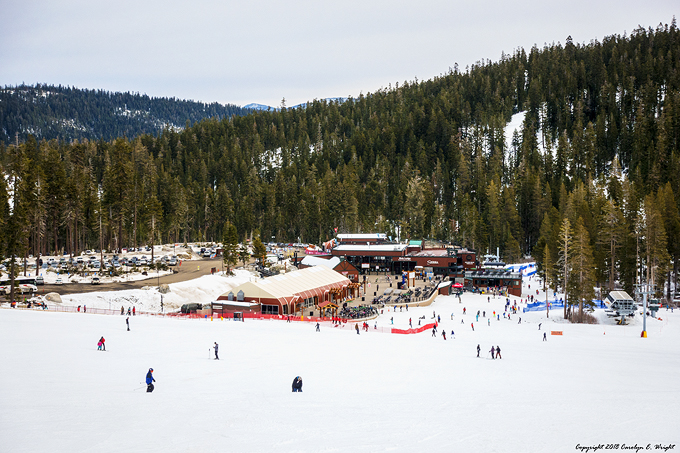
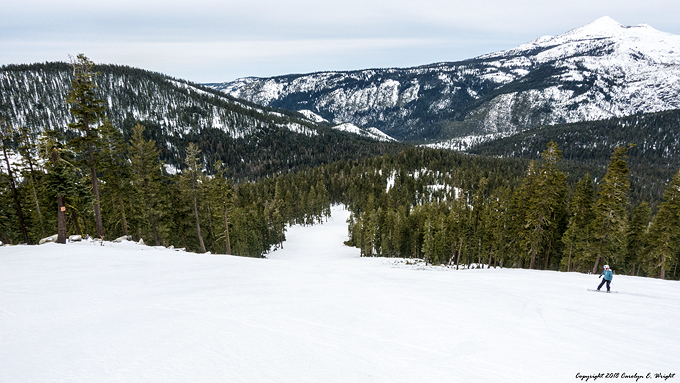
Sierra-at-Tahoe on Monday was a mixed bag, with mostly pleasurable moments. And considering the mountain was devoid of the masses that were here during the weekend, it meant wide-open runs, no lift lines, and no waiting for a cocktail.

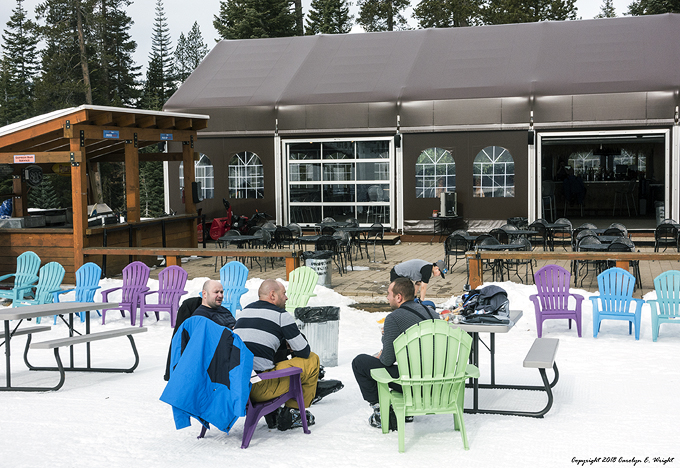
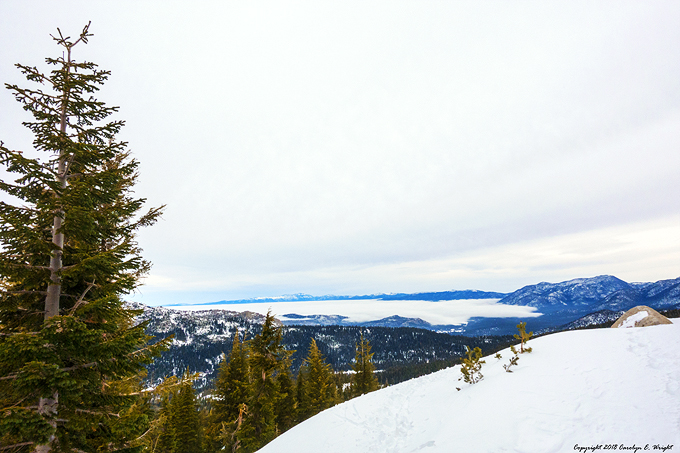
Fog covers Lake Tahoe on Jan. 29 as seen from the 360 Smokehouse at Sierra. Photo Copyright 2018 Carolyn E. Wright

Lower Main had been transformed into a race course for high school teams, with the public side a mogul lover’s dream.

As with most seasons when Mother Nature is remiss at providing ample white stuff, the groomers and snowmakers can save a season.

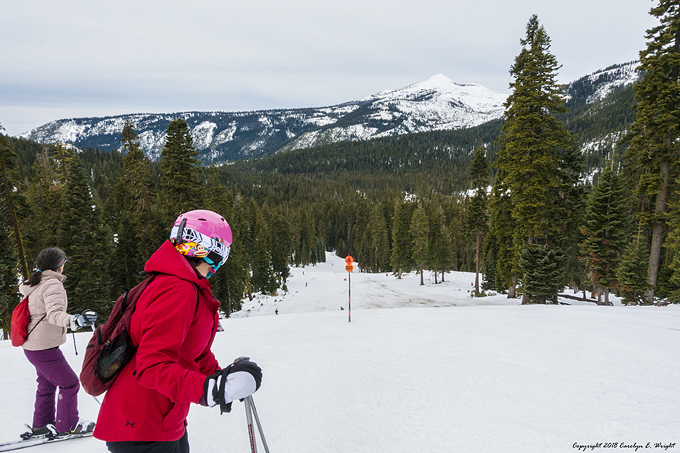
Skiers assess the terrain on Beaver where coverage is lacking a bit. Photo Copyright 2018 Carolyn E. Wright

The groomers are being put into overdrive right now while an inversion hangs over the area. It means temps at lake level are colder than they are on the slopes. Snowmaking requires a certain temperature; it hasn’t dropped low enough the past few nights for the guns to be fired up.

It wasn’t until last week that the West Bowl area of Sierra opened; the back side is also open. This is super late in the season for these areas to be accessible.

Time to shed layers at West Bowl in the warm temps. Photo Copyright 2018 Carolyn E. Wright

All resorts in the region were able to open more terrain after last week’s dump. The problem, though, is the forecast is dry through at least Valentine’s Day. The love from the snow god’s just hasn’t been here this season for the resorts, which are coming off a record snowfall a year ago.

Going down Dogwood off the West Bowl chair it was near perfect conditions. There is no indication there is a lack of snow. But then when the trail merges onto Beaver it’s another world. A lot of brown snow can be found here. Still, it’s manageable. No rocks could be seen.

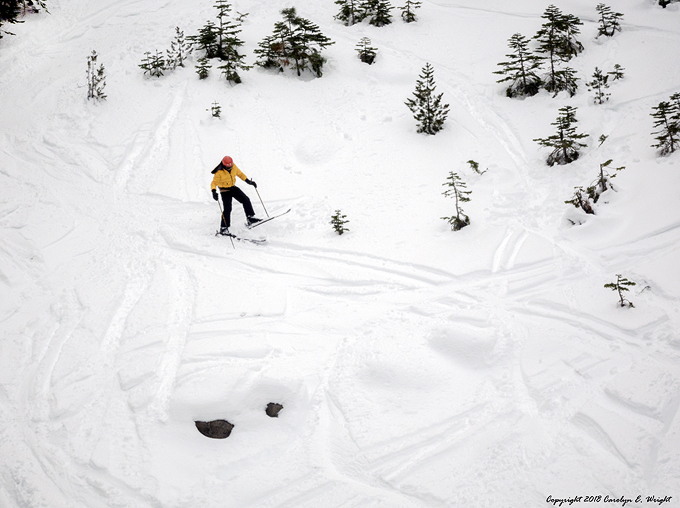
Skiing in closed areas is never a good idea. Photo Copyright 2018 Carolyn E. Wright

Upper Powderhorn was super – plenty of snow (all white) – and nicely groomed.

Sierra does an excellent job of posting signs about conditions ahead. Pay attention.

One yahoo decided to duck under the roped off area of Clipper that said “closed.” Observing from the chairlift, he was in way over his head. These are the people that end up unnecessarily putting ski patrollers’ lives at risk.

Nearly the entire mountain at Sierra is open for skiing/snowboarding. Photo Copyright 2018 Carolyn E. Wright

Tree skiing is always risky; it’s even more so when there isn’t ample snow. And closed, means closed. Those powder stashes aren’t worth it.

Considering February and March are two of Tahoe’s better months for skiing, it’s possible plenty of powder days are still to be had this season.