Veggie garden in Tahoe? — Yes, it’s possible

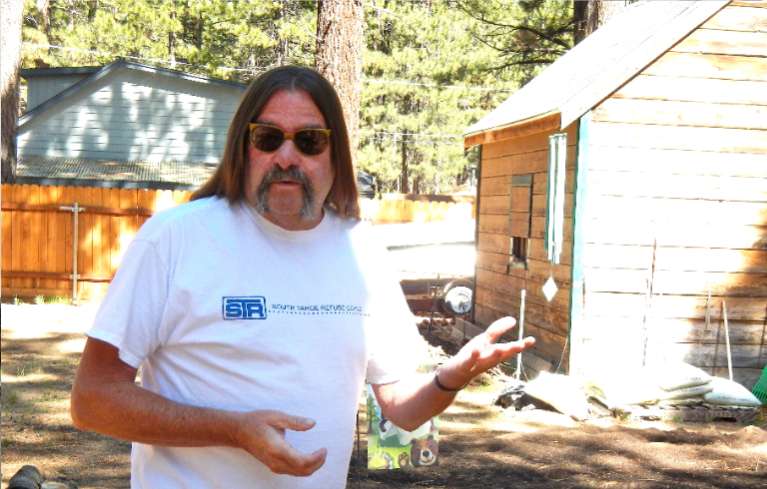
Bob Rockwell has been growing vegetables in Lake Tahoe for 40 years. Photos/Kathryn Reed

Bob Rockwell has been growing vegetables in Lake Tahoe for 40 years. Photos/Kathryn Reed

Publisher’s note: Today begins a random series of stories about growing a vegetable garden in South Lake Tahoe.

By Kathryn Reed

Sun, soil, seeds. Those are the primary elements that make for a successful garden.

Now is the time for Lake Tahoe gardeners to be getting their soil ready. With much of the soil in the basin being decomposed granite, it is necessary to amend the soil. This means mixing in nutrient-rich ingredients in the form of compost.

Compost can come in bags from a nursery or be even fresher if it comes from Full Circle Compost in Minden. Be careful about using steer manure because that can burn plants. Full Circle uses food waste from South Tahoe Refuse to create some of its product.

Bob Rockwell of South Lake Tahoe has used both, but finds the Full Circle product to work best.

Rockwell learned to garden at the side of his mother when he was a boy. When he bought his first place in town in 1974 he started his own garden. Now his primary gardening spot is the lot he owns next to where he lives in the Al Tahoe neighborhood.

A radish pokes above ground.

A radish pokes above ground.

“I’m learning as I grow,” Rockwell told Lake Tahoe News as he perused the compost that still needed to be mixed in with the dirt.

Rockwell doesn’t claim to be an expert. But he is willing to take chances, experiment and to even expand his growing area. In the near-vacant lot his main garden is 16 feet by 25 feet. Just behind it is the secondary garden that is 8 feet by 12 feet. He has another plot behind his house. In a small wood box he is seeing what grows in an all compost mixture. Last week radishes were starting to sprout.

“Tahoe soil is good for growing pine trees and not much else,” Rockwell said. Thus the need to help it out a bit.

Rockwell doesn’t count the hours it takes to tend his garden. It’s one of those labors of love. He’s playing in the dirt nearly every day except during winter and the spring storms.

He used to only use compost from Scotty’s. He still has bags of it sitting next to the original shack that came with the property. Now he swears by Full Circle Compost. Rockwell had some delivered last fall that he then spread on top of soil where he knew he would be planting. Soon all of it will be mixed in.

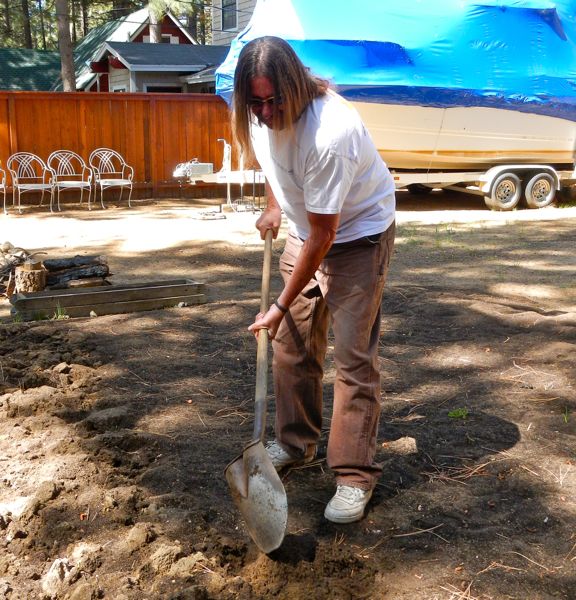
Bob Rockwell mixes compost in with Tahoe's naturally granite soil.

Bob Rockwell mixes compost in with Tahoe’s naturally granite soil.

Rockwell uses a shovel for the mixing. A rototiller would speed up the process.

Once the soil and compost are mixed, Rockwell will rake it smooth. Then distinct rows will be created to plant seeds. Mounds will be created for things like potatoes.

He says even if people are just now starting to think about the soil, that’s fine. But amend, amend, amend. And he says loosely packed soil is the best.

Fresh compost isn’t something people want to plant in right away because it can be too hot and burn the seeds or plants. That is a reason to get it in the fall and not the spring.

A raspberry plant and onion are coming up in the main area. These are volunteers – things he didn’t plant. But he’s not about to pull them either. He wants to see how they do.

His eyes, though, are always on the weather forecast. He follows four weather sites. This time of year it’s all about determining if he needs to be covering what is growing.

Various greens are a big component of Rockwell’s garden.

“When you have a salad with dinner that you grew there is nothing better,” Rockwell said.


Extended fire season puts California on alert

By Haya El Nasser, Aljazeera America

The climate change debate currently pits the bulk of the scientific community against holdouts who don’t believe rising temperatures are the result of human activity. But in California, a state suffering from a historic drought, why the phenomenon is happening is less important than the simple fact that it is.

Forecasters and fire agencies have tossed aside their normal fire calendar — mid-May to mid-October — and now prepare for what some call a new normal of a greatly extended fire season. They are hiring extra staff and issuing more warnings. Some local officials have warned that fire season in some parts of California has basically become a year-round phenomenon.

The National Weather Service has been issuing an unprecedented number of fire forecasts and alerts in the thick of the usually-wet season, months earlier than normal. Its forecast offices have kicked into fire-season mode well ahead of schedule.

The Sacramento office, which issues fire forecasts for interior Northern California, decided last week to up its daily seven-day forecasts to twice a day, and its National Fire Danger Rating System, which measures the seriousness of fire conditions, is going out earlier.

Read the whole story


Republicans back Brown’s rainy day fund concept

By Chris Megerian, Los Angeles Times

SACRAMENTO — Gov. Jerry Brown has Democrats and Republicans on board with the broad outlines of his plan for stockpiling some cash and paying off debt.

But as the special legislative session Brown called on the issue opened Thursday, it was clear that, as lawmakers like to say, the devil could be in the details.

Republicans, whose votes the Democratic governor needs to place his measure on the fall ballot, want tighter controls on the reserve fund than the governor has proposed. One senator said there might be a loophole in the plan that could help Brown fund the state’s troubled bullet train network — a project most Republicans oppose.

On the other side of the aisle, Senate leader Darrell Steinberg, D-Sacramento, has publicly balked at Brown’s insistence that lawmakers act on his proposal now rather than later this year. Democrats also could hold out for the restoration of more healthcare and social service funds cut during the recession.

Read the whole story


Brady: ‘A leadership void exists within the sheriff’s office’

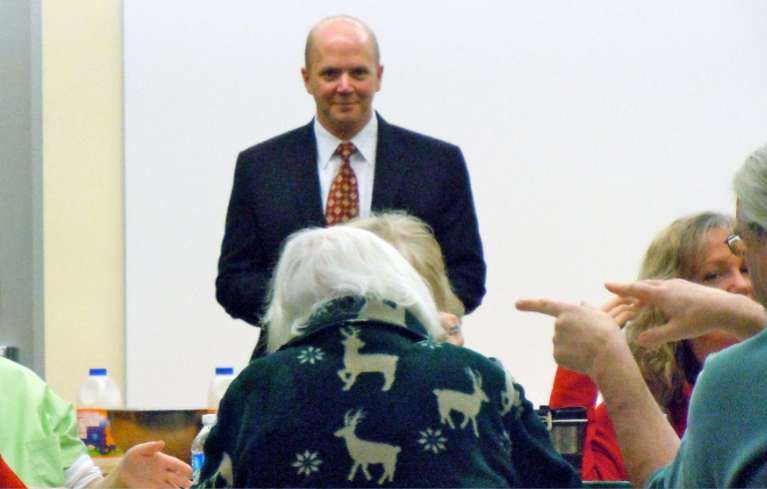
David Brady

David Brady

Publisher’s note: Lake Tahoe News asked the three Douglas County sheriff’s candidates a series of questions. The responses are running in the order they were received. All but one question is the same.

Name: David James Brady

Age: 58

Occupation: President of Brady & Associates, a financial services firm.

Certified financial planner (1988)

What groups, nonprofits, other civic involvement are you part of outside of work?: Board of director: Carson Valley Chamber of Commerce, the Foundation for Douglas County, 1 Family 1 Restaurant, Suicide Prevention Network of Douglas County.

Member: Business Council of Douglas County, Minden Rotary International.

Education: Master of public administration USC 1981

Bachelor of science in Public Affairs USC 1977

Certified financial planner designation USC 1987

Public management certificate UNR 2006

Certified public official certificate UNR 2006

CA P.O.S.T basic, intermediate, and advanced certificate

NV P.O.S.T reserve certificate.

In Tahoe during the morning commute there are often multiple deputies out on Highway 50. How is enforcing speed the best use of limited resources?: Traffic enforcement is a vital element of public safety. High visibility patrol is a common deterrent to aggressive driving tactics and excessive speed. Targeted enforcement to reduce accidents in high frequency areas is proactive in nature and could save lives ultimately. Priority calls for service will always be handled accordingly.

When the South Shore is busy rental units often have so many vehicles they spillover onto the streets to create a problem for locals and pose a safety issue. Currently, nothing is being done about this issue. What do you think should be done to address this ongoing issue?: I am familiar with this issue, having responded to such calls for service as a reserve deputy sheriff. Following an initial response from the sheriff’s department to address the immediate concern of safety, it should be the responsibility of the code enforcement officer to keep a log of such incidents, contact the rental owner and if the problems persists, revoke their permit.

Do you believe it’s better for the head of a law enforcement agency to come from inside or outside the department? Why?: As a general rule, I believe having the head of a law enforcement agency come from inside the department is appropriate, given certain conditions. One of the critical roles of any chief executive is to identify and develop the leadership of tomorrow. If this role is not exercised by the head of the organization, a leadership void is created, and it then becomes incumbent to reach outside the organization for talent.

A leadership void exists within the sheriff’s office. For three decades, the sheriff has been selected from within the department, with the added benefit of not having any contested elections. After 20-plus years of the same administration, it is time for a fresh perspective, and a multi-dimensional approach to leadership of the organization. This election will provide the “best of both worlds” in that both Steve Orr and I have multiple career experiences in leadership roles within the county and with other public agency organizations.

Why do you want to be sheriff?: I was fortunate to know early in my life that I wanted to be a police officer. Upon graduating college, I served as a police officer in Redondo Beach as a patrolman, traffic officer and K9 officer. I quickly realized where my passion rested, and that I wanted to make a career in law enforcement. My vocation was to one day lead a public safety organization. To that end, I went back to college and obtained my master’s in public administration from USC in 1981.

Family obligations brought me to Douglas County in 1985. While working as financial investigator for the Gaming Control Board, I obtained my certified financial planner designation and subsequently began a career in the financial services industry, serving police and fire associations throughout California and Nevada.

I never lost my passion for public safety, and served for 15 years as a reserve deputy sheriff in Douglas County. For the past 29 years, I have committed myself to public service, and have enjoyed multiple career experiences in leadership roles, all of which have been progressively responsible administrative and supervisory in nature.

We have seen a paradigm shift in local government finance in the past eight years, and the challenge has been to “do more with less”. My extensive background in banking, finance, and financial planning, combined with my passion to serve in a law enforcement leadership role have prepared me to serve as your sheriff. I welcome the opportunity, and would bring a fresh perspective, vision and passion to the position.

Why should someone vote for you over someone else?: Voters should critically evaluate all candidates in terms of their education and experience to determine each individual’s credentials and potential to serve as their sheriff. My broad based background, advanced education, extensive work experience and training, in both the public and private sector make me uniquely qualified to serve as your sheriff. I will bring multiple career experiences in leadership roles to the position.

Previous positions have included president of the Douglas County School Board and vice chair of the Douglas County Commission. In the private sector, I was a board member and treasurer of the Greater Nevada Credit Union. For 27 years, I have been a small business owner, and currently am president of Brady & Associates, a financial services firm.

I have 25 years of street level experience, which includes eight years as a police officer in the city of Redondo Beach, two years as a financial investigator for the Nevada Gaming Control Board, and 15 years as a reserve deputy sheriff for DCSO.

As important, I am the only candidate who has developed a strategy and action plan for the department. I intend on conducting an operational audit to determine where the organization can be more efficient, and reduce the cost structure where appropriate. We will develop a strategic plan to identify the needs of both the department and the community. We will also seek national accreditation for the organization through the Commission on Accreditation For Law Enforcement Agencies Inc. Such participation will improve service delivery, strengthen crime prevention efforts, and formalize essential management procedures.

Finally, I have announced that Steve Orr will join our management team as undersheriff following a successful election. Steve served in DCSO for 26 years and achieved the rank of captain prior to becoming the chief of police in Lewiston, Idaho, in 2008. I believe we will provide a “value added” proposition to the taxpayers and residents of Douglas County with our extensive leadership experience and operational expertise.

What is your stand on medical marijuana? What kind of enforcement issue would that present for the department?: The advent of medical marijuana dispensaries in Nevada is becoming a reality as a result of recent legislative laws. To the commission’s credit, they voted unanimously for a 180-day moratorium while officials evaluate legal considerations and the impact on county financial resources. This issue is a work in progress, in which the scope of the enforcement challenges have yet to be clearly defined.

As sheriff, my role would be to enforce any ordinances established by the commission, as well as any Nevada Revised Statutes set by the state Legislature.

What do you believe is needed for a good relationship between the sheriff’s department and county commissioners?: Regular communication between the sheriff and the County Commission is a critical element for a good working relationship. In my six years as a commissioner, I took the initiative to meet with other county officials including the DA, fire chief and department heads to discuss issues and keep the lines of communication open. During my tenure, communication between the sheriff and the board was limited. As sheriff, I would be proactive in maintaining positive relationships with the commission through ongoing and consistent communication.

If the commissioners cut your budget by 10 percent, what program or people would you cut? Please be specific.: To put the question in perspective, a 10 percent cut in the sheriff’s department represents a reduction of $1,500,000. First and foremost, I would critically evaluate the potential role of civilians serving in a law enforcement capacity. Not all positions within the organization need to be filled with “PERS paid or POST certified” deputies. In 2010, as a commissioner, during the budget process, I challenged the entire command staff of the department to examine the potential for cost savings, using this approach. It was ignored. The cost structure of the command staff is expensive and can be restructured to include a civilian management analyst with a subsequent reduction in cost to the taxpayer.

In 2008, I advocated for the county to embrace “Priority Based Budgeting” as an alternative to the standard “across the board” budget cuts typically employed during the budget development process. To the county manager’s credit, the county has transitioned to PBB with great success.

I would evaluate those services provided within the fourth quartile rankings, and look to eliminate accordingly.

What is your relationship with businesses at Lake Tahoe that work with the sheriff’s department on various events? If anything, what would you consider changing?: I would look to develop personal relationships with the businesses at Lake Tahoe, and make it a priority to be directly involved and visible within the Lake Tahoe community. I will create a personal presence and make this one of my priorities.

The sheriff’s department has always refused to make the New Year’s Eve celebration at Stateline a sanctioned or permitted event. The casinos have asked for this and have wanted to expand the festivities, but DCSO says no. Do you believe this is a good policy? Why or why not? And how would you address it?: In the 1990s, this issue was visited by DCSO and the casinos. The casino representatives were not interested at that time due to concerns with the intoxicated 18-, 29-year-olds that populate the corridor during the celebration events. I am willing to revisit this issue, if that is the desire of the casinos. The responsibility of issuing special use permits is the role of the board of commissioners. Any issuance of a permit would require the applicants for the permit to pay the related costs of all related law enforcement expenses for the event. Currently, those costs are absorbed by the county.

You have said you want Steve Orr as your undersheriff. Orr was somewhat divisive when he was a captain for DCSO. How do you think he would fit into the institution now?: Rather than respond to undocumented comments, a factual review of the evidence regarding Steve Orr’s performance puts a different light on his abilities, credibility and the positive aspect he will bring to the sheriff’s office. An assessment of Steve’s performance evaluations as chief of police in Lewiston, Idaho, for the past seven years reflect an average rating of 8.125, out of a possible rating of 9. Every year his summary evaluation ranking was “distinguished”. He received a No. 9 in the following categories: Leadership ability, relationship with associates, and supervising others.

Moreover, the following comments were included in his evaluations:

2009 “He has gained the trust and support of management, co-workers and his department.”

2010 “Steve continues to bring fresh approaches to Lewiston law enforcement due to his maturity and outside experience.”

2011 “Your actions and behaviors embody pride, thoroughness, and high ethical standards which is then reflective of the entire department.”

2012 “Your leadership of the department is exceptional.”

2014 “Your emphasis on re-building trust within the department has been very successful. You have every right to be proud of this accomplishment.”

Steve will strengthen the organization and enhance the operational cohesiveness.

Douglas County sheriff’s deputies make less than South Lake Tahoe police officers and El Dorado County sheriff’s deputies. Does this hamper efforts to recruit employees? Do you believe deputies should be paid more? Why or why not? If yes, how would you go about getting them more money?: Douglas County is in the process of conducting a salary and benefit survey for all employees to assess the state of employee salary and benefits relative to similar counties. This survey will provide baseline data from which we can determine if employees are being compensated fairly and equitably. Previously, as the chief negotiator for a police association, I worked from the premise that compensation and benefits for my membership should be in the upper quartile of those cities in the “comparison pool”. The city mutually agreed with this position, and we worked collaboratively to achieve that goal. This became a multi-year endeavor and the framework for all future negotiations. Recruitment can be a function of compensation, and that is just reality. You will always have individuals choosing other agencies or leaving an organization for additional compensation, no matter the condition of the department. I would work closely with DCSPA to understand the issues relative to collective bargaining, and offer my insight, expertise and assistance where appropriate. Having sat on “both sides of the table” I can appreciate the challenges germane to negotiations.

What is lacking in the department right now in terms of personnel or equipment or other resources? How would you address those needs?: What is lacking within the department currently is a strategy to deliver public safety services in a smarter and more efficient manner. To that end, as part of our action plan, we intend on conducting an operational audit to examine the departments’ organizational structure and culture, compare the state of the department to industry standards and best practices, increase efficiency, identify workloads, and recommend appropriate staffing.

Further, we will develop a strategic plan to examine and identify the needs of the organization and the community, create a vision, engage in financial planning, and develop an approach to address the opportunities and goals established during the entire process.

What do you think is the biggest issue facing Douglas County Sheriff’s Office and how do you plan to resolve it?: I think the biggest operational issue facing the Douglas County Sheriff’s Office is poor morale. During my 15-year tenure as a reserve deputy, I have seen a deterioration in the mood and morale of the employees serving on the front lines. The great recession has presented challenging financial times, and staff is witnessing reductions in compensation due to salary cuts, and corresponding increased health care costs. Compounding the situation is that during this similar time frame, calls for service have increased by 33 percent, (12,131 call increase between 2008-12) placing unrealistic demands on a department with a static field force. Employees are overworked, unappreciated, and not respected. The chief operations officer’s response concerning these conditions has been to reply, “Morale is not his problem”. Clearly, a lack of insight and leadership. For the sheriffto support this type of response demonstrates an absence of leadership and vision on his part. The culture of the organization needs to change where employees are valued, respected and feel empowered. My first initiative would be to “lead by listening” wherein I would meet with all employees individually to hear of their concerns, ideas and how they feel they can best serve the organization, as well as the community. I would develop open lines of communication where open and constructive dialog is encouraged and respected. This is an example of behavior that has a “high impact and low cost”. I have always believed that “those closest to the work should design it.” When employees have ownership of the ideas and plans to improve an organization, big things can happen.

While this does not address the financial conditions, I would work tirelessly to engage the board of commissioners to fulfill one of their budget directives for the 2014-15 budget which is to “Plan for future investments in employees”.

What is one do-over you would like to have in terms of a professional decision you have made?: I would have reconsidered my departure from the Nevada Gaming Control Board as a financial investigator. The work was interesting, challenging and fun.

Tell us something about yourself that people might not already know?: I am a twin, a kidney donor, and graduated magna cum laude from the University of Southern California.



Tahoe guide calls off Everest climb

Adrian Ballinger with Alpenglow Expeditions based in Olympic Valley has been leading Everest expeditions for years. Photo/Alpenglow Sports

Adrian Ballinger with Alpenglow Expeditions based in Olympic Valley has been leading Everest climbs for years. Photo/Alpenglow Expeditions

By Brian Hickey, KCRA-TV

Northern California climbers called off their trips to the world’s tallest mountain this week after growing tension in base camp and dangerous climbing conditions on Mount Everest led to their tough decisions.

Adrian Ballinger is the lead guide and owner of Alpenglow Expeditions based in Lake Tahoe. Ballinger was to lead a group of six climbers to the summit of Everest in the coming weeks, but via his Facebook page Thursday morning announced he was canceling the trip.

The decision comes after 16 Sherpa were killed in an avalanche earlier this week.

The Sherpa are essential support staff for the hundreds of international climbers who attempt to scale the mountain each year.

Read the whole story


Calif. Senate undergoes ethics training

By Laurel Rosenhall, Fresno Bee

Imagine this: A state senator is carrying a package of bills for a major corporation. The same company backs a foundation that plans to give the senator its national legislative achievement award. The award comes with $25,000 cash.

What ethical or legal issues does the scenario raise?

That question was among several that California senators discussed Wednesday during special ethics training prompted by the unusual spate of problems to hit the Capitol in recent months.

Two senators have been charged with corruption in separate FBI investigations and a third has been convicted of perjury for lying about where he lived when he ran for office. A fourth is fighting a judge’s recommended order that he pay a fine for campaign money-laundering, and two high-profile Sacramento lobbying firms have paid record-setting fines for violating state lobbying laws.

“Money has a corrosive effect on politics and on legislatures and congresses throughout the land,” Senate leader Darrell Steinberg said after the training. “But these are the rules.”

The rules forbid a direct exchange of money for policy, as described in the example above and as alleged by federal authorities who claim that Democratic Senators Ron Calderon of Montebello and Leland Yee of San Francisco took bribes from undercover FBI agents seeking official actions from them in the Capitol. Calderon and Yee have pleaded not guilty.

Read the whole story


Greene leaving LTCC for college presidency

By Kathryn Reed

Sometimes it takes just one application. That was the case for Tom Greene.

It means Lake Tahoe Community College’s vice president of Academic Affairs and Student Services is leaving. This summer he becomes president of American River College in Sacramento.

Tom Greene is leaving LTCC to be president of American River College. Photo/LTN file

Tom Greene is leaving LTCC to be president of American River College. Photo/LTN file

“I didn’t send out a bunch of applications. This is the only one I sent out in California. I did because I know it’s a good fit and I worked in that district before,” Greene told Lake Tahoe News. “I know it’s a good college. It’s a real opportunity where the institution can invest in teaching and learning for students.”

Greene was hired in 2010 by LTCC from Sacramento City College where he had been associate vice president of Enrollment and Student Services. This was his second stint at LTCC. Previously he had been a counselor.

He doesn’t plan to make any dramatic changes at the get-go.

“It comes down to me to create the best conditions so that others can exercise their passion and talent. It’s more about removing barriers than building anything,” Greene said.

He will be going from one of the smallest community colleges in the state to one of the largest. American River College has 30,000 students. But Sac City was large, too, so he knows what he is getting into.

“At a smaller college you are forced to get involved with many things and into the granular detail,” Greene said. “At a larger college there are so many more layers. The people at a small college are the heart of the institution. My heart is still in Tahoe with the college and the people.”

Another thing he’ll miss is the outdoors – especially being able to mountain bike after work.

For the time being he will also be leaving his wife behind and returning to a commuter relationship. Suzanne Roberts is an English instructor at LTCC and intends to continue her position there through at least the next school year.

Before the couple married and Greene got the VP job at LTCC they did the Tahoe-Sac commute. It will resume again this summer. Greene does not have a definitive start date in Sacramento, but plans to leave LTCC in June.

“The college as a whole is very excited for Dr. Greene’s accomplishment. He is a very talented and exceptional college professional. While the faculty, staff, board, and students are saddened by losing Tom, we know he will go on to lead American River College in a manner that is student focused,” Kindred Murillo, president of LTCC, told Lake Tahoe News.

Murillo said LTCC is working on a transition plan that should be in place by mid-May that will be for the short term and long term.

In addition to Greene’s job at the college, he has been the chair of the board for the Tahoe Prosperity Center for the past 18 months.

He will give up those responsibilities knowing Heidi Hill Drum has been hired as the executive director, that a $167,000 grant from the state Public Utilities Commission to fund a comprehensive assessment of broadband in the entire Lake Tahoe Basin is about to be awarded the TPC, and that the organization will be the leader in maintaining the commodities bank for tourist accommodation units and commercial floor area are in place.

Greene said the greatest outcome to date with the center is creating a model for how collaboration can work among those in the basin and beyond.


Dismal Tahoe snow doesn’t doom Vail Resorts profits

By Jason Blevins, Denver Post

Despite one of the worst winters ever for resorts around Lake Tahoe, Vail Resorts on Wednesday reported that stellar snowfall in Colorado buoyed the company’s performance for the 2013-14 ski season.

“Our performance this year reflects our ability to drive outstanding performance across our business despite varied conditions,” Vail Resorts chief Rob Katz said in a statement.

Lift revenue at the company’s eight destination resorts — four in Colorado, three in California and Canyons in Utah — climbed 7.6 percent over the previous season. Visitor spending climbed 7.5 percent for ski lessons, 3.1 percent on food and drink and 5.1 percent on retail and equipment rentals over the 2012-13.

Ample snow and strong visitation to Vail, Beaver Creek, Breckenridge and Keystone helped Vail Resorts weather a record decline in snowfall at its Heavenly, Northstar and Kirkwood ski areas.

Total skier visits across its destination resorts climbed 2.3 percent over the 2012-13 ski season.

Read the whole story


Calif. moves to boost water saving toilets, faucets

By Rory Carroll, Reuters

With California facing its worst drought in a century, state officials have fast-tracked first-in-the-nation water efficiency standards for new toilets, urinals and faucets, an action expected to save about 8.2 billion gallons of water the first year while cutting energy use and greenhouse gas emissions.

The draft standards, released late last week, would prohibit the sale of appliances in California that do not meet proposed standards, which are expected to go into effect in 2016.

The standards would require that toilets use no more than 1.28 gallons per flush instead of the current limit of 1.6 gallons per flush.

They would limit urinals to a half a gallon of water per flush, half of what is currently allowed.

Lavatory faucets would have a maximum water use level of 1.5 gallons per minute under the proposed standards, down from the current limit of 2.2 gallons per minute.

Read the whole story


Larson moving from STHS to district office

By Kathryn Reed

South Tahoe High School is nothing like it was eight years ago. And that’s a good thing.

While it took many people – including the voters of the school district – to help transform the school, it was the leadership of Principal Ivone Larson that led the charge.

Larson has known for some time this would be her last year at the helm of STHS. What she found out April 22 is the board agreed to hire her as assistant superintendent of secondary curriculum and instruction, career technical education. This is a part-time position.

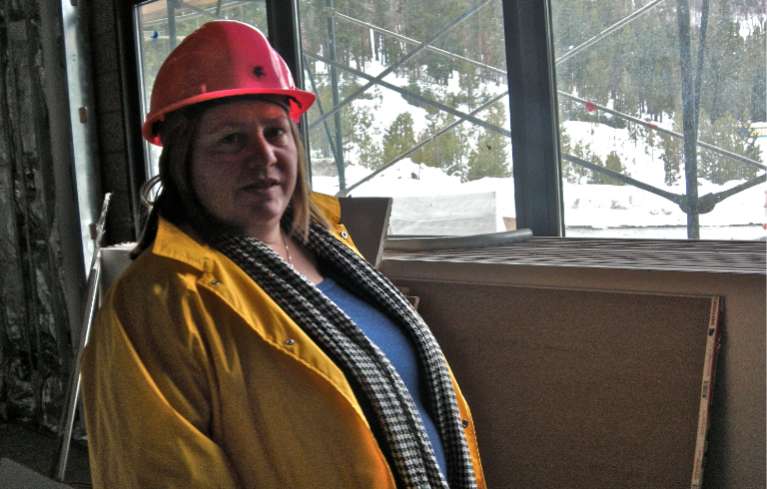
Ivone Larson has a special pink hard hat to wear during all the construction at STHS. Photo/LTN file

Ivone Larson had a special pink hard hat to wear during all the construction at STHS. Photo/LTN file

“Ivone is an incredible visionary. She has certainly been a gifted grant writer. We’re hoping she will continue to bring needed funds into our district,” Lake Tahoe Unified School District board President Wendy David told Lake Tahoe News. “She has been a relationship builder. She is passionate about the opportunities we can give our kids.”

Larson said part of her accomplishments are luck – like being in the right place at the right time. But the truth is if she had not had the vision or grant writing skills, the improvements to the school site would not be what they are. She helped the district secure millions of dollars beyond what the voters approved that went into transforming STHS from a rundown old school to a state-of-the-art center of education.

“I’ve had the ride of a lifetime,” Larson told Lake Tahoe News of her experience these last eight years. She said she has grown professionally and personally.

The next chapter will build on what she has been doing. It will also take some weight off Superintendent Jim Tarwater, especially as the state increases its mandates on local districts.

LTUSD has not had an assistant superintendent since Barbara Davis left in August 2005. And she was full time. At the end of the 2010-11 school year Tarwater also took over many of the human resources duties when the director’s position was eliminated.

“The board has been interested in putting back into our administrative budget a position that could really be of help to Dr. Tarwater,” David said.

More money is likely to be flowing to LTUSD from Sacramento in the next eight years because of the makeup of students, class-size reduction and career technical education.

“We are transforming education and that will take a lot of people at every single level of education,” Larson said.

She calls the changes “the most revolutionary things I’ve seen in California education.”

Funding, Common Core and assessment accountability are the big changes. LTUSD is in the process of implementing the Local Control Funding Formula, Local Control Accountability Plan, Common Core, and the Smarter Balance Assessments – all state requirements.

“The cool thing about it is it includes the voice of everybody,” Larson said.

While she is excited about the next step, she is already realizing leaving South Tahoe High is going to be more difficult than she expected.

“It’s harder than I thought,” Larson said. And while she will still be around, she said, “It won’t be that day-to-day with the kids.”

But her motto is, “Dream big and it can happen.”

Now the district is in recruiting mode for a principal at STHS.