Laine — chronicling Tahoe one shot at a time
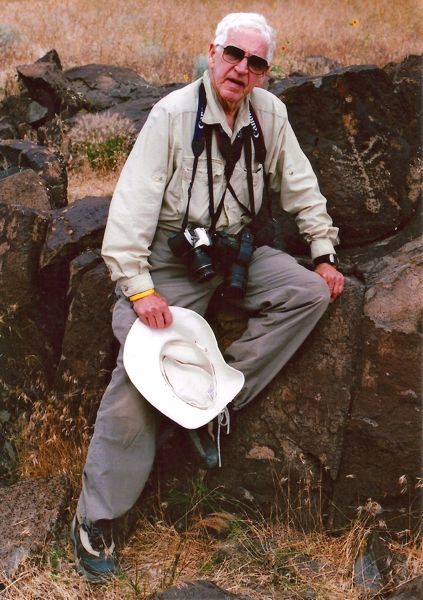
Ed Laine has been capturing Lake Tahoe for decades. Photo/Provided

Ed Laine has been capturing Lake Tahoe for decades. Photo/Provided

By Kathryn Reed

An artist is what Ed Laine always wanted to be. But he didn’t expect it to involve a camera.

He had majored in art at the University of Oregon, with the idea he would be creating pottery as a living. But life isn’t always predictable. Collecting a hundred bucks a month making pottery wasn’t paying the bills so he had to find another line of work.

“The market wasn’t here yet. It would be today I think,” Laine told Lake Tahoe News. “I was striving to do more commercialized pottery.”

And thus he launched his career in advertising and photography, where he saw the South Shore grow, businesses come and go, and lived through the evolution of printmaking.

The 82-year-old moved to South Lake Tahoe in September 1957. Not long after that he went to work at the Tahoe Daily Tribune. His job title? “Everything,” he said.

“It was all lead and ink at that time,” Laine said of the printing process, which he also called “cumbersome”.

Everything was shot with film. It was processed in a darkroom on site. (The Tribune didn’t use digital cameras until 2003.)

Laine remembers the time he was told to go get pictures of a bear hanging out by the California Lodge at Heavenly. It was standing on its back legs munching on a head of lettuce not more than 40 feet away. He kept shooting and shooting.

When he got back to the lab there were no images.

“It was completely blank,” Laine recalled. “I had forgotten to pull the slides.”

Camera equipment was much more complicated back in the day.

When color photography came around all the aluminum plates on the press had to be removed and the color put on. This would double or triple the length of a press run. It’s why color photos used to be rare in publications and why color ads once cost more than black and white.

With a population of less than 5,000 at the time in South Lake Tahoe, it also meant there were not many businesses. Selling ads was hard. The good thing at the time is businesses didn’t have a ton of choices for reaching the consumer.

The biggest advertisers were Harrah’s, Harveys, Outdoorsman and Barney’s.

By the time Laine left the Tribune in 1967 he had married Del, who wrote columns for the paper about skiing, hiking, bowling, fishing, gossip and other activities.

Together they opened Laine Associates. It was an ad agency. But there were not enough advertisers to sustain the business so they took the photography aspect of the company and started Laine Photolabs.

Weddings were the principal component of the business. Some were shot at the top of the tram at Heavenly Mountain Resort others at Taylor Creek, and even more at one of the beaches around Tahoe.

“Mothers of the bride were the worst,” Laine said. He added, if they had sisters, it got even worse.

The equipment was heavy. Laine was using a 4 x 5 Speed Graphic that he had to lug around.

The one-hour photo business became a reality when they moved from South Lake to Round Hill in 1989.

Laine Photolabs had contracts with area schools and then moved into sports photography. The business closed in 2010. While Laine was active in the company up until the end, his daughter, Brooke, was running it by that time.

(The Laines have four children and 10 grandchildren.)

Through the years Laine also did other jobs relating to photography. He did quite a bit of work for South Tahoe Public Utility District.

“When they ran the piping over Luther Pass I was hired to photograph it day and night. I had to camp out there,” Laine said.

For about seven years he volunteered to photograph sections of the Tahoe Rim Trail for the nonprofit association. It involved lugging heavy camera gear into various locations.

For the Lake Tahoe Historical Society Laine did a substantial amount of photocopying of old pictures that were donated to the organization.

A retired police sergeant from Fresno started an institute in South Lake Tahoe for officers to learn how to photograph evidence. Laine was one of the instructors.

Laine has kept some of the old photo equipment, but it’s all boxed up now. He admits if he is going to shoot anything today, he has a small digital camera.

As for the pottery, he never picked it up again.


60 years after Brown v. Board of Education the fight goes on

By Sherrilyn Ifill, MSNBC

May 17 marks the 60th anniversary of the Supreme Court’s decision in Brown v. Board of Education, the constitutional moment that compelled our country to reckon with its history and confront the unfulfilled promise of equality first articulated in our founding documents.

Brown literally changed America. It was a mid-20th century course correction that ushered in a modern America that must grapple honestly with the promise of equality and opportunity for all its citizens.

At its core, Brown marks the beginning of the end of legal apartheid in this country. This would be enough to celebrate. But Brown is also a powerful example of how change can happen and the important role that law plays in shaping the very character of our country.

Within 15 years of the Court’s decision in Brown, segregation had been declared illegal in almost every aspect of American life, from the school house to swimming pools, golf courses to public transportation and housing. These changes were not brought about by lawyers alone. The broad civil rights movement that began the year after Brown reflected a powerful demand for full citizenship for blacks throughout the South. But Brown also deployed our nation’s most coveted assets – our Constitution and the rule of law – to articulate and enforce the principle of equality.

Read the whole story


Compromise federal water bill unveiled

By Henry C. Jackson, AP

WASHINGTON — House and Senate negotiators on Thursday unveiled a compromise bill that authorizes billions of dollars for water projects over the next decade, from flood protections in California to deepening Georgia’s rapidly growing Port of Savannah.

Lawmakers released details of the Water Resources Reform and Development act a week after they announced a tentative agreement on legislation that blends House and Senate versions of the bill. The legislation will authorize 34 projects in virtually every region of the country. Lawmakers say it provides important investment in the nation’s water infrastructure.

“This legislation is about jobs and our country’s economic prosperity, and I look forward to bringing to back to the House for a final vote,” said Rep. Bill Shuster, R-Pa., the chairman of the House Transportation and Infrastructure Committee, who filed the bill Thursday.

The proposed investments include projects related to both expansion and flood protection.

The bill sanctions more than $748 million in federal funds for dredging and widening of the Sabine-Neches Waterway, an area billed as “America’s Energy Gateway” because the roughly 80-mile waterway services oil and natural gas refineries in Texas and Louisiana. The legislation also authorizes as much as $800 million for a flood diversion project that would protect the Red River Valley region of North Dakota and parts of Minnesota, which have suffered major floods in four of the past five years.

The Senate passed its version of the bill roughly a year ago, with the House following suit in October. Since then, lawmakers have been working to thrash out differences between the two bills. The Senate’s version would authorize about $12.5 billion over the next decade, while the House’s version would cost about $8.2 billion. The compromise is expected to land somewhere in between the two, but a Congressional Budget Office estimate was not yet available.

Lawmakers have expressed a pent up demand for a water projects bill. Congress last authorized a bill in 2007 and many lawmakers have said they feared the U.S. was falling behind in its water infrastructure.

Congress would have to pass separate legislation to pay for all of the projects included in the bill.

The House is expected to vote on the bill as early as Tuesday, with the Senate following suit. Both versions of the bill easily passed previously. With the estimated cost of the bill expected to rise, though, there is some concern that more conservative Republicans might vote against it. Outside groups, including Heritage Action, have said the bill does not do enough to rein in spending.

But businesses groups — and many lawmakers — have called both versions of the bill a potential jobs engine, citing the investment in infrastructure. The U.S. Chamber of Commerce has also lobbied lawmakers in both houses to pass the bill, saying it will ensure that American businesses stay competitive.

“Legislation to improve the nation’s marine transportation system is long overdue and will grow jobs, boost international trade … and strengthen America’s competitive edge,” said Janet Kavinoky, the executive director transportation and infrastructure with the U.S. Chamber of Commerce.

One effort to try to keep conservative lawmakers on board is preserved in the compromise. Addressing past concerns that water projects bills were loaded with favors for lawmakers’ districts and states, the compromise legislation eliminates roughly $18 billion in dormant projects that were authorized prior to 2007.

The bill also sets specific time and cost limits for studies on potential projects, eliminates duplicative reviews and includes language that speeds up the environmental review process for projects.

The compromise legislation will also increase spending from the Harbor Maintenance Trust Fund, which will be used to fund improvements to ports and creates a five-year pilot program to provide loans and loan guarantees for various water projects.


Plastic bag ban working in South Lake Tahoe

By Kathryn Reed

If the number of people who showed up at a meeting this week about South Lake Tahoe’s plastic bag ban is an indication of it how it is working, it’s working well.

Four members of the public attended the May 14 meeting to talk about what is working and what isn’t. Mayor Hal Cole and Councilmember JoAnn Conner were also in attendance. City Attorney Tom Watson ran the meeting.

On this same day a state Assembly panel moved forward a proposal to ban plastic bags throughout California.

The ban for South Lake Tahoe grocery stores started in mid-January, while others will not be able to hand out the one-time use bags starting Oct. 15.

Connie Hinton, who owns a thrift store in town, worries about what will happen when she is no longer allowed to package people’s goods in plastic bags. She said it would have an economic impact.

Today she is given bags from customers – plastic and paper – that she reuses for other customers. She would still be able to use the paper.

Hinton said there is a bit of inequity in that the Attic, another thrift store, will be able to use plastic bags in the future because it is a nonprofit.

Nonprofits are exempt from the bag ban. However, it is still impacting them. Bread & Broth used to have a plethora of grocery store plastic bags to fill with goods for people to take with them at the end of the meal. Now the group is relying on other businesses to donate bags, such as Heavenly Sports and Michael’s.

Priscilla Rohrich’s problem with the ban is that she said it isn’t helping the environment because people are buying boxes of plastic bags to line their garbage cans instead using a bag that once held groceries. She has a problem with corporations benefiting from South Lake Tahoe’s decision.

Karen Fink, who was instrumental in bringing the bag ban to the council, said she finds no need to buy bags. Her family has found ways to use bags from cereal boxes, bread and other items in lieu of the grocery store plastic bags.

Councilmember Conner made the false comment that some stores have stopped charging for paper.

When Fink asked her which stores, Conner snidely said, “You are going to have to figure that out yourself.”

So, Lake Tahoe News did. What was discovered is Conner was lying. Raley’s charges 5 cents for paper, Safeway 10 cents for paper, and Grocery Outlet 5 cents for paper and 10 cents for reusable plastic bags.

The four major grocery stores in the city limits (there are two Raley’s) all say the ban wasn’t welcome at first, but now customers have gotten used to it.

Victor Guerrero at the Raley’s near Stateline told Lake Tahoe News people even sued the chain because of the policy. The store prevailed.

“It’s working. People are slowly remembering their bags,” Guerrero said of people using reusable bags.

A Safeway clerk said a good number of people bring their own bags, while others pay for paper.

Conner also said there has been more shoplifting with people filling reusable bags or walking out with carts full of goods. None of the above mentioned stores mentioned this as a problem to Lake Tahoe News.

The council is expected to discuss the plastic bag ban at the June 17 meeting.


Early fitness may improve middle-age brain

By Gretchen Reynolds, New York Times

The more physically active you are at age 25, the better your thinking tends to be when you reach middle age, according to a large-scale study. Encouragingly, the findings also suggest that if you negligently neglected to exercise when young, you can start now and still improve the health of your brain.

Those of us past age 40 are generally familiar with those first glimmerings of forgetfulness and muddled thinking. We can’t easily recall people’s names, certain words, or where we left the car keys. “It’s what we scientists call having a C.R.S. problem,” said David R. Jacobs, a professor of public health at the University of Minnesota in Minneapolis and a co-author of the new study. “You can’t remember stuff.”

But these slight, midlife declines in thinking skills strike some people later or less severely than others, and scientists have not known why. Genetics almost certainly play a role, most researchers agree. Yet the contribution of lifestyle, and in particular of exercise habits, has been unclear.

Read the whole story


Sierra mountain range on the rise

If it seems like the Sierra are getting taller, it’s because they are.

Depletion of groundwater is causing the Sierra Nevada mountains to rise, according to a study published in the journal Nature on May 14.

“We first wrote two years ago about the rapid rise of the Sierra, with its 14,000-foot peaks in the south and 10,000-foot peaks at Lake Tahoe, moving as much as 1 to 3 millimeters per year,” UNR Professor Geoff Blewitt said. “The puzzling results of our earlier research cannot be explained easily by geology alone. We’ve now found that a reason for the rapid uplift may be linked to human activity.”

The newest chapter of research shows draining of the aquifer for agricultural irrigation in the Central Valley results in upward flexing of the earth’s surface and the surrounding mountains due to the loss of mass within the valley. The groundwater subsidence was found to also correlate with seismic activity on the San Andreas Fault.

In the past 150 years, about 40 trillion gallons of groundwater in the Central Valley have been lost through pumping, irrigation and evapotranspiration. That’s roughly equal to all the water in Lake Tahoe, the volume of which can cover the entire state of California in 14 inches of water.

“This massive withdrawal of water has relieved pressure on the Earth’s crust, which is now rebounding upward in response,” Blewitt said. “This is counter-intuitive to most people, even geologists, who tend to only think that water withdrawal causes subsidence, which is only true in the sediments of the valley from which the water is withdrawn. With the weight of the groundwater missing, the hard-rock crust under the valley is actually rising too.”

The rise is quite fast in geologic time, with these mountain ranges rising by a similar amount each year – about the thickness of a dime – with a cumulative rise over the past 150 years of up to 6 inches, according to the team of geophysicists.

Blewitt and colleague Bill Hammond, who run the Nevada Geodetic Laboratory at UNR, partnered with University of Western Washington, UC Berkeley and University of Ottawa in the research.

“The real importance of this research is that we are demonstrating a potential link between human activity and deformation of the solid Earth, which explains current mountain uplift and the yearly variation in seismicity,” said Colin Amos, assistant professor of geology from Western Washington University and lead author of the Nature article. “These are questions that lots of geologists have been puzzling over, and it’s a real eye opener to think that humans are the ultimate cause.”

Blewitt shared the research in a presentation at the European Geophysical Sciences Union conference in Vienna on April 28. The annual EGU General Assembly is the largest and most prominent European geosciences event.

The study is based on detailed GPS measurements from California and Nevada between 2007 and 2010.

— Lake Tahoe News staff report


Editorial: Sullivan, Ashworth for EDC judge

sullivan-ashworth

Publisher’s note: Lake Tahoe News convened an editorial panel of six South Shore residents to decide on this endorsement for the June primary.

Politics in judicial races can be troubling because those wearing the revered black robe are on the bench in what is supposed to be an impartial role. They are there to follow the law, not political biases.

Judges should not be taking out ads to support the Second Amendment. They are there to uphold the entire Constitution. Judges need a moderate perspective to handle the wide range of issues they hear. It is important that people who come before them are given their due process.

Voters in El Dorado County on June 3 will be asked to replace two retiring judges. Both slots are being contested.

Lake Tahoe News recommends voting for Dylan Sullivan to replace Daniel Proud and Vicki Ashworth to take Doug Phimister’s seat.

Sullivan is essentially doing the job today of a judge in her role as a court commissioner for El Dorado County. She has had that job since fall 2011. This experience will allow her to step into the judgeship without having to endure a learning curve.

Those who have been in her court describe Sullivan as fair, open minded, respectful, efficient with time, knowledgeable and versed in the topic before her.

Joe Hoffman is her opponent. We question his ethics, especially in how he represented himself to voters. He also lacks substance.

For all of these reasons Sullivan is unequivocally the best person for El Dorado County Superior Court Office 5.

Ashworth is a veteran in the El Dorado County District Attorney’s Office. She has handled every type of criminal case there is. And while she would likely not hear criminal cases at the get-go because of potential conflicts of interest, we have no doubt she will be adept at learning the other types of legal matters that will come before her.

In such a small county the judges must be versed in all aspects of law and don’t have the luxury of specializing.

Successfully prosecuting high-profile criminal cases takes research, patience, intelligence, knowledge of the law, a realization of knowing lives will be forever changed from the trial’s outcome, tenacity and a drive to ferret out the details.

Ashworth embodies those traits each time she steps into the courtroom. We believe she will do the same from the other side of the bench.

She is running against Joe Weinberger and David Combellack. The bulk of Weinberger’s experience is as a personal injury attorney, which we don’t believe qualifies him for the complexities of being a judge. We question the reasons Combellack would wait so long in his career to attempt to be a judge. And with Judge Steve Bailey being an advisor to his campaign and Bailey wanting to be the presiding judge, we cannot support Combellack.

Without reservation we support Ashworth for Office 1 of the El Dorado County Superior Court.

When selecting the two people to endorse Lake Tahoe News also took into consideration the overall makeup of the court, which has branches in South Lake Tahoe, Placerville and Cameron Park. There are eight judges and one commissioner. And unfortunately a bit of politics is going on inside those hallowed halls.

We are in favor of Judge Suzanne Kingsbury remaining the presiding judge. With a belief that not only will Sullivan and Ashworth do the job well, we believe they will support Kingsbury.


Nutting not guilty of felonies, guilty of misdemeanors

By Peter Hecht, Sacramento Bee

El Dorado County Supervisor Ray Nutting was found not guilty today on three felony charges of political malfeasance, but was convicted of six misdemeanors for improperly raising bail to free himself from jail.

The charges stemmed from income Nutting received from a state fire safety program for clearing brush on his ranch. Prosecutors alleged that Nutting failed to disclose tens of thousands of dollars, faced a conflict of interest when he voted to fund local resource agencies and took illegal loans from government employees to post bail.

Though the El Dorado Superior Court jury in Placerville found Nutting not guilty on three felonies, it was hung on a fourth felony count alleging that Nutting fabricated documents related to herbicide treatment for which he was reimbursed by the state.

Had Nutting been convicted of a felony, he would have had to relinquish his county supervisor post under state law. After the verdict, Nutting walked from his defendant’s chair into the courtroom gallery, hugged his wife and cried.

Read the whole story


Fire season comes early to California

By AP

After months of warning that drought-stricken California is facing a potentially devastating wildfire season, officials are telling residents it’s time to get serious about clearing brush from backyards, creating evacuation plans and exercising caution with equipment that can throw sparks.

CalFire declared fire season open in most of Northern California on Monday and planned to extend the designation to the rest of the North State next week. That is about a month earlier than normal and a reflection of the kindling-like conditions on moisture-deprived hillsides and in forests packed with dead greenery, agency spokesman Daniel Berlant said Saturday.

The official start of the fire season means staffing levels will remain at their peak and firefighting aircraft on standby until the heightened danger subsides, he said.

In Southern California, the fire season is already underway because the agency never ended the one that started in 2013, Berlant said.

State fire officials have been gearing up since January by slowly adding more temporary firefighters in the central and northern parts of California.

State water managers conducted their final survey of the Sierra Nevada snowpack on May 1 and found it was at 18 percent of average for the date. The snowpack accounts for about one-third of the state’s water.

“There is no doubt that the drought has left the grasses and the brush very dry and that has really set the stage for a very busy fire season,” Berlant said.

CalFire crews already have responded to nearly 1,300 wildfires across the state in 2014, more than twice as many as usual for this time of year.

Inspectors have started visiting fire-prone areas to remind property owners to remove branches, weeds and leaves from around their homes, but not to use lawn mowers, trimmers or power tools that could ignite a blaze after 10am.


Valhalla upgrading site, summer festival lineup

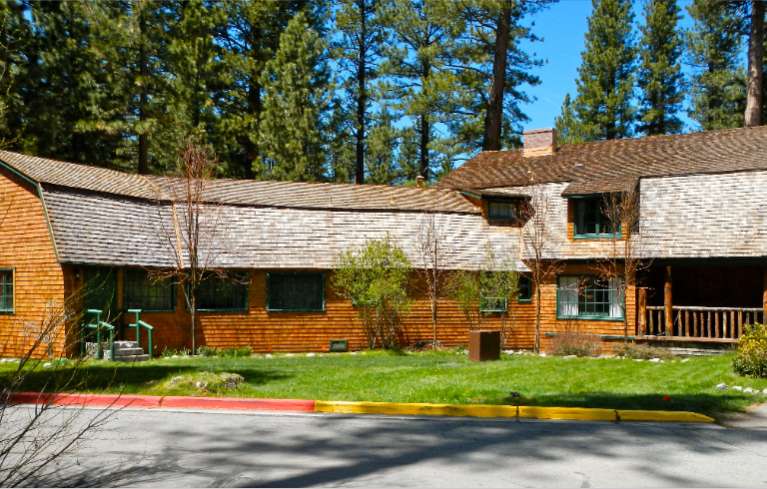
The Grand Hall's front has new siding. Photos/Kathryn Reed

The Grand Hall’s front has new siding. Photos/Kathryn Reed

By Kathryn Reed

For nearly 40 years the Valhalla Art, Music & Theatre Festival has been staged at the Tallac Site on the South Shore. But for the last few years music has not had equal billing. That is about to change.

“I want to get the music to the level of what the theater is so it will be a world-class festival,” Evangeline Elston told Lake Tahoe News.

Elston was hired this winter to be the director of the festival. While she has less than a one-year contract, she is hoping the improvements she brings to this year’s offerings will warrant a longer contract.

She grew up near Carson City, spent the bulk of her career in the Grass Valley-Nevada City area in the music world, and the last year in Austin, Texas, doing work for artists. She knew she wanted to return to the Sierra and that is how she landed in Tahoe.

Ginger Nicolay-Davis, president of Valhalla Tahoe (formerly Tahoe Tallac Association), admits the group has been running on autopilot when it came to music – booking acts that had been there before and not doing much more.

This season expect a more eclectic mix.

One of the first things Elston was able to get the board to agree to was upgrading some of the sound equipment in the Boathouse Theater, which is where the paid performances will be.

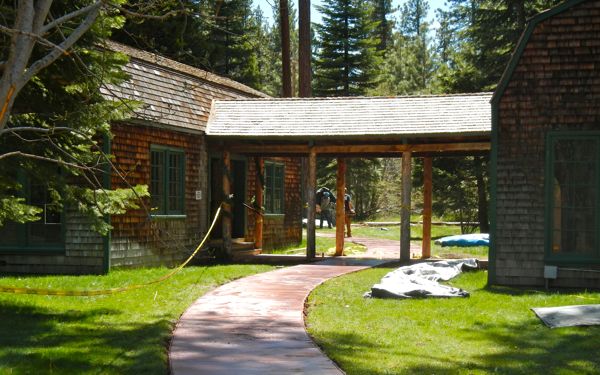
A paved walkway bisects the Twin Cabins.

A paved walkway bisects the Twin Cabins.

Ray Bonneville will launch the 2014 season on June 25 at 7:30pm. Lance Canales and the Flood will also be on stage that night.

Grammy-nominated bluegrass duo Laurie Lewis and Tom Rozum will play Aug. 6 at 7:30pm.

For the first time, Valhalla and Lake Tahoe Community College are partnering to put on a summer play. “August: Osage County” will be at the Duke Theater in July.

To balance this adult-oriented production, “Charlie and the Chocolate Factory” will be at the Boathouse earlier in July.

Four nights of Improv are on the schedule.

In conjunction with this being the 50th anniversary of the Wilderness Act, the Wild and Scenic Environmental Film Festival will be at the Boathouse on Aug. 13. This is also going to be a membership drive event for Valhalla.

The nonprofit gets its funding from ticket sales and memberships. In a deal with the U.S. Forest Service, which owns the land, a certain percentage of the proceeds must be spent on upgrading the property.

In the last three weeks about $30,000 in improvements have been made. A walkway between the Twin Cabins, which are in front of the Grand Hall closest to the road, was completed May 12. The front of the Grand Hall and the side porch have been resided. The remaining siding will be replaced next year.

One of Elston’s goals is bring more public awareness to the partnership between Valhalla and the USFS, and how it’s not just a festival that is going on, but preservation of Tahoe’s past.

—-

Note:

• The event schedule for the 2014 season is available online.

• Membership information is also online.