Yosemite Park expansion stalls in Congress

By Paul Rogers, San Jose Mercury News

Time is running out on a deal to secure the largest expansion of Yosemite National Park since 1939, and one man appears to be standing in the way: local congressman Tom McClintock.

Declaring his distrust in the National Park Service, the tea party Republican from Granite Bay is at odds with local Republican state legislators and the Mariposa County Board of Supervisors over efforts to add a scenic parcel of land on Yosemite’s western boundary now owned by a Bay Area conservation group. The deal is even becoming a campaign issue in this rugged part of California as McClintock fights for re-election against a fellow Republican.

If a deal isn’t reached by the end of the year, the small nonprofit group that owns the land says it will have to sell. And the land is zoned for construction of up to 19 homes.

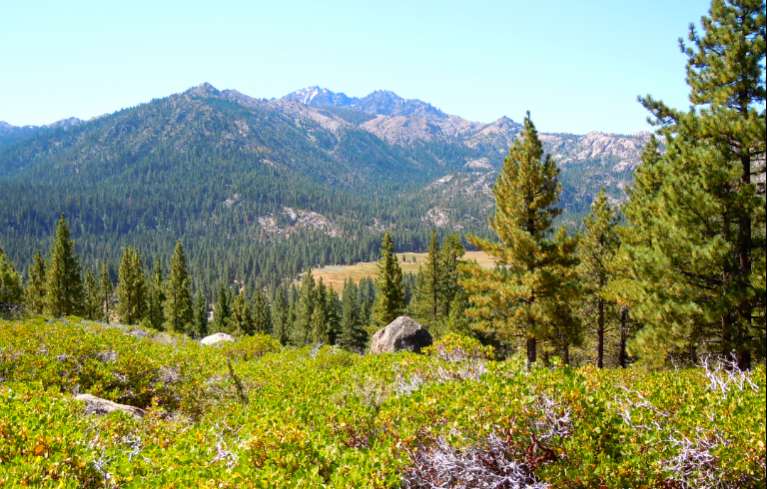
In 2004, the trust bought the land — a scenic landscape near El Portal that is thick with incense cedar, white fir and sugar pine trees, with breathtaking views — from a family that had owned it since 1925.

Read the whole story


Goldman: No escaping climate change

By Kathryn Reed

INCLINE VILLAGE – “Climate change is going to affect the whole world in a variety of fashions and most are negative.”

That was the message Charles Goldman delivered to nearly 100 people on Tuesday night at the Tahoe Environmental Research Center. Goldman is a renowned limnologist who has been studying Lake Tahoe since the 1950s.

Goldman said that climate is changing so fast that the models created to track it are having a hard time keeping up.

He equated the climate change deniers to the tobacco company chiefs who used to say smoking was good for your health – it’s just not true.

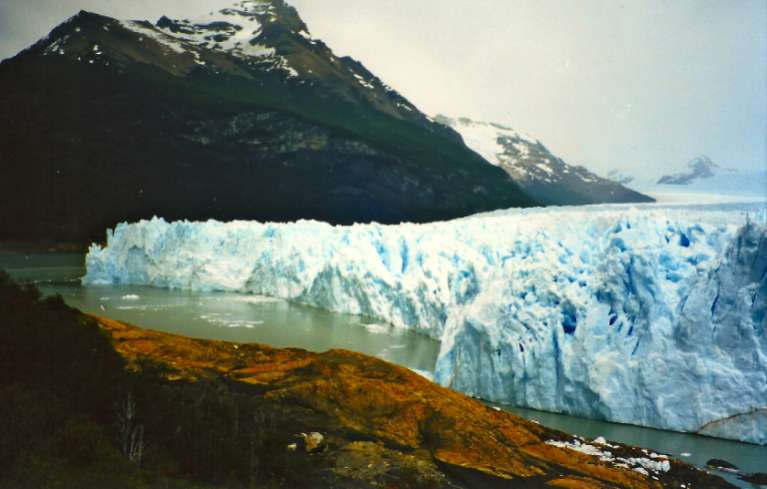
Glaciers are melting throughout the world, including the Moreno Glacier in Argentina. Photo/LTN file

Glaciers are melting throughout the world, including the Moreno Glacier in Argentina. Photo/LTN file

The reality, he said, is signs of climate change are already prevalent. Flooding in the Midwest this spring made it difficult for farmers to get corn in the ground at the time they were used to. Puffins are dying off because the fish they are feeding to their young are too big to swallow. The smaller fish they used to feed the young are gone. Temperatures are rising throughout the world and records keep being broken.

“You can only make snow if it’s cold enough,” Goldman said. “That will be more and more difficult.”

This, he pointed out, could be a problem for Lake Tahoe.

Beyond the diminishing snowpack in the Sierra, scientists most often point to the melting of glaciers.

The Arctic ice pack reflects heat back into the atmosphere. When they are gone that heat goes back into the ocean.

“If it’s extreme enough, the Gulf Stream could lose its oomph. If that happens, Europe freezes over,” Goldman said.

The release of methane gases is another concern as the ice melts and the permafrost recedes on the tundra. Goldman said methane gas is 22 times more potent than greenhouse gas.

Goldman said he first realized how air pollution was impacting Lake Tahoe when he saw the billowing lead spewing from buses at the Stateline casinos. He said atmospheric deposition is a greater problem for the lake than stream runoff.

“The world should recognize air pollution is a global problem, not just a local problem,” Goldman said. He pointed out how researchers have tracked dust from the Gobi Desert reaching Lake Tahoe.

Fresh water is likely to disappear and be one of the biggest concerns with climate change. The increasing world population – which is now more than 7 billion people – contributes to this. Some forecasts are that there will be 14 billion by mid-century.

The world cannot sustain that many people, Goldman said, because the food supply isn’t adequate enough.


What killed Americans in 1900 vs. 2010

By Kyle Kim, Los Angeles Times

Americans aren’t dying the way they used to. The data come from an article published by the New England Journal of Medicine, which combed through 200 years worth of its back issues to look into how Americans die.

The article was originally published in 2012, but became a top post on Reddit this week after computer scientist Randy Olson posted a reworked version. We created a chart to more clearly show the changing causes of death.

The most visually striking difference is the enormous decline of infectious diseases (pneumonia, influenza, tuberculosis, etc). Advances in medicine and society have largely eradicated many of these diseases that were an overwhelming cause of death in 1900.

Read the whole story


Weather officials: Long, hot summer for Calif.

By Matt Weiser, Sacramento Bee

As if the drought isn’t enough to worry about, weather officials say California is likely to experience a hotter-than-normal summer this year, a phenomenon certain to add anxiety for water agencies and fire departments.

Summer doesn’t officially begin until Saturday. But the heat already is scorching the record books, as seen by a wave of 100-degree weather that swept across Northern California early last week. Heat records fell at six locations in the Sacramento Valley, including downtown Sacramento, which saw a high of 107 degrees last Monday. That shattered the date’s record of 103, set in 1883.

This follows what already has been an unusually warm winter and spring. In a study released Thursday, the National Climatic Data Center reported that California experienced its warmest January through May on record, with temperatures 5 degrees above the 20th-century average. Five California cities also set records: Sacramento, Los Angeles, San Diego, San Francisco and Eureka. In Sacramento’s case, the first five months of this year were 3.7 degrees warmer than the average over the past 30 years.

In its long-range forecasts, the National Weather Service is reporting that odds favor a summer across all of California that is warmer than average. The agency extends that forecast all the way into October, the earliest that Californians normally expect seasonal rains to resume.

Read the whole story


SLT putting investment action plan together

By Kathryn Reed

While South Lake Tahoe’s financial viability is precarious, the City Council on Tuesday agreed that investing in recreation must happen if the city is going to be on stable footing.

City Manager Nancy Kerry started a 3½ -hour workshop on June 17 by outlining where the city is today in regards to income/expenses. The city is headed for the red because expenses are outpacing revenues. Much of the drain is from health care costs for current and retired employees.

But pension expenses also add to the problem. PERS – Public Employee Retirement System – costs are expected to increase 7 percent each year. And with PERS recently recalculating fees, South Lake Tahoe must pay an additional $300,000.

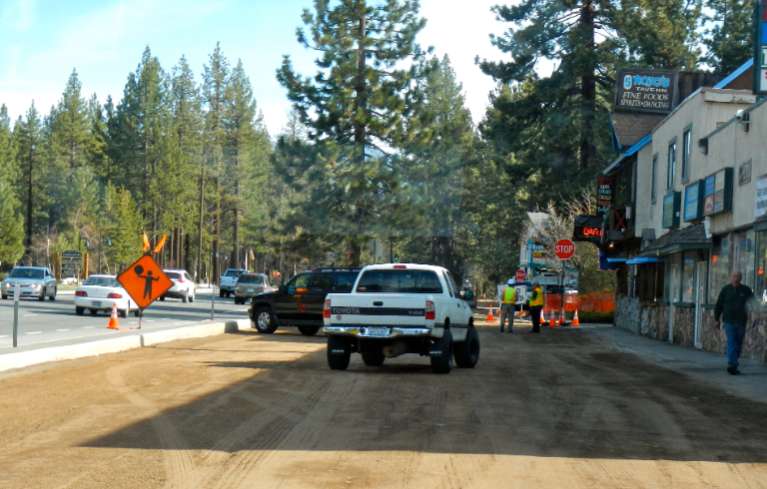
The city will need more public-private partnerships like the one for Harrison Avenue. Photo/LTN

The city will need more public-private partnerships like the one for Harrison Avenue in order to make improvements. Photo/LTN

While employees have not gotten a raise in the last five years, retiree benefits keep increasing. PERS puts in a cost of living adjustment no matter the economic situation. In the last five years, retiree payouts have increased by 12 percent. This means California public employee retirees can’t say they are on a fixed income.

South Lake Tahoe has 165 employees, but 800 people receive health benefits. This is because until 2001 dependents could be covered on the health plan of retirees for the rest of their lives. Starting with those hired in 2008 retiree health care was no longer an option.

In a 10-year period from 2009-18 the city forecasts needing $44.3 million to fund health care. If changes are not made, that figure could grow to $60 million or more, according to Kerry, based on health care costs rising and more people entering the program.

“The city can’t grow to $6 million a year or we’ll never fund recreation,” Kerry said. The current annual health care cost is about $4 million.

That $6 million is the same amount of cash the city receives in property taxes each year.

South Lake Tahoe under Kerry’s leadership wiped out a $20 million year liability by mandating qualified retirees join Medicare. This is something that should have been done under any previous city manager.

The city is negotiating with each of its bargaining units to make changes to the benefits plan.

“The system is the problem. Information was not brought to the council about how bad things were getting,” Kerry said.

In the mid-1980s it cost the city $1,200 a year for a family’s health plan. Today it costs $1,500 per month.

It is not known if any other city administrator ever proposed capping the amount of money the city would pay per employee or retiree, but it never happened.

Going forward

Kerry told the council if the city doesn’t continue investing in infrastructure, it will have what it has now – crumbling streets. She said the community needs between $15 million and $20 million each year to be able to compete. This would be a mix of public and private money.

She didn’t hesitate to expound upon Tahoe’s major industry being tourism and the need to have quality amenities.

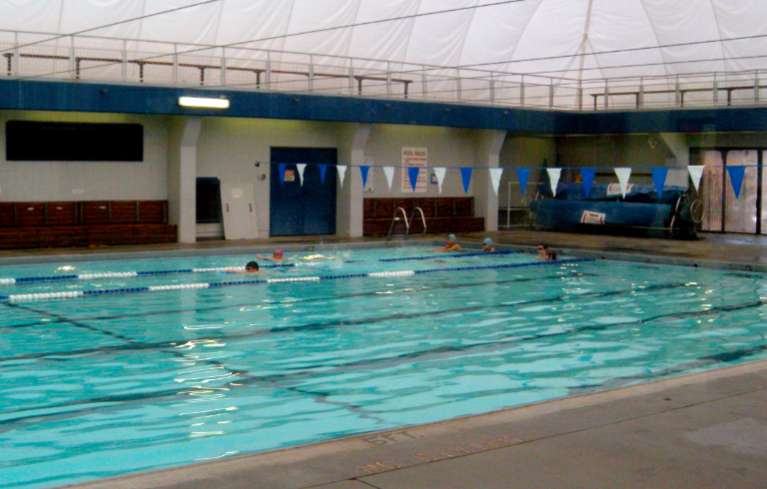
Overhauling South Tahoe's pool complex could cost $13.7 million. Photo/LTN file

Overhauling South Tahoe’s pool complex could cost $13.7 million. Photos/LTN file

The city has put in $30 million in infrastructure improvements in the last four years.

Part of Tuesday’s discussion was about what else the city should invest in. The council is open to spending the $1 million in excess reserves on projects. This money is in addition to the city’s 25 percent reserves.

Staff will come back soon with recommendations about how to spend the money. Part is likely to go toward finalizing some planning and design work for projects, some could go toward the bike park in Bijou Community Park, and maybe some for hookups at Campground by the Lake.

Jim Marino, assistant public works director, went over staff recommendations for what should be capital improvement plan priorities. He prefers CIP mean community investment plan.

Upgrading the recreation center at an estimated cost of $13. 7 million and revamping Regan Beach to the tune of $4.2 million top the list. An aquatic center could be built, perhaps a second story, definite energy upgrades would be included to the rec center. At the beach the steel bulkhead would be removed and the building gutted.

While the council agreed to the priorities, there is no money for these endeavors. An outdoor amphitheater also is of interest to the council.

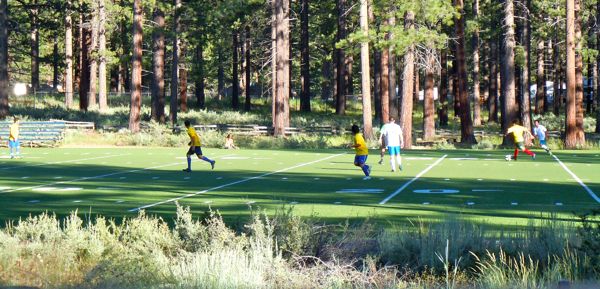
The field at Lake Tahoe Community College needs replacing.

The field at Lake Tahoe Community College needs replacing.

However, the return on investment for all three would likely be rather immediate.

But with definitive goals, then partnerships can be formed and grants sought, as well as money put away for the big projects.

Playing to the recreation theme, the city is saving money from Measure S/R to replace the community ball field at Lake Tahoe Community College. It’s likely to cost $500,000. Marino said at 9-years-old the field has reached its life expectancy.

Replacing it, he said, “directly supports sports tourism, which I believe is underleveraged.”

The council collectively agreed the community deserves more action and less talk.

When it comes to figuring out how to come up with more money to invest in the community, the council agreed to form a community task force that will be a partnership with other stakeholders – which includes agencies, government entities, residents and business owners – who want to work on ways to bring investors to town.

Of the seven people who spoke at the meeting, most agreed the city needs to invest in itself, with some saying go after little things, others saying shoot for the moon. Of the 21 letters, nearly all lobbied on behalf of the bike park.

The bike park advocates have $350,000 in cash and in-kind donations, with $100,000 more needed to complete the project. It is in the planning stages and could come to the council later this summer.

But it was also pointed out that residents would be asked what they are willing to do when it comes to investing in the community because the city can’t do it alone.


Alpine County bucks trend with nearly 70% voting

By Seema Mehta, Los Angeles Times

MARKLEEVILLE — Tess Castle, drinking a mid-afternoon pint at the Wolf Creek Restaurant & Bar on a recent afternoon, admitted something she had never told anyone before: She doesn’t vote.

“Shame on you. I didn’t know that,” said bartender Danea McAvoy, 51, after selling lottery tickets to tourists passing through this bucolic town of 210 residents. “Shame on you.”

There is more wilderness than people in Alpine County. Photo/LTN

There is more wilderness than people in Alpine County. Photo/LTN

The reaction may seem sharp, but it’s because Castle, 28, is in a distinct minority in this picturesque county seat of tiny Alpine County.

Nearly everyone in this community makes their mark on election day. On June 3, in one of the least compelling gubernatorial primary elections in memory, nearly 70 percent of voters cast ballots, the largest turnout per capita in the state.

California as a whole is on track to hit a record of a more dubious nature — 18.3 percent of voters cast ballots through election day on June 3. Absentee and provisional ballots are still being counted, but voting experts expect the state to end up with a turnout of 22 percent to 23 percent — far less than any in recent history — when the tally is finalized in early July.

That’s a roughly 10-point drop from the last gubernatorial primary, part of a long-term trend in California, where fewer voters are casting ballots in primary elections as more choose not to affiliate with a political party.

Read the whole story


Whooping cough reaches epidemic levels in Calif.

By CBS News

The number of whooping cough cases throughout California has reached epidemic proportions, state health officials said Friday.

The California Department of Public Health said in a statement released Friday that more than 800 cases of whooping cough, also known as pertussis, have been reported over the past two weeks. As of June 10, there have been 3,458 cases — more than in all of 2013.

CBS Los Angeles and KNX 1070 news radio report health officials say more than 85 percent of those who have contracted pertussis had preventative shots.

“The vaccine, while it’s very effective when it’s obtained following the first year, each year thereafter, the effectiveness decreases,” said Dr. Wilma Wooten with San Diego County Health and Human Services. “That’s why we’re seeing the infections.”

Read the whole story


El Dorado County neglects historical cemeteries

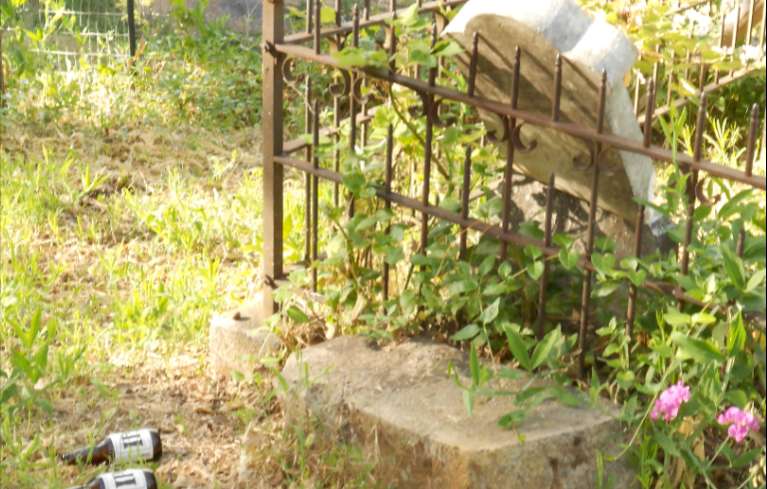
Beer bottles and a fallen grave marker indicate rundown nature of Old City Cemetery in Placerville. Photos/Joann Eisenbrandt

Bottles and a fallen grave marker indicate the rundown nature of Old City Cemetery in Placerville. Photos/Joann Eisenbrandt

Publisher’s note: This is the second of two stories about El Dorado County’s pioneer cemeteries.

 “As you walk through these burial grounds, walk softly, quietly, and with deep respect. The Pioneer Spirit is sleeping here. The spirit which founded a nation of freedom, and tamed the west.”

— “Burial Grounds of El Dorado County, 1849-“, Betty C. Laarveld

By Joann Eisenbrandt

PLACERVILLE — The foothill regions of El Dorado County and Placerville have taken visible pride in their roles as ongoing custodians of the Pioneer Spirit that built them. Preservation of the historic buildings along Main Street and the elaborate gabled wooden homes and humble hewn-block blacksmith shops that line Placerville’s narrow, hilly streets, as well as pioneer-era structures in the unincorporated areas of El Dorado County outside the city limits, is a priority, and is carefully regulated and supported by public agencies, private businesses and nonprofits alike.

But the task of being custodians of the pioneers themselves has proven to be much more daunting. The problem began with the Gold Rush emigrants themselves. Recordkeeping for the early cemeteries was minimal or nonexistent. The grave markers, where they existed at all, were often made of wood and simply disintegrated over time.

Camps, roadhouses, and their accompanying small cemeteries were often abandoned and forgotten. A 1910 fire destroyed all prior official death records in the El Dorado County Recorder’s Office, forcing the county to attempt to reconstruct them from Mountain Democrat obituaries and articles and pioneer family histories. Vandalism of the cemeteries with damage or destruction of many grave markers has been a significant issue even from Gold Rush times.

Today, one city, one county and a variety of nonprofit, church and historical societies have the maintenance, preservation, restoration or updating of records of the area’s pioneer cemeteries as either a part of their legal duties or stated missions.
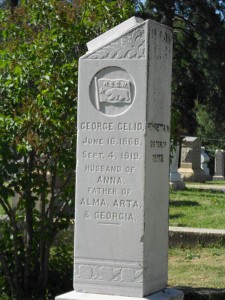
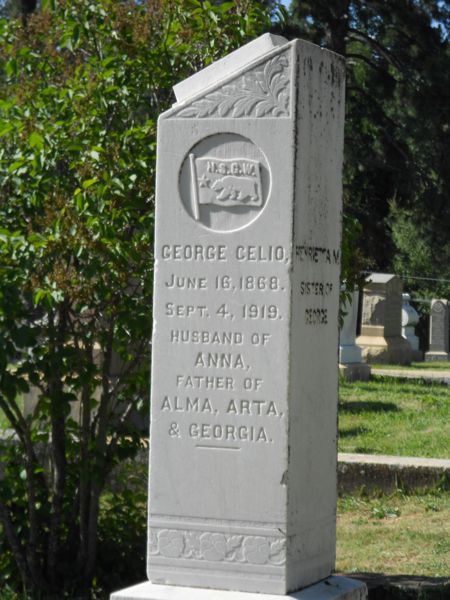
Descendants of the Celio family are buried in the Placerville Union Cemetery.

Descendants of the Celio family are buried in the Placerville Union Cemetery.

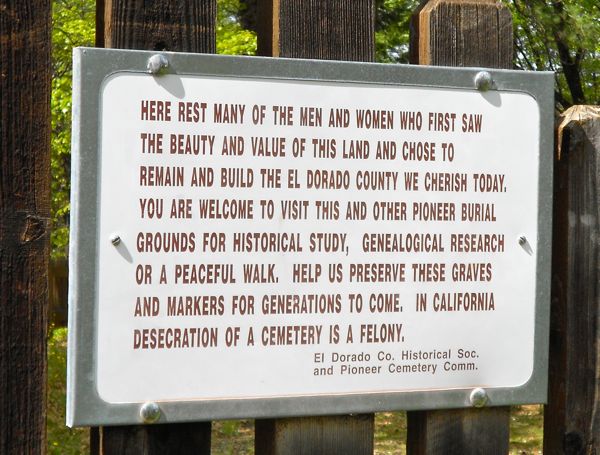
Many pioneer cemeteries that have survived almost intact or have been restored in more recent times by public or private entities, but many are in the same condition as Old City Cemetery. Looking over the sturdy low wooden fence that lines its entrance on Chamberlain Street, there are few gravestones visible. Dating from the 1850s, and designated an historic landmark in 1983, it stretches from Chamberlain more than two blocks down a gentle slope to the wire fencing and sharp cliff overlooking bustling Main Street.

In winter and early spring, luxurious green weeds cover the grounds and blackberry bushes which tendril around and obscure the few remaining intact headstones. In summer, before the yearly brush trimming, tall dry grass full of prickles and scurrying small creatures crunches under your feet. Broken shards of white marble and piles of weathered red bricks lie scattered around; broken or twisted scrollwork iron borders or cement copings surround the obvious indentations of gravesites which no longer hold any clue to who is buried there.

A few gravestones remain intact, but many more are nonexistent, broken or illegible. Some have been cemented into the ground to preserve what remains of them. A few empty beer bottles and colorful crushed tin soda cans lie at the feet of the pioneers who rest there.

Placerville Union Cemetery has fared much better. Located up a steep hill on Bee Street several blocks above and north of Highway 50, the spacious grass-covered cemetery sits in a quiet and shady neighborhood surrounded by streets dotted with historic homes. Although it had its share of problems, falling for a time into serious disrepair and suffering some effects of vandalism, the overall appearance is remarkably peaceful. Walking across its gentle slopes, outlined by oaks and pines, reading the inscriptions on tombstones dating back to the 1850s, you could forget just what century you were in.

El Dorado County maintains 17 other cemeteries, some small, some larger, some public and some private. Given the county’s Cemetery Ordinance’s definition of a cemetery as, “a place used or intended to be used and dedicated for cemetery purposes, and in which six or more human bodies are buried,” undiscovered cemeteries might remain.

According to El Dorado County Cemetery Administrator Bonnie Wurm, the county is now in the process of updating its Cemetery Ordinance and looking to clearly define the types of cemeteries, who owns or maintains them and whether or not they are active, still accepting burials, or inactive and no longer taking them.

Volunteers at the El Dorado County Historical Museum are also working to update the records of individual early cemeteries.

The state Health and Safety Code requires all active cemeteries have current plot maps, accurate recordkeeping of burials and basic maintenance of the grounds. It gives to governing bodies of cities or counties the power to further define the regulation of the public and private cemeteries they control to “assure decent and respectful treatment of human remains, or prevent offensive deterioration of cemetery grounds, structures, and places of interment.”

In the case of the pioneer cemeteries, poor early recordkeeping, changes of ownership, spotty or deferred maintenance and the destruction of grave markers caused by vandals have complicated the task. Vandalism is not a new problem. A Mountain Democrat article from Oct. 10, 1858, laments, “Yesterday, as a gentleman was passing through the city grave-yard (Old City Cemetery), he observed the iron railing around one of the graves had been misplaced by some means, and upon close examination, discovered that the iron rods, which had held it together, were removed. The inference is that some scoundrel has stolen them.”
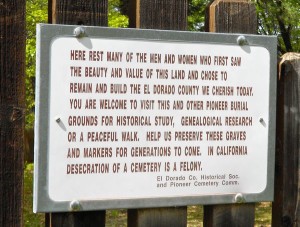
signThe problem remains today. A Mountain Democrat headline from an Aug. 25, 2008, laments, “Vandals knock over tombstones in Placerville Union Cemetery.” Thomas DeLange, the cemetery’s Grounds Maintenance supervisor, told the reporter, “It’s not just this cemetery, sometimes it’s other cemeteries. But this one – lots of the other cemeteries, the graves stones are missing and the one in Middletown, that one is pretty abused. People hang out there and drink. They’ve actually stolen a bunch of the markers.”

Bonnie Wurm confirmed that just a year ago the fountain in the center of the mausoleum at Placerville Union was stolen. The large cement pool constructed to catch the gently falling water sits dry and forlorn.

Over the years, efforts have been made to clean up and to inventory the records of the area’s many pioneer cemeteries. In 1975, Betty Laarveld, a field representative for the El Dorado County Department of Public Works, was hired to locate and survey all the burial sites in El Dorado County. Acknowledging at the outset that, “most of these burial sites will never be known,” Laarveld used county death records, cemetery markers, and information from churches, funeral homes, historical organizations and the descendants of pioneer families. The results are chronicled in her book “Burial Grounds of El Dorado County, 1849-.”

Laarveld found that few of the active cemeteries had accurate plot maps, and the smaller private cemeteries, often overseen by volunteers, did not understand or meet state requirements for either recordkeeping or maintenance. The report gave a brief overview of the current condition of each cemetery. Some, like Pleasant Valley, had fared well. She described it as, “well maintained and has a picturesque setting on top of a little hill . . . It is a cemetery the local residents can take just pride in.” Others not so well. Of Middletown Cemetery, she wrote, “(it) represents the epitome of parsimony. The entrance to the cemetery is unsafe … the grade of the access road is in such a steep incline that the driver is unable to see the road ahead of him.”

For several others she noted the continued presence of active rattlesnake dens.

Her report also included cemetery chains of title, survey maps of cemetery locations, and a facts and findings section detailing her recommendations for what needed to be done, which included setting up uniform maintenance requirements, assessment reports with photos showing each cemetery’s actual condition, thorough yearly inspections, and a way to mark graves for which families could not afford gravestones so they could be identified in the future. To accomplish this, she included samples of all the needed forms.

In 1996, the nonprofit El Dorado County Pioneer Cemeteries Commission was formed, as their website notes, “To identify pioneer cemeteries in El Dorado County, to determine those which are in crises, to address protection, preservation, restoration and conservation needs, and work together to accomplish these tasks.”

They also hoped to monitor development which might impact pioneer cemeteries, install interpretive signs with the history of each area and coordinate with area chambers of commerce to produce materials about the pioneer cemeteries to encourage public appreciation of the sites and to lobby the county for the establishment of a cemetery board to provide protection for pioneer cemeteries and create stiffer penalties for vandalism and desecration.

In 1996, Lyn Mizell, a member of that group, proposed a project to the Roots and Gold Dust Genealogical Society of El Dorado County to be done in conjunction with the 1998 sesquicentennial of the discovery gold. The project would research and update the inventory of the Old City Cemetery.

Mizell described Old City at that time as, “a lovely hilltop setting with many old oaks scattered throughout … sadly, the cemetery is quite bare of markers. Would estimate only one quarter to half of the ground has markers, coping or clearly defined graves. Many of the gravestones are broken. Some markers were obviously patched years ago and are lying flat imbedded in concrete slabs.”

Mizell and another group member, Kathy Fleming, walked the cemetery and plotted the graves, checked county burial permits, the county library and the 1850 and 1860 Census records, and compiled it into a report titled, “Old City Cemetery–Rector and Chamberlain Streets.”
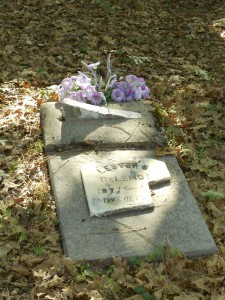
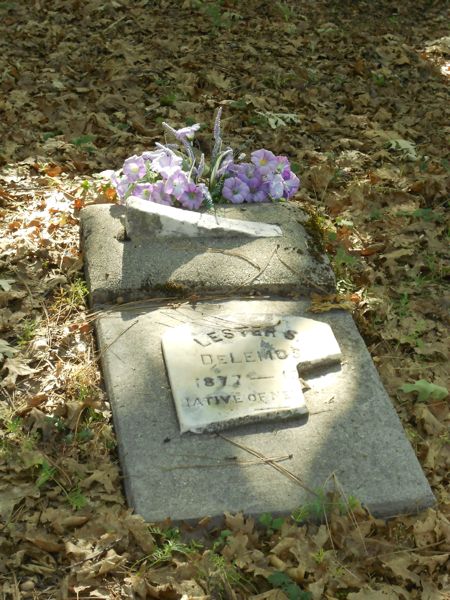
Flowers are rare.

Flowers are rare.

The report recommended Old City be officially closed to further burials, gravestones cleaned up, broken markers, ironwork and coping repaired, yearly maintenance initiated, historic signage added with warnings against vandalism and nearby homeowners contacted to set up a “Cemetery Watch.”

In 1998, Mizell made a formal proposal to the Placerville City Council for the restoration of Old City Cemetery, including a cleanup by local Eagle Scouts and monument repair by Roy Rukhala of Rukhala Monuments, that she would pay for. The cleanup occurred and the monuments were repaired, but within a year most of the monuments had again been vandalized.

In 2002, the county’s Cemetery Advisory Committee was created to, “draw upon the advice and expertise of trained, knowledgeable, and interested individuals within the local community.” Led by Bonnie Wurm, they are currently providing input into the update of the county’s Cemetery Ordinance and are reviewing the status of the more than 100 entries on the county’s list of known cemeteries. The task of backtracking through records to identify chains of title is a slow and complex.

Between 2002 and 2004, the county contracted with outside geophysical consultants for the use of ground penetrating radar to identify potential unmarked graves, land surveying services and the preparation of burial maps for Pilot Hill, Bryant, Camino, El Dorado, Frenchtown, Jayhawk, Uniontown, El Dorado County Hospital, Shingle Springs, Smith Flat, Dickinson (in Mosquito), Skinner, Diamond Springs, Spanish Dry Diggings, Middletown, Fair Play, Mormon Island, and Georgetown Pioneer cemeteries.

Old City and Uppertown, the two cemeteries owned by Placerville, have long been inactive. Steve Youel, director of Community Services for Placerville, noted that there is little funding to maintain them. Current maintenance consists of a once-yearly cleanup of brush and hazardous tree trimming, contracted out this year to the CalFire crew from Growlersburg.

The city has a Historical Advisory Committee, but it is focused on the preservation of buildings, not cemeteries. As committee member JoAnne Rogers told Lake Tahoe News, they only become involved with cemeteries if there is, “any proposed construction or alterations of buildings within the city limits that is within 300 feet of a cemetery and which might alter or change it.”

Views on the level of success in communication and cooperative efforts between local governmental agencies and the many nonprofit groups focused on historical preservation varies depending on who you talk to. Steve Youel said he hasn’t been approached recently by nonprofit groups or volunteers to become involved in the maintenance of the city’s two cemeteries. Bonnie Wurm said she would welcome it if a group came forward and formed a nonprofit focused on Placerville Union Cemetery and its 6,700-plus graves.

The close family connections to the pioneer cemeteries that existed when those who lived here had relatives buried in them is also much less common.

“New people are moving in,” Marilyn Ferguson, Manager of the Fountain & Tallman Museum on Main Street and founder of the nonprofit Heritage Association of El Dorado County, told Lake Tahoe News. “Many older people are gone, or have died. The new people have no connection to the cemeteries.”

—-

More information:

Marilyn Ferguson’s nonprofit

Roots & Gold Dust Genealogy Site

Pioneer Cemeteries Commission

El Dorado County Historical Museum

El Dorado County Historical Society

El Dorado County Cemetery Administration


Study: Teens more apt to text and drive than drink, smoke and fight

By Mike Stobbe, Washington Post

NEW YORK — American teens are smoking less, drinking less and fighting less. But they’re texting behind the wheel and spending a lot of time on video games and computers, according to the government’s latest study of worrisome behavior.

Generally speaking, the news is good. Most forms of drug use, weapons use and risky sex have been decreasing since the government started doing the biennial survey in 1991. Teens are wearing bicycle helmets and seat belts more, too.

“Overall, young people have more healthy behaviors than they did 20 years ago,” said Stephanie Zaza, who oversees the risky-behavior study at the Centers for Disease Control and Prevention.

The results come from a study of 13,000 U.S. high school students last spring. Participation was voluntary and required parental permission, but the responses were anonymous.

Read the whole story


Calif. lawmakers pass $156 billion budget

By David Siders and Jeremy B. White, Sacramento Bee

California lawmakers approved a $156.4 billion state budget Sunday, rushing to pass legislation less than six hours before the constitutional deadline.

The spending plan, a compromise between Gov. Jerry Brown and the Legislature’s Democratic majority, includes more money for high-speed rail, Medi-Cal and welfare-to-work, and an expansion of child care and preschool for poor children.

It also begins to pay down an estimated shortfall of more than $74 billion in the teachers’ pension fund and puts about $1.6 billion into a special rainy-day account.

The budget’s passage resolves months of budget negotiations at the Capitol, a process that has become less rancorous as the state’s financial condition has improved. The Father’s Day vote came just before the midnight deadline by which lawmakers must pass a budget to avoid losing pay.

Read the whole story