McLachlan sings her way into fans’ hearts

Sarah McLachlan's talents include singing, song writing, guitar and piano playing. Photos/Kathryn Reed

Sarah McLachlan’s talents include singing, song writing, guitar and piano playing. Photos/Kathryn Reed

By Susan Wood

STATELINE – Singer-composer-musician Sarah McLachlan left no mystery about what kind of summer Harveys expects to provide as she led off a blockbuster lineup of artists for this summer’s outdoor concert series.

Diverse, prolific, prominent and up close and personal.

McLachlan didn’t miss a beat in her trademark personable style and self-made emotionally charged ballads the minute she hit the stage to start the concert series Tuesday – now in its 13th season.

“We have a lot more big names,” entertainment director John Packer told Lake Tahoe News before McLachlan took the stage.

The stage was set as a quasi nightclub with circular rings of light bulbs that changed color with the mood of the songs. They rotated between her well-known hits off her “Surfacing” LP and new album “Shine On” released in May for which the tour was named.

“This album for me was about gratitude – recognizing the things I’m grateful for. I’m just so blessed,” McLachlan said.

Beyond her successful career, she was the founder of the now defunct Lilith Fair that was dedicated to providing venues for female artists, has a school of music for inner city children, and is a supporter to the ASPCA to benefit animals.

Sarah McLachlan split her time between the piano and guitar.

Sarah McLachlan split her time between piano and guitar.

Dressed in a shimmery silver, sleeveless top, she launched the June 24 concert with her mega hit “Building a Mystery” off “Surfacing.” In 1991, this number was recognized as VH1’s 100 Greatest Songs of the ’90s.

Next, she jumped to “In Your Shoes,” the first track off the new album. The CD is a dual compilation for the lovelorn because break-up songs “have to be discussed.”

Then, there was love found, more specifically written for “her sweetie” on the new song “Brink of Destruction.” She laughed at the notion the title didn’t sound happy. But for the most part, it’s the type of collection of songs to lounge on the sofa with on a rainy day, or a warm summer Tahoe day.

“It’s so gorgeous here. You are so lucky to be living here,” she told the audience. And someone yelled out to make sure she was staying hydrated in the high elevation, something she noticed even with her noted breathy vocal delivery. “Yes, I’m drinking a lot. Thank you.”

She even took pre-submitted questions out of a top hat.

What’s her favorite place to travel? She rattled off New Zealand and Russia. But she further admitted her favorite place is her Vancouver, British Columbia, homeland. More personal, some asked about the most exotic place she’s made love – the bow of a boat.

With that, McLachlan never strayed from showing her personal side. She let the audience in on a secret. She admitted to stealing some “big ass” pine cones from Tahoe.

While many musicians connect with fans, McLachlan did in an unusual way. Names had been drawn to join her on stage in a living room set up for them to get the close-up perspective. It was all a part of what the artist-activist-philanthropist refers to as a way “to create positive social change.”

The participants on the sofas certainly enjoyed the gesture. They danced to the upbeat “Sweet Surrender,” chatted between sets and took selfies to spread the message of goodwill.

One woman told McLachlan that she’d been a fan for almost 20 years, and the song “Possession” changed her life.
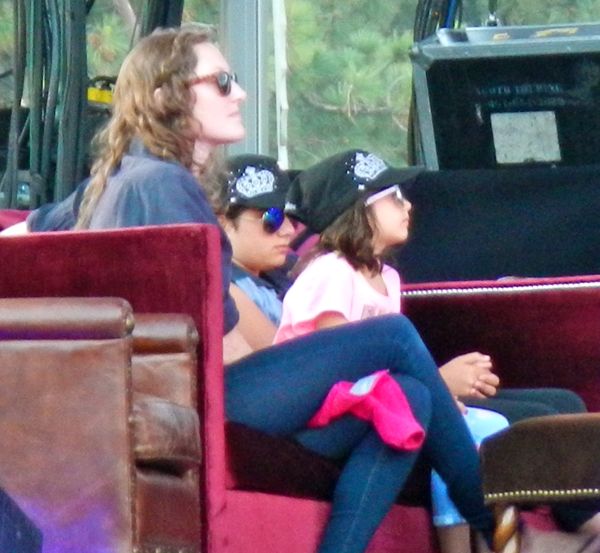
Sarah McLachan has redefined front row for fans.

Sarah McLachan has redefined front row for fans.

With more than 40 million albums sold worldwide, the Canadian native has made a longstanding career from her compositions, soulful ballads and diverse appearances.

From the song “Angel” featured in the hit movie “City of Angels” starring Meg Ryan and the sweet tune “Ordinary Miracle” for the “Charlotte’s Web” animated film, the artist has used her songwriting talents in a number of ways. Along with “Angel,” she performed in 2011 the other mega hit “I Will Remember You” to commemorate the 10-year anniversary of 9/11 at the Pennsylvania plane crash site. The place marks where passengers fought back hijackers and brought down the plane.

She also composed the official theme song for the 2010 Winter Olympics in Vancouver – “One Dream.”

But for all the grand-scale awards, recognitions and worldwide acclaim, it’s the one-on-one intimacy that McLachlan is best known for. In between weaving in and out of albums with her musical sets, the latest includes a special tribute to her father who died four years ago.

“My dad was really an anchor for me,” she said of “Song For My Father.”

With the launch of that single, McLachlan earlier invited people through social media to submit photos with their fathers to be featured on her video.

McLachlan also gave the attentive crowd a glimpse of her family commitments with the new song “Beautiful Girl,” a tune dedicated to her two girls, ages 7 and 12. The lyrics are both sentimental and nostalgic for anyone who recalls the angst in coming of age.

“We’re gonna push on through, pretty girl

Just like we always do, beautiful girl

I know the world can be cruel, pretty girl

You’re gonna make it ‘cause you’ve got love on your side.”

The artist’s comfort level on stage was often apparent with her free-flowing arm gestures, passionate facial expressions and rocking-out dance movements. It was refreshing to see. And not every singer who writes about “your love is better than ice cream” can be taken seriously – even with a band as serious as hers.

With John Evans on bass, Curt Bisquera on drums, Joel Shearer on guitar and Vincent Jones (of Alanis Morissette fame) on keyboards, the group gripped the precision of a recording studio outdoors. And McLachlan’s signature high-range vocal chords held up better than ever. Her trick – “drinking warm water and honey” before performances.

The other reason the acoustics that night were so great for vocals is the sound engineering was superior, a change from the usual too-hot instruments drowning out the singers found at many outdoor concerts.

Four band members complement Sarah McLachlan's music and vocals.

Four band members complement Sarah McLachlan’s music and vocals.

As professional as they were on stage, the group seemed to enjoy themselves. McLachlan had a commanding stage presence – whether standing with a guitar or sitting quietly down with her Yamaha grand piano.

“I want to say I’m having so much fun,” McLachlan admitted.

She must have been. After an expected encore of “Angel” – which brought a hush over the night, she broke out the ukulele and played it like she was hanging out at the beach.

“This was my very first instrument. I started playing it at 4 years old,” she said, breaking in the tune “The Sound that Love Makes” off the new album.

“This was better than expected, even as a fan,” Diane Berkovatz of Reno said.

McLachlan keeps up her Shine On tour at UC Berkeley’s Greek Theater on Friday night; the Greek in Los Angeles the following evening; and Humphreys in San Diego on Sunday.

The Harveys Outdoor Summer Concert Series also continues with country music acts Carrie Underwood on July 18; Zac Brown Band two nights later; rock band Train on July 25 and ’80s group Journey with the Steve Miller Band five days later.

With the South Shore noticeably picking up more summer traffic, the concerts “create a buzz” that coincides with a busy season, Lake Tahoe Visitors Authority Executive Director Carol Chaplin told Lake Tahoe News.

Snowmelt impacts communities from Sierra to Pacific

By Lisa Krieger, San Jose Mercury News

When a single snowflake falls peacefully atop a Sierra peak, it begins a turbulent journey to help quench the thirst of a drought-stricken state.

In most years, Sierra snow provides a third of California’s water supply. But it is by far the least reliable portion — and now, after three years of historically low snowfall, tensions are soaring over how we share the shrinking bounty of this great frozen reservoir.

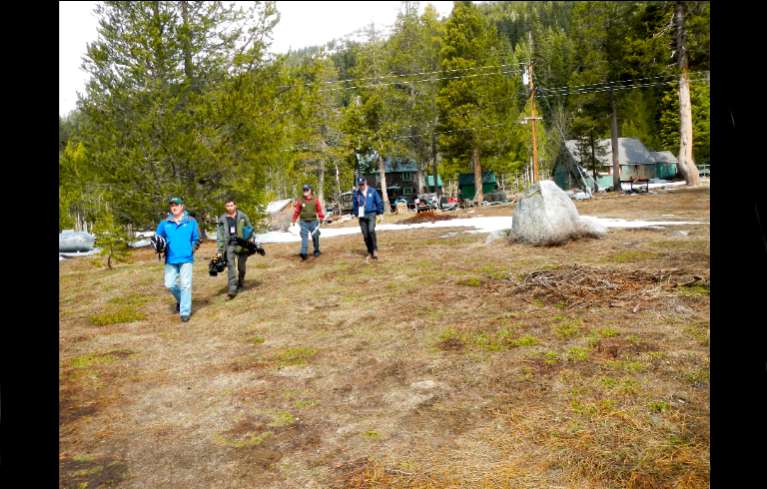
Lake of snow in the Sierra this winter, as evidenced by the March snow survey, will impact hydro-electric power in California. Photo/LTN file

Lake of snow in the Sierra this winter, as evidenced by the March snow survey. Photo/LTN file

Today, on the cusp of a long, dry summer, we follow the melting snow — and meet its dependents — along one of its many routes from remote peaks to thriving communities around the Golden State.

As our snowmelt travels the 300-mile path from Yosemite’s Mount Dana to the sea, it meanders through the Tuolumne River watershed, past hydropower plants and nurseries, wildlife refuges and chemical plants, vineyards and the San Francisco Bay Area, where it provides water for millions of people.

Each of these water users, linked by a reliance on this fragile resource, has a legal right to some of the flow — and a growing need to insist on those claims.

The trouble is, in an average year, five times more water is committed than flows through all the state’s rivers and streams combined, according to new research by University of California scientists. The state’s population growth will further boost this demand. And climate change predictions suggest our water supply will only continue to diminish.

Read the whole story


Little sun, small space no problem for gardener

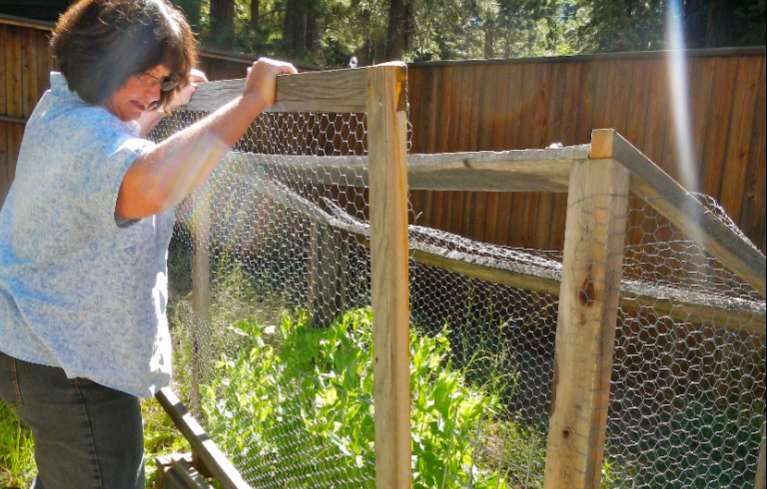
Toni Sopocko closes the bin to her vegetable garden. Photos/Kathryn Reed

Toni Sopocko closes the bin to her vegetable garden. Photos/Kathryn Reed

Publisher’s note: This is one in a random series of stories about gardening in Lake Tahoe.

By Kathryn Reed

Growing vegetables doesn’t require a large plot or a ton of hours each day. Just ask Toni Sopocko.

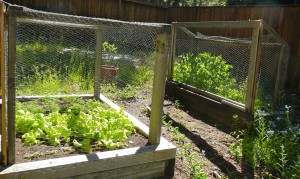
Her husband, Steve, built her two structures that sit in the sunniest spot of their Tahoe Mountain backyard.

To keep the rodents out – which have been more of a problem since the 2007 Angora Fire – mesh was first put on the ground. Then Steve Sopocko used scrap wood from projects – mostly old decks he tore up – as the frame for the two gardening boxes. Chicken wire covers the four sides and top. Even though it’s enclosed, voles can squeeze through the wire.

Enclosed veggie boxes help keep out critters.

Enclosed veggie boxes help keep out critters.

Toni Sopocko got into gardening somewhat on a whim about three years ago.

“It sounded like fun and I wanted to grow stuff,” she said.

Sometimes not all of the lettuce makes it inside for the daily salad. It’s sweet right out of the ground. Tender to the touch, it almost seems like a delicate flower that should be treated with kid gloves, even revered. It would be easy to sit and munch the morning away.

“I pinch off the leaves as I need them,” Sopocko said of the lettuce. She said the key is to snip off the flowers so the lettuce will keep growing.

Nothing goes to waste. Eventually some of it will end up in their mulch pile.

Good soil is a common thread among those who garden successfully in the Lake Tahoe Basin. The Sopockos have a connection where they can get horse manure in the fall that is added to the soil.

Still, Sopocko says their gardening is more trial and error than science.

She tried peppers, but they didn’t work. Not enough intense sun where she lives on the South Shore. Zucchini has done well in the past, but it’s not something they both enjoy.

Sopocko admits the warm spring led her to start planting sooner than she should have. The lettuce is from seeds that she put in rows. When some didn’t come up she added more seeds.

Next to the lettuce are carrots. The green stalks are well above ground, but the edible orange part is in the formative stage. She pulls one out to show just how tiny it is at this stage. If the recognizable stalk weren’t there, it would be hard to know that was a carrot at the other end.

It will be a little while before they have fresh carrots in their salads. This is much to the chagrin of her dogs who like carrots right out of the ground.

Carrots and lettuce will be harvested at different times.

Carrots and lettuce will be harvested at different times.

The snow peas will be ready in the next couple weeks. They are creeping up the devices she has stuck in the dirt so they don’t just lay on the ground. Stir fries are a common use for these edibles. She also has English peas in this box. But like the other produce, sometimes it never makes it into the kitchen.

In a nearby planter blueberries are being grown. This is a first for Sopocko. She figured she could risk the $1.99 it cost her to see if it would bear fruit.

Sopocko chooses what to plant based in part on what will grow in the limited sunlight her beds get each day, veggies without potassium for health reasons, and things she knows will be successful in Tahoe’s climate.

In the fall she plans to plant garlic that will then be ready in the spring.

To make things easy she has a timer on a hose that sits between the two veggie boxes. Each day it comes on for 10 minutes.

“Every other day or so I pull weeds. I don’t do anything other than pick (veggies) now,” Sopocko told Lake Tahoe News. “It’s not a lot of work when it’s this small.”

Even these two boxes, which aren’t more than 4 feet by 2 feet, produce enough lettuce that the Sopockos are giving it away because it’s too much for the two of them.


Seniors turning to social media coaches

By Anita Creamer, Sacramento Bee

Jim Patterson needed help. His granddaughter had tagged him in a photo of the two of them that she posted on his Facebook account, and he didn’t know what to do. So the 92-year-old retired carpenter, who lives in a Placerville retirement community, checked in with a social networking coach.

“If you’ll just scroll down,” said Blair Gregorvich, a Visiting Angels caregiver who has given computer skills classes to older adults in El Dorado County. “Now click on ‘Write a comment,’ and we’ll add one.”

“I never put any comments in, because I forget how to work it,” said Patterson.

Patterson was seated at the desktop computer in the corner of his living room, with Gregorvich peering over his shoulder while he typed in a few words.

“Now hit ‘Enter’,” said Gregorvich.

“That’s what I forget all the time,” said Patterson.

A growing list of the region’s seniors centers and church groups offer computer classes so older adults can learn to log on to the Internet, set up email accounts, research genealogy and even sign up for Facebook or use Skype to converse with faraway relatives. But what happens when seniors go home and sit down in front of their own computers, alone?

Read the whole story


Report: Climate change to cost U.S. billions

By Sharon Begley, Reuters

NEW YORK — Annual property losses from hurricanes and other coastal storms of $35 billion; a decline in crop yields of 14 percent, costing corn and wheat farmers tens of billions of dollars; heat wave-driven demand for electricity costing utility customers up to $12 billion per year.

These are among the economic costs that climate change is expected to exact in the United States over the next 25 years, according to a bipartisan report released on Tuesday. And that’s just for starters: The price tag could soar to hundreds of billions by 2100.

Commissioned by a group chaired by former New York City Mayor Michael Bloomberg, former Secretary of the Treasury and Goldman Sachs alum Henry Paulson, and environmentalist and financier Tom Steyer, the analysis “is the most detailed ever of the potential economic effects of climate change on the U.S.,” said climatologist Michael Oppenheimer of Princeton University.

The report lands three weeks after President Obama ordered U.S. regulators to take their strongest steps ever to reduce greenhouse gas emissions, including requiring power plants to cut carbon dioxide emissions to 30 percent below 2005 levels by 2030.

Read the whole story


Pain of California’s drought spreading

By Matt Weiser, Sacramento Bee

OUTINGDALE — In the small community of Outingdale in rugged El Dorado County, neighbors Mary Callahan and Steve White confess they used to leave the water running while brushing their teeth. No more.

Now, in addition to turning that tap off, they have stopped filling outdoor birdbaths and cut back on landscape watering. They bathe less and take “Navy showers” when they do, collecting the outflow in buckets and jugs as they wait for the water to heat up. They tell their visitors to live by these rules as well.

Outingdale is one of the first communities in Northern California to know what the worst drought since 1977 really feels like. Residents have been told by the El Dorado Irrigation District, their water provider, to consume no more than 68 gallons of water per person per day. That’s about one-third of the state average. Their use is being monitored by water meters at each home.

Millions more Californians could find themselves in a similar situation as the drought continues into the sweltering months of summer.

“It’s not a pleasant thing that’s going on here,” said Callahan, who retired to Outingdale with husband, Dennis, about 15 years ago. They recently asked their daughter and three young grandsons to cancel their annual summer visit because there isn’t enough water to go around. “It breaks my heart because I don’t get to see them very much.”

Outingdale, founded in the 1920s, consists of about 150 small homes on the flank of a forested canyon alongside the middle fork of the Cosumnes River. Residents enjoy more than a mile of riverfront access, including shaded beaches and deep, clear swimming holes that create a cool refuge amid the hot Sierra Nevada foothills.

That river is also their only source of tap water. Thanks to a state water right held by the El Dorado Irrigation District, the river is piped into two holding tanks, treated with chlorine, then delivered to homes and fire hydrants.

Read the whole story


Donner Party had issues beyond cannibalism

By Kathryn Reed

Successfully crossing the Sierra in the winter of 1847 was part survival of the fittest, part luck and part tenacity.

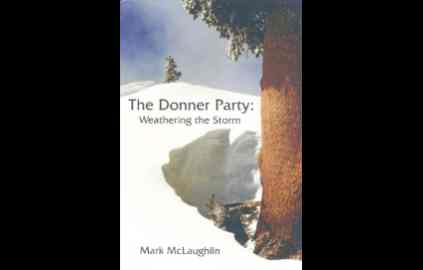
For the Donner Party, it was mostly tragic. And while much has been written about cannibalism that took place, that is not the focus of Mark McLaughlin’s book “The Donner Party: Weathering the Storm”.

McLaughlin spoke last week to a full room at the South Lake Tahoe Library. His book, published in 2007, centers much on the weather. It was one of those epic winters, where winter started in October.

donner party bookDuring the talk and slide presentation, McLaughlin delved into a bit of the legacy of lawyer Lansford Hastings. Hastings is important in the Donner story because he had created a shortcut.

The problem is the shortcut was ideal for men on horseback, not wagon trains full of families, with some who were not all that healthy.

Jim Reed (no relation), while he wasn’t the captain of the party, was the take-charge person in the group. It was George Donner who was captain, but he could be pushed around.

A seasoned mountain man had warned the Donner Party not to take the Hasting’s shortcut. But Reed said to heck with that advice. That one decision could be seen as their total undoing because it added three weeks to their journey.

The Donner clan had to hack their way through brush to make a road. It was roughing going through the Wasatch mountains.

“They nearly died of thirst in the Utah desert,” McLaughlin said.

By now the number of wagons in the party have been condensed. Goods are discarded. Some people are on foot. Half of the Donner Party was 18 years old or younger, according to McLaughlin.

Reed gets into a skirmish that ends with the death of a man, though self-defense is claimed.

Some have gone for help. Sutter’s Fort is known to provide supplies. Reed takes off, too, at about where Winnemucca is today.

But then the snow comes, and it keeps coming. Reed is trapped; unable to bring goods to his comrades – including his wife and four children. He tells John Sutter he needs to get supplies to the others. Sutter said they should be fine based on what Reed said they had.

What Reed didn’t know is the Paiute Indians had shot many of their animals and that people were ill. There were no fish to be had; lakes had been freezing.

Reed was finally successful in what was the second rescue party.

There are still descendants of the Donner Party who reunite every 10 years at Donner Lake.


Calif. lawmakers, governor to get raise

By Jeremy B. White, Sacramento Bee

Gov. Jerry Brown, California lawmakers and other elected officials will be getting a 2 percent raise this year.

Pointing to California’s firmer fiscal footing, a panel that sets salaries for elected officials voted 4-1 Friday to enact a pay boost. Starting Dec. 1, the raise will add $1,906 to lawmakers’ annual $95,291 salary, giving them a yearly pay of $97,197. The raise for Brown will be $3,480, taking him to $177,467 a year.

Years of yawning budget deficits have given way to a surplus, allowing California to pass an on-time budget this year with minimal friction. Those sunnier circumstances framed the debate among members of the California Citizens Compensation Commission and guided Friday’s decision to hike pay for the second consecutive year.

“It would be hard to argue, I believe, that the state is not better off financially today than it was a few years ago,” said commissioner Scott Somers, a corporate executive and compensation expert. “If they get tarred when times are tough,” he added in reference to elected officials, “they ought to at least get some credit when things are improving.”

Read the whole story


Study: Gay marriage would bring cash to Nev.

By Wesley Juhl, Las Vegas Review-Journal

If Nevada were to legalize same-sex marriages, the state would see significant economic benefits, a report released last week found.

In the first three years that same-sex couples could marry, Nevada’s wedding and tourism industries could see spending rise between $23 million and $52 million, which would raise state and local tax revenues between $1.8 million and $4.2 million, according to the report by the Williams Institute on Sexual Orientation and Gender Identity Law and Public Policy, a think tank at the UCLA School of Law.

The institute tracked economic and census data from states that have legalized same-sex marriage and applied those trends to Nevada. If the Silver State follows suit, it could reap millions of dollars of taxable revenue, the report said.

Nevada has 7,140 same-sex couples living in the state, according to census data. If gay and lesbian couples married in Nevada at the same rate as those in Massachusetts a decade ago, half of Nevada’s LGBT couples would marry in the first three years, the report found.

Read the whole story


Future governance of Meyers up in the air

By Kathryn Reed

Who will be the voice for Meyers once the area plan process is through?

That answer remains to be seen.

At recent meetings regarding the Meyers Area Plan residents have said they want more say in what happens to their enclave that sits at the base of Echo Summit to the west of the city limits of South Lake Tahoe. Being in the unincorporated area of El Dorado County residents are governed by the Board of Supervisors who are based in Placerville, as well as the Tahoe Regional Planning Agency.

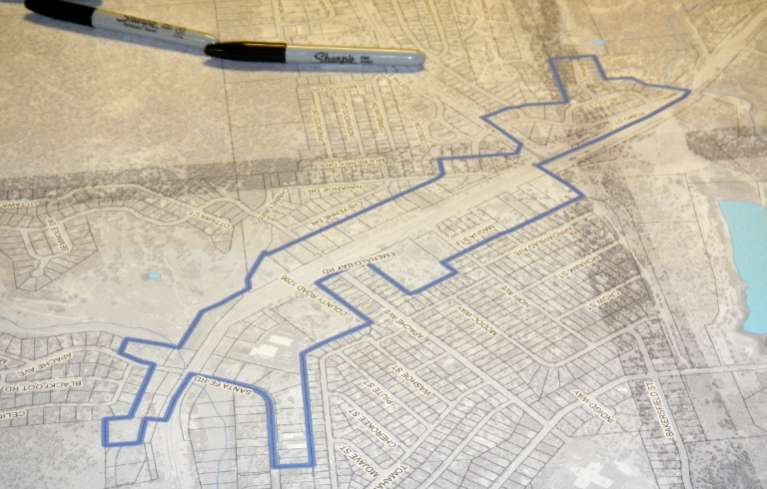
The Meyers Area Plan mostly deals with the highlighted area. Photo/LTN

The Meyers Area Plan mostly deals with the highlighted area. Photo/LTN

Forming a community services district has been talked about as a way to take what is the current Meyers Advisory Council and formalize it more. (The MAC evolved out of the Meyers Roundtable.)

Brendan Ferry, chief planner for El Dorado County, told Lake Tahoe News, “(The Meyers Area Plan) still formalizes the MAC as an official body of the county. It is just expanded to include the possibility of forming a CSD in the future. In that case the CSD board would essentially be the MAC.”

Here is the exact language in what is now the third draft of the Meyers Area Plan:

“Policy 1.2: El Dorado County shall establish and maintain a Meyers Advisory Council (MAC), with regularly scheduled and publically noticed meetings, to provide recommendations to the Planning Commission, County Board of Supervisors, and/or TRPA on the implementation of this Plan. The MAC shall include seven residents or property owners in the Lake Tahoe Region of unincorporated El Dorado County. The MAC shall include community members representing business, environmental, recreation, and other appropriate interests necessary to carry out the vision of the Meyers Area Plan. The MAC shall be comprised of elected board members of a Community Services District or other appropriate special district, or if no appropriate entity exists, the MAC members may be appointed by the El Dorado County Board of Supervisors.”

There is another meeting about the plan on June 26; at which time it’s possible the CSD will be discussed.

David Reichel, who is on the MAC, said at no time did that body make a formal recommendation to the community as a whole or to county staff about what it would like the MAC to be in the future.

“I’m aware people are looking at other options to make the body more formal,” Reichel told Lake Tahoe News.

A CSD is also a taxing entity and has elected board members. CSDs usually get a portion of property taxes or assess the area an additional tax that would be used just for that particular CSD’s business. But it can be an uphill battle to tap into the existing property tax allotment because it would mean some other entity would then be given less money.

LAFCo (Local Area Formation Commission) is the only governing body authorized to form districts. The three ways to get LAFCo’s attention is through voter petition, the landowner and petition by another agency.

The Legislature treats a CSD like it’s a junior city. But land use is not something a CSD has jurisdiction over. And land use is the overriding issue Meyers area residents want to control based on comments at public meetings for the past two years.

“If you want to have some kind of role in development issues, it would best to petition the Board of Supervisors to create some kind of advisory board that will give them input on what kind of development is going through,” Jose Enriquez, El Dorado County LAFCo executive director, told Lake Tahoe News.

He said Pollock Pines and other West Slope communities have these types of advisory boards. The Board of Supervisors appoints those members.

Enriquez said CSDs are usually formed for municipal services like fire, parks, and lighting-landscaping.

“If you want to be a land use regulating agency and not deal with the Board of Supervisors, then you form your own city,” Enriquez said. “That is a much larger discussion.”

Even though LAFCo doesn’t see a CSD being the correct route for Meyers, in the cover letter released earlier this month about the current draft Meyers Area Plan, it says, “Many community members have expressed a desire for a locally elected body to review project proposals in Meyers and to maintain and update the plan in the future. In response, the county is evaluating the establishment of a Community Services District, which would review proposed projects in Meyers, initiate future revisions to the plan, and direct some funding for local improvement projects. If established, this Community Services District would be comprised of a board directly elected by Meyers residents, and it would fulfill the role of the Meyers Advisory Council described in the plan.”

Neither El Doardo County Chief Administrator Terri Daly nor Supervisor Norma Santiago is responding to inquiries from Lake Tahoe News. The outside flack hired by Daly to deal with the media told LTN to attend this week’s meeting to have questions answered.

If Meyers went through with a CSD, it would also have to define what Meyers is in terms of geographic boundaries. Only property owners in that CSD would be taxed and have a say in who is on the CSD board.

Meyers could also form a business improvement district like the property owners along Ski Run Boulevard in South Lake Tahoe did. Or they could do like the South Lake Tahoe lodging establishments and form a tourism improvement district. These, though, are both taxing entities that would require those affected to vote on creating the districts and vote to tax themselves.

——

Notes:

• The next meeting is June 26, 6pm at the CCC building in Meyers.

• The draft plan is available online.

• Here are the proposed Meyers Area Plan revisions.

• Comments may be submitted to MeyersAreaPlan@edcgov.us.

• Future meetings: El Dorado County Planning Commission – Aug. 28, Placerville; El Dorado County Board of Supervisors – Sept. 9, Placerville; Tahoe Regional Planning Agency Advisory Planning Commission – Sept. 10, Stateline; Tahoe Regional Planning Agency Governing Board – Oct. 22, Stateline.