
Skimpier health plans could be costly

By Michelle Andrews, NPR

People are worried about being able to pay for health insurance. So the insurance industry and a group of Democratic senators have proposed offering cheaper, skimpier “copper plans” on the health law’s marketplaces that could draw in people who were unhappy with the cost of available plans.

But consumer advocates and others who study the insurance market suggest that there may not be a big demand for these plans and that they could expose people to unacceptably high out-of-pocket costs if they got sick.

“It’s a false promise of affordability,” says , project director at Georgetown University’s Center on Health Insurance Reforms. “If you ever have to use the plan, you won’t be able to afford it.”

Coverage through the Affordable Care Act is divided into five types of plans that require different levels of cost-sharing. Platinum plans pay 90 percent of medical expenses, on average; gold plans, 80 percent; silver plans, 70 percent; and bronze plans, 60 percent. Tax credits to help pay premiums are available for people with incomes up to 400 percent of the federal poverty level ($46,680 for an individual in the 2015 plans). In addition, a catastrophic plan is available, mainly to people younger than 30; it covers only limited services before the deductible is met and isn’t eligible for subsidies.

Read the whole story


Community college students need 4 years to graduate

By Jason Song, Los Angeles Times

About half the students enrolled in California’s community colleges take more than four years to graduate, double the traditional two-year commitment, a study released Tuesday found.

Of the nearly 64,000 who received a single associate degree in the 2012-13 academic year, the median student took 4.1 years, the nonprofit Campaign for College Opportunity said.

“We’re all talking about a college affordability crisis,” said Michele Siqueiros, executive director of the group that examined the graduation rates of the 2012-2013 graduates. “And time is part of that crisis.”

State community college officials said that nearly 80,000 students received an associate degree in the 2012-13 year, but some may have earned additional certificates or degrees. The study only examined students who earned an associate’s degree.

Read the whole story


Conflicting reports on care at Barton Hospital

By Kathryn Reed

Mixed messages are being sent to Barton Health regarding its care for hospital patients.

“The Joint Commission is the major governing body for hospitals across the nation. They have invited us to share best practices on one of our safety measures because of our good work here,” Monica Sciuto, spokeswoman for Barton, told Lake Tahoe News. The invite came last week.

But it came on the heels of the Centers for Medicare & Medicaid Services announcing Barton Memorial Hospital is one of 761 hospitals with a high rate of patient harm.

Analysts looked at rates of infections in patients with catheters in major veins and their bladders, blood clots, bedsores and accidental falls. A score of 1 to 10 was given; with the higher number meaning the hospital had a greater rate of patient harm. Barton scored a 10.

Barton has not been officially notified about the analysis and findings.

“Barton can challenge the findings if the data presented does not seem correct. If we are notified, we will have the opportunity to validate the data and look at every case to make sure it is correct,” Clint Purvance, Barton’s chief medical officer, told Lake Tahoe News.

The goal of the feds is to quash the occurrences of people getting sicker or acquiring a new medical problem while hospitalized. Hospitals with a score of 7 or higher will receive fewer reimbursements from Medicare.

“It is our understanding that some adjustments in the measures may be made for smaller hospitals and for hospitals in rural areas because of the small patient population sizes and the large effect just a few events makes to their scores,” Purvance said.

He went on to say, “To give you a sense of scale, our daily hospital census averages 20-21 patients per day versus a larger, urban hospital who may have upward of 600 patients per day at their facility. As an example, when one patient suffered from a Foley catheter urinary tract infection, this gave us a 17 percent rate on the report. In larger hospitals, one event like this would be a small drop in the bucket.”

On the positive side, in October, Barton received the highest recognition in the American Hospital Association’s Partnership for Patient campaign. The South Lake Tahoe hospital was selected as a mentor hospital by the Centers for Medicaid & Medicare Services.

This is the same group that six months later released the unflattering report.

Part of the problem is different data are used. The negative results come from infections during the 12-month period from July 2012 through June 2013. The California Hospital Association uses current data. Final data, used for the penalty phase, will include Jan. 1, 2012, to Dec. 31, 2013, according to Purvance.

Barton posts patient safety information online. Here are some examples:

• Catheter associated urinary tract infections in 2013 – zero

• Ventilator associated pneumonias since 2010 – zero

• Central line associated blood stream infections since January 2012 – zero

• Falls with injuries since January 2012 – zero.

Barton admits in 2008 it was considered average for the number of “adverse events”. A commitment to patient safety and training employees led to a turnaround.

Today, Barton spends more than $1 million a year on staffing for patient safety and quality initiatives including a quality management team, patient safety officer and chief medical officer. In 2008, that dollar amount was $100,000.


Americans donate a million years of work annually

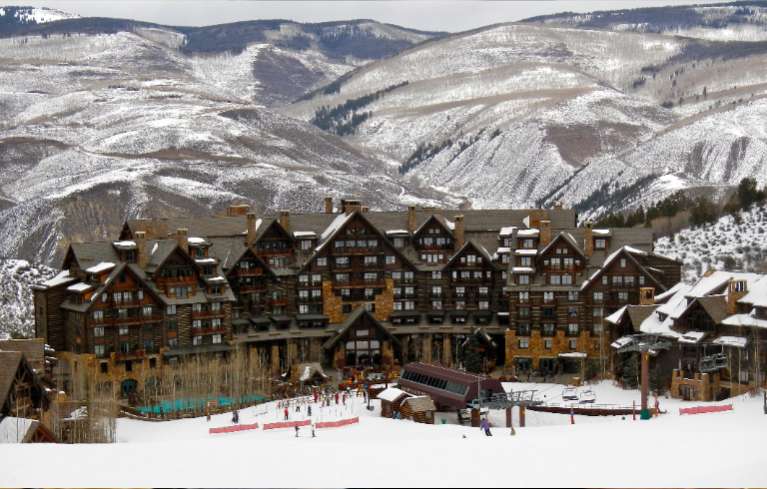
U.S. residents are missing out on places like Ritz-Carlton, Bachelor Gulch because they to work instead of go on vacation. Photo/LTN file

U.S. residents are missing out on places like Ritz-Carlton, Bachelor Gulch because they choose to work instead of go on vacation. Photo/LTN file

By Ben Steverman, Bloomberg

The big difference between hoarders and collectors: One of them appreciates what they’re piling up.

The U.S. stands alone among developed countries by not mandating vacation time. Of those who get vacation time, four in 10 Americans stockpile them, failing to take all the days they’re offered. Those stay-at-work Americans leave an average of 8.1 days unused, according to a 2014 Oxford Economics analysis. That’s about 429 million unused days per year.

Those million-plus years are one big gift to corporate America — and a gesture that doesn’t do employers or their employees much good. Few cultures can match the U.S. for its ability to stigmatize vacation time. The irony amid the mix of sincere devotion to the workplace, job insecurity and false emblems of productivity (like, say, dropping by the office on a weekend just to say you did): All this obsessing over work can get in the way of getting stuff done. According to managers, HR professionals and behavioral economists, time off makes you not just happier and healthier but more productive on the job.

Skipping a vacation or working longer hours can make sense if you get something for it. Some workers are compensated for unused days, but that’s hardly the main reason people skip vacations. Since the recession, the fight for raises and promotions has gotten cutthroat and more workers fret over job security, says Penn State University economics professor Lonnie Golden. Extra time at the office may give you a tiny leg up. One 2013 study found that, for those who work more than 47 hours a week, five extra hours correlate with a 1 percent increase in yearly wages.

Read the whole story


Nev. lawmakers back education funding change

By Sean Whaley, Las Vegas Review-Journal

CARSON CITY – A panel of lawmakers and educators on Monday recommended Nevada’s public education funding formula include more money for students in poverty or with limited English proficiency.

The minimum funding increase supported by the Task Force on K-12 Public Education Funding is 50 percent but could be set higher.

The 1.5 weighted ratio approved by the 15-member committee, which also included parents and financial experts, will now be turned into a bill for consideration by the 2015 Legislature.

If approved, Nevada’s per pupil funding formula would be altered to reflect the increase in support for these at-risk populations of students. The existing funding formula does not allocate additional support to educate these groups.

A majority of the panel also endorsed a recommendation to phase in the new funding to minimize any impacts to rural school districts, which otherwise could see their funding decline under the new formula if overall education spending does not increase.

Read the whole story


NV Energy CEO pumped up profits, self wealth

By Eli Segall, Las Vegas Sun

When Michael Yackira took charge of NV Energy in 2007, the company was earning big profits just a few years after it almost went bankrupt.

Nevada’s main electric utility stayed in the black on his watch, despite his steering more cash to shareholders, cashing in on $21 million when he sold the company to Warren Buffett and undertaking some big projects, including the planned closure of a coal-fired power plant.

Yackira, who joined the utility in 2003, is retiring today. He will be succeeded by Paul Caudill, named company president late last year.

Based on his stock holdings, Yackira was poised to collect $21.2 million from the buyout. His annual compensation regularly outweighed that of his predecessor, Walter Higgins.

Read the whole story


St. Theresa School in South Tahoe closed

By Kathryn Reed

St. Theresa School has shuttered its doors.

The Catholic K-8 school in South Lake Tahoe that opened in 1960 will not be offering classes in the 2014-15 school year. Also being displaced are preschoolers.

While the rumor of the school’s closure has been ongoing for years, it is finally a reality. Principal Anne Filce told Lake Tahoe News she was too busy to comment.

The enrollment has been dropping for years, with just more than 50 students this last school year. St. Theresa opened 54 years ago with 120 students. It operated for nine years before closing. Then it reopened in August 1994 with 121 students.

“We are prepared. We can handle it,” Lake Tahoe Unified School District Superintendent Jim Tarwater told Lake Tahoe News of the influx of students. “If we have to make another class, we can, though schools are fairly full.”

It remains to be seen where the St. Theresa students will go. Some families live in Nevada, so Douglas County School District is an option. The nearest Catholic school is in El Dorado Hills.

LTUSD is preparing for an additional 35 students for next school year, which starts Aug. 25. This includes St. T kids and others. This is the second year in a row that LTUSD enrollment is projected to increase.

Tarwater said the bulk of the St. Theresa kids are in grades K-5.

Many of the parochial students have had interaction with LTUSD students either through music, assemblies or outside activities. Most go on to attend South Tahoe High School.

The biggest change will be for the sixth-, seventh- and eighth-graders who will be at one school of about 800 students. But even for the elementary age, if they transfer into Lake Tahoe Unified, most of those K-5 schools are at about 300 students each.

LTUSD has class size reduction in grades K-3, which means a maximum of 22 kids per teacher. To go over that amount means losing state funding. That is why it’s possible depending on where the students land and in what grade more teachers will be needed.

What will become of the St. Theresa’s School remains to be seen.


Prediction of wet winter waning

By Steve Scauzillo, San Gabriel Valley Tribune

Not too long ago in this season of California’s massive and extended drought, climate experts saw a small glimmer of hope on the horizon: Predictions for a wet El Niño season coming in the winter that would bring badly needed rain and relief to a parched state.

Now that glimmer is fading fast, and the drought has gotten even worse.

A minimal amount of snow remains on Mount Tallac. Photo/LTN

A minimal amount of snow remains on Mount Tallac. Photo/LTN

One hundred percent of California is in a severe drought, 77 percent is in an extreme drought and 33 percent is in an exceptional drought, according to a report released last week by the National Drought Mitigation Center in Lincoln, Neb.

“Those are remarkable numbers,” said Mark Svoboda, a climatologist and the center’s monitoring program leader.

The drought monitoring team in Lincoln has never seen an exceptional drought since it started keeping detailed data in 1999. The D4 category — a foreboding maroon color on a California drought map — extends from Sacramento and the Bay Area through the Central Valley, Santa Barbara and Ventura counties.

fight the drought, now in its third year, Svoboda said.

Predictions for a much-anticipated wet 2014-15 winter are waning.

Read the whole story


Tahoe Paradise park fights to stay independent

A walking path goes along the edge of Lake Baron at Tahoe Paradise park. Photos/Kathryn Reed

A walking path goes along the edge of Lake Baron at Tahoe Paradise park. Photos/Kathryn Reed

By Kathryn Reed

TAHOE PARADISE – “Tahoe Paradise Park is currently operated by the Tahoe Paradise Resort Improvement District, and at some point in the future, El Dorado County is scheduled to take over operations. This change in management should increase options for re-development and management.”

Those sentences come directly from the draft of the South Lake Tahoe-El Dorado County Recreation Master Plan. The draft is expected to be released to the public Aug. 8.

However, no one is publicly taking ownership for putting those lines into the document. And it wasn’t until this last week that the bulk of the TPRID board even knew the language was in the document.

El Dorado County Supervisor Norma Santiago is on that board and has been instrumental in the recreation master plan. By the end of the meeting she was visibly upset because another one of her ideas had backfired and came to light before she wanted it to.

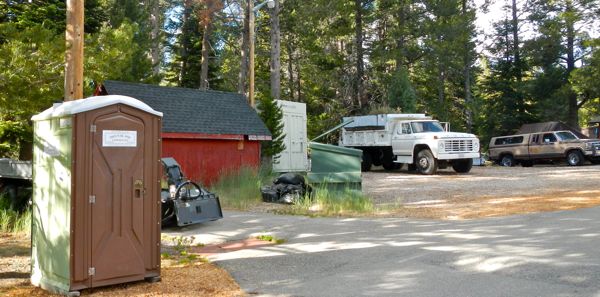
The board wants to put in more permanent bathrooms this summer.

The board wants to put in more permanent bathrooms this summer.

Santiago never brought up the language in the draft master plan to the TPRID. Board members found out about it elsewhere.

“When it says we are being taken over in the future by El Dorado County, that is a concern of the board, members of the community and the district,” board member Judy Clot said.

Clot brought up the fact that the TPRID was initially invited to participate in the rec master plan, but then the process went forward without them.

At the meeting it was decided the board would write a letter requesting the language quoted above not be included in any future recreation master plan versions.

This is not the first time the park has been left out of a conversation. It was brought up at the board meeting and the next night at the Meyers Area Plan meeting that the TPRID board has not been consulted about plans to extend the greater Meyers trail network into the park, which would bring more users.

Vickie Sanders, county parks manager, was at the June 25 TPRID board meeting at the request of Santiago.

Sanders later told Lake Tahoe News, “I was always told we were supposed to take over that park, but I’ve never seen proof of that.”

Tahoe Paradise RID was created in 1965. It includes 2,200 residences, 4,400 parcels and is 10 square miles. The park gets its money from renting the facility – mostly for weddings, grants and $50,000 a year from Measure S/R. Steve Dunn, who is the park manager, lives on site; with the free rent being part of his compensation package.

Keeping the park looking presentable has been an issue for eons. Driving in, Dunn’s residence is on the right, and then it looks like a maintenance yard and not a park. To the left are three tennis courts, with the fence on the first one being mangled and that court unplayable. The clubhouse looks nice from the outside. It backs to open space and Lake Baron.

Money has always been issue and will become greater once Measure R sunsets in 2030. Another issue facing the district is the state and others want to do away with resort improvement districts.

“What the Legislature said a few years ago is let’s convert them to a more modern version of local government so they have more modern laws and modern tools,” Jose Enriquez, executive director of El Dorado County Local Area Formation Commission, told Lake Tahoe News. He used the analogy of going from a 1988 Yugo to a 2014 Camry. “It does the same things, but it’s more modern.”

Day use area at the park.

Day use area at the park.

He believes Tahoe Paradise’s best option would be converting to a parks and recreation district. Having to adhere to the Brown Act – the open meetings law, and coming under Proposition 13 are some of the changes that would occur.

It’s up to the TPRID board to ask for the conversion.

Senate Bill 1023 was passed in 2010, revised in 2011 to allow for the conversion to go forward faster. Enriquez said all Tahoe Paradise would gain by doing this before the bill expires in 2018 is cutting off about three months of the process.

Bill Cherry, who is on the TPRID board, said LAFCo has spoken to the board and the board said no to the conversion.

“LAFCo said an advantage of a park and recreation district is that it would be easier for the county to take it over,” Cherry told Lake Tahoe News.


Dissecting Nevada’s statute of limitations

By Ana Ley, Las Vegas Sun

Among the more surprising ways Nevada’s two-year statute of limitations protects defendants from excessive litigation is by actually dissuading potential plaintiffs by giving them ample time to think about filing suit.

“Strangely, and somewhat perversely,” shorter time limits — like that of Kentucky, Louisiana and Tennessee, which span one year — tend to backfire because people often feel rushed into taking legal action after perceived wrongdoing, says UNLV law professor Thomas Main, who specializes in civil procedure.

In a conversation with the Sun, Main dissected Nevada’s statute of limitations in cases involving personal injury and death:

How exactly can a longer statute of limitations subdue litigation?

Those statute of limitations periods — one way of thinking about them is that they give a person who would file a lawsuit a chance to see whether or not they need to file a lawsuit. If a statute were only 30 days or 60 days, everybody would have to hurry and find a lawyer and file a lawsuit before they really found out whether or not they needed to.

That is one often-overlooked thing — the virtue that, in a sense, it can discourage lawsuits because you can wait and see if you need to file one.

Over the course of years, a person can look back and realize an injury was just a bad weekend and one missed day of work.

Read the whole story