Fines possible for Calif. water wasters

By Don Thompson, AP

Wasting water outdoors amid the state’s drought will begin hitting Californians in the wallet under get-tough restrictions being proposed by state regulators, with fines of up to $500 a day for overwatering front lawns or washing a car without a nozzle on the hose.

The State Water Resources Control Board next week is scheduled to consider draft emergency regulations made public Tuesday. They are intended to put teeth into conservation efforts that so far have produced disappointing results.

Most of the regulations to be considered by the board are aimed at reducing outdoor water use in cities and towns, which the board said accounts in some areas for more than half of residents’ daily water use.

The regulations would prohibit overwatering of lawns and landscaping that causes runoff onto sidewalks or streets, washing sidewalks, driveways and other hard surfaces, using a hose to wash a vehicle unless the hose has a shut-off nozzle and using drinking water in a fountain or decorative water feature unless the water is recirculated.

Violations would be infractions punishable by fines of up to $500 a day, and tickets could be written by any public employee empowered to enforce laws. While $500 is the daily maximum, most cities are likely to have a sliding scale that starts with a warning and builds for repeat violations.

“We are in a drought of historic proportions,” board Chairwoman Felicia Marcus said in a telephone interview with The Associated Press. “Many urban water users don’t realize how bad this drought is. They’re not seeing the communities that are actually running out of water. … They don’t see the streams and creeks running dry.”

If the board adopts the regulations after hearing comments during a July 15 public meeting in Sacramento, the rules would take effect immediately and remain in effect for nine months.

They do not target indoor water use, such as doing the laundry or dishes, although some individual cities and water districts have asked or required their users to reduce overall water consumption.

Marcus said the restrictions to be considered next week represent what the water board considers the minimal level of conservation.

“We’re not doing standards here that say you have to kill your lawn,” Marcus said. “It doesn’t mean you can’t take a shower. … It just means, think about it.”

She said the board might consider additional steps as the drought continues.

Under the proposed rules, urban water agencies would have to implement their water-shortage contingency plans to require mandatory restrictions on outdoor water use, if they have not done so already.

Water agencies without such a plan would have to act within 30 days to require their residents to restrict outdoor irrigation to no more than two days each week or take other mandatory steps to conserve the same amount of water.

Water agencies that do not comply could face fines up to $10,000 each day.

The generally obscure State Water Resources Control Board is assuming a more high-profile role during California’s drought, which has left some communities scrambling for drinking water and led to thousands of farm acres being fallowed.

The board usually regulates such things as wastewater and irrigation discharges to rivers and the ocean, as well as any activity that changes a waterway or harms water quality.

But the board’s five members, who are appointed by the governor, are acting under Gov. Jerry Brown’s emergency drought proclamation in January and a related executive order in April, as well as drought legislation he signed in March. Last week, for example, the board adopted a different set of emergency regulations that will accelerate enforcement of orders prohibiting some junior water rights holders from diverting water from rivers and streams.

The additional restrictions the board will consider next week were proposed after a recent survey of water suppliers serving 25 million Californians showed that current voluntary and mandatory conservation efforts had resulted in just a 5 percent decline in use through May. Brown is seeking a 20 percent reduction.

The survey found 30 percent of water suppliers had imposed mandatory restrictions that include limits on outdoor irrigation, washing vehicles and filling ornamental fountains and swimming pools.

Water use already was down the last three years because of dry conditions and poor economic conditions, and the survey found a significant reduction this May compared with the previous three years.

Nearly all those who responded said they had increased their conservation outreach, while 40 percent had increased their enforcement and monitoring. Two-thirds of the suppliers are requesting 20 percent water conservation, and 7 percent changed their water rates in response to the drought.
Wasting water outdoors amid the state’s drought will begin hitting Californians in the wallet under get-tough restrictions being proposed by state regulators, with fines of up to $500 a day for overwatering front lawns or washing a car without a nozzle on the hose.

The State Water Resources Control Board next week is scheduled to consider draft emergency regulations made public Tuesday. They are intended to put teeth into conservation efforts that so far have produced disappointing results.

Most of the regulations to be considered by the board are aimed at reducing outdoor water use in cities and towns, which the board said accounts in some areas for more than half of residents’ daily water use.

The regulations would prohibit overwatering of lawns and landscaping that causes runoff onto sidewalks or streets, washing sidewalks, driveways and other hard surfaces, using a hose to wash a vehicle unless the hose has a shut-off nozzle and using drinking water in a fountain or decorative water feature unless the water is recirculated.

Violations would be infractions punishable by fines of up to $500 a day, and tickets could be written by any public employee empowered to enforce laws. While $500 is the daily maximum, most cities are likely to have a sliding scale that starts with a warning and builds for repeat violations.

“We are in a drought of historic proportions,” board Chairwoman Felicia Marcus said in a telephone interview with The Associated Press. “Many urban water users don’t realize how bad this drought is. They’re not seeing the communities that are actually running out of water. … They don’t see the streams and creeks running dry.”

If the board adopts the regulations after hearing comments during a July 15 public meeting in Sacramento, the rules would take effect immediately and remain in effect for nine months.

They do not target indoor water use, such as doing the laundry or dishes, although some individual cities and water districts have asked or required their users to reduce overall water consumption.

Marcus said the restrictions to be considered next week represent what the water board considers the minimal level of conservation.

“We’re not doing standards here that say you have to kill your lawn,” Marcus said. “It doesn’t mean you can’t take a shower. … It just means, think about it.”

She said the board might consider additional steps as the drought continues.

Under the proposed rules, urban water agencies would have to implement their water-shortage contingency plans to require mandatory restrictions on outdoor water use, if they have not done so already.

Water agencies without such a plan would have to act within 30 days to require their residents to restrict outdoor irrigation to no more than two days each week or take other mandatory steps to conserve the same amount of water.

Water agencies that do not comply could face fines up to $10,000 each day.

The generally obscure State Water Resources Control Board is assuming a more high-profile role during California’s drought, which has left some communities scrambling for drinking water and led to thousands of farm acres being fallowed.

The board usually regulates such things as wastewater and irrigation discharges to rivers and the ocean, as well as any activity that changes a waterway or harms water quality.

But the board’s five members, who are appointed by the governor, are acting under Gov. Jerry Brown’s emergency drought proclamation in January and a related executive order in April, as well as drought legislation he signed in March. Last week, for example, the board adopted a different set of emergency regulations that will accelerate enforcement of orders prohibiting some junior water rights holders from diverting water from rivers and streams.

The additional restrictions the board will consider next week were proposed after a recent survey of water suppliers serving 25 million Californians showed that current voluntary and mandatory conservation efforts had resulted in just a 5 percent decline in use through May. Brown is seeking a 20 percent reduction.

The survey found 30 percent of water suppliers had imposed mandatory restrictions that include limits on outdoor irrigation, washing vehicles and filling ornamental fountains and swimming pools.

Water use already was down the last three years because of dry conditions and poor economic conditions, and the survey found a significant reduction this May compared with the previous three years.

Nearly all those who responded said they had increased their conservation outreach, while 40 percent had increased their enforcement and monitoring. Two-thirds of the suppliers are requesting 20 percent water conservation, and 7 percent changed their water rates in response to the drought.



BMPs may become issue when selling property

By Kathryn Reed

STATELINE – Lake Tahoe homebuyers and sellers beware because the Tahoe Regional Planning Agency is looking to crackdown on erosion control measures at private residences.

There is a good chance that a year after escrow closes BMPs will have to be completed. And when it comes time for disclosure about BMPs, sellers may be asked to pony up the money to have them completed or for the selling price to be reduced.

On July 8 a room of about 70 people, most of whom are in the real estate business, gathered to hear what the future of best management practices will be as well as to give the nine-member committee their opinions.

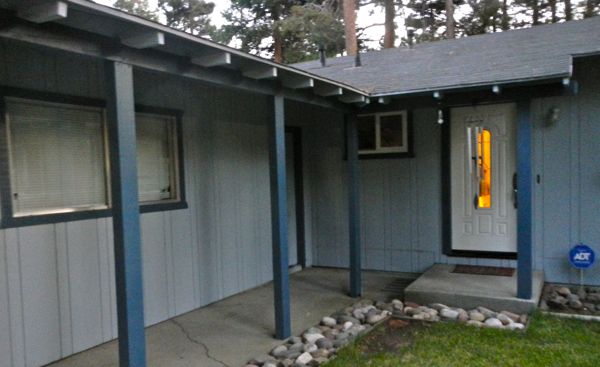
Rocks in front of this residence are a drip line so runoff from the roof doesn't pound the ground. Photo/LTN

Rocks in front of this residence are a drip line so runoff from the roof doesn’t pound the ground. Photo/LTN

A working group was convened earlier this year to address the BMP issue because the Regional Plan committee could not find a resolution prior to the update being adopted in December 2012. The group first met in March.

What has the real estate community up in arms is the possibility of requiring BMPs be done at the point of sale. Collectively, they said this would hurt their industry and is not the best way to achieve the main goal – which is to reduce sediment from reaching Lake Tahoe.

Even though it was pointed out in the staff report that primary roads are the overwhelming transporter of runoff, that was barely touched upon. Jason Kuchnicki with Nevada Department of Environmental Protection and Jason Burke with South Lake Tahoe brought it up, but the conversation went nowhere. (They are on the working group.) Of the five categories, single-family residences carry the least debris to the lake. In fact, those parcels along with multi-family residences, secondary roads and “land use category” don’t collectively total the amount of sediment of primary roads.

It is Clem Schute, California’s rep on the TRPA Governing Board, and Dan Siegel with the California Attorney General’s Office (both working group members) who are pushing for the point of sale BMP requirement. They are willing to delay the discussion for two years when the Regional Plan will be updated. (That document is now being looked at every four years.)

But what they want now is any residence that is sold to have its BMPs within a year. The fine per day would be $5,000 – or nearly $2 million a year. It was pointed out how this practice is equivalent to having a point of sale mandate.

Shelly Aldean, Nevada Governing Board member who is on the working group, said the fine is already part of the TRPA Compact and is not something new.

Agents for years have chosen to have sellers disclose and buyers acknowledge whether BMPs existed. Now, they say, the market is dictating that BMPs are becoming a negotiating point without TRPA intervention.

All residences were supposed to have put in BMPs by now, but the TRPA has been lax about enforcement. (However, about 60 letters are going out soon to Al Tahoe residents.) Part of the lack of enforcement has to do with staffing, and part with the evolution of science since 1987 when the first Regional Plan was adopted.

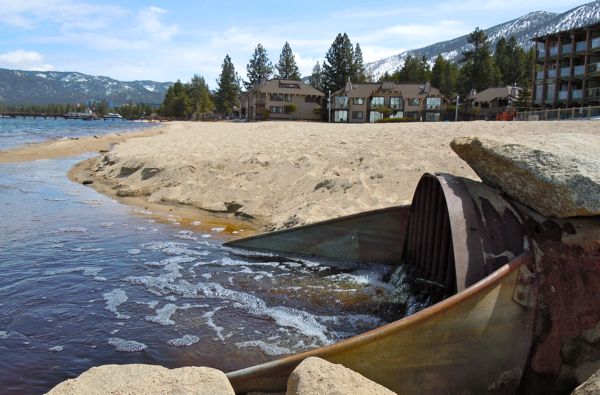
Water from the Bijou area drains from a large pipe right into Lake Tahoe. Photo/LTN file

Water from the Bijou area drains from a large pipe right into Lake Tahoe. Photo/LTN file

Plus, the passage of the total maximum daily load protocols calls for jurisdictions to reduce fine sediment in order to be in compliance with state agencies. Working on roads and larger erosion control projects is how they will achieve this.

It was stated at the meeting that even if all the residences in the basin did their BMPs, it would not add up to enough credits to satisfy the larger state goals. (Half of the residents in the basin have completed their BMPs.)

Many who spoke – including working group members – said the big picture is what should be looked at instead of going parcel by parcel. This includes putting together assessment districts like South Lake Tahoe has done with the Bijou properties. That is a multi-year project that is under way now that involves commercial and residential parcels.

But things like that take time. The Bijou process started in 2007. And when some property owners balked, the city and TRPA teamed up and threatened them with a lawsuit.

There was talk of looking at the areas in the basin that are the biggest contributors to sediment runoff and working to get those parcels into a stormwater district so it would have a greater environmental impact and likely cost less because of the economies of scale.

“The rest of the country is far ahead of us on this,” Joanne Marchetta, TRPA executive director, said.

At the Aug. 20 meeting the group is expected to finalize the TRPA document real estate agents use in regards to BMP disclosure.

In the meantime, security deposit forfeitures will be a topic for the Legal Committee to tackle. The discussion would cover the use of those funds and the possibility of targeting additional funds for BMP enforcement.

For next month’s meeting staff will also bring back a detailed document for how enforcement could be handled.

The group meets from 9am-noon (or longer as the case was Tuesday) at the TRPA offices in Stateline.

Other working group members are Karin Staggs (Nevada Tahoe Conservation District), Sara Ellis (Nevada Realtors), Shannon Eckmeyer (League to Save Lake Tahoe), and Woody Loftin (Natural Resources Conservation Services).


Climate-driven wildfires consume USFS budget

By Alan Bjerga, Bloomberg

Wildfires blamed in part on climate change are consuming timber in the U.S. West at such a furious pace that half the Forest Service’s budget is now spent fighting them — up from 21 percent in 2000.

Add in the firefighting of other agencies, as well as state governments, and the bill to taxpayers runs in the billions of dollars each year. And it’s growing fast, driven by an urbanizing West as well as warmer and drier summers.

The cost has touched off a debate about whether the rush to quench blazes is obscuring the need to prevent fires by thinning deadwood and controlling insects or limit their impact by discouraging home-building in danger-prone areas.

“We don’t always necessarily need more money,” said Kim Rodrigues, a wildfire expert with the University of California’s agricultural and natural resources department in Davis. “But we need more proactive efforts.”

President Obama, citing a National Climate Assessment in May that mentioned wildfires 200 times, is proposing a shift in the way firefighting is funded and put blazes on par with hurricanes and earthquakes. That would boost funding and end the practice of taking money from mitigation and prevention to pay for disaster response.

Federal firefighting costs passed $1 billion for the first time in 2000 and have exceeded that mark every year but two. Together, the Forest Service and Interior Department have averaged $1.54 billion in fire suppression in the past decade. States pay another $1 billion to $2 billion annually, according to Headwaters Economics, a Bozeman, Mont.-based research group. Fires affected about 7.3 million acres a year in the most recent decade, up 66 percent from the previous 10 years.

Read the whole story


Recovery evident as U.S. residents hit the road

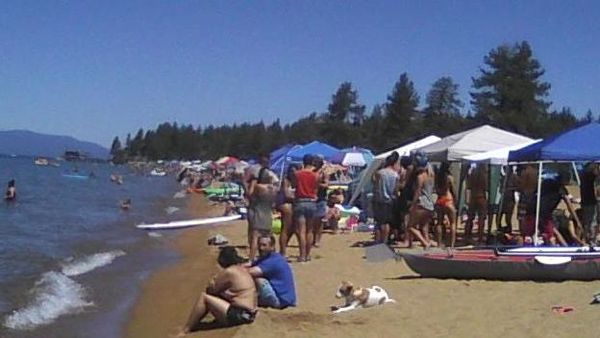
Tahoe was a definite destination Fourth of July weekend. Photo/Bill Kingman

Tahoe was a definite destination Fourth of July weekend. Photo/Bill Kingman

By Steve Matthews, Nina Glinski and Nadja Brandt, Bloomberg

Traci Butler and her husband cut out vacations after the U.S. recession five years ago. This week, the couple is taking their two boys on a weeklong trip that includes a July 4th visit to the nation’s capital, just a few weeks after touring Italy on their own.

In the aftermath of the recession, “things were much tighter,” said Butler, a special education teacher from Washington, Illinois, whose husband works for construction machinery maker Caterpillar Inc. “We didn’t have bonuses for a while. The last two years have been better.”

About 34.8 million people planned to drive 50 miles or more from home during the five days ending July 6, up from 34.1 million last year and the most since 2007, AAA, the biggest U.S. motoring organization, said. The travel recovery is boosting sales for hotels and attractions, a sign that consumer confidence and consumer spending are on the mend, said Mark Zandi, chief economist at Moody’s Analytics Inc. in West Chester, Pa.

Hotel occupancies across the U.S. averaged 62 percent during the first five months of this year, up from 60 percent during the same period last year and the highest average for that time frame since 1996, according to data provided by Hendersonville, Tenn.-based research firm STR Inc. Average room rates climbed 4.1 percent to $113.58.

Read the whole story


Tahoe mountain biking on national radar

Mountain biking in Lake Tahoe is getting national recognition. Photo/TAMBA

Mountain biking in Lake Tahoe is getting national recognition. Photo/TAMBA

By Jessie Marchesseau

It’s no secret that Lake Tahoe is an outdoor recreation destination. Skiers and snowboarders flock here in the winter, and visitors come to hike and play on the lake during the summer. The local economy depends on people coming here to play. However, one user group it seems Tahoe has yet to really capture is mountain bikers.

With more than 300 miles of mountain bike trails in the basin, there could be room enough for everyone. So the Tahoe Area Mountain Biking Association got together with Bike magazine in an effort to take steps toward bringing in more bikers.

Ben Fish, president of TAMBA, along with TAMBA member Paul Tolme, spent six months discussing and planning with Bike magazine Managing Editor Nicole Formosa the possibility of Bike doing a feature story on mountain biking in Lake Tahoe. Formosa finally made the trip to check out some trails in June.

Bike magazine is an international publication with more than 200,000 subscribers. They are known for their pages of stellar photography and focus more on where to ride than how to. Formosa said Bike tries to get to the “soul of the sport, the adventure of it” and looks for diversity in the destinations they feature. The magazine encourages readers to escape to places with beautiful scenery, a variety of trails and a location they can realistically travel to without it being too cost prohibitive.

Armstrong Connector Trail Photo/TAMBA

Armstrong Connector Trail Photo/TAMBA

“Someplace you can go and be for a few days and just explore right from your door,” she told Lake Tahoe News, “and I think Tahoe has a lot of those things.”

Fish said he believes one of the reasons Tahoe has not yet sought out mountain bikers as a valid tourist group is a misconception that if they do come, they won’t spend any money. On the contrary he says, they will stay in hotels, eat at restaurants and spend money in the community just like skiers do. Bike magazine’s demographic research suggests he is right. Bike’s readers have an average annual household income of $100,000, more than half are willing to spend more than $2,000 on their next bike and 80 percent of them say they plan on taking a mountain bike trip in the next year.

Formosa said mountain bikers are just starting to be viewed as a valid user group that takes trips and spends money.

Some places such as Moab, Utah, and Whistler, B.C., have jumped on the bandwagon, marketing themselves as top mountain biking destinations. Tolme said with the quality of trails here along with all the other amenities Tahoe has to offer, he sees potential for Tahoe becoming a world-class mountain biking destination.

“We think if they know about it, they’ll come,” he said.

Formosa spent five days here in June riding and researching for the story. Fish, his wife, Amy, also a TAMBA board member, and other TAMBA members spent the week showing Formosa around and taking her on some of their favorite trails.

They rode the Tahoe Rim Trail from Mount Rose, then the Flume trail. They took her on Powerline and up Cold Creek to Star Lake and on the new Monument trail. They rode Armstrong Pass and the new and improved Corral just in time to catch the ribbon cutting ceremony on June 14, then later checked out Van Sickle trail, and, of course, Mr. Toad’s Wild Ride.

“She left exhausted and impressed. At least, that was my impression,” Tolme told Lake Tahoe News.

Some of the trails they rode are relatively new or recently improved. In fact, there is scarcely a trail in the basin which hasn’t been somewhat improved in the last 10 years.

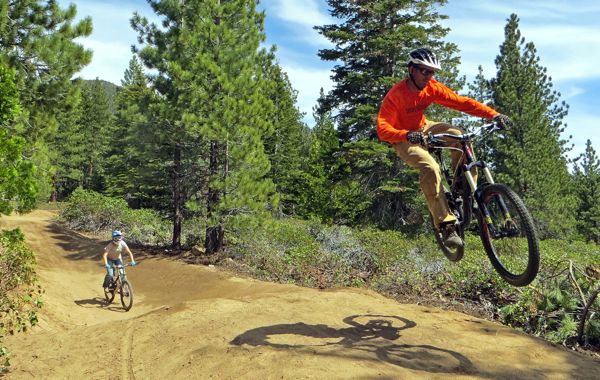
Features are being built in to some of the trails. Photo/Dave Clock

Features are being built into some of the Tahoe trails. Photo/Dave Clock

“[Tahoe] trails are amazing and the work that’s going on is really encouraging,” Formosa said. “Tahoe compared to other places has a really admirable partnership with the Forest Service. I haven’t seen that in a lot of places.”

The U.S. Forest Service was instrumental in helping with the construction and funding for the recent improvements on Corral and other area mountain bike trails. Fish said they have formed a great partnership with TAMBA in the last few years and are really beginning to understand mountain bikers as users of Forest Service lands.

One of Formosa’s favorite aspects of her visit to Tahoe was experiencing the community of mountain bikers here and the partnership they have formed with the Forest Service, something she hopes is indicative of the future of the sport. She also appreciated how they were able to start pedaling right at the Fish’s back door and within a couple hours be someplace that felt completely serene and remote.

Bike magazine has already posted one story from Formosa’s visit on their website. The full feature on Lake Tahoe will appear in print sometime next year.


Reid leaves Searchlight a richer man

By Rosalind S. Helderman, Washington Post

SEARCHLIGHT — Harry Reid grew up in a shack in this dusty old gold-mining outpost in the middle of the desert.

As he rose to political power, he amassed personal wealth and began living part time in a condo in Washington. But he never stopped holding tightly to a gritty public persona grounded in his Searchlight roots — building a house here and keeping the town his official residence.

Along the way, a tiny town that thrived only briefly during a gold rush more than a century ago gained bragging rights as home to the most powerful man in the U.S. Senate.

Sen. Harry Reid sells Searchlight property to gold mining company. Photo/LTN file

Sen. Harry Reid sells Searchlight property to gold mining company. Photo/LTN file

But this month has brought a remarkable turn of events for Searchlight and its population of a few hundred: A new gold rush has reignited investor interest here. And Reid, whose land quite literally sat on a gold mine, has seized the opportunity to cash out of the town at the center of his political identity.

He announced last month that he had sold his house along with 110 acres of Joshua-tree-dotted, rocky land to Nevada Milling and Mining, a small South Dakota company that bought an abandoned mine next door in 2010 and has high hopes for a new era of gold production.

The $1.75 million deal was a handsome payout for the Democrat, who is paid a Senate salary of $193,400 per year. Nearly all of the land had been in Reid’s family for decades, much of it originally deeded to his father and some bought by Reid from family members. His brother will continue to live in Searchlight, where Reid will also retain some holdings.

Reid, 74, said he and his wife, Landra, wanted to be closer to their children and grandchildren, as well as his political base in Las Vegas, an hour’s drive across the desolate Mojave Desert.

Now Reid, who as Senate majority leader is presiding over the Democrats’ efforts this year to retain control of the Senate and looking ahead to his own potentially difficult re-election in 2016, will need to adjust the carefully tended life narrative he has presented to voters since he entered politics in the late 1960s. And Searchlight is pondering a new but possibly brighter future without its native son.

“We’re all very, very sad to see Harry go,” said Reggie Doing, 32, whose family owns the Searchlight Nugget Casino and Restaurant, which offers 10-cent coffee, $1 beer and is the town’s main gathering place. But he said the return of gold mining marked by the sale could renew the town. “Nothing is guaranteed and nothing is forever. Change can be a blessing.”

A video that Reid recorded to break the news of his land sale to constituents shows the senator lovingly describing Searchlight trinkets he keeps in his Washington office, including an old miner’s helmet with a carbide lamp. “Even after all these years, you can still smell the carbide,” he said, sniffing the item.

“Searchlight is my birthplace, it is my home, my favorite place in the world,” Reid said in a statement provided to the Washington Post. He called the sale a “a very difficult decision.”

The return of gold mining to Searchlight is part of a new rush throughout Nevada made possible by a spike in gold prices following the economic crash of the last decade, when gold was thought to be a safe investment in a volatile financial world. The price of gold soared to over $1,900 an ounce in 2011; it has now settled back to about $1,300 an ounce, still a historically high price.

Read the whole story


As drought persists, frustration mounts over secrecy of California’s well drilling logs

By Tom Knudson, Sacramento Bee

Inside a government warehouse along a noisy freeway in West Sacramento is a set of metal shelves holding more than 100 carefully labeled cardboard boxes.

Inside those boxes are tens of thousands of state records that could help scientists and water policy specialists better understand and protect California groundwater.

But while all other Western states make such records – known as well completion reports, or well logs, for short – open to the public, California does not.

Lake Tahoe is so low little sand bars are being created at Cove East on the South Shore. Photo/Kathryn Reed

Lake Tahoe is so low sand bars are being created at Cove East on the South Shore. Photo/Kathryn Reed

Here, access to the documents is restricted. While some government agencies and researchers can view them, many scientists and the public at large cannot, a barrier many say reins in knowledge about groundwater supplies as the state struggles with one of the worst droughts in recorded history.

“We’re basically blindfolding ourselves,” said Laurel Firestone, co-director of the Community Water Center, a Visalia-based nonprofit, who argues that access to the records could help improve water quality. “If California is going to be serious about managing its groundwater, it can’t possibly do that without accessible and transparent data.”

By now, the contours of California’s groundwater crisis are familiar: the dried-up wells, sinking farmland, over-tapped aquifers and growing push for more state oversight. But on the edges of that drama is a back story that’s been largely overlooked about groundwater data, government secrecy and scientific opportunities lost.

Groundwater is critical to California. Without it, agriculture collapses, cities shrink, ecosystems die. Yet while our knowledge of rivers and reservoirs is exhaustive, we know far less about water stored inside the earth, including how much can be safely pumped without depleting aquifers and sowing long-term harm.

“Imagine trying to manage a reservoir where you’re not sure what the boundaries of the reservoir are. You’re not sure how much water gets in, how much water gets out, or what the level is,” said Graham Fogg, a professor of hydrogeology at UC Davis.

“Groundwater management is kind of like that,” Fogg said. “You are trying to manage systems that are ill-defined and ill-understood.”

Well completion reports help chart that underworld. Like medical charts, they are filled with data and notes that help researchers and water managers understand a complex system they can’t actually see.

In all other Western states, such records are accessible to whomever wants to see them – from university professors to civil engineers, real estate agents to the media. But in California, well logs are barred from public inspection by a 63-year-old law written to keep data gathered by well-drilling companies from falling into the hands of competitors.

Read the whole story


Tahoe Keys Marina’s troubles keep growing

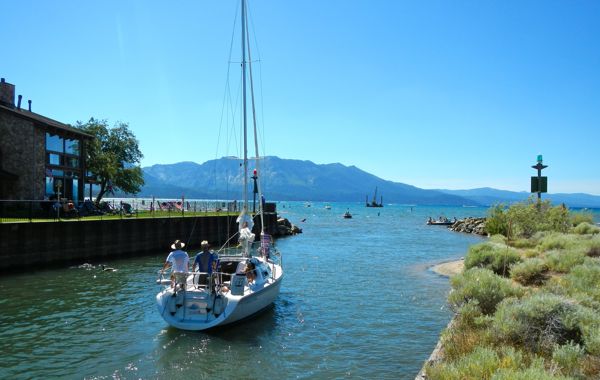
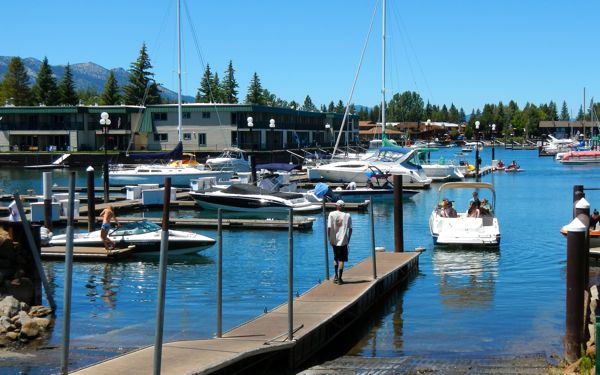
This sailboat on July 4 had to go out on the left to have enough clearance in the water. Photos/Kathryn Reed

This sailboat on July 4 had to go out on the left to have enough clearance in the water. Photos/Kathryn Reed

By Kathryn Reed

Tahoe Keys Marina is in a bit of turmoil. Lawsuits, OSHA investigations and financial troubles have been issues since the ownership change.

Donna and Robert Krilich bought the Tahoe Keys Marina in early 2009 for more than $20 million. South Shore real estate agent Jean Merkelbach has a minority interest in the marina.

But the Krilichs and Merkelbach are now fighting each other in court. Neither party was available for comment.

In early 2013, the Krilichs bought the Fresh Ketch restaurant at the marina from longtime owner Bob Hassett. At the time, the El Dorado County Assessor’s Office listed the value of the property and business at $1,224,913.

Speculation among those dealing the marina is the owners will default on their financial obligations.

“I don’t think we have filed bankruptcy. There has been some talks about it because of some of the litigation,” Robert Krilich Jr. told Lake Tahoe News. Krilich runs his parents’ Krilich Companies, which is based in Illinois.

The marina’s attorney, Bob Anderson, said at this time bankruptcy is not going to happen.

The Safari Rose charter boat just left the Keys because of the low water level. It is now operating out of Round Hill Pines, which for the first season is run by Hassett.

Tahoe Keys Marina has been in trouble since the ownership changed five years ago.

Tahoe Keys Marina has been in trouble since the ownership changed five years ago.

The Tahoe Keys Marina never applied for a dredging permit from the Lahontan Regional Water Quality Control Board. Lake Tahoe’s water level continues to drop because of the prolonged drought. This means some boats won’t be able to get out of or into the marina.

The U.S. Coast Guard, which has a station in Tahoe City, has not yet told the marina operators to warn boaters of the low water level.

Boats besides the Safari Rose are abandoning the marina because the channel is getting too precarious to navigate. On Fourth of July the marina had someone at the entrance of the channel into the docks warning people how to navigate the water. People in the condos were also helping, including directing some boats to stay on the left side to get out because that is where the deepest waters are. (New this year, the marina closed the launch at 9pm instead of midnight on July 4. A worker had no reason for the change.)

Vendors are also complaining they are not getting paid by the marina.

Anderson, the marina’s attorney, has his hands full with legal issues involving the marina. A 21-page 1991 agreement between the marina, Tahoe Keys Property Owners Association, and Tahoe Keys Beach and Harbor Association is at the center of one dispute. The document dictates how the three organizations work together, who pays what to whom and for what. Potable water and water quality are two key issues.

The disagreements have only arisen since the Krilichs took over the marina.

The Krilichs are familiar with the court system – civil and criminal. In 2013, they won a multimillion-dollar lawsuit over a land deal.

Locally, the problem is the marina owners are accused of not paying the bills TKPOA has submitted.

Scott Brooke, the attorney representing TKPOA, deferred comment to the association. However, interim General Manager Dan Moore did not return multiple phone calls.

Anderson also did not want to speak about the disagreements.

These aren’t the only troubles for the marina. The Cal-OSHA investigation is continuing. The state Occupational Safety and Health Administration opened the investigation earlier this year regarding how equipment is maintained and other safety issues.

South Lake Tahoe building officials have also been on site.

“We didn’t find anything of imminent danger,” Dave Walker with the city’s building department told Lake Tahoe News. “There were some minor things.” He said nothing was so egregious to warrant needing to shut down any business.

But Walker admitted it is hard to completely match up all the permits the city has issued and the work that was done.

“They have pulled quite a few permits over the years. When you go back 25, 30 years the description on the permits is limited so it is hard to see how much is permitted (compared to the) scope of work,” Walker said. “It would be very tough to nail down every little change. There are lots of plans, lots of permits. That’s why we kept mainly to life and safety issues. We didn’t see anything that would jeopardize anybody.”

One business practice Walker said has to stop is the marina has been using two of three residential units as vacation rentals. This is illegal.


Opinion: Wilderness Act faces midlife crisis

By Christopher Solomon, New York Times

You won’t hear it on your summer hike above the bird song and the soft applause of aspen leaves, but there’s a heresy echoing through America’s woods and wild places. It’s a debate about how we should think about, and treat, our wilderness in the 21st century, one with real implications for the nearly 110 million acres of wild lands that we’ve set aside across the United States.

Fifty years ago this September, Congress passed the Wilderness Act, which created a national system of wilderness areas. Wilderness has been called the “hard green line” for the act’s uncompromising language: Man will leave these places alone. As the law’s drafter and spiritual father, Howard Zahniser, put it, “we should be guardians, not gardeners.”

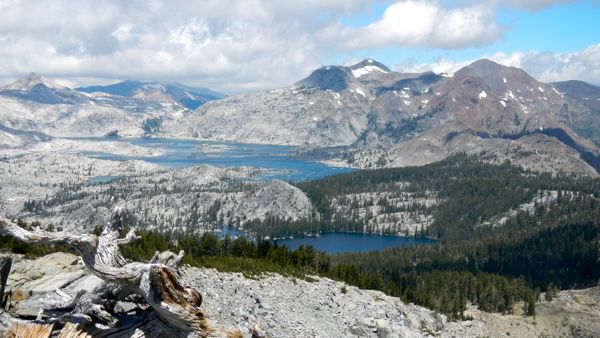
Views from Ralston Peak in Desolation Wilderness. Photo/LTN file

Views from Ralston Peak in Desolation Wilderness. Photo/LTN file

At 50, however, the Wilderness Act faces a midlife crisis.

We now know that, thanks to climate change, we’ve left no place unmolested and inadvertently put our fingerprints on even the most unpeopled corners of the planet. This reality has pushed respected scientists to advocate what many wilderness partisans past and present would consider blasphemy: We need to rethink the Wilderness Act. We need to toss out the “hands-off” philosophy that has guided our stewardship for 50 years. We must replace it with a more nuanced, flexible approach — including a willingness to put our hands on America’s wildest places more, not less, if we’re going to help them to adapt and thrive in the diminished future we’ve thrust upon them.

A great example is Joshua Tree National Park in Southern California, most of which lies within the 595,000-acre Joshua Tree Wilderness. Up to 90 percent of the park’s namesake trees could disappear by century’s end, according to models that factor in expected warming. Should we let that happen as nature’s atonement for our mistake? Or should park managers instead intervene in some way — relocating trees to higher elevations to promote their survival, for instance, or finding or creating a hybrid species that can withstand the hotter temperatures and combating exotic grasses that increase the threat of fires?

Such questions didn’t exist in 1964 when President Lyndon B. Johnson signed the Wilderness Act. Then, the nemesis of wilderness was America’s unchecked appetite — for land, roads, mines, timber — that gnawed away even at the boundaries of government-sanctioned “primitive areas.” Wilderness advocates craved permanence, in the form of legislation that took decision making away from capricious bureaucrats and political appointees.

Read the whole story


Stewart Indian School offers little-known U.S. history

By Susan Winlow, Daily Republic

CARSON CITY — A strong wind bullied through the Carson Valley last weekend. It whistled and pushed itself through the trees, which isn’t too difficult since you can see a lone tree from 10 miles away.

Sand, dirt and knee-deep brushy stuff is the norm in this high desert.

However, that terrain changes as you turn into the parking lot of the historic Stewart Indian School, situated on 240 acres on the Stewart Indian Colony (reservation) three miles southeast of Carson City on Snyder Avenue. The central part of the large campus – operational from 1890 to 1980 – is a treed oasis, punctuated by the unique stone masonry that makes up most of the buildings. About 60 stone buildings, according to Nevada Indian Commission information, were built over a 16-year period starting in 1919 by students learning stone masonry from their teachers, who included Hopi stone masons.

The government-mandated school’s original goal was to train and educate Native American children and assimilate them into white society. School curriculum offered some reading, writing and math, but focused on vocational training in the trades such as agriculture and the service industry. It opened with 37 students from the Washoe, Paiute and Shoshone tribes and by 1919, 400 students called the school home during the school year. As the student population rose, more buildings were built.

Sherry Rupert, the executive director of the Nevada Indian Commission, created the Stewart Indian School Trail in September 2008 with several purposes, she said.

“First is to preserve those precious memories and oral histories of the school,” she said. “Second is to bring awareness to this widely unknown history of the Native American boarding schools.”

Rupert rethought her sentence and added, “unknown to the public.”

Read the whole story