Tahoe to be clearer because of erosion project

By Kathryn Reed

By the time the Bijou erosion control project is completed this year, South Lake Tahoe will have put in an $11 million investment to curtail fine sediment from reaching Lake Tahoe.

This section of town is responsible for about one-third of the sediment in the city limits that reaches the lake.

“It’s designed to handle most storms,” Ray Jarvis, city public works director, told Lake Tahoe News. “Bijou has historically been the biggest problem for discharge into the lake.”

Crews work July 15 on the Bijou erosion control project. Photo/LTN

Crews work July 15 on the Bijou erosion control project. Photo/LTN

The city per Lahontan Regional Water Quality Control Board’s total maximum daily load policy is mandated to reduce the amount of fine sediment entering the lake.

The 42 acres are comprised of 43 parcels, most of which are commercial.

At the July 15 City Council meeting a community facilities district was formed that includes 10 of those parcels. This means they will pay for some of the improvements and ongoing maintenance via a tax that will be assessed to the property. This will allow property owners to receive their best management practices certificate from the Tahoe Regional Planning Agency.

That BMP certificate is something all properties in the Lake Tahoe Basin are supposed to have by now. It demonstrates the property owner has met mandated erosion control requirements.

What no one at the city or TRPA could immediately answer is if property owners who are not in the community facilities district, will still get a certificate.

The 10 properties that are part of the CFD are paying a reduced price for their BMPs compared to if they did them on their own. The cost is about 10 cents per square foot of impervious surface through the CFD, while it is between $1 and $3 per square foot individually.

The remaining properties can join the CFD at a later date if so desired.

This project looks at the stormwater runoff more holistically instead of parcel-by-parcel. So instead of keeping water on each site, the water collected via gutters is diverted to larger catch basins for filtration purposes.

The problem with this area is that so much of it paved. It includes the Bijou center where CVS is located.

Storm vaults were inserted underground by Lake Shore Lodge last year. Now much of the work is concentrated on Fairway Avenue on the other side of Highway 50.

The system is designed to handle 220,000 gallons of water at once.

The water will collect in the basins for the sediment to settle, then the water will be pumped back to the meadow area near Glenwood Avenue where it will be filtered naturally. There are still drains that are along the beaches of Lake Tahoe that carry treated water.



Heller, Amodei on opposite sides of extending unemployment benefits

By Amber Phillips, Las Vegas Sun

WASHINGTON — Sen. Dean Heller has invested months lobbying his colleagues to extend benefits for unemployed Americans.

In a rare feat of bipartisanship, Republicans and Democrats from Nevada’s six-person delegation have backed Heller’s effort to renew benefits for the long-term unemployed after Congress let the program expire in December.

The bill has become personal for Heller because Nevada’s unemployment rate remains stubbornly high at 7.9 percent, the second highest in the country. “This year has been extremely difficult for Nevadans who still do not know how they are going to pay their bills or feed their families,” Heller said in a recent press conference.

But there has been one noticeable holdout from Nevada’s delegation: Republican Rep. Mark Amodei.

Amodei, who represents Reno and Carson City, didn’t support extending the benefits when it passed the Senate and died in the House this spring, and he isn’t sure he’ll join in this time, either.

Amodei’s opposition falls in line with House Speaker John Boehner. Despite Heller’s repeated calls on Boehner for support, the Ohio Republican hasn’t brought the bill to a House vote.

Read the whole story


Plan to break up Calif. closer to being on ballot

By Jennifer Chaussee, Reuters

A long-shot effort to break California into six separate states got a boost on Monday, when the billionaire venture capitalist behind the proposal said he had gathered enough signatures to place it on the ballot in two years.

Timothy Draper, a founder of a Silicon Valley-based venture capital firm that has invested in Twitter, Skype and Tesla, among other companies, has been agitating for months for a ballot initiative to chop the most populous U.S. state into smaller entities.

“It’s important because it will help us create a more responsive, more innovative and more local government, and that ultimately will end up being better for all of Californians,” said Roger Salazar, a spokesman for the campaign. “The idea … is to create six states with responsive local governments – states that are more representative and accountable to their constituents.”

Salazar said Monday that the campaign had gathered more than the roughly 808,000 signatures needed to place the measure on the November 2016 ballot. Draper and other supporters plan to file the signatures with California Secretary of State Debra Bowen on Tuesday.

Read the whole story


Squaw chef produces explosion of flavors

By Kathryn Reed

OLYMPIC VALLEY – Heirloom tomatoes, corn bisque and black trumpet mushrooms = heaven, even for a carnivore.

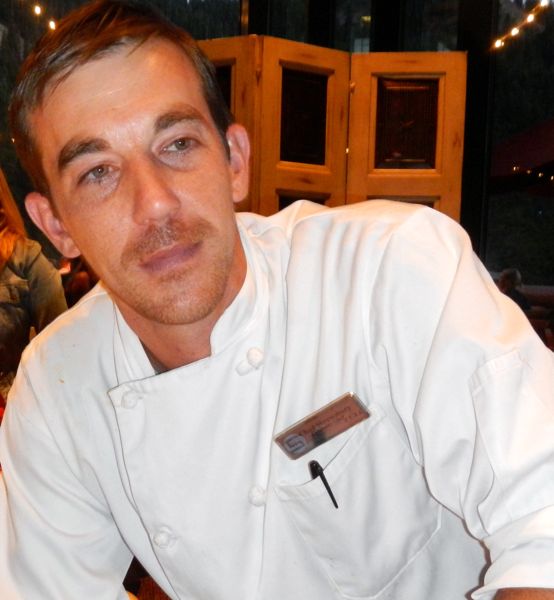
Chef Chad Shrewsbury had guests of this month’s Study of the Seasons: Farm to Tahoe dinner at the Resort at Squaw Creek’s Six Peaks Grille raving about his ability to transform ordinary ingredients into extraordinary culinary delights.

Heirloom tomatoes, above, and the corn bisque soup were highlights of the July 5 Farm to Table dinner at Resort at Squaw Creek. Photos/Kathryn Reed

Heirloom tomatoes, above, and the corn bisque soup, below, were highlights of the July 5 Farm to Table dinner at Resort at Squaw Creek. Photos/Kathryn Reed

The sea salt on the tomatoes reminded Sue of growing up in Vermont when her mom would pick tomatoes out back and serve them sliced with a dash of salt.

Shrewsbury’s dish elevated this classic first course with the addition of Burrata cheese (a mix of mozzarella and cream), purple basil (which is sweeter than regular basil), sherry vinegar and a pine nut relish. While finely chopped, that relish provided an unexpected crunchiness because visually it was not obvious nuts were part of the dish.

Using more than just red tomatoes from Greg’s Organics in Grass Valley also made the dish wonderful to just look at.

These dinners are all about using ingredients sourced from regional farms in the foothills near Lake Tahoe. Each course is then paired with a wine. The July 5 dinner featured Clos LaChance winery in San Martin.

Winemaker Bill Murphy chose a 2013 Sauvignon Blanc to pair with the heirloom tomatoes. Sue liked squaw dinner-4-soupthe fig she noted in the wine, saying it complemented the pine nut relish. While many Sauvignon Blancs are fine without food, this one in particular had its fruitiness enhanced by the tomatoes.

For most people, the next course was pork belly with Blue Lake beans, jalapeno polenta, citrus salad and mole rapido. I had the corn bisque, which Sue (the carnivore) said was her favorite dish of the night.

The pork was served with a 2010 Reserve Pinot Noir. Murphy noted it was darker in color than most Pinots, which is what the Santa Cruz Mountains tend to produce.

Standing in front of the picture windows with a backdrop of the towering granite peaks that make up Squaw Valley Ski Resort, Murphy answered questions about his wines and the industry in general. He explained how he started in the wine business as a hobby. Now he and his wife have 150 acres of estate grown grapes.

Murphy believes the climate has more to do with the end product of a wine than the terroir. He points to the hot sunny days and cool nights of Santa Cruz for adding so much to the grapes he grows.

He is extremely familiar with the North Shore, having had a house at Squaw Valley for the last 20 years and at Tahoe Donner before that.

Chef Chad Shrewsbury has been with the Resort at Squaw Creek for seven years.

Chef Chad Shrewsbury has been with the Resort at Squaw Creek for seven years.

Sue liked that the Pinot had a long finish, meaning it stayed on her taste buds longer. It paired nicely with the pork, but was not a good choice for the bisque.

Pork belly is traditionally a fatter cut of meat. Sue noticed it was a bit salty, but a sip of wine took it away. The polenta was not spicy, despite having jalapenos in it.

A unique twist with the corn bisque was the pieces of gnocchi in it. It was the texture more than anything that complemented the silkiness of the soup. This bisque was so refined. While the corn flavor was obvious, it wasn’t overwhelming. It could have been a meal unto itself.

That is one of the things about this four-course dinner — the portions are extremely generous. None of this take two bites and call it a serving like so many places. But at the same time, come hungry or you won’t be able to eat everything. Plus, the wine pours are ample.

I was not able to finish my next course because I was already getting full. But it is something I would love to have again. The pasta came with fava beans, spinach, cherry tomatoes, artichoke hearts and black trumpet mushrooms.

Those same mushrooms accompanied the Chilean sea bass that also had sweet corn and parsley tomato jus.

Sue said the earthiness of the mushrooms is so distinct that it was like they had been growing deep in the soil. I have such a thing for mushrooms that I made sure not a nibble was left on the plate.

Shrewsbury’s skills as a vegetarian chef have been honed through the years because his wife doesn’t eat meat. He’s been at Six Peaks Grille for seven years.

“I like earthy food, stuff that you get fresh from the farmer,” Shrewsbury told Lake Tahoe News. “I keep it basic, but I keep the flavor profile. If you explode the subtle flavors of food, people love it.”

The next Farm to Table dinner is Aug. 20

The next Farm to Table dinner is Aug. 30.

Based on the empty plates returning to the kitchen, Shrewsbury nailed it.

This third course was served with a crisp 2010 Reserve Chardonnay.

The only disappointment of the evening, though, was dessert. Fortunately we were so full it’s not like we really needed more. The chocolate crème brulee was not a traditional crème brulee. It came with stone fruit, mint marmalade and powder raspberry. None of it seemed to go together.

Dessert came with a 2010 Estate Zinfandel. It was wonderful not to have a traditional dessert wine. Zins pair so well with chocolate, that this was perfect for the last course – even for those who didn’t eat their dessert.

—-

Notes:

• The next dinner is Aug. 30. For more info, go online or call 530.583.6300.


Rural Nevadans opt out of medical pot

By Whip Villarreal, Las Vegas Review-Journal

CARSON CITY — Much of urban Nevada is quickly moving forward to license medical marijuana dispensaries, but patients in some rural areas might find it difficult to obtain the drug because local governments are opting out.

Another barrier to getting the drug is the apparent lack of interest by entrepreneurs to operate in the sparsely populated areas. Nevada’s rural counties reported little to no interest from applicants wishing to establish dispensaries, according to the Nevada Association of Counties.

The City Council in Fernley, which in 2010 had a population of 19,368, voted 3-1 last week to prohibit the dispensing, growing and manufacturing of marijuana for medical purposes within the city limits, according to Mayor LeRoy Goodman. The action taken was to direct staff to draft an ordinance to officially ban a dispensary in the Northern Nevada city.

Elsewhere in Lyon County, Yerington Mayor George Dini said a medical marijuana dispensary is “not a good fit for our city.” The town in 2010 had a population of 3,048.

With decisions by Lyon and Storey counties not to allow dispensaries, residents of this western Nevada region will be forced to drive elsewhere to purchase medical marijuana. A patient from Yerington would need to travel 120 miles round trip to get to the nearest dispensary in Carson City.

Read the whole story


Higher wages buys loyalty from fast food workers

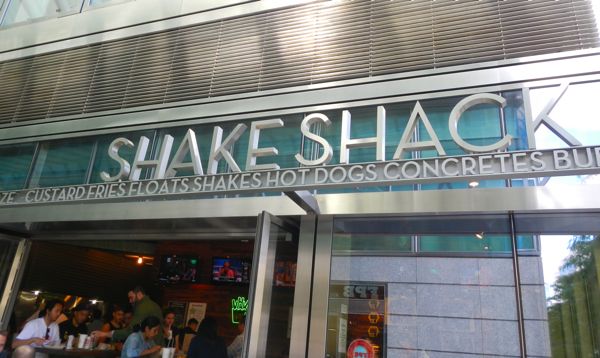
Shake Shack pays employees well above minimum wage. Photo/LTN

Shake Shack pays employees well above minimum wage. Photo/LTN

By Steven Greenhouse and Stephanie Strom, New York Times

CONCORD, N.H. — Ben Nawn, a sophomore at the University of New Hampshire, says his friends who work at McDonald’s are envious of what he earns working for the Boloco burrito restaurant here.

While they make $7.25 an hour, the federal minimum wage, Nawn receives $9 an hour, which Boloco sets as the floor at its chain of 22 restaurants, most of them in New England.

Nawn works at one of the handful of restaurant chains that deliberately pay well above the federal minimum wage. In-N-Out Burger-based in California pays all its employees at least $10.50 an hour, while Shake Shack, the trendy, lines-out-the-door burger emporium, has minimum pay of $9.50. Moo Cluck Moo, a fledgling company with two hamburger joints in Michigan, starts everyone at $15.

These companies’ founders were intent on paying their workers more than the going rate partly because they wanted to do the right thing, they said, and partly because they thought this would help their companies thrive long term.

“The No. 1 reason we pay our team well above the minimum wage is because we believe that if we take care of the team, they will take care of our customers,” said Randy Garutti, the chief executive of Shake Shack.

The nation’s fast-food restaurants, which employ many of the country’s low-wage workers, are at the center of the debate over low pay and raising the federal minimum wage — fueled by protests demanding that fast-food chains establish a $15 wage floor. McDonald’s was pilloried last year for a hotline that advised employees how to seek food stamps and public assistance for heating and medical expenses.

Read the whole story


SLT resolving Redevelopment Agency issues

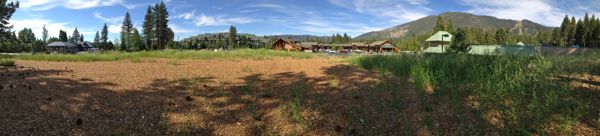
The vacant lot on Ski Run and Highway 50 looks to Ski Run Marina, from left, Lake Tahoe Vacation Resort, and Red Hut. Photo/Kathryn Reed

The vacant lot on Ski Run and Highway 50 looks to Ski Run Marina, from left, Lake Tahoe Vacation Resort, and Red Hut. Photo/Kathryn Reed

By Kathryn Reed

South Lake Tahoe is about to own a highly valuable piece of property in the city – assuming the City Council agrees to buy it.

On the July 15 council meeting the 1½ acres on the corner of Ski Run Boulevard and Highway 50 is on the agenda. It had been acquired by the now defunct Redevelopment Agency in deals with the prior owner of the timeshare complex that is kitty-corner to this lot. Originally that land was to be developed as another phase of what is now a Diamond Resorts owned property.

It is one of several parcels the Successor Agency needs to eventually unload.

“This is one of the last pieces of undeveloped prime real estate (in the city),” City Manager Nancy Kerry told Lake Tahoe News.

The appraised value is $800,000, which is what the city would pay. The city has $1.8 million in undesignated reserves. That pot of money is proposed to be tapped to buy the land.

“This meets the council’s objective to advance economic development. This gives them the opportunity to own a piece of land they have never owned,” Kerry said.

It comes with coverage, but no commercial floor area or tourist accommodation units. It has 88 parking spaces deeded to it from the parking garage next door that is owned by Diamond Resorts.

With the state dissolving redevelopment agencies, a convoluted process is in place for those entities to get rid of land and other holdings they own. Ultimately the Oversight Board will have to approve the purchase. That group’s next meeting is July 25 at 3pm at Lake Tahoe Airport.

This parcel has been on the market, but no potential buyer could make it work in the post-redevelopment era. Ideas had been to turn it into a high-end spa or drugstore like Walgreens.

Now the city would have control over what goes there. It’s possible the city would sell the land to a developer contingent upon what is built. There could be a lease to buy option as well.

“The next step is to market the property and see what kind of interest there is today,” Kerry said.

South Lake Tahoe is sitting on commercial floor area commodities, so developing the site is possible. (In the Lake Tahoe Basin, the Tahoe Regional Planning Agency has made commercial floor area and tourist accommodation units commodities, and has limited how many of each is allowed.)

Other redevelopment/Successor Agency items are also on Tuesday’s council agenda. They involve dealing in part with the $7 million the city took from the general fund to make the Heavenly Village project a reality and the other is the Housing Agency.

This taking was unbeknownst to the public until long after the money was spent. And allegedly the council – which at the time consisted of Hal Cole, Tom Davis, Judy Brown, Kathay Lovell and John Upton – didn’t know either. At least that’s what they said at a May 2003 council meeting when the gifting of public funds – aka taxpayer money – was acknowledged by then City Manager Dave Jinkens.

It was in 2004 that then-Mayor Davis signed a retroactive loan agreement between the city and Redevelopment Agency so the general fund would be repaid. There is still $4 million, which includes interest, that needs to be paid.

Tuesday’s agenda item will help speed up that process.

In 2010, the state “borrowed” $2 million from the city’s Redevelopment Agency. The agency didn’t have the money so it borrowed $426,000 from the Housing Agency.

Money to pay back the Housing Agency and city will come from revenues of sales of former Redevelopment Agency holdings, like the Ski Run-Highway 50 property, as well as property taxes.

A complicated state process allows those debts to be added back as an obligation of the non-existent Redevelopment Agency. The Successor Agency has to approve these transactions.

Kerry said the multimillion-dollar note owed the city could take upward of 10 years to pay off, but she was adamant the debt would be paid once the agencies vote on all the transactions.

On the Aug. 5 council agenda will likely be the option to refinance the bonds associated with redevelopment. This will lower the debt payment, which could mean the Housing Agency and general fund bills get paid sooner.


Calif. on edge as peak fire season looms

By Sam Stanton, Sacramento Bee

In recent months, as California officials started to calculate the fire danger posed by the state’s prolonged and historic drought, they tucked an extra $23 million into the CalFire emergency wildfire budget for the fiscal year that began July 1, bringing its total to $209 million.

By July 6 – just days into the fiscal year – the agency already had spent $13.9 million battling two major blazes, and is now bracing for one of the longest and most difficult fire seasons in memory.

“That’s just the first week, and we still have 51 more weeks to go,” said Daniel Berlant, spokesman for CalFire. “We’re not even to the peak of the fire season yet.”

Berlant and top fire officials have been warning for months that the state faces serious peril from wildland fires this year, as the drought – stretching into a third year – has sucked dry much of the state’s brush lands and forests more quickly than in years with more normal precipitation levels.

After it became evident over the winter that California was facing its worst drought in a generation, officials began taking extraordinary steps to prepare for the fire season. Even as Gov. Jerry Brown declared a drought emergency in mid-January, Cal Fire was hiring seasonal firefighters in the north state, a move that typically occurs in May.

Normally, CalFire would hire 2,400 seasonal firefighters to handle blazes statewide, but this year increased that staffing to 2,700. The department also took a number of other steps to prepare for a potentially catastrophic fire season, including awarding a $5.4 million contract for a DC-7 air tanker that already has been deployed to the Monticello and Butts fires and augments CalFire’s fleet of 50 aircraft.

President Obama on Tuesday sent a letter to Congress seeking a $615 million emergency appropriation request to fund firefighting efforts; California is expected to ask for the bulk of the federal reimbursements, given predictions for where wildland fires are most likely in coming months.

The latest map from the National Interagency Fire Center in Boise shows that forecasters believe California, Nevada and Oregon face the gravest threats.

Read the whole story


Caesars hires law firm to deal with reorganization

By Laura J. Keller, Bloomberg

Caesars Entertainment Corp.’s largest unit hired law firm Kirkland & Ellis LLP to advise the casino operator on how to reorganize its $17.4 billion of debt, according to a person with knowledge of the appointment.

Caesars Entertainment Operating Co. selected the New York-based company after taking pitches from restructuring firms this week, said the person, who asked not to be named because the matter is private. Blackstone Group LP (BX) has been working as the parent company’s adviser, the person said.

The gaming company, which was taken private in 2008 by Apollo Global Management LLC and TPG Capital for $30.7 billion, has been in a battle with its bondholders that may result in a broad restructuring of its debt load.

Caesars, which is the parent company of Harrah’s Lake Tahoe and Harveys, is fighting with creditors over a March deal that moved the Bally’s, Quad and Cromwell casino-hotels in Las Vegas and Harrah’s New Orleans from its operating unit to affiliate Caesars Acquisition Co. (CACQ), out of reach of the bondholders. The parent company created Caesars Acquisition, owner of the World Series of Poker, in October with two casinos it split from the operating company.

Read the whole story


TRT challenges inexperienced mountain bikers

Rosemary Manning rides a section of the Tahoe Rim Trail. Photos/Kathryn Reed

Rosemary Manning rides a section of the Tahoe Rim Trail. Photos/Kathryn Reed

By Kathryn Reed

STATELINE – Experienced mountain bikers had warned us the Kingsbury Grade to Spooner Summit segment of the Tahoe Rim Trail was beyond our abilities.

We didn’t listen.

We didn’t make it.

It didn’t matter.

The three of us accomplished much more. We proved to ourselves that we are better mountain bikers than we thought and we can handle more than just a dirt trail. We liked pushing ourselves to traverse what was new terrain to us.

Admittedly, it does say something about our mountain biking skills when it’s probably going to be faster to hike this section than it is to bike it.

Still, we had a blast.

We were fortunate to run into Clay Grubb at the trailhead. He was the interagency and TRT Association project manager for the Daggett Summit Trail System Project.

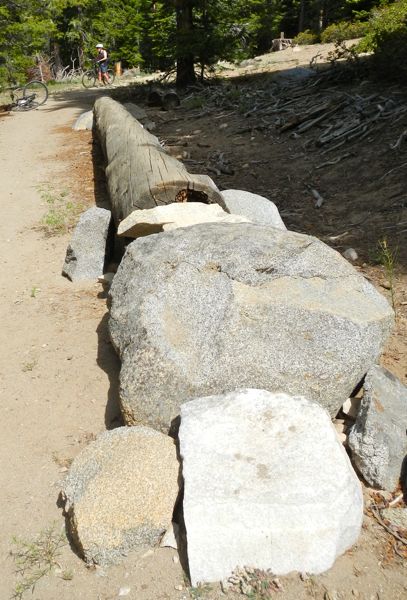
A few optional features are along the trail

A few optional features are along the trail.

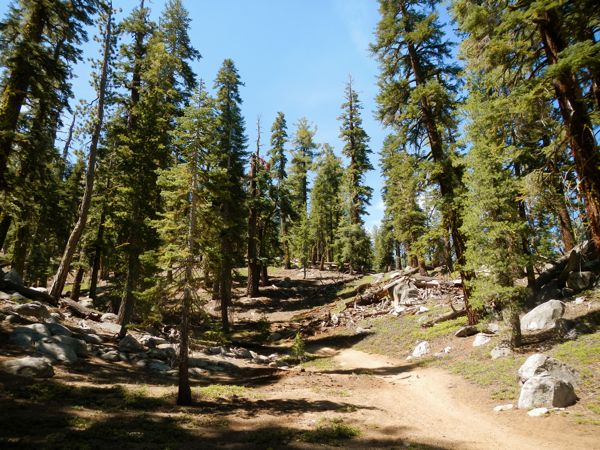
This section had few people on it on a Sunday in June.

This section had few people on it on a Sunday in June.

He told us that going straight up from the trailhead was going to be a bit difficult for us after we told him our ability level. He suggested riding down a bit to the U.S. Forest Service gate to swing around to the trail.

Grubb also pointed out how across the street is another connector section of the TRT that was completed last year.

Rosemary, Sue and I pedaled down to our new beginning point. It starts out as a descent, rolling over some embedded rocks along a single-track trail.

We meet up with Grubb again. He’s out for a jog. He warns us uphill is up ahead.

No problem. And when we did complain on this early section, it had more to do with not having bike leg muscles than the skill to pedal forward.

Not too far in there is an optional feature – as in riding across a log. Not for us – at least not yet.

For the most part it is quiet, isolated and tranquil. Lupine are out – at least they were in late June.

The noisiest part is when a section of the trail crosses an area where dirt bikes are allowed. Those guys were having a blast. It kind of made us jealous how they could just speed along in the dirt.

We were getting more exercise is how I rationalized it.

We pedal on.

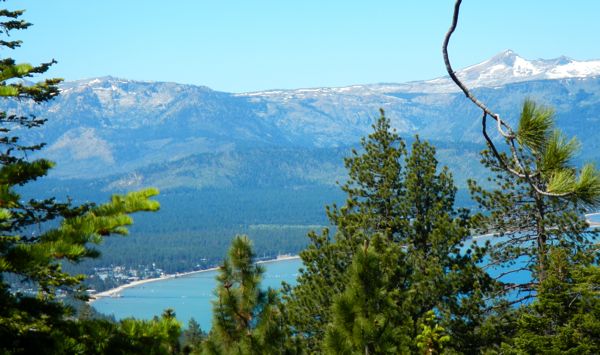
At one point we get off our bikes to scamper up a knoll that provides a view of Lake Tahoe.

Finally, we reach a section that is uphill and full of rocks that resemble a staircase. We leave our bikes behind to go on a scouting mission to see if at the top we get a view or the terrain seems more accessible. Neither. We choose to turn around.

Views of Lake Tahoe are visible -- but require getting off your bike.

Views of Lake Tahoe are visible a short ways off the trail.

We didn’t achieve our goal, but we had a great time.

We don’t know how many miles we went. Kingsbury to Spooner is 12 miles.

—-

Getting there:

From South Lake Tahoe, go east on Highway 50. Turn right on Kingsbury Grade. Turn left on North Benjamin Drive. This turns into Andria Drive. The road gets a bit rough. The trailhead sign is obvious on the left.

We started just below the main trailhead where the green U.S. Forest Service gate is.