Major California reservoirs below 50% capacity

By Veronica Rocha, Los Angeles Times

Most of California’s major reservoirs are now less than half-full — or at what officials call a “seriously low” level — but that’s still nowhere near the historic lows set in 1977, the state’s driest year on record.

The latest report released Wednesday by the California Department of Water Resources shows 10 of the state’s 12 major reservoirs below 50 percent of their total capacity, with some nearing just 20 percent.

“They are not historical levels, but they are seriously low,” department spokesman Ted Thomas said.

But when all 12 of the major reservoirs are combined, the average is at 60 percent, Thomas said. That’s puts the state in a far better position than it was 37 years ago, when a crippling drought brought the statewide reservoir average down to 41 percent.

As of Wednesday, the largest federal reservoir in California at Lake Shasta was only at 36 percent capacity, which is 4.5 million acre-feet of water, he added.

Read the whole story


Tahoe Keys Marina creates illegal parking lot

By Kathryn Reed

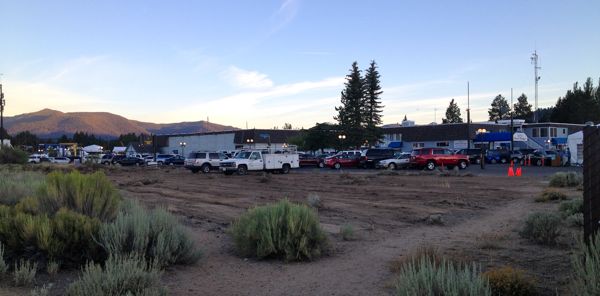
Tahoe Keys Marina staff illegally removed vegetation to create a dirt parking lot close to the water.

“It’s fairly significant. Eleven thousand square feet is the size of an entire lot,” Julie Regan, spokeswoman for the Tahoe Regional Planning Agency, told Lake Tahoe News. “It’s a serious matter and we will want to look into it thoroughly.”

TRPA issued a cease and desist order July 25. If would be up to the Governing Board if punitive action would be taken.

Tahoe Keys Marina turned vegetated state land into a dirt parking lot. Photo/Kathryn Reed

Tahoe Keys Marina turned vegetated state land into a dirt parking lot. Photo/Kathryn Reed

The grading occurred July 24. TRPA, South Lake Tahoe and California Tahoe Conservancy started investigating Friday. The Conservancy owns the land that was dug up.

“We cannot change what has happened. We have to decide how best to move forward … if it’s only remediation or if it’s something compensatory,” Ray Lacey, CTC deputy director, told Lake Tahoe News.

State officials were at the marina at 10am Friday giving people until 5pm to remove their vehicles from the illegal dirt parking area.

The marina is accused of violating two state Penal Code sections. One was trespassing by taking down a fence to get heavy equipment in to do the work; the other is unauthorized removal of plants and soil.

This is an area where the Conservancy spent significant money to restore the site.

The marina owns the paved area. The Conservancy owns the dirt area. A fence separates the two.

The vegetation that was removed is next to the South Lake Tahoe launch ramp.

It’s also against TRPA code to park on dirt. The fine sediment is an issue when it comes to erosion, and in particular for reaching Lake Tahoe and degrading its clarity.

No one from the marina returned calls, and their attorney was not available for comment.

Marina officials, including their attorney, had met with Conservancy staff July 24 about using the 1-acre lot the Conservancy owns off Venice Drive for parking for this weekend’s wooden boat show. This is a lot the two entities have long agreed to could be used for boat storage. Parking for the show was not a problem, the Conservancy said.

Lacey said Robert Spinnato, marina manager, apologized for digging where they didn’t have permission. And the marina, according to Lacey, agreed to keep people from parking on the dirt.

South Lake Tahoe sent police and building inspectors to the site on July 25.

“It’s a violation of TRPA code and they have been noticed. They also violated the city’s grading ordinance,” City Manager Nancy Kerry told Lake Tahoe News. “The police department is interviewing and may file a complaint for improper removal of vegetation.”

A bit of irony is that one day the disturbed land, including the Conservancy section up to the cul de sac area of Venice Drive, is slated to be paved. The Conservancy board in December 2013 OK’d 60,000 square feet for additional parking that would be used for people accessing Cove East and for the marina. Marina attorney Bob Henderson had earlier told Lake Tahoe News that would not happen this building season.

Even so, all the permitting still needs to be secured before any new parking lot in the basin is ever created.

Lacey said a meeting has been set up for Monday between Conservancy staff and marina officials.


Nev. needs Congress’ OK to do anything with its land

By Amber Phillips, Las Vegas Sun

WASHINGTON — With one week to go before a five-week summer break, Nevada’s lawmakers are doing what they can do to push through agendas they’ve been working on all year.

Rep. Mark Amodei claimed one of the delegation’s first victories of the week when the House of Representatives passed the Northern Nevada Republican’s bill signaling the end of a decade-old water dispute near Reno between the the Pyramid Lake Paiute Tribe and a ranch that wants to expand.

The details are wonky, but it underscores the fact Nevadans need congressional approval to do pretty much anything with the state’s land. The bill is expected to pass the Senate and become law.

Nevada’s House delegation also teamed up with Florida lawmakers — two states with economies that rely heavily on tourism — to support a bill that passed the House to encourage tourism to America. The bill has the support of Senate Majority Leader Harry Reid, D-Nev., so it may have a chance of actually becoming law.

Read the whole story


Drought is not just California’s problem

By Katharine Mieszkowski, Center of Investigative Reporting

Gov. Jerry Brown has asked restaurants not to serve water unless diners ask for it. He’s letting lawns at the state Capitol turn brown. Farmers in the Central Valley are getting just a trickle of the water they usually do. Conspicuous water wasters – commercial and residential – face fines of $500 a day.

Even Lady Gaga is pleading with Californians to conserve.

All of California is in a state of emergency because of the prolonged drought, now in its third year. And it’s more than just Californians who are feeling the impact – the state uses its scarce water to provide the nation with more food than any other state.

Here’s a guide to what’s causing the drought and what it means for all of us.

Drought is part of life in California.

In the last century, the state suffered seven multiyear droughts.

This drought is particularly bad.

By this spring, California had experienced its driest three-year stretch since 1895.

San Francisco, Los Angeles, Sacramento and Fresno logged their driest year ever recorded in 2013.

California’s climate varies tremendously, from temperate rainforests on the North Coast to the extreme aridity of Death Valley. Conditions now are so dry that all of the state is considered to be in a drought. More than 80 percent of the state is in extreme or exceptional drought, according to the United States Drought Monitor.

An extreme drought happens once every 20 to 50 years and wreaks havoc on crops. An exceptional drought, meanwhile, comes every 50 to 100 years, causing true water emergencies by draining reservoirs, streams and wells.

Blame the severity of the drought on the “Ridiculously Resilient Ridge.”

That’s the cheeky nickname for a high-pressure area – think of it as a mountain of air – that sat for months over the eastern Pacific Ocean. The name was coined by Daniel Swain, a doctoral student at Stanford University who writes the California Weather Blog.

The ridge sent storms that normally would hit California up over the Alaskan panhandle and the Yukon, leaving California unusually dry. The ridge extended from British Columbia down the coast of California, blocking storms from making their way to the Golden State.

The state saw low rainfall last winter and during the latter part of the previous winter, which has left the already thirsty state parched.

Aside from being ridiculously resilient, the ridge is also a bit of a mystery. Such high-pressure areas commonly develop in the winter, but they usually break down, allowing storms to get to California. Climatologists don’t know why this ridge persisted so long.

Many farmers are getting walloped.

California farms, which guzzle 80 percent of the water used by humans in the state, are feeling the heat. Farmers in the dry Central Valley alone may stand to lose $810 million this year from keeping their fields idle, according to the UC Davis Center for Watershed Sciences. They’ll also spend an extra $453 million on pumping water out of the ground. The state likely will lose 17,100 agricultural jobs because of the drought.

California moves vast quantities of water around the state, but some of it just isn’t available this year. The Central Valley Project usually sends water from the northern half of the state to the dry San Joaquin Valley. Many farmers who depend on it are getting none of that water this year.

The State Water Project, which is a significant source of water for 750,000 acres of farmland, is delivering 5 percent of the water that farmers have requested.

About 428,000 acres, or 5 percent of the irrigated cropland in the Central Valley, Central Coast and Southern California, won’t be planted this year, researchers at UC Davis predict.

This has started to affect the price of fruits and vegetables in the United States.

California produces nearly half of the fruits, vegetables and nuts grown in the United States.

That means the drought already is starting to hit our pocketbooks as farmers idle land, driving up prices. The U.S. Department of Agriculture predicts fruit prices may rise as much as 6 percent this year, while vegetables may go up as much as 3 percent nationwide.

For instance, the majority of the nation’s lettuce is grown in California. Between April and May, prices for the leafy green went up 1.9 percent.

The popularity of almonds has only compounded the problem.

Some farmers in these areas have invested in lucrative crops that have to be watered year-round or they die.

In the past 20 years, nut trees, like almonds, have become more popular to plant because the crops are lucrative. In a dry year, a nut tree still needs water to survive, while an annual crop, like rice or tomatoes, could not be planted that year and the field left fallow.

Some farmers now are uprooting nut trees before they’re past their prime because they don’t have the water to keep them alive.

With water a scarcity, there’s a drilling frenzy to scoop up groundwater, causing the ground to sink in the Central Valley.

In some areas of the state, the groundwater has become so overtaxed that the earth is literally sinking. Between 2008 and 2011, parts of the Central Valley subsided more than 2 feet, as this startling visualization by NASA’s Jet Propulsion Laboratory shows.

Groundwater is an important source of water for the state in wet years and dry years, accounting for about 40 percent of water used in normal years and up to 60 percent in drought years, according to the California Water Foundation.

Some 75 percent of Californians rely on groundwater for at least a portion of their drinking water. Yet, California lacks a comprehensive groundwater management plan, which all other dry Western states already have.

Two bills in the Legislature right now seek to move the state toward local management of groundwater.

The drought is also causing fish evacuations and wildfires.

The ecologically important Sacramento-San Joaquin River Delta also is feeling the drought.

In June, rainbow trout and steelhead trout had to be released from two hatcheries at a much younger age and smaller size than usual. The reason: Scientists predicted that by midsummer, the water in the hatcheries would be too warm for the fish to survive, because there is so little mountain runoff. Chinook salmon have been trucked to San Pablo Bay so they won’t have to navigate parched rivers and streams on their way to the ocean.

Wildfire risk also is up statewide. This year, there had been 3,400 wildfires as of July 19, according to the California Department of Forestry and Fire Protection. That’s an increase of 36 percent over the five-year average.

In May, more than a dozen wildfires raged in San Diego County. The wildfire season there is usually in the fall following the hot, dry summer.

The state and federal governments have put hundreds of millions of dollars into aid.

In March, Brown signed drought relief legislation worth $687 million. It included $25.3 million for food and $21 million for housing for those like farmworkers who are out of work thanks to fallow fields. In February, President Barack Obama announced the federal government would chip in $183 million to the parched state.

When will the drought end?

When El Niño shows up, maybe.

That’s when warm waters develop in the Pacific Ocean, which often bring wet winters to California. The National Oceanic and Atmospheric Administration now puts the odds of El Niño at 80 percent.

But there’s a big catch.

California needs a strong El Niño to reliably deliver that rain. Right now, it’s shaping up to be weak or moderate.

In search of El Niño, meteorologists scrutinize current sea surface temperatures, air patterns and ocean currents around the globe, using computer models to analyze how all those factors interact.

They’re trying to forecast what the sea surface temperature will be for a large expanse of ocean along the equator south of Hawaii, known as the east-central Equatorial Pacific. If that water is warmer than usual for a solid three-month stretch, it’s El Niño – the warmer it is, the stronger the El Niño.

Get used to these droughts.

It’s difficult to link any one weather event – like the current drought – to climate change.

Whatever happens this winter, it is highly likely that Californians can expect even more extreme droughts in the future, thanks to climate change.

Southern California will get drier, climate scientists predict. Northern California will get hotter. Some snow won’t fall as snow anymore – it’d become rain. The snow that does fall will melt faster. That could shrink the Sierra Nevada spring snowpack by as much as 90 percent.

The loss of snow doesn’t affect just the annual family snowball fight. When the snowpack – often called California’s largest reservoir – melts in the spring, it is an essential source of water for farms and cities.

That means less water for all of us.


Drought impacting Tahoe’s forest health

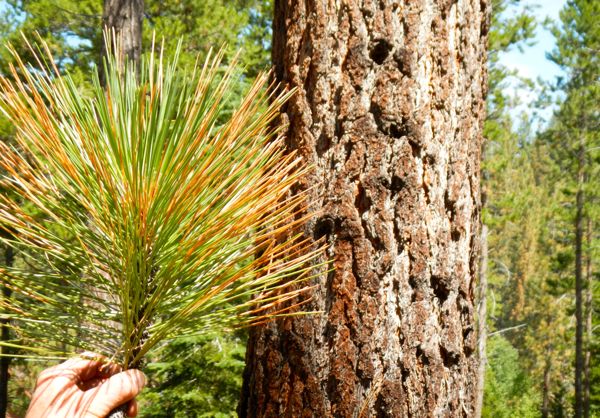
A moth is causing pine needles in Meyers to turn orange. Photos/Kathryn Reed

A moth is causing pine needles in Meyers to turn orange. Photos/Kathryn Reed

By Kathryn Reed

MEYERS – The tiny moths that are turning a large swath of the South Shore orange are out mating so there will presumably be more organisms to wreak havoc.

The needle miner is a micro moth that lives about a year, but can do tremendous harm in its short lifespan. They live in the needles of pine trees.

Soon they will lay eggs on the current growth of green needles. If they continue to populate, their work will turn up in a year.

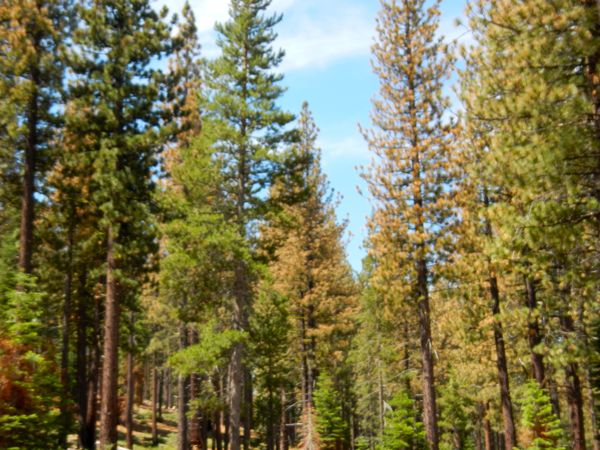
They have taken over about a 40-acre area near Pioneer Trail and Highway 50 in Meyers. The exact acreage will be noted in September when the U.S. Forest Service takes its annual aerial photographs of the Lake Tahoe Basin.

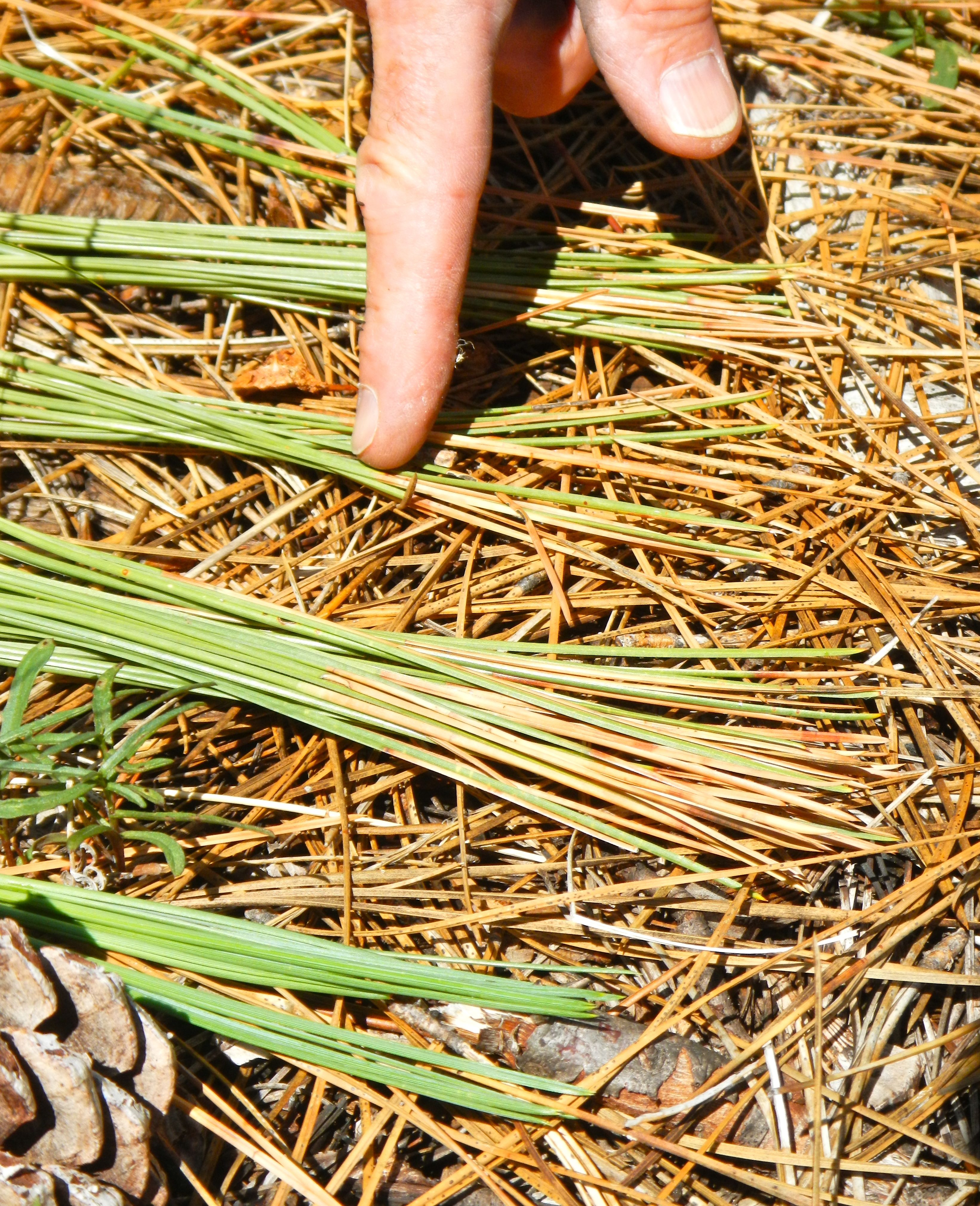
Forest pathologist Martin MacKenzie shows needles from 2011, 2012, 2013 and 2014. The moth has not landed on the 2014 needles -- yet.

Forest pathologist Martin MacKenzie shows needles from 2011, top, 2012, 2013 and 2014. The moth has not landed on the 2014 needles — yet.

“They are native and have been here all along,” Martin MacKenzie, a forest pathologist, told Lake Tahoe News. “They are species specific. This one is so little-known it doesn’t have a name.”

MacKenzie works out of the Stanislaus National Forest, but was in the basin last week surveying the local damage caused by the needle miner to the Jeffery pines.

Taking a small branch off an infected tree, MacKenzie surveys the growth rings. Removing needles from each section it’s easy to see the increased damage that has been done by the moth since 2011.

It’s not until every needle is red that the tree is dead.

The needle miners that attack lodgepoles are more common. The only Jeffery stands the needle miners are known to have infested are the ones in Meyers, the Al Tahoe neighborhood of South Lake Tahoe, and eight miles along Highway 395 in the Inyo National Forest.

In some places the forest is more orange than green.

In some places the forest is more orange than green.

“I think the recent climate phenomenon has allowed this moth to get out of whack,” MacKenzie said.

The moths’ natural predator is a wasp. What happened to the wasp is a mystery. The wasp will lay its egg on the caterpillar and eat inside out so a moth never comes to life. That process is what is missing.

“The natural balance is out of control,” MacKenzie said.

While MacKenzie and Rita Mustatia, forester with the Lake Tahoe Basin Management Unit, don’t believe the moth will kill the trees, prolonged destruction of the branches combined with the drought could weaken the trees. For now, though, it is more of an aesthetic issue. The trees look like they are dying.

That is one reason why Forest Service officials don’t want people running to a tree service to have them felled. Odds are the trees will survive.

Mustatia points to thinning tree stands as one way to help the longevity of the pines. Trees grow faster with more sunlight and when they don’t have to compete for water. A healthier tree is going to withstand the ravages of the moth for a longer period of time.


Survey: Increase in teens using performance enhancing drugs

By David Crary, AP

NEW YORK — Experimentation with human growth hormones by America’s teens more than doubled in the past year, as more young people looked to drugs to boost their athletic performance and improve their looks, according to a new, large-scale national survey.

In a confidential 2013 survey of 3,705 high school students, released Wednesday by the Partnership for Drug-Free Kids, 11 percent reported using synthetic HGH at least once — up from about 5 percent in the four preceding annual surveys. Teen use of steroids increased from 5 percent to 7 percent over the same period, the survey found.

Travis Tygart, CEO of the U.S. Anti-Doping Agency, depicted the numbers as alarming but not surprising, given the extensive online marketing of performance-enhancing substances and near-total lack of any drug testing for high school athletes.

“It’s what you get when you combine aggressive promotion from for-profit companies with a vulnerable target — kids who want a quick fix and don’t care about health risk,” Tygart said in an interview. “It’s a very easy sell, unfortunately.”

Nine percent of teen girls reported trying synthetic HGH and 12 percent of boys.

“A picture emerges of teens — both boys and girls — entering a largely unregulated marketplace (online and in-store) in which performance-enhancing substances of many varieties are aggressively promoted with promises of improved muscle mass, performance and appearance,” said the report. “This is an area of apparently growing interest and potential danger to teens that cries out for stricter controls on manufacture and marketing.”

Given the high cost of authentic HGH, it’s possible that some of teens who reported using it may in fact have obtained fake products. As the survey said, “It’s very difficult to know what exactly is in the substances teens are consuming, or what the short- and long-term impact on their health may be.”

Steve Pasierb, president of the Partnership for Drug-Free Kids, said the motives of today’s youthful dopers were different from the rebellious or escapist attitudes that traditionally accompanied teen drinking and pot-smoking.

“This is about how you feel, how you look,” Pasierb said. “They’re doing this thing to get ahead. … Girls want to be thin and toned. For a lot of boys, it’s about their six-pack.”

He urged parents to talk candidly with their children about the dangers of performance-enhancing substances, but to avoid moralizing.

“It’s not about illegality, or whether you’re a good parent or bad parent,” he said. “It’s a health issue. These substances literally alter your body.”

Pasierb said high school coaches have a key role in combating doping. Some are vigilant, other oblivious and perhaps a third are prepared to tolerate doping in the interests of winning, he said.

The new survey noted that the upsurge in teen HGH use occurred even as famous athletes were caught up in high-profile doping cases. Last August, Major League Baseball punished Alex Rodriguez with a lengthy suspension after investigating his use of performance-enhancing drugs. A few months earlier, Lance Armstrong admitted in a TV interview to doping throughout his cycling career.

One of Armstrong’s former teammates is Tyler Hamilton, who was forced to return his 2004 Olympic gold medal after being found guilty of doping. In recent public appearances, Hamilton has implored young athletes to resist the temptation to dope.

“There’s so much pressure on winning — it’s tough for these kids to stay true to themselves,” he said. “I can’t change every kid’s mind, but if I can do my part and other people do their part, we can beat this monster.”

Tygart, who as USADA’s chief oversaw investigations of Armstrong and Hamilton, noted that stringent testing regimens are an increasingly effective deterrent to doping among athletes in major pro sports and in international competitions.

“But most young athletes are not in any testing program, and their chance of getting caught is zero,” he said. “When left unchecked, the win-at-all-cost culture will take over and athletes will make the wrong decision.”

Synthetic HGH is supposed to be available only by prescription, yet products claiming to contain HGH are widely promoted and enforcement of the regulations is inconsistent, Tygart said.

Among the groups seeking to reverse the teen doping trend is the Texas-based Taylor Hooton Foundation, named after a 17-year-old high school athlete whose suicide in 2003 was blamed by his family on his use of anabolic steroids. Its staff has spoken to thousands of young people at school assemblies and sports camps.

Donald Hooton Sr., Taylor’s father and the foundation’s president, depicted teen doping as an epidemic fueled by widespread ignorance among parents and coaches. He estimated that more than 1.5 million youths in the U.S. have tried steroids.

Information about teen use of performance-enhancing drugs is readily available online. The Mayo Clinic, for example, provides a list of possible hazards and side-effects, including stunted growth, acne, liver problems, shrunken testicles for boys and excess facial hair for girls.

The clinic urges parents to check the ingredients of over-the-counter products used by their teens, and to be on the lookout for warning signs, including increased aggressiveness, rapid weight gain, and needle marks in the buttocks or thighs.

The Partnership for Drug-Free Kids survey also reported on other forms of substance abuse. Among its findings:

—Forty-four percent of teens report using marijuana at least once within their lifetime; 24 percent report using within the past month; and 7 percent report using at least 20 times within the past month. These levels have remained stable over the past five years.

—After a sharp increase in teen misuse and abuse of prescription drugs in 2012, the rate remained stable in 2013, with 23 percent of teens reporting such abuse or misuse at least once. Fifteen percent reported having used the prescription painkillers Vicodin or OxyContin without a prescription at some point.

The survey of 3,705 students in grades 9-12 was conducted at their schools between February and June 2013.

The margin of error was calculated at plus or minus 2.1 percentage points.

Founded in 1987, the New York-based Partnership for Drug-Free Kids is a nonprofit working to reduce teen substance abuse and support families affected by addiction.


Fire significantly damages South Tahoe hotel

The Deerfield Lodge and hotel guests' vehicles were destroyed July 23 by fire. Photos/Susan Wood

The Deerfield Lodge and hotel guests’ vehicles were destroyed July 23 by fire. Photo/Susan Wood

By Kathryn Reed

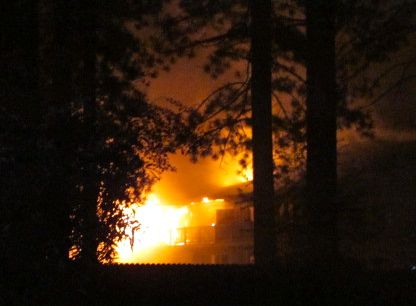
Two people were injured when the Deerfield Lodge in South Lake Tahoe went up in flames Wednesday night.

The fire that swept through the Ski Run Boulevard two-story hotel displaced all of the guests. Thirty-five people were taken to Lakeside Inn for the evening and are expected to return today.

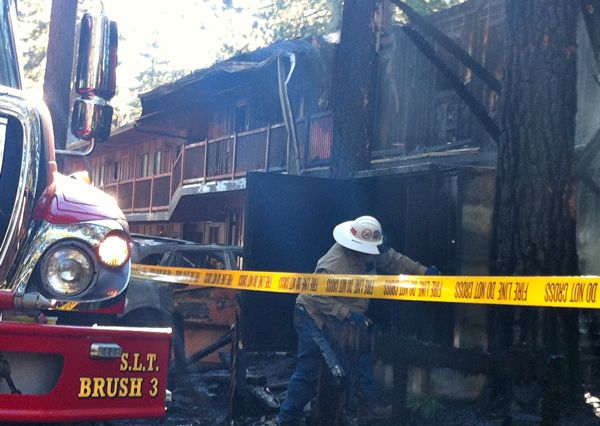
The back building that had six rooms was completely destroyed, while the front is intact and does not have smoke damage.

South Lake Tahoe Fire Chief Jeff Meston estimated the damage at between $2 million and $2.5 million.

Also gone are four guest vehicles and two cars parked on Spruce Avenue, about 25 feet away from the hotel.

The people who were injured jumped from the second story balcony. Meston told Lake Tahoe News they were taken to Barton Memorial Hospital with significant injuries, but did not have further details.

Firefighters on July 24 access the damage to Deerfield Lodge and investigate the cause.

Firefighters on July 24 assess the damage to Deerfield Lodge and investigate the cause. Photo/Susan Wood

The fire started at 11:45pm July 23 and was brought under control at 2:35am. Assisting South Lake Tahoe were firefighters from Tahoe Douglas and Lake Valley, along with an engine from CalFire. The cause is under investigation.

Tahoe Douglas’ ladder truck was used because South Lake Tahoe’s new one is still not in service because it was damaged when the manufacturer had someone drive it from Louisiana to Tahoe in four-wheel drive.

Susie Horst, who lives across the street on Spruce Avenue, had her windows knocked out from the fire. She had to evacuate.

Horst told Lake Tahoe News it was like she was having a nightmare because she could hear all of these people screaming.

A guest woke up Jerry Birdwell, owner of the Black Bear Inn located next door to the Deerfield, to tell him about the fire.

A truck was spraying water from the side street next to the Black Bear across the bed and breakfast’s property to the Deerfield.

“I looked and my god it was blazing,” Birdwell told Lake Tahoe News. “They protected our property. The manner in which the firefighters worked, the police worked and when [City Manager] Nancy [Kerry] got on scene and handled the situation with Deerfield guests … it was absolutely professional.”

It was Kerry who arranged for a BlueGo bus to take the people to Lakeside Inn and was calling all over town before she was able to secure rooms for the night at the Stateline casino-hotel.

The city is coordinating relief efforts for guests – adults and teenagers – who lost everything. Anyone who can assist with clothing, lodging or other amenities should call 530.542.6016.

The Deerfield Lodge goes up in flames. Photo/Denis Bellocq

The Deerfield Lodge goes up in flames. Photo/Denis Bellocq

The Red Cross is not much help in situations like this because their focus is on people who live in a town, not tourists.

The Deerfield used to be the Dream Inn until Eric and Robin Eichenfield bought it in May 2006 for $800,000 and then invested more than $1 million to turn it into an upscale boutique hotel. New owners took over a year ago this month. No one was answering the phone this morning at the Deerfield.

This was the third South Lake Tahoe hotel fire in a last few weeks. On July 20 the Highland Inn was affected by the fire at Mountain Mike’s T-shirt shop. Then there was a small fire at Lake Shore Lodge that started in a dryer.

Susan Wood contributed to this story.


Arson dog helping track Tahoe fire starter

By Kathryn Reed

STATELINE – With an arsonist on the loose on the South Shore setting brush fires, Simmie is even more important.

Simmie is Lake Valley Fire Protection District’s arson dog. She was at the Soroptimist International South Lake Tahoe lunch on Wednesday at Harrah’s Lake Tahoe with her handler Gareth Harris.

Harris, fire chief for Lake Valley, has been working with Simmie for a couple years. She came to the department via a donation from a nonprofit. And she is the only arson dog that services Northern Nevada.

Firefighters on June 18 hike into a small blaze in Stateline. Photo/Carol Faccinetti

Firefighters on June 18 hike to a blaze in Stateline that was intentionally set. Photo/Carol Faccinetti

“There is no doubt it was started with an accelerant,” Harris said of one of the Stateline area fires.

Simmie is trained to sniff out hydrocarbons. Samples are then sent to a lab in Sacramento for confirmation.

Multiple agencies are working to track down the person or people setting the local fires, with a task force convening on Monday.

While the basin has not had many arsons, three people were arrested earlier this month in connection with starting a fire at an Incline Village restaurant, the January house fire in South Lake Tahoe was the work of an arsonist who has not been caught, and in October 2012 a South Lake Tahoe man was arrested on charges of arson at a residence. And of course there is the Angora Fire of 2007 that, while not deemed intentional, was started by someone not extinguishing an illegal campfire.

According to the South Lake Tahoe Fire Department, arson killed more than 800 people in 2012 and was the largest single cause of fire damage to property.

Harris explained how it wasn’t until the 1980s that arson dogs came into vogue. Bomb and drug sniffing dogs had been used long before that.

He said Labradors, like Simmie, have 4,000 times more powerful noses than humans. Simmie trains by searching for a piece of cloth that has one drop of gasoline on it. The cloth is in a prescription bottle that is then placed in a Tupperware container.

Instead of pawing at the evidence, she sits when she finds something. She makes eye contact with Harris and then uses her nose to point to where the accelerant is located. This way she does not use her paw to contaminate the scene.

The other part of the July 23 talk focused on defensible space, and the increased need for it this year with the risk of fire escalating every day the drought lingers. Plus, it’s the law in California to have defensible space.

Leona Allen, who works for Lake Valley, said 75 percent of the houses in the Angora burn area that had defensible space survived.

While there are rules about what is allowed at certain distances from a structure, the main test is think about throwing a softball-size ember anywhere on your property. Would it catch fire? If, yes, you need better defensible space, Allen said.

More info about defensible space may be found online.


Climate scientists have a beef with beef

By Geoffrey Mohan, Los Angeles Times

If you want to slow climate change, white meat may be the right meat, according to two studies that tally the environmental effect of the beef industry.

Raising cattle in the U.S. requires 28 times as much land and 11 times as much irrigation water, and pumps at least five times as much planet-warming gases into Earth’s atmosphere than producing the equivalent calories of dairy products, poultry, pork or eggs, according to a study published online Monday in the journal Proceedings of the National Academy of Sciences.

And from 1961 to 2010, worldwide emissions of planet-warming gases from livestock increased 51 percent, with the bulk of the increases coming from developing nations that are rapidly adopting the U.S. model of meat consumption, according to another study published Monday in the journal Climatic Change.

“For people, the obvious answer is: whenever possible, replace beef with something else,” said Gidon Eshel, a geophysicist at Bard College and lead author of the study in Proceedings of the National Academy of Sciences.

The beef industry, not surprisingly, is not impressed.

Read the whole story


Calif. marks warmest winter, spring on record

By Sharon Bernstein, Reuters

SACRAMENTO — California had its warmest winter and spring on record this year, leading to stresses on water resources and agriculture, as well as increased risk of wildfire in the most populous U.S. state, the National Weather Service said Monday.

In an overview of the nation’s weather released on the agency’s website, meteorologists said temperatures in California were about 5 degrees Fahrenheit above normal during the first six months of 2014, and just over 1 degree hotter than the previous record.

“Despite short-term drought relief in the Central and Southern Plains, long-term drought conditions will continue to impact water resources and agriculture,” the report said. “Long-term and short-term drought conditions in the West will also increase wildfire risk.”

Read the whole story