Security of SLT cops, vehicles a concern

By Kathryn Reed

Nothing separates the South Lake Tahoe Police Department fleet from the public. No fence. Only a sign telling people they can’t park in that area.

Earlier this summer when the City Council was discussing capital improvement projects, No. 18 on the list was a perimeter security fence for the department. But it was never brought up for discussion at the meeting.

On the Aug. 5 council agenda is the five-year capital investment plan. It’s possible the council will approve it Tuesday. There is no specific mention of the fence.

While Police Chief Brian Uhler does not expect the security fence to be part of the 2014-15 budget, he hopes it will become a reality sooner rather than later.

“It’s on the list of things to be done. It is competing with many other projects,” Uhler told Lake Tahoe News. “It will be an item I will continually press forward.”

South Lake Tahoe police vehicles are not kept in a secure area. Photo/LTN

South Lake Tahoe police vehicles are not kept in a secure area. Photo/LTN

When he was hired a few years ago he couldn’t believe one did not exist. He said previous chiefs have lobbied for a fence, but it has never risen to the top of the priority list.

“It’s normal and customary for police to have secure parking for employees and the fleet,” Uhler said.

Uhler said known suspects have videotaped officers; this includes filming the officers’ personal vehicles. Officers’ vehicles have also been vandalized.

While there are video cameras in the parking lot, that doesn’t prevent someone from tampering with vehicles or filming officers. The cameras can only help identify the people. But it is not illegal to film officers.

“It would provide an extra layer of security when doing prison transports, drop offs and coming to the jail facility,” Uhler said of the fence.

He proposes a 6-foot fence with a mesh lining to prevent clear visibility of the vehicles. It would have a security gate that would need to handle opening and closing multiples times a day. Plus, if there is power outage, there needs to be a backup to make sure vehicles can get in and out.

While there is no official estimate on the cost, Uhler said the fence and gate are likely to be in the $100,000 to $200,000 range.


Oracle chief sells Tahoe estate for $20 mil.

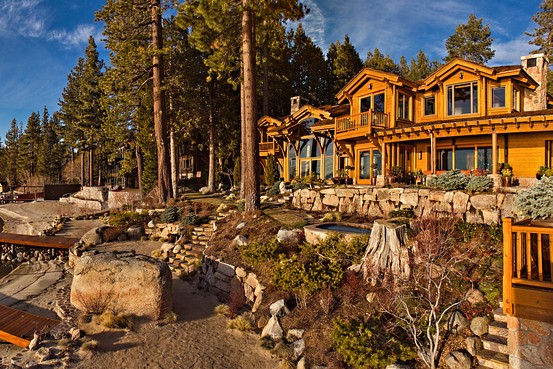
 The former Lake Tahoe home of billionaire Larry Ellison . Photo/Eric Jarvis

The former Lake Tahoe home of billionaire Larry Ellison . Photo/Eric Jarvis

By Candace Taylor, Wall Street Journal

Oracle billionaire Larry Ellison has sold one of his Glenbrook properties for $20.35 million, according to public records.

The sale closed in mid-July and names the buyer as a California-based entity called Residential Property Mgmt LLC.

The property is one of three parcels Ellison had listed together for $28.5 million in 2013 with Jennie Fairchild of Chase International. It contains a 9,242-square foot main house, which Ellison spent three years remodeling, with six bedrooms, eight full baths and one half bath. There is a soundproof screening room, a gym, a billiard room, a library and a sauna. Also on the property is a 1,326-square-foot, two-bedroom, three-bath guest house.

The other two parcels — including a roughly 3,000-square-foot lakefront house and an adjoining vacant lot — are still on the market, priced at $4.15 million, Fairchild said in an email. She declined to discuss the details of the sale.

Read the whole story


Study details early tsunami event at Tahoe

By Andrew Alden, KQED-TV

Once upon a time, geologists tell us, a massive chunk of Lake Tahoe’s West Shore collapsed into the water in a tremendous landslide. The water responded by sloshing high onto the surrounding shores in a series of landslide tsunamis. A major new study in the journal Geosphere adds much new detail to that story, tracing massive features around and beneath the lake. And it places the date of the fearsome event near the time that humans first visited it.

Lake Tahoe is a peaceful mountain resort area today, but its geologic past has been long and violent. Its very presence is due to tectonic stretching of the Earth’s crust across Nevada, which has opened large basins from California’s Sierra Nevada crest all the way to Salt Lake City. The Tahoe basin has been there for roughly 3 million years, during which time it’s seen outbreaks of volcanism and countless major earthquakes.

Forty years ago the first sonar survey of Lake Tahoe showed evidence that bite-shaped McKinney Bay, in the middle of the lake’s western shore, is a scar left by a very large landslide and that huge pieces of that slide, as much as a kilometer long, are strewn across the lake bottom.

Since that time, as funding permits, geologists have sent submarine-mounted cameras into the lake and taken core samples of its sediment. They’ve also tramped the shores and mountainsides, mapping the signs the catastrophe left there.

The new paper in the August issue of the journal Geosphere, by veteran researchers James G. Moore, Richard Schweikert and Christopher Kitts, assembles the evidence old and new into a scenario of that convulsive day. Much of their paper represents significant progress on the Tahoe tsunami problem.

Read the whole story


Hot tub draining not a simple topic in Tahoe

By Kathryn Reed   

When hot tubs are purchased and installed in the Lake Tahoe Basin no one explains where the water is supposed to go when it comes time to draining them – at least not for residents.

For commercial hot tubs and pools, the rules are more defined.

“Commercial hot tubs and pools are connected to the sewer and they pay a fee for that,” Ross Johnson, manager of plant operations for South Tahoe Public Utility District, told Lake Tahoe News. “For residential hot tubs I tell them to do the thing I always do which is irrigate your yard with the hot tub water.”

Draining hot tubs can pose problems in the Lake Tahoe Basin. Photo/LTN

Draining hot tubs can pose problems in the Lake Tahoe Basin. Photo/LTN

Draining hot tubs is getting attention lately because just this week property owners on Wildwood Avenue in South Lake Tahoe let the water from their spa go down an embankment. This presents erosion concerns because ultimately the dirt that wound up in the street is likely to reach Lake Tahoe. And it is sediment that is the No. 1 cause of declining lake clarity.

A neighbor notified the Tahoe Regional Planning Agency and other entities.

“It’s illegal to discharge chlorinated water into the city storm drains,” Jason Burke, stormwater program coordinator for South Lake Tahoe, told Lake Tahoe News.

In June, Lake Tahoe Vacation Resort notified Lahontan Regional Water Quality Control Board that its pool water was put down a storm drain.

While the resort admitted this, the city is contemplating what to do based on not having evidence of the infraction occurring. Burke said the city is working with TRPA on potential penalties for the hotel property.

Julie Regan with TRPA said their investigation is ongoing with the resort because the chlorinated water was also discharged into a stream environmental zone. This is never allowed.

Three people from the South Lake Tahoe hotel are no longer employed there because of this incident.

All the agencies agree commercial properties in the basin must tie their tubs and pools into a sewer line. These hot tubs are also a different grade than a residential one because they have stronger pumps and must have two drains.

TRPA in its best management practices handbook has a section addressing pools and hot tubs. The major concerns are if the chemicals in the water would harm animals or reach a water body, whether it’s a creek or Lake Tahoe.

“We are not enforcing how they empty personal hot tubs,” Regan told Lake Tahoe News. But doing so over grass or rocks so it does not create an erosion problem is highly encouraged.

A private hot tub can contain between 200 and 600 gallons of water.

Allen Miller with Lahontan said his agency doesn’t have a problem with residential units draining tubs for irrigation purposes.

“To use it to irrigate seems like a pretty good option, especially in drought conditions,” Burke said. “The only thing people should be careful is to not create erosion problems with all that water.”

He recommends letting a chlorinated tub sit without replenishing chemicals for a week or using dechlorination tablets before draining.

South Tahoe PUD doesn’t want private hot tub owners to start using the sewer system for multiple reasons. For one, it costs money to treat that water. Added costs to the district would eventually mean higher sewer bills.

Another concern is if people don’t know what they are doing, the sewer line can get contaminated with dirt or sewage could flow the other way.

While residents are not draining their hot tubs all that often, vacation rentals in some jurisdictions are supposed to in between each new rental. Those are not considered commercial tubs even though it is a business operation taking place.

Calls to vacation rental and spa businesses were not returned.

None of the agencies is addressing whether the gray water violates the Porter Cologne Water Quality Control Act. That federal law is what mandates all the treated sewer water in the basin must be exported. People in the Lake Tahoe Basin aren’t even supposed to collect water from a shower and use that for irrigation — even though that is a common drought busting tool.


Study: Parents in denial about kids’ obesity

By Cari Romm, Atlantic

There’s a certain type of parental pride that grows from just the right combination of willful ignorance, unflagging optimism, and impressive mental gymnastics. Junior’s latest report card was less than stellar? Well, yes—he’s so smart that school just bores him. Little League game spent on the bench? The coach probably doesn’t realize the talent he has on his hands.

But that usually harmless denial can also manifest itself in a more significant—and more damaging—way, according to a new study in the Journal of the American Academy of Nutrition and Dietetics. Specifically, the study lent more support to the notion that parents of obese children often fail to see their kids’ weight as unhealthy, even after a doctor’s diagnosis.

Researchers from the University of California San Diego and Brown University surveyed parents of first-time patients at a pediatric obesity clinic, assessing the families’ willingness to help their children lose weight. The patients, who ranged in age from 5 to 20, had all been classified as overweight or clinically obese, and most had been referred to the clinic for treatment by their regular pediatricians.

The majority of parents, 93.5 percent, correctly recognized that their children were, in fact, overweight or obese—but nearly 30 percent said they didn’t see their children’s weight as a problem, and roughly the same number rated their children’s health as “very good” or “excellent.”

Read the whole story


Waterfowl latest casualty of Calif. drought

By Matt Weiser, Sacramento Bee

Add another casualty to California’s prolonged and punishing drought: Wildlife officials warned this week that dry conditions in the state’s Central Valley could have a devastating effect on North American waterfowl.

The Central Valley is recognized as the most important resting and wintering ground on the Pacific Flyway, a global migratory path for millions of ducks, geese and other birds. About 5 million waterfowl spend the winter on state and federal wildlife refuge areas and flooded rice fields in the Central Valley each winter.

This year, the worst drought in a generation means those Central Valley habitats have been dramatically reduced in size. Wildlife refuges have had their state and federal water supplies cut by 25 percent. Rice acreage has been reduced by a similar amount as farmers also have endured water cutbacks.

As a result, millions of migrating birds will be crowded into less habitat, significantly increasing the odds of botulism outbreaks, which spread rapidly and can kill thousands of birds in a matter of days. The problem is not limited to rural areas but can affect waterfowl drawn to urban water bodies as well. Officials also are concerned the drought could cause food shortages.

Read the whole story


Weather kills 2,000 a year; cold No. 1 reason

By Mike Stobbe, AP

NEW YORK — The weather kills at least 2,000 Americans each year and nearly two-thirds of the deaths are from the cold, according to a government report.

That may surprise some people, the researchers acknowledged. Hurricanes, tornadoes and heat waves “get more publicity, for some reason, than cold-related deaths,” said Deborah Ingram, one of the report’s authors.

The report released Wednesday by the Centers for Disease Control and Prevention analyzed U.S. deaths attributed to the cold, the heat, storms, floods and lightning. It used national death certificate information for five years.

The report found:

  • Of the 10,649 deaths attributed to the weather, about 63 percent were tied to exposure to the cold or hypothermia. Those who more often fall victim to the cold include the homeless, alcoholics, those who take part in wilderness activities and winter sports, and fragile people already fighting illnesses who live in under-heated homes.
  • About 31 percent of the deaths were caused by heat, heat stroke or sun stroke. The remaining 6 percent were blamed on storms, floods or lightning.
  • More than two-thirds of weather-related deaths were men and boys, and men were twice as likely as women to die from storms, floods or lightning strikes. And people 65 and older had much higher death rates than younger people, perhaps because it’s harder for them to endure temperature extremes, the researchers said.
  • The highest heat-related death rates were in cities and very rural areas; the most isolated areas also had the highest rates related to the cold and to storms, floods and lightning. Low-income counties had higher weather-related death rates than high-income counties. That could be due to people in poor rural or urban places lacking heating, air conditioning or help during blizzards or heat waves, the researchers said.
  • For blacks, the heat-related death rate was about 2.5 times higher than the rate for whites, and about twice as high as the Hispanic rate. Blacks also died at a higher rate from the cold. That finding may be tied to higher concentrations of low-income blacks in large cities or very rural areas. Also, blacks might be more vulnerable to weather extremes because they have more heart disease and other chronic health problems. Whites, however, died at twice the rate of blacks from floods, storms and lightning strikes.


EDC supervisor candidates try to woo voters

Kenny Curtzwiler and Sue Novasel are running for El Dorado County supervisor, district 5. Photo/LTN

Kenny Curtzwiler and Sue Novasel are running for El Dorado County supervisor, District 5. Photo/LTN

By Kathryn Reed

MEYERS – A contrast in styles is the overwhelming difference between the two El Dorado County District 5 supervisor candidates.

Kenny Curtzwiler is animated and passionate. He talks about how he goes to all the events in town, how people come to him with their problems and how he will get things done.

Sue Novasel is more reserved and thoughtful in her approach. She talks about building consensus, needing to count to three and being a team player.

On July 29 they spoke to an audience of about 50 people at the California Conservation Corps offices about county issues and why they should be the next supervisor to represent Tahoe in Placerville.

Members of Tahoe Regional Young Professionals started the questioning before the public questions were asked. The first was: What would your top three priorities be as supervisor?

“The top three are basically the same for me. It’s community involvement,” Curtzwiler said. “The community is what makes it a community.”

Novasel said her priorities are economic vitality, fire safety and public safety, which include mental health.

When it comes to the Meyers Area Plan, Novasel said, “It still needs some tweaking.” But she did not elaborate. The questioning panel did not ask a follow up question.

Curtzwiler said he likes the Meyers plan.

“I read the entire Catalyst project. It’s good, but it’s too big for the community,” Curtzwiler said. “There is another project out there if the community knew about it, they would like it.”

He didn’t elaborate and the questioning panel didn’t press him further.

They were asked how they are involved in the community.

“I attend almost every single community event,” Curtzwiler said. He said through his business he donates time and resources to various causes.

Curtzwiler also said he is involved with Christmas Cheer.

Novasel was more specific with her involvement – Lake Tahoe Wildlife Care, 12 years on the Lake Tahoe Unified School District board, Lake Tahoe Community College Foundation, Soroptimist International South Lake Tahoe and Lake Tahoe South Shore Chamber of Commerce board (one of the event sponsors).

Curtzwiler was asked to clarify something he had written about the morality of breaking a contract. He said it was about Heavenly Mountain Resort not paying its fair share of taxes to South Lake Tahoe; that he believes the contract should be broken by the city.

Novasel countered, saying, “You have a moral obligation when you have a contract. If something needs to be changed, you do so through legal channels. You work with your board.”

When a member of the public asked about county’s Charter review committee, neither candidate had a firm grasp of what it is or why they should care about it.

When it comes to infrastructure, Novasel wants to see roads and broadband. She believes recreation is the “lifeblood” of the area.

Curtzwiler doesn’t believe it’s the county’s job to provide Internet. He also believes recreation should be No. 1.

Curtzwiler said he is not asking for people’s vote, but instead for their vote of confidence and accountability. He wants to be the first person people call when they need something.

Novasel said she is asking for people’s vote. She plans to listen more than talk, and she said she will build consensus.

The election is Nov. 4.


Middle class 20% poorer than in 1984

By Matt O’Brien, Washington Post

Nostalgia is just about the only thing the middle class can still afford. That’s because median wealth is about 20 percent lower today, in inflation-adjusted dollars, than it was in 1984.

Yes, that’s three lost decades.

Now, as you might expect, the middle class has been hit particularly hard by the Great Recession and the not-so-great recovery. It’s all about stocks and houses. The middle class doesn’t have much of the former, but it does have a lot of the latter. And that’s bad news, because, even though the crash decimated both, real estate hasn’t come back nearly as much as equities have. So the top 1 percent, who hold more of their wealth in stocks, have made up more of the ground they lost. But, as the Russell Sage Foundation points out, the slow housing recovery means that, in 2013, median households were still 36 percent poorer than they were a decade earlier.

In fact, the housing bust was big enough to erase all the gains the middle class had made the past 30 years—and then some. As you can see below, median households didn’t add much wealth between 1984 and 2007. That’s what happens when real wages don’t increase, and the cost of a middle class lifestyle—housing, healthcare, and higher education—does. So, as Dean Baker points out, when the crisis did come, it devoured these meager gains and left the middle class with 20 percent less wealth than they had when it was “Morning in America.”

Read the whole story


Tahoe Keys Marina violating state permit

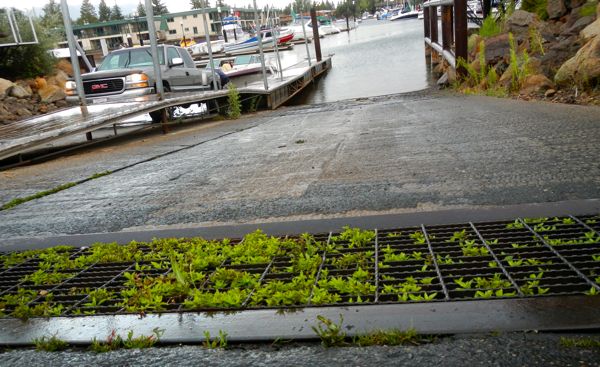
Tahoe Keys Marina is accused of not maintaining its best management practices for erosion. Photos/Kathryn Reed

Tahoe Keys Marina is accused of not maintaining its best management practices for erosion. Photos/Kathryn Reed

By Kathryn Reed

One week after Lahontan Regional Water Quality Control Board found 12 violations at Tahoe Keys Marina the infractions have not been corrected.

“That is significant,” Eric Taxer, water resource control engineer, told Lake Tahoe News of the ongoing problems.

Failing to maintain a pump so boaters can get rid of their sewage was one of the more serious violations. These pumps are required at all marinas so sewage does not wind up in Lake Tahoe.

“I was there (Monday) and it still was not working. And he assured me it would be by (Tuesday),” Taxer said. It wasn’t.

The “he” Taxer is referencing is Rob Spinnato, general manager of the marina. Spinnato was not available for comment.

Taxer said Spinnato told him the pump had been out for about a month before the inspection. He reportedly told Taxer getting parts could be a problem.

Another of the more serious violations was not having adequate supplies on hand in case there is a spill.

“They did have some oil absorbent booms on site, but an inadequate supply. There should have been more, especially for a marina that size,” Taxer said.

Inspectors found an oil rag wrapped around one of the fuel nozzles to catch drips.

“However, the rag appeared to be completely saturated and of no use,” the report stated.

Spinnato claimed more pads were on order. The order date, though, says July 22 – the same day as the inspection.

Other violations included:

• Failure to clean up anti-freeze and silicon spills in areas close to marina waters.
• Failure to maintain copies on site of all monitoring results.
• Failure to maintain copies on site of the inspection logs.
• Failure to maintain copies on site of the weekly printouts of the National Weather Station prediction reports.
• Failure to maintain copies on site of the daily recordkeeping of the rain gauge readings.
• Failure to maintain a copy of the permit on site.
• Failure to maintain stormwater runoff erosion control measures.
• Failure to perform all maintenance activities under cover, in bermed areas.
• Failure to properly dispose of soiled absorbent pads.

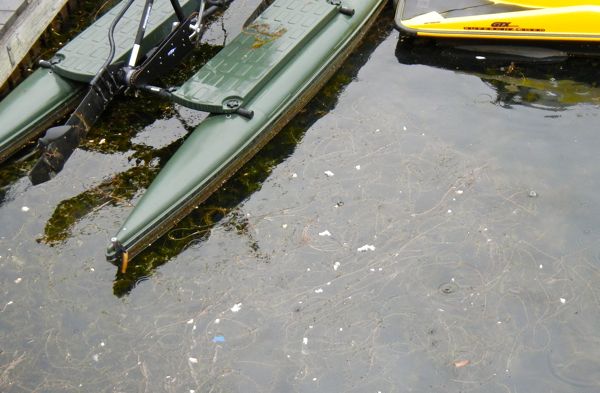
On July 22, Tahoe Keys Marina was told Styrofoam needed to be cleaned up; on July 29 it was still floating by rental boats and near the fuel docks.

On July 22, Tahoe Keys Marina was told Styrofoam needed to be cleaned up; on July 29 it was still floating by rental boats and near the fuel docks.

“This one had the most amount of violations; some of which were significant,” Taxer said in comparing the Keys inspection to other marinas. “We will look at our enforcement options and consider what is most appropriate for the site.”

The ultimate goal of staff is for the marina to fix the problems. If the marina fails to do so, the Lahontan board could get involved with additional enforcement actions that could include a cleanup and abatement order that imposes specific deadlines and/or fines.

“Pulling a permit to operate does not stop the discharges nor does it assist us in getting reports or achieving compliance. They can continue operating,” Lauri Kemper, Lahontan’s assistant executive officer, told Lake Tahoe News. “Leaving the permit in place allows us to impose penalties on the ongoing violations of the permit. Many of our fines are based on a per day violation of a permit requirement.”

This summer Taxer has conducted inspections at seven marinas in the Lake Tahoe Basin. The Keys in South Lake Tahoe has the most egregious violations.  These inspections are routine and are done every few years on a rotating basis throughout the basin. Every marina on the California side operates under a permit issued by Lahontan. They are updated every five years. The current one expires April 12, 2016.

There could be regulations from the state or Environmental Protection Agency that could change, or new technology introduced. New in the 2011 permit is marinas needing to ensure vessels have been inspected for aquatic invasive species.

The other marinas inspected by Lahontan this summer include:

• Sunnyside: No violations.

• Lakeside: Failed to maintain records on site and didn’t have working rain gauge. Those infractions have been corrected.

• Ski Run: Needed updated version of the permit.

• Camp Richardson: There was an area where materials encroached on a stream environmental zone. The metal has since been removed.

• Meeks Bay: Some areas did not have appropriate erosion protections. Follow up still needed.

• Timber Cove: Oil containers were being stored in a box under the docks. This was corrected while inspectors were on site.