Tahoe funding source at risk under Trump plan

By Benjamin Spillman, Reno Gazette-Journal

A Nevada-based program that’s generated more than $300 million to improve Lake Tahoe would take a funding hit under one federal budget proposal.

On Monday the Interior Department published a budget brief that includes a proposal to take $230 million from the Southern Nevada Public Land Management Act over the next three years. 

The act funds conservation and recreation projects around Nevada, including in the Tahoe basin.

Read the whole story


Making skis strong enough for Olympians

By Marc Zupan, The Conversation

Olympians expect top-notch performance from their minds and bodies, but they get crucial advantages from the very best equipment for their sports and the weather conditions they’re competing in. Skis, for example, must stand up to near-constant changes in stress during races.

The ideal ski provides a stiff and rigid platform for skiers’ boots to attach to, flexes to carve through turns, doesn’t break under the pressure of jumps and landings and is light enough not to slow the athlete down. But that’s not all: Skis must resist damage from collisions, absorb vibrations from icy conditions and withstand the temperature extremes and intense sunlight common in mountain environments.

That’s a lot to ask of a single item. The first skis were made of strong, flexible ash wood, but technology has found ways to do much better. Today’s materials design and construction processes are closely guarded industrial secrets, specific to individual ski companies. But I and other materials experts know that the essential components and methods are very similar: All skis are like sandwiches, stacking separate layers of different materials with all those separate properties into a single item, a competition-class ski.

Elite ski racers rely on state-of-the-art equipment. Photo Copyright 2018 Carolyn E. Wright

Advanced materials for extreme conditions

Ultra-high molecular weight polyethylene is a highly engineered plastic often used in high-strength ropes as well as in artificial hip and knee implants. It’s tough, bends and flexes a lot without breaking, resists scratches, retains its properties across a range of temperatures and has tiny microscopic pores across its surface. When it’s used as the base layer of a ski, those microscopic pores act like a sponge into which racing wax is melted to fine-tune the ski’s contact with whatever the snow conditions are.

The sides of the ski base are made of high-strength steel alloys that are heated and processed to meet the demanding conditions of skiing. These processes make the steel resistant to rust and able to be sharpened like a knife. The steel needs to hold its edge to carve through snow and ice while flexing with the rest of the ski without cracking or breaking.

Inside the ski

On top of the base is a complex layer in the ski sandwich, an element itself called a “sandwich panel,” made of similar materials and with the same techniques as those used to build spacecraft, aircraft and performance race cars. The center of the sandwich is a core material surrounded by fiber-reinforced composites.

The cores of ski sandwich panels can be lightweight titanium alloys, polymer foams similar to Styrofoam coffee cups or different kinds of woods – such as maple, oak, aspen or poplar. These different plastic, wood and metal materials are layered and combined to tune the ski to the desired levels of strength, stiffness, ability to twist and vibration-damping, all with as little weight as possible.

The outer layers of the sandwich panel are made from epoxy resins – high-performance glues – into and onto which are laid engineered fabrics like carbon fibers, fiberglass and Kevlar. These resin-fiber layers hold the sandwich core structure together and make all of the different material types work as one.

Like the core, these composite layers vary in thickness and makeup along the ski. They’re even applied at different angles to the ski itself to improve ski stiffness and strength.

The sandwich panel ski makes turning quicker and helps the ski ride smoothly over bumps and ruts in the terrain. It’s more responsive to the skier and more stable at high speeds than less advanced designs because it can take advantage of the best aspects of all its ingredients. Overall, the sandwich panel is built to be stiffest under the binding area where the boot attaches, and more flexible near the ski tips, to glide more easily over uneven terrain. Each ski’s sandwich panel is designed and built to optimize performance in a specific skiing event – such as downhill racing, snowcross or jumping – or even a particular skier’s preferences.

Rapid improvement

The ski industry, and particularly its competitive elements, are willing to take risks and push limits, exploring the most advanced materials concepts to achieve optimum performance. As a result, decades of research have improved Olympic skiers’ times significantly over the years.

That work has also spread benefits well beyond the Olympic medal podium and into the recreational market. Amateur skiers can explore more advanced terrain and more challenging slopes with help from the tuned spring response, vibration damping and light weight of their skis. Recreational skiers can also go faster in changing snow conditions and steer more easily through turns because their skis are adaptable and responsive to individual skiers’ strengths, as well as slope conditions. The materials advancements help recreational skiers ski well on terrain previously accessible only by superior athletes.

All these advances happen very quickly. Before the next Winter Olympic Games, consumers will likely be able to easily purchase the same kinds of skis and snowboards that the 2018 Olympians competed on – and the 2022 Olympians will be using even better materials that help them go faster, higher and stronger than ever before.

c an associate professor of mechanical engineering-materials and solid mechanics at the University of Maryland, Baltimore County.


SLT council prolongs city manager chaos

Former South Lake Tahoe Mayor Hal Cole, right, gives his opinion Feb. 12 about the city manager debacle. Photo/Kathryn Reed

By Kathryn Reed

Nancy Kerry remains the city manager of South Lake Tahoe, but at this point it is in name and paycheck only.

The City Council on Feb. 12 discussed her future for about 2½ hours in closed session. The only item on the agenda was “public employee discipline/dismissal/release.” There was no reportable action.

“She is the city manager and is getting paid as the city manager. She has not been terminated and if she is, that will be reportable action,” interim City Attorney Nira Doherty told Lake Tahoe News.

Under the Government Code reportable action includes change in employments status, salary increases/decreases and a settlement.

At this point, it’s likely a settlement will be the ultimate outcome. Kerry per her contract is guaranteed nine month’s severance if she is let go without cause. Like all employees, she is also entitled to any unused sick time and vacation days.

Expressions on the five council members’ faces upon the end of the session Monday ranged from anger to sadness to frustration. All briskly walked past Lake Tahoe News.

What has led to the bad blood has not been disclosed to the public. If it were a criminal allegation, that would have been handled differently.

All the public has been told is that Mary Egan of Municipal Resource Group came in last October to assess the culture of the city. Sources have told Lake Tahoe News this was spearheaded by then-Mayor Austin Sass who had a vendetta against Kerry. City officials have said Egan did not give them a written report. She talked about her findings in closed session Jan. 23.

Two weeks later Kerry’s evaluation was again on the closed session agenda. It is not known if new information came forward in that time period or if council wanted to digest what they had heard from Egan. The outcome of the Feb. 6 meeting was that Kerry was immediately placed on indefinite paid leave, with Fire Chief Jeff Meston stepping in as acting city manager.

It was obvious by comments before the public was kicked out of the council chambers on Feb. 12 that not all the council members are happy with how the city’s business is being conducted.

“I’m not even sure why we are here. You need the employee,” Councilwoman Brooke Laine said. She hinted to being surprised about finding out about the meeting on Friday.

“We had a discussion that we would bring this back March 20. Why are we here?” Councilman Tom Davis said. “I want the opportunity to see if she wants this in open session.”

Kerry was not invited to the Feb. 12 session – with or without her own legal counsel.

It is up to the employee being disciplined whether she would want the hearing in open or closed session. The council legally cannot unilaterally make the decision for open or closed.

Sass questioned whether having it in open session would violate the rights of others.

To that, Davis said, “No employees have come forward.”

To this date there have been no complaints filed against Kerry. The only former employee to have sued the city during Kerry’s five-plus tenure was Stan Sherer, who was the Community Services director. That case was settled in 2014.

There are protocols in place if someone wants to file a grievance against the city manager. The Human Resources Department and city attorney would do so. Complaints can also go to council members, who are the boss of the city manager. Whistler-blower laws and other state and federal laws are also in place to protect employees from their boss.

After the curt exchange among the council, Mayor Wendy David with the assistance of Doherty said it was time to go into closed session so as not to violate the Brown Act.

There is a question, though, whether that in itself was a violation of the open meeting law. Discussing the merits of the meeting, whether the accused should be in the meeting and whether it all should be heard in the open do not fall under the protections of the Brown Act. Litigation and personnel are closed session items. Policy surrounding all of that is not completely protected.

Five people were in the audience Monday, with three speaking. Public comment was taken before going behind closed doors.

Former Councilman Bruce Grego advocated for the dispute to be aired in public.

David Kurtzman, who years ago was elected to the local school board and therefore understands these processes, said it would best for the city to retain outside counsel – not the current law firm on retainer – to sort through the chaos.

This might bring trust and transparency to a process that has been shrouded in secrecy and innuendo.

Former Mayor Hal Cole spoke of how during his 20-plus years on the council consultants were brought in to do evaluations of the city manager, but all had a defined scope of work. He questioned where that was the case with Egan.

“I have never seen one done with such haste or so disrespectfully,” Cole said.

He spoke of how he was a member of councils that got rid of city managers and city attorneys, but it “was done respectfully.”

It is not known when the council will discuss the issue further. Nor is it known if the direction given was for the city attorney to negotiate a deal with Kerry.

Also not known is why all of this is happening after Kerry had only received positive evaluations, as recently as June 2017.


Being an Olympian does not mean being wealthy

By Edward Etzel, The Conversation

Recently, while sitting in traffic, I noticed a weathered bumper sticker with a little acoustic guitar on it that said: “Real musicians have day jobs.”

I presume most of us do have real day jobs, but as the Pyeongchang Winter Olympics begin, for some reason – maybe because I’m an ex-Olympic shooter – I wondered about the hundreds of young women and men who have tried (with many failing) to represent the United States in the Olympics.

Real musicians and Olympians seem to have a lot in common. They have ambition and enthusiasm for their craft. But like musicians, these talented young people have to pay their electric bills too. How do they support themselves and their families, all while having to diligently train, often several hours a day over the course of years? How did I pull it off?

The haves and haves nots

Many might assume that since athletes are at the pinnacles of their respective sports, they’re all able to live comfortably, either from endorsements or competing professionally. After all, Olympic swimmer Michael Phelps’ estimated net worth is about $55,000,000.

But most who do make it to PyeongChang receive very little funding, and most don’t make a lot of money off their sport outside of the Olympics, either. For example, two-time Olympic javelin thrower Cyrus Hostetler recently told the Washington Post that the most he’s ever earned in a year is $3,000.

Sure, there are many celebrity athletes who are professionals, have corporate endorsements and have their airbrushed faces on a Wheaties box. Snowboarder Shaun White and skier Lindsey Vonn compete in the Olympic Games and then return to a life of material comfort. But these folks are few and far between.

The average U.S. Olympian simply does not live in the highest level of the financial stratosphere. According to the Track and Field Athletic Association, there’s a “steep pyramid of income opportunities” for track and field athletes, with only a “select few” able to earn a very good living. Fifty percent of track athletes who rank in the top 10 in the U.S. in their event earn less than $15,000 annually from the sport.

Unlike many other countries, the United States federal government doesn’t fund Olympic programs, though some athletes get special funding from their national governing bodies. For example, USA Swimming reportedly provides approximately $3,000 to national team members of its top 16 ranked athletes. But other aspiring athletes are actually unemployed and need to be supported by their families – and some families have even gone bankrupt trying to support their son’s or daughter’s Olympic dreams. Leading up to the 2012 Games in London, US News reported that gymnast Gabby Douglas’ mother had filed for bankruptcy, in part due to “the high cost of her daughter’s training, which involved living away from home for two years.”

Scraping by to chase a dream

In reality, countless hopefuls and current Olympians hold down real jobs working all shifts. You name it, they do it: waiter, teacher, coach, construction worker, public speaker, janitor and many other jobs. For example, swimmer Amanda Beard has worked as a model and as a public speaker to earn a living.

Many are undergraduate and graduate students who train at their universities. Some serve in the military. Several fortunate athletes live and train at regional Olympic training centers like those at Colorado Springs, Chula Vista and Lake Placid.

The U.S. Olympic Committee has created athlete employment programs that offer some support and employment opportunities. For example, the Team USA Athlete Career and Education Program (ACE) exists to link aspiring athletes with organizations like Coca-Cola and Dick’s Sporting Goods, among others, that provide full- and part-time employment.

In my case, I recall preparing over two Olympic quadrennials to get ready for the boycotted 1980 Moscow Games (a team I did not make) and the 1984 Los Angeles Games (which I did make and medal) as a shooter. It was not a financially comfortable time in my life.

I supported myself with a mix of funding from the G.I. Bill, a graduate assistantship teaching physical education classes and work as a shooting coach. I also served part-time as a member of the U.S. Army Reserves. All told, from working three jobs, I earned $500 a month (around $1,500 today), plus the cost of tuition.

In fact, I just received a Social Security statement of earned income during those eight years. It doesn’t reflect the wages of a rich man during my Olympic quest – and even so I was probably one of the lucky ones. Many more fail in the dream to make an Olympic team than those who actually get to walk behind the flag in the opening ceremonies.

Chasing the Olympic dream can be exhausting. It’s not a straight path. There are skilled athletes who had to drop out of their chase for a medal because of finances.

So when you watch the Olympics, consider the personal stories of the 2016 U.S. Olympians who might be making less than $12,000 a year.

I can tell you from personal experience it’s not easy. But I can also tell you it can be quite rewarding.

Edward Etzel is a professor of sport and exercise psychology at West Virginia University.


Anderson defends Olympic gold in slopestyle

By Rachel Axon, USA Today

PYEONGCHANG, South Korea — Jamie Anderson of Meyers is golden again.

 Four years after she won gold in snowboard slopestyle’s debut in the Games, Anderson claimed another here in PyeongChang. With strong winds gusting throughout the competition, Anderson took the lead on her first run with a score of 83 and it was enough. Laurie Blouin of Canada won silver and Finland’s Enni Rukajarvi took bronze. 

Read the whole story


Opinion: How Kerry is being treated is horrific

By Tony O’Rourke

On Feb. 8, 2018, the Tahoe Daily Tribune, based on seven anonymous sources, destroyed City Manager Nancy Kerry’s reputation. As the former city manager prior to Nancy Kerry, I know the challenges, rewards, and pitfalls of managing cities. Given the average tenure of a city manager is three to five years, it is not uncommon for city managers and city councils to amicably part ways.

What is not common is how Nancy Kerry has been treated or better yet, mistreated and personally defamed in an effort to summarily terminate her without due process and fair compensation as called for in her contract with the city.

Tony O’Rourke

First, when do seven anonymous people get to define Nancy Kerry? A fair and reasonable person would examine and weigh her exceptional 10-year tenure with the city; in particular the past 5.5 years as city manager. Nancy’s annual evaluations during her tenure have all been outstanding. In her most recent June 2017 performance evaluation, conducted on behalf of the City Council by nationally recognized City Manager Ted Gaebler, Nancy was rated between outstanding and excellent. Mr. Gaebler personally stated in his review, “I rarely have seen this among city managers.”

As a result of Nancy’s June 2017 evaluation, then-Mayor Austin Sass and the City Council awarded Nancy a 5 percent pay raise and restored a $600 monthly car allowance.

In October 2017, the City Council, covertly via the city attorney, hired Mary Egan of Municipal Resource Group, to conduct an organizational climate survey for $10,000. Organizational climate surveys are an excellent method to identify organizational strengths, weaknesses, and opportunities for improvement. During my tenure with South Lake Tahoe we retained Bill Chiatt of the Alta Mesa Group to conduct two annual organizational assessments in 2010 and 2011. Unlike the current City Council’s secretive Mary Egan study, the 2010 and 2011 organizational assessment reports were shared with the City Council, city employees, the public and media.

The organizational assessments were important because to eliminate a $5.2 million deficit in 2010, as well as, a projected five-year financial shortfall of $25 million, I had to recommend the elimination of 25 percent of the city workforce, and 40 percent of its senior management. The City Council unanimously endorsed these “right sizing” initiatives to ensure the financial health and sustainability of the city. Four California municipalities; Stockton, Vallejo, San Bernardino and Mammoth Lakes all filed for bankruptcy during this time period.

As a result of these tough decisions, I was frequently a lightning rod for criticism. As a city manager you learn to accept this as an agent of change and progress. What you don’t expect or accept are unfounded anonymous allegations that result in defamation and your dismissal. If someone has a valid complaint and evidence of wrong doing, they should publicly share it; for as Justice Louis Brandies so eloquently stated, “Sunlight is the best disinfectant.”

The difference in my and Nancy’s situation is the covert and anonymous character of her critics. She has been found guilty of creating a “toxic” work environment, in the absence of any due process or public evidence. She has been personally and professionally defamed based on mere allegations. What happened to the right to face your accusers? Where is there public evidence of these allegations? This matter is a political hatchet job perpetuated by a few.

Of the seven anonymous sources attacking Nancy, three are currently city employees. This represents 1.5 percent of all city employees. The other four are former city employees. Given there are hundreds of former city employees, they too represent a tiny fraction of former city employees.

In summary, Nancy Kerry has been unfairly criticized and defamed in a rush to judgment based on seven anonymous individuals in a city organization of 200 and a community of 21,000. She has not been afforded any due process, provided any evidence to support allegations against her or been provided the right to face her accusers. Nancy’s witch hunt and defamation is abhorrent to the America our constitutional and individual liberties are founded upon, and our military bravely defends and fights for. South Lake Tahoe needs to stand up to and defeat this modern day digital and covert McCarthyism, or others in the community will be next.

Tony O’Rourke was the city manager of South Lake Tahoe before Nancy Kerry.


Snowboarding: From outcast to Olympic darling

By Rachel Axon, USA Today

In 1995, the addition of snowboarding to the Olympics wouldn’t have foretold the mainstay the sport would become at the Games. Known for being counterculture, the sport was banned at many ski resorts. The X Games were a little more than a year away from holding its first winter edition.

Less than a decade after Time had called snowboarding the “worst new sport,” the International Olympic Committee sought it and the youthful audience it promised.

Since its introduction at the Nagano Olympics in 1998, the soulful sport has boomed. Participation has skyrocketed. Resorts now cater to snowboarders. And in the Games, the sport’s success paved the way for freeskiing and delivered on the coolness the Olympics lacked with a younger generation.

Read the whole story


The first USFS ranger station at Tahoe

By Don Lane

Four years after it was discovered in 1844 by explorer John Charles Fremont, the Lake Tahoe Basin saw an influx of people attracted to the 1848 discovery of gold nearby. Fortunately, there were few gold nuggets in the streams around the lake and the basin was largely left unchanged.

However, just a few years later, in 1859, another great discovery to the east of Lake Tahoe, the Comstock Silver Lode, would have a substantial impact. The Tahoe basin would never be the same. 

Wood for the Comstock mines came from Tahoe basin forests, and over the next 35 years, over two-thirds of the basin’s forests were logged. The timber was used for the mines, railroads, and growing cities of the West.

Voices of concern grew louder as the lands around Lake Tahoe were being changed forever. Finally, after the rich veins of ore from the mines ran dry, a movement arose to try and save what was left of the forests around the basin.

In response to petitions from the Sierra Club, Stanford University, and prominent individuals, the Lake Tahoe Forest Reserve was established by President William McKinley in 1899, six years before the establishment of the U.S. Forest Service.

The designation encompassed nearly 240 square miles of land and included 37,000 acres located in the southwest portion of the Tahoe Basin. 
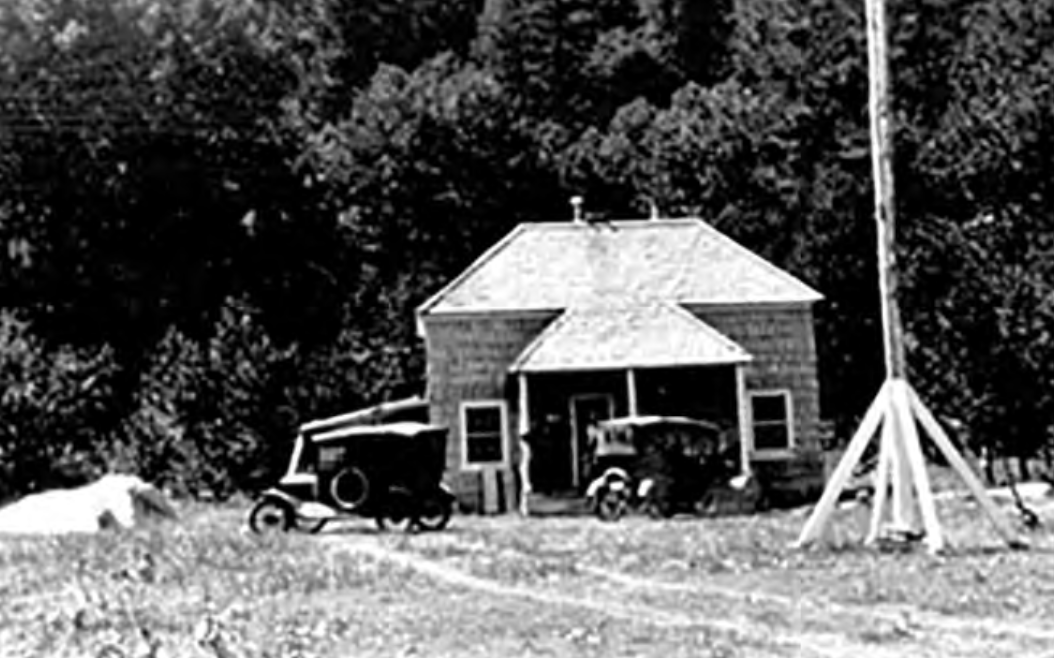
Rangers first had a permanent home in the Tahoe basin in 1920 in Meyers. Photo/USFS

The first Lake Valley rangers

After the establishment of the Forest Service in 1905, the Lake Tahoe Forest Reserve was managed by three men: Assistant Forest Ranger James Stout, Forest Guard Lester Walker, and Deputy Forest Ranger Raymond Tyler, who served as the first Lake Valley District ranger. 

The Lake Valley rangers reported to the ranger in charge, Samuel L. Ellis, who was located in Sonora on the Stanislaus Reserve. Their headquarters was a primitive camp three-quarters of a mile below the Echo Post Office in Strawberry Valley, which was approximately 10 miles west of the Tahoe basin.

For the rangers, Lake Tahoe Forest Reserve summer duties consisted of patrolling for and extinguishing fires, surveying boundaries, posting boundary signs, building and managing trails, and managing incoming cattle and sheep.

Managing the Lake Tahoe Forest Reserve from the Strawberry Valley location proved difficult. Supplies and official communications from the Sonora office were transported via stagecoach and the long commute between Strawberry Valley and the basin was a challenge to say the least.

In addition, living accommodations within the reserve were poor. The cold winter rain and snows of late spring and fall made living in tents difficult during these seasons. The rangers frequently had colds and the horses grew unhealthy due to the icy winds.

Plans for new cabin

As the years passed and interest in the Tahoe basin grew, it became apparent that a permanent structure was needed from which the rangers could more effectively manage the Lake Tahoe Forest Reserve.

In 1911, after a half-dozen years of commuting and using temporary camps, Lake Valley Rangers’ dreams were about to come true.

In July that year, Eldorado National Forest Supervisor Evan Kelly sent a letter to the current Lake Valley district ranger, J.P. McMillan, saying money was available and plans had been drawn up for the Lake Valley Ranger Station and barn. Kelly asked whether lumber could be obtained for the building.

Kelly sent out requests for bids to construct a cabin and barn in Lake Valley. They called for all materials and work to be furnished by the contractor and the station and barn to be completed for occupancy on or before Sept. 15, 1911.

In August, a bid received from Marshall Hughes came in at $398 for construction of a 14-by-28-foot station and $212 for an 18-by-26-foot barn. Another bid received from Al Smith for both the station and barn was for $638.

Kelly sent a letter to the Lake Valley rangers stating that the bids were rejected because they were too high.

Construction would not begin that season. He said they’d need to wait for a mill to be built in the vicinity to provide reasonably priced lumber.

So it was that in 1912, in early summer, the first Lake Valley Ranger Station was finally built. However, the barn would take a few more months to complete. 

A new era

The Lake Valley rangers continued to carry out their duties in the rapidly growing Tahoe basin. By the 1920s, the need for a year-round ranger station at Lake Tahoe became apparent.

The decision was made to move out of the rustic cabin to a new location three miles away in Meyers.

A local doctor, Frank Avery, was authorized to use the former station for $30 a year. It was noted that when the Forest Service needed it back, the cabin would revert to the agency.

The Avery family occupied and maintained the structure as a summer residence until Jan. 31, 1959, when they relinquished the cabin to the Forest Service. The Forest Service then utilized the cabin to accommodate backcountry and trails staff and to store its equipment.  

For many summers, the cabin was occupied by a Forest Service packer named James Hawksworth and the adjacent meadow was used to graze the horses and mules used during the summer months to support the Forest Service wilderness and trails program.

Hawksworth and his wife, Donna, resided at the cabin for over 30 years while serving the Forest Service.

In the early 1970s, due to concerns for the aging condition of the building, a nearby tent platform was constructed to house Hawksworth, along with a bathroom to replace the original outhouse. 

In 2004, the pack station was renamed Hawksworth Pack Station in honor of the long-term Forest Service packer.

The original Lake Valley Station has been preserved and today stands as a proud reminder of the early days of the Lake Valley Ranger District. The cabin is now used as an equipment storage site for the Lake Tahoe Basin Management Unit’s wilderness program, and has been evaluated and considered to be eligible for National Register of Historic Places status.

Don Lane is the recreation and wilderness program manager for the Lake Tahoe Basin Management Unit. This article is republished from the winter 2017 edition of Tahoe In Depth.



How a thrill-seeking personality helps Olympic athletes

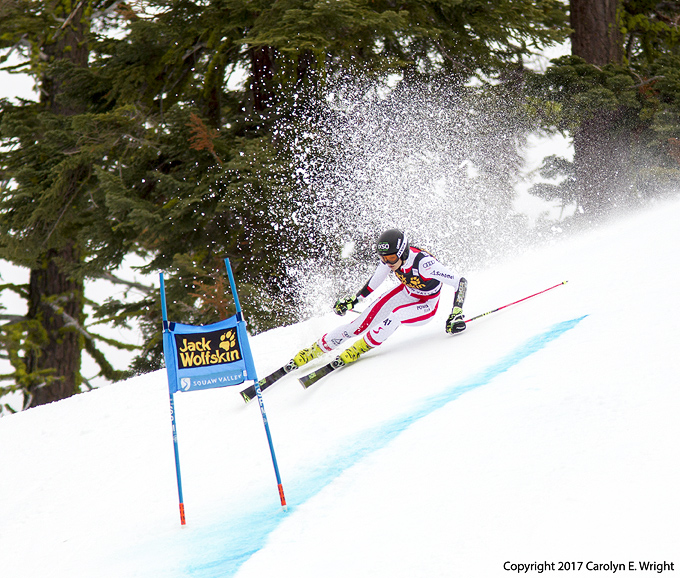
Mikaela Shiffrin may compete in five events this Olympics. Photo Copyright 2018 Carolyn E. Wright

By Kenneth Carter, The Conversation

One of the main draws of the Winter Olympics is the opportunity to witness some of the most exciting and nail-biting athletic feats.

The daring events include the bobsled and downhill skiing. Then there’s the terrifying skeleton: Imagine barreling down a narrow chute of twisted ice-coated concrete at 125 miles per hour. Now imagine doing that head first, like a human battering ram.

Athletes train for years for these events, but most of these elite athletes possess something that helps them succeed during these high-stakes events: their personality.

Some people have a personality trait that helps them focus in highly chaotic environments like the ones you’ll see during the Winter Olympics. It’s called a high sensation-seeking personality, and it’s a trait that, as a psychologist, I’ve long been fascinated with.

Calm in the face of danger

To some extent, we all crave complex and new experiences – that is, we all seek new sensations.

Whether it’s our attraction to the latest shiny gadget or the newest fashion trend, novelty tugs at us. But even though we all share an interest in new sensations, what sets high sensation-seeking personalities apart is that they crave these exotic and intense experiences to an extent that they’re willing to risk their health.

What’s amazing is that some high sensation-seeking individuals experience less stress and are fearless and calm in the face of danger. For example, 2014 Olympic slalom gold medalist Mikaela Shiffrin tears down mountains at speeds of 80 mph. But she recently told Sky magazine that the experience can feel like it unfolds in slow motion while she’s “finding a way to control the controllable.”

There’s neurological evidence to back up the sense of calm that athletes like Shiffrin feel in midst of chaos and danger.

You may have heard of cortisol – it’s the “fight or flight” hormone, and it can make us feel stressed and overwhelmed.

However, when people with high sensation-seeking personalities have intense experiences, they don’t produce that much cortisol. On top of that, they produce higher levels of “pleasure” chemicals like dopamine.

What’s more, researchers have found that people with high sensation-seeking personalities have increased sensitivity to things that could be rewarding (like landing a perfect switch backside 1620) and decreased sensitivity to potential dangers (like the fear of wiping out after doing a triple jump).

High sensation-seeking isn’t exclusive to Winter Olympians, of course. It can creep into every aspect of life, influencing the way you interact with other people, the things you do for fun, the music you like, the way you drive and even the jokes you tell.

Leaping before you look

In the 1950s, while studying sensory deprivation, psychologist Robert Zuckerman stumbled upon this sensation-seeking trait. Zuckerman was eventually able to show that sensation-seeking is made up of four distinct components.

Each contributes to an individual’s unique way of seeking (or avoiding) sensation. (And you can actually take a test to see where you fall for each of these four components on the sensation-seeking scale.)

The first two – thrill-seeking and experience-seeking – were mentioned earlier. But the sensation-seeking personality trait also involves disinhibition and boredom susceptibility.

Disinhibition has to do with our willingness to be spontaneous and our ability to let loose. People with low levels of disinhibition always look before they leap. Those high in disinhibition? They just leap.

Boredom susceptibility boils down to your ability to tolerate the absence of external stimuli. Those with high scores in boredom susceptibility dislike repetition: They tire easily of predictable or dull people, and they get restless when forced to perform mundane tasks.

This last component might be the toughest thing for Olympic athletes who are high-sensation seekers to deal with. In order to be a successful Olympian, you need to spend countless hours practicing dull, repetitive workouts and drills.

It’s easy to see how all of these aspects of sensation-seeking personalities might exist in Olympic athletes, whether it’s a snowboarder experimenting with a daring new trick or a hockey forward navigating a puck through a maze of defenders.

People with high sensation-seeking personalities don’t just crave these situations. In those moments, they’re in their element. Where a low sensation-seeking person might crumble, they thrive.

So when you’re watching the Winter Olympics and wondering how the athletes can handle the pressures and dangers of competition, just remember: For some of them, chaos and intensity are secret weapons of success.

Kenneth Carter is a Charles Howard professor of psychology at Oxford College at Emory University.


Expansion and growing pains of Winter Olympics

By Heather Dichter, The Conversation

When the International Olympic Committee announced that PyeongChang would host the 2018 Winter Olympic Games, most people outside of South Korea had probably never heard of it, let alone knew that the eastern part of the country had snow and mountains.

The shift in the type of place capable of hosting such a mega sporting event demonstrated how much the Winter Olympics has grown – but this change also brought with it a set of problems unforseen when the event began in 1924.

Figure skating first appeared on the Olympic program in 1908, and ice hockey in 1920, but these events were part of the summer games. The first Winter Olympics took place in the French alpine village of Chamonix in 1924. The organizers of the Paris Olympics that year wanted to offer an International Sports Week at the beginning of the year with solely winter sports as an experiment. Only after its success did the IOC decide to call the Chamonix event the Winter Olympics.

The first few Winter Olympics took place in ski resort towns known to winter sport enthusiasts: St. Moritz, Switzerland, in 1928, Lake Placid, N.Y., in 1932 and Garmisch-Partenkirchen, Germany, in 1936. In the 1930s the U.S. and Germany hosted both the Summer and Winter Olympics because the IOC allowed the country which won the right to host the summer games to decide whether they wanted to organize the winter ones too. If they did not – or could not in the case of the Netherlands in 1928 – then the IOC opened up the bidding to other countries.

The Winter Olympics has always been significantly smaller than its summer counterpart in terms of the number of sports contested and number of countries competing. Just over 250 athletes competed in Chamonix, and it took until the 1964 games in Innsbruck, Austria, for more than 1,000 athletes to compete. Fewer than 3,000 athletes competed in Sochi in 2014, whereas more than 11,000 athletes competed in the 2016 Rio Olympics.

No more village ski resorts

Although still significantly smaller than the summer event, the growth of the Winter Olympics to include 102 events across 15 sports at PyeongChang, alongside its global media coverage, means that the games no longer take place in small ski resort villages. Instead, larger cities have bid for and hosted the Winter Games in the past few decades.

Urban centers provide many of the required amenities for a successful Olympics: huge venues for the opening and closing ceremonies, sizeable indoor arenas for ice hockey and figure skating, facilities to accommodate the world’s media, and thousands of hotel rooms for all of the spectators. However, those same larger cities tend to be further away from tall mountains and the higher altitudes needed to ensure sufficient snowfall and cold temperatures for the outdoor events of skiing, snowboarding, and the sliding sports of bobsled, skeleton, and luge.

At the 2010 Vancouver games, even with the widening of the highway that leads from the city to the mountains at Whistler, it still took nearly two hours to reach the mountain venues. The organizers put on buses for those spectators who purchased tickets to events in the mountain to minimize traffic on the highway. After the initial ticket allocation, only Canadians with a postal code within a small radius of Whistler were permitted to purchase the remaining tickets to some of the mountain events.

Further and further from the mountains

One of the reasons the IOC selected the Korean city for the 2018 event was to spread winter sport to a new part of the world which had not held the Winter Olympics. But aside from concerns about the post-Olympic use of these venues in a country where participation in skiing has declined, logistics for spectators will be challenging.

The PyeongChang organizers recommend that visitors use the high-speed train from Seoul which opened in December 2017. However, a major Korean holiday falls during the Winter Olympics and the majority of seats on the train have already been reserved. International spectators who purchased special train passes for the games are now unable to book seats on trains to take them to the Olympic events. There have also been concerns about accommodation shortages.

The next Winter Olympics in Beijing in 2022 will be ever more spread out between venues. As larger cities further away from the mountains host the Winter Olympics, the games feel more disjointed for both athletes and spectators. Fans must decide where to stay and may decide not even to bother attending any mountain events. The organizers for recent Winter Games have built two Olympic villages, one in the city and another in the mountains, separating athletes instead of them all living together.

Future hosts for the Winter Olympics have to find a way to balance the interests of athletes, spectators, and post-event use of facilities. This challenge will not be easily solved, although recent past host cities – such as Salt Lake City – putting their hat in the ring to host the Winter Olympics again may be one solution.

Heather Dichter is an associate professor at Leicester Castle Business School at De Montfort University.