Alcohol, marijuana bad for teens in different ways

By Robert Preidt, HealthDay

Drinking alcohol and smoking marijuana may lead to different types of harmful consequences for teens, a new study suggests.

Researchers analyzed 2007 to 2011 data gathered from more than 7,400 U.S. high school seniors who said they had used alcohol or marijuana at least once.

The investigators found that drinking alcohol was associated with more unsafe driving, damage to relationships with friends and romantic partners, and regret about actions while under the influence of alcohol, especially among females.

On the other hand, marijuana use was more often tied to worsening relationships with teachers or supervisors, less energy or interest, and poorer school or job performance, according to the NYU researchers.

Read the whole story


David: S. Lake Tahoe is ‘tired, faded and dated’

Publisher’s note: Lake Tahoe News asked the seven South Lake Tahoe City Council candidates a series of questions. All are the same except for one that is specific to each candidate. The responses are being run in the order LTN received them.
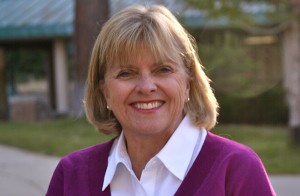
Wendy David

Wendy David

Name: Wendy David

Profession/work experience: Lake Tahoe Unified School District teacher’s aide 1975-1981, co-director Tahoe Parents Nursery School 1984-1997, site manager CASA El Dorado, South Lake Tahoe 2000-2009, LTUSD board of education 1997-current.

Age: 65

What organizations, committees or groups are you or have you been involved with?: Lake Tahoe Unified School District, co-chaired our successful $64.5 million Measure G bond effort. Took lead roles with Measure L and Measure A.

Current commissioner and chair of First Five El Dorado, appointed by the Board of Supervisors, third term.

El Dorado Child Abuse Council, three years as the chair. Spearheaded community forum Poverty to Prosperity, highlighting and educating our community on some of the very real issues facing the unemployed, underemployed and those incapable of employment, including serious transportation barriers.

Lake Tahoe Cabinet /El Dorado Community Foundation and have accepted their invitation to be a member of the board beginning in January 2015.

Facilitator and member Lake Tahoe Collaborative.

Community Advisory Committee/ Barton Health Foundation.

Angora Fire Fund, the group that was formed to respond quickly, securing and distributing $1 million in funds to 254 families that lost their homes.

Lake Tahoe Education Foundation, liaison, 17 years.

Soroptimist International of Tahoe Sierra.

Bread and Broth founding member.

Tahoe Magic founding board member.

Appointed as a community leader to committees in planning for our future through Tahoe Regional Planning Agency and the prosperity plan.

Also included are youth sports boards, school site councils, family life committee, and community liaison for Senior Project at South Tahoe High School.

Why are you running for City Council?: I love my community and have been heartbroken to see it become tired, faded and dated. I feel that it is the right time as I retire from the LTUSD board to step up, bringing my skills to the council and the city. I look forward to being a part of the creation of a stronger and more sustainable economy, enhance our offerings and reputation as a recreational destination, provide jobs for our community and build allegiances through collaboration with our private and public partners. I am encouraged by our beginning face-lift and look forward to helping to shape the future of South Lake Tahoe.

Why should people vote for you over the other candidates?: I will bring a fresh voice to the City Council, coupled with four decades of experience in leadership roles in this community and at the county level, chairing numerous organizations and serving as president of the board of education for 13 years of my 17 years of tenure.

I am a natural facilitator; understand the process of decision-making and embracing change. I listen, collaborate, respect divergent views, and work toward consensus. I believe that I will bring the broadest record of respected leadership to this office.

I am the only council candidate that brings the voice and perspective of our most vulnerable population. I know their struggles, their families and their stories.

What do you think is the most pressing issue facing South Lake Tahoe and how will you deal with it?: I believe the most pressing issue for the council will be creating and implementing a budget that plans adequately for the future and protects the present. I believe it is essential to put in the hard work of visioning, planning, working collaboratively and embracing all facets of our community to move forward in this positive direction. It takes money to create the change we want to see. It takes effort, new ways of doing business, cooperation and diligence to have the resources to create change. It takes fortitude and guts. We can accomplish this, which will open doors for the city we envision in the future.

If the city cannot reach an agreement with its bargaining units, are you willing to go to impasse?: These are personnel issues that I would not speak publicly to, especially as a candidate. I can comment that I am familiar and understand the bargaining process and that impasse is a possible help when the parties are unable to reach agreement.

How would you resolve the CalPERS and health care issues in the city?: I cannot and will not comment, again, on any issue that is a personnel, closed session item. It would not be fair to fellow council members or to the bargaining units. I do know that this will be an issue that the City Council will grapple with. I can reiterate that I am a fair, respectful, thoughtful and wise decision-maker.

What is your opinion about term limits for the council?: This is an interesting question for an elected official who is finishing four consecutive terms. I am not in favor of term limits for the council. I do believe in the power of the public vote and the responsibility of every registered voter to vote, deciding at the polls when it is time for someone to step down and another to step up.

If the city has positive cash flow, where should the money be spent?: I would like to see money spent to give incentives to new businesses who have a business plan that buys tired properties on the Highway 50 corridor, demolishes and rebuilds. I have never been as happy as recently to see backhoes and tractors cleaning up our landscape. I would like to see our roads get the attention they have needed for years. I have studied the five-year Community Investment Plan and agree that there are many additional places where we need to revitalize, invest and improve our city and appreciate that they have been prioritized.

What are your ideas for increasing the city’s revenues?: We can look at the properties we own and how we can increase revenues through usage, buying and selling of properties. We can continue to encourage new business. We can enhance our appeal by continuing to upgrade the physical appeal of our city to visitors. I am looking forward to all residents ringing in on this question. I hope the council will adopt this as a question of their own.

What is your vision for the 56-acre project?: I have been very impressed with the Lakeview Commons project. My vision, as a dreamer and not looking at funding sources, would be to create a community complex of buildings that would include our city offices, a nonprofit organizations building, similar to the Parasol Building in Incline, and a large community meeting area. It would incorporate a new or remodeled recreation center, and a visitor/tourist center that would meet the needs of our tourists, visitors and community residents. This complex would have outside plazas, playgrounds, picnic areas, benches and walkways. It would be a centerpiece jewel the city that would be available for those visitors from around the world and those across the street.

What would you do to improve relations with El Dorado County?: Communication and involvement at a county level is essential. As the only South Lake Tahoe representative on a county commission or board at times, I have learned that developing respectful two-way working relationships based on common goals, being informed and transparent about our city’s needs, and acting as a passionate advocate for those needs has helped to improve relations. I will continue to advocate for South Lake Tahoe through my comrades and connections on the Western Slope. It is not easy, takes work and the Sierra divide is tough to overcome. I will work to have a close relationship with our newly elected board of supervisor.

Is the city on the right course with restructuring debt and focusing on recreation? Why or why not?: Yes, South Lake Tahoe’s reliance on gaming and the jobs it provided has passed. We are prime to become a world-class recreation destination. We have not provided our visitors from around the globe with a city that projects that we are world class. Focusing on recreation and building an infrastructure that will complement and enhance the experience of every visitor will contribute to our economic vitality. I am not an expert on the details of the restructuring of the city’s debt, but I believe in the purpose and focus it brings.

Name one vote the City Council made in the last four years you are proud of and one you are disappointed in – and why?: I am proud that the City Council voted to create the Commons and to go ahead with the Harrison Avenue project. I am disappointed that after voting for the bag ban, a wise and environmentally progressive decision, that the council then, in opposition to their voted time line, voted to delay implementing the next stage of the ban.

What is working in the city and what isn’t; and how would you go about changing what isn’t working?: I believe the city is working when it takes a hard look at our future financially. I believe in strategic planning, timelines, community input for projects, collaboration and transparency. I am seeing all of this evolve and develop as the city moves forward.

I would not be running for City Council if I believed that the council is working at the highest level of collaboration, consensus building, visioning, respect for staff and administration, trust and cooperation between themselves and with the community and other agencies. I believe that every council does the best they can and brings the best they have to offer. I also believe that a new voice on the council will be beneficial to the city.

Being on the council requires working with four others. Give readers an example of how you work well others in difficult situations with differing opinions: I have had many difficult situations over the last 17 years on the board of education. I know that each interested person, staff member, resident, parent and student has a right to be heard and acknowledged. I respect the person and the right to comment and to disagree. I listen to each comment, rephrase and repeat it back and then acknowledge it. Some examples of dealing with difficult decisions and differing opinions came when we were faced with closing two elementary schools, possibly cutting our athletic programs, creating K-2 schools and 3-5 grade schools, and changing to a 4×4 schedule at STHS. All of these difficult decisions had extensive comments and input. In all instances the public brought valuable input, in all instances the public input was taken seriously and in some instances, this input influenced the board to move in a different direction. A good council will bring a broad range of experience and knowledge to each discussion and decision in a respectful and professional manner.

What is your opinion about the following topics:

• Ferry service on Lake Tahoe?: Sounds great to me, less cars, less pollutants in the air, better experience for travelers. A good ferry service does need a higher water level and we need that too!

• Loop road?: I will need to study this further, but a highway going through our casino corridor has never made that much sense to me.

• Future of Lake Tahoe Airport?: It will not again be a commercial airport. Interstate 580 will soon be completed and the commute to the Reno/ Tahoe airport will be less than an hour. However, we will always need to have an accessible and open airport for our safety, in emergencies and for the appeal to private owners.

• Increasing the transient occupancy tax?: I need to study this proposal, looking at the cost to our visitors, the benefit to the city and how we would utilize the increased income. This would be a process; I imagine that would take study and input with our public and private partners.

• Changing the vacation rental ordinance to reduce the number of such units in neighborhoods?: We are a tourist destination. We have seen a drastic change in how our visitors want to enjoy our beautiful surroundings on their vacation. I don’t blame them. It is a far better experience for a family or friends to rent a home. Without data to support a compelling reason to change the ordinance, I would not be in favor. We do not own the neighborhood we live in, nor the sky or the mountains. If fortunate, we own one home in the neighborhood, sharing the rest of the neighborhood with others that wish they did as well. We are the lucky ones.

Your background has been focused on social services, how will that translate to having to deal with a broader spectrum of issues on the council?: I care deeply about children and families. I always have. Each of them is a thread in the fabric of our community. My knowledge of our families, nonprofit agencies, governmental agencies and my direct leadership, decision-making and networking will translate very well to the broader spectrum of issues. I will bring a perspective to the council that educates and recognizes the impact of our decisions in relationship to our residents. Our city is our community and I will constantly be aware that each decision we make can affect a person, a family, a business or an entity positively or negatively. I recognize and respect that many others know more than I about many of the broader issues at the beginning of my term. Each council member brings a vital perspective, mine will be that of vast board and organizational leadership, the ability to vision, execute and implement ideas and goals. I can speak of our most fragile residents and their housing, job and transportation challenges. I can also learn the issues, discuss the issues intelligently and thoughtfully, remembering that the impact is great, and often will follow for generations.

Tell the voters something about yourself that they may not know: Voters may not know that my husband and I came on vacation to South Lake Tahoe, as a stop on the way to the “perfect place” we would choose to live; at the time our thinking was that it might be Boulder, Colo. It was the end of June and we spent all of July going to the beach, having barbecues, playing softball and baseball, watching the sunsets and enjoying our two young boys. At the end of July, we thought, why not here? A job was secured. Two more kids, seven grandkids and 41years later, it is still a vacation.


Rising alpine vegetation could hit Calif. water supply

By Pete Spotts, Christian Science Monitor

A warming-climate-induced march of alpine vegetation up a large river basin on the western slope of the Sierra Nevada could slash by one-fourth the annual flow of water the basin delivers to California’s thirsty Central Valley by the last two decades of this century, a study says.

The results of the Kings River Basin study imply that the same type of risk holds for another 10 major river basins along the western Sierra, although to varying degrees, say the researchers involved in the study. It also could hold similar implications for other regions around the world that rely on alpine snows for much of their fresh water.

The results also imply that in a warming world, some forests may have to be managed as much to ensure adequate water supplies downstream as they will be to reduce the hazards of large wildfires.

Managing vegetation for stream flows already has been undertaken to some extent along rivers and streams in the Southwest, where invasive plants such as tamarisk took root along the banks, siphoning far more water than native species such as cottonwoods. Groups have been removing the tamarisk and other water-binging invasives in hopes of maintaining or restoring normal seasonal stream flows.

Read the whole story


Gay marriage decision could hit Nevada quickly

By Sean Whaley, Las Vegas Review-Journal

CARSON CITY — A ruling from the 9th U.S. Circuit Court of Appeals finding Nevada’s ban on same-sex marriage unconstitutional could almost immediately open the floodgates to gay unions across the state, a legal analyst involved in the challenge said Tuesday.

Lambda Legal Legal Director Jon Davidson said that is what happened in cases in Pennsylvania and Oregon when a federal appeals court found those same-sex marriage bans unconstitutional.

When state officials in those two states decided, as they have in Nevada, not to challenge the effort to overturn the bans, the rulings were allowed to go immediately into effect, he said. Efforts to stay the rulings were denied all they way to the U.S. Supreme Court, Davidson said.

“So we might see a similar scenario in Nevada,” he said.

But while the marriages might happen quickly in Nevada, Clark County Clerk Diana Alba said she has been told by the county district attorney’s civil division that officials should have a 21-day period to prepare for same-sex unions.

The 9th Circuit is scheduled to hear arguments in the challenge to Nevada’s same-sex marriage ban on Monday in San Francisco. A ruling is not expected for several weeks.

Read the whole story


Select SLT workers forfeit retiree health plan

By Kathryn Reed

South Lake Tahoe’s City Council on Tuesday approved a tentative agreement that calls for nearly one-third of the employees not to receive city-provided health benefits when they retire.

The public works bargaining unit, which is the largest of the six groups in the city, is expected to vote this week on the proposal. Still to be worked out are raises and changes to the health care plan.

Also agreeing to eliminate retiree health benefits are the at-will management workers. Altogether this represents about 60 employees.

South Lake Tahoe faces about a $40 million unfunded liability because of promised health care benefits for employees and their dependents after they retire.

“This is an important thing for the public,” City Manager Nancy Kerry told Lake Tahoe News. “How often do you see public employees say I will personally make a sacrifice? This particular group has some of the lowest paid employees in the city. That’s why I really admire them. They don’t have the resources others might have.”

Already employees hired after 2008 don’t have the same retiree health benefits. Changes do not affect current retirees. What would affect their benefits is if and when the current health plan is altered.

The city is negotiating with the other bargaining units. Kerry would not comment on how discussions are going, other than to say the city has no problem negotiating long after the budget is voted on at a special meeting Oct. 1.

At the Sept. 2 council meeting Kerry and all the department heads went over the proposed 2014-15 budget that takes effect Oct. 1. It was in closed session that the retiree health care was voted on.

The $73 million budget is about $20 million less than the current year’s budget. This is because there is less outside money coming into the city for capital projects. For instance, the $18 million on the books this year for the Bijou erosion control project will be gone next year because the work will be done this fall.

What is remaining consistent is the $32 million general fund. That is the pot of money the council has leeway with when it comes to spending. However, with that said, 89 percent of that pot of money is allocated for salaries and benefits.

The city spends about $4 million on health care and another $4 million on pensions each year.

Kerry said the state Legislature has the power to change CalPERS, but refuses to do so. Public entities may negotiate with employees for increases to CalPERS, but are not allowed to go in the other direction.

She called out South Tahoe Public Utility District, saying how that agency during the recession never had pay cuts, furlough days or staffing cuts, and now is rewarding its employees with a three-year pay hike just two months after imposing a rate increase on users.

“Maybe they could take a 9 percent pay cut and improve infrastructure,” Kerry said.

She said, that while city employees are also due a raise, it’s imperative cuts are made, too, so there is more prudent spending of taxpayer money. For the city, this is coming in the form of changes to health care for current employees and retirees.

On the negotiating table are five health plans with three tiers.

Mark Carlson, the city’s finance director, told the council if changes are not made, the city will find itself back in 2003 economic conditions. That means no reserves and no money in the bank.

If changes to health care are not made across the board, Carlson said, “expect to be upside down” starting in fiscal year 2017.


Health plan deductibles weigh down employees

By Tara Siegel Bernard, News York Times

Anita Maina was working on an arts and crafts project she found on Pinterest — creating a table out of wood and cork — when she ripped off a fingernail while removing staples from a piece of wood.

“It is one of those things that really hurt, and I thought I should go to urgent care,” said Maina, 27.

But she ultimately skipped the visit since she had not met the $6,000 deductible on her health plan, and she knew she probably did not have much left in her health savings account, a type of tax-advantaged savings vehicle that is often used with high-deductible plans to help defray out-of-pocket costs.

Maina, an associate in a health and human services consulting agency, said her employer added the high-deductible plan earlier this year; though her monthly premiums are only $34, these plans require employees to pay for a greater share of their medical expenses upfront, before the plan starts making payments.

Next year, even more corporate workers are likely to be offered high-deductible plans — sometimes known more benignly as consumer-directed plans — and at a rising share of large companies, it will be the only option remaining.

“You can’t sugarcoat this,” said Paul B. Ginsburg, a professor of the practice of health policy and management at USC’s Sol Price School of Public Policy. “This is a more challenging situation for consumers and it’s a reflection of how difficult it is to afford health care.”

Just as employers replaced pensions with retirement savings plans, more large companies appear to be in a similar cost-sharing shift with health plans. Besides making workers responsible for more of their care, employers hope these plans will motivate employees to comparison-shop for medical services — an admirable goal but one that some say is hard to achieve.

Read the whole story


Policymakers rethink merits of Common Core

By Kimberly Hefling and Julie Carr Smyth, AP

COLUMBUS, Ohio — Millions of students will sit down at computers this year to take new tests rooted in the Common Core standards for math and reading, but policymakers in many states are having buyer’s remorse.

The fight to repeal the standards has heated up in Ohio, with state Rep. Andy Thompson, a Republican, saying it’s kind of “creepy the way this whole thing landed in Ohio with all the things prepackaged.”

It’s playing out in Louisiana, where GOP Gov. Bobby Jindal is in a nasty feud involving his former ally, Education Superintendent John White. Jindal has sued the Obama administration, accusing Washington of illegally manipulating federal grant money and regulations to force states to adopt the Common Core education standards.

The standards were scrapped this year in Indiana and Oklahoma. Governors in North Carolina, South Carolina and Missouri have signed legislation to reconsider the standards, even though they still will be used in those three states this fall.

Like many critics, Thompson and Jindal base their opposition on federal support of the standards. But states led the Common Core movement that really took off in 2009 and that effort was voluntary.

The administration offered incentives to states to adopt college and career-ready standards, and Common Core fit the bill. The incentives included cash grants and permission to ignore parts of the much-maligned No Child Left Behind law.

The standards emphasize critical thinking and spell out what reading and math skills students should grasp at each grade level, while leaving how those skills are mastered up to districts and states. The hope was that higher standards shared across state lines would allow for shared resources, comparable student performance measures and smoother school-to-school transitions for children who move, such as military kids.

Nearly every state adopted the standards.

Debate spreads

The debate over Common Core has spilled into the national political realm. Among potential GOP presidential candidates in 2016, former Florida Gov. Jeb Bush supports the standards; Jindal, Indiana Gov. Mike Pence and Kentucky Sen. Rand Paul do not.

Teachers’ unions, historically aligned with the Democrats, endorsed the standards and helped develop them. But they now complain about botched efforts to put them in place and say it’s unfair to use Common Core-based assessments in new teacher evaluation systems rolling out in much of the United States.

The issue has gotten pulled into a general anti-testing backlash in parts of the country. To ease the testing concerns, Education Secretary Arne Duncan recently said he would allow states to delay using students’ test scores in teacher evaluation systems.

“What really has happened is that this has become a politicized issue and it’s become an ideological symbol, interestingly, on both sides,” said Patrick McGuinn, a political science professor at Drew University. He said the standards and the assessments designed under them are generally considered acceptable or of high quality.

Classrooms prepare

Far from the political discourse, American classrooms continue to be transformed by the use of the standards, with new curricula developed and teachers trained. Some parents are perplexed by the new ways their children are completing their lessons.

Supporters like former Georgia Gov. Sonny Perdue, a Republican who helped lead the governors’ group that identified the goals set by Common Core, say politics and mistruths have hijacked a needed and effective education overhaul.

The standards were a response from governors in a defensive mode to keep the federal government out of education, Perdue said, and he supported the changes out of concern for U.S. students’ global competitiveness. The U.S. Chamber of Commerce is among backers.

“It’s just a situation that I don’t think should have become political, which has become politically toxic and I don’t really know how to decontaminate that,” Perdue said.

Shifting public opinion

A PDK/Gallup Poll released Aug. 20 found a dramatic change in the number of people aware of the standards. Last year, two-thirds of those surveyed said they’d never heard of the standards. This year, 81 percent said they had — and 6 in 10 said they oppose them.

Daniel A. Domenech, executive director of the national organization representing school superintendents, said polling provides more evidence it’s important to “slow down to get it right.”

This school year marks a milestone. This coming spring, roughly 11 million students in more than half the states are expected to take new computer-based assessments aligned with Common Core standards that were developed by two groups of states to replace the standardized tests that had been used.

States can choose the assessment to be used, but those decisions have not been without controversy. Some states, including Georgia and Michigan, that originally joined the consortiums, have dropped out and opted for different tests.

Awaiting results

The rollout of Common Core-based tests will be watched closely for computer glitches and other problems, as well as to see how well students perform.

The ambition of Common Core is “quite broad,” said Jonathan Supovitz, co-director at the Consortium for Policy Research in Education at the University of Pennsylvania. He said the standards have the potential to bring new tools and technologies into classrooms and lead to greater student mastery of subjects, but it will take time.

“This is not going to happen overnight. It’s going to take lots of resources and lots of teacher exposure to new ways of doing things and we’re just at the beginning of that process,” Supovitz said.

Many state lawmakers aren’t willing to wait.

State pushback

Jindal initially supported Common Core. He said that’s because the standards were first presented as a bottoms-up approach, but “the reality is what it has become is another tool for the federal government to try to dictate curriculum.”

He suspended contracts that the state Department of Education planned to use to buy testing material aligned with the standards. White and education board leaders say the governor overstepped his legal authority, and they sued. A state district judge has since said the governor’s actions were harmful to parents, teachers and students and he lifted Jindal’s suspension of the contracts. The decision allows White to move ahead with Common Core-tied testing plans until a full trial is held later over the legality of Jindal’s executive orders against the standards.

At the same time, 17 state lawmakers who oppose the standards have lodged their own legal challenge, but lost their first round in court.

Education Secretary Arne Duncan has criticized the Jindal’s opposition to Common Core as politically driven. In a June interview with “CBS This Morning,” the secretary said of Jindal’s switched position: “It’s about politics, it’s not about education.”

In Ohio, some teachers have raised concerns about how the standards came out, Ohio Federation of Teachers president Melissa Cropper said, but most largely support them. Some of the state’s largest urban districts, such as Cleveland and Columbus, have spent two years and lots of money preparing for the rollout that started this school year, she said.

Cropper urged state lawmakers to stay the course with the standards, which were adopted in 2010.

“All that time, energy and resources would be wasted,” Cropper said. “I think it will absolutely throw our districts in chaos.”

State Rep. Thompson, whose wife is a Spanish teacher, isn’t convinced. He says Ohio and other states adopted the standards in the wake of the economic downturn because they were in desperate need of money.

“When you take federal leverage, it affected people’s behavior,” Thompson said.

Other voices

Parents and educators opposed to the standards in Ohio were allotted three full days of hearings in mid-August to discuss the merits of replacing Common Core. Defenders of the standards were relegated to holding news conferences.

Lincoln Bramlage, a father of three from Ottawa-Glandorf in northwest Ohio, said the standards are “hardly relevant.” He added: “We need to fight for the teachers and the kids. This is not education. It’s indoctrination.”

Carrie Moenster, a parent and teacher, said she’s seen her fourth-grade students in tears because they couldn’t understand math standards that she called “abstract and developmentally inappropriate.”

“One child who was once very confident comes up to our desks repeatedly while working on an independent assignment because he doesn’t trust his own mind and judgment anymore,” she said.


Palacio: ‘It’s time for a new generation’

Publisher’s note: Lake Tahoe News asked the seven South Lake Tahoe City Council candidates a series of questions. All are the same except for one that is specific to each candidate. The responses are being run in the order LTN received them.

matt palacioName: Matt Palacio

Profession/work experience: Did not respond.

Age: 34 (35 later this month)

What organizations, committees or groups are you or have you been involved with?: I’m a member of the Tahoe Regional Young Professionals, South Lake Tahoe Economic Development Task Force, and the 2014 Leadership Lake Tahoe class.

Why are you running for City Council?: It’s time for a new generation to be represented in City Council. I’m running to be a voice for everyone in South Lake Tahoe, including the young homeowners, business owners and professionals who see a future in South Lake Tahoe.

Why should people vote for you over the other candidates?: South Lake Tahoe needs new ideas and a new perspective in its leadership. Folks can vote for three City Council candidates in the upcoming election and a vote for me is a vote for a new voice and diversified representation within the council.

What do you think is the most pressing issue in South Lake Tahoe and how will you deal with it?: Lack of vision plagues this town. It’s as if we can’t get out of our own way and any opportunity we have to improve our town is botched due to infighting. I’d like to help build consensus by balancing facts with feedback and having City Council be more present in creating public-private partnerships and work together. This town is at a crossroads; we can have “more of the same” or we can put our differences aside and move forward with improvements that make South Lake Tahoe a better place to live, work and play.

If the city cannot reach an agreement with its bargaining units, are you willing to go to impasse? Why or why not?: This is an issue for the city manager to handle, and it’s something I look forward to being debriefed on. The City Council will vote on bargaining units, but they aren’t necessarily at the bargaining table.

How would you resolve the CalPERS and health care issues in the city?: Did not respond.

What is your opinion about term limits for the council?: I stand behind term limits as a way to help the council from getting stale. It allows new council members to bring in fresh ideas to move the city forward.

If the city has positive cash flow, where should the money be spent?: Positive cash flow should be reinvested in the community by way of infrastructure that supports our environment like gutters and streets, and enhances public safety like sidewalks and bike paths. But we should also consider shovel-ready projects that provide immediate improvements in our built environment, access to recreation and create jobs.

What are your ideas for increasing the city’s revenues?: I have a sales and marketing background, so I can tell you that to increase revenue, you have to increase business. How do you increase business? By developing your product and reaching new markets. By improving South Lake Tahoe’s built environment and offering new amenities we’ll attract better spending visitors and stand out against the competition. Let’s not just go for “more” business – let’s go for “smarter” business to drive revenue from our tourism industry.

What is your vision for the 56-acre project?: The 56-acre project is an opportunity for South Lake Tahoe to positively position itself as a recreation destination. Improving the recreation center’s facility and programs will help residents and visitors alike. Highway 50 is the main corridor through South Lake Tahoe, but only a short stretch runs along the lake. We need to capitalize on this portion and make this into a community hub for both residents and visitors.

What would you do to improve relations with El Dorado County?: Are you referencing the El Dorado County government or the unincorporated area of Meyers within El Dorado County? I think the answer is the same for both: we need to have two-way communication with the government and citizens. Citizens of Meyers cannot vote in the city, but they are a part of our South Lake community, with the same schools, roads, and businesses. I look forward to working with El Dorado County as well; I’ve had brief conversations with both Kenny Curtzwiler and Sue Novasel regarding our mutual campaigns and what it would mean to work together. By listening to their needs and having them listen to the city’s needs a mutual understanding should be reached. We may not always agree, but at least we’ll understand where each other is coming from.

Is the city on the right course with restructuring debt and focusing on recreation? Why or why not?: The city is on track for focusing on recreation, with the Planning Commission and recreation plan building momentum. The city is maintaining transparency and giving residents the opportunity to give their feedback by conducting email surveys and public workshops. There seems to be a high level of collaboration, too, with recent projects like the Tahoe Valley Area Plan integrating bike paths and parks to continue in the direction of recreation. I think the OpenGov.com website that the city is now a part of is a huge step forward in transparency. If you want to see the money that comes into and out of the city coffers, this is the best place to start.

Name one vote the City Council made in the last four years you are proud of and one you are disappointed in – and why?: Proud of: I commend the City Council for voting for the Harrison Avenue Project, and working to implement this public-private partnership that helps our town visually, economically and environmentally.

Disappointed in: I was disappointed to see our elected officials vote to delay the plastic bag ban’s second phase despite overwhelming support for the initiative from shoppers and businesses alike.

What is working in the city and what isn’t; and how would you go about changing what isn’t working?: I think we have a movement in the younger generation with people who are ready for change. Some of us moved here for the recreation lifestyle and have become involved as change agents (myself), and others have come home after starting successful careers elsewhere to help their hometown flourish (Scott Fair, Darcie Collins). I’m the face of this movement; we’re ready to lead South Lake Tahoe in the present and future.

I think what is lacking is community engagement. I think our citizens don’t feel connected to their local government for a number of reasons, it could be the transiency that is natural in a resort community, but I also think a lack of representation on the council plays into this as well. It’s hard to feel a connection to council members who say they want improved recreation and a cleaner environment when as council members they are not recreating nor voting to improve our environment. I hope to be a council member that is approachable for people of all ages, I am someone deeply committed to our environmental sustainability as this is our biggest asset, and as someone who moved here for a management position at a ski resort and the recreation opportunities in our community I feel I have a better understanding of where we need to invest in first to make life better for residents and visitors alike. I want to connect with the community by making myself available at community events like Live at Lakeview, the Stand Up Paddleboard Series, or chats at local coffee shops in the winter. I may not always agree with every opinion I hear, but making yourself available is key to an inclusive government.

Being on the council requires working with four others. Give readers an example of how you work well others in difficult situations with differing opinions: Leadership Lake Tahoe’s class of 2014 was tasked with putting on a summit as our class project. There were no real parameters given, no budget to start with, only a hierarchal framework. I was elected to be the co-chair of our summit and we set our sights on pulling off a large-scale summit. There were lots of differing opinions on what type of event to put on, how to raise funds, and who to invite as speakers for our panels and keynotes. These decisions were all made through consensus building and getting the class to buy-in to the vision so they felt they were a part of the overall decision making process.

I define leadership as someone who knows the way, shows the way, and goes the way. John Rice at Sierra-at-Tahoe is the best leader I’ve ever worked for and I use him as my leadership model. We believe in his leadership skills, he invites us to share his vision for the future, and then John actively leads us to our destination.

What is your opinion about the following topics:

• Ferry service on Lake Tahoe?: Ferry service on Lake Tahoe would decrease pollution by reducing emissions, and would allow us to increase visitation to the South Shore. A ferry system would create new, high paying jobs as well. So long as the boats had a moderate impact on the environment, I support a ferry service on Lake Tahoe.

• Loop road?: The Loop Road is a sensitive subject for many people in our city due to the issues arising from other development projects such as the Chateau project. The city has lost trust with some citizens in our community because of how past projects were handled. Yet I believe that we need to create a walkable downtown area for our residents and visitors. The majority of the city’s budget comes from TOT and visitors’ sales tax revenue. Our tourism economy needs to adapt to what visitors want and we also need to embrace a future that doesn’t rely on the automobile for your shopping experience. We are a ways off with green-lighting a project like the Loop Road due to many issues outside of the city’s control (Caltrans, an environmental impact report, etc.) but I hope to be on the council to bring in all sides the Loop Road conversation and hopefully we’ll move forward in a sensible fashion.

• Future of Lake Tahoe Airport?: The Lake Tahoe Airport is South Lake Tahoe’s largest polluter, next to the Tahoe Keys. If it’s going to exist, it should be to serve the greater good of the community. I’d like to see the airport redeveloped to bring in revenue to fund infrastructure and public safety.

• Increasing the transient occupancy tax?: I’m staunchly against increasing South Lake Tahoe’s transient occupancy tax. Our TOT rates are higher than San Diego, Monterey and Palm Springs – all of which are thriving destinations with higher occupancy rates and a more vibrant tourism economy. A failing hotel doesn’t raise rates to bring in more revenue; they work on improving the property to generate the traffic necessary for a successful business. Instead of increasing TOT, let’s grow our cash flow by improving South Lake Tahoe’s recreation offerings and bringing in better spending visitors.

• Changing the vacation rental ordinance to reduce the number of such units in neighborhoods?: A balance needs to be struck in the amount of vacation rentals and non-primary residences and the number of full-time residents that live, work and play in South Lake Tahoe. Vacation rentals are a reality of South Lake Tahoe and generate transient occupancy tax that benefits the city of South Lake Tahoe. But when our town is made up of mostly non-permanent residents, vacation rentals can quickly take over a neighborhood. I look forward to reviewing the ordinance to see if a sensible balance can be achieved.

Your civic involvement is lacking, why should the public believe you have what it takes to step onto the City Council?: Civic engagement is defined as individual and collective actions designed to identify and address issues of public concern. My life in Tahoe is dedicated to addressing public concern – whether working to bring more skiers to our slopes and putting heads in beds, volunteer at community clean ups or lead the charge in the creation of the Elevate Your View summit last spring, which addressed community apathy. My lack of experience as an elected politician is exactly why people should vote for me – our town needs new blood and fresh ideas within City Council. I’m not a career politician; I’m a homeowner who wants to create a future here for my family and everyone else.

Tell the voters something about yourself that they may not know: I came to South Lake Tahoe as a child once every winter to toboggan and saucer on the local hills and those trips to my aunt’s cabin are the foundation for my love of South Lake Tahoe. My wife and I left Tahoe for two years and were eager to return to South Lake Tahoe to help this community move forward. Service also runs deep in my family. My two male role models growing up served their communities in different ways. My maternal grandfather was a CTA representative who helped his fellow teachers negotiate for fair wages and compensation, sometimes working past midnight on projects after putting his five children to bed. My father was a union representative at a paint factory in the Bay Area representing over 50 coworkers. I come from humble roots, my father’s side of the family is from Mexico, and I’m proud of my grandparents for coming to the California to make a better life for themselves and their family. I think of myself at the epitome of the American Dream when seen through their eyes, I’ve achieved more than I ever thought I could in my life and I look forward to a progressive future for South Lake Tahoe.


Nev. land market continues to recover

By Doresa Banning, Nevada Business

Demand for land in Nevada has resembled a roller coaster pattern this decade. During the real estate boom in the first half of the 2000s, both residential and commercial developers hungrily purchased land, driving up prices. With the recession, the opposite happened; development nearly ceased, land demand decreased and so did the price.

Again, the pendulum has begun to swing in the other direction as the post-recession restart of residential construction has heated up the state’s land market.

“The land market has been in recovery since 2010, and homebuilders have been driving that,” said Bill Lenhart, managing partner of Sunbelt Development & Realty Partners LLC, a real estate brokerage company specializing in land.

Nevada is a state whose land is primarily owned by the federal government — 87 percent, in fact. The state itself owns less than 1 percent of its land; about 12 percent is privately owned, according to the Nevada Division of State Lands. This agency provides land and land use planning services to the state, its agencies and its people. For instance, it secures, disposes, leases and authorizes use of state land. Of the Silver State’s state-owned land, most consists of wildlife management areas (158,345 acres), parks (120,471 acres) and prisons (6,692 acres), said Charles Donohue, NDSL’s acting administrator.

Other Nevada-owned sites include 500 Lake Tahoe lots managed as conservation areas, parcels housing state facilities and undeveloped and/or vacant properties that the NDSL plans to hold until land prices rise.

Read the whole story


Wildlife populations plummet for 3,000 species

By John Heilprin, AP

GENEVA — About 3,000 species of wildlife around the world have seen their numbers plummet far worse than previously thought, according to a study by one of the world’s biggest environmental groups.

The study Tuesday from the Swiss-based WWF largely blamed human threats to nature for a 52 percent decline in wildlife populations between 1970 and 2010.

It says improved methods of measuring populations of fish, birds, mammals, amphibians and reptiles explain the huge difference from the 28-percent decline between 1970 and 2008 that the group reported in 2012. Most of the new losses were found in tropical regions, particularly Latin America.

WWF describes the study it has carried out every two years since 1998 as a barometer of the state of the planet.

“There is no room for complacency,” said WWF International Director General Marco Lambertini, calling for a greater focus on sustainable solutions to the impact people are inflicting on nature, particularly through the release of greenhouse gases.

The latest “Living Planet” study analyzed data from about 10,000 populations of 3,038 vertebrate species from a database maintained by the Zoological Society of London. It is meant to provide a representative sampling of the overall wildlife population in the world, said WWF’s Richard McLellan, editor-in-chief of the study. It reflects populations since 1970, the first year the London-based society had comprehensive data. Each study is based on data from at least four years earlier.

Much of the world’s wildlife has disappeared in what have been called five mass extinctions, which were often associated with giant meteor strikes. About 90 percent of the world’s species were wiped out around 252 million years ago. One such extinction about 66 million years ago killed off the dinosaurs and three out of four species on Earth.

In the new WWF study, hunting and fishing along with continued losses and deterioration of natural habitats are identified as the chief threats to wildlife populations around the world. Other primary factors are global warming, invasive species, pollution and disease.

“This damage is not inevitable but a consequence of the way we choose to live,” said Ken Norris, science director at the London society. “There is still hope. Protecting nature needs focused conservation action, political will and support from industry.”