Publisher’s note: Lake Tahoe News asked both candidates running to the South Tahoe Public Utility District seat being vacated by Eric Schafer the same questions. Duane Wallace’s opponent did not answer the questions.
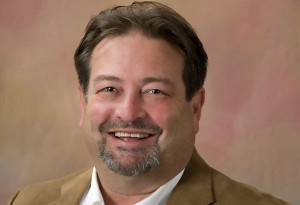 Name: Duane Wallace
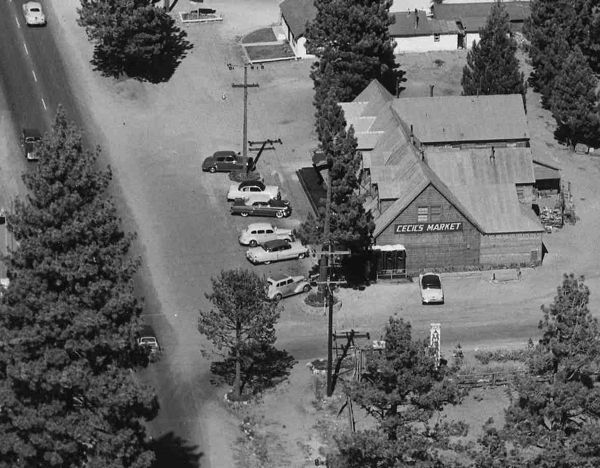
Profession/work experience: I’m a businessman. At age 21 I opened the Happy Steak Restaurant at the Y. I opened a second Happy Steak in Carson City in 1980 for a total of 16 years as an owner with about 75 employees. From 1989 to 1994 I worked for Aspen Realty helping people buy and sell businesses and homes. I was also an adjunct faculty member at LTCC teaching Introduction to Business and Principles of Supervision. From 1994 to 2006 (12 years) I was the CEO of the South Lake Tahoe Chamber of Commerce. In 1991 I ran for the utility district and was elected four times and served 16 years until 2007. From 2007-2009 I was the executive director of four Boys & Girls Clubs and a teen center on the Western Slope. I had also done drug and alcohol counseling for SRC. When my father became ill I started business consulting here doing startups, marketing, business evaluations and turnarounds. I did that for seven different lodging properties as well as restaurants service and retail businesses. I was appointed as a board member of the school district. I worked a short time at the county jail working in the kitchen with inmates where they learned food service. I worked as a coffee shop manager for two years for a chain restaurant and recently opened a hot dog and ice cream restaurant under a contract for services. I have an AA in social science and BA in business administration. I’m also a graduate of the Institute for Organization Management. I recently passed the CBEST exam so that I can become a certificated substitute teacher for LTUSD. Just like many of the ratepayers I have often worked two jobs at a time.
Age: 61, feels like 45
What organizations, committees or groups are you or have you been involved with?: South Tahoe Association of Realtors. VP of government relations, past president Lake Tahoe Jaycees, past president South Y Merchants Association, past president South Lake Tahoe Chamber of Commerce, co-founder of Leadership Lake Tahoe, past member Tahoe Youth & Family Services, founding grant initiating Clean Tahoe, supporter of Lake Tahoe Wildlife Care, Kiwanis Family of the year 2002, supporter of Air Fest, Foster Adopt Family/ Champion for Children Award 2012, charter member and founding secretary Lake Tahoe Winter Games Organizing Committee/Reno Tahoe Olympic bid. Fundraiser Measure S ball fields and ice arena, youth group leader Sierra Community Church, co-founder South Tahoe Wrestling Club, Pop Warner coach, coed softball league, D league basketball, past member Placerville Rotary Club, charter member and past president Lake Tahoe Education Foundation, member Lake Tahoe License Plate Coalition, past president Secret Witness, past president Superior California Chamber Execs, Quarterback Club, charter member Tahoe Tomorrow, past chair Highway 50 Coalition, board member Boys & Girls Club, past member Tahoe Heritage Murals, past member Lake Tahoe Transportation and Water Quality Coalition, BMX track supporter, named Outstanding Community Member by the El Dorado County Association of School Districts in 2008, Accredited Chamber Executive, twice nominated for top chamber exec in the Western U.S. by the Western Association of Chamber Execs, chair of the Sawmill Pond fishing for kids only committee, invited by Green Peace to Moscow, Irkutsk and Lake Baikal Siberia in 2000 to speak on Russian TV regarding how to build a tourism economy in a environmentally sensitive place. Other stuff that I can’t remember.
Why are you running for the South Tahoe PUD board?: I’m the right combination of past successes and future improvements. I believe that the district needs my set of experience and skills and my ability to change things in a positive way. There is a job that needs finishing to protect our town from another fire. In 2004 I went to Washington, D.C., with several local fire chiefs and Assemblyman Tim Leslie to convince Sen. [Dianne] Feinstein and Congressman [Tom] Doolittle to work together on our growing fire danger. A few months later we sponsored the Fire Forum, with the senator and congressman warning all the agencies and public of the impending disaster that unfortunately happened in 2007. STPUD had already started replacing the water lines years before to develop a ring of fire suppression around the community. The work of the district went a long way toward protecting Gardner Mountain. That work started is not finished. There are still low-pressure zones that need to be replaced. The public doesn’t completely trust the district. The issue of mandatory water meters on every house has the ratepayers worried and suspicious. I have stood aside for the past seven years, spending that time reflecting and letting others take the lead. I’ve realized that I’m not done contributing. It’s time to elect someone independent and fair who can get things done.
Why should people vote for you over the other candidate?: It is one thing to have proven through one’s actions for decades about who they are and what they believe in and much another to just show up and promise to do things or criticize the work of others. My 16 years of past experience at the district is much more than the other candidate has. I haven’t just found an interest in the district last month. I’ve proven that I’m a good independent fair person who is worth voting for. I have old school values and training coupled with the new school ability to make needed changes. Having been on boards and having worked for boards gives me a good perspective on how to get things done. A vote for me would send a message that the district is not for sale or for takeover by special interests. As proof that I did the job well the district was twice named No. 1 utility district in the United States. I was the chair both times we won that unprecedented honor. In addition the district earned the top national financial reporting award for our Comprehensive Annual Financial Report (for transparency and open records). We won that honor my last 10 years in a row.
What do you think is the most pressing issue facing the district and how will you deal with it?: The issue is money, what the rates should be and where to allocate the public’s money. This has caused acrimony between the competing interests and points of view. Some see the top need as being for replacing aging infrastructure. The industry average is to set aside 1 percent or more of the total assets worth each year. The assets of this district are about $1.6 billion. The district was begun in 1950s. Pipes and tanks wear out just as they are doing all over California and the entire U.S. There are also those who want to modernize and expand in the community. Yet there isn’t evidence that they have considered who would bear the cost of moving and installing new lines that were just replaced in those locations just a few years back. Then there are board members who want rates frozen or reduced in recognition of the ever-rising cost of living for the ratepayers who fund and essentially own the district. They believe in paying as you go and in keeping wages low and in line with the local economy. And there are the unions and management groups who want to keep wages competitive so that the district can attract and retain the best employees available. The positions at the district are highly technical and they require certificated people who have had to devote a lot of education hours to obtaining the skills needed. An exodus of retiring and relocating of key employees appears to be happening. That needs to be addressed for the sake of institutional knowledge. And there are the local and state governments who see special district funds as a place to steal money to bail out the finances management of their entity. Just the state requirement of placing water meters on every home caused a $25 million loan to be sought. There has been increased animosity between those who have advocated for one or more of the above positions. This main financial issue goes to the ability to work with other board members. And the public needs to be sure that they will be treated fairly when it comes to how the rates will be structured.
Would you consider merging administrative services with the city of South Lake Tahoe so there would be a reduction in cost to ratepayers?: No, I would not. It does not save money for the taxpayers. It has not proven to be a good idea in most instances where it has taken place. Cash strapped cities that have taken over special districts have tended to raid the funds set aside for future uses or have raised utility rates to cover the shortfalls in their own budgets rather than using the utility funds to replace aging utility infrastructure and saving funds for natural disasters. And in the case of this district the boundaries of the district go outside the city. The issue is further complicated by the well owners and private water companies that exist. The idea is not a good fit for our community.
The district is seen by some as a cog in the wheel for economic development. Recent examples are charging $50,000 to add a small bathroom to a business and $500,000 for a Laundromat to move. What are your opinions about the district’s fees?: In 1991 it was obvious that STPUD as well as other agencies wore blinders when it came to economic development. Each agency only saw their needs instead of looking at the community improvement as a whole. In addition, the environmental groups saw higher rates as a way to promote no or slow growth agendas. There were many Catch 22 situations that frustrated those who tried to build community improvements or even small home projects. Many just gave up which was a blow to Tahoe’s economy. As a board member I pushed hard for re-working our ordinances. It took quite a long time but we were able to reduce and or clarify the entire book of ordinances with several hundred eliminated or changed. One good example was that STPUD required customers to use the more expensive metal piping while the district itself used the less expensive better adapted plastic pipes. Just prior to my being elected, the district board had literally hijacked the first Embassy Suites redevelopment water connection fee, raising it after the will serve letter had been given to Embassy, from about $18,000 in the letter to $140,000. I fought that as a citizen and after being elected was able to help bring costs to a more reasonable place. The balance between running the district like a business and charging fees that keep the district solvent and not stopping community projects is still in need of attention. That balance can be achieved. I was there when we did it before.
Being on the board requires working with four others. Give readers an example of how you work well others in difficult situations with differing opinions: I do my best to be able to disagree without being disagreeable. I do my best to control myself and to respect the opinions of others. Showing respect encourages others to return the same attitude in kind. Humor also helps. I’ve been able to learn from past sage board members and employees how to keep focused on the issue and not the person bringing it forward. All votes don’t have to be unanimous 5-0 votes. If that were the case, we would only need one board member. By showing respect and by not sabotaging the majority decision when in the minority caused others to show the same consideration. One example of my involvement in creating a win-win solution was during a previous drought period. The district drilled new wells to provide adequate water supply to the customers. However, it appeared that the private well owners might be affected. Some on the board felt that the private wells were not our concern. Others felt that we should buy them all out. And the property owners did not go into the process with any trust of the district. As chair I worked hard to keep things civil through numerous open public meetings in order to reach a solution that gave the property owners the opportunity to speak their minds and gave them the choice to either become a District customer or receive help in digging their own deeper wells. Everyone ended up with water and the solution worked while the hard feelings dissipated.
What needs fixing at the district and how would you go about fixing it?: Communications need improving in all directions. For instance, the state of California has required water meters. The ratepayers during this election are very concerned about their water bills going up especially during a drought. The board and staff have actually worked out some possible solutions, but the average citizen still hasn’t been convinced. That spells trouble and the mistrust needs to be fixed. Another area that needs working on is an internal issue. In the past there were some board members who put self-interest over community needs. That left a remaining bad feeling with the public, the employees as well as other board members. And there is a true disagreement amongst the board as to what overall financial path to take. While a board member I was able to help find grants and funds in Washington, D.C., that helped offset rate increases. That appealed to both sides of the financial debate. Although I have been known as a board member who stood up to special interests from all directions, I also proved that I can be a voice of reason in getting groups of people to work together. I am a graduate of the six-year U.S. Institute for Organization Management where the lessons and techniques are taught for getting organizations to where they need to go and having everyone enjoy the trip. One example was being asked to mediate the dispute over the draw down in water between Alpine County and the El Dorado Irrigation District. If you drive out to Caples Lake today, you would see that there is still water for fishing there even in this drought year. This fall the draw down will start which will then also benefit the residential and agriculture users on the Western Slope.
How many board meetings in the last year have you attended?: I’ve attended about 400 board meetings since 1991 as well as about 300 or more other types of district meetings for a total of at least 700. I’ve attended several retirement dinners this year and a few board meetings this year. I do read the agendas and make calls for clarification and to sometimes offer possible solutions.
Do you know what a special district is and how familiar are you with the governance of a special district?: Yes I do know special districts. I have a certificate in special district finance and a certificate in special district governance. I also have a certificate in communication from Rapport Institute. I have been to numerous conferences sponsored by ACWA, the Association of California Water Agencies. I’ve been a member of and have attended many conferences by CASA, California Association of Sanitation Agencies. Special districts were established to be able to cross over and through city and county boundaries and were enabled to raise funds for operations through connection and service fees from those who used their services. Some are fire districts and locally we have a cemetery district as well as a small electrical delivery system. They are subject to the Brown Act as well as FPPC regulations. The water and sewer agencies are regulated by numerous federal and state agencies including in our area, regulation by Lahontan, TRPA and the U.S. EPA and California EPA.
With a constrained budget, how would you prioritize projects involving the delivery of potable water, the collection and treatment of wastewater, and the export and reuse of treated wastewater?: Those services mentioned in the question are actually the priorities required of the district by state and federal law. In fact there is a law that pertains only to our basin called the Porter Cologne Water Quality Act that adds increased responsibility. It requires that all treated wastewater be transported out of the Tahoe basin. In essence all other projects and programs come secondarily to those mandates. Large fines and even possible criminal penalties are in place to protect against districts that do not comply or do not maintain their facilities properly thus causing spills and or environmental damage. As I stated, I am especially for improving the fire flow in our water pipes.
In order to reduce water and sewer rates would you be a proponent of a reduced level of service by the district? Why or why not?: That is always the choice each year as the budget is prepared and discussed and debated. The first priority is the federal and state mandates stated in the question above. The state or feds can cause rate increases just by changing the rules. Then there is a descending hierarchy of needs. Those include adequate staffing salaries, payments to other utilities such as propane, diesel, natural gas, electricity, large and small equipment repairs and office facilities. Depending on whether the board uses a one-year, five-year, 10-year or up to 20-year forecast approach to budgeting the decision can be different. If the board decides to have a one-year budget approach and pay as you go for projects and emergencies as they arise. And if the board votes to have no pay increases because of a struggling local economy, then with those decisions there can be a zero or very low rate increase. If the board wants to look into the future and plan for infrastructure replacement and to have contingency funds for emergencies and natural disasters and to attract top tier employees in their field then that board might see the need for high rate increases. I see those divergent points of view on the present board at STPUD. As for what I would do, in the past I have done both depending on the facts present at the time. When there was almost no savings or emergency funds when I was first elected I voted to hold back on expenses across the entire organization until we were solvent. When there were different facts I also voted to hold rates. For instance when the district won the big lawsuit on MTBE a rate increase in that fund was not needed. My view didn’t always win the vote. The bottom line is that the board needs to adopt a philosophy of how to run the district with goals and benchmarks and stick to it with constant evaluations to see if they are on track to reach the goals they have set. All that being said I am more for finding ways to raise money that don’t involve rate increases. I pushed for using the downhill flow of wastewater to generate the electricity that can be sold back to Liberty power company while operating the Luther Pass generators. That is still a viable option that I believe can be accomplished now that the downhill C-line pipe is ready to be replaced. The new replacement pipe can then be converted to a high-pressure innovative reservoir that is actually the pipe itself. The turbines for generating electricity will have to be specially manufactured with higher tolerances that allow for the higher degree of sediments that go through the impellers. Cogeneration can and should be done when the time is right. I believe that now is the time. I’m also for finding more grants and state and federal assistance funds to help pay for needed projects. The district was even able to get money included in the Lake Tahoe Restoration Act. We are designated as the most precious of environmental locations in our nation. It seems only fair that just the locals should not be required to provide all the funds needed to meet all the unique requirements to protect this resource. I have the relationships in place that can produce those sources of funds to help keep rates lower. Again proven results versus promises and borrowed ideas.
The district has been criticized for providing a higher compensation package than other entities in Lake Tahoe. Do you believe this package is justified? Why or why not? If not, what is fair and what will you do to change things?: My understanding of what the present board union contract language has adopted in collective bargaining contracts has been to be about average of the other similar water and sewer agencies by size and number of employees. Their reasoning is that they hire from other sewer and water agencies so they want to be able to attract good employees from within their industry. And they have to hire from a limited supply of specialists with specific certifications and schooling in the varying disciplines within the industry. In my businesses I have always wanted the best employees that I could afford in order to give the best service and provide the best product. That being said, in a community where many of the constituents work two or more jobs and barely get by, it is difficult to justify if you compare the specialists to the regular workforce. The district payroll runs about 35 percent where the city and county are at about 70-80 percent payroll. It is in some ways like comparing apples to oranges, but in that regard the district is at industry average. Once again it comes down to the overall board philosophy of business. My philosophy is fairness produces better results.
As a board member how would you represent all district customers and not just the small percentage of people who comment or complain to you?: I will because I always have. In fact I turned down the endorsement of a large special interest group for this election. Still, I believe that once a person is elected they should represent those who didn’t vote for them just as much as those who did. By standing up to special interests I took a lot of heat as a past board member. I have been away for about seven years giving me time to reflect on the job I did and want to do again. Although I suffered personally and financially by standing firm against demands and at times threats from a few groups, the time away has strengthened my resolve to once again represent the entire district not just the loud and wealthy. I always returned every call and listened respectfully to anyone who wanted to talk to me individually or to the board. My being elected will send a message that people will be listened to.
Tell the voters something about yourself that they may not know: I was on district business with Dennis Cocking in Washington, D.C. on 9/11. We were in the U.S. Capitol building when eerie sirens went off and we were evacuated. We could hear the plane flying low. We thought it would hit the Capitol so we took cover behind a retaining wall about 70 yards away. Then we felt the blast and saw the black mushroom cloud from the Pentagon complex that we had been right next to the day before. Later we saw the plane catch fire again as it protruded from the Pentagon building. As we walked back to our rooms located across our stunned nation’s capital we heard more of what we thought was buildings being hit by the planes. Huge thundering sonic booms were the cause of those noises as our military jets scrambled to protect the city.