Jones: ‘I am the most qualified person for the position’

Publisher’s note: Lake Tahoe News asked the two candidates running for District 2 of the South Tahoe Public Utility District board the same questions. The answers are running in the order received by LTN.

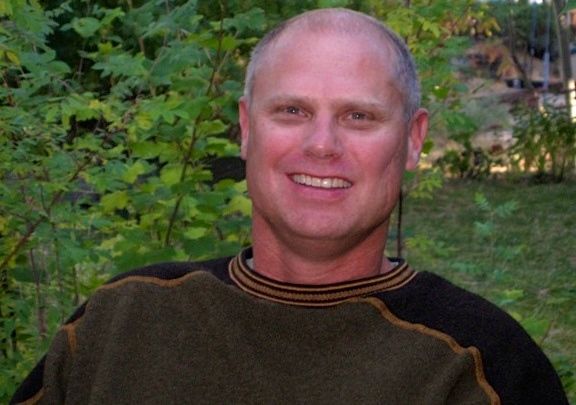
jim jonesName: Jim Jones

Profession/work experience: B.S. civil engineer, Cal Poly, 1968
M.S. civil engineering, Stanford University, 1972
Consulting engineer, South Lake Tahoe, 1977 to present
Executive director, Lake Tahoe Research Coordination Board, National Science Foundation, 1974 to 1977, South Lake Tahoe
Sanitary engineer, Environmental Protection Agency, San Francisco, 1972 to 1974
Hydrologist and civil engineer, U. S. Bureau of Reclamation, Sacramento and Denver, 1968 to 1972
Registered civil engineer in California, Nevada and Hawaii
California Community College instructor credential

Age: 71

What organizations, committees or groups are you or have you been involved with?: Member of the American Society of Civil Engineers
Kiwanis Sunrisers of South Lake Tahoe, member and president, 25 years
Tahoe Tallac Association, founding board member, 22 years
South Lake Tahoe Chamber of Commerce, member 28 years.

Why are you running for the South Tahoe PUD board?: The prosperity of our community is directly related to the services provided by the district. With my education, training and experience, I feel that this is where I can best serve the community where I have lived and owned a residence for 40 years. I am deeply concerned about protecting the $1.6 billion investment that we have in infrastructure and improving our fire protection facilities. I have the time, enthusiasm and the energy to carry out the duties of a director.

Why should people vote for you over the other candidate?: With my knowledge and understanding of the “Water World”, I am the most qualified person for the position. I have represented the district on the regional, state and federal level. I have been heavily involved in lobbying and obtaining over $90 million of federal funding to rebuild the wastewater treatment plant in the ’80s, replace the export pipe line in the ’90s and most recently to obtain matching funds for fire protection in the basin. I was the chairman of the MTBE Committee for the Association of California Water Association and testified before Congress in the successful effort to have MTBE banned. We also won $69 million from the oil companies for cleaning up their pollution of our groundwater and wells.
What do you think is the most pressing issue facing the district and how will you deal with it?: As for the water distribution system, we have about 250 miles (1.3 million lineal feet) of waterlines. Most of these lines are more than 50 years old and at least 10 percent are under sized or failing. We desperately need to upsize many of these lines, most of which are in the older parts of town such Al Tahoe and Sierra Tract, for fire protection. The cost of replacing the old water lines about $1 million per mile and we should be replacing at least 1 percent or 2.5 miles per years. Many of sewer and water pump stations are more than 50 years old and need upgrades and significant repairs.

Would you consider merging administrative services with the city of South Lake Tahoe so there would be a reduction in cost to ratepayers? Why or why not?: The jurisdictional boundaries are not the same and the county would not be included. If in the unlikely event that city and the county were to be combined, there might be some benefits. At this point in time, because of the unique mandates of the district, I don’t see any significant benefits in combining STPUD with the city. I don’t think anyone would suggest merging the school district into the city for a similar reason.

The district is seen by some as a cog in the wheel for economic development. Recent examples are charging $50,000 to add a small bathroom to a business and $500,000 for a Laundromat to move. What are your opinions about the district’s fees?: The district is a publicly owned entity by the 17,000 property owners within the district boundaries. The value of the district infrastructure is about $1.6 billion meaning that everyone has about a $100,000 investment in water and sewer facilities. Connections fees for new or expanded projects partially pay for a “buy in” to the existing system. Thus the existing owners are not forced to subsidize new development.

The sewer units go with the property and cannot be moved. When a Laundromat was recently forced to relocate, they were given an estimate of about $250,000 (not $500,000) to buy approximately 50 more sewer units to install the Laundromat in an existing building. They then decided to move into the Raley’s building at the Y where there were already enough sewer units at no cost.

As for the reported $50,000 fee for adding a bathroom, the staff at the district has no idea where that came from as the cost for adding a sewer unit is about $5,000 in an existing residence or commercial building.

Being on the board requires working with four others. Give readers an example of how you work well others in difficult situations with differing opinions: The board works under a long and complicated list of regulation and laws implemented by the state and federal governments. These regulations include not only water quality and environmental issues, but how the district deals with labor issues. Education and experience are necessary in dealing with many issues. When every board member understands the issues and implications, it is easier to come to a resolution. Board members are encouraged to attend meetings, workshops or conferences of the Association of California Water Agencies (ACWA), the California Association of Sanitation Agencies CASA) or the California Special Districts Association (CSDA) to learn the “water business” and how to be the best director as they can be.

What needs fixing at the district and how would you go about fixing it?: The funding mechanism is out of whack! For the last eight years, the majority of the board has not seen ready to raise the rates to cover the cost-of-living increases or to adequately fund capital improvement projects. Because of the lack of funding, staff has constantly had to modify the 10-year master plan, ignore the 20-year plan and scramble to delay repairs, upgrades or replacement of infrastructure.

For years, I have not supported the budget prepared to reflect the lack of increased fees. I have advocated gradual, modest increases to cover the long-term master plan. We are now on a course that will at some time lead to high annual rate increase over multiple years.

We should be building for the future, not stealing from it!

How many board meetings in the last year have you attended?: In the past year, I have attended 22 of the 24 board meetings, missing two meeting when I represented the district at Association of California Water Agencies conferences. Additionally, I have attended monthly Operation Committee and other ad hoc committee meeting. I also represent the district at monthly meetings of the El Dorado County Water Agency of which I am the current chairman.

Do you know what a special district is and how familiar are you with the governance of a special district?: Special districts are created to provide a specific public service for a community under California law. These district boards are often the ones most closely chosen and regulated by the local community when compared to larger state and federal departments. They reflect the flexibility that local communities want that larger state agencies cannot provide.

With a constrained budget, how would you prioritize projects involving the delivery of potable water, the collection and treatment of wastewater, and the export and reuse of treated wastewater?: I have long advocated a long-term master plan of at least 10 and possibly 20 years. Some districts actually plan and save for 50- to 100-year capital improvement master plans. Our staff will establish priorities based upon potential failure factor which is multiplied by the impact of failure. Other factors such as regulatory deadlines and availability of grants are used in the evaluated. Priorities are evaluated annually and may be changed as conditions change.

Because of fiscal restraints, many higher priorities projects have been pushed back or kicked down the road. I have argued against the lack of fiduciary responsibility in protecting the districts assets for our customers.

In order to reduce water and sewer rates would you be a proponent of a reduced level of service by the district? Why or why not?: The district has a list of minimum levels of services which the board will periodically reviewed and revised. At this point, I don’t believe there are any significant changes that we can implement without adversely impacting the environment or the lake. Additionally, we do not want to reduce the services that might impact the tourist industry that the city thrives on.

An example of issues that threatened to impact the tourist industry was the MTBE pollution problem. The district immediately implemented a policy of not providing water with any detection of MTBE even when the state set a higher standard that would allow a possibility of some smelling the pollutant. People were calling the district and the chamber of commerce to see if they should bring their own bottled water.

The district has been criticized for providing a higher compensation package than other entities in Lake Tahoe. Do you believe this package is justified? Why or why not? If not, what is fair and what will you do to change things?: The staff is full of highly trained individual with special skills, training and one or more state certifications. We need to and are required by state legislation to compensate them on a level comparable with the rest of the water/sewer districts in the state. There are legislative mandates that the district adhere to in negotiating with labor union for public agencies. Salaries need to be comparable with similar jobs in similar agencies for recruiting and retaining high quality employees.

It should be noted that the district has never provided post-retirement benefits that have threatened the financial health of many other agencies in California and the nation.

As a board member how would you represent all district customers and not just the small percentage of people who comment or complain to you?: As a civil engineer with 45 years of involvement in water issues, I have always been concerned with doing the right things to make the systems work efficiently and protect the district’s $1.6 billion investment for all of our customer/owners. I look at the whole picture and not to anecdotal stories and the small minority of the usual suspects that don’t represent the 17,000 that we serve.

Tell the voters something about yourself that they may not know: Back in the early 1980s, I was involved in Baja off-road racing and got mixed up with a group in Southern California that were tied into Toyota. They had access to a supply of Toyota mini-truck that they converted to 4X4s before Toyota had factory built 4X4 mini-truck. I was marketing these super trick trucks to Toyota dealers as far north as Portland and east to Denver. I was selling 4X4 trucks to Shehadi Toyota.



Advocates consider expanding Calif. recycling

By Jeremy B. White, Sacramento Bee

The fact that you drag that recycling to the curb doesn’t mean it escapes the landfill.

In the years since California enacted a recycling framework, subsidized by the deposits paid on cans and bottles, people have generally been willing to do their part. Cities and counties have reflected that receptiveness by expanding the universe of materials eligible to be picked up curbside.

But putting recyclables in a bin forms just one link in a long chain allowing containers to live second lives as repurposed raw material. Once discarded goods arrive at a processing facility, their fate is governed by a simple business decision: given the resale value, is it worth the time and money to collect, separate or process?

A recent Californians Against Waste report found that most most cartons containing milk and juice end up intermingled with garbage – despite the fact that more and more cities encourage residents to toss those containers in with other recyclables. Styrofoam is technically recyclable but often becomes garbage.

“It’s important to make a distinction between collected and recycled,” said Mark Oldfield, a spokesman for CalRecycle. “It quite often comes back to, what do they have locally in terms of processing capability?”

California’s foremost recycling advocacy group hopes to expand that capacity. Fresh off a resounding victory as the Legislature passed a ban on the single-use plastic bags that gum up recycling machinery and clutter waterways, Californians Against Waste is contemplating legislation to expand the type of materials covered by the state’s program.

Read the whole story


Calif. pot legalization efforts under way

By Lisa Leff, AP

SAN FRANCISCO — A national marijuana advocacy group took steps Wednesday to begin raising money for a campaign to legalize recreational pot use in California in 2016, a move with potential to add a dose of extra excitement to the presidential election year.

The Marijuana Policy Project filed paperwork with the California secretary of state’s office registering a campaign committee to start accepting and spending contributions for a pot legalization initiative on the November 2016 state ballot, the group said.

The measure would be similar to those passed in 2012 by voters in Colorado and Washington, the first U.S. states to legalize commercial sales of marijuana to all adults over 21.

California, long the national leader in illegal marijuana production and home to a thriving, largely unregulated medical marijuana industry, is one of the 21 other states that currently allow marijuana use only for medical reasons. The drug remains illegal under federal law.

“Marijuana prohibition has had an enormously detrimental impact on California communities. It’s been ineffective, wasteful and counterproductive. It’s time for a more responsible approach,” Marijuana Policy Project Executive Director Rob Kampia said. “Regulating and taxing marijuana similarly to alcohol just makes sense.”

The Washington, D.C.-based group also has established campaign committees to back legalization measures in Arizona, Massachusetts and Nevada in 2016.

Voters in Oregon, Alaska and the District of Columbia will weigh in on marijuana legalization in November.

In 2010, California voters rejected a ballot initiative seeking to legalize recreational pot. The measure, just like the medical marijuana law the state approved in 1996, was the first of its kind. But along with opposition from law enforcement and elected officials, Proposition 19 faced unexpected resistance from medical marijuana users and outlaw growers in the state’s so-called Emerald Triangle who worried legalization would lead to plummeting marijuana prices.

Marijuana Policy Project spokesman Mason Tvert predicted no such divisions would surface this time around.

Citing his group’s experience in Colorado and the advantage of aiming for a presidential election year when voter turnout is higher, Tvert said legalization supporters would use the next two years to build a broad-based coalition and craft ballot language that addresses concerns of particular constituencies.

“Obviously, it’s a whole different landscape in California, where it will cost probably as much or more to just get on the ballot as it did to run a winning campaign after getting on the ballot in Colorado,” he said.

League of California Cities lobbyist Tim Cromartie, whose group opposed the state’s 2010 pot legalization initiative and until this year fought legislative efforts to give the state greater oversight of medical marijuana, said Wednesday that it was too soon to say what kind of opposition, if any, would greet a 2016 campaign.

Lynne Lyman, California director of the Drug Policy Alliance, said her group expects to play a major role in the legalization effort and already has started raising money. Lyman said the goal is to have an initiative written by next summer. She estimated that a pro-legalization campaign would cost $8 million to $12 million.

Even though California would be following in the steps of other states if a 2016 initiative passes, legalizing recreational marijuana use there would have far-reaching implications, Lyman said.

“When an issue is taken up in California, it becomes a national issue,” she said. “What we really hope is that with a state this large taking that step, the federal government will be forced to address the ongoing issue of marijuana prohibition.”


Public gets glimpse of S. Tahoe recreation plan

By Jessie Marchesseau

About 30 people gathered at the South Lake Tahoe Recreation Center on Sept. 25 for a public open house to review the recently released draft of South Lake Tahoe’s first Parks, Trails and Recreation Master Plan.

The plan, which has been in the works for more than a year, is collaboration between El Dorado County and South Lake Tahoe. During this time coordinators have gathered more than 1,200 surveys and questionnaires from residents indicating what they believe should be the community’s park and recreation priorities.

The draft is available to view on the city’s website, but this was the first public presentation of it.

Consultant Cindy Mendoza presenting the plan highlights. Photo/Jessie Marchesseau

Consultant Cindy Mendoza on Sept. 25 presents the recreation plan highlights.
Photo/Jessie Marchesseau

At a long table on one side of the gymnasium sat four of the six core project team members: Norma Santiago, Angela Swanson, Vickie Sanders and Lauren Thomaselli, and five of the 11 master plan advisory committee members: Andrew Strain, Steve Yonker, Scott Valentine, Ty Polastri and Garrett Villanueva.

Thomaselli, Swanson, Strain, Polastri and Santiago each took a few minutes to speak to attendees about the plan, the process and their personal visions before handing the podium over to Cindy Mendoza, a project manager with planning and design firm MIG.

Mendoza has been helping the committee and team members develop the overall plan. She broke down some of the survey data for attendees revealing, for example, how 94 percent of residents agreed that trails, pathways and mobility were the most important areas needing improvement. One aspect she found surprising, however, was that people indicated they wanted these bike trails and paths not so much for recreation purposes, but for getting where they needed to go such as work and the grocery store.

Mendoza, in conjunction with the project team and advisory committee took these survey results and combined them with economic data, environmental concerns and recreation opportunities to create this master plan vision statement:

We envision an accessible, interconnected, and sustainable system of diverse, year-round recreation opportunities for residents and visitors. Our world-class parks, facilities, trails, and programs inspire and engage recreation enthusiasts, shape our community, connect us to our natural environment and support our shared future in the South Shore.

The master plan breaks down projects into three main categories: quick wins, short-term projects, and long-term initiatives. Long-term initiatives are the lowest on the priority list and/or the larger, more time-consuming projects; these have a six- to 10-year time line. Short-term projects will have a two- to five-year timeframe, and quick wins are projects that can be done within the next year, offering instant gratification and a feeling of getting the ball rolling.

“We do feel like quick wins are demonstrating action,” Thomaselli said.

Some of these projects which can already be seen around town are the improvements to the Al Tahoe sports fields which were completed this summer and the extensive resurfacing of city bike trails. Dirt is also piling up at the Bijou bike park which will undergo construction next spring.

Listed as short-term priorities are a number of projects including restoration of Regan Beach, improvements to Bijou Golf Course and implementing water efficiency programs.

Making the long-term list is the renovation of the recreation and swim complex, an outdoor amphitheater or events venue, and a new park for county residents among other things.

Even though the plan’s vision statement calls for “year-round recreation opportunities,” any mention of winter activities or improvements was noticeably missing from the evening’s presentation. When asked about this oversight, Polastri said the city is going to try plowing the bike paths this winter. Beyond that, Mendoza said the focus would be more on providing people with indoor activities during the winter such as using the recreation and swim complex.

During open discussion, attendees brought up several other seemingly overlooked recreation concerns such as the Bijou skate park, fishing opportunities, rock climbing access, softball fields and sledding hills. Mendoza explained that most of these items did not show up as priorities in the public surveys, but encouraged participants to submit their concerns on questionnaire sheets available at the door.

The planners are adamant that the South Lake Tahoe of the past which had a tendency to do a lot of planning but never carry through on those plans is no more.

“We are great at planning,” Santiago said, “but now we have a group of committed people that are good at implementation.”

The projects already under way or completed appear to be a step in the right direction. However, financial funding for most of the short- and long-term projects is still unaccounted for, though Thomaselli said she is confident if the plans are in place, the funding will come through.

The public has until Oct. 10 to submit comments and opinions on the master plan draft. The plan is online.


College education tied to earnings potential

By Thomas C. Frohlich, Robert Serenbetz, Alexander Kent and Alexander E.M. Hess, 24/7 Wall St.

The proportion of Americans with a college degree has increased steadily each year for more than a decade. According to the latest U.S. Census data, 29.6 percent of Americans at least 25 years old had at least a bachelor’s degree last year, up from 27.9 percent in 2009.

Based on recently released educational attainment data from the U.S. Census Bureau’s American Community Survey, West Virginia had the lowest level of educational attainment, with 18.9 percent of adults 25 and older having attained at least a bachelor’s degree in 2013. Conversely, more than 40 percent of Massachusetts residents had at least a bachelor’s degree, the highest percentage nationwide.

Earnings vary dramatically according to a person’s level of education. According to Holly Yettick, director of the Education Week Research Center, it is very clear that “people with higher levels of educational attainment make more money.” While a typical American adult with less than a high school diploma earned slightly more than $20,000 in 2013, a person with a bachelor’s degree earned more than $50,000.

Varying levels of income and poverty may also help explain the considerable variations in educational attainment between states. According to Sterling Lloyd, senior research associate at the Education Week Research Center, “varying poverty levels, or differences in socioeconomic status among residents in states” are among the major contributors to disparities in educational attainment.

In fact, the median household income in nine of the 10 states with the lowest educational attainment rates was far lower than the national median of $52,250 in 2013. On the other end of the spectrum, the most educated states all had among the highest median household income in the nation.

A number of other factors contribute to a state’s college attainment rate. While it is extremely difficult to measure the impact of policy on a region’s level of education, Lloyd explained that policy makers expect that “efforts to increase financial assistance for students will ultimately result in higher rates of educational attainment.” State policymakers are also attempting to improve college readiness by implementing new curriculum standards and benchmarks for college readiness, Lloyd told 24/7 Wall St.

College attainment levels may also be influenced by a migration effect. Yettick pointed out that areas in Colorado, for example, have excellent college attainment rates but relatively poor high school graduation rates. This may indicate that while a state’s education system may be weak, its job market may be strong, attracting people with college degrees to move to the state.

However, a state may also attract people without college degrees. Yettick mentioned Nevada in particular, which had among the lowest college attainment. According to Yettick, “there are a lot of service jobs, so a lot of people moving into [Nevada] do not have college degrees.”

Read the whole story


Olympic committee chief demands ‘sustainable’ Games

By Peter Hutchison, AFP

INCHEON, South Korea — Olympic boss Thomas Bach said future Games hosts would have to prove their “sustainability” and that there would be a shake-up of the bidding criteria.

The International Olympic Committee (IOC) president made the comments last weekend to Olympic Council of Asia delegates in Incheon, which has gone into debt to host the ongoing Asian Games.

The German official said the IOC has to “act now” to preserve its “relevance”, suggesting cities who pitch for international sports events need to think about the long-term impact.

“There is broad agreement that we need changes in the bidding and candidature procedure for the Olympic Games,” Bach told the OCA general assembly.

Read the whole story


Forecast: Less snow for skiers, less water for Calif.

By Kitty Felde, KPCC

Attention skiers: climate change means fewer trips to Tahoe this century. That’s the word from a first-time study by the Department of the Interior. Less snow also means additional challenges for storing water during drier months.

According to the DOI’s Sacramento and San Joaquin Basins Climate Impact Assessment, the average temperature in California’s Central Valley is predicted to rise by about 3 degrees Fahrenheit by mid-century and possibly more than 5 degrees by the end of the century. It may not sound like much, but it means more rain and less snow in the Sierra.

That snow provides more than recreation for skiers. It’s like a bank account for future water withdrawals. Deputy Interior Secretary Michael Connor says we’ve historically relied on the natural snowpack to melt slowly, providing steady runoff that would provide water for cities and farms into mid-to-late summer. Less snow means less water during California’s hotter, drier months.

Read the whole story


Parents get schooled in social media dangers

By Kathryn Reed

How well do you know your friends?

That was the overriding question this week as FBI Special Agent Scott Schofield spent two days at South Tahoe Middle School talking to students, faculty and parents about the dangers lurking on the Internet.

It’s not just Facebook that is a problem. In fact, that is less worrisome these days for kids because they are tuning out as more of their parents are logging in. It’s Instagram, which Facebook owns, SnapChat, the app Kick and gaming consoles that are attracting younger people. (Gaming consoles allow for chatting and interactions with strangers.) Then there’s always the next unknown social media platform that is on the horizon to be worried about.

Schofield said the basic questions to ask are:

• What information am I giving away about myself and others?

• Who am I giving it to?

• Is that a good idea?

Adults should be asking the same questions, he said. Schofield is with the Child Exploitation Task Force out of the Sacramento office, of which South Lake Tahoe is a part.

He pointed out there are 138 million fake Facebook accounts. He has one where he is a teenage girl. He’s never “friended” someone, but has 200 friends. They have sought him out because of things he’s posted as his alter ego.

Schofield then proved how easy it is to get tons of personal information about people and then use it to become their “friend”, stalk them or steal their identity. The worst cases are when people meet a “friend” in person and it either ends in abuse or a fatality.

And while SnapChat’s claim to fame is not to record photos or videos, nothing is ever truly deleted. Plus, if someone takes a screenshot, well, it’s in the universe presumably forever.

This can backfire when it comes time to apply for college or a job. Google searches are the norm these days. What is posted at age 13 can be a black mark at 18.

“I learned I have a whole lot to learn and I can’t afford not to,” Sylvia Kaufman told Lake Tahoe News after the Sept. 24 meeting that was targeted to parents.

She has one child who is a freshman at South Tahoe High School and an adult daughter who has a child of her own. Now she is worried about all the information on Facebook about her grandchild.

Kaufman said it’s important to be vigilant even when her son says she doesn’t trust him. Her response is that she doesn’t trust everyone else on the Internet.

The parent presentation Wednesday evening, which drew more than 100 people, followed the daytime talk by Schofield to educators. That was a bit more graphic in nature.

On Thursday, the sixth-, seventh- and eighth-graders heard much of the same, but a greater emphasis was put on cyber bullying. That was barely touched on with the parents. But it is of great concern to Willie Shamas because his son, who is 13 and 160 pounds, is getting harassed by kids because of his size.

“I bet none of them could say what the golden rule is,” Shamas told Lake Tahoe News. “I’m trying to teach our son respect.”

Respect was something Schofield touched on, especially when it comes to sexting. Boys, he said, need to respect girls more and stop asking for explicit pictures. And girls need to respect themselves enough not to provide them. It is illegal to try to obtain what would be deemed pornographic pictures of someone who is younger than 18 – even by someone in the same age group. Naked photos fall under pornography, especially for those under age.

STMS Principal Beth Delacour is trying to bring programs to her school that will show students and parents the dangers that lurk outside the walls of her campus, but can still penetrate them. Students have access to the Internet in classrooms. And while there are firewalls, she is sure some students could penetrate them. Phones are not allowed during school hours. If students are caught with one, it is confiscated and a parent must come retrieve it. She estimates 70 percent of her students have a cell phone.

“We don’t have bad kids, just kids who are learning and making mistakes,” Delacour said. Schofield and others are trying to limit the damage of those mistakes.

Delacour told Lake Tahoe News the problem this year has been more with parents. They just don’t believe their child has done what they are being accused of. That in part is why not only are the students getting in on the education, but parents are, too.


Romsos: ‘Fuel operations with renewable energy sources’

Publisher’s note: Lake Tahoe News asked the two candidates running for District 2 of the South Tahoe Public Utility District board the same questions. The answers are running in the order received by LTN.

Shane RomsosName: Jeffrey “Shane” Romsos

Profession/work experience: I’m currently a research scientist for Spatial Informatics Group – an environmental think tank specializing in landscape analysis to inform good natural resource policy and management. I was formerly the science, monitoring, and evaluation program manager for Tahoe Regional Planning Agency (total 12 years), and wildlife program manager, and on the Forest Plan Revision Team for U.S. Forest Service – Lake Tahoe Basin Management Unit (total 5.5 years).

I hold a bachelor of science in wildlife, and master’s of science in natural resources from Humboldt State University.

Age: 47

What organizations, committees or groups are you or have you been involved with?: Professionally, I was involved the 2012 TRPA Regional Plan update, the 2001, 2006 and 2011 Environmental Threshold Evaluations, the 2000 Lake Tahoe Watershed Assessment, Pathway Planning process, and served as the U.S. Forest Service’s alternate representative on the TRPA Advisory Planning Commission. As a volunteer, I’ve participated in Bijou School Beautification Committee workdays and St. Theresa School fund raising events, and other community events, such as Forest Stewardship days. I’m a 2014 graduate of the South Tahoe Chamber of Commerce’s Leadership Lake Tahoe program. I participated in the Lake Tahoe Community College Vision 2020 Forum. I’ve recently committed to participating on the South Tahoe Economic Development Task Force.

Why are you running for the South Tahoe PUD board?: Personally, I want to be a more active participant in our community. As a STPUD board director, I’d like to explore where and how the district can do more to support prosperity and quality of life in South Lake Tahoe. I’d like to change the district motto from “Silently Serving South Lake Tahoe” to “Doing More to Serve the South Lake Tahoe Community.”

Why should people vote for you over the other candidate?: I’ll bring new energy and fresh ideas to the board. I’m committed to representing the perspectives of the various district customers and continuing the delivery of affordable, cost-effective and high quality water and wastewater services. I believe the district has tremendous opportunities to utilize its many diverse resources and talented staff for the benefit of our community – I will be a resource for making positive changes.

What do you think is the most pressing issue facing the district and how will you deal with it?: The district has and always will have a wide range of recurrent issues related to water, wastewater, fire hydrant flows, metering, acquisition of private water utilities, and water reclamation systems – all of these recurring issues are addressed in various management plans and are already the focal-point of the district board and staff. A greater challenge to the board and district’s management is to control costs so those costs are not passed on to the customer. To control costs, the district needs to make sure it is spending money on the right projects at the right time. I believe there are many important projects but they do not all need to be done immediately and proper asset management can effectively prolong the life of critical infrastructure, and decrease real costs over time. Also, the district should do more to make its operations more energy efficient and to fuel operations with renewable energy sources. This move would also reduce greenhouse gas emissions. The district could also save customers money by increasing the utilization of existing staff or using local contractors and consultants to do needed work instead of contracting with more expensive off-the-hill consultants that are not necessarily in tune with our community, local regulations, issues and ways of doing business. Spending district money locally will help fuel our local economy. Additionally, I think the District can do more to create and genuinely embrace partnerships with local, regional, state and federal agencies – leveraging resources would reduce costs.

Would you consider merging administrative services with the city of South Lake Tahoe so there would be a reduction in cost to ratepayers? Why or why not?: I think there are a number of jurisdictional boundary, political and legal issues that need to be worked out before a merger could take place. Instead, I believe a more cost-effective solution is for the city and district to enter into and embrace a partnership to get things done. For example, the city and district could share and combine resources. In the winter, the city struggles to keep up with snow removal for example. This is typically when the district is not as busy due to a decline in construction activities – perhaps staff could be shared. The district has heavy duty vacuum trucks (and other heavy equipment) which often sit idle and could be used to assist the city in cleaning out stormwater treatment facilities – in doing so, the district would be protecting drinking water and Lake Tahoe. The district similarly employs people with technical knowledge of pumping systems – the city could benefit from this know-how for its maintenance and operation of other stormwater facilities (e.g., the Bijou stormwater treatment facility). The district could also do more to support community facilities – many utility districts provide play areas and recreational facilities for their customers (e.g., IVGID and North Tahoe Public Utility District). Why couldn’t the district provide play areas for our kids on their lands in South Tahoe or otherwise creatively support the upkeep of existing community recreation amenities? In doing so, the district would be given notoriety for providing our local and visiting customers recreation opportunities that are important to supporting our quality of life and attractiveness as a resort destination.

The district is seen by some as a cog in the wheel for economic development. Recent examples are charging $50,000 to add a small bathroom to a business and $500,000 for a Laundromat to move. What are your opinions about the district’s fees?: I believe there is an opportunity to review the current hook-up fees in order to better facilitate projects that are needed to improve our community. We need new responsible development which provides for stormwater treatment and other projects which protect the lake — our community needs affordable housing, and to redevelop antiquated and outdated development. It seems reasonable to me that the district take an active role in helping developers and businesses further transform our community into a place we can be proud of by reducing certain fees or finding alternative financing mechanisms associated with water and sewer hook-ups. Connection fees have been an impediment to community improvement projects including new and improved business developments, residential construction, low-income housing, improvements along Highway 50, greenways, linear parks, Lakeview Commons, and others. Similarly, I believe the district should take the opportunity to review and potentially revise the rate structure for residential units now that metering is being implemented. The current rate schedule is based on the size of pipe entering the property, and with metering, this no longer seems equitable or reasonable to the typical ratepayer. I believe your rates should primarily be based on the water you use, not the size of the pipe at the property line.

Being on the board requires working with four others. Give readers an example of how you work well others in difficult situations with differing opinions: Having worked at TRPA and the U.S. Forest Service on planning matters for greater than 16 years combined, I’ve frequently dealt with divergent views. In my experience, it’s important to be a good listener and genuinely attempt to understand different viewpoints. And from my perspective, it’s also important that each board member apply due diligence in researching issues before coming to any concrete conclusions. From there, I believe common ground can be found to move forward on issues and decisions.

What needs fixing at the district and how would you go about fixing it?: From my perspective, it seems like the district is somewhat fixated on finding ways to be exempted from state and federal policies and regulations designed to improve efficiency, conserve water, or otherwise benefit the environment. That is, it appears the district prefers to do things like they always have. It costs consumers money to hire lawyers and lobbyists to fight such policies and regulations. Rather, I’d like to see the district adopt a more progressive, forward-thinking philosophy and get out in front of such policies and regulations. For example, California has adopted ambitious greenhouse gas reduction targets that right now do not affect the district’s operation, but eventually will. Let’s invest in doing those things to make the district a model of sustainability now, instead of spending customers’ money on lawyers and lobbyists to fight good policy.

How many board meetings in the last year have you attended?: I have reviewed dozens of board meetings in the past year via the website and attended a handful of meetings in person. I have also toured the district wastewater operations twice.

Do you know what a special district is and how familiar are you with the governance of a special district?: Special districts are a form of local government created to meet a specific need such as providing water and wastewater services. Special districts are accountable to the customers who use their services. The state of California provides oversight over special district operations, and special districts are required to follow state laws pertaining to public meetings, debt management, environmental compliance, record keeping and elections, and must submit annual financial report to the state controller. Professionally, I’ve worked with STPUD in a planning and regulatory role on various projects, such as the wastewater export line over Luther Pass.

With a constrained budget, how would you prioritize projects involving the delivery of potable water, the collection and treatment of wastewater, and the export and reuse of treated wastewater?: The district maintains five- and an ongoing 10-year priority capital improvement program (CIP) lists and a less specific 20-year CIP list for develops a longer term budget forecast. So in many ways, priorities have been set and are based on established criteria related to age and condition of infrastructure and needs associated with improving fire hydrant flows. As discussed above, I would look at how these projects are prioritized and make sure we are spending money at the right time and in the right place, and develop strategic partnerships with other agencies to maximize the return on our investment in personnel, equipment, technology, and resources. As a board member, I’d like to prioritize moving the district toward implementing more energy-efficient technologies and retrofitting operations with renewable energy systems to save customers money and to reduce the district’s greenhouse gas emissions. There are alternative revenue sources, such as state and federal grants and potentially carbon offsets that could help pay for such upgrades. Today the district spends about a million dollars per year on non-renewable energy to pump wastewater to Alpine County – wouldn’t it be great if we could reduce that bill by half through the utilization of renewable energy sources? I’d also like additional focus on the operations of lands in Alpine County. I believe there is incredible opportunity to better utilize recycled wastewater and district owned land to create wetland habitat for wildlife (and natural areas for people) and still provide water to ranchers that are dependent on those waters. Funds to support such a project could come from creating a habitat mitigation bank as well as from selling carbon offsets and charging for the use of recycled water (which is currently given to ranchers at no cost).

In order to reduce water and sewer rates would you be a proponent of a reduced level of service by the district? Why or why not?: According to district financial reports, the district’s water and sewer rates are the lowest in the Lake Tahoe basin and track well with the consumer price index. I would not support a reduced level of service in order to reduce rates. The Lake Tahoe environment is too fragile to be frugal – the system needs to be appropriately monitored and maintained to ensure no harm is done to our drinking water and our Lake. The quality of our environment is critical to maintaining our quality of life and economic prosperity.

The district has been criticized for providing a higher compensation package than other entities in Lake Tahoe. Do you believe this package is justified? Why or why not? If not, what is fair and what will you do to change things?: I believe our community needs more opportunities similar to those provided by the district — good paying jobs attract and retain talented people, and ultimately contribute to a prosperous south shore economy. The district assumes a significant amount of responsibility to manage these systems, to ensure they reliably deliver high quality water and treat wastewater, and do no harm to Lake Tahoe’s fragile environment. The district’s compensation package is justified considering the high level of skill needed to operate and maintain the complex water and wastewater systems at South Tahoe. As a director, I would support the continued development and promotion of staff, recognizing the value of institutional history. I’d support district wage policies that are based on an individual’s skill sets, level of responsibilities and performance, and be against policies that automatically allow for wage increases. The district does pay its employees well and we must demand very high performance in return. As a director, I would set the bar high, and help provide the energy, ideas, contacts, and resources to get it done.

As a board member how would you represent all district customers and not just the small percentage of people who comment or complain to you?: Through my experience in regional planning, research and monitoring, I have a keen familiarity with local issues and people’s concerns. I appreciate the diverse nature of our town, the needs of stay-at-home and working parents, their children, people trying to find good work and good homes, the challenges of the contractor, realtor, and other small business owners, young seasonal workers to retirees. I am an involved member of the community and know a diverse group of people through my work, volunteer efforts and family life. I will use the relationships I’ve created professionally and personally here at South Tahoe to actively ask people how the district is doing and note their responses. Additionally, I believe the district should conduct regular customer satisfaction surveys which include the opinions of businesses to get a broader sense of how the district is doing. This input should be used to improve the district’s services. I also believe the district has a responsibility to more effectively communicate their decisions and activities in order to inspire better public participation at Board meetings and support from customers. I’d support moving the time of board meeting’s to later in the day when it is more convenient for customers to participate.

Tell the voters something about yourself that they may not know: I moved to South Lake Tahoe with my family in 1972, and attended Meyers Elementary School. I lived here off and on through middle school, and I permanently settled here in 1997 after finishing my graduate program. I’m married with two children. In my free time, I enjoy spending time with my family and friends, woodworking, playing hockey, and the many recreational opportunities that South Tahoe has to offer. I am fully dedicated to our community and to help it become a better place to raise a family, earn a good living, start and run a profitable business, and enjoy the great outdoors.


Parched Calif. expected to miss out on fall rains

By Veronica Rocha, Los Angeles Times

Northern and Central California typically receive 30 percent to 40 percent of their precipitation over the next three months, but this year, forecasters say the upper two-thirds of the state can expect to miss out on much of that badly needed moisture.

The lack of significant rain will mean little relief for thousands of firefighters battling a series of destructive wildfires in Northern California, although a weather system is expected to bring some showers to the region later this week.

And even if an El Niño weather pattern does develop later this year, it is only expected to deliver below-median rainfall for Northern California, according to U.S. Seasonal Drought Outlook from the National Weather Service’s Climate Prediction Center.

Read the whole story