Wynn: Gambling not key to casinos’ success

A sold-out concert like Lady Antebellum doesn't mean concert-goers spend money at the casino, too. Photo/LTN file

Harveys has found success with its outdoor concert series. Photo/LTN file

By J.D. Morris, Las Vegas Sun

Nongaming revenue isn’t just crucial to the success of casino-resorts now — in fact, it’s always been “the story,” Las Vegas mogul Steve Wynn said in a speech this week.

Wynn delivered a keynote address to a packed crowd at the first full day of the Global Gaming Expo, or G2E, at the Sands Expo. Much of his remarks focused on revenue sources aside from gambling, an area to which the casino industry has shifted attention in recent years as many patrons have done the same.

Wynn stressed that bankrolling a successful resort on nongaming dollars — from hotel rooms, restaurants, shops and entertainment — is nothing new. He gave a history lesson of sorts, beginning with his tenure at the Golden Nugget decades ago.

Wynn brought up the fact that most Americans now live in a state where they can easily access a casino, meaning that a resort’s gambling opportunities can’t be the only thing attracting customers.

Read the whole story


LTCC soccer program netting more than goals

Midfielder Hector Hernandez, No. 15., goes for the ball Sept. 15 at LTCC. Photo/Jessie Marchesseau

Midfielder Hector Hernandez, No. 15., goes for the ball Sept. 15 at LTCC. Photo/Jessie Marchesseau

By Jessie Marchesseau

Lake Tahoe Community College kicked off the 2014-15 school year with a new mascot, the coyote, and two new soccer teams to wear it on their jerseys.

LTCC has been devoid of an intercollegiate athletic team since it did away with Nordic skiing in 2001. Volleyball and cross country running were discontinued a few years before that. More than a decade later, re-entering the collegiate athletic field was no snap decision. The new soccer program has been years in the making, with numerous proposals, discussions and studies along the way.

Ultimately, LTCC President Kindred Murillo believes the addition of a soccer team fit perfectly into the college’s new vision and goals for increased enrollment.

“It started out of our desire to reach into local high schools, and expanded into fitting our desire to be a destination college,” she told Lake Tahoe News.

Murillo sees the soccer team as a way for LTCC to meet its goal of attracting more students from local and nearby high schools by offering athletes a means to continue playing soccer without having to travel far away.

She also pointed out how students and young adults often come to Lake Tahoe from other areas because they enjoy a variety of outdoor sports. By offering the opportunity to play intercollegiate soccer Murillo hopes the college can tap into the supply of potential students already considering a move to Lake Tahoe.

And so far, it seems to be working.

“I believe we hired the coaches that will bring this program to the forefront of California community college soccer and bring student athletes to the program,” said Tim Johnson, LTCC physical education and health department chair, who originally proposed the idea of a soccer team to the school’s administration.

The head coach for the women’s team, Chris DeLeon, coached at South Tahoe High from 2001 to 2013. With such deep-rooted connections in the local soccer community, it is no surprise that 15 of the 21 players on the women’s roster hail from South Lake Tahoe.

“One of our biggest goals for starting teams was giving local flavor a chance to play,” DeLeon told Lake Tahoe News.

On the men’s side, head coach Benjamin Wade came to LTCC from Lassen Community College in Susanville. He brought 12 players from Lassen with him, chose a handful more at tryouts and used his web of international soccer connections to fill out the men’s team with 18 international players originating from Europe, Australia and South America.

The athletes, no matter where they come from, are not eligible for athletic scholarships, a variation from four-year institutions. This means every new player results in additional tuition dollars for the school.

In all, DeLeon said the soccer program brought in more than 50 students this year. About 20 of those were from other countries.

The unexpected influx of international students for the teams even influenced LTCC to implement an international student program. These international students are a welcome addition to the school for more reasons than one.

First of all, Johnson said, they bring different cultures and a more worldly air to the campus. In addition, they pay a significant amount of tuition to the school.

But, still, Murillo said she would like to see more local players and students.

“I think it’s surprising to local students how rigorous your life is going to be being involved in a college sport,” she said.

Many potential players struggled with balancing work and school schedules. Murillo said they are learning as they go, and the school may make some changes for next year to encourage more local athlete involvement.

Overall, the program has exceeded the expectations of pretty much everyone involved. From the turnout of more than 150 spectators at the first women’s home game, to the men’s team being ranked as high as No. 1 in the state in recent weeks, LTCC Coyotes soccer is off to a running start.

“It opens that door to the possibility of exploring another sport,” Johnson said.

This may happen sooner rather than later. Murillo indicated they are not leaning toward one sport or another, but the administration may begin exploring other intercollegiate athletic options as early as this winter.

The next Coyote soccer home game is Oct. 3. Team schedules are online.


Northern Nevada growing without tourism

By Ryan Frank, Las Vegas Sun

Reno had a problem in 1998. Lots of problems, in fact.

“The Biggest Little City in the World” long had been surpassed by Las Vegas and Atlantic City as a gaming destination, and tribal casinos had taken over Reno’s monopoly on northern California gamblers.

Lance Gilman, a music promoter-turned-real estate mogul, had a solution. While others focused on the warts of boarded up casinos, Gilman saw Reno’s potential as a hub for warehouses, manufacturers and data centers. And he had the cash to make a big bet on the region’s future.

Gilman and his partner bought a parcel of land east of town that was so big it covered more ground than the city of Las Vegas does today. On it, they planned to build what they described as the world’s biggest industrial park.

Sixteen years later, Gilman has the world’s attention.

Tesla Motors announced this month it would build an electric car battery plant in Gilman’s industrial park, the Tahoe-Reno Industrial Center. It’s expected to be one of the biggest buildings in the world and, if all goes as planned, deliver up to 22,000 jobs, $100 billion in economic impact and a new industry to help power Nevada’s economy.

Gov. Brian Sandoval said the deal “changed the trajectory of Nevada forever.” State lawmakers agreed, approving four Tesla bills, 240-0, including more than $1 billion in tax breaks and incentives.

Southern Nevadans may wonder why Tesla landed in tiny Storey County when Clark County has 30 times more land mass and 500 times more people. The lesson for Las Vegas is that the Reno region won because it had the right mix of strategy, location, geography and people.

Northern Nevada’s civic leaders accepted the reality that tourism wasn’t coming back and embraced Reno’s new identity as a remote suburb of San Francisco, rich with wealth, talent and tech. Fortune 500 companies such as Amazon, Wal-Mart and Barnes & Noble picked the region so their trucks could reach every major market in the West with one-day shipping.

Read the whole story


‘We had 3 minutes to save their lives’

By Amy B Wang, Arizona Republic

The command that blared from the radio was one Gary Dahlen had never heard before, not in all his years piloting helicopters over wildfires.

All available helicopters prepare for an emergency launch.

He hardly knew what to make of it. “I was thinking maybe structures were threatened,” Dahlen said later.

He was waiting at a helicopter base in Placerville.

Just uphill, where the American River’s south fork cuts a knife-sharp slash through the forest, the King Fire had been exploding up the canyon walls and beyond since Sept. 13. Now, two days later, the airborne and ground attack on the fire was under way.

Dahlen had been out doing “bucket work” all morning, picking up water in the bucket that dangled from his yellow Bell 205, dropping it onto the flames in the forest below. At midday, he returned to the base to refuel and await orders. Then he heard the unusual radio call.

He quickly climbed into his flight suit, then into his seat.

As the helicopter’s turbo engine whined to life,someone from the fire command staff came sprinting toward the aircraft, reached in and punched latitude-and-longitude coordinates into Dahlen’s GPS.

That was when he learned the emergency: It was a shelter deployment.

A crew on the ground, somewhere in the steep wilderness beyond the base, was stuck in front of the fire. Deployment meant the crew had unpacked their fire shelters, blankets of reflective foil and insulation, and prepared to climb inside them.

For a firefighter, deployment is a last resort. Some firefighters inside shelters survive, as the flames roll past them. Some do not. In 2013, the Yarnell Hill Fire in Arizona overtook 19 firefighters, members of the Prescott-based Granite Mountain Hotshots. Realizing they were trapped, the firefighters deployed their shelters. None survived.

In the cockpit of his helicopter, Dahlen looked at the coordinates on his GPS. The long line for his water bucket was still shackled to the airframe. But the trapped crew was 10 miles away. He lifted the Bell into smoke-dulled afternoon light and headed toward the flames.

Read the whole story


Novasel: ‘This is not a job for first-timers’

Publisher’s note: Lake Tahoe News asked the two El Dorado County District 5 supervisor candidates a series of questions. All are the same except for one that is specific to each candidate. The responses are being run in the order LTN received them.

Sue Novasel

Name: Sue Novasel

Profession/work experience: Business owner/school board member

Age: 58

What organizations, committees or groups are you or have you been involved with?: Presently, I am serving a third term in office (12 years) as a school board member (and past president) of Lake Tahoe Unified School District’s board of education; president of the board of Lake Tahoe Wildlife Care; secretary of the board of Lake Tahoe Wedding & Honeymoon Association; board member of the Lake Tahoe South Shore Chamber of Commerce; and member of Barton Hospital’s Community Advisory Committee. I have served on the original Meyers Community Plan team from 1990 to 1993; chair for over 10 years of the Meyers Community Roundtable Committee; immediate past president of Soroptimist International of South Lake Tahoe; member of the 56 Acre/Lakeview Commons Advisory Committee; and a member of TRPA’s Pathway 2007 Committee.

Why are you running for supervisor?: I have served our community for over 30 years as a member of over 20 boards. I am deeply rooted in our community. My varied background has given me the breadth and depth of experience necessary to understand the dynamics and complexities of the Tahoe basin and this district. I know how to make a fair and balanced decision while being respectful to others. I seek to be your county supervisor because I want to increase the service I can give to our community, and pledge to be your full time supervisor.

Why should people vote for you over the other candidate?: This is not a job for first-timers. I have a demonstrated ability to work in a governing body with professional administrative staff. My 12 years of experience as a public servant has also given me a broad-ranging set of connections with community residents as well as the skills required to deal with the demands and requirements of the job of county supervisor. Experience has taught me that good decisions result from reaching out to get information from all those affected and that listening carefully is generally more important than talking. I will work full time to achieve the greatest good for those I represent, which is critical for our community.

What do you think is the most pressing issue facing El Dorado County and how will you deal with it?: Economic vitality is the most important issue throughout our district. TRPA’s new Regional Plan update includes incentives and processes that can spur businesses to redevelop run-down properties or add new businesses to our communities while improving our environment.

In addition, a huge issue in all of District V is the fire risk resulting from poor forest health and dry conditions. We must be sure we are organized for rapid response by CalFire, the U.S. Forest Service, and local fire agencies so that effective coordinated action by all can occur the instant a fire starts.

Another important duty of the District V supervisor is to assure fair representation. Joint meetings between the county and City Council, school and utility districts, Tahoe Conservancy, U.S. Forest Service, and Lake Valley Fire District should be sought where major issues, challenges and opportunities for joint action can be discussed and planned.

The 56-acre project, which includes Lakeview Commons and the campground on the other side of Highway 50, is owned by the county and maintained by the city. The county has not invested a dime and does not contribute to the maintenance and operations. Would you ask the county to help with paying some of the bills or would you advocate for deeding the land to the city? Why or why not?: The county has invested money within the 56-acre project area. El Dorado County built the South Lake Tahoe library and fully funds its operations, including snow removal. County staff maintains the building and grounds. As a member of the 56-acre Advisory Committee, our group studied the possibility of transferring property to the city. The property is currently under a 50-year lease between the city and the county. With the joint City-County Recreation Master Plan and the 56-acre Master Plan having most of its elements still to be done, there may be some capital improvement opportunities that the existing city/county arrangement may offer – which might go away if the city wholly owns the property. In the mid-90s, a transfer nearly occurred but the effort was terminated due to West Slope concerns about the city’s commitment to retain the campground and the library. Those issues would all need to be addressed prior to pursuing a transfer. That being said, Lakeview Commons is a study on how our community can plan and create a masterpiece of recreation and community events for all residents (city and county) and tourists alike.

The city and county are putting together a recreation master plan, but the Board of Supervisors has never voted on whether it would fund the implementation of the plan. Would you dedicate funds to promote the investment of recreation?: Absolutely. Lake Tahoe is a world-class destination resort town. As our area has struggled to re-invent ourselves in the area of recreation and tourism, it is vital that we understand how our locals and tourists alike need better recreational opportunities for improving our quality of life. Specific projects need to be identified so that priorities can be planned and implemented. The county will be considering funding when it [had] budget hearings in September. There is a joint City Council/Board of Supervisors meeting scheduled in South Lake Tahoe on Oct. 28, at which time it is expected that the Recreation Master Plan will be adopted.

Being on the board requires working with four others. Give readers an example of how you work well others in difficult situations with differing opinions: The key is to listen to what other are saying, seeking and noting areas of agreement and disagreement. I always consider possible compromises that might achieve agreement (or at least, seek first steps toward resolution and action). To be an effective, successful leader you must listen to all sides then initiate action by incorporating items that everyone can agree upon and which ends with a positive solution.

What is working in the county and what isn’t; and how would you go about changing what isn’t working?: County employees are doing their jobs, serving the public in an excellent manner. What is not working is the board and some department heads who are not working together and with the CAO. The board is not giving consistent policy direction or setting a level of civility in public meetings that the public expects and deserves. There will be three new personalities on the board in this coming year. The board needs to work better together to become a strong advocate for public policy and leadership for our county. I will insist upon civility, respect and action plans to create a clearer direction for our county government.

Would you consider replacing the current CAO? Why or why not?: It is the duty of the board to give clear direction to the CAO. With three new Board members, providing a stable atmosphere and consistent direction needs to be the first course of action. We need to work with the current CAO at that level in order to understand and assess the CAO’s job performance.

The grand jury labeled the county dysfunctional. What is your opinion of that assessment?: I agree with the grand jury’s assessment that dysfunction within the board needs to be addressed. As to the recommendation to change several elected department head positions to appointed, the public reaction to that proposal has been extremely negative and I disagree with the grand jury on this point. There are benefits to the elected department heads having the independence to serve the voters, as opposed to being controlled by the board and/or administration. Most elected department heads are not seriously challenged (if challenged at all) when they run for re-election, giving them little need to posture for political reasons. I believe it is important to communicate well with department heads and I will work hard to build positive working relationships with both those who are appointed and elected.

Agriculture is a huge economic driver for the county. What are your ideas in regards to the drought to ensure farmers and ranchers have enough water?: With regard to the agriculture, issues of urbanization, conservation, management and utilization of lands within the county are fundamental elements that need to be considered as pressures from increases in population within our county threaten the rural character of our lands as well as the water supply in our county. It is especially important during these drought years and vital that agricultural water supplies be kept from being diverted to urban uses. The county needs to be proactive in the development of long-term water sources for irrigation and we need to be constantly searching for ways to expand sources. We need to prioritize water needs and actively pursue long-term solutions for the agriculture industry. I will take steps to assure that plans for future water use are properly drawn, reviewed and executed throughout the county. We need to get information about opportunities and costs, then evaluate feasibility and determine how extended supply facilities can be financed.

The Sand Fire this summer proved El Dorado County was lacking in emergency response coordination efforts. What improvements would you propose?: The Sand Fire, similar to the Angora Fire in Tahoe, was a “perfect storm”, as characterized by first responders. A huge issue in all of District V is the fire risk resulting from poor forest health and dry conditions. We must be sure we are organized for rapid response by CalFire, the U.S. Forest Service, and local fire agencies so that effective coordinated action by all can occur the instant a fire starts. I will work to ensure that reserve funding is strengthen to provide critical response time to emergency events while still providing general funding sources that are equipped to handle essential services and public safety to our communities.

How would you improve relations with the city of South Lake Tahoe?: To improve staff relationships, I would have the principal counterpart positions – county chief administrative officer and city manager, county counsel and city attorney – meet after facilitating and developing a discussion agenda, then have them meet on a regular basis thereafter. To improve the elected officials relationship, I would meet periodically with the mayor and, with the mayor’s knowledge and approval, meet with other members of the City Council. These meetings would be in addition to being sure that my office did a very good job of setting up the annual county board/city of South Lake Tahoe meeting, such as the one being held in October. To improve communications, this would include setting joint meetings between City Council and county supervisors, taking tours of city and county projects with emphasis on major project areas, and meeting with representatives of other Tahoe basin agencies such as the TRPA, Tahoe Conservancy, Tahoe chambers, U.S. Forest Service and Lake Valley Fire District.

You are involved in many things, how can people trust you will devote the necessary time it takes to be supervisor?: I recognize that the job of supervisor is at least 70 hours per week, with over 500 meetings per year. This obligation would be of upmost importance to me and would necessitate the need to resign from other positions I hold within our community. I pledge to devote my complete attention and energies to being a full time supervisor for District V.

Tell the voters something about yourself that they may not know: Many people didn’t know (until I mentioned it during the primaries) that I was an Olympic torch runner when the torch came through Tahoe in 1984 (on its way to the Summer Games in Los Angeles). I was the student representative for Lake Tahoe Community College’s board of trustees at the time and they asked me to represent the college by running the torch for the school. It was such a great honor that I decided to donate the torch back to the college and it still resides in their gym today.




USFS backs off wilderness photo restrictions

By Rob Davis, Oregonian

The U.S. Forest Service’s chief backed off proposed restrictions on photography in wilderness areas Thursday after facing sweeping protests from lawmakers, First Amendment advocates and media outlets across the country.

“The U.S. Forest Service remains committed to the First Amendment,” the agency’s chief, Tom Tidwell, said in a statement. “To be clear, provisions in the draft directive do not apply to news gathering or activities.”

The USFS is looking at revising rules for filming/photographing wilderness areas like Desolation. Photo/LTN file

The USFS is looking at revising rules for filming/photographing wilderness areas like Desolation. Photo/LTN file

Tidwell’s statement said he was attempting to “clarify the agency’s intentions” and would not require a permit for news-gathering or recreational photographs in wilderness areas.

Tidwell didn’t explain why others in his agency told the Oregonian the opposite just two days earlier.

On Tuesday, Liz Close, the agency’s acting wilderness director, said the Forest Service would permit reporting in wilderness depending on its subject matter, with exceptions for breaking news. “If you were engaged on reporting that was in support of wilderness characteristics, that would be permitted,” Close said.

She acknowledged that reporters shooting videos, even on iPhones, would need special permits.

The agency’s news release Thursday said the maximum $1,500 permit fees were “erroneous, and refers to a different proposed directive.”

Read the whole story

—

LTN notes:

  • To comment on the proposal, go online. The deadline is Dec. 3.
  • The number of film requests the local USFS office gets was not immediately available.
  • Here is a statement from the National Press Photographers Association.


Brown approves community college bachelor’s degrees

By Alexei Koseff, Sacramento Bee

In what could portend a monumental shift in public higher education in California, Gov. Jerry Brown signed a bill Sunday that will allow up to 15 community colleges to launch bachelor’s degrees programs in vocational fields.

While 21 other states offer community college baccalaureates, California’s colleges have traditionally been the domain of transfer students and career technical education, granting two-year associate degrees, as established more than fifty years ago in the Master Plan for Higher Education. Senate Bill 850 will allow colleges to experiment with four-year degrees. The pilot program is set to begin no later than the 2017-18 academic year and end in 2024.

In recent years, advocates have argued that growing industry demand for more educated workers in fields such as dental hygiene and automotive technology could be met by expanding existing programs at community colleges.

Read the whole story


Heavenly makes pitch for summer expansion

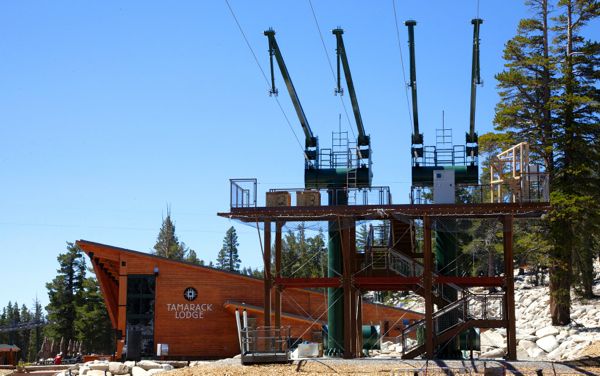
The four-line zipline being built near Tamarack Lodge will open in summer 2016. Photo/Carolyn E. Wright/Copyright

The four-line zipline being built near Tamarack Lodge will open in summer 2015. Photo Copyright 2014 Carolyn E. Wright

By Kathryn Reed

STATELINE – Snow isn’t the only thing Heavenly wants to be known for. The South Shore resort is making substantial efforts to be a playground in the summer, too.

The Tahoe Regional Planning Agency Governing Board on Sept. 24 got a taste for what Heavenly Mountain Resort wants to become.

“Guests want more than a sightseeing experience,” Heavenly COO Pete Sonntag said.

When the gondola opened in 2000 it was about getting skiers at the state line bed base onto the mountain without driving. A viewing deck near the top was about being a scenic lookout. Gradually the resort has added non-winter activities, with this summer being the inauguration of three ropes courses and the resurrection of a zipline. But the resort is just beginning.

Ziplines, canopy tours, sky cycles, alpine coaster, and a mountain bike park are part of the resort’s plans that are being studied in environmental documents.

The TRPA board heard a presentation Wednesday about the multi-million dollar on mountain transformation.

The mountain bike park will be on the Nevada side, outside the Lake Tahoe Basin – therefore outside TRPA’s jurisdiction. It will not be as difficult as Northstar’s park. It will have a connector route to the Tahoe Rim Trail and access via Van Sickle Bi-State Park.

A Governing Board member questioned how Heavenly would be able to manage capacity if people are in the park who have not paid. Andrew Strain, government affairs chief for the resort, said that is part of the monitoring that is being worked out.

A member of the public wondered if air quality issues had been addressed when it comes to taking people on guided mountain tours via vehicles. The roads to be used for this are ones that already exist.

Most of the development will be in three primary hubs that already are considered disturbed land because of the ski resort. The alpine coaster will be a modern day version of an alpine slide. It uses gravity to whisk people through the trees on an elevated course. The sky cycle has people pedaling 20 or 30 feet off the ground in the forest. It is proposed to go near the top of the gondola. A replica of a fire lookout will be constructed and used as a way to teach people about fire.

Education is a component Heavenly wants to weave into many of its summer activities.

“It’s a different market for us than winter. For some it’s the first time they’ve set foot on a national forest,” Strain told the board. “We are partnering with the Nature Conservancy. They will drive the education experience.”

Ryan Galles, principal of Sierra House Elementary, said he could see how this will benefit his students. The school, which has an emphasis on fitness, already partners with Heavenly in the winter. He hopes to have similar opportunities when snow isn’t on the ground.

“Learning happens inside and outside the classroom,” Galles said.

Strain said careful planning has been done to ensure the structures that are built don’t impede the experience of skiers and snowboarders. Resort officials realize they are still primarily a winter destination. Most of the structures will be in the ground year-round even if they aren’t used.

“We will not be operating the ropes courses or ziplines this winter,” Sally Gunter, resort spokeswoman, told Lake Tahoe News.

That could change in future winters.

The mountain at complete build-out could handle 17,000 skiers a day. Today Heavenly sees about 10,000 a day at peak periods. This compares to summer where about 108,000 visit the resort all season. Projections are for that number to grow to 160,000 with the added amenities.

Most of the 13 people who spoke at the meeting had favorable things to say and recommended the board approve the project. (A vote will come after the final EIR/EIS are released. Comments on the draft are being taken until Oct 27.)

Besides the construction dollars that could start to flow to the region next summer if the project is approved, it means an economic stimulus in other ways. What the current summer operations – one zipline and three ropes courses – have meant is 120 full-time jobs that didn’t previously exist.

“We were able to take our best winter employees and offer them year-round employment,” Sonntag said.

Besides transitioning from a gaming-dominant economy to recreation, another emphasis of the powers that be has been on providing more than seasonal employment.

If the project is approved in the spring, construction would begin in phases in summer 2015. Some features would open in summer 2016, others the following year.


Drought reduces California harvest

By Dale Kasler, Sacramento Bee

It’s harvest time in much of California, and the signs of drought are almost as abundant as the fruits and nuts and vegetables.

One commodity after another is feeling the impact of the state’s epic water shortage. The great Sacramento Valley rice crop, served in sushi restaurants nationwide and exported to Asia, will be smaller than usual. Fewer grapes will be available to produce California’s world-class wines, and the citrus groves of the San Joaquin Valley are producing fewer oranges. There is less hay and corn for the state’s dairy cows, and the pistachio harvest is expected to shrink.

While many crops have yet to be harvested, it’s clear that the drought has carved a significant hole in the economy of rural California. Farm income is down, so is employment, and Thursday’s rain showers did little to change the equation.

An estimated 420,000 acres of farmland went unplanted this year, or about 5 percent of the total. Economists at UC Davis say agriculture, which has been a $44 billion-a-year business in California, will suffer revenue losses and higher water costs – a financial hit totaling $2.2 billion this year.

Read the whole story


Federal judge refuses to halt fracking in Nev.

By Scott Sonner, AP

RENO — A federal judge has refused to block the release of oil and gas leases in Nevada that critics say will be used for hydraulic fracturing that could harm sage grouse and cause more environmental damage than the Bureau of Land Management admits.

U.S. District Judge Miranda Du ruled she has no authority to grant opponents’ request for an emergency order that would prevent the BLM from formally issuing the leases in an area stretching across about 270 square miles of central Nevada.

Glade Hall, a lawyer representing the Reese River Basin Citizens Against Fracking, said this week they are considering refiling their complaint.

The coalition of ranchers, farmers and others says the BLM has abused its authority by limiting public comment and failing to conduct an adequate review of the potential impacts of the fracking.

Fracking involves blasting water, sand and chemicals deep into underground rock formations to free oil and gas.

Some of the drilling could occur near key habitat for the sage grouse, which the U.S. Fish and Wildlife Service currently is considering protecting under the Endangered Species Act.

“The new fracking threat in Nevada further imperils the greater sage grouse, making ESA listing even more needed and likely,” said Dan Patterson, a Nevada-based ecologist for the Center for Biological Diversity, which petitioned for the listing and is protesting the development.

The citizens group based in Battle Mountain says that besides wildlife threats, the fracking could suck millions of gallons of water from Nevada’s high desert and undermine the region’s seismic stability about 160 miles northeast of Reno.

Hall said BLM’s assumptions there will be little impact are based almost exclusively on unrealistic expectations that the little interest shown in Nevada’s oil and gas historically will continue. He said the government is ignoring a recently discovered shale deposit running from southeast Nevada into Utah that some believe could become one of the nation’s most valuable.

BLM argues that while it completed the sale of the leases in July, it retains discretion as to whether it will actually issue any of them.

“There currently is no proposal to engage in hydraulic fracturing,” Justice Department lawyer Dominika Tarczynska told Du in federal court in Reno earlier this month. She said the agency is still considering protests challenging the leases and could place additional stipulations on any development.

“Until that is completed, there is no final agency action,” she said.

Hall insisted BLM’s argument that it may not actually follow through with issuing the leases is a legal smoke screen. He said BLM has supplemented some of the flawed environmental assessment with additional information that was never subject to public comment.

“It is simply a prop for a decision that already has been made,” Hall said.

Du acknowledged in her Sept. 8 ruling the claim that BLM’s actions to date suggest “it is prepared to defend its inevitable decision to issue the leases.”

But “until BLM completes its decision-making process, its decision is not subject to judicial review,” the judge wrote.

Hall told The Associated Press that Du was “correct in her ruling.”

“But the game the BLM played in this case does not serve the public interest in being informed about environmental consequences of federal actions at a point in time when the public can intelligently participate in the decision-making process,” he said.