If OK’d, sports betting in N.J. could dwarf Nev.

By Tim Dahlberg, AP

There’s a brand new sports bar at Monmouth Park with televisions hanging from nearly every available rafter.

Mostly empty now except on racing weekends at the horse track little more than an hour from Manhattan, it may not stay empty long. Depending on how a judge rules, it could soon become the first fully functioning — and fully legal — sports book in the country outside of Nevada.

The William Hill Race and Sports Bar would become the William Hill Race and Sports Book. And that could be a game changer for anyone in New Jersey who likes to have a little action on their favorite team.

“We’re built out and ready to go,” said Joe Asher, who heads operations for betting giant William Hill U.S. “This is a very sizeable market.”

Of that, there is little doubt. There’s no shortage of sports fans in the New Jersey/New York area, and bookmakers believe they will line up from opening day on with fistfuls of cash to wager on games.

Asher says that if sports betting is allowed in New Jersey it could dwarf the $3.6 billion that was wagered legally on sports last year in Nevada, opening up an entire new industry on the East Coast. It might even help rescue Atlantic City casinos that are struggling to attract customers in the wake of casino expansion around the country.

New Jersey residents want it, voting overwhelmingly in 2011 to permit sports betting at race tracks and casinos. Gov. Chris Christie signed a bill into law approving sports betting, only to see it derailed in court because it conflicts with federal law.

But now the issue is back before a federal judge, and all bets are off. An end-run around the federal prohibition of sports betting in all but four states is once again in play.

And the sharp guys from Vegas are poised, ready to jump in when they get the word.

“I believe the New Jersey market once fully up and going would be at least three times the Nevada market,” Asher said. “This is an area with some of the most storied franchises in American sports where billions of dollars are already bet on sports illegally.”

Unfortunately for would-be bettors, not everyone is enamored with the idea of sports betting. They’re stuck in the past, still believing that betting on sports draws undesirables and is somehow a threat to the integrity of the games themselves. They don’t understand that it’s a lot easier to monitor betting trends in legal books than with an illegal bookmaker operating out of a corner bar.

There are some signs that even that may be changing. Daily fantasy sports wagering is exploding online thanks to a loophole in the federal law, and looks very similar to sports betting.

The NFL, meanwhile, holds games every year in London where there are betting parlors on every block offering a line on the action. And last month NBA Commissioner Adam Silver said at a business conference that he was not opposed to the idea of sports betting and expected his league to participate in it at some point

“Obviously we read with great interest Commissioner Silver’s comments,” said Asher, whose company runs more than 100 locations in Nevada and 2,400 shops in the United Kingdom. “I hope that signals a re-evaluation of what is obviously a mindset that does not comport with 21st Century reality.”

For now, though, the NBA and the other major sports leagues are lining up against betting in New Jersey. Lawyers for the four leagues and the NCAA will argue Oct. 31 before U.S. District Judge Michael Shipp that the injunction he issued last year upholding the ban should stay in place despite Christie’s announcement that the state would not be involved in regulating the betting.

Should the door open in New Jersey, though, other states will surely follow, much the way they did when Atlantic City became the first place outside of Las Vegas to legalize casino gambling. The online market could explode, much like it is in Nevada where 36 percent of William Hill’s handle comes through bets on its mobile app.

Right now all they’re selling at the sports bar at Monmouth are food and drinks. Betting is limited to the expected finishing position of the horses on the track.

It might not be long, though, before you can order an NFL three-teamer to go with that trifecta on the ponies.
CDC: Americans can expect to live longer

By Karen Kaplan, Los Angeles Times

Americans are living longer than ever before, government data show.

A typical toddler born in 2012 can expect to live 78.8 years — a new record, according to a report published Wednesday by the Centers for Disease Control and Prevention. That’s 36.5 days longer than in 2011.

Adults who were 65 in 2012 could expect to live an additional 19.3 years, on average, the report said. That’s also 36.5 days longer than in 2011.

These gains in life expectancy are the result of small but steady decreases in Americans’ age-adjusted death rate (a statistic that controls for the age distribution of the population as a whole).

Read the whole story


Lukins seeks 53.9% water rate increase

By Kathryn Reed

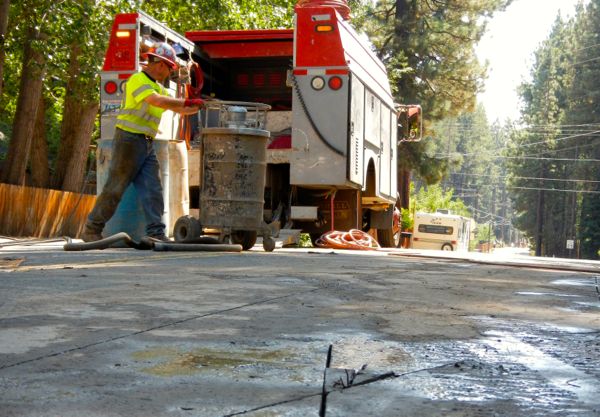
Paying for the more than 6,000 feet of lineal water line Lukins Brothers Water Company put in doesn’t stop with the contractor’s last bill.

The South Lake Tahoe company’s liability insurance went up 60 percent because of those lines.

In the last two years Lukins has put in 6,000 lineal feet of 12-inch line, 450 feet of 6-inch line and 16 fire hydrants. This gives 40 percent of the 963 customers adequate fire protection.

Lukins has been upgrading its water line to meet fire suppression standards. Photo/LTN file

Lukins has been upgrading its water line to meet fire suppression standards. Photo/LTN file

Because there was a cost savings of $200,000 the contractor will be back out in the spring to start on phase two. This is enough money for at least another 500 lineal feet of 12-inch line and two more fire hydrants.

This $2 million project is being paid for with a $15 to $25 surcharge that the 963 ratepayers started seeing on their bills this year. The California Public Utility Commission guarantees the loan will be repaid via the 20-year surcharge.

But bills may be even higher if the small private water company gets its way. It has asked the state PUC to raise rates by 53.9 percent, or $283,546.19 a year.

This will increase the average flat rate residential bill by $19.43 per month, so the quarterly bill becomes $167.52.

“It focuses on your operating expenses,” Jen Lukins, who runs the company, said of the rate increase. “No one is paying less for power, gas, fuel or insurance than they did 10 years ago.”

She said the CPUC looks at several years of data to determine what it deems to be reasonable ratepayer costs.

“The cost of producing water is going up; the cost to comply with state regulations is going up,” Lukins said.

She said there are only so many places the company can cut back.

Some of the money raised would go to replacing the 1982 truck that doesn’t have a heater and is barely running.

The last increase of this nature was in 2009. Lukins had asked for a 66.7 percent increase and was granted 36.03 percent. Before that rates went up in 2000.

Lukins said she would prefer more gradual increases, but how the state handles the requests it would be impossible to do so annually or every couple years.

“If we don’t get it, it means budget cuts, operating on a tighter budget, less improvements to the water system, not installing meters, continuing with old equipment and not being able to make upgrades,” Lukins said. “We are not trying to be extravagant.”

—-

Notes:

• There will be a meeting before the CPUC about the rate increase on Oct. 27 at 6pm at Lake Tahoe Airport.

• Protests to the rate increase are due Oct. 23. They must be sent to the CPUC at water_division@cpuc.ca.gov and to Lukins Water Co. at 2031 West Way, South Lake Tahoe, CA 96150.

• A copy of Lukins’ filing with the CPUC is available for review at the company’s office on West Way. The request was filed in June.


Lukins’ wells contaminated, using STPUD water

By Kathryn Reed

Most of the water Lukins Brothers Water Company customers are using is coming from South Tahoe Public Utility District.

This is because two of the three active wells the South Lake Tahoe private water company operates are contaminated with Tetrachloroethylene, also known as PCE. The wells show 16 parts per billion and 43 parts per billion. The maximum contaminant level is 5 parts per billion.

The state Division of Drinking Water mandates regular testing of water for a variety of potential contaminants. The day it came back high the state was notified, the wells were shut down and the intertie with STPUD was opened. This was July 11. However, it was not until Sept. 30 that the state told Lukins to let its customers know what is going on. Legally, the water company could not disclose the information until being told to do so by the state.

Jen Lukins, who runs the water company, said there was no threat to customers because three months ago when the water came back with a high PCE reading the company took steps to ensure other water was coming out of taps.

“Everyone is receiving safe, potable drinking water that meets all drinking water standards,” Lukins told Lake Tahoe News. “Those wells will be shut down until a treatment is found or Lukins drills a new well. An engineering firm is trying to determine what the best solution is for Lukins. Then we’ll work with the state to get the funding.”

Two private wells near the Y off Highway 89 are also contaminated with PCE.

“One challenge is we don’t have some obvious source,” Lauri Kemper with Lahontan Regional Water Quality Control Board told Lake Tahoe News.

Cleanup cannot take place until the location is identified. Once that is done the property owners will be tasked with cleaning it up.

Lahontan applied for a $69,000 grant from the state’s cleanup and abatement account. Sometime this fall a series of hydropunches will be performed to determine the location of the contaminant. The drilling equipment punches holes in the soil, takes samples and tries to pinpoint where the PCE is originating.

Then the groundwater, soil or both will be treated.

Kemper said most likely this PCE outbreak is not from the Laundromat at the Y. There is still an open case involving that facility from when it had a self-serve dry cleaning machine that leaked in the 1970s. A similar machine was at the site of what is about to be BevMo, but that case was closed.

Kemper said the drought could be contributing to why PCE is making itself known because of how wells draw water.

“We hope we find the source of the contaminant fast before more of the aquifer becomes contaminated,” Lukins said.

In other water contamination news:

• Lahontan officials continue to monitor what Tahoe Tom’s gas station is doing regarding cleaning up MTBE leaking from its site into the ground water and contaminating the water at Mark Twain Hotel. The station is supposed to be paying for the bottled water being used by the South Lake Tahoe hotel, but it isn’t. Kemper said the station is racking up penalties. The water board will be meeting with station owners at the end of the month.


Lake Valley makes pitch to hike fire tax

Lack of property tax revenue from the Angora burn area is impacting Lake Valley Fire. Photos/Kathryn Reed

Lack of property tax revenue from the Angora burn area is impacting Lake Valley Fire. Photos/Kathryn Reed

By Kathryn Reed

MEYERS – Lake Valley Fire Protection District does not have enough money to do all of the things it wants to do. That is why a parcel tax is on the Nov. 4 ballot.

Members of the district, which for the most part includes the incorporated area of El Dorado County in the basin, have been paying $20 a year since 1986. The problem is Measure M never increased based on inflation. It brings in $150,000 a year.

Measure H, which will be before voters, would replace Measure M with a $120 fee that would be tied to the consumer price index. This means it could go up each year, though not by more than 3 percent any given year. It is projected to bring in $1 million.

“Things will change,” Fire Chief Gareth Harris told Lake Tahoe News when asked what happens if the measure fails. “We’d have to eliminate the fuels program.”

About 25 people turned out for a meeting Oct. 8 regarding the measure, though most were firefighters or on Lake Valley’s board.

Firefighter Martin Goldberg went over where the money would go. He explained how state and federal funds have dried up so another resource needs to be found. Measure H is the district’s answer.

Marty Goldberg, left, with the Angora Peak Fire Crew.

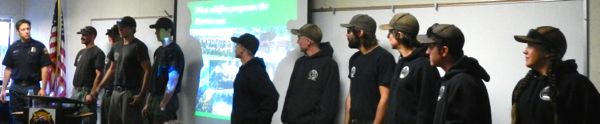
Firefighter Martin Goldberg, left, with some of the members of the Angora Peak Fire Crew.

The money would not go to raises, even though firefighters have not received a raise in eight years. The salaries it would fund are those of the members of the Angora Peak Fire Crew. Many of them just spent two weeks on the King Fire. They were paraded before the audience and introduced.

This group is responsible for the free chipping service the district provides, thinning on district parcels and pile burning.

Parcel tax money would also go toward aging facilities and equipment.

It would go on indefinitely. Goldberg said if other funding sources come forward, then property owners would be given a reprieve with Measure H. Possible sources are if Lake Tahoe Restoration Act is reauthorized and if State Responsibility Area funds are released.

“I feel like we are asking what we need to maintain the program,” Goldberg told the group.

Lake Valley is not receiving any of the $152.33 the state is collecting from residents for being in a State Responsibility Area. It does, however, intend to apply for a chunk of the $10 million that will soon be made available statewide.

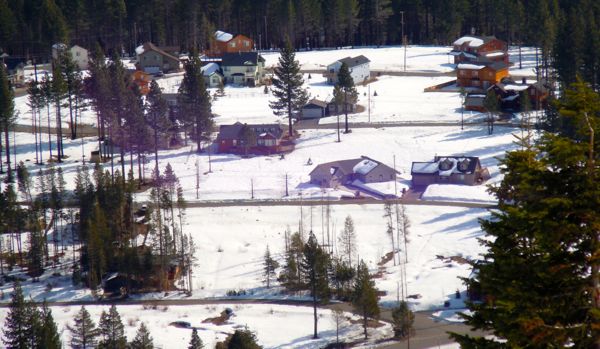
Another hit to Lake Valley’s income is the diminished property tax collected from the Angora burn area. This is because about 100 of the 254 houses that were reduced to ash in June 2007 have never been rebuilt.

“They are off the tax roll except for the land value,” Harris said. “That is a significant issue.”

To pass, Measure H requires two-thirds of the voters on Nov. 4 to approve it.

—–

Notes:

• More info is available online.


S. Tahoe overhauls employee benefits package

By Kathryn Reed

While South Lake Tahoe employees will have more in their paychecks, it’s going to cost many of them more to retire. This is because retiree health care coverage is going away for almost all current workers.

The South Lake Tahoe City Council at a special meeting this morning at 8 is expected to approve agreements with five of the six bargaining units. A tentative agreement has been reached with the 11-member Police Employees Association that will come back to the council at a later date.

“Transformative” is the word City Manager Nancy Kerry and Mayor Hal Cole used during an exclusive interview with Lake Tahoe News this week when describing the changes that are about to unfold.

By changing the health care plan, eliminating retiree health benefits for employees not yet retired, and modifying coverage the city will see a cost savings of $1.5 million a year for each of the next three years. This starts with the fiscal year that began Oct. 1. The city is taking that savings and reinvesting it in the employees.

So, while there are raises and the introduction of deferred compensation programs that are similar to the private sector’s 401(k), the money for these benefits has already been allocated and nothing is being taken away from the public to make it happen.

“The most important element of the overall financing strategy for the restructuring of wages and benefits is that it is funded from current and anticipated available resources, not additional taxes from the taxpayers, and in fact, it will reduce the city’s and therefore the taxpayers’ contribution payments to the other post-employment benefits trust over the next many years,” Kerry told Lake Tahoe News.

When Kerry was hired the unfunded liability for health care was $47 million. With getting retirees onto Medicare, that figure dropped to $25 million. Today’s changes should bring that amount to $15 million. An actuarial study will be completed after the first of the year that will provide a detailed analysis of the unfunded liability.

“We could never have set enough aside,” Kerry said of the promises previous councils and city managers made to employees.

Kerry has been working to resolve the health care and other unfunded liability issues for nearly three years. Cole said he tried to address the issue with previous city managers but they never wanted to deal with it or said nothing could be done.

“Pressure forces you to be innovative,” Kerry said. She said it took a strong council and knowing the community would not tax themselves to deal with the debt or raises.

While in years past each employee group usually got the same percentage of raise, that is not happening now. The pot of money has been split equitably, which means fairly by dollar amount and not percentage. Each group decided if they wanted the money in the form of raises, deferred compensation, health care or other benefits.

Salaries will increase between 2.5 and 4 percent this year and next, and from zero to 4 percent in 2016-17. It has been nearly five years since most employees received a raise.

The city was paying $19,000/year for a family health plan. Now it will be paying $12,000.

A change is that employees may opt out of the health plan – something that was not allowed before.

“We have to stay self-insured because we have so many retirees. They are the most expensive,” Kerry explained.

There are 800 people in the plan, though only 175 of them are employees. Without the change, that number could have grown to 1,200. When the current crop of retirees and their dependents are no longer covered by the city then officials can look at not being self-insured.

The city has created what it calls Plan A. That is a basic health plan that has a $5,500 deductible. The city picks up the cost for singles, couples and families. Vision and dental are no longer offered. If people want a better plan, they can pay the difference for it.

Changes in the first year will see a positive net fund balance of approximately $500,000. The recommendation is for that money to be set aside to pay for changes in the following two fiscal years.

For employees who are close to retiring and would not have been saving for post-retirement benefits there will be a transitional plan.

Council members and current retirees are also impacted by the changes. The latter have always been subjected to whatever current employees agree to. This means they will be on Plan A for health coverage, with the option to upgrade if they want.

Councilman Tom Davis is considered a retiree because when he left the council he took on retiree status – unlike Cole and Brooke Laine when they initially stepped down. Even though Davis is on Medicare, when he retirees again from the council this will allow him to tap the city’s supplemental health insurance for the rest of his life like all other current retirees. The other current council members are eligible for Plan A and will receive no medical benefits when they leave the council.

South Lake Tahoe is the only public entity in the Lake Tahoe Basin that offers any retirees medical coverage. It’s also one of the only public agencies to have not given raises in the last five years.

It’s possible the changes South Lake Tahoe is making to its medical plan will be precedent setting. City officials have been asked to speak to other cities about what South Lake Tahoe has accomplished in overhauling its health care offerings.


Studies: Talking to your car can be dangerous

By Joan Lowy, AP

WASHINGTON — Just because you can talk to your car doesn’t mean you should. Two studies have found that voice-activated smartphones and dashboard infotainment systems may be making the distracted-driving problem worse instead of better.

The systems let drivers do things like tune the radio, send a text message, or make a phone call while keeping their eyes on the road and their hands on the wheel, but many of these systems are so error-prone or complex that they require more concentration from drivers rather than less, according to studies released Tuesday by the AAA Foundation for Traffic Safety and the University of Utah.

One study examined infotainment systems in some of the most common auto brands on the road: Chevrolet, Chrysler, Ford, Hyundai and Mercedes. The second study tested the Apple iPhone’s Siri voice system to navigate, send texts, make Facebook and Twitter posts, and use the calendar without handling or looking at the phone. Apple and Google are working with automakers to mesh smartphones with infotainment systems so that drivers can bring their apps, navigation and music files into their cars.

The voice-activated systems were graded on a distraction scale of 1 to 5, with 1 representing no distraction and 5 comparable to doing complex math problems and word memorization.

The systems were tested by 162 university students and other volunteers in three settings: a laboratory, a driving simulator and in cars while driving through a Salt Lake City neighborhood.

Apple’s Siri received the worst rating, 4.14. Twice test drivers using Siri in a driving simulator rear-ended another car.

Chevrolet’s MyLink received the worst rating, 3.7, among the infotainment systems. Infotainment systems from three other automakers — Mercedes, Ford and Chrysler — also were rated more distracting for drivers than simply talking on a hand-held cellphone. “What we continue to see from customers is that they demand this level of technology in their vehicles, that access to music and access to calls is now a critical part of the driving experience and so we’re looking at innovative ways to provide that,” said Chevrolet spokeswoman Annalisa Bluhm.

Apple noted in a statement that researchers didn’t use the company’s CarPlay or Siri Eyes Free, which are designed for use in cars. However, David Strayer, the University of Utah psychology professor who led the two studies, said researchers consulted with Apple before beginning the study. The study used an iOS 7 version of Siri that was tweaked to be nearly identical to the iOS 8 version, which was just recently released, he said.

The systems with the worst ratings were those that made errors even though drivers’ voice commands were clear and distinct, said Strayer. Drivers had to concentrate on exactly what words they wanted to use and in what order to get the systems to follow their commands, creating a great deal of frustration.

For example, an infotainment system might recognize a command to change a radio station to “103.5 FM,” but not “FM 103.5” or simply “103.5,” he said.

Siri sometimes garbled text messages or selected wrong phone numbers from personal phonebooks, Strayer said. During one test, Siri called 911 instead of the phone number requested by the volunteer driver and the driver had to scramble to end the call before it went through. Siri found the number in the driver’s phonebook because the driver had called it once before.

“When these systems become more complex, like sending text messages or posting to Facebook, it pushes the workloads to pretty high levels and may be dangerous while driving,” Strayer said.

The studies contradict claims by automakers, who have been pitching the voice systems to car buyers as a way they can safely enjoy social media and connectivity. Safety advocates say drivers assume that such systems are safe because they are incorporated into vehicles and are hands-free.

The National Highway Traffic Safety Administration, which regulates vehicle safety, has issued guidelines to automakers for dashboard systems and is working on similar guidelines for cellphones and voice-activated systems, but the guidelines are voluntary.

“Infotainment systems are unregulated,” said Deborah Hersman, president of the National Safety Council and former chairman of the National Transportation Safety Board. “It is like the Wild West, where the most critical safety feature in the vehicle — the driver — is being treated like a guinea pig in human trials with new technologies.”

Two of the infotainment systems were rated relatively low for distraction. Toyota’s Entune received a 1.7, the distraction equivalent of listening to an audiobook, and Hyundai’s Blue Lin Telematic System received a 2.2.

“The good news is that really well-designed systems offer us the possibility to interact in ways that aren’t so distracting,” Strayer said.


Vail is not the enemy

By Derek Taylor, Outside

When it comes time to throw stones in the ski world, there’s no easier target than Vail. A $3 billion-plus publicly traded company, Vail is an easy target because it’s a big target. Taking it down verbally is a rite of passage in many mountain communities. Just as a generation of Red Sox fans can’t mention Bucky Dent without giving him a middle name that starts with F, many denizens of ski towns across the nation find it impossible to say the word Vail without immediately following it with “sucks.”

Vail, there is no doubt, brings much of this on itself. Look no further than the recent diarrhea storm it recently created when it purchased Utah’s Park City Mountain Resort after the ski area inexplicably failed to renew the terms of its lease. Even setting aside that it was Canadian real estate developer Talisker, not Vail, that originally evicted PCMR, or that it was neither Talisker’s nor Vail’s responsibility to remind PCMR that its sweetheart lease was about to expire, the strong-arm tactics Vail employed in acquiring its nearest competitor for just slightly more than Randolph Hearst’s former Beverly Hills home were decidedly “un-bro” and left many people with a bitter taste. When Outside first reported that Vail acquired PCMR, the comment section of our Facebook wall overflowed with vitriol directed at Vail.

But before you grab a torch and join the lynch mob, I have something to tell you. Vail is not your enemy. Don’t get me wrong, I’ve done more than my fair share of Vail bashing. I used to live in a town (Crested Butte) that sold “Vail Sucks” shirts in most storefronts. And if I were to compile a list my favorite ski resorts, there might  —might — be one from the Vail Resorts portfolio on the list. But when it comes time to spew venom, there’s something else to remember. Unlike many entities that storm in and adversely affect our little mountain utopias (Talisker?), Vail is a ski company.

Not only is Vail a ski company, it is a successful ski company. The 11 areas the company runs survive. They attract people. They create skiers. At a time when the buzz in the long-struggling ski industry is about increasing the size of the pie rather than fighting over the pieces, Vail is actually doing that.

Read the whole story


Editorial: Novasel for EDC supervisor

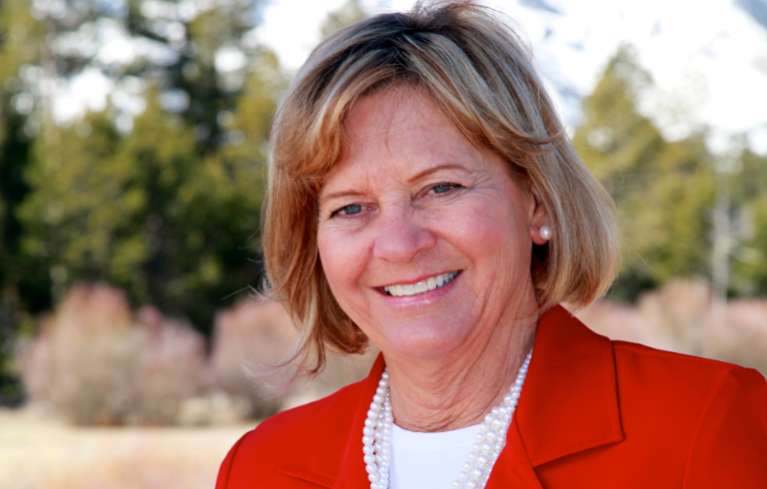
Sue Novasel

Sue Novasel

Publisher’s note: Lake Tahoe News convened an editorial panel of seven community members to come up with this endorsement.

Who is going to genuinely represent the constituency the best?

While that question is good to ask in every race, it was the deciding factor for us when it came to who should be the next El Dorado County supervisor representing District 5.

We kept coming back to Sue Novasel.

Experience trumps the guy you want to have a beer with. The listener wins over the talker. We want substance not hot air. We want someone who will work and not call in sick on a powder day.

Being on a board requires the ability to count to three to get your measure passed. Novasel has demonstrated the ability to do so on the various boards she has been on, most notably to the elected board of Lake Tahoe Unified School District.

There is a give and take to being on a board. It equals working together.

But what we can’t tolerate is another four to eight years of a District 5 supervisor who is led and is not a leader. And being president of a board does not make a person a leader. Leadership is a trait we hope is inside Novasel that she has yet to demonstrate.

Novasel’s experience with such varied endeavors as Soroptimist International of South Lake Tahoe and Lake Tahoe Wildlife Care give her a glimpse into working in different group dynamics. This could aid her as she joins a board that is mostly inexperienced at least at the current job.

When it comes time to act the supervisors represent the entire county, not just where they were elected from. While the East and West slopes are dramatically different, it is still one county. We need someone who will take an interest in all the issues that come before the board.

We trust Novasel will be prepared at each of the weekly meetings, that she will use the time of staff wisely and that she will be more of a presence in the district than the current supervisor.

There is no doubt Kenny Curtzwiler, the other contender, is passionate about his community. He talks a good game until the knowing listener seizes the opportunity to punch holes in his diatribe. The problem is with the unknowing listener who wants to believe Curzwiler’s tales. His spoken word is no different than his writings – full of nuggets of wisdom saturated in half-truths (or less) that amount to a hill of beans.

We need someone in office who looks at all sides of a topic, understands hard topics and gets the answers; not someone who is unprepared, acting on emotion and fails to truly grasp what the job entails. We believe Novasel is the best choice voters have for El Dorado County District 5 supervisor.


Skydiving Squaw CEO cheats death

By Andy Wirth, Outside

I came to Squaw Valley in August 2010 to be president and CEO of Squaw Valley Ski Holdings and quickly befriended mountain athlete J.T. Holmes. J.T. is predominantly known for BASE jumping, wingsuiting, and big mountain skiing, but when we skied together, I’d tell him how I really wanted to get into skydiving.

Andy Wirth has given up skydiving. Photo/LTN file

Andy Wirth has given up skydiving. Photo/LTN file

In spring 2011, he hooked me up with Red Bull athlete Sean McCormick, who helped me certify to jump, and we saw to that in Perris, California. From the very first time I did it, I was in love with it. I’ve rapelled big faces and skied some big and hairy lines, but nothing felt like this.

We would jump as often as my schedule allowed, which frequently felt like not enough, as many addictions go. There were days when we would jump from first load to sundown, getting as many jumps as possible. On those days when we were really getting after it, we’d get seven jumps in. I got comfortable enough to do some pretty cool things out of the plane and in the air, like four-way inverted exits—where we’d grab each other and exit facing one another—and delta tracking, where you put your hands by your sides, straighten your legs, and fly like a dart, sometimes in formation with other jumpers.

On Oct. 12, 2013, J.T., some friends, and I went to Davis to jump. We had a great, full day of jumping. On Sunday the 13th, the Davis drop zone was shut down due to winds, so we drove over to a drop zone in Lodi. It was windy, but they were still flying. I’d jumped there before, so I knew this drop zone pretty well. We went up, played in freefall, and delta tracked.

But then a few things went wrong. The pilot flew a bad flight line, so we were too far away from the drop zone, and we exited last, taking us even farther from the drop zone. I pulled my canopy too low at 2,500 feet AGL (above ground level). Normally I’d pull the canopy at 4,000 feet AGL. Unknown to all of us, the winds had changed since takeoff, so I had a headwind going into the drop zone instead of a tailwind.

I realized I wasn’t going to make the drop zone, and I didn’t have any good landing options: power lines on three sides and a vineyard on the other. I decided to land in the vineyard rather than try to make it over or under the power lines. I lined up parallel with the rows of the vines, but just as I was coming in and flared my canopy to slow down and land, a small crosswind forced me to my right.

I caught a pole with my right arm. The pole tore off my arm and stripped all the tissue from my shoulder down to mid-forearm. When I looked down, I knew I was in a rough spot. My brachial artery, which runs from your shoulder to your forearm, was bleeding out. Within a short period of time, I had lost a substantial amount of blood.

Read the whole story