Whittell High trying to figure out its future

Brian Rippet talks Oct. 8 while task force member Stacy Noyes takes notes and facilitator Nancy McMillan listens. Photo/Kathryn Reed

Brian Rippet talks Oct. 7 while task force member Stacy Noyes takes notes and facilitator Nancy McMillan listens. Photo/Kathryn Reed

By Kathryn Reed

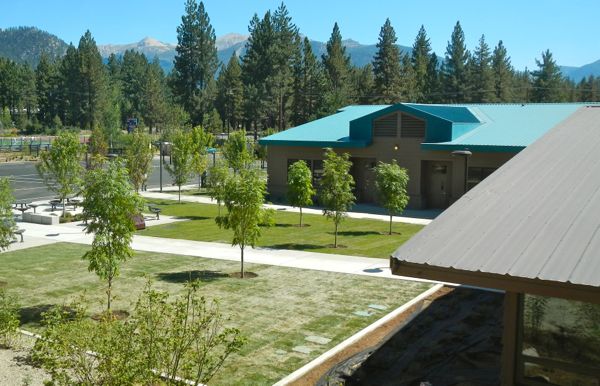
ZEPHYR COVE – While a group of concerned individuals is tasked with answering three questions regarding the future of Whittell High School, the chore is turning out to be anything but simple and straightforward.

The committee – made up of parents, teachers, and a community representative – came about after last spring’s uprising regarding staffing and course offering issues at the Zephyr Cove 7-12 school. Staff, administrators and board members are often on hand to help or to answer questions.

Last week was the second time they met to discuss:

• What should/could the format and course offerings look like if Whittell stays approximately the same size?

• What should/could the format and course offerings look like if Whittell grows in enrollment?

• What should/could the lake schools’ format and course offerings look like if Whittell/Zephyr Cove Elementary decline in enrollment?

Member Brian Rippet on Oct. 7 pointed out how prior to 2010 there was an opportunity for students in California (that goes beyond the Alpine County agreement) to attend Whittell. He said the board took that opportunity away unbeknownst to staff and parents. This has led to trust issues.

It was also pointed out that when programs start and stop it does not build confidence in parents to enroll their students.

(No board members attended last week’s meeting, nor did the superintendent.)

Member Stacy Noyes has been talking to Lake Tahoe Unified School District Superintendent Jim Tarwater and Lake Tahoe Community College President Kindred Murillo about Douglas County students taking classes across the state line. The biggest roadblock was put up by Nevada when it eliminated the good neighbor policy a handful of years ago.

Only six credits from outside Nevada can be applied toward high school graduation. However, unlimited community college credits from a Silver State institution would be allowed. The problem, though, is that LTCC is closer for Whittell students than Western Nevada College.

Noyes said there is work being done at higher levels to rectify the California-Nevada enrollment issue so perhaps the local group should focus on other things.

Parent Carol Chaplin pointed out how her sons were promised the opportunity to be able to take WNC classes, but that was short-lived. In fall 2008, Whittell had an agreement with WNC. Whittell teachers taught WNC classes in addition to their regular five periods. One was a section of composition and one of trig/pre-calculus.

She pleaded with the panel to find things in the short-term that would benefit her son who is still at Whittell, since one son has already graduated.

One of the more immediate measures that could be done, though it doesn’t affect current students, is to look at a program that welcomes potential new students as a way to grow enrollment. There was talk of how people have called the school and been turned off before even scheduling a visit. A member of the parents club said she would look into whether that group would take on a more formal orientation program.

Task force members don’t want money to be a reason not to consider an idea. They want to explore the idea for merit first.

Reaching out to area preschools was also broached because they are the feeder programs for the school district.

Also to be explored is why people who live in Douglas County are opting not to go Zephyr Cove Elementary or Whittell High schools, as well as finding out why new enrollees picked DCSD.

The next meeting is Oct. 21 at 4:30pm at Whittell High School.


King Fire terrain susceptible to more devastation

By Hudson Sangree, Sacramento Bee

Rugged and isolated, the Rubicon River Valley on the border of El Dorado and Placer counties was for many years an idyll of old-growth trees and icy swimming holes. Then the King Fire roared through last month, turning a 20-mile stretch of the canyon into a vast dead zone of ashen earth and smoldering stumps.

Experts now worry that the devastation and the extreme temperatures of the fire, which scorched much of the soil and reduced its ability to hold together and absorb runoff, could lead to floods and mudslides when winter storms arrive. The same conditions affect parts of the south fork of the American River near Pollock Pines, where an arsonist allegedly started the 98,000-acre King Fire on Sept. 13.

Members of the U.S. Forest Service’s Burned Area Emergency Response team, or BAER, swooped in last week, as the fire was finally contained, to assess the immediate dangers remaining in its aftermath. Members include botanists, hydrologists and geologists. Their job is to deal with such immediate threats as falling trees and crumbling roads.

BAER coordinator Eric Nicita said possible mudslides are a major concern, because when the top layer of soil cooks, it looses the fungi, bacteria and other organic material that hold it together and allow it to absorb water. In these conditions, rain runs through soil and tears it down instead of percolating into the earth.

“The only thing the water can do is roll downslope,” said Nicita, a soil scientist with the Forest Service. “All of a sudden, your flow is increasing incredibly.”

One of the most vulnerable danger zones from the King fire is the White Meadows Road area above the south fork of the American River, along Highway 50 near Fresh Pond. That’s where a dozen homes burned and where residents are already busy clearing dead trees and starting to rebuild.

Read the whole story


Project uses Tahoe weather data to create sound

By Davis Enterprise 

The Lake Tahoe Sonification Project is a sound installation which represents multiple aspects of Lake Tahoe’s environment, both above and within the lake.

Weather data from the lake is crafted into sound, creating a continuous aural experience that is artistic in design, and intelligible to a listener. This sound installation will create an absorbing experience for all who wish to listen.

The Lake Tahoe Sonification Project is on display at the Nelson Gallery on the UC Davis campus through Nov. 2.

The Lake Tahoe Sonification Project is possible due to the work of the water scientists of the Tahoe Environmental Research Center. Precise measurements of the internal waves that constantly move through the lake are regularly collected by TERC.

Professor Geoff Schladow, the director of the center, has worked closely with several UC Davis composers to explain the data and the behavior of Lake Tahoe. Also involved was Professor Naomi Saito of the Department of Mathematics, who has worked closely with the data from the lake.

Read the whole story


Editorial: Grant for LTCC board

Bob Grant

Bob Grant

Publisher’s note: Lake Tahoe News convened an editorial panel of seven community members to come up with this endorsement.

An educator as board member is often frowned upon. This is because it can diminish the level of checks and balances, create favoritism and be a presumed vote for the unions.

But we have not found that to be the case with Lake Tahoe Community College instructor Larry Green being on the Lake Tahoe Unified School District board. Nor do we believe it would be the case with South Tahoe High School instructor Bob Grant being on the college board.

We believe Grant is hands down the best candidate for the LTCC board seat being vacated by Molly Blann. This is the first year the college will have had district elections where the seats represent a specific geographic area and not the entire college boundary.

Grant brings many things to the table that his challenger doesn’t. One is his depth of understanding of the education arena.

LTUSD and LTCC are in a unique relationship, whose bond continues to grow stronger. This has a lot to do with the leadership of the boards and administrations. It is a partnership that needs to continue to be nurtured to ensure resources are shared and not duplicated, that the interests of locals and others are understood, and that programs complement one another where possible.

Grant has proved himself to be a leader at STHS in his capacity as an instructor. He isn’t someone who puts in the minimum number of hours and calls it a day. He has taken on tasks that go well beyond the classroom.

Most important he puts students first. While the job of a board member and a teacher are extremely different, at the end of the day what is in the best interests of students needs to come first – no matter the grade level.

We believe Grant understands the complexities and nuances of the education field to be able to step onto the board without a learning curve. This is critical as the college navigates unchartered waters of looking at potentially managing a $55 million bond or revising it, creating a baccalaureate program, resurrecting the good neighbor policy with Nevada, expanding the sports program, leasing property for student housing, and dealing with a shrinking budget.

As for Grant’s challenger, Michelle Sweeney, she doesn’t have the experience Grant does. Plus, on her resume she wrote “CA Governor appointee to TRPA Governing Board.” This is simply not true. The truth is she worked for the governor’s appointee. She was never in a position to sit at the big table to cast a single vote, and we can’t get over the fact that she misrepresented herself in this way.


Drought a concern for aspens

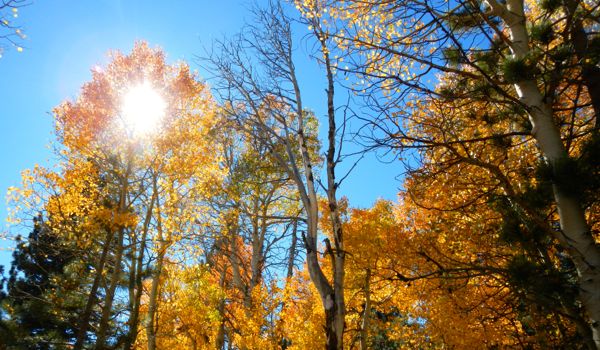
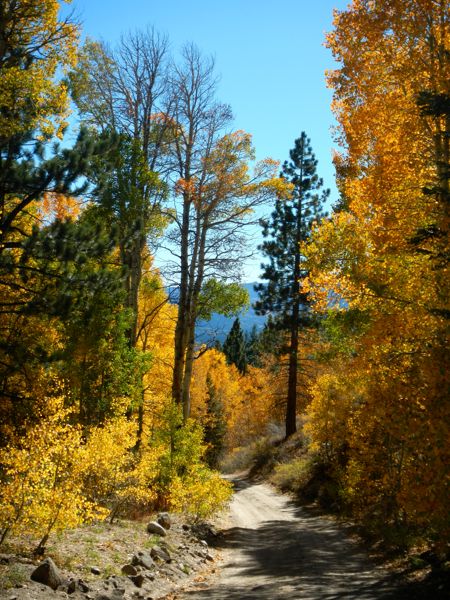
Aspens along Armstrong Pass. Photos/Kathryn Reed

Aspens along Armstrong Pass. Photos/Kathryn Reed

By Daniel R. Cluck

Concern for the health of California’s quaking aspen (Populus tremuloides) habitat has increased in recent years due to heavy wild ungulate and domestic livestock browsing, competition from conifers and other vegetation in the absence of fire, the impacts of drought and the potential negative impacts of climate change.

In response, land managers are taking inventory of California’s aspen resources and identifying the magnitude of these threats. These inventories have thus far included assessments of aspen regeneration, conifer encroachment and animal browsing as indicators of aspen health. Restoration treatments have also been implemented to rejuvenate and protect individual aspen stands. These include removal of competing conifers,
fencing, prescribed burning and/or a combination of treatments.

Spotted aspen leaves are the norm this year.

Spotted aspen leaves are the norm this year.

Recent California aspen studies have examined regeneration response to conifer removal treatments (Jones et al. 2005, Shepperd et al. 2006), simulated browsing (Jones et al. 2009), and white fir competition (Pierce and Taylor
2010). To date, no inventories or studies in California have assessed the impacts of native insects
and diseases to aspen health or their responses to various restoration treatments.

Daniel R. Cluck is a forest entomologist with the U.S. Forest Service. Here is a link to the full report.

With a change in weather coming this week, autumn colors may quickly fade.

With a change in weather coming this week, autumn colors may quickly fade.


Drought conditions good for wine grapes

By Oulimata Ba, HNGN

California’s record-breaking drought may be wreaking havoc on local wildlife and forcing residents to steal water.

But for state vineyard owners, the lack of water has produced the best wine grapes in years.

“This year’s vintage could be one for the ages,” Michael Coats, who co-owns Valerie’s Vineyard in Sonoma County, told the Wall Street Journal.

Winemakers across the Golden State’s Napa and Sonoma counties say the three-year drought has produced weather conditions that have made the grapes tastier and better in quality. The secret is the lack of water, which causes the vines to grow smaller grapes, leading to a higher concentration of sugar, according to Michael Honig, president of Honig Vineyard & Winery in Napa County.

Read the whole story


Safe connections to STMS being plotted

By Kathryn Reed

On a good day maybe three dozen of the nearly 800 students at South Tahoe Middle School ride their bike to school. Some walk, even more get a ride either from their parents, friends’ parents or via the school bus.

For anyone who has been by the school in the morning or afternoon it’s easy to see why parents may not want their child to walk or bike to the campus. The school fronts a state highway and has a four-lane major thoroughfare on one side.

Along Al Tahoe Boulevard the sidewalks are sporadic. It’s most dangerous by the school because of the bus barn on the school side and all the driveways to the shopping center on the other side.

Planners want to make it safer to bike and walk to South Tahoe Middle School. Photo/LTN file

Planners want to make it safer to bike and walk to South Tahoe Middle School. Photo/LTN file

Because this is the only 6-8 school in South Lake Tahoe students are coming from all parts of the district. And the routes to get there are not ideal.

This is why a group in town is looking at how to improve the trail system in the area to make it safer for students.

“At the end of it we will have a full connectivity plan,” Gavin Feiger with the Community Mobility Group told Lake Tahoe News. “Consultants will provide alternatives about how to connect to surrounding neighborhoods and the broader community.”

His group is part of the larger Lake Tahoe Sustainability Collaborative. The collaborative was awarded a $153,625 On Our Way grant from the Tahoe Regional Planning Agency. Experts associated with Safe Routes to Schools are part of the team.

Enough money is in the pot to pay for design and engineering plans. The goal is not to talk about what could be done, but to have a plan ready to build.

This week begins a series of meetings and workshops to gather input from the public about possible improvements to get kids to and from school as well as how to tie the school to the existing trail system.

Safety is a huge concern.

“It is a problem not only in that area but elsewhere in the city,” Police Chief Brian Uhler told Lake Tahoe News. “Anything that can be done to improve bike trails, pedestrian pathways, signage, and increasing the distance from 4,000-pound vehicles and bicycles or walkers is going to help.”

With how trails suddenly stop, people often find themselves in precarious situations, even going against the flow of traffic.

Principal Beth Delacour said the biggest problem she sees is students not using the crosswalk between STMS and Rite-Aid. Delacour is curious to hear what the activists come up with, as she was just brought into the loop in the last two weeks. She will be administering a survey to students to get their feedback about trail connections in and around the South Lake Tahoe school.

The mobility group earlier this month conducted traffic counts during the week and weekend to see how many people were using trails by STMS and which ones.

Going forward planners see this area of town being more of a hub, especially with the addition of Lakeview Commons, improvements to Harrison Avenue and potential growth at Lake Tahoe Community College. They would like the trails to logically connect to the recreation center, library, ball fields, Bijou Community Park and surrounding businesses.

After this week’s meetings there will be a workshop in November where alternatives will be presented. The final plans and projects will be chosen, with appropriate design and engineering work done so construction funding could be applied for in May.

—-

Notes:

• LTUSD board meeting, Oct. 14 at 6pm at the district office on the corner of Highway 50 and Al Tahoe Boulevard.

• Outreach meeting, Oct. 16, 7-9am at STMS.

• Public workshop, Oct. 16 from 5:30-7:30pm in the STMS multipurpose room.

• Public workshop, Nov. 19 from 5:30-7:30pm in the STMS multipurpose room.


Sierra House to be growing veggies this fall

Excavation work is beginning at Sierra House Elementary where two growing domes will be erected. Photo/Rebecca Bryson

Excavation work begins at Sierra House Elementary where two growing domes will be erected. Photo/Rebecca Bryson

By Kathryn Reed

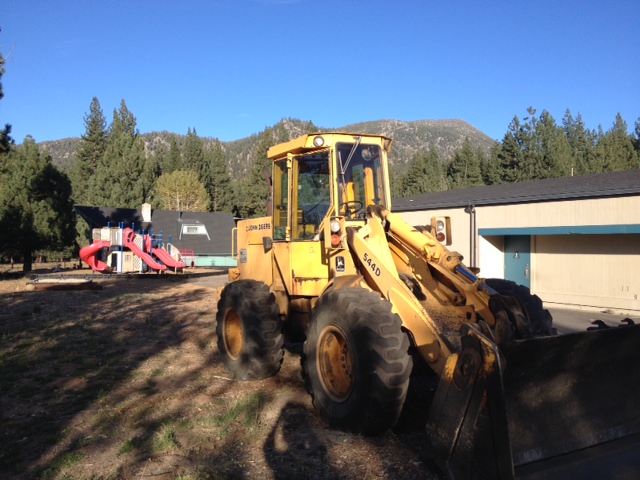
Grading began this weekend at Sierra House Elementary School on what will be two growing domes by the end of November.

A cadre of parents determined to make this a reality has never wavered in their desire to bring this to fruition. With the Tahoe Regional Planning Agency signing off on the necessary permits, all that is left is final approval from the state architect’s office. Steve Morales, facilities manager for Lake Tahoe Unified School District, said this could come any day.

Holes for the two 18-foot diameter domes will be dug this week, with the foundation then going in. The foundation will be built higher than what is normal for a structure because inside will be dirt. This will allow for some insulation.

Between the domes will be a 25-foot by 25-foot outdoor learning area.

The domes are likely to go up in mid-November.

“Erection of the two domes will take place in probably less than eight days. They are a kit. The dome company sends erection crews out with supervisors,” Morales told Lake Tahoe News.

Then it will be up to the parents to outfit the interiors how they want.

Rebecca Bryson, a parent who has been instrumental is making the dome a reality, said parents will likely spend Thanksgiving week getting the interior of the domes situated how they like. Volunteers will do the teaching, including master gardeners.

To start with Bryson expects lettuce, kale and other winter crops to be grown.

The parents have raised nearly $118,000 for the project. The district has incurred expenses mostly just in terms of personnel.

Ravinder Saini gives pomegranate seeds to her daughter, Arya. Photo/Provided

Ravinder Saini gives pomegranate seeds to her daughter, Arya. Photo/Provided

Soroptimist International South Lake Tahoe was the single biggest donor at $25,000. The remainder of that cash will be given to the parents group on Wednesday at the service club’s weekly meeting.

The dome in Truckee requires about a $500 operation and maintenance fund each year. The South Shore parents are using that figure as a barometer for what it will need to put aside for O&M costs; with the realization annual fundraisers may be necessary to keep the domes operational.

Nutrition, healthy eating and teaching students where food comes from before it reaches the grocery store are all components of the growing dome. It’s also a chance for kids to play in the dirt, see veggies grow from seed into something edible, and to learn about other aspects of gardening. They will also get to eat what they grow.

“We will be able to supplement school lunches,” Bryson told Lake Tahoe News. “McDuff’s was one of the early sponsors. They would like to make pizzas with kids using ingredients from the dome.”

Some lessons are already being taught. This fall students throughout the district were introduced to pomegranates through a joint project with Barton Health, UC Cooperative Extension and Raley’s.

Bryson said it’s possible art students from Lake Tahoe Community College will create a Let it Grow mural at the elementary site by the domes.


Study: Few states preparing for climate change

By Neela Banerjee, Los Angeles Times

Fewer than half of American states are working to protect themselves from climate change, despite more detailed warnings from scientists that communities are already being damaged, according to a new online clearinghouse of states’ efforts compiled by the Georgetown Climate Center.

Fourteen states have plans to prepare for the effects of climate change. California, New York and Maryland are among those that have made the greatest progress toward the dozens of goals their plans set forth, such as cutting statewide greenhouse gas emissions, improving infrastructure, securing water supplies, battling wildfires or coping with rising sea levels. Even those states have much work ahead of them, though.

Another eight states and the District of Columbia are devising similar plans, and some counties and towns have plans in place, too. But more than half of American states have not taken any steps to address the threats posed by climate change, leaving them vulnerable to predicted flooding, drought and wildfire, and leaving taxpayers on the hook for the cleanup.

The online tool is meant to give communities a way to track what their state is doing to adapt to climate change. Lawmakers and regulators could also use the tool to glean ideas from states that are further along.

Read the whole story


Editorial: Elect Romsos, Wallace to STPUD

shane and duanePublisher’s note: Lake Tahoe News convened an editorial panel of seven community members to come up with this endorsement.

Most people don’t think about their water or sewer provider until the flow in either direction isn’t working. But South Tahoe Public Utility District has been in the news of late because of rate and salary increases.

When considering which of the four candidates to vote for on Nov. 4 we believe it is important to consider where our money is going. While we believe infrastructure and paying people a decent wage are important, the ratepayers should not be fleeced to do either or both.

We need people on the South Tahoe PUD board who can vote no. We need people who are not myopic in their vision. We need people who understand how to compromise for the greater good.

This is why Lake Tahoe News is endorsing Shane Romsos and Duane Wallace.

Romsos is new to the political arena, but not to the workings of Lake Tahoe. He is taking on Jim Jones, who was on the STPUD board for 12 years beginning in 1977, was off for four years and has been on since 1993.

We know Romsos is passionate about whatever he takes on, and hope this approach will carry forward to the STPUD board. In his work life he has come prepared to meetings, been professional and asked the appropriate questions – traits needed to be a successful board member.

His time working as a research scientist for Spatial Informatics Group – an environmental think tank specializing in landscape analysis to inform good natural resource policy and management, along with employment at the Tahoe Regional Planning Agency and U.S. Forest Service, Lake Tahoe Basin Management Unit will make him a better informed board member.

Romsos has also demonstrated that he can be forward thinking. We expect he will bring new ideas to the board and not be an automatic yes for more, more, more.

While we commend Jones for his tenure on the board, it has been disappointing to watch him vote time after time for raises for employees. We question why he was an advocate for rate increases last spring for infrastructure and at no time broached the subject of employee raises. And while improved water lines for fire capacity, storage and pump stations are necessary, so is a balanced approach to get these things. Jones has had an all-or-nothing mentality that is not good for the district or ratepayers.

He needs to be replaced with someone who is much more conscious of the district’s ratepayers.

When it comes to the other STPUD race between Duane Wallace and Andy Chapman, the choice is easy – Wallace by a landslide.

Wallace, while he has been on the board before and has baggage, also has experience. He would be replacing Eric Schafer, a longtime board member who is stepping down.

Wallace can listen; he can take direction. What he needs to do more of is be a team player and not take all the credit for accomplishments as he has done in the past.

He needs to listen to ratepayers, not just staff and employees.

We hope he will utilize his vast STPUD experience with independent thinking to make astute decisions that keep the district’s rates down, yet provide the same great service.

Wallace also has the desire to be involved beyond attending monthly meetings, which is more than can be said of some of the continuing board members. He has been to Washington, D.C., to lobby on behalf of the district, he knows the players inside and outside the basin. In this age of diminishing dollars and escalating needs, the ability to hit the floor running is critical.

Chapman is a recent transplant to California from Nevada. He doesn’t attend STPUD meetings. He works on the North Shore in marketing for the North Lake Tahoe Resort Association. Nothing in his background points to being a viable member of any water and/or sewer board. And how can ratepayers take him seriously when he snubbed them by refusing to answer questions submitted to him by Lake Tahoe News?

Romsos and Wallace will complement the existing board, bring varied backgrounds to the table, and keep an eye on the needs of the district infrastructure while being mindful of the ratepayers’ wallets.

Fiscal responsibility needs to become a mantra of the district. We don’t need another Taj Mahal, as the administrative building is often referred to. We don’t need the district giving out sweetheart deals involving bulk rate water and expensive pump station upgrades at the ratepayers’ expense as was done for Heavenly Mountain Resort for enhanced snow making. Nor do we need more public figures benefitting from special favors at the ratepayers’ expense.

None of this should ever happen again.