Dems fight among themselves as they work to replace McClintock

By Emily Cadei, Sacramento Bee

California Democrats face a crucial task as they gather in San Diego this weekend for their annual convention: deciding the party’s endorsements in a handful of crowded congressional races. That includes the increasingly fractious 4th Congressional District contest, where some local leaders are hoping the decision to endorse a candidate will help stem some of the infighting – and turn the race’s focus to ousting veteran House Republican Tom McClintock.

The traditionally Republican district, which includes El Dorado County, parts of Placer County and eight others that stretch into the Sierra Nevada mountains, has seen a surge of energy and excitement on the Democratic side since President Trump’s election. Despite the long political odds, activists believe whichever Democrat gets out of the top-two primary could give McClintock a run for his money.

Two of the three Democrats running for McClintock’s seat – Regina Bateson and Roza Calderon – are urging the party to let the voters sort out who that will be in June, and not weigh in with an endorsement now. But “Democrats, in general, I think they would like to see an endorsed candidate,” said Eric Sunderland, the state party’s regional director based in Sacramento. It could “help clean the field up a little bit.”

Read the whole story


Shining light on SLT’s contract with law firm

By Kathryn Reed

It is normal for government bodies to have an attorney with their best interests in mind review all contracts.

That doesn’t appear to have happened last fall when the South Lake Tahoe City Council entered into an agreement for Burke, Williams & Sorensen to provide city attorney services on an interim basis.

Mayor Wendy David told Lake Tahoe News, “I’m not aware of an outside attorney reviewing the contract.”

So, this means there was no independent review of the contract.

It was signed by outgoing City Attorney Tom Watson, who was leaving because he was tired of the city. No one thought to question if he would have the city’s best interests at heart at that juncture and whether it was appropriate for him to handle the contract for his successor.

The contract was also signed by then Mayor Austin Sass and Eric Vail of the law firm.

That contract states, “Burke will not employ or otherwise incur an obligation to pay other counsel, specialists or experts for services in connection with this agreement without prior written approval of the city attorney.”

In other words, the law firm has carte blanche to hire whomever it wants for presumably whatever reason and the city has no say because the firm is the city attorney.

That open ended allowance is how Nira Doherty, who is the law firm’s designee to be South Lake Tahoe’s interim city attorney, was able to approve the contract with Municipal Resource Group. Mary Egan, who heads MRG, is the one who came in last fall at the urging of Sass to assess the culture of the city.

Even so, with the council taking action in closed session to approve the agreement it needed to be reported in open session. It never has been. All that the city has provided to Lake Tahoe News is the agreement MRG sent to the city, not the actual contract.

While city officials have told LTN at some point the contract is going to come back to correct that Brown Act violation, this could be a violation of the California Constitution in regards to approving a contract retroactively.

Doherty allowed the council to violate the Brown Act by not insisting the MRG contract be reported in open session. Brown Act violations are misdemeanors; every council member could be charged.

The MRG agreement called for Sass to arrange meeting space at the Marriott for Egan to conduct her interviews with council and department heads.

Lake Tahoe News has asked for detailed bills regarding the law firm, but to date has only received totals. The contract with the firm says, “As a condition precedent to any payment to Burke under this agreement, Burke shall submit monthly to the city separate statements of account which clearly sets forth by dates the designated items of work for which the billings are submitted.” So, clearly, those details exist.

There is also a question as to what role Doherty really has. In October, she filled out the state Form 700 disclosing economic interests. Under office/agency/court she listed city of South Lake Tahoe, with her position being city attorney.

This makes it appear she is an officer of the city.

The contract with the law firm further states, “No member of the governing body of the city, and no other officer, employee or agent of the city who exercises any functions or responsibilities in connection with the carrying out of any project, to which this agreement pertains, shall have any personal interest, direct or indirect, in this agreement.”

That would mean Doherty would have a conflict with said agreement because she does have a personal and direct interest.

California Government Code 1090 says, “Members of the Legislature, state, county, district, judicial district, and city officers or employees shall not be financially interested in any contract made by them in their official capacity, or by anybody or board of which they are members. Nor shall state, county, district, judicial district, and city officers or employees be purchasers at any sale or vendors at any purchase made by them in their official capacity.”

If she is an officer of the city as written on Form 700, it appears she violated the Government Code by devising a contract with the city in which she benefits. This is a felony.

Doherty is on vacation. At this week’s council meeting she said she would be unavailable for comment during this time.

Doherty has asked for her law firm’s contract to be on the March 20 council agenda.


Ex-EDC judge faces 11 ethics charges from state

Updated 11:15am:

By Kathryn Reed

Former El Dorado County Superior Court Judge Steve Bailey faces 11 counts from the state Commission on Judicial Review.

The 22-page document filed this week lays out in detail how on multiple times Bailey allegedly violated the Code of Judicial Ethics. He is charged with “willful misconduct in office, conduct prejudicial to the administration of justice that brings the judicial office into disrepute.”

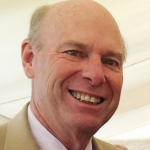
Steve Bailey

Bailey officially resigned from office in August 2017. His term did not expire until 2020. The seat has remained vacant since then, with visiting judges picking up some of the workload.

Bailey, who worked in the South Lake Tahoe courthouse during his tenure, could not be reached for comment.

However, after this story was originally published, Corey Uhden, communications director of Bailey’s AG race, issued this statement to Lake Tahoe News, “This is merely an inquiry that the commission dominated by liberal appointees admits is ‘not a finding of judicial misconduct’ because there is no misconduct to find. It’s simply an attempt to disparage a respected former judge and a highly qualified candidate for attorney general. These proceedings will conclude that this is a waste of time and taxpayers’ money.”


Details of the complaint include:

·      On multiple occasions ordering criminal defendants to use an electronics monitoring firm where his son works. This dates to 2009, the first year he was a judge.

·      Giving legal work to a friend who was not on the court-approved list of special masters without disclosing their relationship, or the fact he had received gifts from the man and presided over his wedding.

·      Acceptance of gifts from various individuals and entities. Judges are not ethically allowed to accept any gifts.

·      Failure to declare on state disclosure forms reimbursements from two law schools where he attended judicial education programs.

·      Inappropriate comments to other judges about homosexuality.

·      Using the judicial office to raise funds for his bid to be attorney general.

·      Raising funds for the attorney general race prior to filing a candidate intention statement.

·      Engaging in on-going political activity without taking a leave of absence without pay from his judgeship.

The next step is for Bailey to respond to the charges. The commission will then issue a notice of admonishment, which could be public or private. Bailey could accept the punishment, reject it or ask for a hearing before the commission.

The Commission on Judicial Review “is the independent state agency responsible for investigating complaints of judicial misconduct and judicial incapacity and for disciplining judges.”

Even though Bailey is not on the bench anymore, he is running for attorney general this year. His website for that campaign is still active.


Anderson soars to silver in big air at Olympics

By Dan Wolken, USA Today

PYEONGCHANG, South Korea — Snowboarder Jamie Anderson of Meyers couldn’t eat Thursday morning before her competition in the first big air event in Olympics, so instead she poured a thermos full of hot tea with homemade ghee that she brought with her from the United States.

Anderson’s ghee, however, is not just plain, old clarified butter. It was cooked down at her home in Lake Tahoe with “good love” that includes crystals being placed around the pan while it cooks and “sound therapy,” which she explained as something akin to a humming that reverberates off the metal.

 “You have to bless it, you know?” said the 27-year old, who already had a gold medal at these Games and 2014 in the slopestyle competition. “I love ghee because especially in the morning if I’m not eating food it’s really healthy fats for y our brain and just is delicious.”

Though that may not be every Olympian’s morning routine, it certainly worked for Anderson, who landed a frontside 1080-degree trick on her first jump, eventually launching her to a silver medal behind Austria’s Anna Gasser.

Read the whole story


Reno’s Wise defends gold medal in halfpipe skiing

By Associated Press

PYEONGCHANG, South Korea — At least the Americans have the Phoenix Snow Park halfpipe.

Freestyle skier David Wise of Reno successfully defended his gold medal Thursday, breaking through on his final run to give the U.S. its third gold medal in the halfpipe at the Pyeongchang Olympics.

Wise wiped out on his first two runs before sneaking past countryman Alex Ferreira on his third with a score of 97.20.

Read the whole story


Study: Ski economy could suffer with shorter winters

By Ashley Williams, AccuWeather
 
A recent study has found that virtually all United States-based winter recreation locations could experience shorter ski seasons, exceeding 50 percent by 2050 and 80 percent in 2090 for some downhill skiing destinations.

Researchers examined projected climate change through the 21st century and found that the continued rise in temperatures, which results in more rainfall than snowfall, will likely decrease the duration and extent of the Northern Hemisphere’s natural snowcover.

To conduct the study, researchers used a physically based water and energy balance model that simulated natural snow accumulation at more than 240 U.S. winter recreation spots.

Read the whole story


AP exam figures give Nev. reason to celebrate

By Meghin Delaney, Las Vegas Review-Journal
 
Nevada is normally at the bottom of national education rankings, but new data released Wednesday gave the Silver State a rare opportunity to celebrate.

For the second year in a row, Nevada’s performance on Advanced Placement exams was highlighted in an annual report by the College Board for showing one of the biggest year-over-year increases.

“Nevada is sort of the star of this year’s AP report, alongside Massachusetts,” said Trevor Packer, who administers the AP program for the College Board. Massachusetts, for the second year in a row, led the nation in overall passing rate, but Nevada posted one of the sharpest gains to finish 14th overall.

Read the whole story


Wildfires inspire new idea: Charging rural customers more for electricity

By David R. Baker, San Francisco Chronicle  
 
The cost of preventing power-line wildfires could rise so high that California’s top utility regulator recently suggested a new way to pay for it — charge residents of high-risk areas more money for electricity.

Michael Picker, president of the California Public Utilities Commission, floated the idea during a Jan. 31 meeting on fire safety for utility companies. With more Californians moving into rural areas prone to fires, he questioned the fairness of forcing all utility customers to pay the costs of preventing rural wildfires sparked by utility lines.

“Should we actually start to charge differentially for the use of the distribution system for those sections that are in the high-fire-hazard zone and people who choose to live there?” Picker said.

While it wasn’t a formal proposal, Picker said in a follow-up interview that it’s an idea worth discussing.

Read the whole story


Future of SLT’s city manager, city attorney unknown

By Kathryn Reed

Apparently whatever rattled the South Lake Tahoe City Council members to the point they stripped City Manager Nancy Kerry of all her duties isn’t that egregious based on the decision to keep her on the payroll.

The council in closed session on Tuesday again were discussing Kerry. The closed session items for Feb. 20 and Feb. 12 were listed as: public employee discipline/dismissal/release.

No reason has been given as to why the taxpayers are paying to keep Kerry at home.

Mayor Wendy David during council comments on Tuesday said she recognizes the council is being scrutinized for what appears to be a lack of transparency, but added that they are “absolutely prohibited from speaking about personnel issues. It ensures confidentiality.”

David said the goal is to be cautious, deliberate and decisive. She gave no indication of when a resolution to the conflict would be forthcoming.

Interim City Attorney Nira Doherty said she will be going on vacation starting Thursday. It is not known if someone else from her law firm of Burke, Williams & Sorensen will be handling the city manager legal work during her absence or if it will be tabled until her return. The city’s contract is with the actual firm, with Doherty being the appointed attorney to handle South Lake Tahoe because of her prior full-time employment with the city.

Doherty did request that at the March 20 meeting that the contract with her firm be discussed in open session.

It’s possible the council will be looking for a new city manager and new city attorney this year. And with it being an election year, (the seats of David, Austin Sass and Tom Davis are up) the future of those two top level positions in the city become political fodder.

The city manager and city attorney are the only two positions the council has a say over.

For now, Fire Chief Jeff Meston is the acting city manager.


How attainable is the California Dream today?

By Matt Levin, CALMatters 

California is an expensive state. The cost for housing, gas, electricity and other basics is often more than elsewhere in America. We have the nation’s highest rates for poverty and income inequality. Meanwhile, government resources are stretched thin. But the news isn’t all bad in the Golden State. We’re safer than we used to be. And we’re better educated. And much more diverse.

Here’s a statistical glimpse of key trends in the state. 

Housing

In 1960, average California renters saw about 20 percent of their income go to rent. That’s up to nearly 37 percent now. The trend is even steeper for younger Californians, who are seeing nearly half their paychecks go to rent.

When rents are higher, it gets tougher for renters to save money for a down payment on a house. That, combined with rising single-family home prices and the end of easy mortgages, has sent California’s rate of homeownership dipping.

Whose dream is this?

As recently as 1970, whites accounted for more than 70 percent of the population. That has changed dramatically. Driven by the tremendous growth of its Latino and Asian populations, California is now famously a “majority minority” state, where no ethnic group claims more than 50 percent of residents. The number of white Californians has actually dropped by about 2 million since 1990.

An increasingly diverse California, however, has not translated into an increasingly equal one. While the average Asian household has caught up to whites, both Latino and African American families make significantly less — with that gap only widening in the wake of the Great Recession of the late 2000s.

“The bulk of California’s workforce is going to be young Latinos now,” said Sonja Diaz, founding director of the UCLA Latino Policy & Politics Institute. “But Latinos still lag behind in a number of socioeconomic indicators, in terms of homeownership, income gains, educational attainment, access to health care, living wage jobs.”

California has always been a magnet for immigrants from around the world. While the rate has slowed in recent years, the state still has the largest concentration of foreign-born residents in the country.

But starting in the 1990s, California appears to have lost much of its lure to the rest of the U.S. Over the past two decades, California has lost 1.8 million more residents than it has gained from the rest of the country. And unlike in previous decades, that trend is persisting through good economic times.

Higher education

Clark Kerr, University of California president from 1958 to 1961, was the architect of the state’s 1960 Master Plan for Higher Education. Kerr envisioned a world-class public university system accessible to the top third of state high school students.

Partly due to Kerr’s ambitions, Californians are a lot more educated than they used to be. The percentage of Californians with a bachelor’s degree has nearly tripled since 1960, with particularly strong gains among women. Graduation rates at the University of California are some of the highest in recent decades.

But adjusted for inflation, the cost of one year of a University of California education is seven times what it was in the mid-1960s. That’s mostly because state support for the UC started dwindling in the early 2000s. At its peak, the state provided more than $26,000 per student. It now provides about half that.

Taxes

California has a reputation as a high-tax state. Has that always been the case?

Depends on how much money you make and what type of tax you’re talking about.

While the state has increasingly leaned on high earners to foot the cost of government over the past few decades, the median California household has actually seen its income tax bill drop.

Effective property taxes in California have dipped below the average in most other states since the passage of Proposition 13 in 1978, which limits what local governments can collect as property values rise.

California now has one of the lowest effective property tax rates in the country.

But one regressive tax has increased significantly since the 1960s: the sales tax. In 1964, the state sales tax totaled 4 percent. That rose past 7 percent by the early 2000s.

The economy

The decline of manufacturing and the sharp exodus of blue-collar jobs with decent pay and good benefits are an economic narrative typically reserved for the Rust Belt. But in explaining the erosion of California’s middle class, the decline of manufacturing — particularly in the defense and aerospace industries that dominated Southern California during the Cold War — plays a central role.

“Silicon Valley does not provide those kind of big manufacturing jobs,” said Dan Mitchell, professor emeritus at the Anderson School of Management at UCLA. “There’s no equivalent of in aircraft assembly plant that you get from that. IT does provide high-paying, white-collar jobs, but certainly not as many and not in the same location.”

On the positive side, in good times California’s economy continues to outshine most of the U.S. In 13 of the past 20 years, the state’s annual economic growth has surpassed the national rate.

But California has always been a boom-and-bust state, and recessions play out worse here than elsewhere. The recession of the early 1990s, the dot-com bust at the turn of the century and the Great Recession all hit California harder than most of the rest of the country.