Independent bookstores are more than places to buy books

By David Rosenberg, Slate

Like the independent bookstores he photographs, Bryan David Griffith is a bit of a throwback. He does have an email address, but if you want to reach him on the phone, you have to dial a landline, and most likely track him down through his answering machine. His yearlong project covering more than 20 independent bookstores around the country was photographed with a large format film camera; he travels to each location from his home in Arizona via a makeshift camper in which he sleeps, loads film, and stores his equipment.

“I’m kind of old school,” he said. “I have an engineering degree, so it’s not like I’m a technophobe. I just haven’t adopted technologies that don’t enrich my quality of life.”

One of those things he doesn’t want to see leave are the independent bookstores, a business he sees as a lot more than simply a place to buy books — they’re a meeting place away from the often segregated, homogenous world of social media.

“You’re going to encounter other people who work there or who will be there by chance who might have different experiences that you do,” he said. “I think that’s a healthy thing for our society to interact with and make friends with people who have different ideas than what we do.”

Read the whole story


Ascending to a world of majestic views

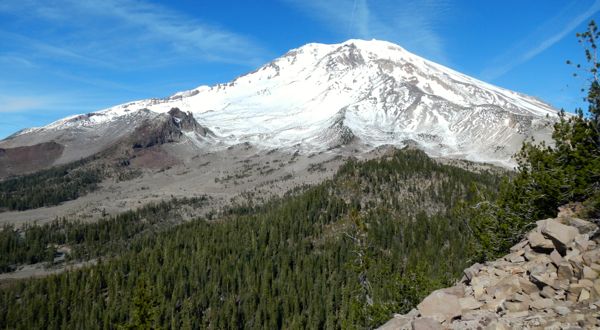
Mount Shasta is the focal point for much of the Gray Butte hike. Photos/Kathryn Reed

Mount Shasta is the focal point for much of the Gray Butte hike. Photos/Kathryn Reed

By Kathryn Reed

MOUNT SHASTA – If seemed like if we would extend our arms, we could scoop a snowball off Mount Shasta – we were that close.

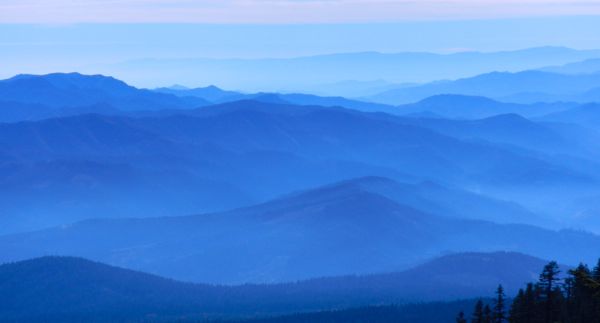
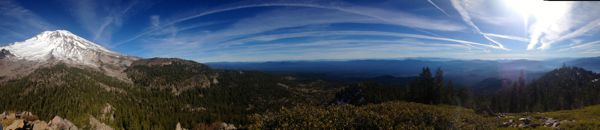
While this majestic mountain dominated our view, it wasn’t the only thing that captivated our attention. From our perch we had a 360-degree view of the North State. This included Mount Lassen, Lake Siskiyou, Trinity Alps, Mt. Shasta Ski Resort and the town of McCloud.

In getting to the starting point at Bunny Flat it seemed like the Everitt Memorial Highway might take us to the top of Mount Shasta. (The highway is named after John S. Everitt, a forest supervisor for the Shasta National Forest who died in 1935 fighting the Bear Springs Fire.)

Scenery is incredible along the trail and from the top.

Scenery is incredible along the trail and from the top.

The road continues three miles farther and 900 feet higher, but it is not open year-round. It was already closed in early November. There is a gate there – which is where we started. It’s about a 7.5-mile round-trip excursion from the parking lot.

Tom had intended to lead us on a different hike, but dogs are not allowed. People in the parking area told us we could walk up the road to Panther Meadows with AJ and Britton, then take a dirt trail to Gray Butte. (There are five colored themed buttes on Mount Shasta. The others are black, red, green and yellow.)

The pavement is a steady climb. To our left Mount Shasta is in view much of the way, so that compensates for being on asphalt for a hike. The other positive is that Pam, Tom, the dogs and I have the route to ourselves.

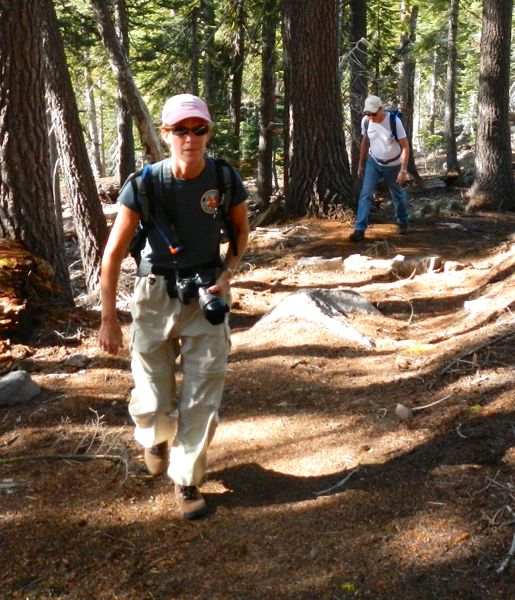
Pam Valentine and Tom Ward hiking Gray Butte trail.

Pam Valentine and Tom Ward hiking Gray Butte trail.

At the campground we veer off to the right and finally feel like we are truly hiking.

Not far out of the campground is Panther Meadow. The view from there of Mount Shasta is stunning.

The trail is marked fairly well. It traverses through old-growth red fir, with hemlock near the summit. At times we are on dirt, sometimes rocks. A few patches of snow indicate we are probably lucky to even be on it. I’m sure some Novembers this isn’t the place you’d want to be hiking.

The top of Gray Butte provides a 360-degree view.

The top of Gray Butte provides a 360-degree view.

Bunny Flat is at 6,950 feet; Gray Butte is 8,119 feet. We were still a ways from the summit of Mount Shasta, though from out vantage point it was hard to believe we would have another 6,000 feet to climb. Shasta is 14,163 feet – the fifth highest peak in California and the second tallest mountain in the Cascade Range.


Study: ‘Text neck’ becoming an ‘epidemic’

By Lindsey Bever, Washington Post

The human head weighs about a dozen pounds. But as the neck bends forward and down, the weight on the cervical spine begins to increase. At a 15-degree angle, this weight is about 27 pounds, at 30 degrees it’s 40 pounds, at 45 degrees it’s 49 pounds, and at 60 degrees it’s 60 pounds.

That’s the burden that comes with staring at a smartphone — the way millions do for hours every day, according to research published by Kenneth Hansraj in the National Library of Medicine.

The study will appear next month in Surgical Technology International. Over time, researchers say, this poor posture, sometimes called “text neck,” can lead to early wear-and-tear on the spine, degeneration and even surgery.

“It is an epidemic or, at least, it’s very common,” Hansraj, chief of spine surgery at New York Spine Surgery and Rehabilitation Medicine, told the Washington Post. “Just look around you, everyone has their heads down.”

Can’t grasp the significance of 60 pounds? Imagine carrying an 8-year-old around your neck several hours per day.

Read the whole story


Nevada earthquake swarm not letting up

Nevada is proving why it is the third most seismically active state in the United States behind California and Alaska.

While it hasn’t had a magnitude 7.0 earthquake in 60 years, the far northwest corner of the state has been shaking for the better part of this fall. It all started in the summer.

There have been several 3.0 earthquakes this week, a 4.0 on Nov. 21 and a 4.3 on Nov. 17. The largest two events – magnitude 4.7 – occurred just after midnight Nov. 6 and Nov. 7.

director of UNR’s Seismological Lab,

Graham Kent, director of UNR’s Seismological Lab, is studying the swarm of quakes in N. Nevada. Photo/LTN file

The thousands of earthquakes in the last several months is the strongest of the swarm-type sequences recorded in Nevada in recent history with its current count of 12 magnitude 4.0-plus events since it began in July.

The area being inundated by these temblors is in the Sheldon National Antelope Refuge about 40 miles southeast of Lakeview, Ore., 40 miles northeast of Cedarville, Calif. and about 250 miles north of Reno. Farm, ranch and grazing lands dominate the landscape.

“We’ve located about 1,350 earthquakes, but thousands more that are taking place just can’t be located because of the small number of seismic stations in that part of the state,” Ken Smith, seismic network manager in the UNR’s Nevada Seismological Laboratory, said in a statement. “So far there have been 112 earthquakes greater than or equal to magnitude 3.0. We’d have to go back to a similar sequence near Hawthorne in 2011 and the 2008 west Reno swarm for anything comparable.”

Additional instruments are being added to the area in order for scientists to gather more data. The goal is to have a better understanding of earthquake swarm behavior.

Scientists said there is a small increase in the probability of a larger event because of the swarm, but forecasting such an earthquake is not possible.

The Wells earthquake in 2008 was a magnitude 6.0, the largest event in Nevada in 42 years. Historically, Nevada can expect to have three magnitude 7.0 earthquakes per century and one magnitude 6.0 or larger every decade, according to Graham Kent, director of UNR’s Seismological Lab, said in a statement.

— Lake Tahoe News staff report


Snowmakers create a Heavenly opening day

Opening day at Heavenly Mountain Resort is an even unto itself. Photos/Kathryn Reed

Opening day at Heavenly Mountain Resort is an event unto itself. Photos/Kathryn Reed

By Kathryn Reed

First tracks happen every day of the ski season. First tracks of the season, well, you can only get those on opening day.

Gunnar Barnwell was going to make sure he christened the slopes of Heavenly Mountain Resort for the 2014-15. The 13-year-old arrived at the gondola entrance at 5:30am Nov. 21 in below freezing temperatures.

He didn’t mind waiting around for 3½ hours until the resort opened; after all this was the Whittell High School student’s first opening day. (Whittell doesn’t have classes on Fridays.) He admitted part of the draw was to have an opportunity to win one of the raffle prizes offered to the first 100 people in line.

Gunnar Barnwell, left, was first in line Nov. 21 for opening day and his friend, Logan Langemeier, was third.

Gunnar Barnwell, left, is first in line Nov. 21 for opening day and his friend, Logan Langemeier, third.

It was Barnwell’s buddy, Logan Langemeier, who won the GoPro. And to think he didn’t arrive until 7am.

This arrival time put the 15-year-old third in line. The South Tahoe High student was playing hooky from school on what was his second opening day.

Jennifer Wolf of Santa Cruz was second in line.

“I’m anxious (to ski),” Wolf told Lake Tahoe News as to why she showed up at 6am. “I sat out last year with a knee injury.”

She’s been skiing Heavenly for 37 years. With her parents having a cabin nearby, it makes doing so all that much easier.

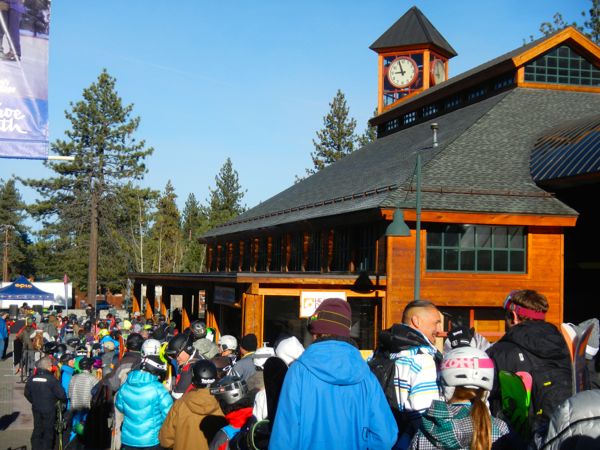
Nearly 200 people wait for the gondola to open to signal the start of the 2014-15 season.

Nearly 200 people wait for the gondola to open to signal the start of the 2014-15 season.

For Brad Drake of Reno this was his fifth opening day.

“It means the rest of the season is ahead of us,” Drake told Lake Tahoe News.

His favorite opening day: “Two years ago when I was lapping the face before Thanksgiving.”

That won’t happen this year. However, snowmaking was continuing on unopened trails throughout the morning, with the anticipation of more terrain on the Nevada side being available as conditions allow.

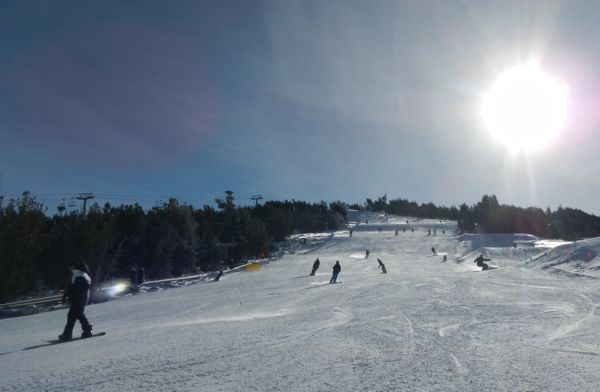
While only the gondola and Tamarack chairlift are open, the snowmaking crew has covered the 14 acres with an abundance of snow. No obstacles, excellent conditions. Four terrain park features are also available to the skier’s left of California Trail.

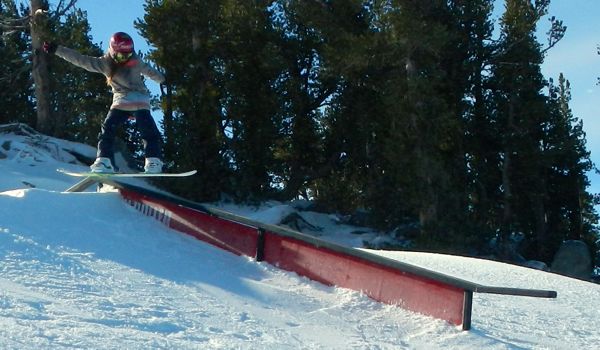
A mini terrain park has four features.

A mini terrain park has four features.


Michael Donahoe leaves environmental legacy

It is a sad time for the Sierra Club – Michael Donahoe, the most energetic, focused, passionate and caring man I’ve known, who provided more than 10 years of leadership to the TASC, has left us for that place out there graced with a perfectly clear deep blue lake surrounded by unspoiled forested mountains.

Michael cared for the lake as few do.

He helped launch the TASC along with Shannon Raborn and Heidi Hill Drum and proceeded to work hard to protect the lake and the shoreline, expand the TASC, faithfully manned the TASC booth at the farmer’s market in South Lake Tahoe from its inception – rallying people to the cause of protecting the shores and the lake from the TRPA’s expansion plan.

When TRPA didn’t listen, Michael led us into the shorezone lawsuit against the TRPA, which TASC won.

He worked hard, built relationships with deciders, and strongly opposed a big subdivision near Kingsbury, but the TRPA stacked the hearing schedule, limited testimony from Michael’s famous hydrology expert and approved the project. Even after what was a major blow, Michael soldiered on, giving his support and encouragement and advice to all of us, always urging us to work to protect the lake that he and we love.

I have a large hole in me that will take some time to heal. I will miss Michael’s advice and support as the TASC continues his work to protect the natural resources of the Tahoe basin that we all love.

I’ll look for Michael’s spirit on our mountain trails and think about the time we were all granted to experience such a talented and positive man who had a very large following. I think of Michael and his circles of friends, from the nude beach friends to the poker group friends, from an annual large family domino tournament, to a drumming circle, to Burning Man.

Michael did it all, with love and great humor.

Michael is irreplaceable.

— Laurel Ames


Stateline casinos firing employees

By Kathryn Reed

Several Lake Tahoe casino workers are out of work and others are losing hours.

Less than a week after Caesars Entertainment – parent company of Harrah’s Lake Tahoe and Harveys – announced it would be trimming its workforce by 1 percent, the ax came down. Some of the jobs were eliminated last week, some this week.

John Packer, spokesman for the local properties, did not respond to an email.

It is not known how many were let go or from which departments. One source told Lake Tahoe News 10 people were laid off in facilities engineering from Harrah’s. No one in table games lost their jobs, but other departments were affected.

“We had to sign documents,” a now former employee told Lake Tahoe News. He would not discuss specifics of the separation.

There are also reports of layoffs in senior management in Las Vegas.

At MontBleu in Stateline hours are being cut.

“(They are) actively trying to cut down our hours in an attempt to perhaps increase the number of part-time employees,” an employee of 15-plus years told Lake Tahoe News. “They have already changed the guidelines for full-timers from 30 hours per week minimum assessed by quarters to assessed yearly. (This) means if you do not actively self-monitor these numbers and how they are assessed, you might have only one quarter or three months to bring your numbers up. I understand these might be hard economic times for the casinos, but I wish they would be more forthright and less callous with their own employees.”

Steve Ditchkus, general manager of MontBleu, did not return a phone call.

At the start of this year MontBleu eliminated health insurance for employees; instead opting to pay the $2,000 penalty per employee as mandated by the federal government under the Affordable Care Act.

Employees don’t know what will happen for 2015.

“I couldn’t make a statement,” a woman in human resources told Lake Tahoe News last week. “We haven’t started open enrollments. I’m not saying yes or no (to whether we’ll offer health benefits).”


Tahoe area ski resorts adapting to climate change, trying to attract newbies

By Kathryn Reed

TRUCKEE – In spite of the challenges of climate change and a shrinking snowboarding clientele, the ski resort industry is going strong, according to those in the know.

“The market and demand is still out there,” Bob Roberts, president of the California Ski Industry Association, said at this week’s Truckee-Donner Chamber of Commerce breakfast meeting.

Lake Tahoe is a critical piece to the state’s overall ski market with half of the visits being to one of the local resorts and more than half of the revenue generated here.

California had been averaging 7.4 million skier visits a year until three years ago. Last season it plummeted to 5.3 million visits. Mother Nature didn’t cooperate so the skiers and riders found something else to do.

It’s hard to attract people when resorts like Mount Shasta were open four days and Dodge Ridge 33 days. Shasta bought goodwill by offering those who purchased a season pass last year to roll it over to this season.

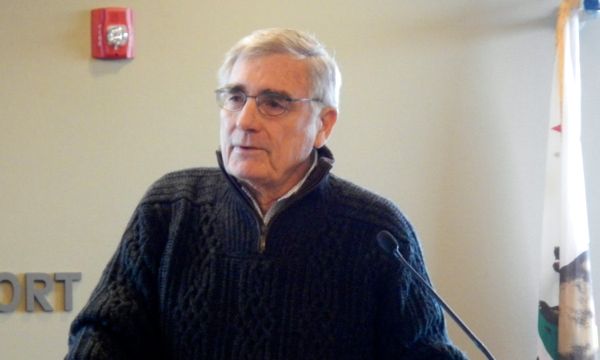
Bob Roberts, president of the California Ski Industry Association, addresses concerns and goals of the industry at a Truckee meeting Nov. 18. Photo/LTN

Bob Roberts, California Ski Industry Association president, addresses industry concerns and goals Nov. 18. Photo/LTN

Roberts on Nov. 18 acknowledged that snowmaking might have to regularly augment what naturally falls.

Resorts are beefing up their snowmaking capability, putting them on more runs and constantly working to make what comes out of the guns as close to “real” snow as possible.

“We had passholders who skied more than 100 days last year. We know we can deliver that again this year,” Rachael Woods with Northstar said.

Jeff Monson with Sugar Bowl said his resort off Interstate 80 put in $500,000 worth of snowmaking equipment, which includes 25 guns that can provide top to bottom skiing. The goal is when Sugar Bowl opens for its 75th season on Nov. 26 there will be three lifts with 1,500 vertical feet.

“We are blowing more snow, more efficiently,” Monson told the packed room at Truckee Airport.

Heavenly Mountain Resort and Northstar have two of the largest snowmaking operations on the West Coast, which is allowing both resorts to open today.

When it comes to snowboarding it is hitting the Southern California market the hardest, Roberts said. The problem is younger people are not picking up the sport. It is an issue Roberts and his colleagues are trying to figure out how to remedy.

Ski resort officials who spoke at the meeting talked about various learn to ski-ride programs that make snowsports more affordable.

Paul Raymore with Homewood Mountain Resort said the West Shore resort is bringing back free lessons for intermediate and advanced skiers-riders.

Roberts said one benefit of the consolidation of resorts is season passes are getting people to ski beyond their one favorite resort. And resorts that aren’t owned by the same company are partnering to offer combined passes.

“Season pass sales are running ahead of last year,” Roberts said. “The indicators are the market is still strong.”

In the last five years more than $500 million has been spent by Tahoe area resorts on upgrading their product. Some of this is for summer fun as they evolve into year-round destinations.

Roberts said Reno-Tahoe International Airport landing direct flights from England and Mexico would also help the local industry. He said Californians tend to spend $175/day on an average ski day, whereas travelers from abroad spend $300 per day and tend to stay at least seven days.


Skiing lesser-known resorts has advantages

By Karen Schwartz, AP

Big-name ski resorts might give you bragging rights when you go back to the office, but lesser-known mountains can give you something else: less crowded slopes, shorter lift lines and even outlets for Crock Pots.

Some of these hidden gems are located near their famous rivals, so visitors can enjoy the same choice of lodging, restaurants and off-the-slope activities.

Suzanne Greenwood, 49, an experienced skier from Nashville, happened upon one of these satellite resorts last March.

Although she’d skied the big resorts in Colorado and Utah with her husband for years, this trip was different. They were introducing their two children, ages 14 and 25, and their two friends, to skiing.

Their plan for spring break was to use the home they’d rented in Breckenridge as a base for the week while visiting several mountains in the area: Breckenridge, Vail, Beaver Creek, Keystone and Arapahoe. They’d even bought a type of pass good at multiple areas.

The first three days they skied Breckenridge, dropping $1,000 on private lessons. Then they headed 20 minutes down the road to Arapahoe Basin.

“The kids got there and loved it,” she said.

Her discovery wasn’t unusual. Smaller resorts are often favored by families and beginners who don’t mind having less terrain to choose from.

Greenwood’s children felt more comfortable on slopes that weren’t crowded. They also found the people friendlier.

She said Breckenridge had better apres ski, but, “The fact is that the kids felt they were getting skiing that was just as good” at Arapahoe.

The two resorts are about equal in the makeup of beginner, intermediate and advanced slopes, but without a doubt, there are differences.

Arapahoe has 109 trails on 960 skiable acres (388 hectares), while Breckenridge has 187 trails on 2,900 acres (1,173 hectares). The lift capacity at Arapahoe is 10,700 people per hour on six chairlifts, while Breckenridge carries four times as many people on 19 chairlifts and a gondola.

In addition, Breckenridge has more vertical: 3,400 feet compared to Arapahoe’s 2,270 feet.

Nonetheless, Greenwood and her family were so happy at Arapahoe that they didn’t bother skiing anywhere else, writing off the higher-priced lift pass they’d purchased.

Greg Ditrinco, editor of Ski magazine, said the savings on lift tickets can vary from good to nonexistent depending on the resort and how savvy the purchaser is. Still, lessons at satellite resorts generally cost less and the food isn’t as pricey, though there are fewer options.

And, “No one gives a fig about what you wear, how you ski or what you’re skiing on. It’s an authentic experience,” he said. “There’s a real value to that.”

Colorado has a wealth of smaller resorts, sometimes marketed as the “Gems,” but so do other ski states.

In Vermont, Mad River Glen is a half-hour away from Stowe and 10 minutes away from the Sugarbush Ski Complex.

In Utah, Solitude is about 45 minutes from Deer Valley, which recently announced plans to purchase the smaller resort. The locals’ resort of Brighton is also nearby.

The Mount Rose Ski Tahoe resort near Reno is within 45 minutes of both Squaw Valley and Northstar.

During the holidays, it attracts skiers from the Bay Area, who bring their rice cookers, electric kettles and occasional Crock Pot to make noodles or soup in the lodge.

“We’re a lot more lax with folks doing that,” than some of the big resorts, said Mount Rose spokesman Murray Blaney.

In the Canadian Rockies, Mount Norquay is just 15 minutes from the town of Banff, Alberta, far closer than Sunshine or Lake Louise.

“Because the resort is small, it only really provides enough terrain to keep people interested for a day or two, unless they are beginners, are taking lessons or race training,” said Banff resident Diane Volkers, 58.

But even advanced recreational skiers enjoy it if they are mixing their time with other activities.

“You can ski an incredible amount of groomed vertical in an hour,” said Volkers. “It’s very handy to go for a partial day.”

Visitors can shop, cross-country ski or do some work in the afternoon.

Greenwood’s group enjoyed Arapahoe so much they are planning on returning this season. And this time, it’s the only place they plan to ski.

“At the end of the day for the kids it’s the snow and the lifts,” she said. “They are less interested in the glitz.”
Nev. outsourcing IT work to private sector

By Kyle Roerink, Las Vegas Sun

Their contracts with the state of Nevada are worth millions.

Their offices are based in places like New Jersey, Texas, California and the Midwest.

They are hired to converge government with a world that moves much faster: technology.

Gov. Brian Sandoval and the state’s Board of Examiners last week approved up to $100 million in 20 information technology contracts. According to the board’s official announcement, the contractors will “provide assistance in a variety of information technology consulting and technical specialist levels on an hourly basis to state agencies.”

The new contracts highlight a growing trend in state government: hiring the private sector to do public sector IT work.

Read the whole story