El Dorado supes restore pay perks for electeds

By Peter Hecht, Sacramento Bee

Thirteen months ago, El Dorado County supervisors voted to strip generous salary enhancements for seven elected officials amid cries that the county was vastly overpaying its public servants.

On Tuesday, the board reversed itself and restored most of the pay cuts.

Major salary reductions were due to go into effect when officeholders were sworn in for new four-year terms in January. But the board voted to reinstate salary enhancements for professional certificates and years of service for seven elected officials.

Supervisors also voted to give additional pay perks to Sheriff John D’Agostini and Auditor-Controller Joe Harn, boosting their salaries with enhancements that are based on the earnings of their top assistants.

The vote was taken after board Chairwoman Norma Santiago argued that supervisors had to correct an unforeseen equity problem: Under the new pay formula, at least five of the elected officials would be earning less, in some cases significantly less, than top assistants.

Read the whole story


Movement under way for free transit in Tahoe

By Kathryn Reed

Free transit. Regional transit. Transit that goes where people want to go.

These are concepts that many tourist destinations have embraced for years. Lake Tahoe, not so much.

But that could change. Tahoe Transportation District in 2015 plans to make a concerted effort to take the necessary steps to bring free regional transit to the Lake Tahoe Basin.

“If each community in the region is interested in being a competitive resort community, we have to go there (with free transit),” Carl Hasty, executive director of Tahoe Transportation District, told Lake Tahoe News.

Hasty was at the Dec. 9 South Lake Tahoe City Council meeting giving the electeds an update on transit issues, including the loop road near the state line.

He started out by saying there is a strong correlation between a strong economy and modern infrastructure. Tahoe is lacking that infrastructure and the economy proves his point.

In looking at places like Vail, Whistler and Park City that offer free transit, the funding comes from federal, state and local government entities.

“We need to create funding sources that don’t currently exist,” Hasty told the council.

Hasty did not have a dollar figure for what free transit would cost or what the city’s share would be. But he is simultaneously working with the North Shore to try to tie the bus services together.

“On free transportation, I’d like a comprehensive network,” Councilman Austin Sass said. He wants it to include biking and hiking trailheads. “I would like it to go from Spooner Summit to Echo Summit.”

Sass also wants to make sure officials from El Dorado and Douglas counties are part of the dialog.

Hasty said a free, expanded bus service would benefit locals and tourists. For tourists, he told LTN, it provides a fluid experience, where they don’t have to worry about how to get from point A to point B.

Plus, he added, when a bus service is safe and convenient, it adds to the overall experience.

When TTD has offered free service on BlueGo on the South Shore the ridership tends to double – with more locals and visitors on board. But those opportunities are infrequent and are based on the ability to get outside funding to cover the costs.

Vail Resorts pays TTD to provide free bus service to Heavenly Mountain Resort on certain routes – mainly the ones servicing lodging properties.

Hasty said in 2015 TTD will be actively seeking community input about what it wants in public transit throughout the Lake Tahoe Basin.


NOAA: Climate change didn’t cause drought

By Tim McDonnell, Mother Jones

California is in the middle of a really bad three-year drought that stretches across nearly the entire state. The drought has already wreaked havoc with the state’s agricultural sector, is expected to take a $2.2 billion bite out of the state’s economy this year alone, and shows no sign of relenting anytime soon.

Climate scientists have warned for years that rising greenhouse gas concentrations will lead to more frequent and severe droughts in many parts of the world. Although it’s generally difficult to attribute any one weather event to the broader global warming trend, over the last couple of years a body of research has emerged to assess the link between man-made climate change and the current California drought. There are signs that rising temperatures (so far, 2014 is the hottest year on record both for California and globally) and long-term declines in soil moisture, both linked to greenhouse gas emissions, may have made the impact of the drought worse.

But according to research by the National Oceanic and Atmospheric Administration, California’s drought was primarily produced by a lack of precipitation driven by natural atmospheric cycles that are unrelated to man-made climate change. In other words, climate change may have worsened the impacts of the drought, but it isn’t the underlying cause.

Read the whole story


Nevada college advisory boards draw criticism

By Bethany Barnes and Francis McCabe, Las Vegas Review-Journal

The Board of Regents last week created local advisory councils for the community colleges in the state, a move some education watchdogs fear is just window dressing to appease advocates who want local communities to have more say in the colleges.

The unanimously supported establishment of the Community College Institutional Advisory Councils on Friday comes in the wake of a heated battle to restructure the governance of higher education in the state.

In a showdown this summer, a panel of lawmakers rejected the idea of taking the community colleges out from under the Board of Regents.

Advocates argued the state needed a two-tier system that that would separate the University of Nevada, Las Vegas, the University of Nevada, Reno and the Desert Research Institute from the state’s two- and four-year colleges.

The concept was that community colleges should be rooted in their communities. Oversight and advocacy end up neglected when the colleges are bundled in with the universities, proponents of local control argued.

Read the whole story


STHS football field scoring upgrades

By Kathryn Reed

By next football season Viking fans will be watching games from a new seating area.

At a January Lake Tahoe Unified School District meeting the board is expected to approve a contract for new bleachers at South Tahoe High School that will seat approximately 1,000 people. A press room and coaches box will be at the top of the structure.

“It includes emergency lighting for the field and seating areas. The back up lighting system is in the event of a power failure we have about 45 minutes of light to evacuate the facility,” Steve Morales, LTUSD director of facilities, told Lake Tahoe News.

The $400,000 project is being funded by Measure G, the $65 million school facilities bond voters approved in 2008.

The current home stands were built in 1966. They don’t allow disabled access or meet federal regulations.

The new structure will meet the American with Disabilities Act, which includes a spot for a wheelchair and companion seating.

Today people in wheelchairs must watch the action from the end zone.

While both structures are bleachers, a difference with the new ones is the flooring is enclosed. This means no legs to dangle through the air, and no kids or personal items falling to the ground.

Officials also believe it will be easier to clean up any discarded trash.

“It will be weather dependent, but our hope is to have it installed prior to graduation,” Morales said. Graduation is June 5.

The current stands have a capacity of less than 800. The visitor seating is about a decade old and has room for about 300 people. It is not being replaced.

The added capacity could also be a boon for organizations wanting to rent the field. The high school football and soccer teams use it today. Plus, it’s where graduation takes place. The Come Up for Air Soccer tournament each June also uses this field.

Restrooms and a concession stand are still on the drawing board, but won’t be part of this project. Porta-potties are brought in to accommodate ADA issues. The bathrooms at Mount Tallac High are open during games, but the road to get to them is not ADA approved. Next football season the district plans to bring in higher-end temporary restrooms; the ones that come on a trailer.

A donor wall was going to be installed by the concession stand, but with no date in sight for that building the district is going to use the bricks in next spring’s project. There will be a permanent wall honoring the 118 people who donated to the field upgrades – which included the lights that were installed in 2011.


Calif. water at-risk from abandoned Sierra Nevada mines

By Ed Joyce, California Public Radio

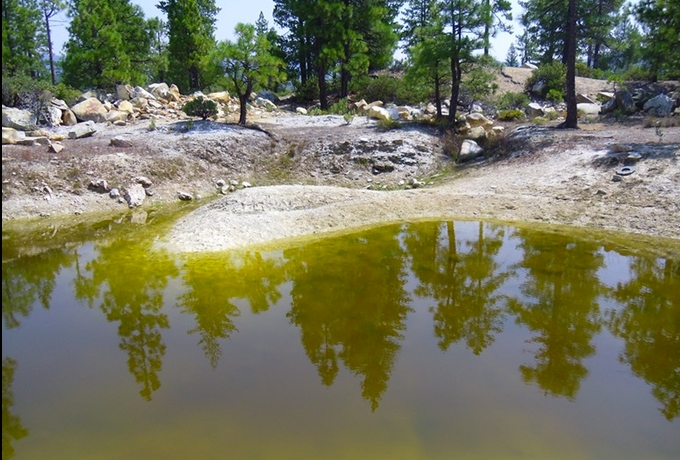
Along the western slopes of the Sierra Nevada, runoff pollution from abandoned mines in “Gold Country” could threaten California’s primary water supply. A pilot project at one mine site is intended to prevent contaminated runoff from reaching the Yuba River.

The Sierra Nevada Conservancy said more than 60 percent of California’s water supply comes from forests in the Sierra Nevada. The state agency says the health of many of those forests is in decline.

Joan Keegan, Conservancy assistant executive officer, said abandoned mines with contaminated soil are a “huge problem.”

A Sierra Nevada Conservancy pilot project is intended to reduce contaminated runoff from an abandoned mine in Nevada County. Bob Kingman / Sierra Nevada Conservancy

The Sierra Nevada Conservancy is working to reduce runoff from an abandoned mine in Nevada County.
Photo/Bob Kingman/Sierra Nevada Conservancy

“There are 47,000 abandoned mine lands in California that have been inventoried and over half of those are in the Sierra Nevada,” said Keegan. “And of those, there are 3,000 that are known to contain chemical hazards, including mercury.”

Keegan said there are probably more mines in the Sierra Nevada with chemical hazards that haven’t been assessed.

She said contaminated soil from abandoned mines drains in waterways that flow to the Sacramento-San Joaquin River Delta.

“Basically, a lot of the mercury and other toxins, that are a result of abandoned mine lands in the Sierra, have and continue to make their way downstream into the Delta,” said Keegan.

Keegan said the majority of those abandoned mines are in “Gold County” including El Dorado and Placer counties.

Read the whole story


Affordable Care Acts cuts down on ER visits

By Phillip Reese, Sacramento Bee

Fewer uninsured Californians are seeking treatment in the state’s emergency rooms, a decline that experts say is a direct result of the federal Affordable Care Act.

The trend represents welcome news for previously uninsured patients who had trouble affording a trip to the emergency room. But it has not brought down ER treatment costs for everyone else, health care experts said, nor has it slowed a years-long increase in overall emergency room traffic.

The Affordable Care Act required most Californians to obtain health insurance by April 15, 2014, or face a penalty. The new figures, reported by hospitals to the Office of Statewide Health Planning and Development, show that about 337,000 uninsured patients visited California emergency rooms between April and June, down by 90,000, or 20 percent, from the same quarter in 2013. Put another way, 12 percent of emergency room patients lacked insurance this year, down from 16 percent in 2013.

Read the whole story


Climate change affecting Lake Tahoe

By Susan Wood

INCLINE VILLAGE – If a tree grows submerged in a lake, will anyone notice?

That’s the prevailing question posed during a lecture at Sierra Nevada College last week by Benjamin Hatchett, who studies climate models for the Nevada State Climate Office of UNR.

The talk, which brought out almost 100 people who were interested in the topic, covered changes to the landscape of what’s considered the Great Basin. Its series of lakes provide a picture of the past and perhaps the present and future of the climate’s effects on Walker, Convict, June and Mono lakes, as well as Emerald Bay and other areas of Lake Tahoe.

From tufa and tree stumps to shorelines and slow-moving glacial movements, Hatchett’s slide show demonstrated a much different-looking western front surrounding Tahoe.
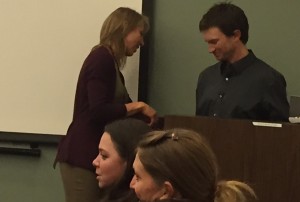
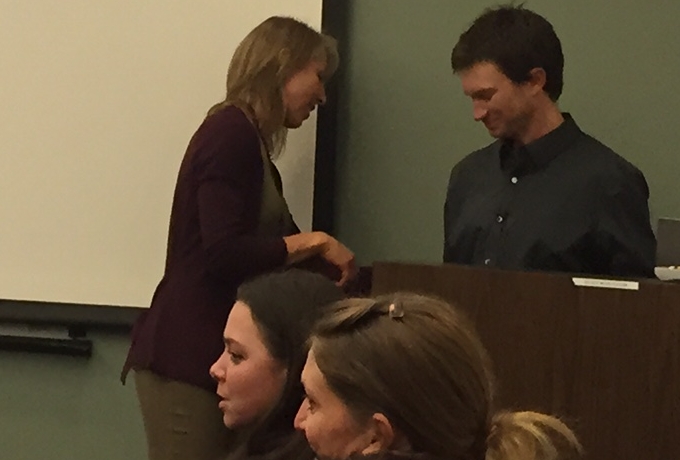
Benjamin Hatchett gives at talk Dec. 4 at Sierra Nevada College. Photo/Susan Wood

Benjamin Hatchett gives a talk Dec. 4 at Sierra Nevada College. Photo/Susan Wood

And as much science as there was, Hatchett made the subject somewhat light with his reference to Bonneville Lake being more known now for giant desert parties and speed races.

Scientists like Hatchett are now able to make the connection between moisture availability with outgoing evaporation and incoming precipitation – a subject near and dear to California and Nevada residents enduring one of the worst droughts in a century.

Tahoe-area researchers have been able to discover 200-year-old trees submerged in Walker Lake, just like those they’ve found in Fallen Leaf. And Mono Lake’s high shorelines that make the tufa rock formations so unusual are “an indicator of how dry it can be here,” Hatchett pointed out.

How do these dry spells affect the web of life?

Walker Lake’s low level has already jeopardized Hawthorne’s famed Loon Festival, a mainstay for the small Western town. When the lake drops, the food chain is disrupted and therefore the birds reduce their visitation.

The best scientists can hope for is moisture because we’re all at the mercy of Mother Nature. Beyond using historical maps, they can also count on solving equations upon geographic grid cells on charts using components such as snowpack, snowmelt, temperature, precipitation, evaporation and water storage.

So at least we’ll have a heads up if we face a “modern mega drought,” which is the worrisome equation at work here.

From 2012 to 2014, the Great Basin experienced the similar level of precipitation to other mega droughts based on the models.

“We could end up with lakes drier than the time when we had trees growing in them,” Hatchett said, adding that the scenario could lead to “massive socioeconomic and ecological implications.”

As it is, Hatchett cited a $2 billion expense reported by UC Davis of the three-year drought. It’s difficult to imagine a long-lasting mega drought.

So, Hatchett put up pictures that showed Emerald Bay and Fallen Leaf Lake as a series of moraines during the Ice Age more than 14,000 years ago. These extreme climate conditions result from large-scale swings in hydrologic history.

The ice flowed down Eagle Creek into Emerald Bay “leading to a nice place to go have tea,” he said, referring to Fanette Island situated in the middle of the bay. The resident of Vikingsholm, Helen Knight, took her guests out there for the English staple.

“Desolation Wilderness is one of the best examples of the Ice Age,” he said.

So the next time you walk in the wilderness and notice a few rock formations that either seem thrown there or out of place in terms of other nearby rocks – think ice movement.

“We can blame glaciers for a lot of weird geologic finds,” he said. What’s the big picture? “Natural or manmade (climate conditions) – if it gets drier, we’re all in big trouble,” he clarified.

And with that, the audience was hushed with keen interest.

Bob Richards, Tahoe researcher Charles Goldman’s understudy for years, was on hand for the talk. Afterward, he told Lake Tahoe News that he wanted to know if Hatchett could say how the 5,000-year-old submerged trees out from Taylor Creek on the South Shore fit into the climate picture of other submerged forests such as the Walker Lake drainage.

After the talk, Hatchett confirmed it’s all a part of the same dry picture. All the studying was food for thought for those wanting to “appreciate a lot of the features around us and how they’re a product of a long-term state of our climate,” Hatchett said. “This can be helpful in what we would do now for the ‘what if’ we’re three years into a 10-year drought.”

More observing is on the horizon. This includes studying the submerged forest off shore from Kings Beach next.


Cameras circling Lake Tahoe would warn of fires

By Associated Press

RENO — Nevada scientists working to expand early earthquake warning systems around Lake Tahoe are developing new plans to eventually ring the mountain lake’s basin with a network of cameras to help alert authorities to potentially disastrous wildfires.

Researchers are seeking private funding to substantially expand the system after a pilot program conducted by the University of Nevada’s Seismological Laboratory was determined to be an encouraging success.

“In the end, we envision encircling the basin so you can see the entire basin,” Graham Kent, director of the seismology lab, told the Reno Gazette-Journal. “We feel this is a very important thing.”

Like an automated version of the manned fire lookouts used for decades to protect vulnerable forests from fire, the cameras are designed to alert officials that a fire has started, allowing them to send firefighters to the scene before it gets big.

The first device, also outfitted with a seismometer, was installed in July 2013 as part of an effort to expand the seismology lab’s seismic network. Two more were installed last summer, and a fourth should be installed near Homewood in a week or so.

The stations employ a wireless, digital microwave communication system that can also be useful in obtaining weather data and in atmospheric and other environmental studies, Kent said.

Their potential usefulness in detecting fire was evident last August when a U.S. Forest Service official was testing one installed in the mountains above Tahoe’s east shore to scan an area that had been hit by lightning over a span of several days.

Mac Heller of the Lake Tahoe Basin Management Unit of the U.S. Forest Service spied thin wisps of smoke and contacted firefighters, who found and contained a half-acre wildland fire near Spooner Summit. “Who knows how big the Spooner fire would have been if it had been reported later or the next day or so?” Heller said.

There’s no way to know for sure, but Kent suspects that had the camera system been in place in June 2007, the Angora Fire might have been stopped before it whipped into an inferno that destroyed 254 homes on the South Shore.

“The fire this system is built to detect is the Angora Fire,” Kent said. “That fire smoldered for hours before it took off. Even the smallest fire is super-apparent, and that thing would have been super-apparent for much of the day.

“This system will have the potential of jumping on fires and the majority, if not all, will be discovered early.”

Lake Tahoe’s fire chiefs have been briefed on the program and are impressed with what they learned, said Mike Brown, chief of the North Lake Tahoe Fire Protection District.

“What they have to offer is awesome when it comes to early detection,” Brown said, agreeing that the cameras might have made a big difference during the Angora Fire.

Officials at REMSA, a paramedic and ambulance service in the region, say the cameras could also be useful in providing a real-time look at Tahoe weather conditions prior to flights of Careflight medical helicopters, Kent said. The cameras — which are controlled remotely by computer and can tilt, pan and zoom — have been used this fall to monitor controlled burns and the smoke they create.

Kent and colleagues envision installing the camera stations at 15 additional locations at a cost of about $2 million. While grants might cover some of the cost, they are hopeful private donations could provide needed money at an accelerated schedule. The lab’s fundraising campaign is called, “AlertTAHOE.”


Money laundering a concern for casinos

By J.D. Morris, Las Vegas Sun

Monitoring casino floors for potential money-laundering is a full-time job for the American gaming industry.

Casinos, like banks and other institutions that deal with a lot of money, are required by law to vigilantly look out for financial transactions that may be illegal. And a first of its kind report from the industry’s Washington, D.C.-based trade association sheds light on the best methods casinos can employ to do that.

The report comes as the industry is under substantial pressure to make sure its anti-money laundering tactics are airtight.

Read the whole story